
Welcome to this exploration of a fascinating heritage. This Baltic country, home to 3.5 million inhabitants, has a rich history that dates back to the 13th century.
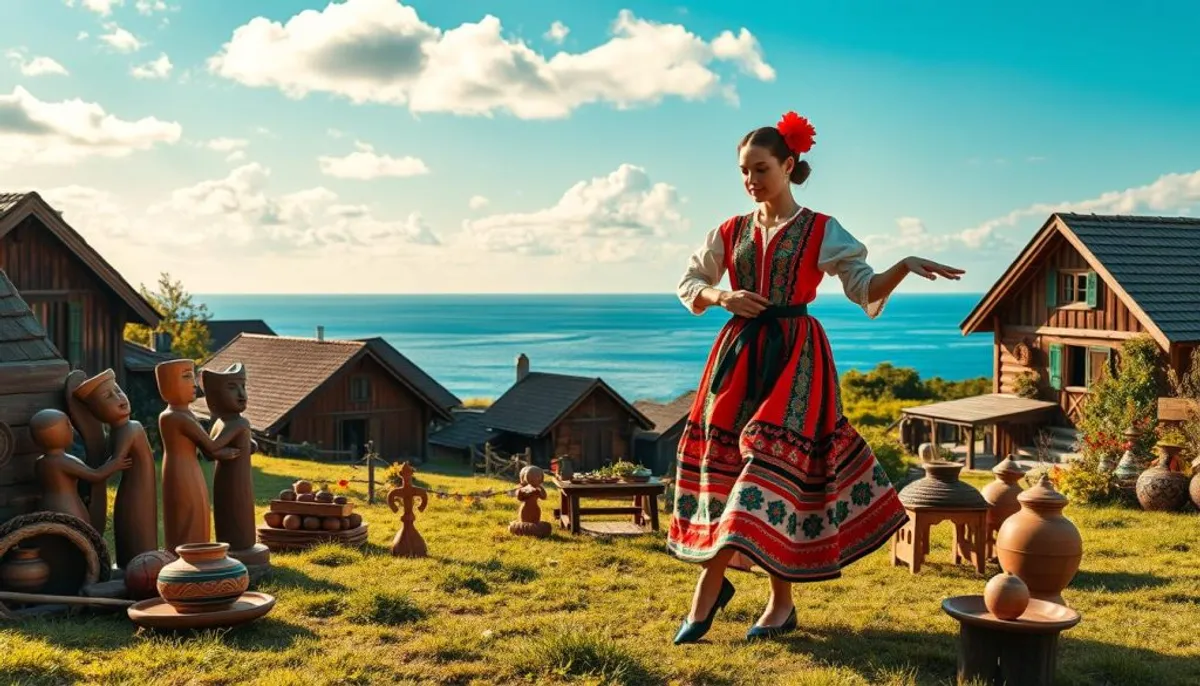
The first written mention of Lithuania dates back to 1009. Despite the challenges of time, its language and traditions have been essential pillars. They have helped preserve its unique identity through the centuries.
This heritage played a fundamental role during the Soviet occupation. It facilitated the national renaissance and European integration in 2004. Today, this synthesis of ancestral traditions and modernity shines in the contemporary world.
Key Points to Remember
- Lithuania is a country in northeastern Europe with a long history.
- Its culture has been crucial in maintaining national identity.
- Lithuanian heritage combines pagan traditions and modern influences.
- The language played a vital role during periods of occupation.
- The country celebrates its freedom while honoring its millennial past.
- Lithuania has been a member of the European Union since 2004.
Origins and History of Lithuania
Over 4000 years ago, the proto-Balts laid the first stones of what would become Lithuania. Their prosperous civilization, based on amber trade and developed agriculture, marks the true beginning of this fascinating history.
The First Peoples and Pagan Heritage
The unique origin of this nation lies in its pagan heritage. The Lithuanians were the last European people to be Christianized, only in the 14th century. This resistance allowed the preservation of a mythology and traditions of exceptional richness.
From the Grand Duchy to the Struggles for Independence
In 1252, the leader Mindaugas founded the Grand Duchy, a state that would become immense. The following centuries were marked by alliances, such as the victory at Tannenberg in 1410, and unions, notably with Poland in 1569.
The country then experienced difficult years under Russian and then Soviet domination. Yet, it was during this dark period that the language and traditions became symbols of resistance, culminating in the Singing Revolution and the return to independence in 1990.
Here are the major turning points of this national epic:
- Foundation of the Grand Duchy by Mindaugas in the 13th century.
- Resistance and preservation of a unique pagan heritage.
- Constant struggles for sovereignty against neighboring empires.
- National renaissance in the 20th century.
Lithuanian Traditions and Customs
At the heart of national identity are ancestral practices that rhythm the lives of the inhabitants. These customs reflect a unique blend of pagan heritage and Christian influences.
Rituals, Festivals, and Ancestral Celebrations
The festive calendar spans the entire year. The national holiday on July 6 commemorates the coronation of King Mindaugas in 1253.
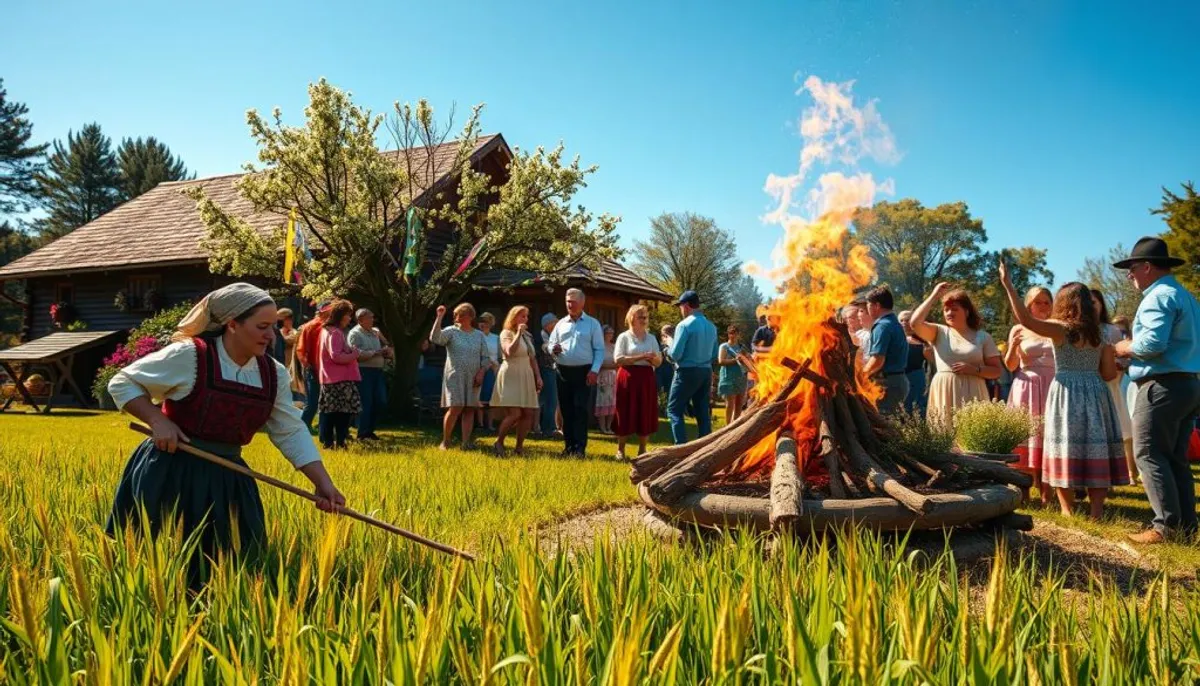
The rituals of the summer solstice (Joninės) are particularly important. The Lithuanians celebrate the shortest night with songs and dances.
The Baltic Song and Dance Celebrations gather thousands of participants. This event is recognized as part of the intangible cultural heritage of UNESCO.
| Celebration | Period | Characteristics |
|---|---|---|
| National Holiday | July 6 | Commemoration of Mindaugas' coronation |
| Joninės | Summer Solstice | Pagan rituals, search for the fern flower |
| Vilnius Festival | July | Diverse cultural events |
| Baltic Celebrations | Every 4 years | Traditional songs and dances |
The craft tradition remains very much alive. The making of amber jewelry and wood carving testify to a preserved popular art.
These practices have endured through the centuries and occupations. They constitute an unbreakable link with the homeland.
Lithuanian Culture: A Vibrant and Modern Heritage
The artistic vitality of Lithuania draws its strength from a continuous dialogue between past and present. This heritage is not only preserved but constantly evolves.
Artistic and Folkloric Expressions
Traditional art forms are experiencing a modern renaissance. Creators reinterpret ancestral motifs with contemporary sensitivity.
This innovative approach particularly characterizes the younger generation. Having grown up in an independent country, these artists bring a fresh vision to international arts.
Evolution Through Cultural Revolutions
The Singing Revolution (1987-1990) marks a turning point in world history. It demonstrates how tradition can transform political life.
After years of occupation, the regaining of freedom in 1990 unleashed exceptional creativity. The Lithuanians now boldly explore all disciplines.
The Lithuania Season in France 2024 perfectly illustrates this vitality. With 200 events, it showcases the cultural diversity of this century.
The Arts and Performances in Lithuania
The Lithuanian artistic scene reveals exceptional richness in all fields of performance. This vitality is expressed through both traditional and contemporary forms.
Polyphonic Music and Traditional Songs
Music occupies a central place with the sutartinės. These polyphonic songs are recognized as part of the intangible cultural heritage of UNESCO.
The folk ensemble of Vilnius University perpetuates this centuries-old tradition. Jazz festivals also enliven the country throughout the year.
Theater, Dance, and Contemporary Performance
The theater enjoys international acclaim. Institutions like the National Drama Theater constantly innovate.
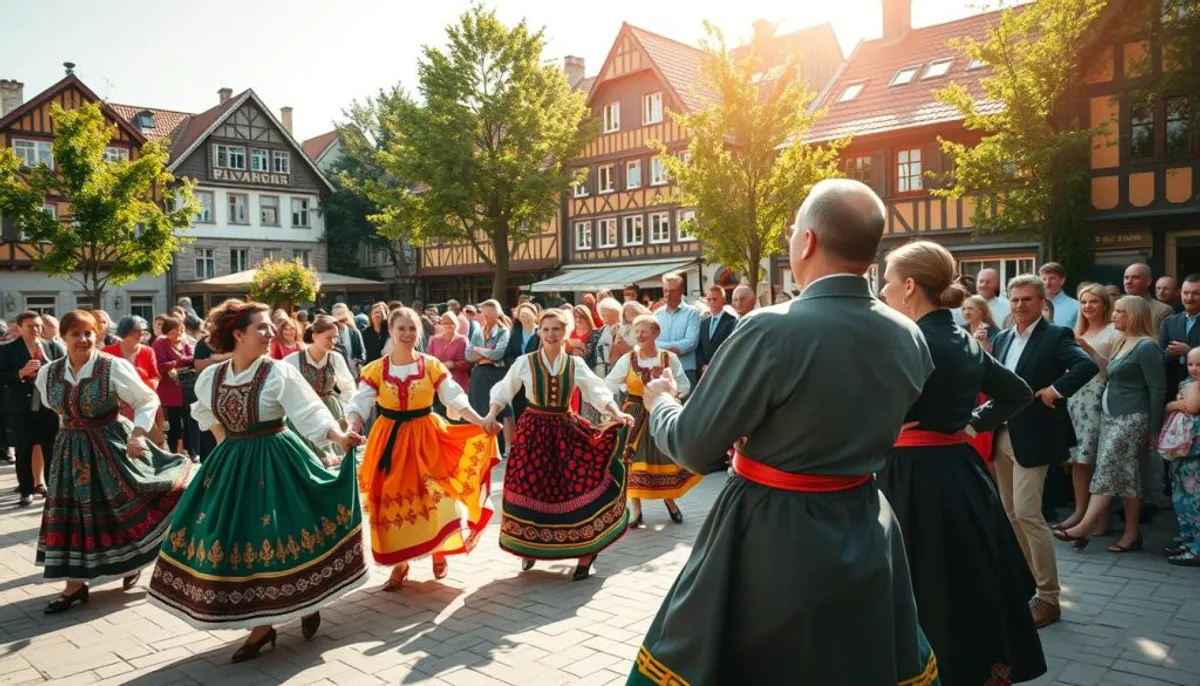
The New Baltic Dance Festival, created in 1997, attracts talents from around the world. It combines folk heritage with modern creations.
Film and Visual Arts: From Čiurlionis to Current Creators
Mikalojus Konstantinas Čiurlionis marks the history of visual arts. This genius of the early 20th century was both a painter and a composer.
Today, filmmakers like Šarūnas Bartas continue this creative tradition. Lithuanian cinema is making its mark on the international scene.
Cultural Practices and Festivities
The Lithuanian festive calendar enlivens each season with remarkable energy. These events rhythm the lives of the inhabitants throughout the year.
Major Festivals and International Events
The country hosts festivals that attract visitors from around the world. The Vilnius Festival in July transforms the capital into a giant stage.
The “Vilnius Days” in September offer an international event of theater, music, and dance. The “Banchetto Musicale” celebrates the musical heritage with exceptional concerts.
Solstice Rituals and Other Seasonal Celebrations
The Lithuanians continue ancestral traditions such as the summer solstice rituals. This magical celebration dates back several centuries.
During the shortest night of the year, songs and dances enliven the countryside. These practices create strong moments of sharing between generations.
The local culture fully expresses itself during these festive days. They show how a small country shines on the international stage.
Gastronomy, Crafts, and Lithuanian Flavors
The authentic flavors and refined craftsmanship reveal an essential facet of this Baltic country. These elements nourish the daily lives of the inhabitants for generations.
Traditional Dishes and Local Specialties
The local gastronomy values the products of the land. Potatoes are the central ingredient in many specialties.
The cepelinai, the national dish, combines a potato dough filled with meat or cheese. It is served with sour cream and crispy bacon.
| Traditional Dish | Main Ingredients | Characteristics |
|---|---|---|
| Cepelinai | Potatoes, meat, cheese | Zeppelin shape, national dish |
| Blyneliai | Flour, eggs, apples, banana | Small sweet pancakes |
| Šašlykas | Grilled meat, vegetables | Caucasian skewers |
| Sakotis | Eggs, flour, butter | Tree-shaped cake |
Amber, Jewelry, and Artisanal Crafts
Craftsmanship represents an exceptional living heritage. Amber, known as “local gold,” has been worked for 4000 years.
Artisans create sophisticated jewelry with this fossilized resin. They also excel in ceramics and art glass.
These unique creations attract people from around the world. They illustrate a harmonious dialogue between tradition and modernity.
The Political Evolution and European Integration
The recent political history of Lithuania tells a tale of resistance and rebirth. This Baltic country experienced difficult years under Soviet domination before regaining its freedom.
From Soviet Occupation to Regained Independence
The Soviet period was the darkest of the 20th century. Hundreds of thousands of inhabitants were deported. Cultural repression attempted to erase national identity.
Yet, the Lithuanians resisted peacefully. The Singing Revolution (1987-1990) saw thousands of people singing their desire for independence. The Baltic Way in 1989 united three Baltic countries in a historic human chain.
March 11, 1990, marked the beginning of a new era. Lithuania became the first Soviet republic to proclaim its independence. This courageous act inspired the entire world.
| Event | Date | Significance |
|---|---|---|
| Soviet Occupation | 1940 | Beginning of the darkest period |
| Singing Revolution | 1987-1990 | Peaceful resistance through culture |
| Baltic Way | August 23, 1989 | Human chain of the three Baltic countries |
| Regained Independence | March 11, 1990 | First free Soviet republic |
| EU Membership | May 1, 2004 | Complete European integration |
Today, Lithuania has 3.38 million inhabitants. The parliament (Seimas) of 141 deputies ensures democratic stability. The languages spoken reflect the diversity of the country.
The European union represents a major success. The 2003 referendum showed massive support for integration. This union strengthens the freedom and prosperity of the Baltic countries.
Conclusion
This journey through Lithuanian heritage reveals a remarkable history of resilience. The Lithuanians have managed to preserve their identity through the centuries.
Their unique heritage combines ancestral traditions and European modernity. The language, spoken alongside Polish and other languages, remains at the center of national life.
From traditional songs to international festivals, this country honors its past while innovating. The 2024 Season in France showcases its place on the global stage.
The University of Vilnius and museums offer gateways to explore this universe. This small northern country inspires with its freedom and creativity.
Its land and its inhabitants demonstrate that no force can extinguish the spirit of a united people. Their art continues to shine in the contemporary world.
FAQ
What is the origin of the Lithuanian people?
The first inhabitants of this land are Baltic tribes that arrived several millennia ago. Their pagan heritage, with beliefs in nature gods, has profoundly influenced customs and celebrations, even after Christianization.
What are the most important traditional festivals?
Solstice rituals, such as Saint John’s Day (Joninės), are highlights of the year. Polyphonic songs, folk heritage, and large family gatherings around dishes like stuffed potatoes rhythm the lives of Lithuanians.
How has music and art developed over time?
Traditional music, notably the sutartinės (polyphonic songs), is unique. Artists like Mikalojus Konstantinas Čiurlionis fused painting and music. Today, theater, film, and visual arts continue to evolve, blending tradition and modernity.
What are the typical dishes that must be tasted?
Local gastronomy heavily utilizes potatoes, mushrooms, and produce from the land. Don’t miss the cepelinai (potato zeppelins), black rye bread, and wild berries. Craftsmanship, especially Baltic amber, is also highly renowned.
How did the country regain its freedom after the Soviet occupation?
The struggle for independence was a long fight. The “Singing Revolution” of the late 1980s, where millions formed a human chain across the Baltic countries, was decisive. Lithuania regained its sovereignty in 1990 and joined the European Union in 2004.