
Welcome to this comprehensive guide that opens the doors to a fascinating treasure of West Africa. Get ready for a captivating journey into the heart of a living and dynamic heritage.
Ghana is a dynamic country with approximately thirty million inhabitants. Its cultural wealth forms an exceptional mosaic, where ancestral traditions and modernity harmoniously blend.
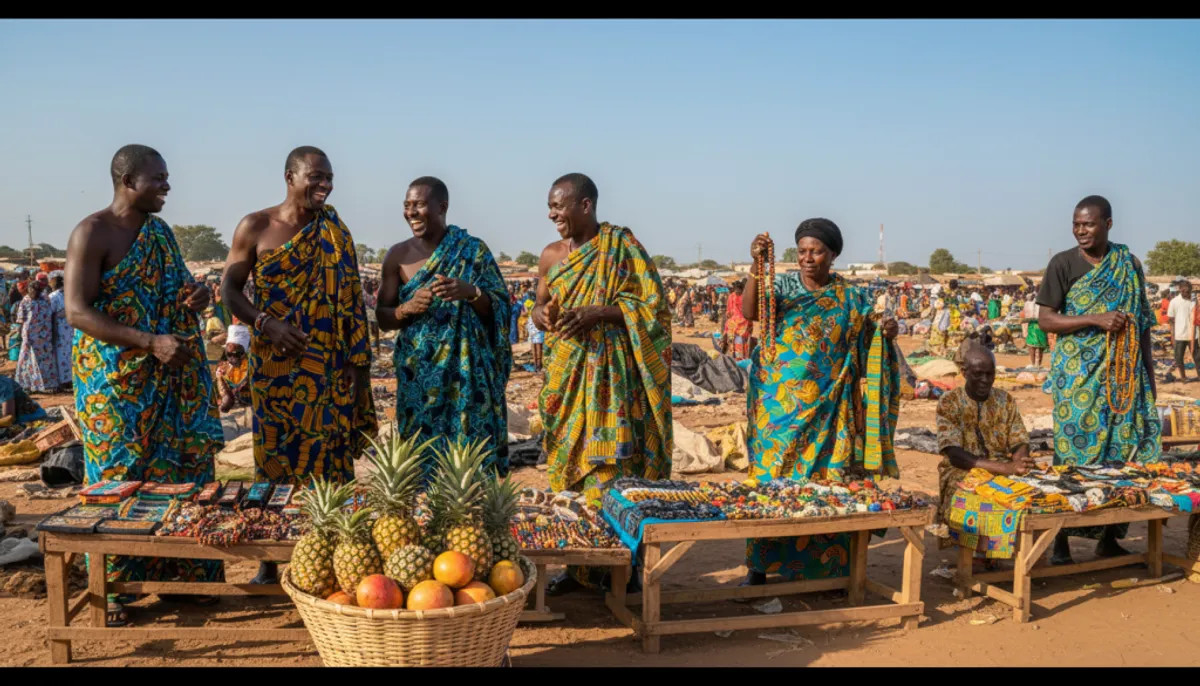
Strategically positioned on the Atlantic coast, this state shares its borders with three Francophone neighbors. This situation makes it a unique crossroads of exchanges and influences.
The local population, welcoming and proud of its heritage, has managed to preserve its customs while embracing the contemporary world. This duality makes its society so exciting to discover.
This ultimate guide will accompany you through all aspects of this culture. From pre-colonial history to the study of colonial history and modern artistic expressions, you will discover why it fascinates travelers and anthropologists alike.
Key Points to Remember
- Ghana is a West African nation with about 30 million inhabitants.
- Its territory is bordered by three Francophone countries: Côte d'Ivoire, Burkina Faso, and Togo.
- It has a southern coast along the Gulf of Guinea (Atlantic Ocean).
- Its area is 239,460 km², divided into 10 administrative regions.
- Ancestral traditions coexist harmoniously with modernity.
- This culture represents the entirety of practices of its population and diaspora.
- It is a cultural crossroads with varied and fascinating influences.
Introduction to Ghanaian Culture
This guide invites you to explore the many facets of a vibrant and complex society. We will traverse together its traditions, history, and modern evolution.
Definition and Scope of the Guide
Our goal is to provide detailed and organized information. This journey covers historical foundations and current artistic expressions.
You will understand how this society was built. You will also see its adaptation to today's globalized world.
The country offers a captivating case study. It was the first sub-Saharan state to gain independence.
Objectives and Interest for the Reader
This site serves as a reliable reference for all. Whether you are a student, traveler, or simply curious, you will find answers here, including a user guide for the culture pass.
The approach is holistic. It goes beyond clichés to examine linguistic, religious, and social dimensions.
You will develop a nuanced appreciation of this identity. It preserves its roots while playing an important role on the international stage.
| Field | Traditional Aspects | Contemporary Aspects |
|---|---|---|
| Languages | Ethnic languages, proverbs | Use of English, media |
| Beliefs | Ancestral rituals, symbols | Religious syncretism |
| Arts | Kente textiles, sculptures | Film, modern music |
| Politics | Pre-colonial structures | Democracy, international relations |
Ghana has been an associate member of the Francophonie since 2006. An office of the Alliance Française is present in Accra, illustrating these cultural exchanges.
Historical Origins and Colonial Influences
The historical roots of Ghana run deep into a past rich in empires and trade exchanges.
From the Pre-colonial Empire to Portuguese Colonization
Long before the 13th century, powerful kingdoms like Fagomba and Mamprusi thrived. They established sophisticated political structures.
These states controlled vast territories and crucial trade routes. Their power shaped social organization for many years.
In the 14th century, the kingdoms of Dagomba and Gondja took over. This pre-colonial period was marked by great stability.
Portuguese explorers arrived in the early 15th century. Impressed by the gold, they named the region Gold Coast.
In 1482, they established the São Jorge da Mina trading post in Elmina. This marked the beginning of a European presence that lasted several centuries.
The British Legacy and the Path to Independence
The British consolidated their grip in the 19th century. They acquired Danish forts in 1850 and Dutch forts in 1871.
This colonization imposed the English language and lasting institutions. It profoundly transformed the local political landscape.
Independence was proclaimed in January 1957. Under the charismatic leadership of Kwame Nkrumah, Ghana became the first independent state in black Africa.
On July 1, 1960, the Republic was officially established. Nkrumah, elected president and nicknamed Osagyefo (the Redeemer), carried a pan-African vision.
These years of transition forged a complex legacy. It blends British influences with a strong national assertion.
Languages and Ethnic Identities
Ghana presents a linguistic landscape of remarkable diversity, with more than eighty local languages. This sonic richness is a direct reflection of the ethnic mosaic that composes the country.
Each community finds its voice here. Words weave the link between the past and the present.
Official and National Languages
English is the official language. A legacy of British colonization, it is used in administration, courts, and schools.
Nine national languages are recognized. These include Akan, Ewe, Ga, Dagbane, and five others.
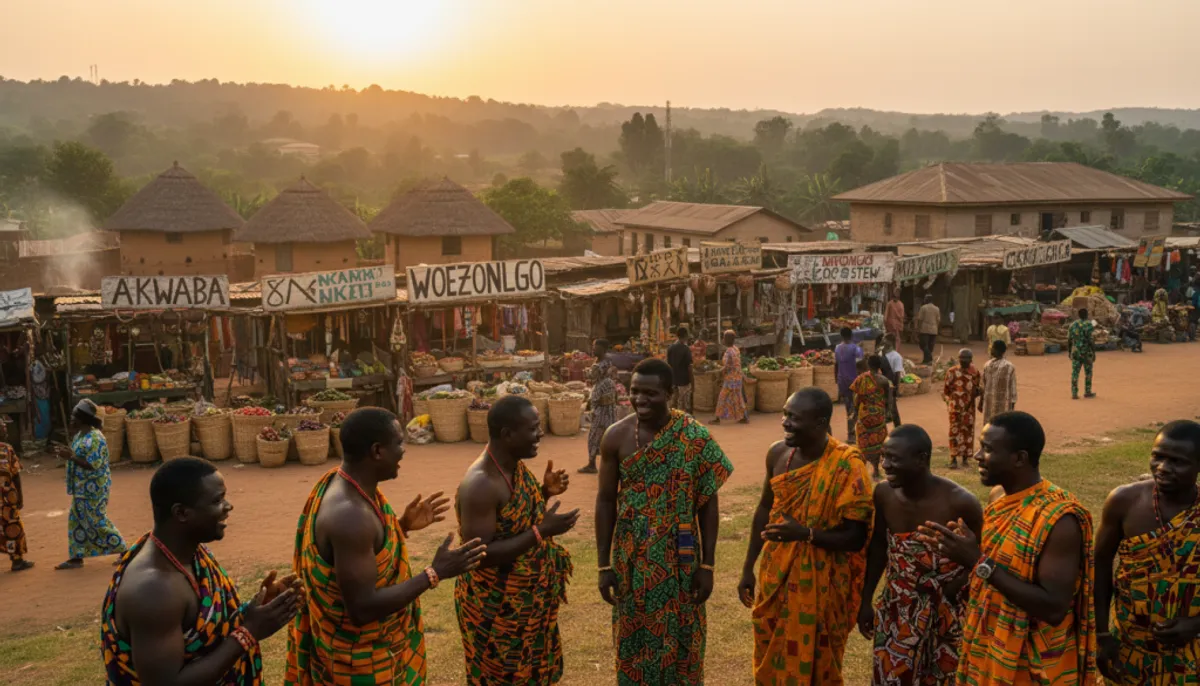
The Akan holds a special place. More than half of the population understands or speaks it.
A Linguistic and Cultural Pluralism
Six major ethnic groups structure the country. Their languages are divided between the Kwa family in the south and Gur in the north.
Hausa serves as a lingua franca in Muslim communities. French, however, remains very little used despite the Francophone neighbors.
This diversity is a strength. It also requires adapted educational policies to reinforce national unity.
| Language Family | Examples of Languages | Main Region |
|---|---|---|
| Kwa Languages | Akan (Twi, Fanti), Ewe, Ga | Center and South |
| Gur Languages | Dagbani, Dagaare, Mampruli | North |
| Mande Language | Bissa | Extreme North |
| Foreign Language | English | National (official) |
Traditions, Customs, and Ancestral Rites
Rites and myths form the invisible fabric that connects Ghanaians to their origins and environment. This intangible heritage still structures social and spiritual life.
Beliefs, Myths, and Legends
The character of Anansi, the clever spider, carries a famous name throughout the country. His adventures, passed down orally, teach wisdom and cunning.
The concept of Sankofa is equally fundamental. It invites learning from the past to better build the future.
Other figures populate the stories, such as Asanbosam or Obayifo. These myths explain the mysteries of life using the local language.
The Akuaba figurines, linked to fertility, testify to a complex belief system. This fact illustrates the connection between the visible and the invisible.
Traditional Rituals and Festivals
The year is marked by vibrant celebrations. The Akan calendar structures this traditional time.
Special days are dedicated to festivals like Aboakyer or Homowo. The latter commemorates the end of an ancestral famine.
The oral tradition, conveyed in Akan language, preserves these practices. Communities gather to honor their ancestors.
These rites strengthen social bonds. They are not mere folklore but the foundation of a living identity.
Each celebration follows a well-established cycle. It marks times of renewal and collective memory.
The transmission occurs from generation to generation. It ensures the longevity of these festive days.
This intangible wealth gives its name to a unique heritage. It still shapes the daily lives of millions of people.
Religion and Spiritual Practices in Ghana
In Ghana, religious beliefs weave a complex and colorful web, reflecting a pluralistic society. This spiritual diversity is a fundamental pillar of daily life.
Traditional Religions and Animism
Ancestral beliefs remain vibrant for a significant part of the population. They honor deities like Nyame and Asase Ya.
Animism perpetuates a deep connection with nature. Festivals like Adae celebrate this intangible heritage.
Christianity, Islam, and Religious Syncretism
Christianity largely dominates, especially in the southern regions. It encompasses Catholics, Protestants, and dynamic Pentecostal churches.
Muslims form a significant community, concentrated in the north of the country. The Hausa language facilitates religious exchanges there.
A fascinating syncretism often blends these influences. Many integrate traditional rites into their faith.
| Denomination | Estimated Distribution | Geographical Presence |
|---|---|---|
| Christianity | ~63% – 71% | Majority in the south and center |
| Islam | ~18% – 25% | Mainly in the north |
| Traditional Religions & Animism | >5% | In all regions |
| Others / No affiliation | ~5% | Dispersed |
This peaceful coexistence illustrates remarkable tolerance. It shapes the spiritual identity of the nation.
Arts, Crafts, and Architecture
The hands of Ghanaian artisans have shaped, over the centuries, works admired around the world. This artistic heritage, along with the preservation of artistic heritage, is of exceptional richness.Painting, Sculpture, and Textiles
The work with gold, inherited from the former Gold Coast, remains at the center of craftsmanship, showcasing the rich tradition of togolese craftsmanship. Adinkra symbols form a sophisticated visual language where each motif carries a name and a philosophy.
Two artistic expressions stand out particularly:
- The weaving of kente, a colorful textile with geometric patterns that tell a story.
- The figurative coffins from the Kane Kwei workshop, celebrating the life of the deceased in a unique way.
Contemporary artists like El Anatsui have brought this art to the international stage. Their works are exhibited in the world's greatest museums.
Traditional and Modern Architectural Heritage
Architecture offers a journey through time. Traditional Ashanti buildings constitute a UNESCO World Heritage Site.
Along the coast, colonial forts like Elmina, dating back to the 15th century, are major witnesses to the history of Senegal and West Africa. They are also classified as World Heritage.
Modern architecture is represented by figures like David Adjaye. The National Centre for Culture in Kumasi is a key site for Ghanaian artists.
Over the last decades, creativity has continually renewed itself. It draws from roots hundreds of years old while looking to the future.
Ghanaian Cuisine: Flavors and Traditions
A gastronomic exploration in Ghana reveals a symphony of tastes where traditions and local ingredients harmonize. This cuisine forms a living heritage, appreciated in all the languages of the country.
Traditional Dishes and Local Ingredients
Yam holds a place of honor. It is transformed into fufu, a national dish consumed with spicy soups.
Other specialties illustrate this creativity. Kenkey, waakye, and kelewele are delicious must-haves.
This culinary fact unites communities. In terms of seasonings, peppers, tomatoes, and onions create powerful flavors.
Regional Influences and Culinary Diversity
Geography strongly influences menus. The north favors grains and grilled meats, such as suya.
The coastal south, on the other hand, celebrates fresh fish and seafood. This diversity is part of its charm.
Festivals dedicated to yam punctuate the year. They renew community ties around this sacred tuber.
Finally, this gastronomy shares similarities with its West African neighbors. Yet it retains a distinct and flavorful identity.
Sports, Media, and Entertainment
The cultural dynamism of Ghana expresses itself with a particular energy through its sports, media, and entertainment. These fields reflect a modern and connected society, influencing the ranking of advertisements that showcase this vibrant culture.
Popular Sports and Festive Events
Football reigns supreme in the hearts of Ghanaians. The Black Stars, the national team, have shone in several World Cups.
Other sports like basketball and athletics are gaining popularity. The country actively participates in the African and Commonwealth Games.
These international competitions take place every four years. They are moments of intense national pride.
Media, Cinema, and Performing Arts
The media enjoys remarkable freedom. In 2016, the country was ranked 26th worldwide for press freedom.
Television and radio broadcast in English and various local languages. Each program reinforces social cohesion.
Music is the vibrant soul of the nation. Highlife and hiplife are iconic genres born here.
Local cinema is experiencing spectacular growth. Talented directors tell authentic stories.
Dances like Azonto and Kpanlogo are constantly evolving. They blend ancestral traditions with modern movements.
This diverse artistic scene makes Ghana a major creative hub in West Africa.
In-Depth Exploration of Ghanaian Culture
Beyond clichés, Ghanaian society reveals complex dynamics between chieftaincies, diaspora, and education. This exploration shows how tradition and modernity shape daily life.
Everyday Ghanaian Culture: Identities and Modernity
Traditional chiefs exercise a power parallel to the state. They manage local conflicts and preserve the unity of communities.
On the rights front, the condition of women is evolving. Figures like writer Ama Ata Aidoo challenge structures while respecting values.
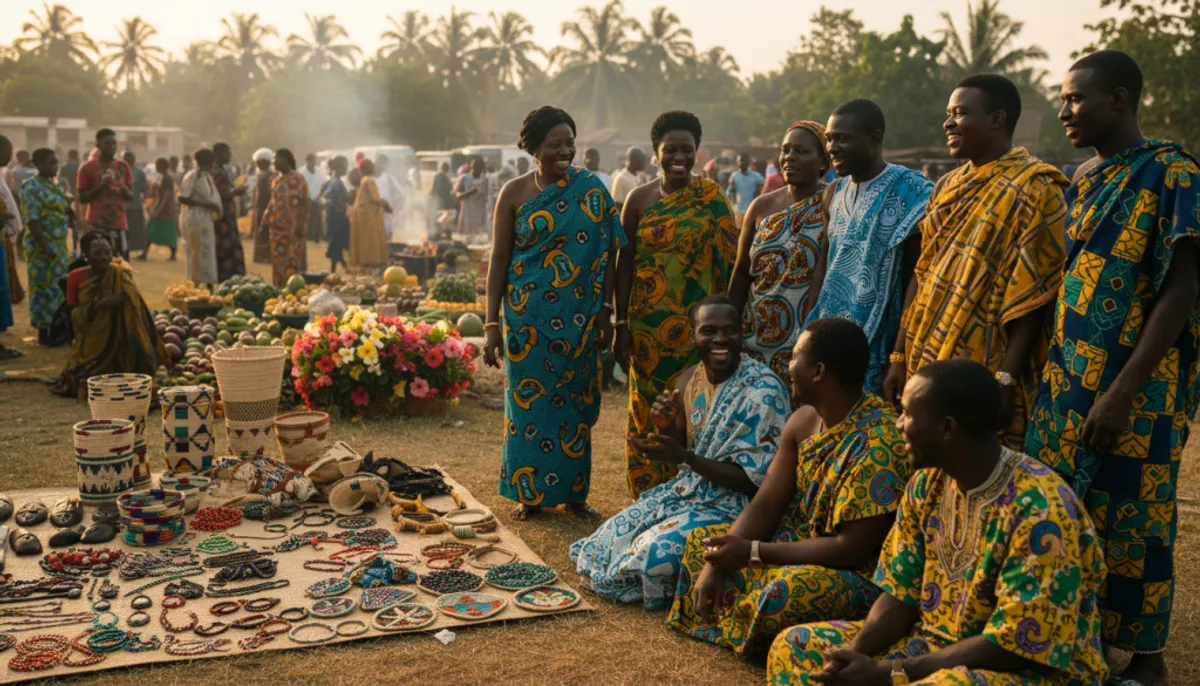
The palaver under the tree remains an ancestral method of resolution. It even inspires modern governance practices.
Social Dynamics and the Diaspora
The diaspora, dispersed around the world, maintains close ties with the country. It contributes to its economic and cultural development.
Education primarily uses English. The French High School in Accra offers an alternative for the international community.
Our literature, written in English, explores the tensions between yesterday and today. It gives voice to our realities.
The Academy of Sciences promotes research. It illustrates positive initiatives in the face of contemporary challenges.
| Social Aspect | Traditional Approach | Modern Approach |
|---|---|---|
| Conflict Resolution | Community Palaver | State Courts |
| Language of Education | Oral Transmission in Local Languages | School System in English |
| External Influence | Limited Regional Exchanges | Active Diaspora and French High School |
| Leadership | Authority of Traditional Chiefs | Elected Government and Ministries |
At the end of the account, the country navigates agilely between its heritage and the demands of the present time.
Conclusion
In conclusion, Ghana embodies a remarkable cultural synthesis, forged by a rich history and a vibrant diversity. This country, neighbor to Burkina Faso, Côte d'Ivoire, and Togo, is a unique crossroads where traditions and modernity meet.
Since its independence in July 1960, it has maintained a strong national unity. This cohesion exists despite a variety of languages and regions. The system of traditional and customary chiefs plays a key role every day.
This guide has covered essential dimensions. The information presented here gives you a comprehensive vision. The Ministry of Culture and these chiefs together ensure the transmission of this heritage.
This culture is not static. It evolves from day to day, adapting to the present time. Our site remains a valuable resource for deepening your knowledge of the country.
Ultimately, you gain a better understanding of this dynamic nation and its living heritage.
FAQ
What are the most spoken languages in this West African country?
English is the official language, used in administration and education. However, the population speaks many national languages, including Twi, Ewe, and Ga. French is also taught, particularly due to proximity to Burkina Faso and Côte d'Ivoire.
How does the diversity of ethnic groups manifest in daily life?
The richness of the country comes from its numerous groups, such as the Akan in the south and center, the Mole-Dagbani in the north, and the Ewe in the east. Each community brings its own customs, music, and traditional chiefs, creating a dynamic cultural pluralism that shapes national identity.
What are the most important traditional events of the year?
Several festivals mark the calendar. The Homowo of the Ga in May, the Aboakyer of the Efutu in April, or the Damba in the north are highlights. These days of celebration blend ancestral rites, processions, and music, honoring history and chiefs.
What colonial influences have marked the history of the country?
After the first contacts with the Portuguese in the 15th century, the territory became a British protectorate, known as the Gold Coast. The legacy of this period is visible in some institutions. The country gained independence in 1957 under the leadership of Kwame Nkrumah.
Is traditional religion still practiced today?
Absolutely. Although Christianity and Islam are widespread, traditional spiritual beliefs and practices remain alive. Many inhabitants practice syncretism, integrating animist elements into their faith. Symbols like Sankofa remind us of the importance of these roots.
Can you name an emblematic dish of the local cuisine?
Fufu is an essential national dish. It is a dough made from plantains and cassava, served with a soup that is often spicy, such as palm nut soup (abenkwan) or peanut soup (nkatenkwan). It perfectly illustrates the use of local ingredients.
What is the role of traditional chiefs in modern society?
Chiefs and queen mothers hold a highly respected moral and cultural authority. They are the guardians of tradition, land, and rites. They often play a mediation role at the local level, and their opinions are considered in politics and regional development.