
Welcome to a journey into the heart of one of the most vibrant traditions of West Africa. This ancestral heritage, carried by a large ethnic group, shines through its depth and diversity.
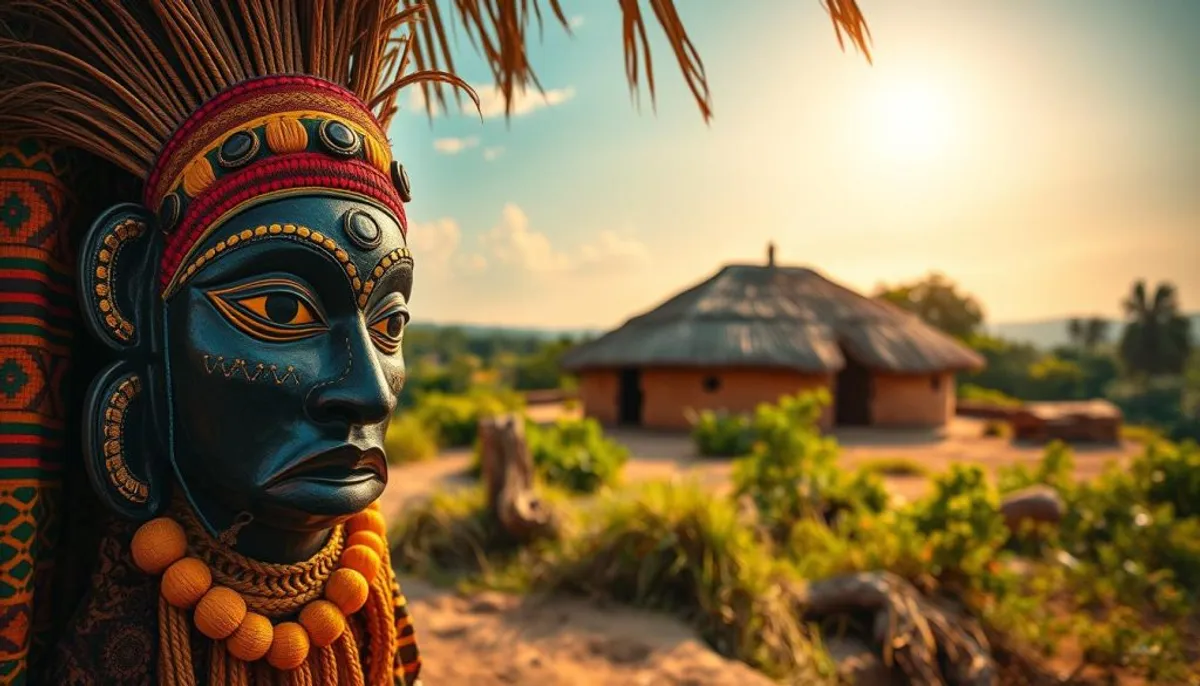
The Yoruba people have built a history marked by a flourishing economy and unique customs. Their millennia-old legacy continues to influence the region and far beyond.
We will explore together the many facets of this culture: its spirituality, artistic expressions, enchanting music, and social fabric. Each aspect reveals an exceptional richness.
Get ready to discover a universe where the past dialogues with the present. This introduction opens the door to a detailed exploration of this living treasure, where you can listen to France Culture podcasts to enrich your understanding.
Key Points to Remember
- Introduction to one of the most influential heritages of West Africa.
- Presentation of the Yoruba people as a major ethnic group.
- Highlighting a prosperous historical economy and unique traditions.
- Exploration of cultural diversity: religion, arts, music, language.
- Contemporary importance of this culture beyond its original borders.
- Friendly and informative tone to spark curiosity.
- Opening towards a detailed exploration in the following sections.
Introduction to Yoruba Culture
In the southwest of Nigeria lies the territory of an ethnic group with millennia-old traditions. The Yoruba people represent one of the most significant ethnic groups in this region.
This community has approximately 37 million members in Nigeria. It forms the majority of the area known as Yorubaland. About one million also reside in Benin.
Yorubaland is home to a population exceeding 42 million people. This ethnic group holds a prominent place in Nigerian society.
A diaspora of around 4 million people lives outside of West Africa. This community influences many cultures around the world. Its legacy continues to shape contemporary identities.
Origins and History of the Yoruba People
Let us discover together the fascinating myths that recount the genesis of this people, as well as the Haitian culture. The founding narratives transport us to ancient times when the divine met the earthly.
Creation, Mythology, and Cosmogony
According to tradition, the origin traces back to Odua, a deity associated with the creation of the earth. He established his residence in Ile-Ife, considered the spiritual cradle.
Mythology tells how Obatala descended from the sky. With the help of Orunmila, the god of wisdom, he used a five-fingered chicken to spread sand over the waters. This action formed the solid earth.
Obatala then shaped clay statues. In his intoxication, some took imperfect forms. This narrative explains human diversity in the Yoruba universe.
The Rise and Greatness of the Oyo Empire
Around 1600, the Oyo Empire emerged. This kingdom became a regional power between 1650 and 1850. Its military organization was key to its expansion.
In the 18th century, the empire invaded the kingdom of Dahomey. It also established trade exchanges with Europe. The decline began around 1750.
In 1860, the British Empire took control. Nigeria gained its independence on October 1, 1960. This date marked a new chapter in the history of the region.
Traditions, Faith, and Religion in Yoruba Culture
The divine pantheon of this tradition includes a multitude of entities with specific attributes. This complex belief system forms the foundation of the spiritual life of millions of believers.
At the top is Olodumare, the supreme god and creator of the universe. He delegated control of nature to over 400 deities, creating an inclusive system.
Deities and Sacred Rituals
Each deity has a well-defined domain of influence. The believers honor these entities through a vibrant worship.
Among the main figures are:
- Sango, master of lightning and thunder.
- Obatala, symbol of peace and creator of the world.
- Yemoja, goddess of the ocean and motherhood.
- Oshun, associated with love and rivers.
- Orunmila, guardian of the Ifa oracle and embodiment of wisdom.
The Yoruba religion is distinguished by its refusal to attribute absolute supremacy to a single deity. This religion values functional diversity.
The chants used during worship reveal the praises and attributes of each entity. This practice enhances the participation of the faithful and permeates their daily lives. In this context, the Z Sedan culture plays a crucial role in enriching rituals and celebrations.
The Arts and Cultural Expression: Music, Dance, and Visual Arts
Artistic creativity manifests with exceptional richness in this community. It expresses itself through three complementary dimensions that captivate with their symbolic depth.
Drums and Ritual Music
Music occupies a central place with its iconic drums. The dundun drum, hourglass-shaped, reproduces the tonalities of the language. It is considered the most powerful traditional instrument.
The sacred bààta drums form a family of three instruments. They reflect family structure and serve to invoke the deities. Their function is essential during religious ceremonies.
Traditional Dances and Festive Ceremonies
Each deity has its own specific choreography. The dances symbolize the nature and energy of the Orishas. They must be executed with rigorous precision.
Sacred dances like Egungun and Gèlèdè are particularly spectacular. They celebrate ancestral spirits and female power, respectively. These traditions maintain their vitality across generations.
Sculpture, Craftsmanship, and Bead Adornments
Craftsmanship excels in wood carving and ritual pottery. The magnificent bead adornments testify to ancestral know-how. These creations once served the ruling elite.
Coral beads were particularly prized during the Oyo Empire. These artistic elements transcend time with elegance. They continue to inspire contemporary creations.
The Role of Family and Yoruba Education
The transmission of ancestral values primarily occurs within the extended family circle. This social structure, called ebi, forms the foundation of community organization. The oldest man leads the family and ensures the preservation of traditions.
Intergenerational Transmission and Family Values
The elders are considered treasures of knowledge. They pass down traditions to the younger generations. This transmission occurs through stories, proverbs, and legends.
Women hold a respected place in this society. They become influential members within the husband’s family. Their authority grows with the time spent in their new community.
Holistic Education within the Community
Education begins in early childhood and lasts a lifetime. Children learn through observation and active participation. The entire village contributes to their training.
The concept of omoluwabi guides this educational approach. It aims to shape individuals of good character. Children integrate the rules of the community during shared activities.
This inclusive education values each individual. No one is left behind in this society. Women play a key role in teaching children within the family.
The Influence of the Diaspora on the Yoruba People
The global expansion of this community represents a remarkable phenomenon of cultural adaptation. Approximately 4 million people currently live outside their homeland.
This diaspora has settled in many countries around the world. Significant groups can be found in West Africa, America, and Europe.
| Region | Main Countries | Notable Communities |
|---|---|---|
| Latin America | Brazil, Cuba, Mexico | State of Bahia, Mexico City |
| North America | United States | Boston, New York/Harlem |
| Europe | United Kingdom | London |
| West Africa | Ghana, Togo, Sierra Leone | Urban communities |
The slave trade was the main cause of this historical dispersion. Between the 17th and 19th centuries, millions of individuals were forced into exile.
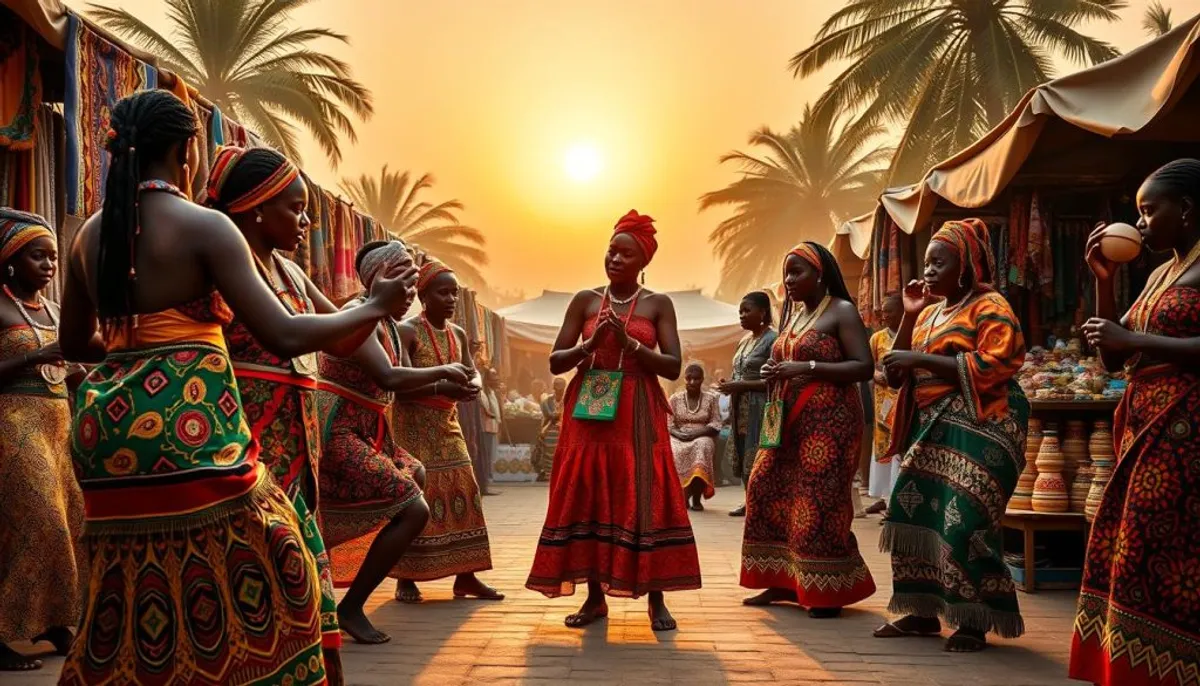
Traditional religion has experienced a surprising revival in the Americas. Rejected by some as idolatry, it now attracts millions of people. This revival is also part of a kawaii aesthetic that appeals to many followers.
These diasporic groups maintain vibrant connections with their heritage. They create hybrid expressions that enrich the global diaspora.
The Importance of the Yoruba Language and Its Linguistic Diversity
The language is a crucial pillar of the collective identity of this people. It belongs to the vast Niger-Congo family, sharing links with Igala, Ewe, Igbo, Nupe, and Fon.
The closest kinship exists with Igala. However, the Yoruba language retains well-defined characteristics. Its unique tonal system even allows drums to reproduce speech.
Evolution and Plurality of Dialects
A rich diversity of dialects and sub-dialects emerges from this tradition. This plurality reflects the geographical dispersion of the different groups.
Despite these nuances, unifying constants persist. Greetings like “E ku”, “Aku” or “Okun o” transcend regional differences. They form the basis of a remarkable linguistic unity.
| Dialect Type | Main Region | Distinctive Characteristics |
|---|---|---|
| Oyo | Center of Yorubaland | Considered the standard form |
| Ijebu | Coastal region | Particular pronunciation of vowels |
| Ekiti | Northeast area | Vocabulary influenced by neighbors |
The Yoruba language is imbued with spiritual references. Everyday expressions often invoke the deities. This particularity reflects the religious depth of the people.
An increasing number of children no longer speak this mother tongue. English is becoming dominant in many households. This erosion threatens the intergenerational transmission of heritage.
Preserving these dialects is crucial for maintaining cultural literacy. Each linguistic variation carries a unique part of this rich culture.
Impact of Yoruba Culture on West African Society
The cultural heritage of this people radiates far beyond its original borders. Its influence profoundly shapes West African society, particularly in Nigeria.
In the southwest of Nigeria, this tradition occupies a preeminent position. Many consider it the quintessence of Nigerian identity.
Modernity and Ancestral Traditions
The people face significant contemporary challenges. The traditional omoluwabi education is gradually being abandoned.
The values of honesty and discipline of the ancestors are eroding. Foreign religions bring new influences into the communities.
| Traditional Aspect | Modern Influence | Impact on Society |
|---|---|---|
| Omoluwabi Education | Western educational system | Cultural transmission threatened |
| Community Values | Growing individualism | Changing social relations |
| Religious Practices | Christianity and Islam | Syncretism and adaptations |
Influence in a Global Context
The Oyo Empire economically dominated the entire region. Its power influenced neighboring tribes for centuries.
The religious system has marked other ethnic groups in West Africa. Even some variants of voodoo bear its imprint.
The traditions find new life across the world. Millions seek to reconnect with their ancestors.
This culture attracts an international audience. Its legacy continues to inspire far beyond its original cradle.
Rituals, Festivals, and Symbols in Yoruba Tradition
Festive manifestations serve as living bridges between the visible world and the realm of spirits. This rich tradition includes at least nine annual celebrations that honor the cycles of nature, among which the Herblay bike rides provide a unique way to discover these cultural events.
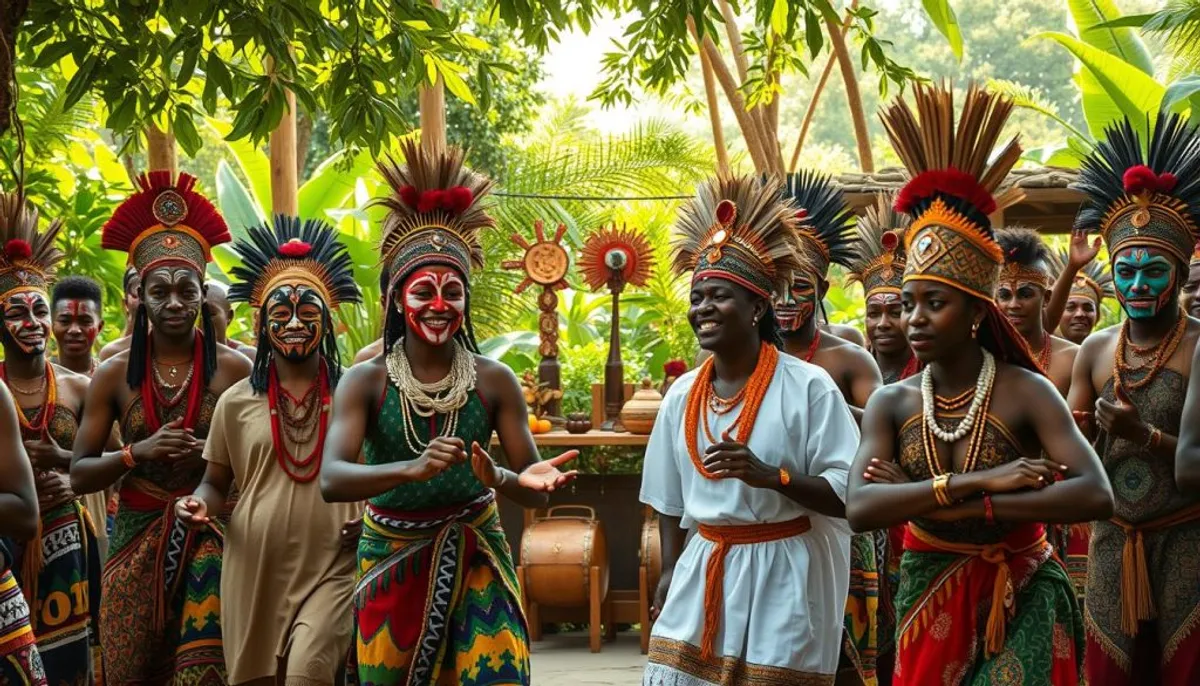
These events strengthen ties within the community while paying homage to the deities and ancestors. The organization of these rituals follows a precise calendar.
Celebrations and Iconic Ritual Dances
Among the major festivals, Odun Egun takes place during the dry season. This collective celebration of the revenants gathers all the Egungun masks from the same locality.
The Egungun ceremony lasts several days. It represents the visible manifestation of ancestral spirits revisiting the community. Drums, music, and dances accompany these appearances.
The Gèlèdè festival celebrates female spiritual power. It specifically honors elderly women, referred to as "mothers who can no longer conceive."
Symbols and Spiritual Meanings
The exhibition of masks has an essential educational function. It recalls the founding events that structured society.
Each color symbolizes a particular deity. White evokes Obatala, blue Yemoja, and green Orunmila. These visual codes reinforce the presence of myths in daily life.
These rituals offer the people an awareness of their place in the universe. They transform individual existence into a meaningful collective drama.
Conclusion
This immersion into Yoruba heritage reveals a remarkable harmony among all the elements of community life. The millennia-old tradition unites religion, family, and arts in a single symbolic universe. This rich culture continues to inspire millions of people around the world.
Despite contemporary challenges, the preservation of this heritage remains crucial. The Yoruba people face linguistic erosion and foreign influences. Yet, the resilience of this community attests to its adaptability.
We encourage you to continue this fascinating discovery. Every aspect of this culture offers valuable lessons on harmonious social organization. This living heritage deserves to be celebrated and passed on to future generations.
FAQ
What are the key elements of traditional faith?
Spirituality is based on the belief in a supreme god, Olodumare, and many deities, the Orishas. These entities represent forces of nature and aspects of life. Rituals, music, and dances are essential to honor these powers.
How is the family organized?
The family is the pillar of society. It extends beyond the parental core to include a wide network. Elders play a crucial role in educating children and transmitting the values and history of the group.
What is the role of drums in celebrations?
Drums, such as the bata, have a sacred function. They not only set the rhythm for dance; they serve as a language to communicate with the spirit world during ceremonies. Their sound is considered a vital force.
Where does this people primarily live today?
Millions can be found in Nigeria, in the southwest, and in neighboring Benin. A significant diaspora is also present in the Americas, particularly in Brazil and Cuba, where the heritage remains very much alive.
What do the colorful bead adornments symbolize?
Beads are much more than mere decoration. Their color, arrangement, and the number worn carry deep meaning. They can indicate the identity of a deity, social status, or spiritual protection.
How are traditions passed on to new generations?
Transmission occurs orally, within the community. Through stories, proverbs, music, and participation in festivals, the young learn their language, history, and the ancestral values that unite the people.