
Welcome to this journey into the heart of a fascinating heritage. Nestled in Southeastern Europe, this territory possesses a rich identity, forged by centuries of multiple influences. Its story dates back to very ancient times, marked by a deep Romanian origin.
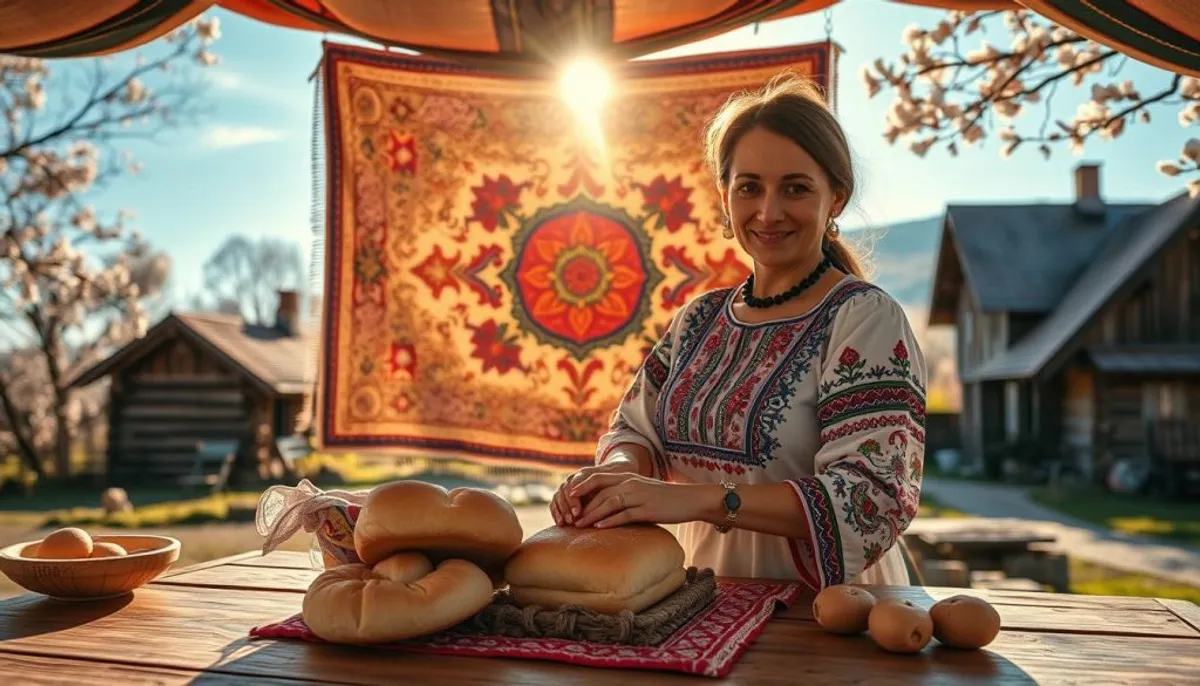
The unique geographical position of this country, crossroads of civilizations, has shaped its customs. This situation has allowed for a constant enrichment while preserving distinct particularities. You will discover how contact with different peoples has created a unique mosaic.
This universe encompasses many captivating aspects. From the Romanian language to folk melodies, along with delicious gastronomy and impressive architectural heritage, each element tells a story. Ethnic diversity adds an extra dimension to this exploration.
Our guide aims to offer you a complete and accessible dive. From the farthest historical roots to contemporary expressions, we will explore together the living traditions that animate the daily life of its inhabitants.
Key points to remember
- A rich heritage located at a cultural crossroads in Southeastern Europe.
- A unique identity influenced by various civilizations over the centuries.
- The Romanian language is a central pillar of this tradition.
- An ethnic diversity that contributes to the richness of the heritage.
- Living traditions, from music to cuisine, remain very present.
- A comprehensive guide to explore all aspects of this fascinating region.
Introduction to Moldovan culture
Discover the multiple facets of a living heritage that unites different communities in the same country. This wealth encompasses much more than the traditions of the Romanian-speaking majority.
All citizens contribute to this vibrant mosaic. Ukrainians, Gagauz, Bulgarians, and other groups bring their unique color.
| Cultural element | Description | Importance |
|---|---|---|
| Romanian language | Unifying pillar of the majority | Intergenerational transmission |
| Traditional arts | Diverse artistic expressions | Identity preservation |
| Cuisine | Flavors passed down for centuries | Strong community bond |
| Literature | Works by prestigious authors | Intellectual heritage |
Despite historical challenges, authentic traditions continue to enliven the daily lives of the inhabitants.
This nation represents a unique case in the post-Soviet space. Its Latin tradition contrasts with the dominant Slavic environment.
The population has preserved its heritage despite difficult periods. Young and old celebrate together during traditional festivals.
Since 1988, a new freedom allows for international influences. Creators are thus developing a more eclectic expression.
The language unites while diversity enriches. Each community adds its stone to the common cultural edifice.
This country therefore offers a remarkable example of harmonious coexistence. Its cultural future seems promising and dynamic.
The historical and identity roots
Let us dive into the historical foundations that have shaped this unique identity. This history dates back to the 2nd century BC, a decisive period.
Latin and Greco-Roman origins
The Roman domination in Dacia left a lasting legacy. The Latin language constitutes the current linguistic base. This foundational period structured the national identity.
After the withdrawal of the legions in 271, new influences emerged. Byzantium and the Slavic peoples enriched the Latin foundation. These contacts created an original synthesis.
Rural and pastoral heritage
The agricultural traditions of the Latinized Dacians persist today. Livestock farming and rural practices remain vibrant. This heritage forms an essential part of society.
The triple influence – Latin, rural, and Eastern – defines this culture. Orthodox religion, Byzantine architecture, and Slavic traditions complete the picture. This richness allows for the integration of various influences.
| Main roots | Characteristics | Current influence |
|---|---|---|
| Latin origins | Romance language, national identity | Linguistic and cultural base |
| Rural heritage | Agricultural and pastoral traditions | Contemporary social practices |
| Eastern influences | Orthodox religion, Byzantine architecture | Religious and artistic heritage |
The Russian and Soviet influence on tradition
The 19th century marked the beginning of a period of significant cultural transformations. The annexation by the Tsarist Empire in 1812 marks the start of this lasting Russian influence.
This era presents a dual face. On one side, intellectual exchanges enrich literature and philosophy. On the other, a policy of Russification gradually takes hold.
Russification and its effects
The Russian authorities impose increasing restrictions on local usage. As early as 1828, the administration prohibits the native language. Schools follow suit in 1866, then religious worship in 1871.
The Soviet period amplifies this influence. It formally tolerates the local language but imposes the Cyrillic alphabet. Toponymy and official history are rewritten.
| Period | Characteristics | Cultural impact |
|---|---|---|
| Russian Empire (1812-1917) | Administrative and educational Russification | Progressive linguistic restrictions |
| Soviet era | Socialist realism, cult of the proletariat | Transformation of artistic expressions |
| After 1988 | Return to the Latin alphabet | Heritage renaissance |
“Glasnost allowed for an unprecedented revitalization of authentic traditions.”
Cultural renaissance after 1988
The regained freedom opens the doors to international influences. The return to the Latin alphabet symbolizes this renaissance. The language regains its central place in society.
Creators are now exploring more eclectic horizons. This openness creates new dynamism while respecting the roots.
The essential role of languages in identity
The linguistic question represents a fundamental aspect of national identity. It reflects the political tensions between European orientation and Soviet heritage since independence.
The Moldovan and Romanian duality
The legal evolution of the official language shows a complex path. Under the USSR until 1989, only the term “Moldovan” was accepted.
From 1989 to 1994, the term “Romanian” became exclusive. Then both denominations coexisted until 2023. This duality symbolizes the identity choices of the republic.
The historic ruling of the Constitutional Court in 2013 establishes the equivalence between “Moldovan language” and “Romanian language”. The Declaration of Independence of 1991 takes precedence over Article 13 of the constitution.
Linguistic diversity and multilingualism
The current linguistic landscape combines several languages. Romanian-Moldovan is spoken by 78% of the population as the official language.
Russian is still understood by almost all inhabitants. Minority languages enrich this unique diversity.
| Language | Percentage of speakers | Status |
|---|---|---|
| Romanian/Moldovan | 78% | Official language |
| Russian | 8% (but understood by all) | Language of communication |
| Ukrainian | 6% | Minority language |
| Gagauz | 4% | Regional language |
| Bulgarian | 2% | Minority language |
The March 2023 law amended the constitution to definitively clarify the status. This reform ends three decades of terminological confusion.
This unique Romance language in the post-Soviet space creates a distinct identity. It reinforces historical ties with Latin heritage.
Moldovan traditions and popular festivals
A unique calendar harmoniously blends ancestral traditions and modern commemorations. This rich annual programming reflects the country's openness and its heritage diversity.
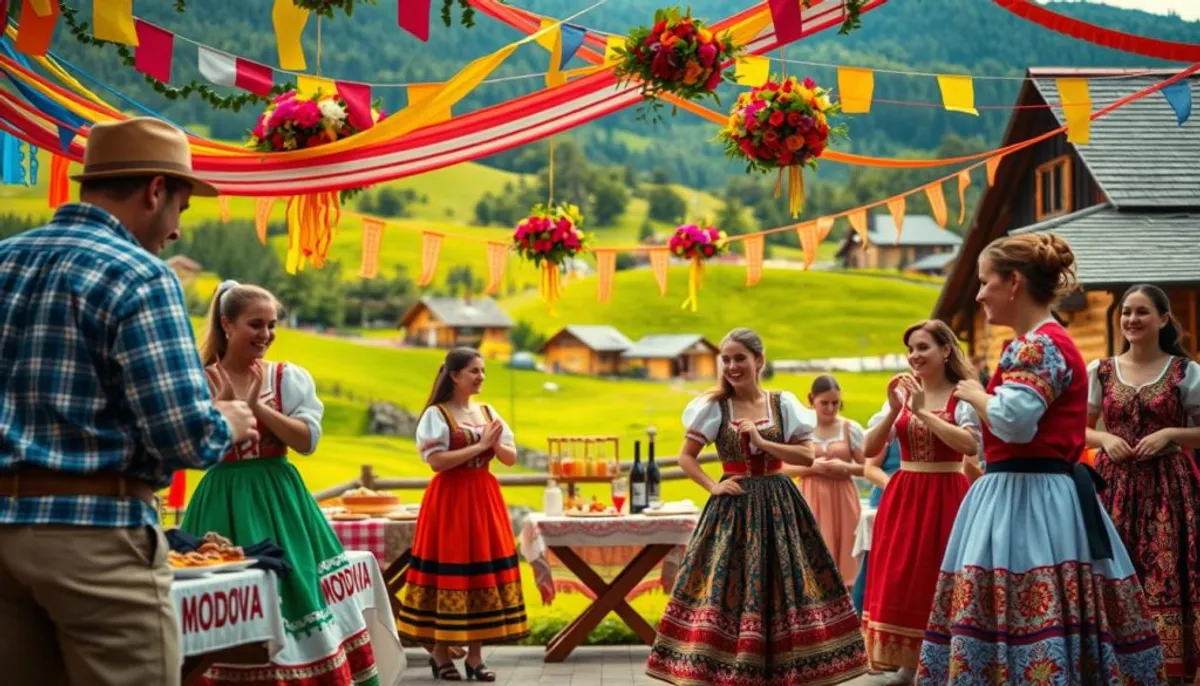
Festive calendar and traditional symbols
The Mărțișor marks the beginning of spring on March 1st. This pre-Christian symbol is given to women to celebrate renewal. The streets of Chișinău are then adorned with these little colorful talismans.
The Independence Day, August 27th, is the main national holiday. It commemorates the liberation of 1991. On August 31st, the Day of our language honors the restoration of Romanian.
Seasonal celebrations and legends
Orthodox Easter sees the resurgence of the ancestral art of decorated eggs. Christmas is celebrated twice, according to both Gregorian and Julian calendars. These religious traditions maintain a strong link with the past.
The legend of Mioritsa and the Colinde songs perpetuate the oral heritage. Despite the Soviet era, these customs have survived. They continue to be passed down through generations.
These Moldovan festivities create a vibrant collective identity. Each holiday tells a part of the national story. The Romanian language unites participants during these celebrations.
All together forms a living heritage that continues to evolve. The Moldovan traditions remain deeply rooted in modernity.
Architectural and religious heritage
The built heritage testifies to a past rich in challenges and creativity. This region preserves exceptional monuments that narrate its tumultuous history.
Monasteries, churches, and historical fortresses
The fortresses of Hotin, Soroca, and Tighina protected this strategic territory. They resisted Ottoman invasions for centuries. These military constructions still impress today.
The Orthodox tradition has a strong monastic component. The complexes of Butuceni and Căpriana were once multifunctional. They produced renowned wine and housed precious libraries.
The Soviet era severely damaged this religious heritage. Many sites were deliberately destroyed or abandoned. Gradual restoration is bringing these architectural jewels back to life.
The Ciuflea church in Chișinău illustrates the local Orthodox style. Its Byzantine influences create a distinctive aesthetic. Nearly 98% of the population follows this religious tradition.
Each church and monastery tells a unique story of resistance. Their conservation represents a permanent challenge for future generations. This heritage forms an essential part of national identity.
Arts and crafts: a living heritage
The skilled hands of artisans tell a millennia-old story through their creations. This popular craftsmanship represents an authentic expression passed down from generation to generation. Despite historical upheavals, these traditions persist with remarkable vitality.
Traditional costumes fascinate with their rich embroidery and vibrant colors. Worn during festivals, they illustrate the ethnic diversity of the country. The Moldovan-Ukrainian and Gagauz variations add their own character to this ensemble.
Traditional craftsmanship and contemporary creations
Ancestral techniques remain very much alive in several fields. Ceramics, textiles, leatherwork, and paper continue to be practiced. These skills are actively transmitted in the face of modernization.
Current artisans reinterpret traditional patterns with a modern sensibility. This approach creates a creative continuity between past and present. Contemporary works thus maintain their connection to the original culture.
The state actively supports this heritage through numerous events. Festivals, competitions, and exhibitions provide precise visibility to artisans. These initiatives also raise awareness among younger generations about their heritage.
The Romanian language unites artisans during these cultural celebrations. Each object created carries a part of the national identity. This craftsmanship remains deeply rooted in contemporary life.
Moldovan music and literature
Beyond monuments and feasts, the soul of a people vibrates in its words and melodies. These artistic expressions tell a deep and resilient story.
They unite generations around a precious intangible heritage. This culture of creation has managed to traverse the ages.
Iconic authors and storytellers
The literary tradition draws its roots from medieval chroniclers. Grigore Ureche and Miron Costin documented the past in Romanian.
Their work established the foundations of national storytelling. Dimitrie Cantemir, a sovereign and encyclopedist, embodies the intellectual openness of his time.
The 19th century sees the emergence of a golden age. Ion Creangă, a master storyteller, and Mihai Eminescu, a romantic poet, become unmissable figures.
Their work in Romanian remains admired classics. Modern literature continues with authors like Iulian Ciocan.
His novels, translated into French, explore contemporary themes.
The musical scene of yesterday and today
Traditional music retains a central place in social life. Young and old practice songs and dances during festivals.
This vitality testifies to a living and shared heritage. Folk melodies resonate during weddings and gatherings.
Even during the Soviet era, these traditions resisted. The inhabitants tenaciously perpetuated their musical heritage.
Today, this Moldovan scene remains a pillar of collective identity. It ensures a strong emotional link with the past.
Moldovan gastronomy: flavors of the past and present
The Moldovan table represents a true living museum of culinary traditions. It harmoniously combines the rural Dacian influences, Eastern contributions, and touches of Central Europe.
This cuisine reflects the agricultural abundance of the country. Each region adds its distinctive touch to ancestral recipes.
Traditional dishes and regional specialties
The Moldovans particularly enjoy Sarmale. These stuffed cabbage rolls are often accompanied by the polenta mămăligă.
The culinary diversity impresses with its richness. One discovers Ciorbă de burtă, grilled Mititei, and the delicious Plăcintă.
The winemaking tradition remains exceptional in this region. The Château de Mimi perpetuates a savoir-faire dating back to the monasteries.
Artisanal beverages complete this tasting panorama. Divin brandies coexist with fruit liqueurs like Vișinată.
The Romanian language unites diners around these dishes. These Moldovan recipes are naturally passed down in families.
Each dish tells a part of the country's history. The language of the recipes preserves this precious intangible heritage.
Education and heritage transmission
The educational system plays a fundamental role in preserving national heritage. It structures the transmission of values and traditions to younger generations.
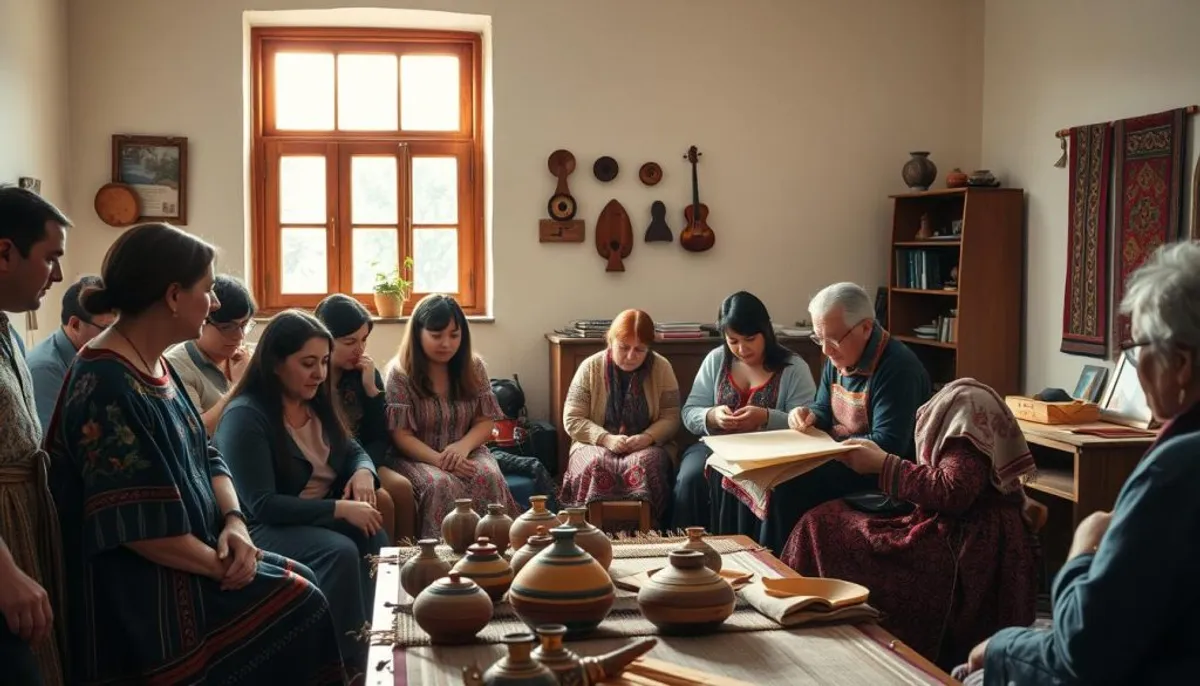
Moldovan education relies on the Academy of Sciences and a dynamic university network. The 2014 Education Code modernized teaching after independence.
The linguistic question occupies a central place in this system. Romanian-Moldovan remains the main language of instruction. Some schools also use minority languages like Russian or Gagauz.
The state actively integrates heritage into school curricula. National history and traditional arts are part of the education from preschool onward.
A Francophone tradition dates back to the Age of Enlightenment. Before 1989, the majority of educated Moldovans mastered French. Today, English is gaining ground despite the affiliation with Francophonie.
The educational sector faces several contemporary challenges. Youth emigration and underfunding complicate cultural transmission. Modernizing infrastructure while preserving quality remains a priority.
Society and evolution of mindsets in Moldova
Moldovan society has undergone profound transformation since its independence. This evolution affects all aspects of the daily life of the inhabitants.
Social identity and modernization
The population maintains a strong link with the Orthodox tradition. Nearly 98% of the inhabitants identify with this religious heritage.
This belonging primarily functions as an identity marker. Religious practice remains limited to major traditional holidays.
The country has experienced a notable mental shift since 1991. During the Soviet era, citizens had to display uniform camaraderie.
Today, the media reflects a new freedom of expression. Constructive criticism has now become an integral part of social life.
The post-Soviet transition has created several phenomena:
- Emergence of an active middle class
- Increase in social inequalities
- Significant emigration of the workforce
The creativity of the population expresses itself through new cultural forms. Roma communities develop unique architectural and musical styles.
These expressions blend traditional and modern influences. Bollywood, rap, hip-hop, and raï enrich the cultural landscape of the country.
This diversity illustrates the adaptability of Moldovan society. Ancestral traditions coexist harmoniously with contemporary innovations.
Contemporary challenges and international influence
In the face of current geopolitical challenges, this territory seeks its path. Since independence in 1991, a dual influence marks its development.
The relationship with France remains complex. About 8% of the population speaks French. This language retains an important place in education.
| Linguistic influence | Current status | Trend |
|---|---|---|
| French | Language of culture and education | Stable but competitive |
| English | Dominant economic language | Rapidly increasing |
| Russian | Important historical language | Repositioning |
Russian pressures persist within the region. The conflict in Transnistria illustrates these ongoing tensions.
The European attraction offers an alternative. However, the negative image in the Western world hinders this openness. The international influence remains therefore contrasted.
Political and administrative organization of the country
The administrative architecture of the territory is structured around several levels of governance. This parliamentary republic covers 33,700 km² in Southeastern Europe.
The central government is based in Chișinău, the capital with approximately 493,000 inhabitants. The territorial organization includes six major administrative regions.
The political system relies on three institutional pillars. The Parliament, the president of the republic, and the Prime Minister form the balance of powers.
The constitution of July 29, 1994, defines this institutional framework. It also governs sensitive linguistic issues within the state.
The geopolitical situation includes two regions with special status. Gagauzia and Transnistria present specific administrative challenges.
This organization reflects the complexity of the territory. The capital concentrates the main institutions of the government.
Articles 10, 13, and 35 of the constitution precisely frame the competencies. This structure ensures the political stability of the republic.
The ethnic and demographic dimension
The human landscape of this nation reveals a fascinating mosaic of peoples and traditions. In 2020, the total population reached approximately 4.0 million inhabitants. This remarkable diversity includes more than 25 different ethnic groups.
The territory hosts a rich variety of communities. Each group contributes to the national wealth with its specific traditions.
Diversity of groups and their cultural contribution
The Romanians form the majority group with 84.4% of the population. They are followed by several significant minorities. Ukrainians, Gagauz, and Russians represent the main communities.
| Ethnic group | Percentage | Main characteristic |
|---|---|---|
| Romanians | 84.4% | Founding majority group |
| Ukrainians | 4.4% | Present in border regions |
| Gagauz | 3.0% | Unique Orthodox Turkic-speaking people |
| Russians | 2.7% | Significant historical heritage |
| Bulgarian | 1.2% | Concentrated in certain areas |
The linguistic situation shows an interesting complexity. Although each community retains its mother tongue, Russian serves as a lingua franca. Almost all citizens understand this language of communication.
Cultural contributions enrich the national heritage. Bulgarian culinary traditions, Roma architecture, and Gagauz music create a true multicultural wealth. This diversity is the country's identity strength.
The impact of tradition on daily life
At the heart of everyday life, centuries-old customs maintain their influence on social behaviors. Nearly 98% of the inhabitants declare themselves of Orthodox tradition, participating in major religious holidays.
However, religious practice remains limited to major celebrations such as Easter and Christmas. These events structure the social and family calendar.
Two Orthodox Churches share the territory. The Romanian and Russian sometimes coexist with tensions. Some clergy members change allegiance according to political circumstances.
Since the disintegration of the USSR, the Orthodox Church has experienced a resurgence. It benefits from radio-television broadcasts and courses in public schools.
| Traditional aspect | Daily impact | Recent evolution |
|---|---|---|
| Orthodox religion | Calendar of family holidays | Increased media presence |
| Agricultural rhythms | Seasonal work in rural areas | Progressive modernization |
| Traditional hospitality | Social relations and welcome | Maintenance of values |
| Community ties | Solidarity and mutual aid | Adaptation to urban context |
High fees for sacraments are the subject of criticism. The clergy is sometimes the target of sarcasm in society.
In response, an alternative movement has developed. The pravoslavnici (“sincere believers”) seek a more authentic spirituality.
Beyond religion, traditions influence daily life. Legendary hospitality and family ties remain fundamental.
Contemporary challenges affect health and social protection. Urgent reforms are needed in these areas.
Fundamental rights have been guaranteed since independence. Freedom of expression and religion is part of the achievements.
Modernity and traditions coexist harmoniously. The internet and mobile technologies coexist with ancestral practices during family events.
Conclusion
At the end of this exploration, Moldovan identity reveals itself as a treasure preserved against all odds. Despite more than two centuries of Russian and Soviet influences since 1812, this country has maintained its unique Latin character.
The historical journey, from Dacian roots to independence in 1991, shows exceptional resilience. The brief union with Romania between the two world wars reinforced these ties.
The linguistic situation has clarified with the March 2023 law. Romanian is now recognized as the official language of the republic, while respecting minority languages.
The population continues to celebrate its traditions with vitality. Young and old dance and sing during festivals, proving the failure of attempts at denationalization.
The state is making considerable efforts to perpetuate this heritage. Festivals and competitions occupy an important part of the national cultural agenda.
This unique synthesis within the post-Soviet world deserves recognition. We invite French readers to discover this country with its rich Francophone heritage.
FAQ
What is the official language of Moldova?
The official language is Romanian. The term “Moldovan” is also used to refer to the local variant of Romanian spoken in the country.
Is Russian influence still strong today?
Yes, the influence of the Russian language and culture remains significant, particularly due to the Soviet period. Russian is widely understood and used in daily life and business.
Is the Republic of Moldova an independent state?
Absolutely. Moldova has been a sovereign state since its independence from the Soviet Union in 1991. Its capital is Chișinău.
What are the rights of citizens belonging to minorities?
The constitution guarantees the rights of minorities. Communities, such as Russian speakers, have cultural and linguistic rights, especially within the educational system.
What is the situation of Francophonie in the country?
French has a historical presence and is learned by many inhabitants. Moldova is an observer within the International Organization of Francophonie.
How has history shaped the identity of the country?
The complex history, marked by Latin, Ottoman, and Russian influences, has created a unique identity. World War II and the Soviet era particularly impacted the territory and its population.