
Welcome to the captivating world of Kiribati culture, one of the most authentic Oceanian traditions. This people have managed to preserve their heritage thanks to their exceptional geographical isolation.
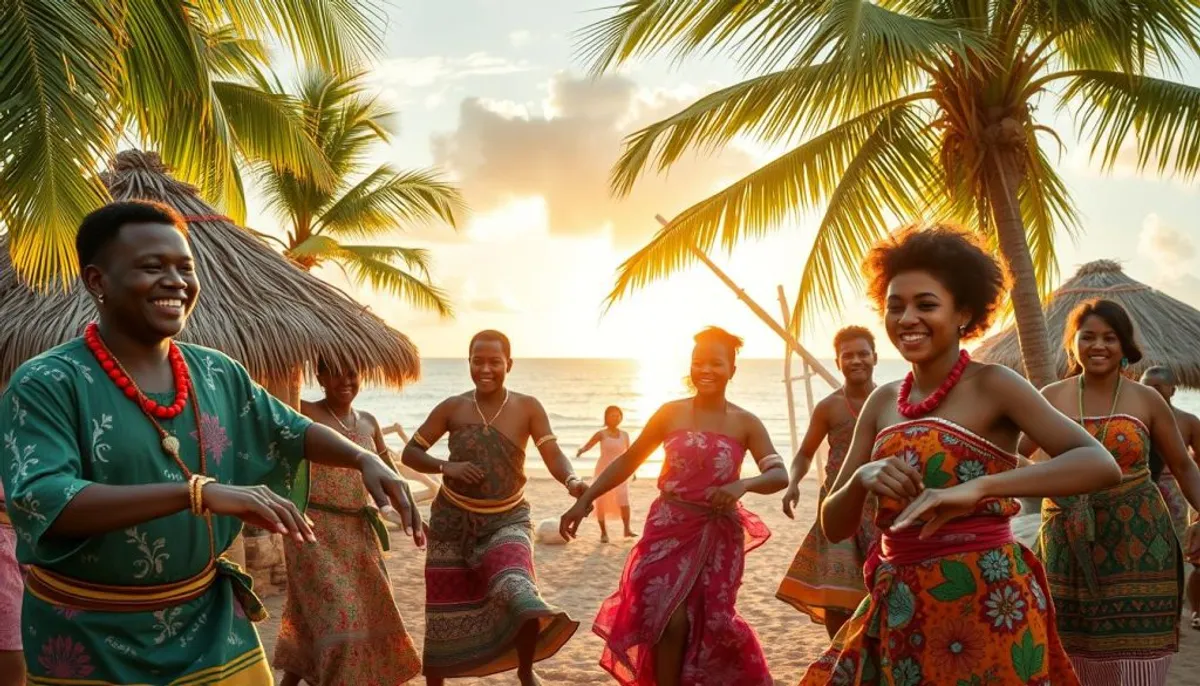
Kiribati is a republic made up of 33 islands spread across three main archipelagos. This country spans an immense maritime area equivalent to that of Europe.
Its dispersed territory makes it the first in the world to welcome each sunrise. This unique geography has shaped a remarkably homogeneous society.
The i-Kiribati heritage faces modern challenges such as climate change. Yet, it retains an extraordinary vitality that deserves to be discovered, including the rich paluan cultural heritage that reflects their unique identity.
This article invites you to explore all aspects of this fascinating culture. From ancestral traditions to contemporary practices, each element tells a rich story.
You will discover how the maneaba structures social life and how dances convey collective memory. An invitation to journey to the heart of the Pacific.
Key Points to Remember
- Kiribati is a Pacific island nation with 33 islands spread across three archipelagos
- The local culture is preserved thanks to geographical isolation and community cohesion
- The country spans an immense maritime area despite its small land masses
- Kiribati is the first territory in the world to see the sun rise each day
- Cultural heritage faces the challenges of climate change and modernization
- The maneaba (community house) is at the heart of traditional social organization
- This culture has maintained its identity despite colonial history and openness to the world
Introduction to Kiribati Culture
The history and heritage of the solomon islands unfolds over millennia of adaptation to a unique environment. The first inhabitants arrived over 4,000 years ago, marking the beginning of a fascinating human epic.
Historical and Geographical Context
The territory extends over three main archipelagos scattered across 3,220 km. This exceptional geographical configuration has shaped a particular way of life.
Austronesian navigators were the first to populate these islands. Their maritime expertise allowed for sustainable settlement on these coral lands.
Over the centuries, external influences enriched the local heritage. Contacts with Fiji and Tonga brought new traditions.
The Foundations of i-Kiribati Identity
Geographical isolation has fostered the development of a strong and homogeneous identity. Despite the distances, a common language and similar customs unite the population.
The te mataro (community assistance) is an essential pillar of society. This philosophy guides social relations and collective organization.
Adaptation to the coral environment has forged unique skills. Navigation between atolls requires an in-depth knowledge of currents and winds.
“Our strength comes from our ability to live together on these fragile lands.”
This rich history continues to inspire current generations. Traditional values coexist harmoniously with modern realities.
The i-Kiribati Traditions and Customs
Interpersonal relationships follow precise codes passed down through generations. This sophisticated social structure ensures harmony within the community.
Six fundamental principles guide behavior in the maneaba. Te bunna means mutual protection, while te kareka encourages listening to advice.
Te betia warns of dangers, and te boia promotes mutual affection. Te reita maintains good relations, and te baema strengthens group cohesion.
The sharing of resources illustrates this collective philosophy. The distribution of fish and copra follows customs established for centuries.
Ancients occupy a central place in decision-making. Their wisdom guides conflict resolution and preserves social balance.
These traditions evolve with modernity while retaining their essential values, including the enhancement of african traditions. Literacy coexists harmoniously with ancestral practices.
Daily life reflects this delicate balance. Wearing the pareo adheres to precise modesty codes during important ceremonies.
This way of life demonstrates how a society can preserve its identity. Every social gesture carries a profound symbolic value.
The Importance of the Maneaba in Daily Life
It is impossible to understand society without grasping the fundamental role of the maneaba in daily existence. This communal house represents the beating heart of every village, where all important decisions for the community are made.
The architecture symbolizes the openness of governance. The massive thatched roof rests on wooden pillars, creating a space without walls. Protocol requires the removal of shoes and a respectful posture.
The maneaba serves as a versatile framework for various activities. It hosts both council meetings and public celebrations.
| Function | Frequency | Participants | Typical Duration |
|---|---|---|---|
| Village Council | Weekly | Elders and chiefs | 2-3 hours |
| Traditional Ceremonies | Monthly | The entire community | All day |
| Conflict Resolution | As needed | Concerned parties | Variable |
| Welcoming Visitors | Ongoing | Tourists and guests | Overnight |
The symbolic value of this place goes beyond its practical function. It transmits ancestral knowledge and resolves disputes. Visitors can experience an authentic immersion through village stays.
For about 35 USD including meals, this unique experience allows sharing in daily life. Observing community debates offers a deep understanding of social organization.
The Dances and Artistic Expressions of Kiribati
Every gesture, every dance step carries the echo of the bakatibu ancestors. These movements constitute an essential form of artistic expression for the transmission of values.
The Gilbertese describe their dances as “bai n abara”, a thing from our land. This tradition finds its origins in ancestral practices.
Traditional Dances te kaimatoa
The te kaimatoa represents a spectacular male warrior dance. Inscribed in UNESCO's oral heritage, it impressed Robert Louis Stevenson in 1889.
Dancers replicate combat movements with remarkable precision. Their jerky gestures and rhythmic cries create a hypnotic atmosphere.
Songs and Popular Music
The te buki, a female dance, is characterized by particular grace. Fluid movements of the hands and hips accompany polyphonic songs.
The te katu, a traditional coconut wood drum, sets the rhythm for all performances. Its shark skin produces deep and enchanting sounds.
“These dances are the living language of our collective memory.”
These artistic expressions enliven important celebrations. They keep the connection with ancestral heritage alive.
Ancestral Rites and Ceremonies
At the heart of island identity are rituals that accompany every significant stage of human life. These millennia-old indigenous traditions create a bridge between generations.
The birth of a child triggers vibrant community festivities. The entire community gathers to sing, dance, and share toddy, this fermented sap symbolizing prosperity.
The transition to adulthood represents a crucial moment. Young people learn navigation, fishing, and essential social codes. This initiation makes them full members of the group.
Marital unions unite far more than two individuals. They create bonds between entire clans through gift exchanges and feasts that can last several days.
Funeral rites honor the deceased with night vigils and specific songs. They reflect the local conception of continuity between the living and ancestors.
Even Christianization has not erased certain ancient traditions. Fishermen still perform protective ceremonies before major sea expeditions.
“These rituals are the backbone of our collective memory.”
Each ceremony has a precise form passed down through oral history. They keep the heritage of previous generations alive.
Bilingualism and Language Policy
A permanent dialogue is established between the language inherited from ancestors and that which comes from elsewhere. This linguistic coexistence defines national identity.
The Gilbertese remains the national language spoken by 97% of the population. English retains its official status inherited from the colonial period.
Use of Gilbertese and English
The distribution of language use follows unwritten but well-established rules. English dominates administrative writing while Gilbertese reigns in oral communication.
| Language | Status | Percentage of Speakers | Main Use |
|---|---|---|---|
| Gilbertese | National Language | 97% | Daily Communication |
| English | Official Language | 30% (second language) | Administration and Education |
Impact on Education and Administration
Primary schools use Gilbertese as the medium of initial instruction. English becomes mandatory in secondary education.
In Parliament, debates often mix both languages. Laws are drafted in English but translated for the public.
This situation creates challenges for access to government services. Some citizens have a poor command of the technical English used in official documents.
Craftsmanship and Cultural Heritage
The masterful use of limited resources defines the excellence of traditional craftsmanship. Artisans transform coconut trees, pandanus, and shells into objects of remarkable functional beauty.
The te wa outrigger canoes represent the pinnacle of nautical ingenuity. Their construction requires an in-depth knowledge of woods and marine currents.
The art of weaving produces mats, baskets, and hats from dried pandanus leaves. This activity has been passed down from mother to daughter for generations.
| Type of Craft | Main Materials | Traditional Use | Transmission |
|---|---|---|---|
| Te wa Canoes | Coconut Wood | Navigation and Fishing | Master to Apprentice |
| Pandanus Weaving | Dried Leaves | Domestic Objects | Mother to Daughter |
| Traditional Armor | Coconut Fiber | War Protection | Specialized Artisans |
| Shell Jewelry | Polished Shells | Ceremonial Adornments | Family |
Coconut fiber armors with diodon skin helmets testify to an exceptional martial heritage. Weapons inlaid with shark teeth recall a bygone yet preserved era.
“Each object tells the story of our adaptation to this unique environment.”
This ancestral know-how constitutes an invaluable value for future generations. It represents the tangible memory of an ingenious island people.
Fishing: Economic and Cultural Pillar
The nourishing ocean has always governed the existence of the inhabitants of these Pacific islands. This essential activity structures daily life and represents a true economic pillar.
Ancestral techniques remain vibrant on atolls like Abaiang. Fishermen build stone traps at low tide that capture fish as the waters recede.
Fishing in outrigger canoes often involves several families. These collective expeditions in the lagoon allow for the pursuit of tuna and bonitos.
Christmas Island attracts sport fishing enthusiasts for bonefish. Packages at 2,100 USD per week generate significant income for the local community.
The sharing of catches follows precise rules inherited from tradition. Elders and large families are prioritized in distribution.
This maritime life faces major contemporary challenges. Fishing agreements with foreign fleets threaten local stocks.
Despite these pressures, fishing remains an essential vector for the transmission of knowledge. It perpetuates values of solidarity and respect for natural cycles.
The Spiritual and Religious Dimension in Kiribati
The contemporary spiritual heritage reveals a harmonious fusion between ancestral traditions and imported beliefs. Christianity has deeply rooted itself since its introduction in the 19th century.
| Denomination | Percentage | Historical Origin | Community Role |
|---|---|---|---|
| Roman Catholic | 53% | French Mission 1888 | Education and Health |
| Gilbert Protestant | 44% | Hawaiian Mission 1857 | Spiritual Leadership |
| Other Denominations | 3% | Diverse Influences | Religious Diversity |
Protestant missionaries arrived in 1857 with Hiram Bingham. French Catholics followed in 1888. Today, their legacy structures religious life.
Sunday services gather the entire community in collective fervor. These moments punctuated by polyphonic songs unite the villages.
A peaceful coexistence characterizes practices. Christian beliefs integrate respect for bakatibu ancestors. Maritime protection rituals persist in a Christianized form.
The church exceeds its purely spiritual role. It provides education through missionary schools. Health dispensaries and assistance to the needy complement its action.
This rich spirituality contributes to national identity. It unites the inhabitants around common values despite confessional diversity.
The Remnants of British Sovereignty
Modern institutions still bear the mark of nearly a century of British sovereignty. This colonial history has profoundly influenced the development of the country, including the significant impact of the spanish influence in the philippines.
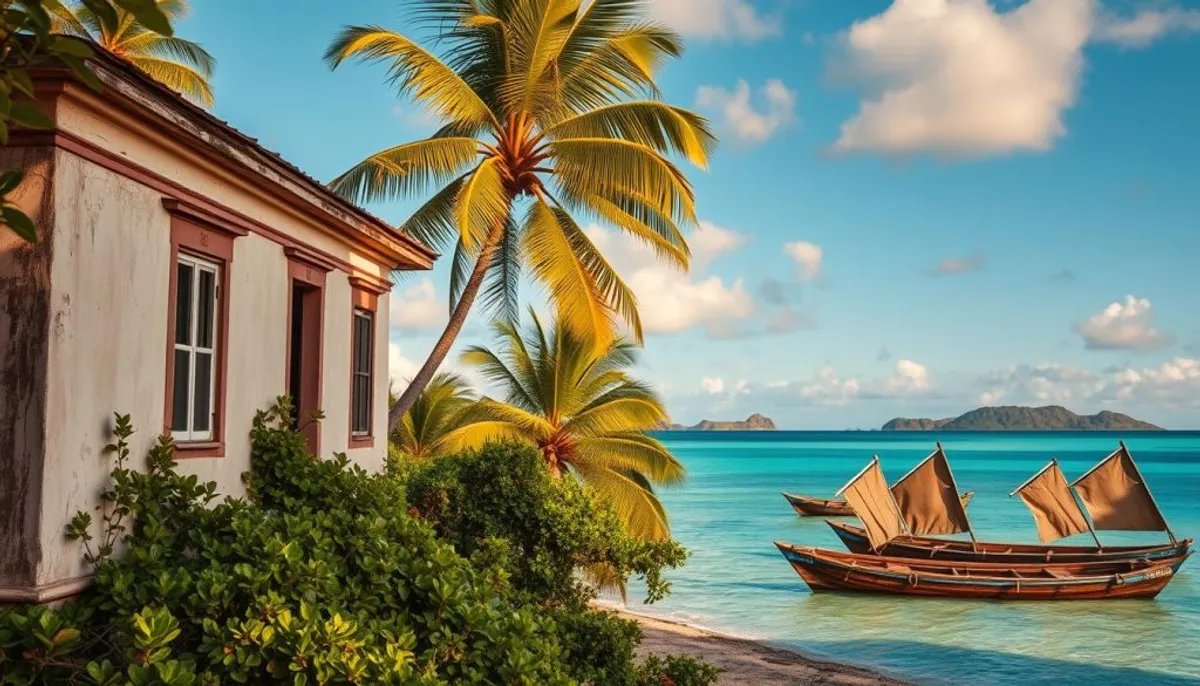
Colonial History and External Influences
The British protectorate was established in 1892. Mining on Banaba Island began in 1900 with great success.
The colony of the Gilbert and Ellice Islands was formed in 1915. During World War II, Japanese troops occupied the territory starting in December 1941.
The Battle of Tarawa in November 1943 was particularly bloody. The reconquest was completed in 1945 for Banaba.
Transition to Independence
Internal autonomy was introduced in 1963 after several years of preparation. In 1975, the Ellice archipelago separated to become Tuvalu.
Independence came on July 12, 1979. The young state maintained British institutions while valuing national identity.
English remained the official language of administration. The parliamentary system and Anglo-Saxon legal code were preserved.
This pivotal period left a lasting mark on the organization of the country. The colonial legacy coexists today with local traditions.
The Archipelagos and Their Role in Identity Building
Three island groups scattered across the Pacific Ocean define the geography and soul of this nation. These groups of islands separated by over 3,220 km from east to west form an exceptional maritime territory.
The Gilbert Islands represent the demographic heart with sixteen inhabited atolls. Tarawa, the capital, concentrates the country's main institutions and traditions.
The Phoenix Islands form a UNESCO marine sanctuary of 408,000 km². This nearly deserted territory symbolizes maritime sovereignty over a strategic oceanic space.
The Line Islands stretch to the UTC+14 time zone with Kiritimati. This largest atoll on the planet welcomes the first sunrise each day.
| Archipelago | Number of Atolls | Population | Identity Role |
|---|---|---|---|
| Gilbert Islands | 16 | Majority | Cultural Heart |
| Phoenix Islands | 8 | Almost None | Maritime Symbol |
| Line Islands | 8 | Minority | Eastern Outpost |
Dialectal differences exist between the islands of the North and South Gilbert. These nuances enrich diversity while maintaining national unity.
The geographical dispersion poses challenges for cohesion. Difficult communications and transport costs threaten the integration of the most distant atolls.
Despite these distances, a common language and similar traditions unite these archipelagos. The sense of belonging to a unique oceanic nation transcends geographical barriers.
Exploring the Gilbert, Phoenix, and Line Islands
Let’s discover the three archipelagos that make up this unique territory of the Pacific. Each group of islands offers a distinct travel experience, from lively atolls to preserved marine sanctuaries.
The Gilbert Islands form the living heart of the country with sixteen inhabited atolls. Tarawa, the atoll-capital, serves as a mandatory starting point for any journey. To the north, Abaiang can be reached in 2 hours by boat from Betio for 50-80 USD.
Abemama holds the remnants of King Tem Binoka and a remarkable artisanal tradition. Butaritari, the first island discovered by Europeans in 1606, enchants with its emerald lagoons.
The Phoenix Islands house the PIPA marine reserve, one of the largest in the world. Only the atoll of Kanton is occupied by a few guardians. Visitor permits are limited to less than 100 per year with a conservation fee of 200 USD.
The Line Islands to the southeast include Kiritimati (Christmas Island), accessible by weekly Fiji Airways flights from Nadi. This journey holds surprises: bonefish fishing and observation of 115 species of birds.
Each archipelago offers a different immersion in Oceanian authenticity. From populated atolls to preserved sanctuaries, exploration reveals all the diversity of these fascinating islands. Additionally, the vibrant fijian dance showcases the rich cultural heritage that enhances the experience of visiting these islands.
Focus on Kiribati Culture in Daily Life
Daily life on these atolls skillfully balances centuries-old traditions and modern realities in a surprising harmony. Daily life begins before dawn, when fishermen prepare their nets for the morning tide.
Parrot fish is cooked over a coconut shell fire. Tuna sashimi is dipped in fresh coconut milk. These ancestral techniques coexist with the use of imported rice.
Practical challenges are an integral part of existence. Tap water is rarely drinkable, so residents purify collected rainwater. Nighttime power cuts are frequent.
| Activity | Schedule | Location | Participants |
|---|---|---|---|
| Morning Fishing | 5 am - 7 am | Lagoon | Adult Men |
| Plantation Work | 8 am - 11 am | Taro Fields | Entire Families |
| Harvesting Toddy | 2 pm - 4 pm | Coconut Groves | Young Men |
| Maneaba Meeting | 6 pm - 8 pm | Community House | Villagers |
“Our way of living unites the past and the present in every simple gesture.”
Transportation illustrates this characteristic in-between. In Tarawa, a bus costs 1 USD while a taxi costs 5-8 USD. In isolated villages, walking and biking dominate.
Every evening, the community gathers at the maneaba to share toddy and exchange news. This social life keeps the link between generations alive.
The Language and Literature of Kiribati
Gilbertese is a fundamental pillar of national identity. This language of Micronesia unites the archipelagos with remarkable homogeneity.
Description and Codification of Kiribati
Missionaries played a crucial role in written codification. Hiram Bingham Jr. initiated this work in the 19th century.
Father Ernest Sabatier created the monumental Gilbert-French Dictionary (1952-1954). This work standardized spelling and preserved valuable vocabulary.
| Spelling Tradition | Origin | Main Characteristics |
|---|---|---|
| Protestant | Hiram Bingham (1857) | English Influence |
| Catholic | French Missionaries (1888) | French Base |
The national language features distinctive phonetic traits. It distinguishes between short and long vowels and uses the nasal consonant [ng].
Influence of Writers and Oral Traditions
Literature remains predominantly oral in this society. Legends are transmitted through songs and stories rather than writing.
Teresia Teaiwa represents an important voice in contemporary poetry. Her work has brought this artistic expression to international attention.
Sir Arthur Grimble popularized island traditions among the English-speaking public. Local schools today teach this rich linguistic heritage.
The Role of Media and Sports in National Identity
Radio Kiribati and football matches create bridges between distant atolls, reinforcing the sense of belonging. The Broadcasting and Publications Authority manages this essential public media that broadcasts in Gilbertese.
The weekly Te Uekera complements this traditional media offering. Taotin Media offers Kiri One TV with three reporters covering national news.
| Media | Type | Language | Reach |
|---|---|---|---|
| Radio Kiribati | Public | Gilbertese | National |
| Te Uekera | Weekly | Gilbertese | Tarawa |
| Kiri One TV | Television | Gilbertese | National |
| Social Media | Bilingual | International |
Facebook serves as a crucial platform for the diaspora established in Australia and New Zealand. This modern communication maintains ties with the home country.
Football and volleyball bring communities together during passionate competitions. The Bairiki stadium in Tarawa hosts major events.
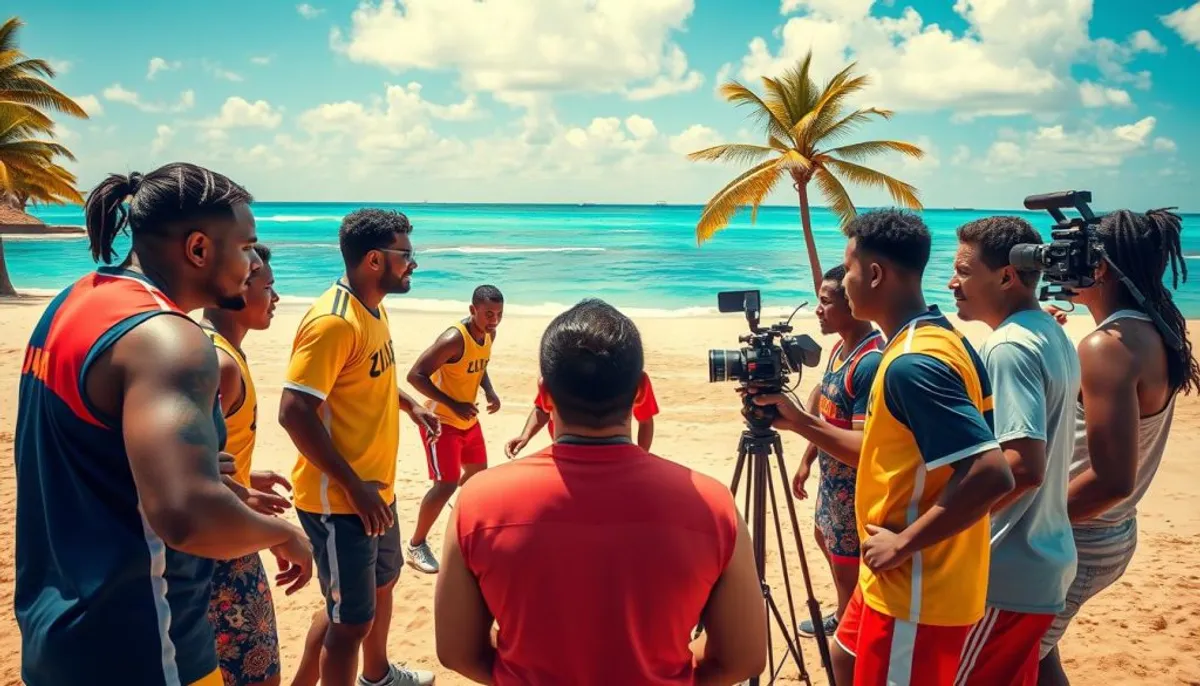
Olympic participation since 2004 places this small country on the world stage. Thomas Meameaa was the flag bearer during the Games.
The national anthem “Teirake kaini Kiribati” symbolizes this unique identity. It unites the population during sports and official celebrations.
Traveling and Experiencing i-Kiribati Life
Discovering this Oceanian territory off the beaten path offers a unique experience. This journey requires careful preparation but promises unforgettable moments.
Practical Tips for an Authentic Stay
Organizing your trip to these atolls requires careful planning. Fiji Airways flights connect Nadi to Tarawa three times a week.
The daily budget varies according to the type of accommodation chosen. Each option offers a different level of immersion in the local nature.
| Type of Accommodation | Average Price (USD) | Comfort Level | Cultural Immersion |
|---|---|---|---|
| Hotel in Tarawa | 120-150/night | Standard Comfort | Moderate |
| Family Guesthouse | 60/night | Basic | High |
| Village Stay | 35/night (full board) | Rustic | Total |
An essential tip: withdraw enough cash upon arrival. Only three ATMs exist in Tarawa.
Cultural Itineraries and Local Immersions
A seven-day tour of the Gilbert Islands allows for a complete discovery. Tarawa, Abaiang, and Abemama offer varied experiences.
The village stay is the best way to experience authentic immersion. Sharing the daily life of the locals creates lasting bonds.
“Living in a traditional village completely transforms the perception of travel.”
Respecting the maneaba protocol is fundamental. Removing shoes and adopting a respectful posture shows an understanding of customs.
This adventure in the Pacific atolls remains a rare and precious experience. Every visitor contributes to preserving this unique heritage.
Conclusion
The cultural adventure we have shared in these pages unveils the very essence of a preserved identity. This comprehensive article has explored the fascinating facets of a unique heritage in the world.
The i-Kiribati country demonstrates remarkable resilience in the face of contemporary challenges. Its ancestral traditions coexist harmoniously with modernity, offering a valuable lesson.
The profound meaning of this experience lies in community values and harmony with nature. These Pacific atolls deserve our attention before the ocean transforms them.
We encourage you to discover this exceptional heritage through responsible tourism. Every visit supports local communities and preserves this rich culture.
Thank you for reading this comprehensive article on Oceanian traditions. Once again, these islands remind us of the fragile beauty of island societies.
FAQ
What is the main language spoken in Kiribati?
Gilbertese, or te taetae ni Kiribati, is the national language. English is also widely used, especially in administration and schools. This form of bilingualism shapes daily life and education in the country.
How does life unfold on a typical atoll?
Life on an atoll is simple and communal. It often revolves around fishing, family, and meetings in the maneaba, the village's public house. It is an experience where nature and danish traditions rhythm the days.
What are the most important traditional dances?
The te kaimatoa dances, performed by groups of men, are highly valued. They tell stories and express values through powerful movements. These dances are a living heritage of the Gilbert Islands.
Is the country easy to visit for a traveler?
Traveling to Kiribati is a unique adventure. One must prepare well for the stay, as infrastructure is simple. For an authentic local immersion, it is advisable to go off the beaten path and meet the communities.
What role does fishing play in the economy and national identity?
Fishing is much more than an economic activity. It is a pillar of daily life and i-Kiribati identity. It nourishes the population and constitutes an essential part of cultural heritage, passed down from generation to generation.