
Welcome to the fascinating universe of this archipelago shrouded in mystery, located between Madagascar and the African coasts. The Comoros represent a true gem of the Indian Ocean, where various influences harmoniously blend.
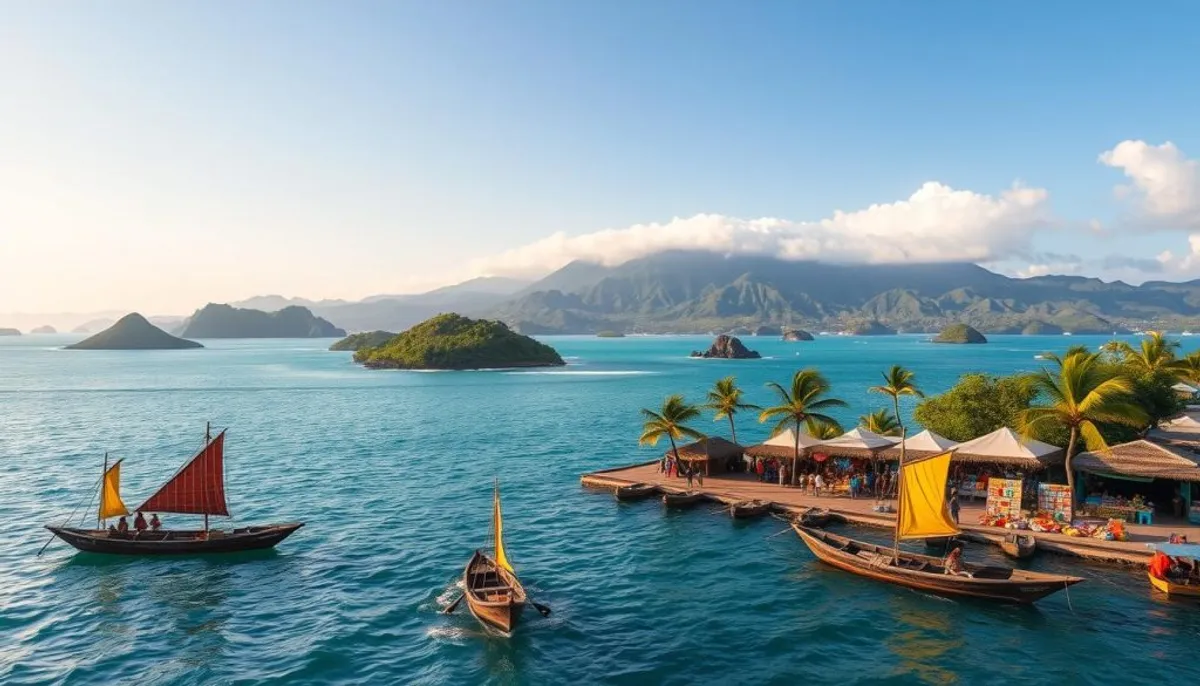
This small island state has approximately 1,100,000 inhabitants spread across four main islands. The Comorian culture constitutes a southern branch of the prestigious Swahili culture, rich in its Bantu heritage.
The archipelago consists of Grande Comore, Anjouan, Mohéli, and Mayotte. Each of these Comorian islands adds its unique nuances to this shared heritage, creating a distinct identity.
The Sunni Muslim religion profoundly structures society, practiced by over 99% of the population. This spirituality coexists with ancestral customs of African origin.
This introduction invites you to discover the multiple facets of Comorian culture: its historical origins, family traditions, festive ceremonies, and refined craftsmanship.
Key Points to Remember
- The Comoros form an archipelago of four main islands in the Indian Ocean
- The population is approximately 1.1 million inhabitants
- This culture represents a synthesis of African, Arab, and Indian influences
- The Sunni Muslim religion is practiced by 99% of the population
- Each island contributes to the richness of the common cultural heritage
- Ancestral traditions coexist harmoniously with religious practices
Historical Origins and Cultural Influences
This island group has historical origins marked by various cultures. The Comorian archipelago developed as a southern branch of the great Swahili tradition.
The Swahili, Arab-Muslim, and Indian Influence
The region was once evocatively named "Zanguebar." The islands share this rich heritage with the East African coast.
The gradual Islamization from the 9th to the 15th century profoundly transformed society. The architecture of mosques and religious practices testify to this even today.
Indian traders brought spices and artisanal techniques. The local cuisine incorporates dishes like pilau and samosas.
The Malagasy and French Contributions to the Archipelago
In Mayotte, nearly 20% of the inhabitants speak Kibushi. This Sakalava language highlights the importance of exchanges with Madagascar.
The French influence introduced the Western education system since the 19th century. These contributions coexist harmoniously with local traditions.
| Cultural Influence | Main Period | Main Contribution | Current Presence |
|---|---|---|---|
| Swahili | Since the Middle Ages | Social and linguistic structure | Fundamental |
| Arab-Muslim | 9th-15th century | Religion and architecture | Dominant |
| Indian | Historical trade | Cuisine and craftsmanship | Visible in daily life |
| Malagasy | Centuries of exchanges | Languages and traditions | Particularly in Mayotte |
| French | Since the 19th century | Education and administration | Modern coexistence |
This unique union of different cultures has enriched the archipelago without erasing its own identity. The Comorian heritage remains distinct while belonging to a larger regional ensemble.
Social Structures and Comorian Hierarchy
Social stratification is a fundamental element of Comorian identity. This rigorous organization structures relationships between people and defines their place in the community.
Age Groups and Hierarchical Classes
The society operates according to three main levels. At the top, the Wandru Wadzima hold the highest status after completing the grand marriage.
The Wanamdji form the middle class. These men aged 25 to 40 prepare for their ascension to the upper rank.
The age class system carries different names depending on the islands. This traditional organization governs village life.
The Role of Grand Marriage and Initiatory Rituals
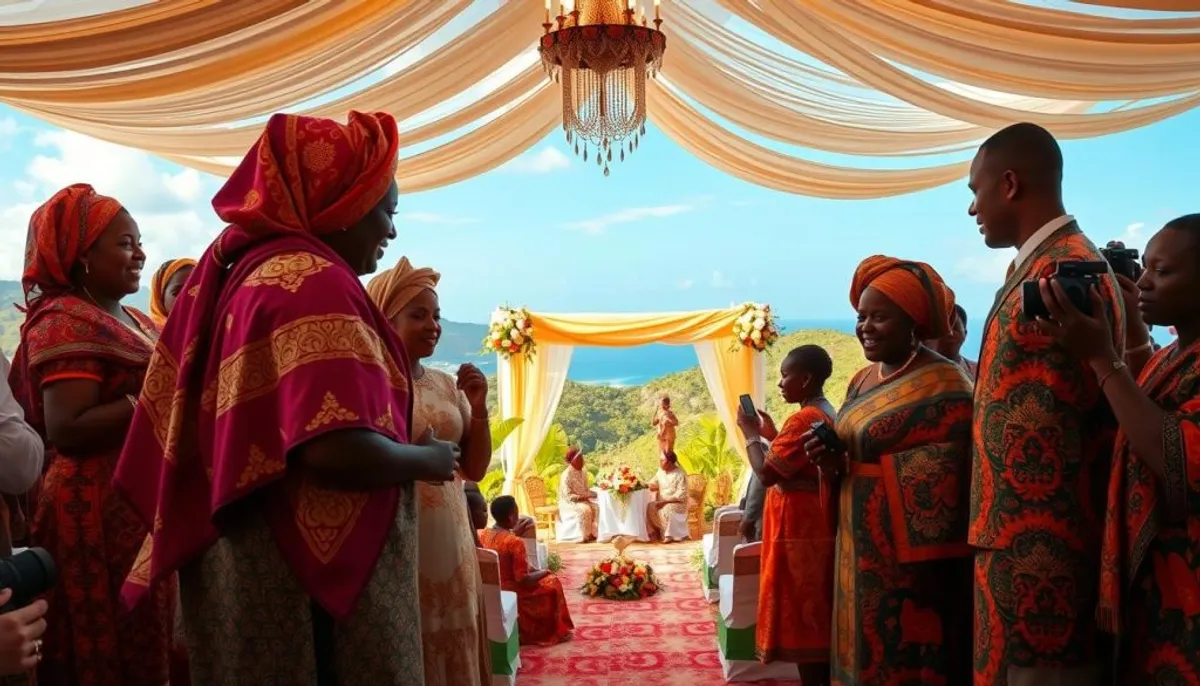
The traditional marriage represents the social culmination for any man. In Grande Comore, this ceremony lasts nine days with specific rituals each day.
The importance of this event extends beyond the private sphere. It confers a rank of notable and influences community decisions.
This system allows for a certain social mixing while maintaining hierarchy. It serves as a true social elevator for the entire male population.
Comorian Culture in Daily Life
In everyday life, the Comoros exhibit particularly original social structures. Daily life is marked by ancestral customs that shape relationships between individuals.
Family Habits and Matrilineal Customs
The family system is based on a unique matrilineal approach. The women hold ownership of the family home, and after marriage, the man comes to live with his wife.
This organization creates a particular social dynamic. The maternal uncle plays a fundamental role in managing the assets inherited by his nieces.
Men are obligated to materially support their sisters and nieces. This priority given to the maternal line reflects the importance of female bonds.
The tradition of hospitality holds an essential place in this society. Every visitor is welcomed generously, reinforcing community values.
Comorian families commonly practice adoption, creating expanded networks of solidarity. A child may call several women "mom" while knowing their biological identity.
Traditions, Ceremonies, and Festivities
The Comorian archipelago vibrates to the rhythm of its traditional celebrations. These events unite people and strengthen community bonds.
Weddings, Dances, and Traditional Ceremonies
The grand marriage represents the pinnacle of festivities. In Grande Comore, the anda lasts nine days with distinct rituals each day.
In Anjouan and Mohéli, the harusi offers a more concise yet equally significant version. The weddings mobilize the entire village community.
Traditional dances enliven every ceremony. The m’biu of Mayotte accompanies the festivities, while the Shengé creates a theatrical dialogue between men and women.
Religious and Cultural Festivals in the Comoros
The maoulides celebrate the birth of the prophet Muhammad. The "ides" mark significant moments in the Islamic calendar.
A unique tradition is the "tam-tam beef." At the end of Ramadan, zebu cattle parade through the streets in a festive atmosphere.
The Majilis gather men to discuss community affairs. These meetings reinforce each person's place in society.
Comorian Arts, Cuisine, and Craftsmanship
The Comorian way of life is vibrantly expressed through its gastronomy and traditional craftsmanship. These two domains represent a fundamental aspect of the island's heritage, where creativity and ancestral traditions intertwine.
Culinary Specialties and Local Products
The local cuisine offers a remarkable palette of flavors. Iconic dishes like madaba or ndrovi ya nazi reveal the harmony between local products and external influences.
Each island adds its particular touch to the recipes. Rice, cassava, and green bananas form the basis of this rich gastronomic culture.
Traditional Costumes, Clothing, and Craftsmanship
Traditional clothing tells a fascinating visual story. The kandu for men and the shiromani for women embody the elegance of clothing customs.
At the end of the day, one can observe artisans crafting kofias. Each island has its characteristic colors that identify its geographical origin.
These artistic expressions perfectly complement the picture of the culture of the archipelago. They give dishes and costumes their name and uniqueness.
The Impact of Islam on Comorian Society
The spiritual imprint profoundly shapes the social organization of the islands. This religion has structured relationships among the inhabitants for centuries.
Religious Practices and the Influence of the Chaféite Rite
The Quranic school plays a fundamental role in the education of children. They learn Arabic and Islamic principles there.
In Grande Comore, the ouléma maintain a delicate balance. They preserve both African traditions and Muslim practices.
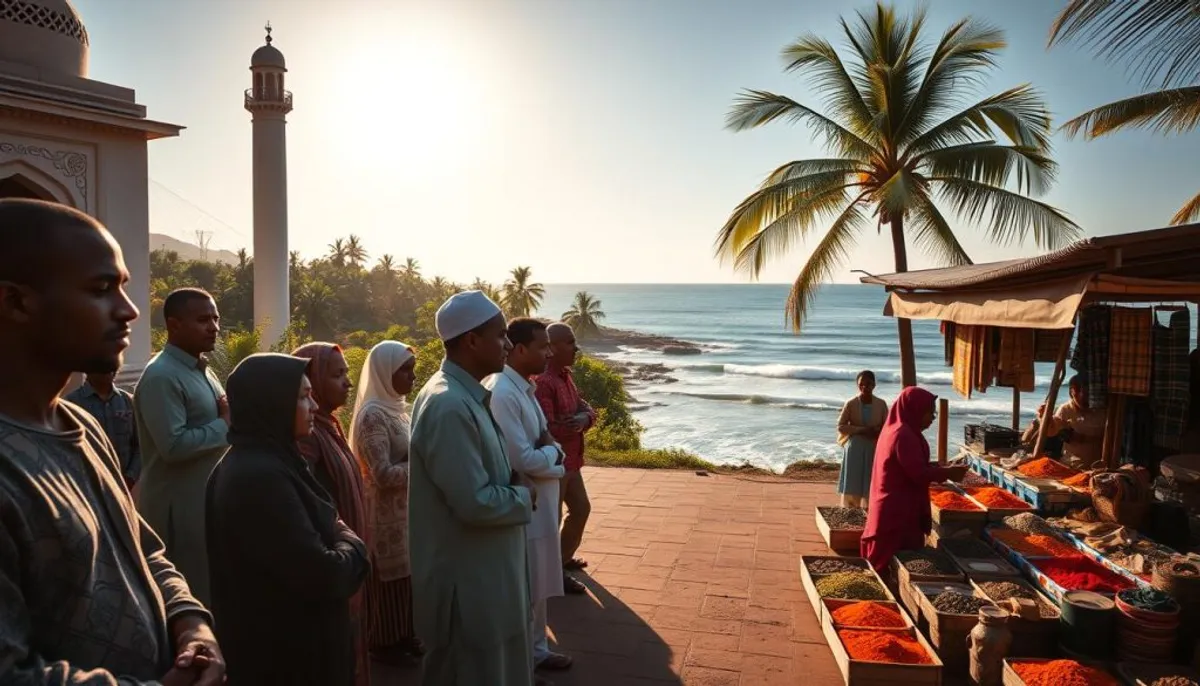
This unique union manifests during ceremonies. Some rites recall voodoo traditions while respecting orthodoxy.
Transformations in the Face of External Influences
The traditional balance has recently experienced upheavals. Saudi influence introduces a more rigorous form of Islam.
The constitutional revision of 2017 altered the status of Islam. It made it the state religion of the union.
In Mayotte, a gradual secularization is observed. French law is gradually replacing local Islamic law.
These transformations create tensions between generations. However, the importance of traditional links remains at the heart of concerns.
Conclusion
The Comoros offer a fascinating example of cultural preservation in the face of contemporary challenges. This archipelago maintains its unique heritage despite external influences.
The grand marriage remains at the heart of society, symbolizing the fulfillment of men and women. These festivities reinforce community bonds for several days.
Each island contributes to this rich tradition while preserving its specificities. The union of the islands creates a harmonious mosaic where every aspect finds its place.
The Comorians, whether in the archipelago or the diaspora, proudly pass on their values. At the end of this exploration, one understands the importance of this resilient community.
This culture continues to evolve while retaining its essence. The Comorians demonstrate how to preserve identity at the heart of modern transformations.
FAQ
What is the status of women in Comorian society?
Women play a fundamental role, particularly in the transmission of names and the management of family heritage. Their place is central within the community, especially in the matrilineal structures observed on certain islands of the archipelago.
Why is the grand marriage so important in the Comoros?
This ceremony is at the heart of social life. It allows one to acquire a high rank and strengthen bonds within the village. It is a crucial step for a man, marking his complete integration into adult life and society.
How is the influence of Islam manifested in daily life?
Religion permeates all aspects of existence, from daily religious practices to major celebrations. The Chaféite rite influences law and customs, providing a framework for family and community life across the islands.
What are the most significant festivities of the archipelago?
Aside from weddings, religious celebrations like Eid hold an essential place. They provide opportunities for gatherings, sharing traditional dishes, and dancing, reinforcing the sense of belonging to a rich and vibrant culture.
What role does oral tradition play in preserving heritage?
It is vital for transmitting history, values, and ancestral knowledge from one generation to the next. These stories keep alive the bonds that unite the inhabitants to their land and customs.