
At the heart of Southeast Asia lies a fascinating country marked by exceptional human richness. Laos represents a true mosaic with its 47 officially recognized ethnic groups.
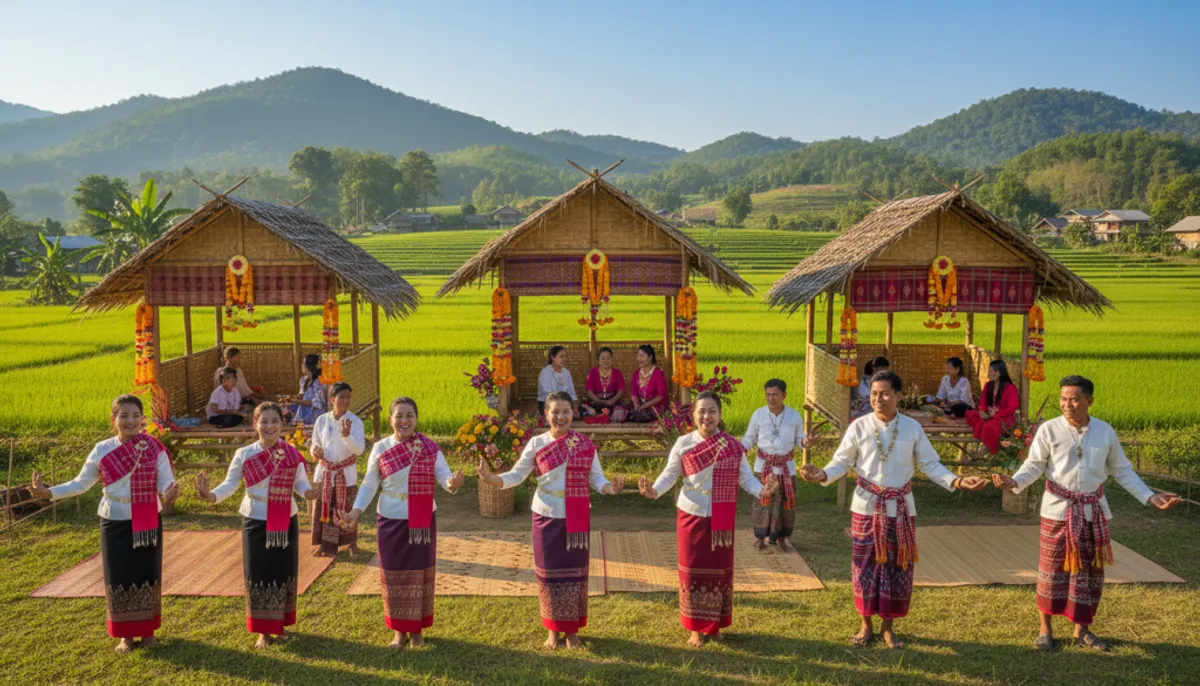
This incredible diversity manifests itself through 149 distinct sub-groups. With only 27 inhabitants per square kilometer, the nation has the lowest population density in the region.
The lao loum, or “Laotians of the plains,” make up the majority group. They represent between 50% and 60% of the total population. Their history is closely linked to the fertile valleys of the Mekong.
Their unique cultural heritage combines Theravada Buddhism and ancestral animist practices. This vibrant culture is expressed through refined craftsmanship and deeply rooted community traditions.
This introduction explores how this diversity of ethnicities shapes national identity. We will discover the historical heritage and spiritual customs that endure today.
Key Points to Remember
- Laos has 47 official ethnic groups divided into 149 sub-groups
- The population density is the lowest in Southeast Asia
- The Lao Loum represent the majority of the national population
- Their culture combines Theravada Buddhism and animism
- They primarily inhabit the fertile valleys of the Mekong
- Their heritage profoundly influences modern Laotian identity
- Ancestral traditions coexist harmoniously with modernity
The Historical Heritage and Origins of Lao Loum Culture
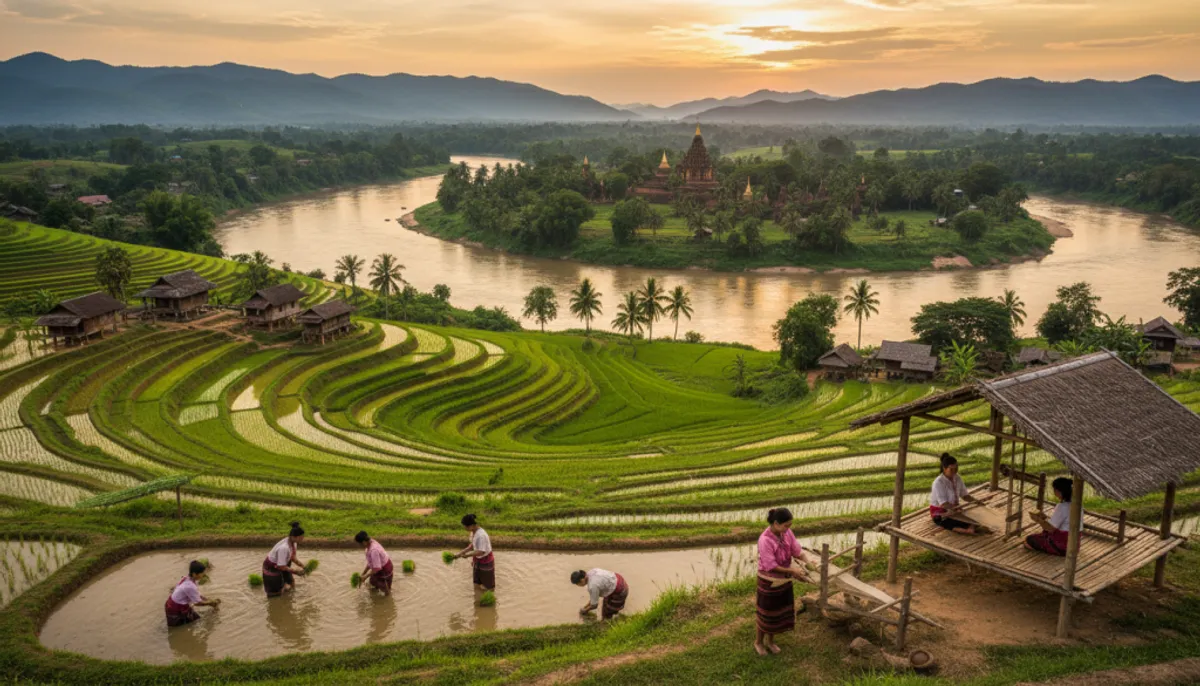
Over the centuries, the ethnic groups of the plains have gradually settled in the fertile territories of the Mekong. Their history dates back over a thousand years, marked by major migrations.
The Lao Loum: Migrations, Settlements, and Ancestral Traditions
As early as the 11th century, the first migrations began under pressure from Chinese dynasties. A larger wave occurred in the 13th century with the Mongolian expansion.
The ancestors of these populations chose the valleys of the Mekong for their agricultural potential. This settlement altered the distribution of inhabitants throughout the country.
Historical Influences and the Link with Ancient Indochinese Kingdoms
The linguistic diversity within these ethnic groups is remarkable. All share common origins in the Tai-Kadai family.
The following table presents the main groups that make up this population:
| Ethnic Group | Characteristics | Geographical Distribution |
|---|---|---|
| Tai Lao | Main group with Phouan, Kaleung | Central Mekong Plain |
| Tai Dam (Blacks) | Distinct communities | Northern regions |
| Tai Daeng (Reds) | Specific traditions | Mid-altitude areas |
| Phoutai | Particular dialect | Secondary valleys |
This rich linguistic mosaic has ultimately given rise to a common language. Modern Lao now enables communication among all inhabitants.
The Traditions, Rituals, and Customs of Laos
Religious customs, including karen customs, form the foundation of social and family life. This rich spiritual tapestry unites communities through ancestral practices.
Religious and Spiritual Practices: Buddhism and Animism
Theravada Buddhism is the main religion, practiced by 66% of the population. The faithful practice worship daily in local temples.
This spirituality coexists harmoniously with animism, honoring the spirits of nature. Spirit houses receive regular offerings in every village.
Traditional Ceremonies and Festivals, from Tak Bat to Baci
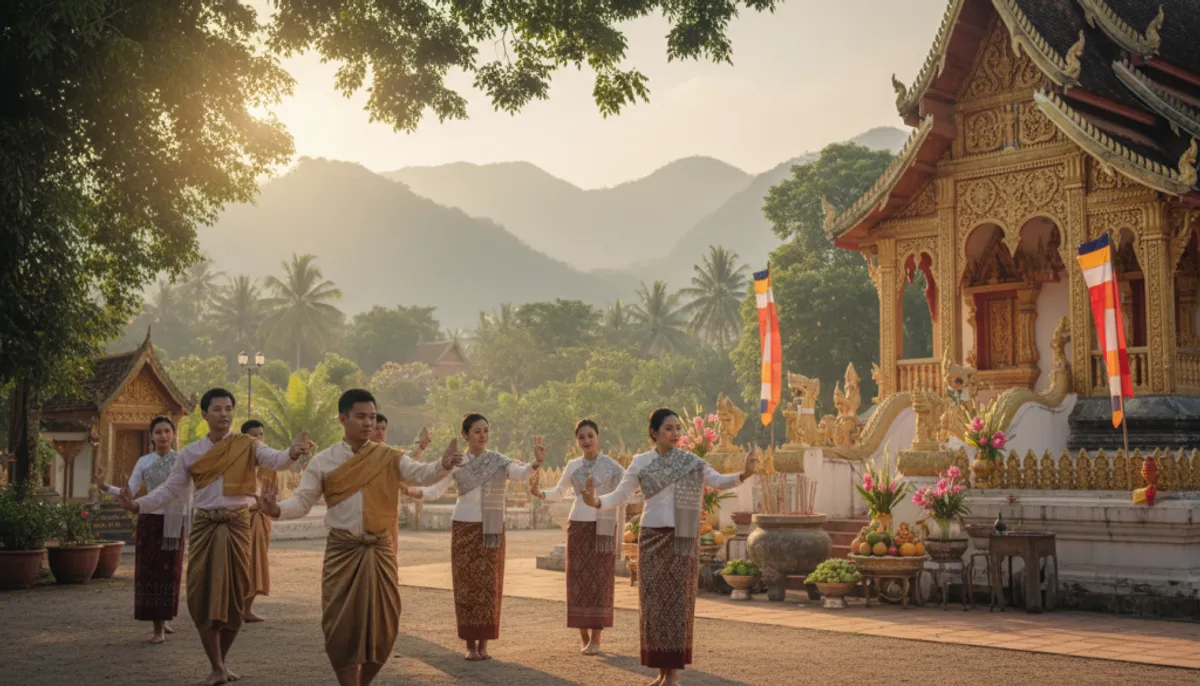
Tak Bat is a morning ritual where monks walk through the villages to receive alms. In Luang Prabang, this devotion-filled spectacle captivates visitors.
The Baci ceremony marks significant transitions in family life. White cotton strings symbolize the protection of the 32 souls of the body.
| Festival | Period | Meaning |
|---|---|---|
| Pi Mai (New Year) | April 13-15 | Purification and renewal |
| Boun Bang Fai | May-June | Call for agricultural rains |
| Boun That Luang | November | National celebration |
Craftsmanship and Traditional Arts
The skilled hands of artisans bring an exceptional heritage to life. This traditional khmer craftsmanship is an essential part of the collective identity.
Weaving, Sculpture, and Basketry: A Manual Heritage
The weaving of silk represents exceptional know-how. Women from the villages raise silkworms fed on mulberry leaves.
Techniques vary by region. In the north, looms are manual while in the south, they are pedal-operated.
Bamboo and rattan are used to create useful objects. Baskets, mats, and furniture illustrate the ingenuity of artisans.
Wood carving produces remarkable religious works. Buddha statues adopt unique symbolic postures.
Visual and Performing Arts: Dance, Music, and Literature
The performing arts offer a vibrant form of expression. The lam vong, a circular dance, enlivens village festivals.
Traditional music uses characteristic instruments. The khaen, a bamboo mouth organ, creates a distinctive sound.
Oral literature preserves ancestral tales. Epics like Sin Xay convey wisdom and moral values.
These artistic expressions serve an important social function. They unite communities during celebrations.
The Lao Loum Culture and Daily Life in Laos
Daily life in Laos offers a fascinating glimpse into the cultural heritage. This immersion in the daily lives of inhabitants reveals how traditions and modernity coexist harmoniously.
Languages, Identity, and Ethnic Diversity
The official language belongs to the Tai-Kadai family. It shares similarities with Thai, facilitating cross-border exchanges.
Communication values politeness and indirectness. The nop gesture (palms together) and the universal “Sabaidee” illustrate this respectful approach.
This linguistic richness reinforces national identity while celebrating the diversity of the ethnic groups.
Traditional Clothing: Between Elegance and Symbolism
The national costume, the Xout Lao, expresses ancestral pride. Worn during celebrations, it symbolizes respect for traditions.
The female outfit combines the sinh (decorated skirt), a fitted blouse, and an elegant shawl. Women display symbolic patterns such as nagas or temples.
The male attire emphasizes dignified simplicity. Sarong and silk shirt create understated elegance for official occasions.
Cuisine and Table Arts, Reflecting Culinary Richness
Local gastronomy centers each meal around sticky rice. Eaten by hand, it unites all generations.
Bold flavors blend chilies, fish sauce, and aromatic herbs. Dishes like larb or tam mak hung illustrate this culinary creativity.
Meals are shared in families, strengthening social bonds. This tradition expresses the hospitality characteristic of villages.
Conclusion
This fascinating ethnic mosaic of Laos and Mongolia reveals a remarkable harmony between tradition and modernity. The majority groups of the plains coexist peacefully with the mountain communities.
The geographical distribution illustrates this diversity. The plains host about 50-60% of the population, while the Lao Theung inhabit the slopes. The high-altitude areas of northern Laos are home to the last communities.
Traditions are passed down within families, preserving the heritage of ancestors. Religion and craftsmanship keep this unique heritage alive.
We invite you to discover this richness by visiting the villages around Luang Prabang or in the south of the country. Meet the inhabitants who uphold these age-old traditions.
FAQ
Who are the Lao Loum and where do they primarily live?
The Lao Loum are the majority ethnic group in Laos. They primarily inhabit the plains and river valleys, such as those of the Mekong. Their way of life is closely tied to rice cultivation and major cities like Vientiane.
What are the main religions practiced by the Lao Loum?
Theravada Buddhism is the dominant religion. However, the worship of spirits, or animism, remains very present in daily rites. These two beliefs coexist harmoniously in the spiritual life of the inhabitants.
What is the role of women in traditional craftsmanship?
Women play a central role in activities such as silk weaving. This craftsmanship is passed down from mother to daughter and represents a source of family pride. The patterns on textiles often tell stories or legends.
How does the diversity of ethnic groups influence culture?
The presence of many ethnicities, such as the Lao Theung in the mountains, enriches the country with great cultural diversity. This is reflected in languages, costumes, and traditions, creating a unique and complex national identity.
What materials are typically used in local craftsmanship?
Bamboo and wood are fundamental materials for basketry and carving. Silk and cotton are essential for creating traditional clothing, renowned for their elegance and symbolism.