
Welcome to this fascinating exploration of a people with millennia-old traditions. The Iban represent one of the most captivating communities in Borneo, with a majority presence in the Malaysian state of Sarawak.
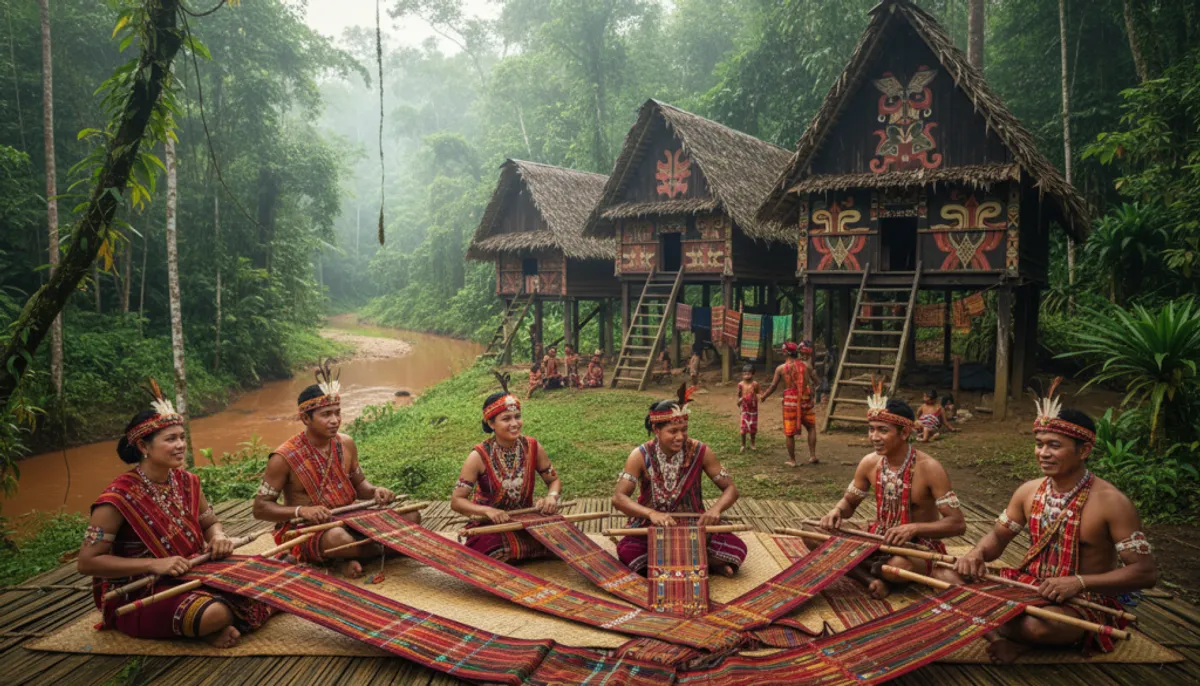
Borneo, the third largest island in the world, is home to an extraordinary ethnic mosaic. Among forty different groups, this ethnicity occupies a central place in this archipelago rich in diversity.
Their history reveals a past of formidable warriors. Once nicknamed “Sea Dayaks” by British colonizers, they were renowned for their ancestral practices.
Today, their population exceeds 700,000 individuals. They constitute the largest Dayak group numerically, preserving a unique heritage.
This article invites you to discover their origins, daily life, and the impact of modernization. Despite rapid urbanization around cities like Kuching, their traditional wealth remains alive.
Understanding this ancestral community becomes essential in the context of contemporary Malaysia. Let us embark on this exciting discovery together!
Key Points to Remember
- The Iban are the most numerous Dayak group with around 700,000 people
- They primarily live in the state of Sarawak in Malaysia
- Their history includes a reputation as formidable warriors
- Their rich culture survives despite modern urbanization
- Borneo is home to about forty different ethnic groups
- Their traditional heritage remains of paramount importance today
Introduction to Iban Culture
Let us meet the original inhabitants of the interior lands of Borneo. The term “Dayak” refers to all the indigenous peoples of this region.
General Overview
This name means “inhabitant of the interior” in Malay. It encompasses various non-Islamized communities of Austronesian origin.
Among them, the Iban constitute one of the most important groups. Their name simply means “person” or “ordinary man” in their language.
This community traditionally lives in longhouses along the rivers. Their way of life is based on the cultivation of mountain rice.
Objectives of the Article
Our exploration aims to provide a comprehensive understanding of this rich tradition. We will address its history, way of life, and contemporary challenges.
This approach combines ethnography and modern perspectives. It allows for a nuanced and current portrait.
Discover how ancestral traditions and modernity coexist today. A fascinating balance to explore together!
The Origins and Migrations of the Iban
The territorial odyssey of this indigenous group begins far from their contemporary lands of settlement. Their journey dates back several centuries, marked by strategic movements.
The Beginnings from Sumatra
Anthropological research places their roots on the island of Sumatra. Expert Raymond Kennedy establishes a fascinating linguistic link with Old Malay.
This language was spoken in Sumatra before the expansion of Islam. It confirms the insular origin of this population.
Their initial migration responded to a vital need. They sought new arable lands and abundant natural resources.
Movements Across Borneo
In the 16th century, a major movement led them from the Kapuas valley to Sarawak. This Indonesian part represented their starting point.
Their main motivation was the quest for pristine primary forests. These spaces allowed for the cultivation of mountain rice.
Their gradual expansion into the Bornean jungle was remarkable. They adapted to this complex ecosystem with increasing mastery.
As they progressed, they assimilated or repelled groups of hunter-gatherers. This dynamic shaped their current territorial distribution.
Fascinating History of the Iban
The historical journey of this indigenous community reveals profound transformations over the centuries. Before the colonial era, they were known as a warrior tribe practicing piracy and ancestral rites. Understanding dayak history is crucial to appreciating these changes and the cultural evolution that followed.
Colonial Eras and Wars
In 1841, James Brooke received the title of rajah from the Sultan of Brunei. He fought against endemic piracy in the region. Local warriors defended Kuching as early as 1846.
In 1862, the famous Sarawak Rangers were established. This organized military force excelled in jungle guerrilla warfare. They mastered rifles and traditional weapons with remarkable expertise.
| Period | Major Event | Impact on the Community |
|---|---|---|
| 1841-1946 | Kingdom of Sarawak | Organized military integration |
| 1941-1945 | Japanese occupation | Profound transformation of lifestyle |
| 1963 | Independence of Sarawak | Participation in nation-building |
The Japanese invasion in December 1941 completely disrupted the existence of local populations. The occupation until August 1945 marked a decisive period.
The resilience of this people in the face of successive conflicts demonstrates exceptional adaptability.
Transition to Urbanization
Tun Jugah (1903-1981) played a crucial role in the independence of Sarawak. The territory joined the Federation of Malaysia in September 1963.
The Konfrontasi (1962-1966) pitted Indonesia against Malaysia. The indigenous people found themselves caught between the belligerents. This difficult period preceded a gradual urbanization.
Around cities like Kuching, Miri, and Sibu, modernization accelerated. However, the traditional heritage, including aspects of javanese culture, remains vibrant despite these changes.
Essential Aspects of Iban Culture
At the heart of Iban social organization lies a unique approach to kinship and individual status. This indigenous community has developed remarkable social principles that value equity over absolute equality.
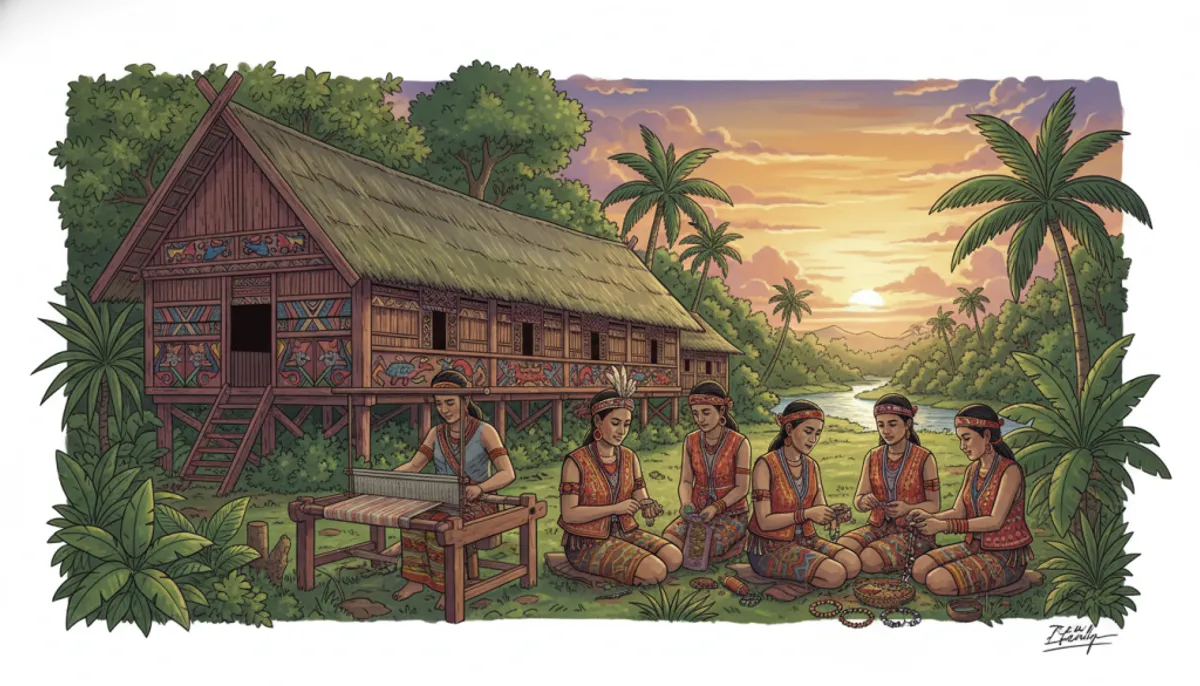
Customs and Traditional Values
The cognatic kinship system completely ignores gender in defining family ties. Age and genealogical proximity take precedence in this flexible social structure.
Each person can choose their affiliation according to personal interests. This reversible choice promotes great community adaptability.
The society operates on the principle of merit rather than inheritance. Prestige is gained through bravery, eloquence, and demonstrated skills.
Core values include courage, generosity, and hospitality. A deep respect guides relationships with ancestors and natural spirits.
The adat, or custom, regulates social life and resolves conflicts. This oral law maintains collective harmony while allowing for individual expression.
The community validates every personal achievement. This balance between competition and solidarity characterizes this social organization remarkably.
Traditions, Rites, and Ancestral Ceremonies
Traditional ceremonies reveal a deeply spiritual worldview, including traditional sundanese art. They punctuate important stages of existence and celebrate harmony with nature.Rites of Passage and Celebrations
Each key moment in life is accompanied by symbolic practices. Birth, marriage, and funerals have their own celebrations.
The lemambang, bard-priest, leads these events with sacred songs. His invocations connect the community to ancestral spirits.
The grand gawai gatherings bring the entire village together in the longhouse. These festivals mark agricultural and warrior successes.
The Symbolism of Head Hunting
This ancient practice had an essential sacred dimension. It aimed to ensure the fertility of the land and people.
Mythology establishes a powerful link between war and agriculture. Heads represent rice ears, and warriors are the harvesters.
The success of an expedition validated prestige through a tattoo. The trophy skulls (antu pala) then protected the community.
This tradition officially ceased in 1920. However, it remains a fundamental element of collective memory.
Daily Life in the Iban Village
The day begins before dawn in these habitats where nature and community intertwine. The early morning wake-up signals the departure to fields often far from the village center.
The bilek constitutes the fundamental family unit. This cell ensures both habitation and agricultural production. All children receive equal inheritance, both boys and girls.
Family and Social Organization
The marriage system is based on strict monogamy. Unions are preferably formed within the same longhouse. Premarital relationships are encouraged in this social structure.
The subsistence economy uses the slash-and-burn technique for mountain rice. The plots are used for two years before a twenty-year fallow. This rotation maintains soil fertility.
| Period | Main Activity | Location |
|---|---|---|
| Morning | Agricultural work | Fields (ladang) |
| Noon | Meals and rest | Temporary shelters |
| Evening | Socialization | Common gallery |
| Night | Family rest | Bilek |
Hunting and fishing supplement the diet. Wild boars and fish provide essential proteins. Dogs and chickens are primarily used for ritual sacrifices.
The seasonal rhythm follows the rice cycle. Intense periods alternate with calmer moments. This organization shapes the entire community existence.
Life Within the Longhouse
A true autonomous microcosm, the longhouse embodies the very essence of the community. This unique structure houses between ten and fourteen families in remarkable social harmony.
Architecture and Structure of the Bilek
Built on stilts five to six meters high, this collective dwelling features an ingenious tripartite organization. The bilek serves as the private family space, dedicated to intimate life and rice storage.
The ruai, a covered central gallery, serves as a gathering place for social activities. The bamboo terrace (tanju’) completes this structure perfect for daily work.
Role of the Tuai Rumah and the Augur
The tuai rumah leads the community with wisdom and authority. He arbitrates conflicts according to ancestral customs and coordinates agricultural work.
The augur, or tuai burong, plays a crucial spiritual role. He interprets the omens of messenger birds before each important decision.
This organization ensures a balance between collective life and family autonomy. Each architectural element meets specific social and ritual needs.
The Influence of Nature and the Jungle
The Bornean jungle envelops traditional habitats with a constant and vibrant presence. This dense rainforest represents much more than just a backdrop.
It constitutes a sacred space inhabited by countless spirits. Indigenous communities maintain a deeply respectful relationship with this environment.

Harmony with the Environment
The lush vegetation shelters extraordinary biodiversity. The inhabitants identify hundreds of useful plant species.
This deep knowledge serves for food, medicine, and craftsmanship. The rotation system for swidden farming allows for sustainable management.
Baskets made from palm leaves are hung from trees. These offerings honor the supernatural powers that govern the forest.
| Resource | Main Use | Sustainable Practice |
|---|---|---|
| Game | Food | Selective hunting |
| Medicinal plants | Traditional care | Reasoned harvesting |
| Rattan | Basketry | 20-year rotation |
The local cosmology places Sengalang Burong as a common ancestor. Seven messenger birds guide important decisions.
Ritual specialists communicate with the spirit world. Their role includes healing, divination, and community protection.
This survival expertise was recognized during historical conflicts. The jungle offers vital resources while demanding deep respect.
The Impact of Modernization on Iban Traditions
The contemporary era imposes on longhouse inhabitants a reinvention of their social and economic practices. Since the 1960s, massive migration to urban centers has profoundly transformed their way of life.
Urbanization and Education
Kuching, Miri, and Sibu attract young generations seeking better opportunities. Diplomas are gradually replacing tattoos as symbols of prestige.
The bejalai, a tradition of travel, is evolving into labor migrations. Destinations now include Brunei and Singapore.
Transport improvements are bringing rural communities closer to cities. Motorized boats and modern roads facilitate movement.
| Traditional Aspect | Modern Transformation | Impact on the Community |
|---|---|---|
| Subsistence agriculture | Urban wage employment | Increased economic dependency |
| Warrior tattoos | School diplomas | New criteria for prestige |
| Animist rites | Gradual Christianization | Religious syncretism |
Adaptation of Cultural Practices
Christianization transforms beliefs while maintaining certain rituals. This population finds a balance between tradition and modernity.
Traditional export crops are becoming less profitable. Coffee and rubber are struggling against global markets.
Young graduates regularly return to their longhouse of origin, reconnecting with the heritage of minangkabau. They thus create a valuable bridge between urbanity and heritage.
This fragile balance allows for the preservation of identity while adopting the advantages of modernity.
Ethnography and Studies on the Iban
Several generations of ethnologists have accurately documented the specifics of this social organization. Their work offers an in-depth view of traditions and contemporary evolution.
Contributions of Ethnologists
Derek Freeman laid the scientific foundations in the 1950s-1980s. His research on the augur and social structure remains fundamental.
Benedict Sandin, himself a member of this community, provided a unique internal perspective. His studies on pre-colonial history are irreplaceable.
Clifford Sather revealed the symbolic dimensions of traditional habitat. His analysis of the longhouse as a ritual structure is particularly enlightening.
Contemporary Perspectives
Current approaches integrate communities more into research. This part of ethnographic studies fosters a balanced dialogue.
Identity transformations and urbanization are the subjects of recent analyses. Researchers document adaptation to modern challenges.
| Researcher | Specialty | Major Contribution |
|---|---|---|
| Derek Freeman | Social anthropology | Foundations of scientific studies |
| Benedict Sandin | History and rituals | Authentic internal perspective |
| Clifford Sather | Symbolic architecture | Analysis of the ritual longhouse |
| Vinson Sutlive Jr. | Modern transformations | Studies on contemporary adaptation |
The Sarawak Museum Journal has been documenting this heritage since 1911. This publication ensures the preservation of knowledge for future generations.
Respect and Transmission of Cultural Values
In the symbolic universe of this community, the body becomes an open book telling the collective story. Ritual gestures help preserve a precious heritage.
Importance of Rites in Collective Memory
Traditional practices serve as a bridge between generations. They transmit essential values and knowledge.
The human body represents a living memory support. Tattoos and adornments recount individual and collective exploits.
These bodily marks once validated warrior courage. They indicated prestige and group belonging.
A fascinating belief holds that tattoos become luminous after death. Ancestors can thus recognize their descendants in the afterlife.
Today, significant efforts aim to preserve this heritage. Elders play a crucial role as guardians of memory.
Festivals and language teaching keep these traditions alive. A delicate balance is established between modernity and identity preservation.
Some young urbanites reconnect with their ancestral roots. They rediscover the richness of their cultural heritage.
Conclusion
This journey through the history of bali and traditions of a remarkable people is coming to an end. Their exceptional journey shows a constant adaptation in the face of change.
From migrants from Sumatra, they have become the largest ethnic group in Borneo. Their population now exceeds 700,000 people.
The transformation was radical. Once practitioners of head hunting, they now navigate between tradition and modernity. Their rich heritage persists despite urbanization.
Contemporary challenges demand a delicate balance, especially when it comes to the appreciation of the local cuisine of aceh. The new educated generation represents hope for this community. They will know how to preserve the distinctive essence while evolving.Their contribution to cultural diversity deserves recognition and respect. This indigenous society continues to inspire with its resilience.
FAQ
How does life unfold in a longhouse?
Life there is very communal. Several families live under one roof, each in their own space called *bilek*. The leader, or *tuai rumah*, ensures that the rules are respected. Residents share tasks and celebrations, which strengthens bonds.
What are the rules of respect to observe when visiting a village?
It is essential to show courtesy. Always ask for permission before taking photos. Listen to the advice of elders and show interest in their customs. A humble and respectful attitude is greatly appreciated.
Does hunting still hold an important place today?
Yes, but its role has evolved. It remains an activity for subsistence in certain areas, but it is also linked to ancestral rites. It symbolizes courage and the deep connection to the forest, even if modern practices have changed.
How do young generations perpetuate traditions?
Many still participate in major ceremonies and learn the stories of the elders. Formal education and city life bring changes, but there is a genuine desire to preserve their unique heritage and values.