
The Hmong, also known as Miao, are a mountain people with deep roots in southern China. Their fascinating history spans centuries, marked by carefully preserved traditions.
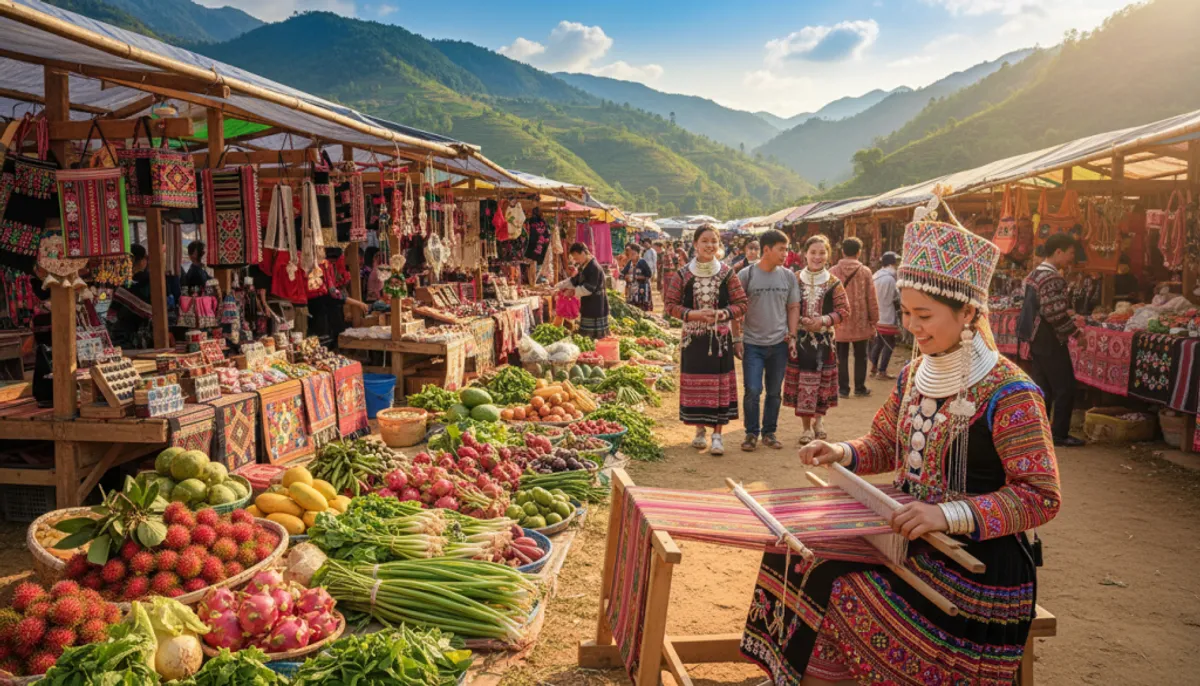
The Hmong diaspora numbers over 12 million people worldwide. The majority live in China (about 10 million) and Vietnam (1.2 million). This geographical distribution highlights the importance of this community in the region.
Despite their dispersion, the Hmong have managed to maintain a strong and distinctive identity. Their ability to preserve their customs in the face of modern challenges is remarkable. This cultural resilience deserves to be studied and understood.
Their adaptation to mountainous environments and their rich heritage make them one of the most captivating minority cultures in Southeast Asia. Discovering their world is to dive into a realm of living traditions.
Key points to remember
- The Hmong are a mountain people originating from southern China
- Their diaspora exceeds 12 million people worldwide
- They are primarily established in China and Vietnam
- Their culture has withstood the challenges of globalization
- Their identity remains strong despite geographical dispersion
- Their adaptation to mountainous environments is remarkable
- Their cultural heritage is rich and well-preserved
Introduction and general overview
The Hmong consider themselves a mountain people, an identity shaped by their natural environment. Their history begins in the mountainous regions of southern China.
Historical and cultural context
These ethnic groups are part of the larger Miao family. They include different sub-groups with varied traditions. Their way of life reflects a deep connection to high-altitude areas.
Successive migrations have marked their journey. These were motivated by repression and historical conflicts. These displacements forged an identity of an independent and resilient people.
The importance of this minority today
The Hmong people play a crucial role in preserving diversity. They maintain ancestral traditions while participating in economic development.
Their presence in several countries of Southeast Asia makes them a major point of interest. Anthropology and cultural tourism study their unique practices.
Contemporary communities navigate between tradition and modernity. They face the challenges of integration while preserving their heritage.
Historical origins and migrations of the Hmong people
The origins of the Hmong people trace back to the mountains of southern China. This mountainous region has shaped their identity for centuries.
Their ancient history primarily dates back to Guizhou province. It is there that their first territorial origin developed before the great migrations.
From roots in China to the mountains of Southeast Asia
During the 19th century, periodic revolts disrupted their settled existence. Imperial repression transformed them into a nomadic community.
| Period | Region | Key events |
|---|---|---|
| Before 1800 | South China | Settled life in Guizhou |
| 1800-1850 | Yunnan, Guangxi | Revolts and early migrations |
| 1850-1950 | Indochina | Crossing the Sino-Laotian border |
These successive displacements led them to Laos, Vietnam, and Thailand. Their adaptation to new mountainous environments was remarkable.
The impact of conflicts and revolts on their diaspora
The 20th century marked their involvement in several major conflicts. They participated in the Indochina war alongside the French.
Then during the Vietnam war, they supported American forces. These strategic alliances aimed to preserve their autonomy.
After 1975, many had to flee to refugee camps. This civil war ultimately dispersed communities around the world.
Geographical distribution and demographics of the Hmong
The demographic map of the Hmong extends from the Asian mountains to Western nations. This dispersion reflects a rich and complex migratory history.
In northern Vietnam, communities are concentrated in five mountainous provinces. Lào Cai, Hà Giang, and Cao Bằng host the largest settlements.
Main settlement regions in Asia
These mountainous regions offer valuable isolation to preserve traditions. The high altitude has always favored the autonomy of villages.
| Country | Hmong Population | Census Year |
|---|---|---|
| China | 9,426,007 | 2010 |
| Vietnam | 1,393,547 | 2019 |
| Laos | 595,028 | 2015 |
| United States | 327,000 | 2019 |
| Thailand | 250,070 | 2019 |
Demographic evolution and key figures
The total number exceeds 11 million people worldwide. The population experienced significant growth after 1975.
Waves of refugees led to new settlements in the West. Despite this geographical dispersion, cultural ties remain extremely strong.
Burma, Argentina, and Australia also host smaller communities. This geographical diversity enriches the heritage of this people.
Discovering Hmong culture
Beyond their cultural unity, the Hmong showcase a rich variety of distinctive sub-groups. This diversity is primarily expressed through their traditional clothing and regional dialects.
The different sub-groups: White, Black, Green, and Flower
Four main groups structure this community in Vietnam. Each has unique clothing characteristics that facilitate their identification.
The white Hmong are distinguished by their white linen clothing accompanied by colorful jackets. They are mainly found in the regions of Sơn La and Điện Biên.
The Black Hmong wear dark clothes dyed with indigo. Their tight pants and embroidered jackets are typical of the Sa Pa and Lai Châu areas.
The Green/Blue group presents outfits in blue or green shades. Their floral patterns and pleated skirts characterize Hà Giang province.
Finally, the Flower Hmong wear brightly colored costumes. Their intricate embroidery and silver accessories adorn the regions of Hà Giang and Cao Bằng.
These differences reflect adaptation to local environments. Despite their specificities, all share a common linguistic root.
Ancestral traditions and beliefs
The spirituality of the Hmong is based on a deeply rooted system of ancestral beliefs. These animist traditions blend polytheism and veneration of natural spirits.
Ancestor worship and shamanic practices
The Pooj ritual occupies a central place in their traditions. Families prepare offerings to honor their ancestors and seek their blessings.
Shamans serve as intermediaries between the human and spiritual worlds. Their customs include healing diseases and resolving conflicts through their mediation.
Traditional festivals and significant rituals
The New Year, celebrated from December to January, brings communities together for dances and feasts. This annual tradition strengthens social bonds.
The harvest festival allows them to thank the spirits for the crops. Prayer ceremonies accompany the sharing of dishes made with fresh rice.
These ancestral practices, passed down from generation to generation, form the heart of this people's identity. They maintain a living connection with a rich spiritual heritage.
Craftsmanship and traditional costumes
The skilled hands of artisans transform simple materials into exceptional works of art. This technical mastery represents a valuable heritage passed down through generations.
Women excel in the art of brocade weaving and delicate embroidery. They create complex patterns using ancestral techniques such as beeswax painting.
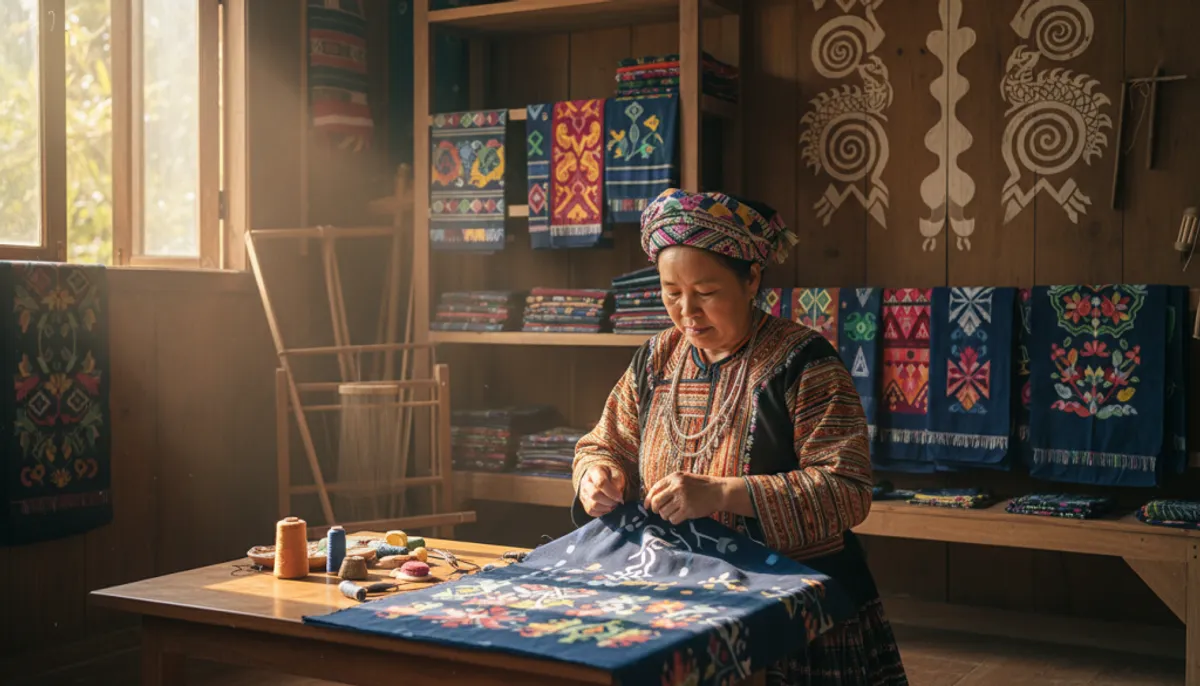
Linen holds deep spiritual significance in the making of traditional clothing. According to beliefs, these garments are essential for reuniting with ancestors after death.
Indigo dyeing produces the characteristic blue and black shades. This natural process exclusively uses plant-based dyes.
Jewelry and distinctive patterns
Silver adornments are an integral part of their clothing identity. Necklaces, bracelets, and earrings feature geometric or animal motifs.
These jewels reflect social status and offer spiritual protection. Women wear them on important occasions.
Learning begins in childhood, as girls acquire these skills from their elders. The markets of Sa Pa and Hà Giang allow for the discovery of these authentic creations.
Daily life and family values
The daily life of the Hmong mountain people revolves around deeply rooted family values. Their life, marked by agricultural seasons, reflects a harmony between tradition and adaptation.
These farmers master two complementary techniques. Slash-and-burn agriculture fertilizes mountainous soils, while flooded rice cultivation creates spectacular terraced landscapes.
| Agricultural technique | Main region | Production |
|---|---|---|
| Terraced rice cultivation | Lào Cai, Sa Pa | Traditional rice |
| Slash-and-burn cultivation | Ha Giang | Secondary grains |
| Fruit growing | Protected valleys | Apples, plums, peaches |
Social organization and the importance of family
The family is the fundamental pillar of this society. Family clans led by elders make important collective decisions.
Early marriages as young as 13-14 years persist in some isolated areas. This ancestral tradition strengthens alliances between lineages.
The education of children represents a daily challenge. Far from schools, many help with household tasks or tend to livestock.
Solidarity and respect for elders cement relationships within each community. These values ensure the cohesion of this people in the face of modern challenges.
Rituals and spiritual practices
Each home is much more than just a shelter; it is a true ritual sanctuary. Traditional architecture reveals a profound spiritual dimension where each element possesses sacred meaning.
Ceremonies, rites of passage, and ancestor prayers
Rites of passage mark important life stages. Birth, marriage, and funerals take place in the family space.
A central altar occupies an essential place in every home. Prayers to ancestors maintain the link between generations. This practice represents a fundamental part of daily spirituality.
The storage of rice and harvests follows precise rules. These food reserves hold strong symbolic value. They ensure the abundance and prosperity of the family.
The symbolism of homes and living spaces
Traditional houses are built with earth walls and stone roofs. This architecture provides natural insulation suited to the mountain climate.
The hillside layout is not accidental. It reflects harmony with nature and the spirits of the place. Nearby water sources complete this symbiosis.
Stone fences symbolically delineate the sacred space. They separate the domestic world from the surrounding natural world. This ritualized boundary protects the family.
Maize hung under the stove combines utility and spirituality. The smoke preserves the grains while purifying the atmosphere. This practice unites the everyday with the sacred.
Contemporary challenges and minority protection
The protection of minority cultural identities represents a crucial issue in the modern context. These groups face complex obstacles that threaten their survival.
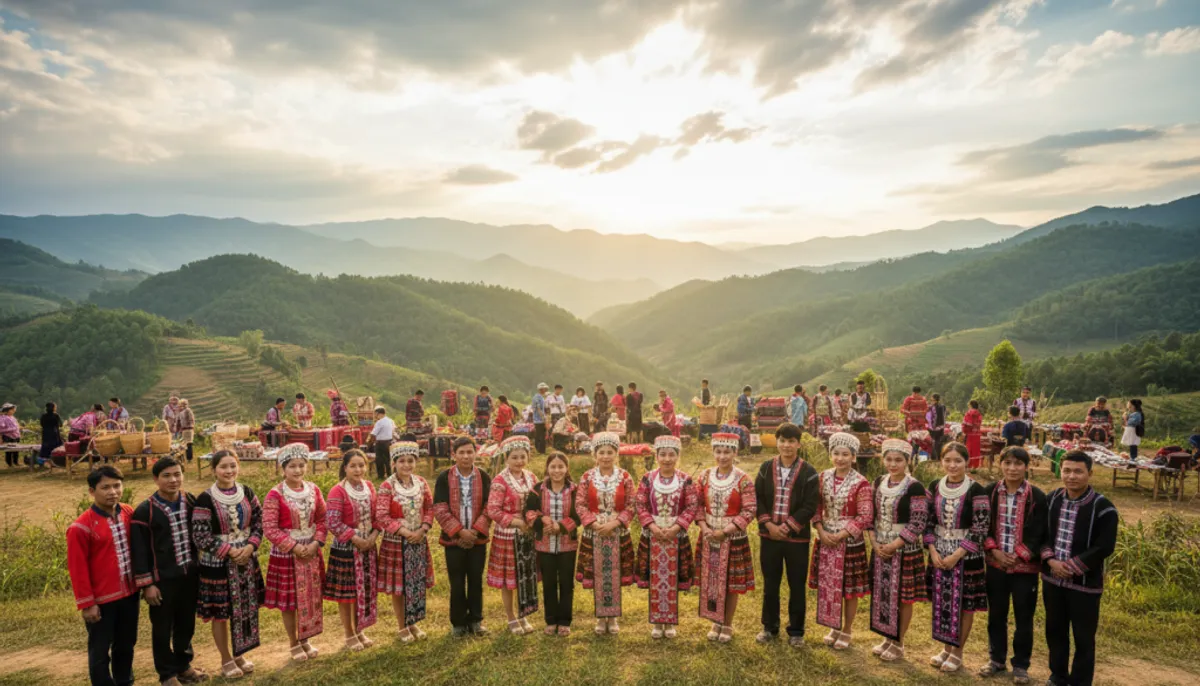
Preservation and transmission of traditions
In Vietnam, many live in great poverty. Massive school dropout and geographical isolation complicate their situation.
The language barrier poses an additional challenge. Many children do not speak Vietnamese, limiting their access to education.
The lack of arable land exacerbates economic difficulties. Integration into the national economy remains challenging for these mountain communities.
Associative initiatives and community support
The consequences of the Vietnam War still weigh heavily. After 1975, persecutions forced many to flee.
In the Xaysomboun area of Laos, the number of refugees dramatically dropped. From over 30,000 people, only 8,000 remained in 2005.
Organizations like Children of the Mekong provide valuable support. They sponsor 120 young people in 7 programs in northern Vietnam.
These initiatives promote education while preserving traditional identity. They equip new generations with the tools for their future.
Meeting the Hmong while traveling in Southeast Asia
The mountainous regions of northern Vietnam hide cultural treasures accessible to curious travelers. This part of the country offers authentic experiences to discover local traditions.
Must-visit destinations: Sapa, Ha Giang, Cao Bằng
Sapa is the ideal starting point for a first contact. Its colorful markets and treks in the surrounding valleys allow for enriching encounters.
Ha Giang impresses with its breathtaking landscapes. The Ma Pi Leng pass and the Lũng Cú market offer unique experiences.
Cao Bằng remains less frequented, preserving remarkable authenticity. Its golden terraced rice fields create an exceptional photogenic setting.
| Destination | Characteristics | Best time |
|---|---|---|
| Sapa | Ethnic markets, accessible treks | September to November |
| Ha Giang | Spectacular landscapes, authenticity | October to December |
| Cao Bằng | Golden rice fields, tranquility | September to October |
Tips for authentic cultural exchanges
Visit during the harvest season or the traditional New Year. These moments allow participation in local festivities.
Learn a few basic words and always ask for permission before photographing. These simple gestures show your respect.
Favor local guides and crafts purchased directly from artisans. Your trip thus directly benefits the community.
Conclusion
Despite their geographical dispersion, the Hmong communities maintain remarkable cultural ties. Their linguistic diversity, with Hmong green and Hmong white dialects, reflects the richness of their heritage.
These groups represent an essential part of the heritage of Southeast Asia. Their preservation is crucial in the face of modern challenges. Their harmonious relationship with the mountains and their traditional knowledge constitute an invaluable treasure.
We encourage you to discover this culture through responsible travel. Each encounter offers an opportunity for mutual enrichment. Supporting local initiatives helps improve living conditions while respecting their autonomy.
The Hmong people deserve to be celebrated and protected for future generations. Their cultural resilience remains a source of inspiration in our globalized world.
FAQ
Where does the Hmong people come from and where do they live today?
This ethnic group finds its origins in southern China. Following migrations, it has primarily settled in the mountainous regions of northern Vietnam, Laos, Thailand, and Burma. A significant diaspora also exists in the United States and France.
What are the main Hmong sub-groups and how do they distinguish themselves?
The White Hmong, Green Hmong, Black Hmong, and Flower Hmong are often distinguished. These distinctions are mainly seen in the details of traditional clothing, notably the color and complex patterns of embroidery.
What are the most important spiritual traditions for this community?
Ancestor worship is central. Shamanic practices also play a crucial role in healing diseases and maintaining harmony between the spirit world and the living. Ceremonies mark significant moments in life.
Is Hmong craftsmanship renowned and what can be discovered?
Absolutely! Their craftsmanship, especially weaving and paj ntaub (reverse stitch pattern) embroidery, is world-renowned. Women create unique pieces rich in symbols that adorn traditional costumes and accessories.
Is it possible to meet these populations while traveling in Southeast Asia?
Yes, indeed. Regions like Sapa or Ha Giang in northern Vietnam are known for this. For an authentic experience, favor respectful visits through local guides that promote genuine exchange and support communities.
What are the current challenges for the preservation of their culture?
The main issues are the transmission of language and customs to younger generations, as well as the protection of their lands. Associative initiatives help to enhance their heritage and improve their living conditions.