
Welcome to a fascinating journey into the heart of an extraordinary community. The khmer krom represent a minority ethnic group with a rich and diverse heritage. Their history unfolds in the Mekong Delta, a vibrant region of Vietnam.
This population maintains ancestral traditions that set them apart. Their language, religious practices, and customs form a unique legacy. The khmer krom proudly preserve their identity in the south of the country.
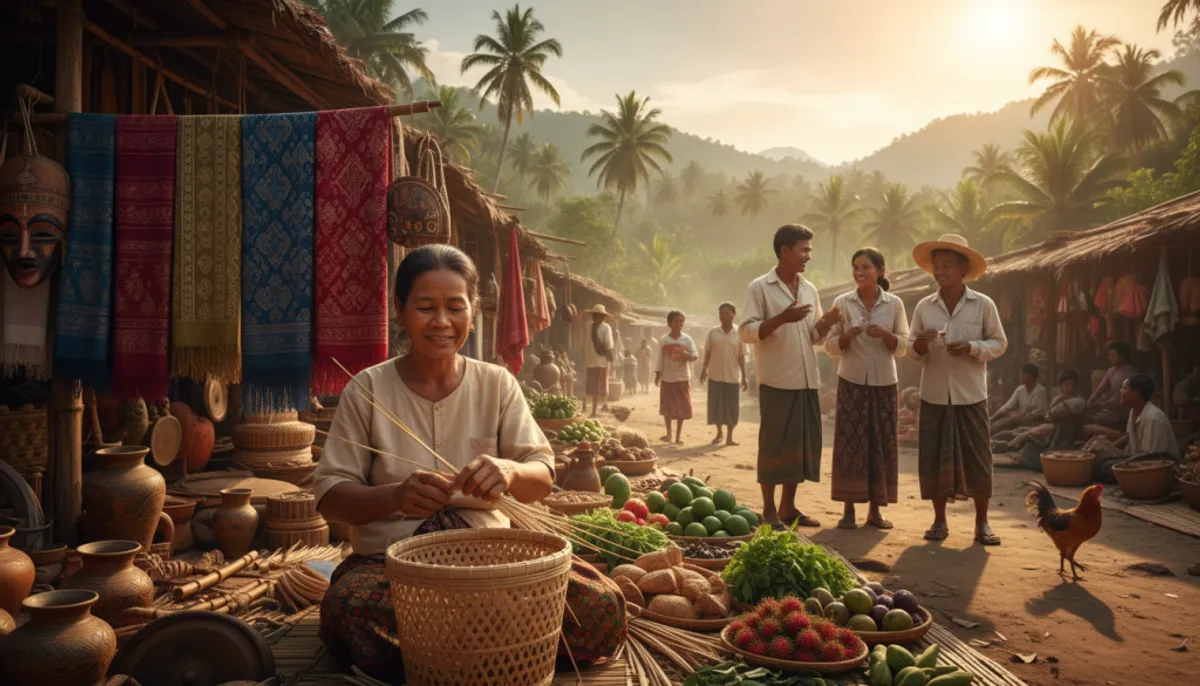
We will explore their daily life, colorful festivals, and remarkable art. Discover how this community faces modern challenges while honoring its past. This overview will prepare you for a complete immersion into their world.
Key Points to Remember
- The Khmer Krom are an ethnic minority living in the Mekong Delta
- They have traditions distinct from other Vietnamese groups
- Their culture includes a unique language and specific religious practices
- They actively maintain their identity in the face of modernization
- Their artistic and festive heritage is particularly rich
- This community represents a valuable cultural heritage to preserve
Introduction to Khmer Krom Culture
Vietnam counts among its 54 official ethnicities an indigenous community from the Mekong Delta. This ethnic group, known for its unique karen ethnicity, represents a historical presence in this fertile region.
General Overview and Context
The khmer krom are recognized as one of the minorities in the country. They are known by different names in Vietnamese, including Người Khmer.
Their number is a subject of debate. The 2019 census counts 1,319,652 individuals. However, some organizations estimate this population to be around 7 million people.
This Khmer ethnic group thus constitutes a significant community. Its official status ensures a place in contemporary Vietnamese society.
Location in the Mekong Delta
The khmers primarily reside in the 13 provinces of the Mekong Delta. This vast area has more than 17 million inhabitants.
They form the second ethnic group after the Kinh Vietnamese. Their presence is particularly marked in three provinces of the delta.
In Sóc Trăng, they represent 30% of the population. Trà Vinh has 32% of this community, and Kiên Giang 12%. This concentration shows their regional demographic importance.
History and Origins of Khmer Krom Culture
The origin of this ethnic group is lost in the mists of time, with archaeological traces dating back over two millennia. Discoveries near Óc Eo reveal continuous occupation and flourishing trade exchanges.
From Ancient Kingdoms to the Khmer Empire
As early as the 3rd century, the delta became an integral part of the kingdom of Funan. This region would then be dominated by the Khmer empire, establishing deep roots.
In the 17th century, a significant event changed the course of history. King Chey Chettha II authorized the settlement of Vietnamese refugees around Prey Nokor in 1623.
The Legacy of French Colonization
The treaty of December 1845 with King Ang Duong confirms the definitive annexation of the delta. This historical fact seals the fate of the khmer krom in this region.
The arrival of the French on February 17, 1859, opens a new chapter. The creation of Cochinchina in 1867 marks over 80 years of colonial influence.
| Period | Major Event | Impact on the Community |
|---|---|---|
| 3rd century | Integration into Funan | First state organization |
| 11th century | Chenla Domination | Strengthening of social structures |
| 1623 | Authorization of Vietnamese settlement | Beginning of Vietnamization |
| 1845 | Annexation Treaty | Change of definitive sovereignty |
| 1859-1867 | French Colonization | New administration and influences |
This rich history explains why the khmer consider this land as their ancestral origin. Their attachment to Kampuchéa Krom finds its roots in this complex timeline.
The Influence of the Mekong Delta on Culture
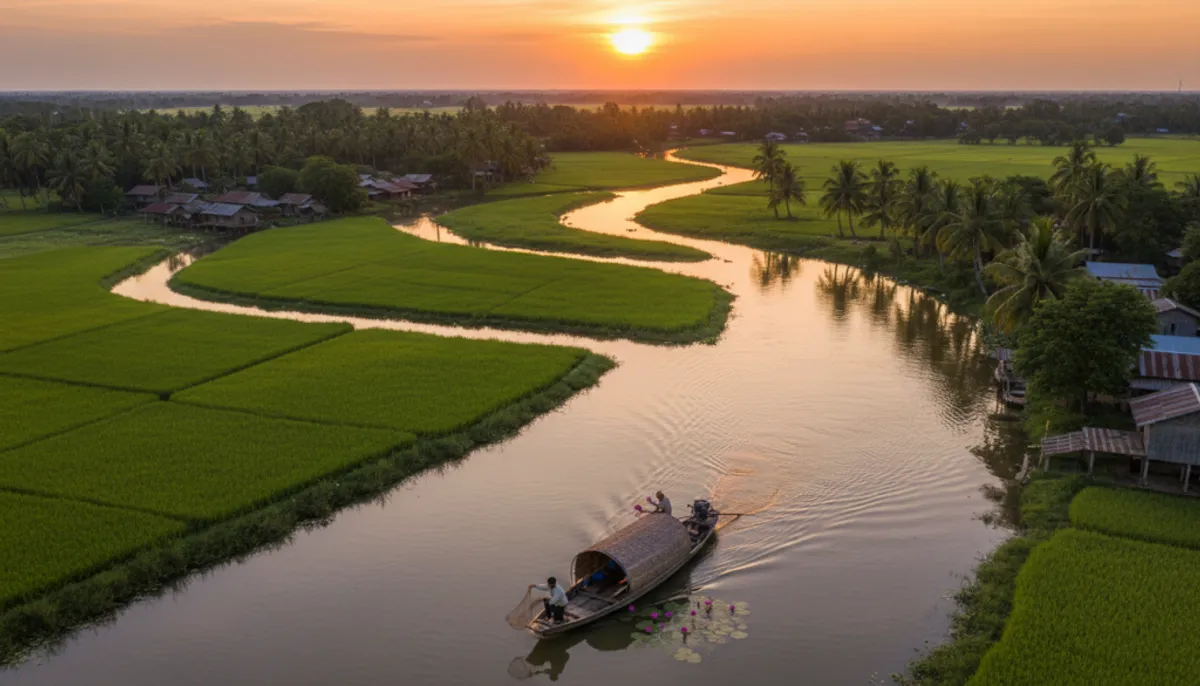
The Mekong Delta, with its fertile lands and complex hydrographic network, has profoundly influenced the development of this community. This unique region of southern Vietnam has shaped traditional lifestyles.
Geographical and Demographic Impact
The khmers primarily reside in six provinces of the delta. Their settlement follows waterways and communication routes.
The traditional spatial organization includes phun (hamlets) and sroc (villages). These units are established on fertile alluvial land.
Socio-Economic Evolution in the Delta
Expertise in flooded rice cultivation represents a major skill. Farmers master irrigation techniques perfectly.
Fishing constitutes an important complementary economic activity. The fish-rich rivers offer abundant resources.
The majority of communities also develop specific crafts. Weaving, pottery, and palm sugar production diversify the local economy.
These activities show how the environment has shaped the identity of the Vietnamese of this ethnicity. The Mekong Delta remains at the heart of their living heritage.
Unmissable Traditions and Festivals
Three major events structure the festive cycle of this Vietnamese ethnic community. These celebrations unite people around ancestral practices.
The New Year Festival and Its Rituals
Chnam Thmay Chol represents the main celebration. It lasts three days in April. Each day has specific activities.
The first day begins at the local pagoda. The khmers listen to Buddhist teachings. The ceremony continues until midnight.
| Day | Main Ceremony | Traditional Activities |
|---|---|---|
| First day | New calendar | Buddhist teachings |
| Second day | Rice offering | Sandy mountains |
| Third day | Buddha bathing | Ritual cleaning |
Other Festivals and Ancestral Ceremonies
Ok Ang Bok honors the moon. Donta celebrates ancestors. These festivals complete the festive heritage.
The culture of the khmer krom vibrates to the rhythm of these traditions, including the iban culture. They keep a precious heritage alive.
Khmer Art and Cultural Expressions
Artistic expressions hold a central place in the transmission of cultural heritage, including khmer art. This community possesses an exceptional musical and choreographic legacy.Music and Instrumental Richness
The khmers have about 48 different traditional instruments. This diversity reflects a musical tradition that goes back several generations.
Among the emblematic instruments, the Kong-thom consists of 16 gongs. They are arranged on a half-moon shaped rack. The Roneat ek uses 21 pieces of wood mounted on a structure resembling a small boat.
| Instrument | Composition | Characteristic |
|---|---|---|
| Kong-thom | 16 gongs | Half-moon rack |
| Roneat ek | 21 pieces of wood | Boat-like structure |
| Other instruments | Traditional variety | 48 different types |
Royal Dance and Folk Performances
The dance was born in royal celebrations long ago. It often represents important stories or legends. This practice plays a role essential in preserving cultural narratives.
A fascinating feature: all roles are performed by women. Even male characters like the king or heroes. The artists wear makeup and male costumes.
The royal dance requires great diligence. Every gesture, facial expression, and smile follows strict traditional rules. This discipline has been passed down through generations.
Almost all khmers practice dance. Many choreographies reflect the activities of daily life. This realistic content explains their popularity over time.
Customs, Clothing, and Traditional Crafts
At the heart of ancestral customs are rituals that mark the transition to adulthood. These clothing and educational traditions keep a precious heritage alive.
Rites of Passage and Education at the Pagoda
Boys of this Khmer ethnic group undergo an important rite. After twelve years, they must study for a minimum of three months at the pagoda.
They learn traditional writing and sacred texts. This religious training is mandatory for later marriage.
The Bank-Bom-Buôn ceremony takes place during the New Year. Young men wear the xarong and a white cloth over their shoulders.
Traditional Costumes and Local Crafts
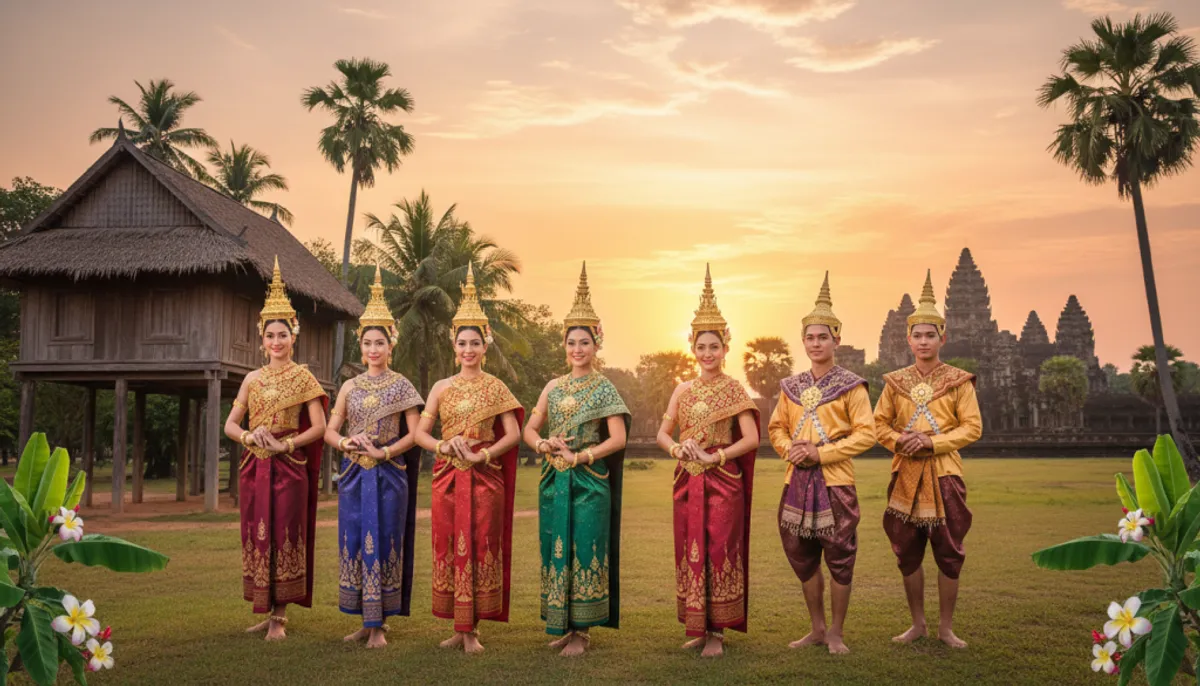
The men wear distinct outfits depending on the occasion. In daily life, they wear black clothing with a checkered turban.
For major celebrations, black tunics and pants dominate. A white scarf completes the outfit on the left shoulder.
Weddings feature even more symbolic costumes. The groom chooses a red sarong with a protective knife.
Women wear red silk dresses in daily life. For celebrations, multicolored outfits brighten the villages.
The bride opts for a purple sampot dress with a red tunic. This textile craft is faithfully passed down through generations.
Religion as a Pillar of Society
Faith is an essential foundation for this Mekong Delta community. Unlike the majority Kinh ethnicity, these people follow the precepts of Theravada Buddhism.
Theravada Buddhism and Its Pagodas
This form of Buddhism represents the origin of their specific identity. Each village has at least one pagoda serving as a center for activities.
The delta has about 400 pagodas. This represents one pagoda for every 1,600 inhabitants. These sacred places host religious and educational events.
The Impact of Religious Practices on Identity
The monks hold significant spiritual power in society. They do not directly manage affairs but play a crucial role.
Their responsibilities include teaching and moral guidance. In 1980, there were 10,620 monks recorded.
The funeral customs of the khmers show this religious influence. They prefer cremation to burial. The ashes are kept at home or in a pagoda.
Khmer Krom Culture in Contemporary Vietnamese Society
The integration of the Khmer Krom and the dayak tribe into modern Vietnam represents a complex journey marked by historical challenges. This ethnic group has faced difficult periods since the country's independence.
Challenges of Assimilation and Ethnic Claims
The regime of Ngô Đình Diệm (1955-1963) imposed severe restrictive measures. It closed schools linked to pagodas and hindered the use of the Khmer language.
The khmer krom had to adopt Vietnamese names. Discriminatory land policies encouraged the settlement of Kinh in the southern provinces.
Since the 1990s, control methods have become more subtle. They limit freedoms of movement and association.
The Social Role and Cultural Expression Today
Despite these obstacles, the khmer krom play an important role in Vietnamese society. They preserve their identity while actively participating in national life.
This Khmer ethnic group maintains its language and traditions in an evolving context. It navigates skillfully between ancestral heritage and modern integration.
The Vietnamese of this community demonstrate remarkable resilience. Their experience enriches the cultural diversity of the country.
Conclusion
The journey of the Khmer Krom reflects a remarkable cultural resilience through the centuries. From their origins in the ancient kingdom of Funan in the 3rd century, this ethnic group has preserved its unique identity in the face of the challenges of history.
Their rich heritage includes the Khmer language, the 400 pagodas serving as community centers, and artistic traditions with 48 musical instruments. The art and culture in aceh is a vital aspect of their identity. Despite assimilation policies under various regimes, the majority of inhabitants maintain their traditional activities.
This ethnic group continues to play a vital role in the economic life of the Mekong Delta, particularly through rice cultivation. Their culture represents a valuable heritage for all ethnicities in Vietnam.
We hope that future generations can pass on this heritage while finding their place in modern Vietnamese society. This balance between tradition and modernity defines their unique journey.
FAQ
Where do the Khmer Krom primarily live today?
Most of the inhabitants of this ethnic group reside in the south of Vietnam, specifically in the Mekong Delta. They are present in several provinces of this fertile region.
What is the historical origin of this group?
Their history is deeply linked to the ancient Khmer empire. Over the centuries, this part of the population has remained in the delta, forming a distinct society with its own language and traditions.
What role do pagodas play in their daily life?
The pagodas are at the center of social and religious life. They serve as places of worship, language teaching, and gathering points for community activities and festivals.
What are the main challenges they face?
Today, this ethnic group navigates between preserving its rich heritage and integrating into contemporary Vietnamese society, with issues related to cultural expression and identity.
What are their main economic activities?
The economy is largely based on agriculture, particularly rice cultivation, which benefits from the fertile lands of the delta. Traditional crafts also represent a significant part of their activities.