
Welcome to this exploration of a fascinating heritage. We embark on the discovery of the Mons, a people whose legacy has profoundly marked Southeast Asia.
This ethnic group, among the oldest in the region, belongs to the Mon-Khmer linguistic family. Their history dates back several millennia.
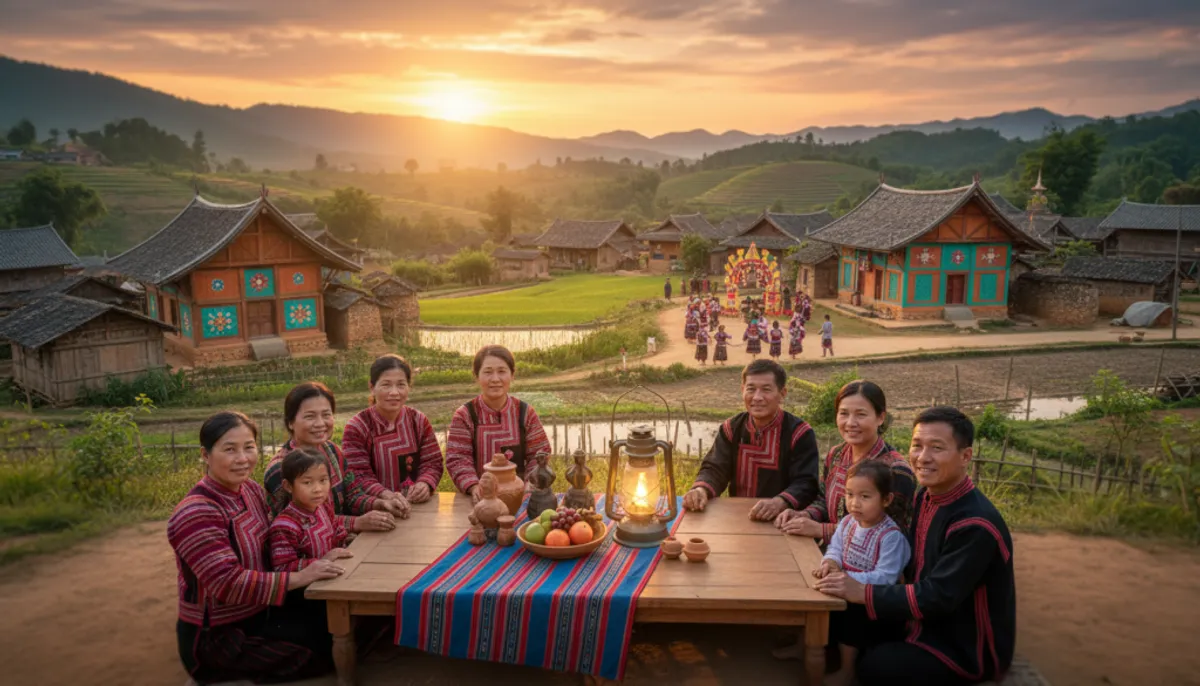
Their migration from southern China led to the establishment of early civilizations. They are recognized as pioneers of wet rice cultivation. This expertise shaped their settlement in the fertile plains.
Today, their communities primarily live in Myanmar, in Mon State, and in certain provinces of Thailand. Their role in the spread of Theravada Buddhism is fundamental.
Despite historical challenges, their rich heritage—arts, traditional dance and music, medicine—persists. This article guides you through their customs and resilience.
Key Points to Remember
- The Mons are an ancient people belonging to the Mon-Khmer ethnolinguistic group.
- They migrated from southern China over 4000 years ago.
- They are pioneers of wet rice cultivation in Southeast Asia.
- Their population is concentrated in Myanmar and Thailand.
- They played a crucial role in the spread of Theravada Buddhism.
- Their cultural heritage is rich and diverse (arts, music, traditions).
- The preservation of their language is a major contemporary challenge.
Origins and Historical Expansion of the Mons
Let us trace the migratory epic of a people who founded civilizations. Their ancient history roots well before the emergence of great empires.
The Early Migrations and Mon-Khmer Origins
The ancestors of the Mons belong to the vast Mon-Khmer ethnolinguistic group. Recent research, such as that of Sidwell (2021), places their original homeland in the Red River delta in northern Vietnam.
This proto-Austroasiatic population lived there about 4000 to 4500 years ago. They developed exceptional mastery of wet rice cultivation.
This agricultural expertise motivated their movement southward around 2000 B.C. They sought fertile lands to practice their craft.
| Region of Departure | Rivers Taken | Settlement Areas |
|---|---|---|
| Red River Delta | Mekong, Irrawaddy | Fertile Deltas |
| Southern China | Salween, Chao Phraya | Central Plains |
| Indochinese Peninsula | Sittaung, Ping | Malay Peninsula |
The Beginnings of Civilization in Southeast Asia
Their settlement along major rivers allowed the emergence of the first sedentary communities. These populations based their way of life on riverine agriculture.
Archaeological evidence, including 6th-century Old Mon inscriptions, confirms this ancient presence. Their heritage laid the foundations for future societies in the region.
Their culture developed in harmony with waterways, creating a model of sustainable society. This model influenced neighboring groups, such as the Khmers.
The Influence of Mon Culture in Southeast Asia
As the first intermediaries between India and Southeast Asia, the Mons transmitted fundamental knowledge. According to historian Georges Cœdès, this people established the first contacts with Indian civilization.
As early as the 3rd century B.C., exchanges existed according to Buddhist tradition. This early relationship explains their role as cultural vectors.
The Impact on Art and Architecture
Their architectural heritage remains visible in numerous stupas and temples. These religious edifices served as models for later constructions.
Their artistic contribution extends to techniques and decorative motifs, including traditional sundanese art. They spread innovations throughout the region.
The adoption of the Pallava script marks a decisive turning point. The oldest traces date back to around 550 A.D.
This writing system later inspired the Burmese and Thai alphabets. This transmission demonstrates their lasting influence on regional development.
Their role as exporters of knowledge shaped the cultural identity of Southeast Asia. This influence persists through monuments and artistic traditions.
History and Kingdom of the Mons in Myanmar and Thailand
Let us discover the prestigious empires that shaped the political landscape of Southeast Asia.
The Historical Kingdoms and Their Evolution
The first organized state was Suvarnabhumi around 500 B.C. This political entity established the foundations of regional power.
Hongsawatoi then became a major center starting in 572. Its religious importance was immense according to local traditions.
| Kingdom | Period | Location | Founder |
|---|---|---|---|
| Suvarnabhumi | 500 B.C. | Lower Myanmar | Unknown |
| Dvaravati | 6th-11th Century | Central Thailand | Local Population |
| Hariphunchai | 750-800 A.D. | North Thailand | Queen Camadevi |
The Influence of Empires and Conquests
The kingdom of Thaton fell in 1057 to the empire of Pagan. This conquest marked a decisive turning point.
After 1287, Pegu was reborn and experienced its golden age. However, the Burmese occupation of 1757 ended this sovereignty.
These events had tragic consequences. The final occupation by the Burmese empire caused massacres and displacements.
Geography and Territory of the Mons
From vast historical kingdoms to contemporary communities, the Mon territory has undergone profound transformations, reflecting the rich history of aceh. This spatial evolution tells a story of power followed by resilience.Historical Territory vs. Current Territory
The ancient Ramonnyadesa, the "land of the Ramans," covered all of Lower Myanmar. It also extended over significant portions of present-day Thailand.
This vast domain included the fertile deltas of the Irrawaddy, Sittang, and Chao Phraya. Three main provinces structured this territorial organization.
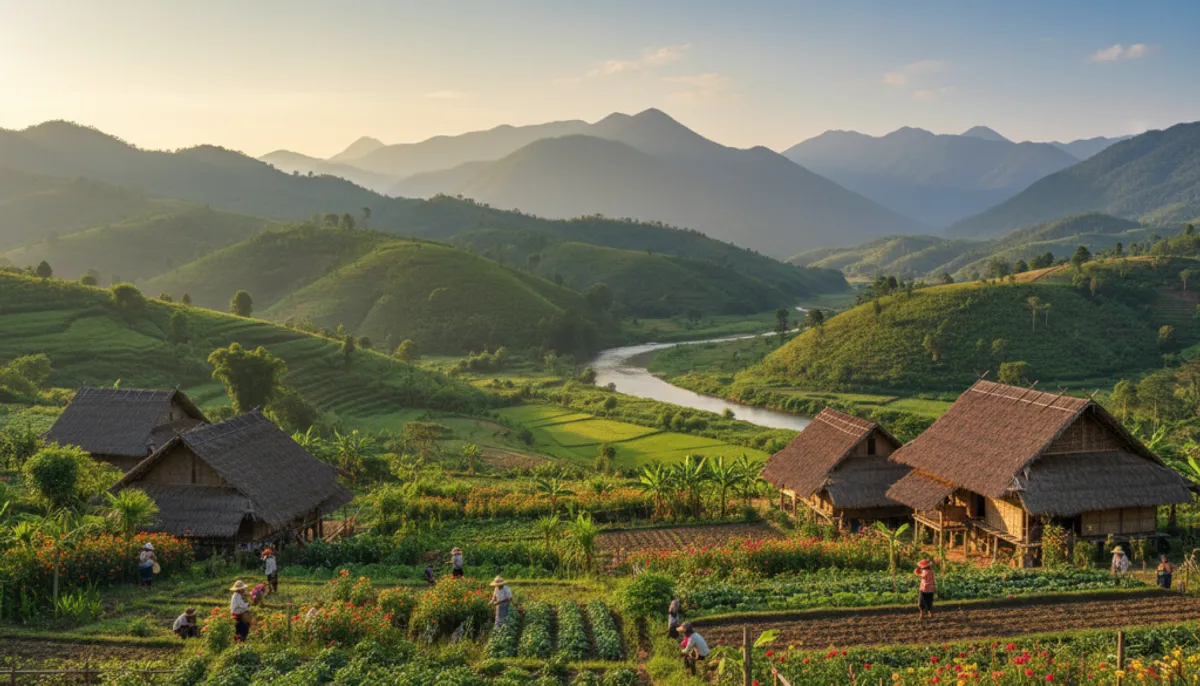
Bassein, Pegu, and Mottama formed the administrative heart with 32 townships each. This structure demonstrated a sophisticated organization.
Today, the modern Mon State in Myanmar covers only 12,297 km². Established in 1974, it represents a fraction of the original territory.
Its capital, Moulmein, is located between 14°52'N and 17°32'N latitude. This strategic place retains symbolic importance.
In Thailand, the population is concentrated around Bangkok and the Mae Klong River. Pak Kret, Phra Pradaeng, and Ban Pong house these communities.
Conquests, forced migrations, and assimilation explain this territorial contraction. Nevertheless, the geographical legacy remains alive.
Mon Culture: A Rich Heritage
The ancestral traditions of the Mons constitute a living treasure that transcends modern borders. This exceptional heritage shines today in Myanmar and Thailand, including the rich flavors of khmer krom cuisine.
Traditions, Festivities, and Ancestral Customs
Oral transmission keeps these age-old practices alive. The National Mon Day, established in 1947, represents a significant moment.
This celebration takes place during the full moon of the 11th lunar month. It commemorates the founding of the Hongsawatoi kingdom.
Artistic performances enliven this important festival. They allow the heritage to be shared with younger generations.
Impact on Local Societies and Cultural Exchanges
The National Mon Cultural Center in Thailand plays a key role. It serves as a nerve center for preservation.
Exchanges between Burmese and Thai communities mutually enrich their cultures. This bidirectional influence creates a unique blend.
Mon religious and artistic practices have been integrated into neighboring societies. This integration demonstrates their lasting impact.
Traditional Dance and Music
Let us delve into the artistic expressions that rhythmically shape community life. These ancestral practices form a living language passed down from generation to generation.
Mon Dance: Symbolic and Ritual
This choreography stands out for its exceptional grace. The slow, fluid movements create a particular harmony where the feet glide without lifting.
The dancers master twelve to thirteen traditional postures. Their costumes vary according to the occasion: vibrant colors for joyful celebrations, black to honor the deceased.
Traditional Instruments and Musical Repertoire
The orchestra accompanies each performance with ten to thirteen songs. The instruments are classified into four distinct categories.
There are string instruments like the Kyeimp zither and the Garolmon violin. The wind instruments include the Kanoit oboe and the Taloot flute.
The membranophones and idiophones complete the ensemble. The Batalar-tun xylophone and Bakaing gongs produce unique sounds.
Three formations exist depending on the scale of the event. The Pipat Môn Hongsawadee, created in 2002, perpetuates this rich musical tradition.
The Role of Religion in Mon Culture
At the heart of Mon identity lies a millennia-old religious tradition that structures social life. This Theravada Buddhist religion has animated every aspect of their existence for centuries.
The Mons are among the oldest Buddhist communities in the world. Their role in the spread of Theravada was determining for neighboring peoples.
Theravada Buddhism and Religious Rituals
Today, 99% of the population practices this religion. Their calendar follows an annual cycle of ceremonies rich in symbols.
The kingdom of Pegu became an important spiritual center under King Dhammazedi. This radiance attracted monks and pilgrims from all over Asia.
Each month brings its specific celebrations. In April, Songkran marks the traditional New Year with purifying rites.
May sees the commemoration of Buddha during Wisakhabucha. June is dedicated to the ordination of young monks.
The Buddhist Lent from July to October shapes community life. Offerings of honey in September and the Totkathin festival in November showcase the diversity of practices.
This religion unites generations around shared values. It remains the identity cement of this resilient people.
Traditional Medicine and Ancestral Knowledge
Beyond the arts and religion, the Mons possess an ancestral medical treasure that has crossed centuries. This therapeutic system relies on a deep knowledge of plants and their healing properties, intertwined with various karen traditions.
The Use of Medicinal Plants
Herbs form the basis of this traditional pharmacopoeia. Leaves are particularly valued for their therapeutic virtues.
Five main methods allow the preparation of these natural remedies. Decoction, juice extraction, and infusion are the most common. Rice water often serves as a therapeutic vehicle, especially for soaking roots.
Three emblematic plants illustrate this botanical richness. The Lagerstroemia floribunda treats cancer and hypertension. The Mimosa pudica cures infections and fevers. The Tadehagi triquetrum combats respiratory diseases.
Techniques and Natural Remedies Passed Down Through Generations
This knowledge is generally passed down from father to son within healer families. This patrilineal transmission ensures the longevity of the knowledge.
Traditional medicine remains vital for rural populations where modern services are limited. It represents much more than a healthcare system.
These ancestral practices form a deeply rooted medical and cultural heritage. This tradition testifies to the resilience of a people facing contemporary challenges.
Other Traditions and Cultural Practices
Beyond religious celebrations, this people honors its history through deeply significant commemorations. These cyclical rituals strengthen community bonds in the face of contemporary challenges.
Cyclical Ceremonies and Community Rituals
Two major events structure the collective memory. The first festival celebrates rebirth, the second commemorates a historical tragedy.
The National Day was created in 1947 during a critical period. It marks the founding of the Hongsawatoi kingdom.
This festival brings together communities from Myanmar, Thailand, and the global diaspora. Artistic performances enliven this joyful celebration.
- Festival of rebirth: foundation of the historical kingdom
- Tragic commemoration: fall of the kingdom in 1757
- Global gathering: unity of dispersed communities
The Holocaust Remembrance Day recalls painful events. The invasion of 1757 caused the death of thousands of people.
Nationalists draw a parallel with the Jewish holocaust. The Burmese government discourages this commemoration.
These rituals keep a resilient culture alive. They allow younger generations to connect with their heritage.
The dense annual calendar of ceremonies creates a unique social rhythm. This memorial culture testifies to extraordinary determination.
Symbols and Cultural Identity
Visual symbols form a fundamental pillar of the collective identity of the Mons. These powerful emblems transcend borders and unite dispersed communities.
They embody a rich culture and reinforce the sense of belonging in the face of contemporary challenges. Each symbol tells a profound story.
The Hamsa: Emblem and Legend
The Hamsa, sometimes called hongsa, represents the national emblem of this people. This mythical sacred bird appears on the flag of the Bago region.
Its origin traces back to a fascinating religious prophecy. Long before the kingdom's foundation, Lord Buddha is said to have seen two hongsa in this region.
He then predicted that this territory would become a place of flourishing for Buddhism. About 1500 years later, this prophecy was fully realized.
The Mons settled in the region and became major propagators of Buddhism. The Hamsa thus symbolizes this fulfilled destiny.
Today, the emblem adorns institutional logos and official seals. It occupies a central place in the collective imagination.
Other visual symbols complement this symbolic heritage. They reinforce ethnic specificity and keep a millennia-old tradition alive.
Language and Writing: A Fragile Heritage
An ancient writing system faces urgent preservation challenges. This unique Austroasiatic language, without dialects, represents a fundamental pillar of collective identity. Understanding the iban history is crucial for appreciating the evolution of this linguistic expression.
In the 10th century, this linguistic expression dominated the Burmese deltas and the Thai basin of the Chao Phraya. Its radiance was considerable during this glorious time.
The influence of its alphabet on Burmese in the 11th century demonstrates its historical importance. Cultural exchanges facilitated this precious transmission.
| Country | Legal Status | Teaching Allowed | Speaker Population |
|---|---|---|---|
| Thailand | Recognized | Yes, in some schools | Minority |
| Myanmar | Prohibited | No | Declining |
| Diaspora Communities | Preserved | Private Initiatives | Reduced |
Today, the situation is alarming. UNESCO classifies this expression among vulnerable languages.
In Thailand, few Thai-Mons still master their linguistic heritage. Reading and writing are becoming rare skills.
The causes are multiple: assimilation, urbanization, pressure from dominant languages. Nevertheless, revitalization efforts are emerging.
The oldest written traces date back to 550 A.D. Discovered in Saraburi, they testify to an exceptional literary tradition.
Contemporary Influence and Cultural Exchanges
In today's globalized world, ancestral traditions find new pathways for transmission. Communities maintain transnational links between Myanmar and Thailand.
The Pipat Môn Hongsawadee, created in 2002, illustrates this dynamic. Supported by monk Luangphor Uttama, this musical ensemble preserves the heritage.
The Integration of Mon Traditions into the Modern World
These artists perform during National Day in several provinces. This festival unites populations on both sides of the borders.
The integration into Thai society shows a remarkable balance. They fully participate in national life while preserving their identity.
The global diaspora now includes established communities in North America and Europe. These groups maintain their traditions in new contexts.
Recent genetic research confirms historical links. Central Thai people and this group share remarkable proximity.
The main challenge remains the transmission to younger generations. Urbanization and assimilation threaten certain practices.
Yet, each festival and celebration reinforces this extraordinary resilience. The vitality of these cultural exchanges promises continuity.
Conclusion
This historical journey demonstrates how a civilization can radiate well beyond its original borders. The legacy of this millennia-old people continues to enrich our present through its exceptional resilience.
Their fundamental contribution to Buddhism, the arts, and agriculture has shaped Southeast Asia. Their rich musical heritage, featuring traditional musical instruments such as the bamboo xylophone and gong ensembles, remains alive today.Various cultural centers in different provinces work to preserve these traditions. Despite linguistic challenges, transnational festivals maintain this dynamic culture.
Every traditional instrument, every religious ritual, every artistic performance testifies to a preserved identity. This nerve center of traditions continues to inspire new generations.
The unique sound of the xylophone and the resonance of the circular gongs carry the soul of this people. Their heritage does not belong only to the past but vibrates in the present.
FAQ
What is the main influence of Mon civilization in Southeast Asia?
What are the most important traditional musical instruments?
The xylophone and the gong occupy a central place in their musical repertoire. These instruments are often played during festivities and religious ceremonies, thus perpetuating a rich sound heritage.
How does religion influence lifestyle and traditions?
Theravada Buddhism is at the heart of their identity. It guides community rituals, festivals, and daily values, creating a deep link between spirituality and social life.
Where is the main population of this ethnicity located today?
The majority now lives in a specific province in southern Myanmar, a territory much smaller than that of their former empire, but which remains a vital center for the preservation of their customs.
What is an important cultural symbol and what does it represent?
The Hamsa, a mythical bird, is a powerful emblem. It symbolizes purity and grace, and its image is often used in crafts and during festivals, illustrating an ancestral legend.