
Welcome to the fascinating universe of the indigenous peoples of Borneo. These communities represent an extraordinary human wealth with their age-old traditions and their deep connection to nature.
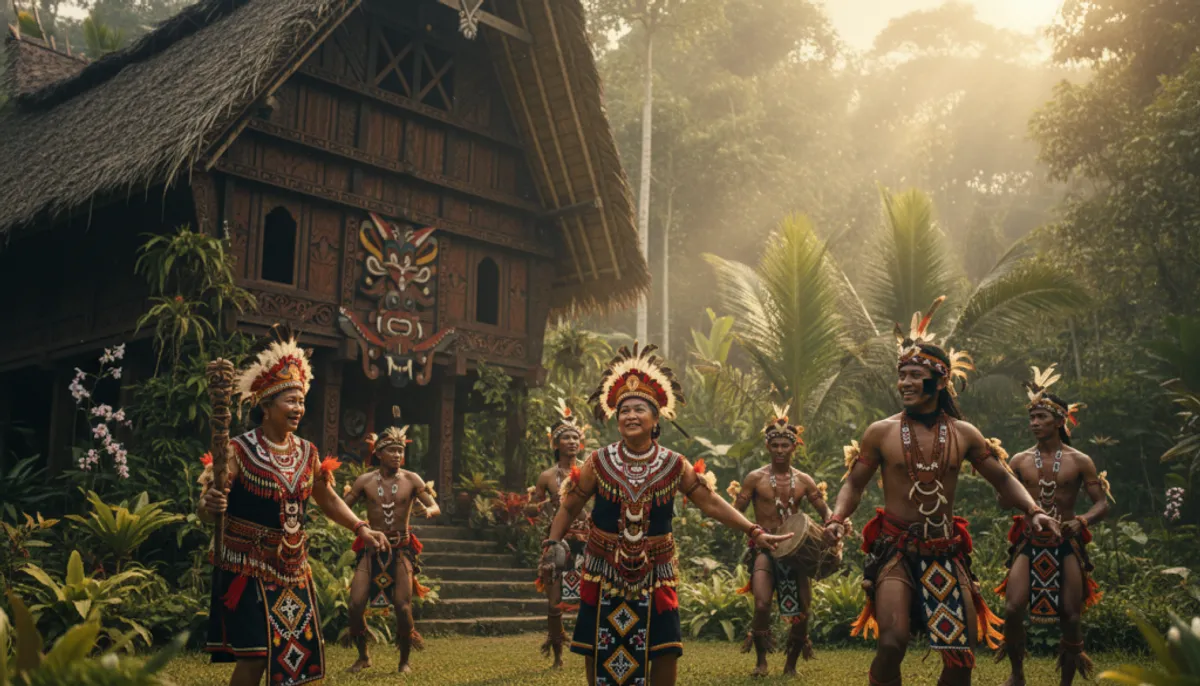
The term “Dayak,” meaning “upstream,” refers to the populations living in the interior lands of this magnificent island. According to recent estimates, nearly half of the inhabitants of Kalimantan share this remarkable ethnic origin.
More than 400 different sub-groups coexist, each with its unique characteristics. This diversity creates a cultural mosaic of incredible richness that attracts enthusiasts from around the world.
The communities preserve their ancestral customs with admirable determination, including the local customs of aceh. Their harmony with the environment and their collective values inspire contemporary researchers and travelers.
Key Points to Remember
- The Dayak represent the indigenous populations of the interior of Borneo
- More than 400 ethnic sub-groups share this collective identity
- The term means “upstream” and refers to non-Muslim communities
- Nearly 45% of the inhabitants of Kalimantan are of Dayak origin
- A living heritage with well-preserved age-old traditions
- A deep respect for nature and strong community values
- A destination that fascinates enthusiasts from around the world
Introduction to Dayak Culture
Let’s explore the foundations of a unique ethnic mosaic within the great island of Borneo. This introduction will reveal how distinct communities share a fascinating common identity.
Context and Interest of Dayak Heritage
The term “Dayak” originates from Dutch colonists. They used it to refer to all non-Muslim people living in the interior lands.
These groups are distinctly different from coastal populations due to their specific identity markers. Their lifestyle and beliefs create a significant cultural difference.
| Characteristics | Coastal Populations | Interior Peoples |
|---|---|---|
| Main Religion | Islam | Traditional Animism |
| Habitat Mode | Towns and Villages | Longhouses |
| Economy | Trade and Fishing | Slash-and-Burn Agriculture |
Presentation of Sources and Cultural Wealth
Despite their extraordinary diversity, these people share a deeply rooted collective identity. Their common spiritual practices unite the different ethnic groups.
“The term Dayak represents much more than a simple ethnic category – it embodies a way of life in harmony with nature.”
The indigenous peoples constitute an essential part of the heritage of this magnificent island. Their presence significantly enriches the cultural diversity of the region.
More than 400 sub-groups coexist, each with its unique traditions. This wealth attracts researchers and travelers from around the world.
The History and Origins of Dayak Culture
Let’s trace the millennia-old paths that have shaped the identity of Borneo's first inhabitants. Their history dates back to the great Austronesian migrations across Southeast Asia.
Ancestral Roots and Migrations
The various tribes gradually settled in the interior lands of the island. They established territories along rivers and in deep forests.
The Iban and Bidayuh communities primarily originate from the Indonesian dayak kalimantan. They migrated to Malaysian Sarawak several centuries ago.
Historical Influences and Cultural Exchanges
The entire range of influences has profoundly marked their way of life. This includes exchanges with Chinese traders and contacts with coastal sultanates.
The Melanau, considered the first inhabitants of Sarawak, coexisted with these migratory waves. Their presence enriched regional diversity.
The many Austronesian dialects testify to common origins. They reveal linguistic connections despite the current diversity of communities.
The Traditions and Customs of the Dayak Peoples
Ritual celebrations form the backbone of social life in the villages of the interior. These practices reflect a unique philosophy of life that unites generations.
Significant events rhythm collective existence with remarkable spiritual depth. Each ceremony serves as a bridge between the visible and invisible worlds.
Ancestral Rituals and Significant Ceremonies
The ritual of Tiwah represents one of the most complex events. This funeral ceremony can last several days and cost between $6,000 and $12,000.
Several families often share the costs to honor their deceased together. This way of proceeding strengthens bonds within the group.
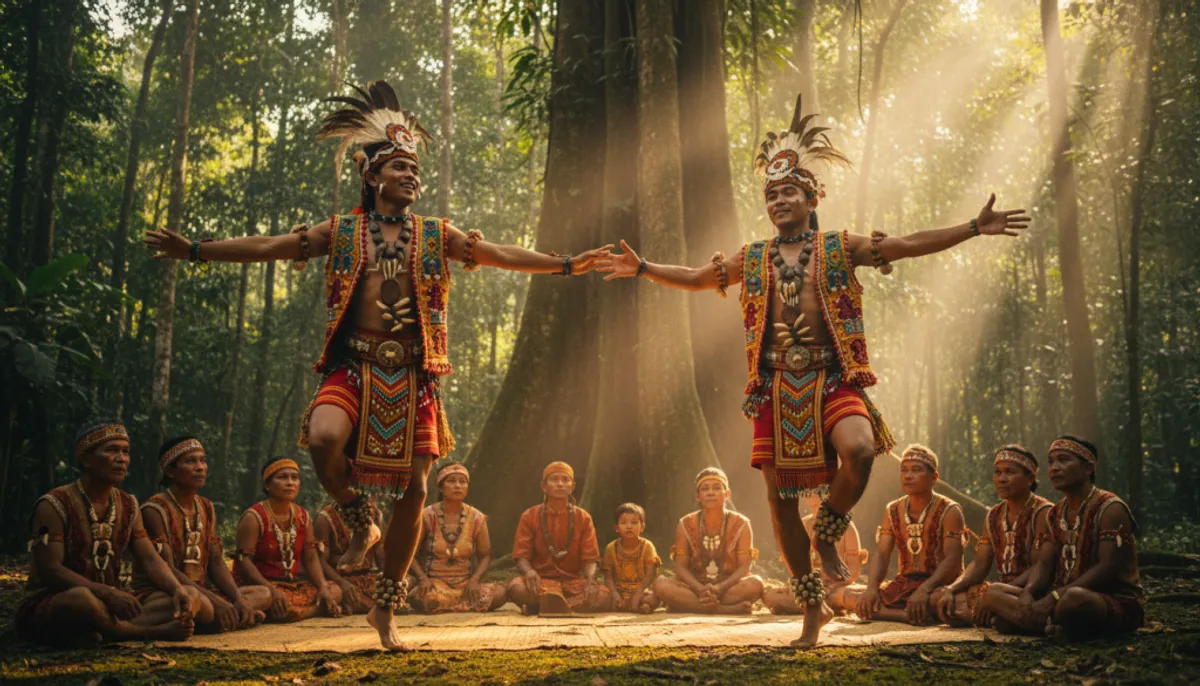
The Iban continue to celebrate the harvests, the dead, and the hornbill. Traditional warrior dances keep the collective memory alive.
The Art of Tattooing and Its Deep Meanings
Tattooing represents much more than body decoration. It is a true rite of passage marking important stages of life.
Artisans use natural pigments and manual percussion techniques. Each motif has a specific protective or guiding meaning.
Animals, plants, and mythical creatures adorn the skin of the inhabitants. These symbols accompany the individual throughout their existence.
This sacred art is still practiced in a specific community context. The place of realization becomes a space for transmitting values.
Daily Life and Architecture in Dayak Villages
The spatial organization of villages reveals a unique conception of collective life. These human settlements traditionally stretch along waterways, creating a harmonious landscape.
Longhouses and Their Social Role
The longhouses, called rumah betang, are the beating heart of community life. Several extended families coexist under the same roof in these impressive structures.
These houses are built on stilts and oriented facing the rivers. This position respects ancestral beliefs regarding water spirits.
“The longhouse is not just a building – it is the living soul of our community where each family finds its place.”
| Architectural Element | Social Function | Symbolic Meaning |
|---|---|---|
| High Stilts | Protection from Animals | Spiritual Elevation |
| Central Corridor | Meeting Space | Community Backbone |
| “Head” and “Tail” | Spatial Organization | Living Architectural Being |
Lifestyle by the Rivers and in Harmony with Nature
Life organizes itself around the rivers, which serve as essential communication routes. Fishing, agriculture, and navigation rhythm existence in these villages.
Among the Ngaju, longhouses are less common. The family structure favors nuclear families extended to married daughters.
Each house contains kitchens, common rooms, and distinct accommodations. This shared space strengthens bonds within the community.
Beliefs and Spiritualities: Animism and Kaharingan
The spiritual world of the indigenous communities of Borneo revolves around a sacred relationship with the environment. Traditional beliefs see spirits residing in every element of nature.
This vision involves a deep respect for forests, rivers, and mountains. Daily interactions follow this living spiritual awareness.
The Place of Natural Spirits in Daily Life
Kaharingan, meaning “elixir of life,” encompasses about 30% of practitioners. This religion, officially recognized as a branch of Hinduism, structures the beliefs.
The Ngaju venerate Mahatala Jata, a fascinating androgynous deity. The masculine part, represented by a hornbill, reigns over the upper world.
The feminine part, symbolized by a water snake, governs the marine realm. The natural spirits influence all important community decisions.
“Our visible and invisible worlds are one – every tree, every rock harbors a sacred presence that guides our steps.”
The Tiwah Rituals and the Celebration of Ancestors
The funeral rituals of Tiwah take place several months after the death. They allow souls to ascend to the supreme heavens.
The carved ossuaries illustrate the cosmic dualism of hornbill/snake. This unique funerary art honors the lives of the deceased with profound respect.
Shamans communicate with the spirits during these complex ceremonies. These rituals keep the connection between worlds alive long after the death.
Dayak Craftsmanship and Cultural Expression
The skilled hands of artisans bring to life works of javanese art that tell the story and values of their people. This creativity is expressed through various artistic forms passed down from generation to generation.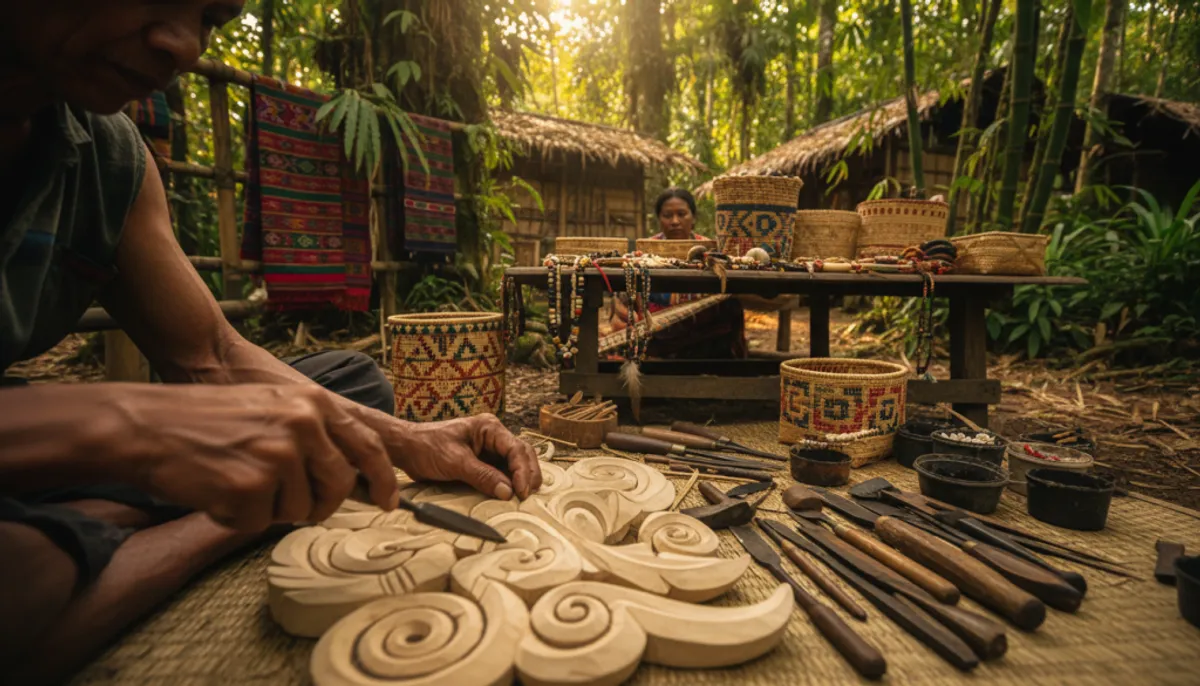
Scultpures, Traditional Objects, and Local Craftsmanship
The textile art of the Iban produces pua kumbu tapestries with intricate patterns. These masterpieces represent plants, animals, and spiritual symbols.
The various tribes excel in making rattan and bamboo baskets. The Kayan and Kenyah are renowned for their exceptional wood carvings.
The funerary objects sandung and sapundu feature mythical creatures. These sculptures allow the local artists' imagination to run free.
Music, Dances, and Traditional Instruments
The Sape, a traditional lute used in traditional malaysian music, produces enchanting sounds during ceremonies. Passionate musicians like Matthew preserve this musical heritage.The warrior dances of the Iban tell the story of the tribes. These dynamic bodily expressions keep the collective memory alive.
Oral transmission ensures the longevity of these arts. Each group thus perpetuates its traditions without formal writing.
Respect for Nature and Environmental Harmony
The philosophy of life of the interior peoples is rooted in a delicate balance between human needs and ecological preservation. This animistic vision considers every element of nature as inhabited by worthy spirits.
Sustainable Agriculture and Connection to the Land
The slash-and-burn agriculture practiced for generations follows the natural cycles of regeneration. Communities let the land rest for several years between each crop.
This method maintains the ecological balance of the forests while producing sacred rice and showcasing the rich flavors of minangkabau cuisine. This staple food also becomes a central element in rituals like the tantulak.| Agricultural Practice | Cycle Duration | Ecological Benefit |
|---|---|---|
| Slash-and-Burn Cultivation | 7-10 years of fallow | Soil Regeneration |
| Polyculture | Seasonal Rotation | Preserved Biodiversity |
| Responsible Harvesting | Limited Gatherings | Sustainable Resources |
Offerings to the spirits are made in various sacred places such as rivers and mountains. This practice reinforces the harmony between the human and spiritual worlds.
Natural resource management ensures the livelihood of future generations. This ecological wisdom guides every aspect of existence.
Dayak Culture in the Contemporary World: Challenges and Preservation
In the era of globalization, the indigenous communities of Borneo navigate between heritage and modernity. Their ancestral way of life faces major challenges such as deforestation and assimilation.
Settling down and modern education transform daily life. Young generations must find a balance between new opportunities and attachment to their roots.
Modernization versus Tradition
Despite the pressures, fundamental values remain strong. The challenge lies in integrating progress without losing the essence of traditions.
This dynamic tension shapes the identity of the dayak kalimantan peoples today. They reinvent their way of living throughout this process.
Local and International Initiatives to Protect Heritage
Many projects are emerging to ensure the transmission of generation to generation. The communities themselves are active participants in this preservation.
Educational programs teach children about their heritage. Responsible ecotourism in cultural villages creates sustainable income.
Digital media offers a new way to share these riches with the whole world. Artists like Matthew, master of the Sape, use these tools to keep traditional music alive.
These combined efforts give hope for the future of this unique heritage.
Conclusion
This journey to the heart of Borneo's indigenous identity reveals much more than a simple heritage. The dayak kalimantan culture embodies a complete philosophy of life where harmony and respect guide every aspect of existence, including the rich sundanese cultural heritage that contributes to the cultural tapestry of the region.The longhouses uniting several families, the rituals of Tiwah honoring the death of ancestors, and the symbolism of the hornbill representing the upper world – each element contributes to a heritage of remarkable coherence. This resilient community has managed to preserve its balance with nature.
Discovering this culture goes beyond a simple tourist journey on the island of Borneo. It is an opportunity to learn from a people with deep ancestral values. Everyone can contribute to preserving this heritage for future generations.
By celebrating these traditions, we honor the wisdom of indigenous peoples. Let us continue to learn from their harmony with the environment and share this wealth with the whole world.
FAQ
What is a longhouse and what is its role?
A longhouse is a collective dwelling that houses several families. It is at the heart of the community, serving as a place of living, decision-making, and celebration of rituals. It strengthens social ties and symbolizes the unity of the group.
What are the main spiritual beliefs?
The peoples primarily adhere to animism and Kaharingan. They believe that spirits inhabit nature, such as trees, rocks, and rivers. Respect for these entities and ancestors is fundamental in their way of life.
How is ancestral knowledge transmitted?
What is the importance of tattooing in this society?
The art of tattooing is much more than decoration. Each motif tells a story, indicates a social status, or has a protective meaning. It is a mark of identity and an important rite of passage for people.
How do villages organize themselves in relation to the environment?
The villages are often established along waterways, which are essential transport and life axes. Their way of life is based on a deep respect for the land, with sustainable agriculture aimed at preserving balance with nature.