
Welcome to this fascinating exploration of a unique cultural treasure located in the province of Aceh. This territory is situated at the northwestern tip of the island of Sumatra in Indonesia. A fascinating ethnic group has lived here for millennia.
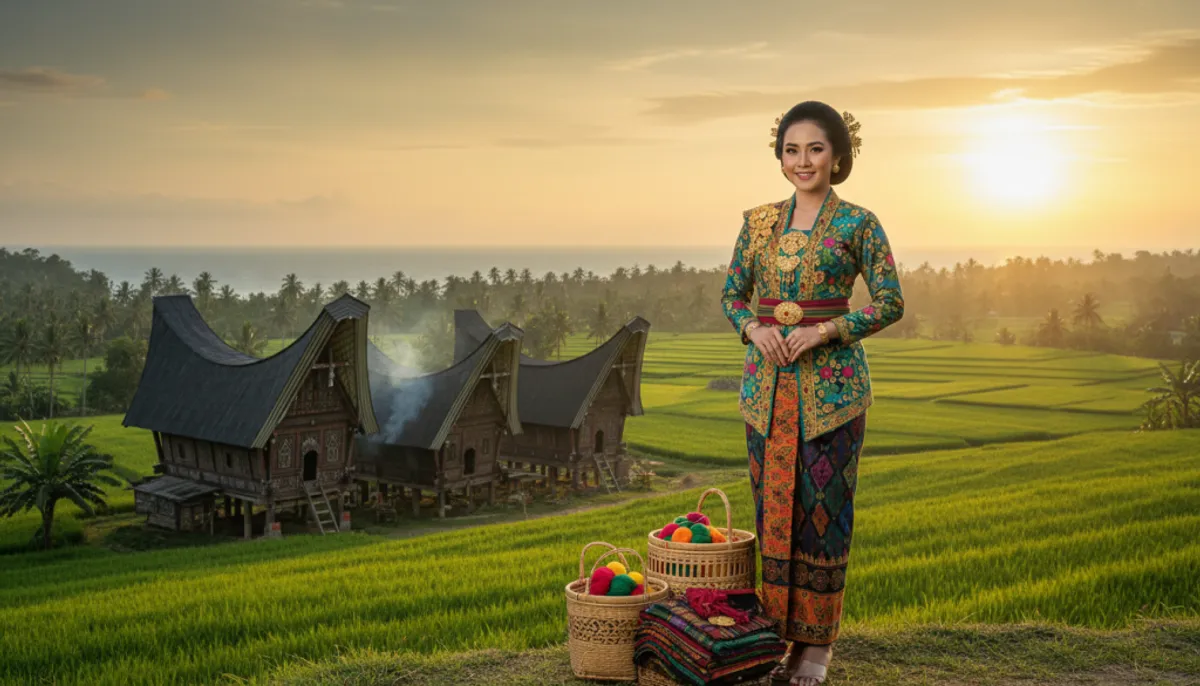
The Acehnese population numbers over 4 million people today. They have developed a distinctive identity due to their strategic position. Their location on historic trade routes between China and India has been pivotal.
This rich history dates back to the Pleistocene. The people have integrated Chinese, Indian, Arab, Persian, and Turkish influences over the centuries. This unique fusion creates an exceptional cultural heritage.
Key Points to Remember
- The Acehnese are an important ethnic group in Indonesia
- Their region is located in the northwest of Sumatra
- Their history dates back to prehistory
- Their geographical position has fostered rich cultural exchanges
- Sunnite Islam is a central element of their identity
- Their heritage combines various international influences
- This culture significantly contributes to Indonesian diversity
History of Acehnese Culture
The millennia-long history of the Acehnese people reveals a fascinating trajectory marked by significant commercial and cultural exchanges. This rich history begins as early as the Pleistocene with the first human occupations.
The Origins and Pre-Colonial Influences
As early as the 6th century, Chinese annals mention Buddhist populations in the region. These early contacts established regular trade relationships with Chinese merchants.
Hinduism arrived in the 8th century, followed by Islam as attested by Marco Polo in 1292. These various religious influences gradually transformed society.
In the 16th century, the Sultanate of Aceh experienced its golden age. This period saw the emergence of a powerful Islamic state that controlled a large part of northern Sumatra.
Struggle Against Colonization and Historical Wars
The people of Aceh fiercely resisted colonization. The Aceh War (1873-1904) against the Netherlands is considered a holy war by the local population.
This resistance has profoundly marked collective memory. Different ethnic groups contribute to the mixing of this unique society.
Modern history includes the struggle for Indonesian independence and the conflict with GAM. These events have shaped the contemporary identity of the people of this region.
The Importance of the Acehnese Language and Its Dialects
The Acehnese language represents a fundamental pillar of the identity of the Acehnese people. Known as Bahsa Acèh by its speakers, this vernacular language belongs to the Austronesian family.
Origins and Linguistic Evolution
The Acehnese language shows fascinating links with other Asian languages. It is more closely related to Cham spoken in Vietnam than to neighboring languages of Sumatra.
This particularity suggests ancient migrations from the continent. Linguist Paul Sidwell even mentions a possible Austroasiatic substrate.
Diversity of Dialects and Preservation Challenges
The Acehnese language exhibits a rich dialectal diversity throughout the province. The communities from different areas have developed distinct variations.
The following table illustrates this linguistic diversity:
| Region | Main Dialect | Characteristics |
|---|---|---|
| Aceh Besar (highlands) | Tunong | Mountainous pronunciation |
| Aceh Besar (lowlands) | Baroh | Coastal influences |
| Pidie | Pidie | Northern variant |
| North Aceh | North Aceh | Distinctive accent |
In 2010, 84.17% of the population used Acehnese at home. However, UNESCO now classifies this language as endangered.
Young generations often prefer Indonesian. Revitalization initiatives aim to preserve this unique linguistic heritage.
Cultural Influences and Cross-Border Exchanges
The strategic position of Aceh has fostered remarkable cultural interactions with several major civilizations, including influences from Javanese culture. These exchanges have created a unique heritage where various traditions blend.
Interactions with Indian, Arab, and European Cultures
As early as the 7th century, Indian merchants established regular trade relations. Their legacy is seen in the language with Sanskrit words and Tamil origins.
Arab groups, especially Yemenis, arrived as merchants and ulama. Their descendants still hold respected positions in local communities.
Persian and Turkish influences also mark this region. The Turks engaged in arms trade with the sultanate. The name "Banda" in Banda Aceh comes from Persian meaning "port".
In the 16th century, the Portuguese settled and integrated through marriage. After the Aceh War, the Dutch controlled the province until 1945.
| Civilization | Main Period | Major Contributions |
|---|---|---|
| Indian | 7th-8th centuries | Language, trade, ethnic origins |
| Arab | Since the Middle Ages | Islam, trade, social structure |
| Persian/Turkish | Golden Age of the Sultanate | Arms trade, linguistics |
| European | 16th-20th centuries | Colonization, integration |
The Javanese migration of the 1960s adds a contemporary dimension. These multiple influences have shaped a unique syncretic identity.
The people of Aceh have managed to integrate external elements while preserving their traditions. This adaptability represents an essential part of their cultural resilience.
Ancestral Traditions and Customs
The Acehnese social fabric is characterized by ancestral practices that rhythm daily life and major events. These traditions constitute a precious heritage passed down through generations.
Religious Practices and Social Rituals
The majority of this ethnic group has practiced Sunnite Islam since the 13th century. This religion profoundly structures their society and customs.
The province applies Sharia, reflecting its conservative approach. The territorial organization into mukims and gampôngs shows this influence.
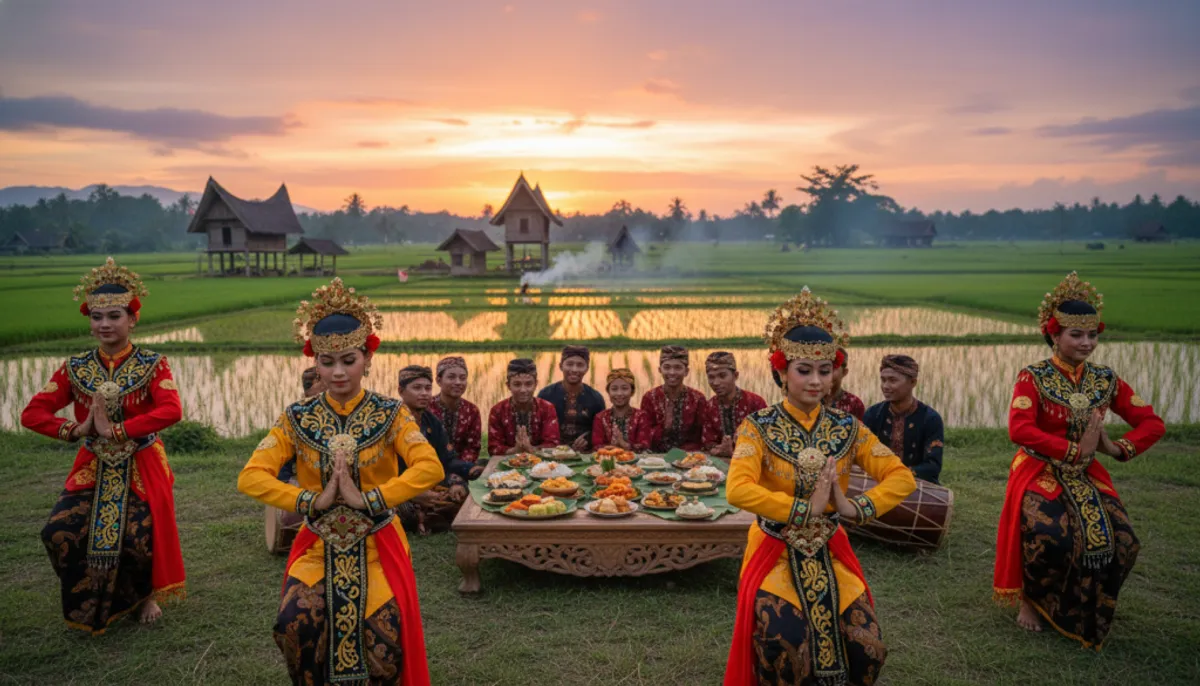
The communities value respect for elders and hospitality. The ritual peusijuek illustrates these values during constructions.
Traditional Celebrations and Ceremonies
Religious festivals are observed with particular fervor. These events strengthen bonds among the people.
Birth, marriage, and funeral ceremonies blend Austronesian and Islamic heritage. They preserve the unique cultural heritage of this region.
These traditions ensure identity continuity for current and future people.
Arts and Cultural Expressions
Artistic creativity represents one of the most vibrant manifestations of Acehnese tradition, including traditional sundanese art. These expressions captivate with their diversity and symbolic depth.Traditional Dances and Music
The dance Saman illuminates the local artistic landscape. This seated collective performance, recognized by UNESCO, combines poetic chants and synchronized movements.
The repertoire also includes Laweut, Seudati, and Tarek Pukat. Each dance conveys specific historical and religious narratives.
These performances traditionally gather same-sex performers. They use either body percussion or musical instruments.
Other Forms of Art and Craftsmanship
Oral literature dates back to the 9th century. The hikayat, epic poems, played a crucial role in anti-colonial resistance.
Local craftsmanship excels in weaving and Islamic calligraphy. These works materialize the spiritual heritage of the communities.
This artistic heritage, including somali art and music, continues to evolve while preserving its roots. It reflects the creative resilience of the people.
Acehnese Cuisine and Its Gastronomic Heritage
The spicy and aromatic flavors of Acehnese gastronomy tell a story of millennia of cultural encounters. This traditional cuisine perfectly reflects the multicultural character of the region.
Iconic Dishes and Culinary Influences
Acehnese cuisine harmoniously combines influences from Indian, Arab, and Chinese cultures. It generously uses spices such as curry, ginger, and coriander.
Among the specialties, the mie Aceh has become the culinary ambassador of this region. These spicy noodles enchant with their aromatic complexity.
The nasi gurih offers a unique tasting experience with its rice cooked in coconut milk. The ayam tangkap combines fried chicken with curry leaves.
Evolution of Cuisine in the Face of Modernity
The people of Aceh adapt their culinary traditions to contemporary standards. Some ancient practices, such as the use of cannabis, have disappeared.
Aceh coffee symbolizes local agricultural excellence. Grown in the high areas, it is appreciated for its distinctive aromas.
This gastronomy remains a vector of identity for the communities. It preserves authenticity while evolving with the times.
Traditional Habitat and Local Architecture
The vernacular architecture of Aceh testifies to remarkable adaptation to the tropical environment. These constructions reflect the ingenuity of builders in facing the specific climatic conditions of this region.
The Rumoh Acèh and Its Characteristics
The traditional Acehnese habitat is distinguished by its stilt structure. This construction technique protects against frequent flooding in the areas along the coast.
Natural materials dominate the architecture. The floor uses areng palm wood, while the walls employ woven bamboo. The roofing consists of sago leaves.
Access to the elevated dwelling is via a ladder or staircase. A rice granary often accompanies the main house.
The architectural history reveals deep social traditions. Fathers begin constructing their daughter's house when she turns seven.
Young women stay with their parents until the birth of their first child. This matrilocal custom structures family organization.
Today, these dwellings are becoming rare in the province. Concrete is gradually replacing traditional materials.
This evolution raises important questions about the preservation of built heritage. The people of Aceh navigate between modernity and ancestral traditions.
Social Organization and Matrilocal Structure
The social organization of the Acehnese presents a unique family structure that intrigues observers. This society is distinguished by its matrilocal system, where women occupy a central position in residential organization.
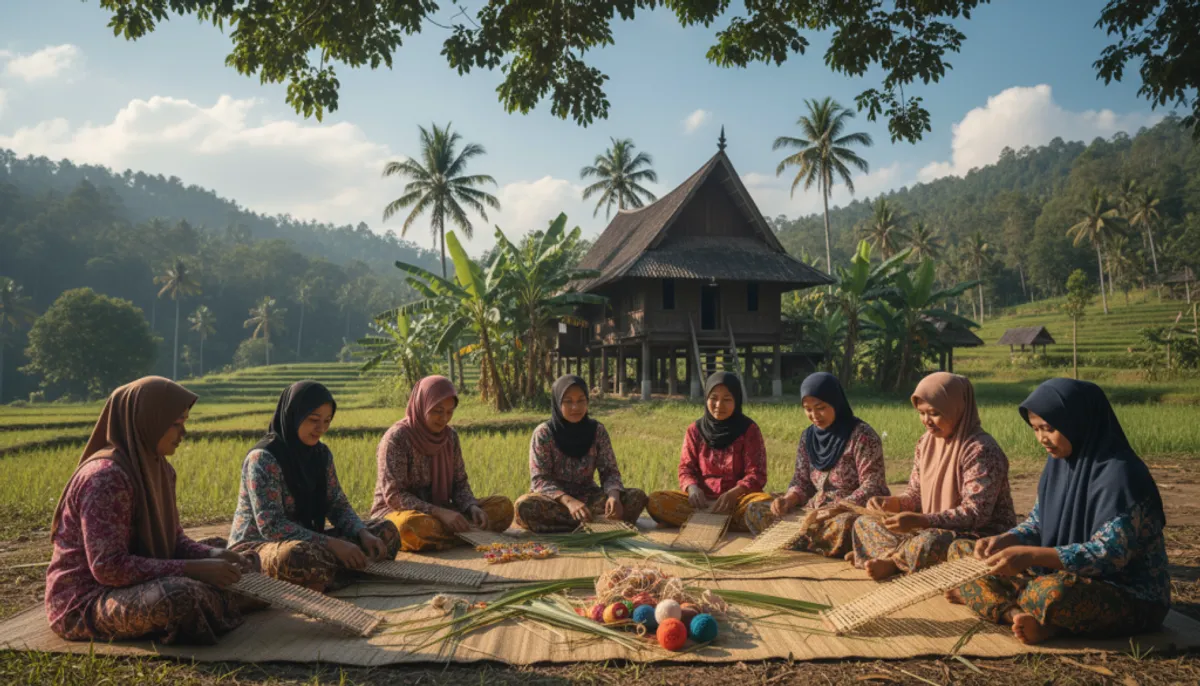
Family Dynamics and Marriage Traditions
During marriage, the husband pays a dowry and then moves in with his wife. This practice combines Austronesian traditions and Islamic prescriptions. Family homes are generally passed down to daughters.
Parents often transfer their property during their lifetime. This strategy avoids the strict application of Muslim inheritance law. The father begins construction preparations as soon as his daughter turns seven.
The young woman remains with her parents until the birth of her first child. Then, the couple settles into their own home. These customs deeply structure the life of the ethnic group.
The traditional territory is organized into mukims divided into gampôngs. This administrative structure historically framed social life. It influenced relationships between the people from different areas.
In the 20th century, industrialization and higher education transformed this organization. Migration to cities created an urban-rural dichotomy. The countryside better preserves matrilocal traditions.
This evolution shows how the people adapt their social structures to modern changes. The province navigates between ancestral heritage and contemporary transformations.
Resilience of the Acehnese People in the Face of Historical Challenges
The exceptional resilience of the inhabitants of Aceh in the face of historical trials demonstrates remarkable collective strength. This population has endured traumatic events that have profoundly marked its memory.
Impact of Conflicts and the 2004 Tsunami
The armed conflict with the Indonesian government lasted nearly thirty years. This difficult period affected the daily lives of the local people.
The 2004 tsunami caused catastrophic damage in the coastal region. More than 160,000 people lost their lives in this tragedy.
| Traumatic Event | Period | Main Impact |
|---|---|---|
| Aceh War | 1873-1904 | Colonial resistance |
| GAM Conflict | 1976-2005 | Political tensions |
| Tsunami | 2004 | Natural disaster |
The strength of the Acehnese lies in their ability to transform adversity into collective rebirth.
These successive trials have had profound psychological consequences. In 2007, a large part of the population still suffered from emotional disturbances.
The Helsinki Agreement in 2005 marked an important turning point. It granted this province special autonomy after decades of conflict.
The history of the bahamas shows how these people have managed to preserve their identity. Despite the traumas, they continue to build their future with determination.
Acehnese Culture Facing the Challenges of Modernity
In the face of contemporary upheavals, the Acehnese deploy innovative strategies to preserve their identity. This society skillfully navigates between ancestral heritage and modern transformations.
Adaptation to Social and Economic Changes
The 20th century profoundly altered social organization. Industrialization and higher education created an urban-rural dichotomy.
The rural population primarily engages in agriculture and fishing. Young generations migrate to cities for educational opportunities.
This mobility leads to a gradual disconnection from traditional roots. Mastery of the local language is decreasing among the youth.
| Geographical Zone | Main Economic Activity | Impact on Traditions |
|---|---|---|
| Rural Areas | Agriculture (rice, coffee), fishing | Strong preservation |
| Urban Centers | Industry, services, education | Accelerated modernization |
| Coastal Zones | Fishing, tourism | Mixed adaptation |
Initiatives for Cultural Heritage Preservation
The provincial government established the LAKA Institute to develop local customs. This organization has been active since 1986 through specific decrees.
Universities offer programs dedicated to the swahili language and the Acehnese language. Syiah Kuala University offers courses in traditional literature.
Our challenge is to pass on the richness of our linguistic heritage to young generations while preparing them for the modern world.
Cultural festivals and media productions in Acehnese language maintain the vitality of this language. These community efforts complement institutional action.
The determination of the people ensures the sustainability of their unique Acehnese culture. This province demonstrates how tradition and modernity can coexist harmoniously.
Focus on "Acehnese Culture" and Its Global Influence
The Acehnese diaspora has played a crucial role in the global dissemination of its ancestral traditions. This ethnic group has managed to preserve its heritage despite geographical distances.
In the 16th century, the Sultanate of Aceh was already an influential cultural center throughout South East Asia. Its influence extended well beyond the province of origin.
The International Dissemination of Its Heritage
Historical conflicts and the 2004 tsunami created a significant diaspora. Substantial Acehnese populations now live in Malaysia, Scandinavia, Australia, and North America.
The dance Saman, recognized by UNESCO, symbolizes the artistic excellence of this people. This choreographic practice has gained remarkable international recognition.
Modern technologies allow dispersed communities to maintain connections with their language and customs. Digital platforms disseminate the richness of this heritage on a global scale.
Resilience in the face of historical challenges has inspired international admiration. Banda Aceh and its region have become symbols of cultural perseverance.
Conclusion
This immersion into the multiple facets of Acehnese society reveals a remarkably resilient cultural identity, deeply rooted in balinese culture. Throughout this article, we have explored how the people of this province have preserved their rich heritage despite historical challenges.
The Acehnese language remains an essential pillar of this identity. Initiatives to preserve the Acehnese language are crucial in the face of modernization. Artistic expressions such as the dance Saman illustrate the vitality of local traditions.
Contemporary people navigate between preservation and adaptation. The government and communities work together to pass on this heritage to young generations. This culture continues to inspire well beyond South East Asia.
We invite you to deepen your discovery of this exceptional heritage. Supporting preservation efforts ensures that future generations of Acehnese people can celebrate their unique heritage. The richness of their language, dance, and cuisine deserves to be known and appreciated worldwide.
FAQ
Where is the homeland of the Acehnese people located?
Their historical territory is located at the northern tip of the island of Sumatra, Indonesia. The province of Aceh is renowned for its rich heritage and major role in trade in South East Asia.
Is the Acehnese language still spoken today?
Absolutely! It remains alive and is used by several million people. Efforts are being made to preserve its various dialects in the face of globalization.
What makes the Saman dance so unique?
This traditional dance is famous for its perfect synchronized movements and complex rhythms, performed in a group. It symbolizes unity and devotion and is recognized by UNESCO.
What are the iconic dishes of the local gastronomy?
The cuisine is known for its rich and spicy flavors. The *mie aceh* (spicy noodles) and *kari* (curry) are must-tries, showcasing Indian and Arab influences.
How is Acehnese society traditionally organized?
The social organization features matrilocal traits, where lineage and heritage often pass through women. Family structure and marriage customs are heavily influenced by this.
How is cultural heritage preserved in the face of modernity?
Through community and government initiatives, such as teaching traditional arts and language in schools. The resilience of this ethnicity after the 2004 tsunami has also strengthened this commitment.