
At the heart of Central Asia, lies a country with grand landscapes, traditionally inhabited by a people with unique customs. Kyrgyzstan, with its majestic mountains, has given birth to a way of life in harmony with nature.
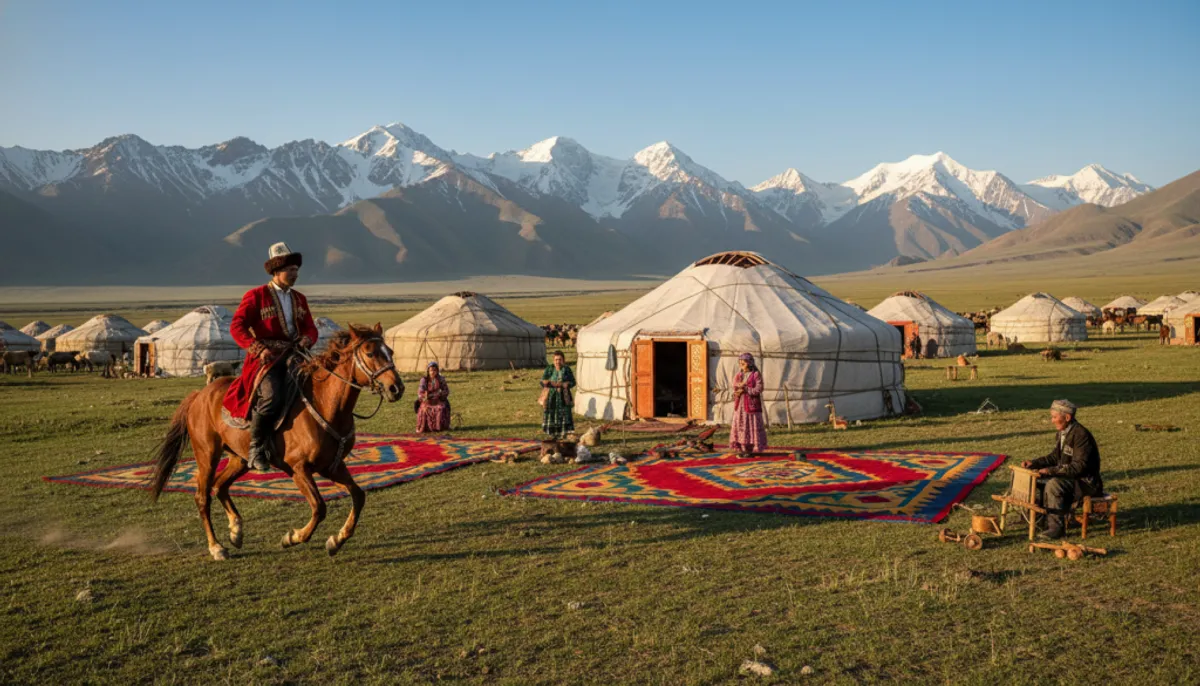
This way of existence, marked by seasonal movements, has profoundly influenced mindsets. Freedom and adaptation to the environment are fundamental values that continue to shape national identity.
We offer you a journey to discover the many facets of this heritage. From traditional dwellings to ancestral celebrations, you will explore how these millennial traditions endure with remarkable authenticity.
This exploration will reveal a world where hospitality and respect for nature are sacred principles. A living heritage that fascinates with its resilience in the face of modernity.
Key Points to Remember
- Kyrgyzstan is a country in Central Asia with a predominantly mountainous territory.
- Semi-nomadic pastoralism remains a living and respected practice.
- This way of life has a profound impact on the mentality and values of the people.
- Ancestral traditions are preserved while adapting to contemporary challenges.
- Hospitality, respect for nature, and solidarity are pillars of this society.
- This culture represents a unique heritage, recognized internationally.
Introduction and Geographical Context
Kyrgyzstan presents a unique geographical configuration, marked by its rugged terrain and isolation. This particular situation has profoundly influenced the development of its inhabitants.
A Country of Mountains and Steppes
More than 90% of the territory consists of spectacular mountains. These impressive reliefs create landscapes of remarkable diversity.
There are snow-capped peaks exceeding 7,000 meters in altitude. The vast steppes alternate with high-altitude pastures called jayloo.
Despite its landlocked position, the country has significant freshwater reserves. Its natural lakes and glaciers compensate for the lack of access to the sea.
The Place of Kyrgyzstan in Central Asia
Positioned at the heart of Central Asia, this territory is surrounded by four nations. To the north, Kazakhstan; to the south, Tajikistan and the Pamir mountains.
To the east, China with the peaks of the Tien Shan; to the west, Uzbekistan and the fertile Ferghana valley. This geostrategic situation has made the region a historical crossroads.
The generous nature and isolated valleys have allowed the development of an adapted way of life. The populations have learned to take advantage of the riches of their mountainous environment.
The Kyrgyz Nomadic Culture
Over the centuries, the inhabitants of the high plateaus have shaped a harmonious existence with their natural environment. This nomadic culture represents much more than a simple way of life: it is a profound philosophy that values freedom and adaptability.
Historical and Ethnic Influences
Kyrgyz nomads have been marked by various influences throughout their history. Their Turkish origins blend with contacts with Mongolian, Persian, and Chinese peoples.
The Soviet period attempted to sedentarize these populations. However, it did not succeed in erasing the deep identity of these mountain nomads.
Daily Life and the Nomadic Lifestyle
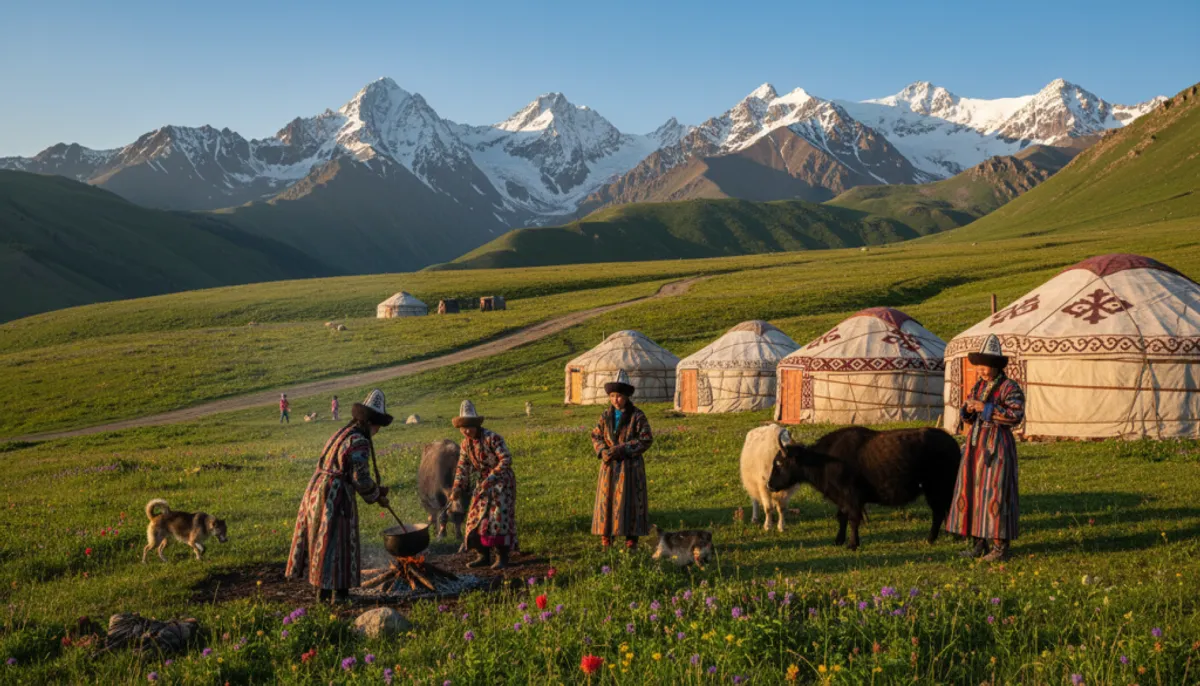
The nomadic life is organized around seasonal transhumance. In winter, families descend into the valleys to protect themselves from the cold.
In summer, they ascend to the high-altitude pastures where grass is abundant. The breeding of horses, sheep, and yaks structures all existence.
This life rhythmically shaped by the seasons forges independent mindsets. Community support and respect for sindhi traditions remain central to collective values.
The Origins and Historical Heritage
For centuries, the Kyrgyz territory has served as a strategic crossroads where different civilizations met. This rich history explains the diversity of influences that have shaped local identity.
The Silk Roads and Cultural Exchanges
The legendary Silk Road traversed this region of Central Asia, creating a bridge between the East and the West. Merchant caravans would stop in the valleys, exchanging much more than goods.
They brought ideas, artisanal techniques, and stories that enriched local traditions. This circulation allowed for encounters between various peoples and cultures.
Millennial Traditions and the Soviet Era
During the 20th century, the country experienced profound transformations with its integration into the USSR. This period saw the succession of three different writing systems.
Despite attempts at sedentarization, fundamental values resisted the passage of time. Independence in 1991 marked an important identity renewal.
The heritage of the south of the country preserves valuable testimonies of this complex history. Caravanserais like Tash Rabat remind us of the importance of the Silk Road in this region of Central Asia.
The Symbolic Importance of the Yurt
This circular dwelling far exceeds its simple function as shelter. It represents a true living architectural heritage.
The yurt embodies the perfect balance between mobility and comfort. Its image even appears on the national flag.
Structure and Function of the Traditional Yurt
The construction uses natural materials like wood and felt. This combination ensures remarkable thermal insulation.
| Element | Material | Function | Characteristic |
|---|---|---|---|
| Structure | Wood | Support | Quickly dismountable |
| Insulation | Thick felt | Thermal protection | Weather-resistant |
| Decoration | Braided wool | Aesthetic | Symbolic patterns |
Craftsmanship and Interior Decorations
The interior reveals a true art of living. Each decorative element has a profound cultural significance.
Colorful felt carpets insulate from the cold ground. Embroidered fabrics add a touch of elegance to the whole.
The yurt is not just a house; it is a complete universe where every detail tells a story.
This millennial tradition continues to fascinate with its harmony and functionality. Modern yurts retain this authentic essence.
The Horse: Companion and Identity Symbol
The bond between the inhabitants and their horses forms the heart of local identity. This exceptional animal accompanies every aspect of life, from travel to celebrations.
A local proverb states: "The horse is the wings of man". This expression perfectly summarizes the fusion relationship that unites the populations with their equine companion.
Equestrian Games and Traditional Competitions
Traditional equestrian games remain extremely popular during festivities. These spectacular competitions showcase the agility of the riders and the endurance of the horses.
| Traditional Game | Description | Particularity |
|---|---|---|
| Kok-boru | Horse rugby with a carcass | UNESCO heritage since 2017 |
| Kyz Kumaï | Horseback love chase | Double race of 300 meters |
| Tyien Engmey | Object collection at a gallop | Test of precision and balance |
| Oodarish | Wrestling between riders | Demonstration of strength |
The Evolution of Breeding and the Preservation of the Local Breed
The breeding of the local horse faced difficulties during the Soviet era. Mechanization and sedentarization threatened this breed adapted to the mountains.
Thanks to passionate French individuals and the Kyrgyz Ate Foundation, a conservation program has emerged. This initiative preserves both the animal and the associated uyghur traditions.
The At Chabysh festival gathers the best riders from the region for several days. This event celebrates the equestrian way of life of the Kyrgyz people.
The Oral Tradition and the Epic of Manas
The epic of Manas is one of the greatest literary works of the world heritage. This oral tradition has been passed down for centuries before being transcribed in the 20th century.
The Role of Storytellers and Manaschis
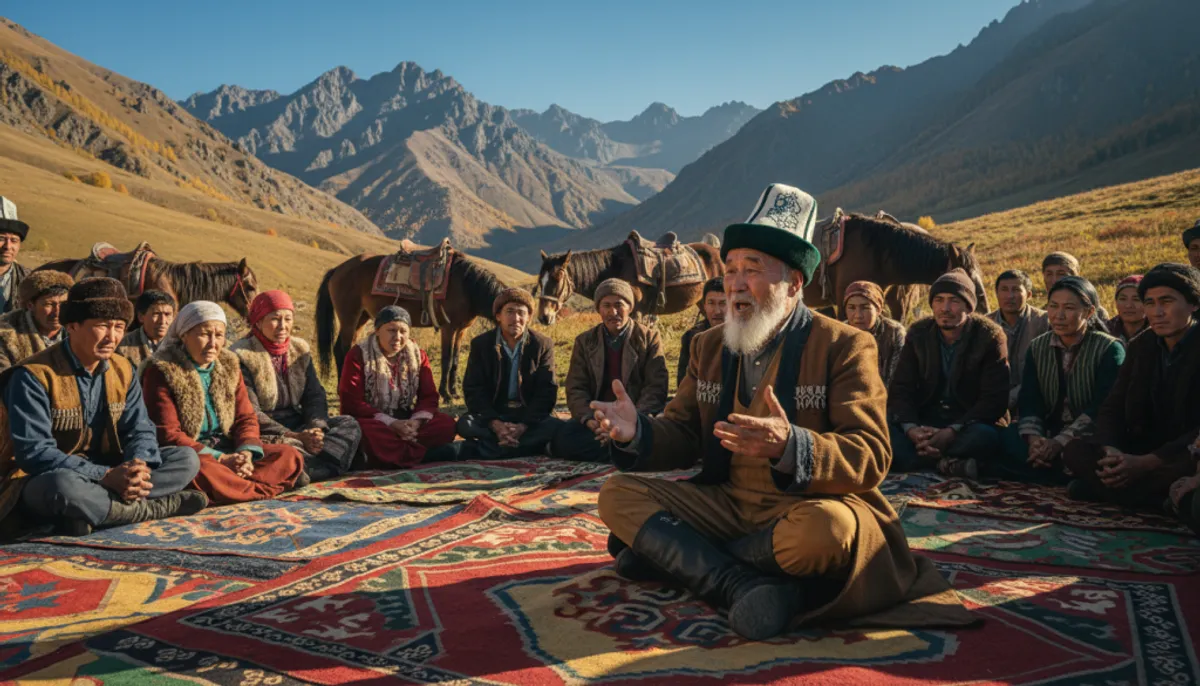
Specialized storytellers, called manaschis, play an essential role. They do not simply memorize the text but reinvent it at each performance.
These artists are considered the living guardians of culture. Their art combines poetry, history, and traditional music.
| Type of Manaschi | Specialty | Training Duration | Recognition |
|---|---|---|---|
| Complete Manaschi | Full recitation | More than 10 years | National |
| Regional Manaschi | Local versions | 5-7 years | Community |
| Apprentice Manaschi | Selected fragments | 2-3 years | Family |
The Place of Manas in National Identity
This epic forms the heart of the identity of the Kyrgyz. It represents much more than a simple literary narrative.
The hero Manas embodies fundamental values such as courage and unity. His name is present everywhere, from universities to airports.
Recognition by UNESCO in 2008 and 2013 confirms the universal importance of this cultural treasure. The storytellers continue to keep this unique epic alive.
Arts and Crafts: Music, Textiles, and Traditions
Kyrgyz artistic expressions shine well beyond the country's borders. This unique creativity harmoniously blends traditional music and ancestral textile craftsmanship.
Each work reflects the soul of a people deeply connected to its environment. These arts constitute a living heritage that continues to evolve.
Traditional Instruments and Folk Music
Music occupies a central place in all festivities and celebrations. The komuz, a small three-stringed mandolin, is the emblematic instrument.
Its construction from apricot wood and its playing technique require exceptional dexterity. The shepherds of the steppes particularly appreciated its lightness.
Other instruments complement this rich musical tradition. The kial (viola), jaw harps, and flutes accompany folk melodies.
Textiles, Felts, and Ancestral Craft Techniques
The work of felt represents a particularly developed ancestral art. Women create colorful carpets with symbolic geometric patterns.
These works insulate from the cold ground of the steppes and decorate the dwellings. The manufacturing process remains long and meticulous.
Each piece testifies to a craftsmanship passed down from mother to daughter. The felt carpets (chyrdak) are part of the traditional trousseau.
The Impact of Art on Nomadic Heritage
The influence of these artistic expressions on the heritage is considerable. Each melody and each textile pattern carries a unique story.
The celebrations marked by music reinforce the sense of belonging. This cultural heritage unites generations.
Traditional festivals thus become moments of natural transmission. The role of art in preserving identity remains fundamental.
These artistic traditions help keep the identity of the Kyrgyz alive. They represent a treasure for all of Central Asia.
Conclusion
Beyond simple traditions, the way of existence of the highland herders reveals a unique philosophy of life. This nomadic culture represents a remarkable balance between adaptation and preservation, much like the regulations set by punjab customs that govern trade and cultural exchanges.
The legendary hospitality and respect for nature remain fundamental pillars. These values transcend centuries with an intact relevance for our contemporary world.
The living heritage of the Kyrgyz continues to enrich our understanding of human relationships. It invites us to rediscover the essential in our relationship with time and space. The rich tapestry of pashtun heritage adds another layer to this cultural richness, showcasing the diverse traditions that shape our world.
This region of Central Asia offers much more than a simple journey. It proposes an authentic encounter with peoples whose harmonious lives deeply inspire.
FAQ
How has the geography of Kyrgyzstan influenced its traditional way of life?
The high mountains and vast steppes have shaped an existence centered on herding and mobility. The high-altitude pastures have encouraged transhumance, a key element of this people's identity. This adaptation to nature has defined their daily lives for centuries.
What is the central role of the yurt in this society?
Much more than just a shelter, the yurt is a true symbolic home. Its round structure and felt decorations reflect a unique worldview. It embodies values such as hospitality and remains at the heart of family celebrations.
Why is the horse so important to the Kyrgyz?
The horse is an indispensable companion for herding, transport, and festivities. Equestrian games like Oulak Tartych (goat pursuit) demonstrate its social role. It represents freedom and strength, qualities deeply admired.
What is the epic of Manas and why is it fundamental?
The epic of Manas is a monumental poetic narrative, one of the longest in the world. Passed down orally by storytellers, the *manaschis*, it recounts the story of a legendary hero. This oral heritage is an essential pillar of collective memory and national pride.
What are the main forms of traditional craftsmanship?
Craftsmanship is rich and varied, with felt work (shyrdaks) and the making of colorful carpets. Music, including mongolian music with instruments like the komuz, accompanies daily life. These arts preserve ancestral know-how and tell the story of the country.