
At the heart of the vast steppes of Central Asia lies a country of continental dimensions. This nation is a unique crossroads, shaped by centuries of history and exchanges.
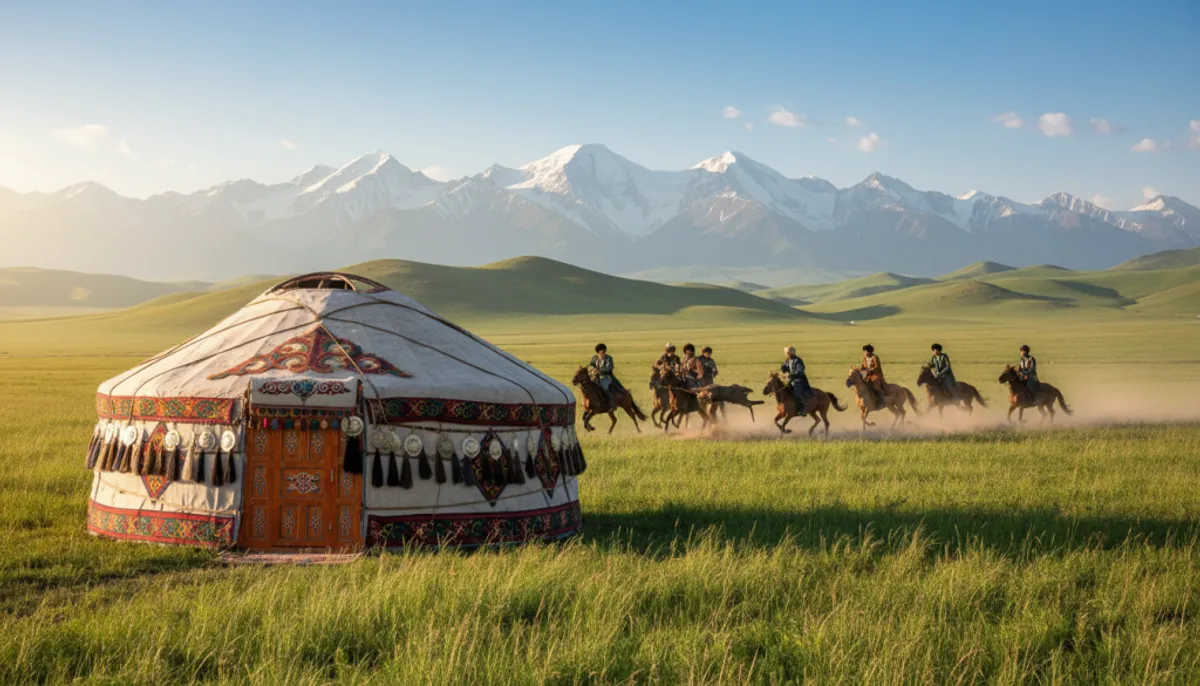
Its identity is a fascinating blend. It draws its roots from the traditions of nomadic peoples while integrating influences from the East and the West.
The itinerant pastoral lifestyle forms the foundation of this society. It has shaped its values, arts, and relationship with the world.
Today, this rich cultural heritage is alive and recognized. Thirteen of its traditions are listed as intangible cultural heritage by UNESCO.
Key points to remember
- Kazakhstan is a vast multicultural country located at the crossroads of Central Asia.
- Its unique identity is born from a blend of nomadic, Turkish, Mongolian, Chinese, and Russian influences.
- The heart of its traditional society rests on a pastoral and nomadic lifestyle.
- The country possesses an exceptional intangible cultural heritage, with 13 traditions recognized by UNESCO.
- This millennial heritage continues to shape daily life and contemporary arts, including initiatives in youth cultural education.
- Exploring this culture is to discover a history deeply linked to vast spaces and the rhythms of nature.
The heritage of traditions and the nomadic lifestyle
Adaptation to a demanding environment has forged a unique pastoral know-how. This nomadic lifestyle has sculpted the identity of a resilient people for millennia.
Pastoral practices and life in the steppe
Life in the steppe demands perfect harmony with nature. Nomads have developed exceptional breeding skills, particularly with the horse, a central animal.
In the regions of Almaty and Altai, these traditions are best preserved. The ancient spirituality of Tengriism is still practiced there.
Traditional games and cultural competitions
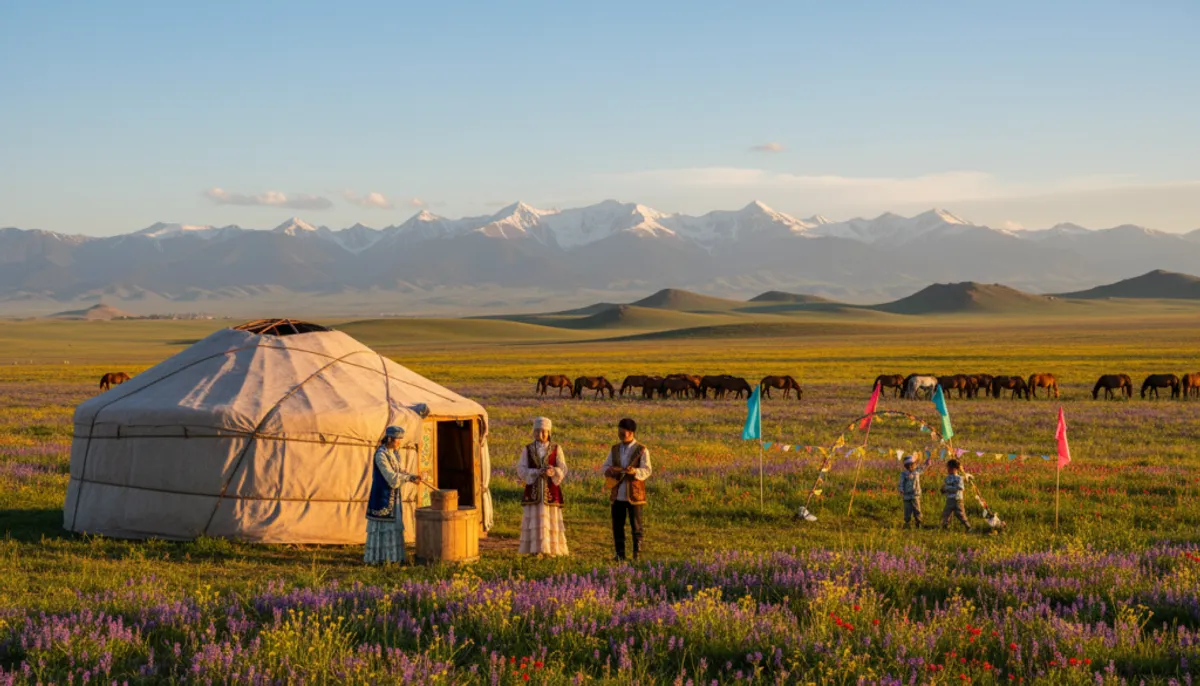
Ancient games are much more than entertainment. They convey wisdom and customs.
The assyks, played with bones since the 1st millennium BC, strengthen community bonds. The Togyzqumalaq is a millennia-old strategy game that sharpens the mind.
Spring rites of the herders, such as Biye bailau, celebrate the sacred bond with the horse. These practices keep a precious heritage alive.
Symbols and ornamentation: the soul of the Kazakh people
Every curve and every symbol in craftsmanship tells a story from the depths of time. This visual language, called oy-ornek, preserves the worldview and memory of the ancestors.
It is not just simple decoration. It is a unique spiritual code passed down through generations.
Traditional patterns and their historical significance
The earliest patterns date back to the era of the Sakas and Huns, from the 7th to the 3rd century BC. Each form has a profound meaning.
These ornaments adorned everyday objects, from weapons to carpets. They connected the past to the present.
| Visual motif | Name | Meaning | Traditional use |
|---|---|---|---|
| Ram's horn | Koshkarmuz | Prosperity and family unity | Decoration of yurts, men's clothing |
| Camel hump | Orkesh | Endurance and strength | Woolen articles, interior decoration |
| Amulet | Tumarsha | Spiritual protection | Women's clothing and jewelry |
| Bird's wing | Kus kaanaty | Freedom and elevation | Embroidery and jewelry |
| Swan's neck | Kazmoyin | Beauty and grace | Decorative objects and wearable art |
From the yurt to the shapan: the decorative and wearable art
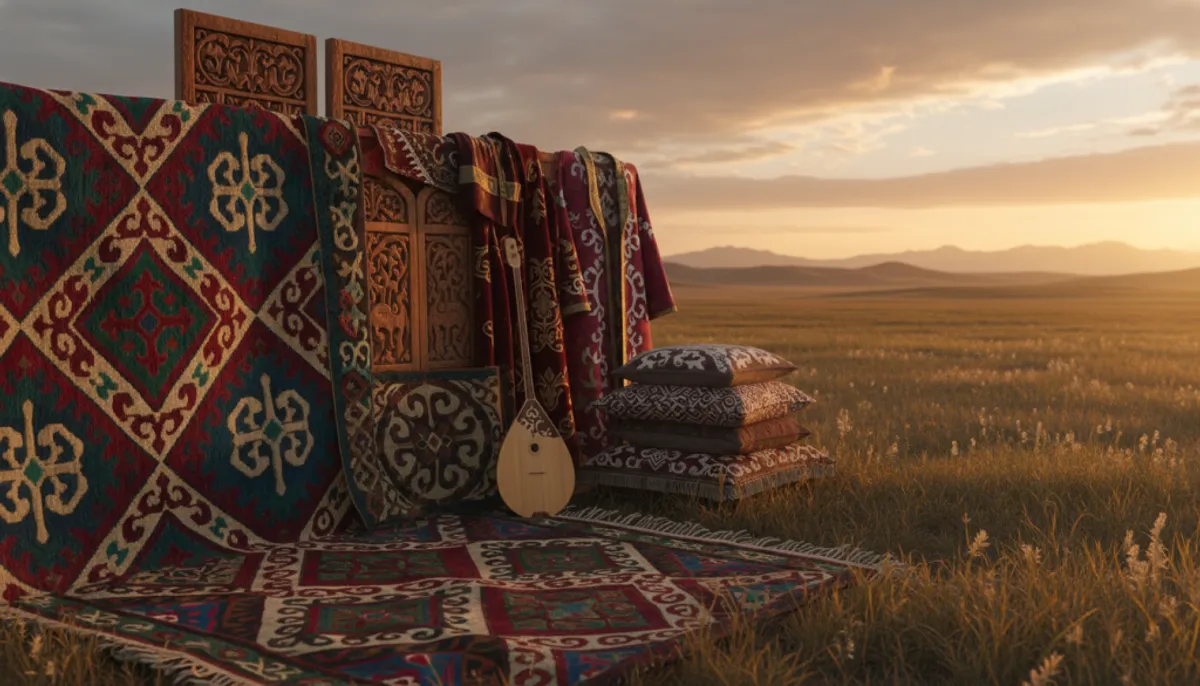
The art is also expressed in clothing. The shapan, a traditional coat, is richly embroidered with these symbols.
Women's jewelry, such as the saukel, carries protective patterns. Each piece tells a clan story.
The nomadic dwelling, the felt yurt, is a masterpiece of craftsmanship. Its construction is recognized by UNESCO.
Today, these patterns are part of contemporary fashion. They adorn modern objects, proving their vitality.
Kazakh culture, intangible heritage recognized by UNESCO
Thirteen cultural jewels of Kazakhstan now shine on the global UNESCO list. This recognition highlights the universal value of a living heritage. These traditions play a central role in national identity, while the realm of france culture audio fiction further enriches the narrative of cultural expression.
Examples of traditions listed by UNESCO
The art of Dombra Kuy is fundamental. This two-stringed instrument produces melodies, the kuy, that narrate history through music. It is over 2000 years old.
The Aitys is a poetic improvisation contest. Two artists compete, accompanied by the dombra. The celebration of Nauryz marks the spring renewal. Families prepare a symbolic dish with seven ingredients.
The sharing of flatbread katyrma is a ritual of unity. Falconry, which is 4000 years old, illustrates an ancient bond with nature in the region. The legends of Korkyt Ata and the art of puppetry Orteke complete these items of cultural heritage. All animate contemporary festivals.
Influences and cultural diversity in Central Asia
The country is a true crossroads in Central Asia. Its vast land has welcomed exchanges with many neighboring peoples.
This position has created a unique identity. It is a fascinating synthesis of influences from China, Mongolia, and Turkish nations.
Fusion of cultures: from China to the Turkish countries
The result is a rich and complex heritage. Each community has preserved its own customs while contributing to the whole, highlighting the importance of cultural preservation.The eastern regions maintain a strong pastoral lifestyle. The west, near the Caspian Sea, shows different traits.
Ancient roots like Zoroastrianism, or fire worship, still mark certain practices. This reflects spiritual connections across Central Asia.
| Source of influence | Cultural element | Visible impact today |
|---|---|---|
| Turkish cultures (Kyrgyzstan, etc.) | Art of Aitys, epics | Poetic contests and shared narrative heritage |
| China and Mongolia | Breeding techniques, spirituality | Pastoral practices and connection to nature |
| Russia | Architecture, language | Linguistic and urban diversity |
| Ancient Zoroastrianism | Fire worship | Rituals and symbols in certain celebrations |
| Neighboring countries (Iran, Uzbekistan) | Nauryz festival | Common celebration of spring |
Many traditions are shared across borders. The epic of Dede Qorqud unites Azerbaijan and Turkey with Kazakhstan.
Falconry, recognized by UNESCO in more than a dozen countries, illustrates this link among nomads worldwide.
Planning a trip here is to discover this fusion live. Each festival and family gathering reflects this vibrant reality.
You will observe a subtle play between tradition and modernity. An authentic experience awaits you on this welcoming land.
Conclusion
This heritage treasure, passed down through generations, continues to shape daily life with remarkable vitality. The traditions of the steppe play a central role in modern identity.
Visitors encounter this living heritage at every moment. Entering a yurt or witnessing a falconry demonstration offers a unique immersive experience. The family remains the main guardian of this tradition, proudly sharing rites such as the meal of horse meat during celebrations.
A trip here is much more than just a tour. It is a sensory dive into a millennia-old history. Whether you are passionate about art or simply curious, Kazakh culture invites you to an unforgettable discovery.
FAQ
What are the key elements of the traditional nomadic lifestyle?
The traditional lifestyle is deeply connected to the steppe and pastoral breeding. The iconic habitat is the yurt, a portable and ingenious home. Community living, seasonal movements, and a unique relationship with the horse are its pillars. This way of life has shaped the identity and values of the people.
What is the role of equestrian games in cultural heritage?
Equestrian games, such as kokpar or kyz kuu, are much more than entertainment. They are vital cultural competitions that perpetuate ancestral know-how, including various cultural shows. They strengthen community bonds, celebrate agility and warrior spirit, and remain highlights of national festivals and celebrations.
What do ornamental patterns represent in local craftsmanship?
The patterns, called “örnek”, are the visual signature of this art. Geometric or inspired by nature, they tell a story and carry symbolic meaning, often related to protection, fertility, or harmony. They can be found on felt, jewelry, carpets, and decorative elements of the yurt.
Which craft objects best reflect this heritage?
Felt craftsmanship, used for carpets and wall coverings, is fundamental. The construction of yurts, saddlery for horses, and making clothing like the shapan (traditional robe) are also highly codified forms of art. Silver jewelry set with turquoise or coral represents the precious version of this craft.
What Kazakh traditions are recognized by UNESCO?
Several practices are listed as intangible heritage. The traditional art of dombra, music played on a two-stringed instrument, is famous. The construction of the yurt, the knowledge related to eagle breeding for hunting, and certain reconciliation rituals are also part of this global cultural heritage.
How have external influences enriched this culture?
Located at the crossroads of Central Asia, Kazakhstan has integrated elements from Turkish, Persian, Mongolian, and even Russian cultures. This fusion is reflected in certain patterns, culinary dishes, or musical instruments. It creates a unique cultural diversity within the region while preserving a strong identity base.