
Welcome to this fascinating exploration of a millennial civilization. This society has managed to preserve its unique identity despite the challenges of time and geography.
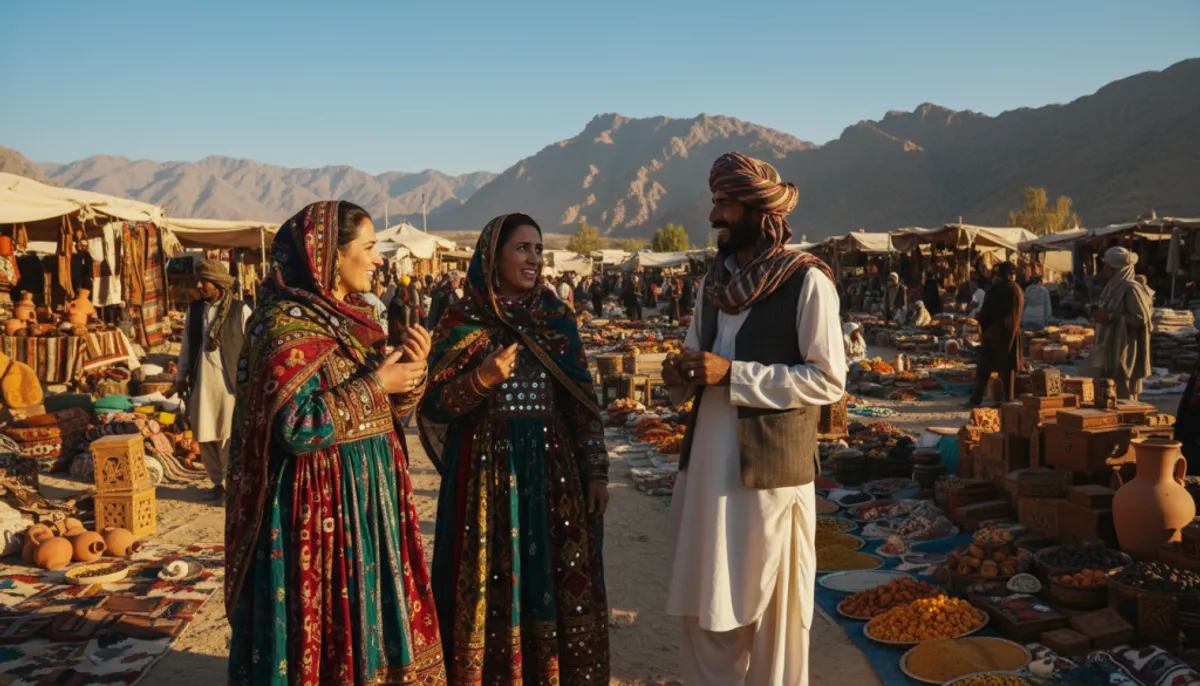
The Baloch people have developed a rich identity at the crossroads of the East and India. Their territory imposes demanding natural conditions that have shaped their character.
Dive into a captivating history dating back to the early Iranian-Aryan settlements. Ancestral traditions remain alive even today.
Discover legendary customs of hospitality and delicate embroidery. Enchanting folk music and complex social structures will surprise you.
Balochistan represents 44% of Pakistan's territory. This region is home to a population deeply attached to its heritage.
Key Points to Remember
- Millennial civilization with a preserved identity
- Strategic position at the crossroads of the East and India
- Origins tracing back to Iranian-Aryan settlements
- Living traditions: hospitality, craftsmanship, music
- Geopolitical importance of Balochistan
- Balance between preservation and modernity
- Resilience in the face of historical challenges
Introduction to Baloch Culture
Explore the secrets of a cultural identity forged in the arid landscapes of Southwest Asia. The exact origins of this people remain shrouded in mystery, with settlements dating back to ancient times at the strategic crossroads between the East and India.
The main territory, once named Makran, underwent a significant name change during the reign of Nader Shah (1736-1747). It was at this time that the word Balochistan replaced the old designation, marking an important milestone in regional history.
This population has remarkably adapted to a desert environment that is difficult to access. Geographic isolation has allowed the preservation of a particularly distinctive ancient Iranian-Aryan identity.
Communities are primarily spread across three countries, forming a diaspora united by a common language and traditions. Their way of life reflects deeply ingrained community values and a strong oral tradition.
Today, understanding this rich culture requires appreciating how it has managed to maintain its traditions, including traditional cambodian dances, while adapting to contemporary realities. The geographical area continues to influence the cultural and social dynamics of this resilient people.
Historical Origins and Evolution
Let us trace the historical journey of a people with debated origins. Experts diverge on the roots of this fascinating community.
Early Settlements and Iranian Influences
The history of early settlements dates back to the 12th century. Some experts mention links to Arab tribes, but this theory lacks documentary evidence.
Over the years, the majority of anthropologists have concluded an Iranian origin. This position is supported by rigorous linguistic analyses.
The desert territory has played a crucial protective role. UNESCO confirms that this geographic isolation has preserved a unique ancient identity.
The Heritage Between East and India
The population has developed distinct ethnic characteristics. The arid environment and limited exchanges have shaped its evolution.
A significant part of this rich history remains unknown. Oral transmission constitutes the main vector of collective memory.
This people has created an original cultural synthesis. It skillfully combines Persian, Afghan, and Indian elements.
The Importance of Baloch Culture
The heritage of this community offers universal lessons on human resilience. Its presence greatly enriches the ethnic fabric of Central Asia.
The Baloch people embody remarkable qualities forged by their environment. Nobility, hospitality, and courage define their unique character.
Despite a simple material existence, this society develops an intense spiritual life. The harshness of the desert has stimulated exceptional artistic creativity.
This tradition represents a living testimony to human diversity. It demonstrates how difficult conditions can lead to social sophistication.
The value system prioritizes honor and community solidarity, deeply intertwined with maratha customs. These principles ensure the preservation of a precious identity in the face of modern challenges.
Ancestral Customs and Traditions
Sacred commitments and the spoken word form the foundation of traditional social cohesion. This society has developed a complex system of values that guides every aspect of communal existence.
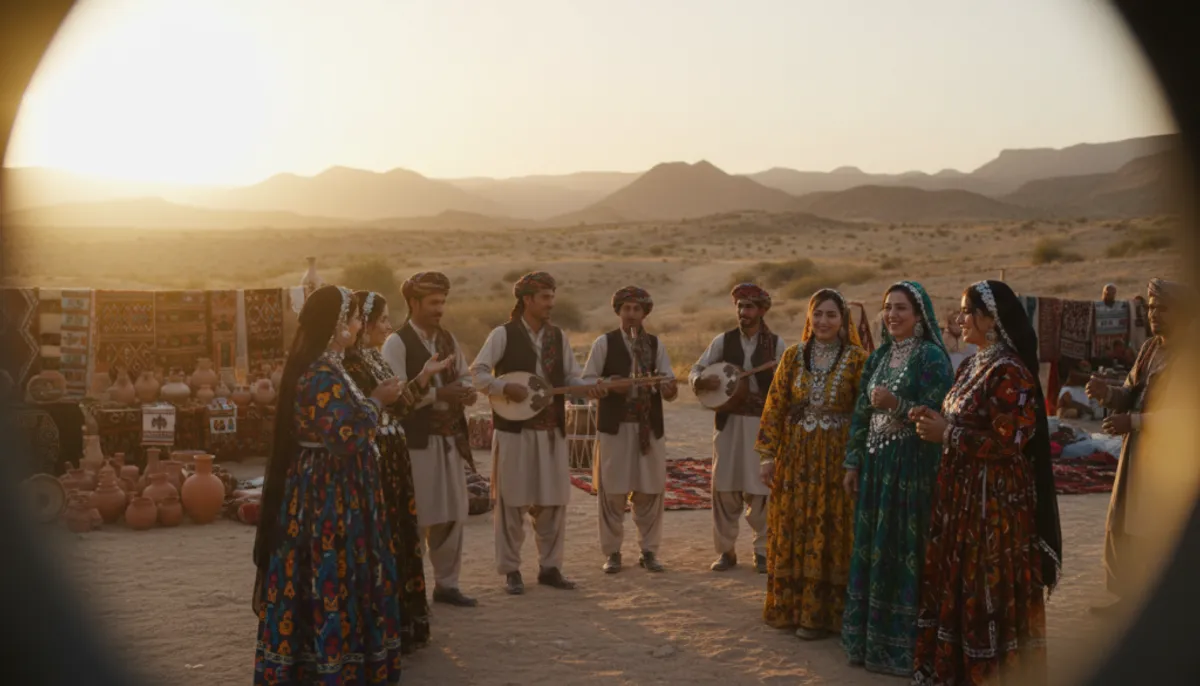
Hospitality represents a cardinal virtue in this social organization. Every guest enjoys absolute protection, regardless of their origin or situation.
Hospitality Rituals and Commitments
The miyârdjali allows any man in danger to find refuge with a different clan chief. The protector commits to ensuring the safety of the refugee for the duration of their life if necessary.
The sacred promise, or ghowl, occupies a central place in the code of honor. "I would rather lose my head than break my word" illustrates this fundamental value.
Community solidarity is not a choice but a vital necessity. The bedjâr helps young men establish a family through collective donations.
The traditional court, or divân, brings together elders to arbitrate conflicts. This institution maintains the balance between justice and reconciliation within each family.
These rituals create a social fabric where everyone knows their place and responsibilities. The court ensures the preservation of these ancestral traditions in the face of modern challenges.
Craftsmanship and Traditional Clothing
Handcrafted creations reveal an identity shaped by the desert. Traditional clothing serves as a distinctive identity marker.
Each garment tells a story of ingenious adaptation. Extreme climatic conditions have influenced the shapes and materials.
Embroidery and Handwoven Textiles
Women’s embroidery represents one of the most refined crafts in sindhi art. Their development has allowed women to generate income while preserving ancestral know-how.
Each ethnic group has its own stylistic variations. Complex geometric patterns and vibrant colors are the hallmark of this province.
Traditional Weaving and Ceramics
Weaving is practiced particularly in the town of Kenarak for fishing nets. This activity illustrates how local resources have shaped specific techniques.
The ceramics from the village of Kalpourgan date back to the protohistoric period. These skills are now valuable economic assets for the communities.
Music and Folklore
In the heart of the deserts, music serves as a link between generations and territories. This artistic tradition represents a fundamental pillar of identity expression.
Traditional instruments create distinctive melodies that accompany every important celebration. Weddings, community gatherings, and family events resonate with these characteristic sounds.
Folklore, including a rich tradition of oral poetry and epic songs, is deeply intertwined with syrian folklore. These works celebrate tribal heroes, legendary loves, and values of honor.
Musicians play a crucial social role as guardians of collective memory. Their compositions preserve the history and traditions of the people through the centuries, including the influence of france culture radio frequency.
This Baloch culture in music skillfully blends Persian, Afghan, and Indian influences. In the face of modern challenges, it continues to assert a unique and resilient identity.
Political Dynamics and Historical Conflicts
The Qajar period profoundly transformed the balance of powers in this border area. The 19th century saw intensified rivalries between Western powers for strategic control of this region.
The Qajar government mainly viewed this territory as a source of tax revenue. This approach neglected local administrative development in favor of central power interests.
The weakness of the Iranian state allowed tribal structures to strengthen their authority. Local leaders exercised near-sovereign control, creating permanent conflicts with central institutions.
| Political Actor | Main Interests | Lasting Impact |
|---|---|---|
| Qajar Government | Tax Revenue | Administrative Neglect |
| British Empire | Strategic Buffer Zone | Geopolitical Rivalries |
| Tribal Authorities | Local Autonomy | Parallel Governance System |
| Local Population | Identity Preservation | Resistance to Central Powers |
The British colonization of India transformed this region into a major political issue. This situation led to constant revolts that were difficult for central authorities to control.
The legacy of these tensions still marks the relationships between local communities and modern governments. The traditional tribal structure continues to influence contemporary dynamics.
Resistance and Nationalist Movements
The 1960s marked a turning point in regional political history. Structured organizations emerged with clear demands.
This period saw the transition from tribal revolts to modern movements. Independence and autonomy became asserted goals.
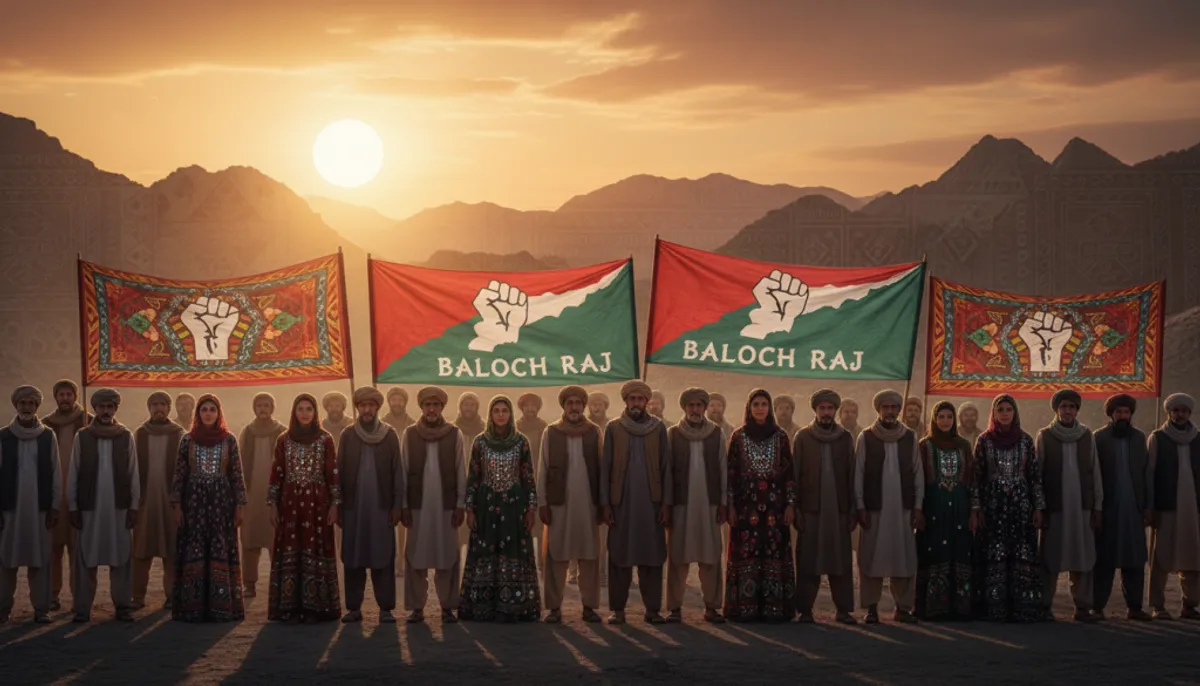
Liberation Fronts and Political Parties
The Liberation Front appeared in 1963 under the leadership of Jom'eh Khan. Supported by Arab countries, this group waged a guerrilla war until the early 1970s.
The Democratic Party was formed in Baghdad during the same decade. It demanded a democratic government and linguistic rights in education.
These organizations represent an innovative secular political approach. Their lack of tribal support explains their relative isolation.
Post-Islamic Revolution Effects and Modernization
The 1979 Revolution profoundly transformed the balances. Opposition to the new government pushed many leaders into exile.
A notable change concerns the emergence of local intellectuals. The increase in academics alters the nature of leadership.
Modernization creates a new generation of activists. Their demands lean towards a contemporary nation-state.
The Geopolitical Situation of Balochistan
The vast desert expanse of Balochistan conceals a complex and often overlooked political reality. This province represents 44% of Pakistan's territory, an area equivalent to that of Germany.
The border situation of this region is particularly strategic. It borders Iran to the west and Afghanistan to the northwest.
To the east and south, it shares borders with the neighboring countries of Sindh and Punjab customs. This unique geographical position profoundly influences regional dynamics.
Quetta, the administrative capital, governs a territory that is sparsely populated. Despite its vast area, the province is home to only 5% of the national population.
Recent history marks a crucial turning point. On August 5, 1947, the British government recognized the independence of this area.
But this sovereignty was short-lived. On March 27, 1948, the Pakistani army intervened in Kalat.
It forced the Khan to sign an accession treaty against the wishes of the local parliament. This event created a tense situation that persists today.
Many local groups contest this forced integration. They claim the right to self-determination for their people.
The presence of natural resources and the port of Gwadar enhance the strategic importance of this province for the Pakistani state. The region remains a major geopolitical issue among several countries.
Linguistic Diversity and Educational Challenges
The linguistic mosaic of Balochistan presents a fascinating landscape where several ancestral languages intersect. This province is home to a rich variety of local dialects that reflect its demographic complexity.
Indigenous Languages and Their Use
Balochi dominates as the majority language with approximately 5.6 million speakers. However, it has no official status in this region.
Three main variants coexist: western (1.1 million), eastern (1.8 million), and southern (2.7 million). Urdu remains the administrative language although spoken by only 4.5% of the population.
Teaching Challenges and Recent Initiatives
In 2014, the provincial government adopted a groundbreaking law for multilingual education. This measure mandates the teaching of mother tongues at the primary level.
The initiative concerns seven languages including Balochi, Pashto, and Brahui. The government must provide textbooks and train teachers.
| Language Variant | Number of Speakers | Geographical Distribution |
|---|---|---|
| Western Balochi | 1.1 million | Iran, Turkmenistan |
| Eastern Balochi | 1.8 million | Pakistani Punjab |
| Southern Balochi | 2.7 million | Central Balochistan |
Despite this advancement, English holds a privileged place in higher education. Implementation faces practical obstacles such as a lack of qualified teachers.
The Influence of Modernity on Baloch Traditions
The encounter between modernity and ancestral traditions creates profound transformations in Balochistan. Social structures are rapidly evolving under the pressure of the central government and economic development, influenced by popular culture trends.
The family situation is experiencing radical changes. Inter-clan marriages are becoming more frequent, challenging millennia of endogamy.
The status of men and women within the family is changing. Modern education and national media influence these evolutions.
Polygamy, once common, is steadily declining. Young people seek economic independence through salaried jobs rather than traditional agriculture.
The political context remains marked by violent conflicts. The war waged by the Pakistani state has caused massive suffering for over twenty years.
Human rights defense groups document violations. The Baloch Yekjethi Committee organizes protests against enforced disappearances.
This province rich in natural resources sees its population evolving. Modernization creates both opportunities and identity tensions.
Conclusion
At the end of this journey through Baloch heritage, a truth emerges strongly. This people has managed to preserve its unique identity despite the challenges of time.
The rich Baloch culture represents an exceptional heritage. Forged by millennia of history, it testifies to remarkable adaptation.
The Baloch groups, spread across several states, number in the millions. Their daily life remains marked by ancestral values.
Every man and woman embodies this resilient tradition. Contemporary politics poses significant challenges for identity preservation.
This exploration reveals a complex and vibrant cultural mosaic. A precious heritage that deserves recognition and respect.
FAQ
Where is the Baloch territory located today?
The Baloch people primarily live in the province of Balochistan, a vast area shared between Iran, Pakistan, and Afghanistan. It is a region at the heart of many geopolitical issues.
What are the main languages spoken by this group?
The Balochi language, derived from Iranian languages, is the mother tongue. However, Urdu, Persian, and English are also used depending on the country, creating a rich linguistic diversity.
How is the defense of the rights of this population manifested?
The defense of rights involves political parties and movements that work for greater autonomy, better access to resources, and recognition of their status within the states where they reside.
What is the impact of conflicts on the development of the region?
Historical conflicts and current tensions have often hindered economic development and education, affecting the lives of millions of people. Initiatives are seeking to improve the situation.
Is Baloch culture in danger in the face of modernity?
Like many cultures, it is evolving. Traditions, craftsmanship, and family structures resist but also adapt to new realities, seeking a balance to preserve their unique heritage.