
Welcome to the captivating universe of the Sakha, a Siberian Turkic people with an exceptional heritage. These inhabitants of northeastern Siberia have developed unique traditions in one of the coldest regions on the globe.
Their territory, the Republic of Sakha, represents one of the most extreme inhabited areas on our planet. Despite these harsh conditions, this community of about 478,000 people has managed to create a remarkable cultural identity.
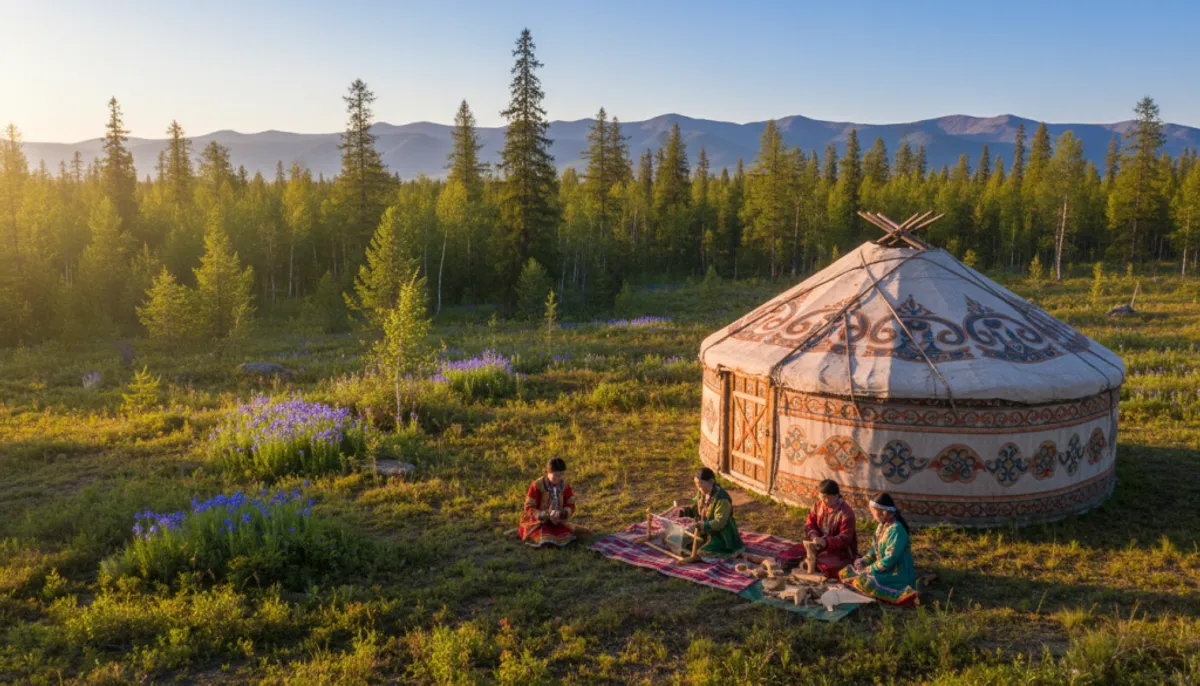
Their olonkho epic, recognized by UNESCO since 2005, testifies to the richness of their intangible heritage. This global recognition highlights the importance of preserving these ancestral traditions.
Discover how this resilient people have turned climatic challenges into sources of cultural inspiration. Their adaptation to the hostile environment of the Far North offers valuable lessons on human capacity to thrive in extreme conditions.
Key Points to Remember
- The Yakuts call themselves Sakha and are a Siberian Turkic people
- They live in one of the coldest regions of the world, in northeastern Siberia
- Their population is about 478,000 people in Russia
- The olonkho epic has been listed as UNESCO's intangible heritage since 2005
- They have developed a unique culture despite extreme climatic conditions
- Their heritage combines nomadic traditions and shamanic spirituality
- Sakha communities also exist in the United States, Canada, and elsewhere
Origins and History of Yakut Culture
The origins of this Siberian people date back to a time of great political upheaval. According to researcher Éric Crubézy, their ancestors were Mongol horsemen from the Baikal region.
The First Migrations and Adaptations in the North
In the 14th century, these populations left the south to migrate northward into Siberia. The empire of Genghis Khan was collapsing, pushing many tribes to move.
“Politically they were not welcome in the South.”
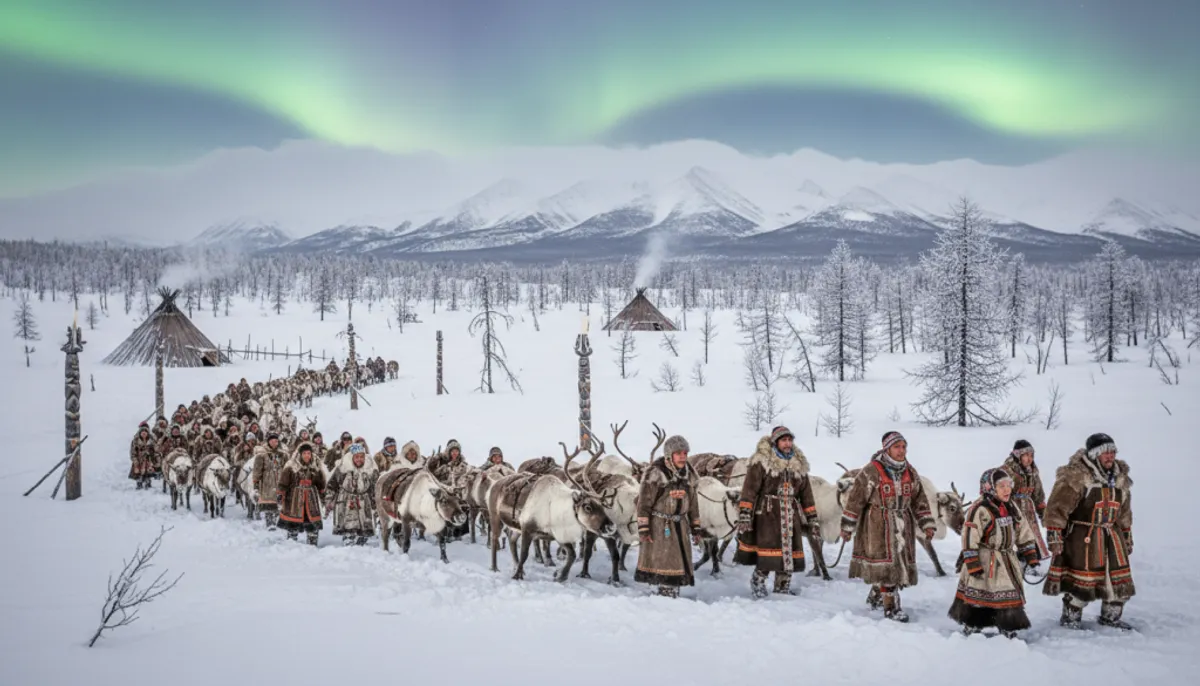
They traveled up the Lena River and mixed with the indigenous peoples. This adaptation to the Arctic environment transformed their practices.
The Influence of Russian Conquest and Historical Evolution
In the 1620s, the Russians arrived in their territory. The founding of Yakutsk in 1632 marked a decisive turning point.
The Russian authorities suppressed several rebellions between 1634 and 1642. In the 18th century, the region became an important trade crossroads.
| Period | Major Event | Impact on the People |
|---|---|---|
| 14th-15th century | Migration from Baikal | Adaptation to Arctic climate |
| 1620-1632 | Arrival of Russian settlers | Founding of Yakutsk |
| 1634-1642 | Rebellions against the Russians | Military repression |
| Before 1820 | Conversion to Orthodoxy | Preservation of shamanism |
Despite religious conversions, shamanic traditions have persisted. The population has shown remarkable resilience in the face of historical challenges.
Traditions and Rituals of the Yakuts
Shamanic spirituality is the invisible thread that connects the Sakha to their environment and ancestors. This sacred connection permeates every aspect of their existence.
Shamanic Ceremonies and Fire Rituals
Shamanism plays a central role in daily life. Every important event requires the participation of a shaman.
Fire rituals are practiced daily. Every meal begins with offerings thrown into the flames. This practice honors the protective spirits.
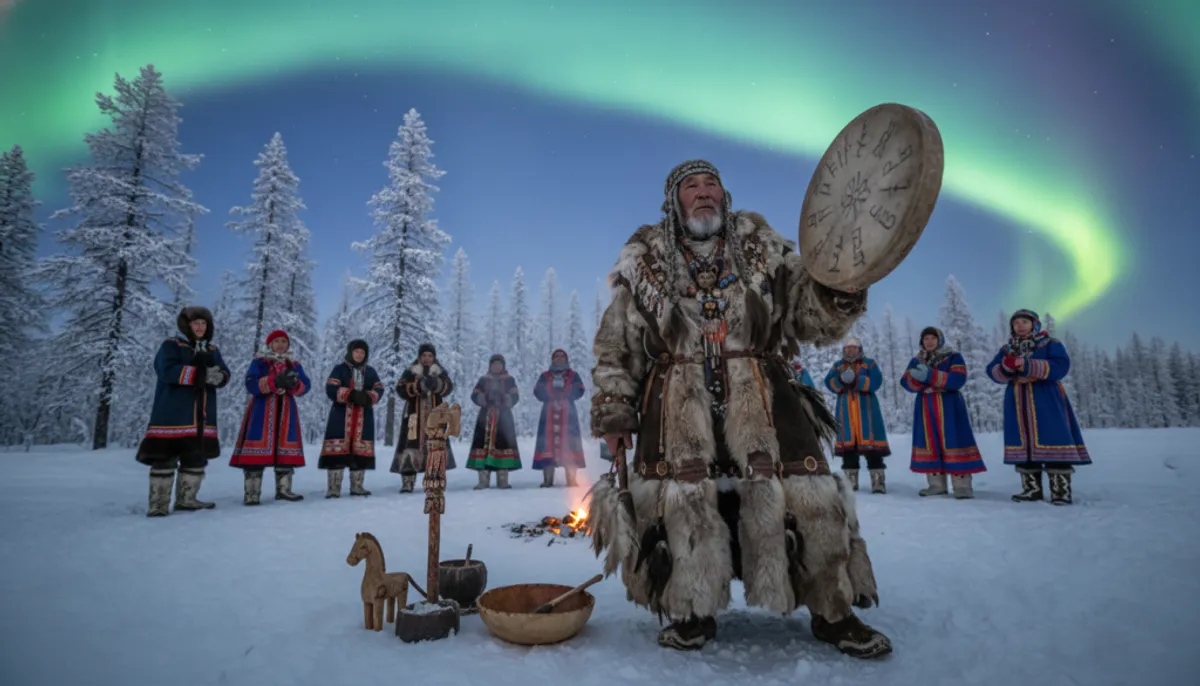
The worldview resembles Shintoism. Every natural element possesses its own spirit. The shamans establish a sacred communication with them.
Ancestral Festivals such as Ysyakh
Ysyakh is the most important celebration of the year. It takes place on June 21 in the Republic of Sakha. Thousands of people gather to honor the sun.
A white shaman opens the festivities with a fire ceremony. This practice purifies the souls and recharges the bodies with energy. At the first rays of the June sun, an impressive silence settles.
The women particularly honor Ayyysyt, the goddess of fertility. The celebration culminates with the osoukhay, a collective round dance. Participants hold hands in a circle.
These traditions help preserve identity and strengthen the sense of belonging. They represent a precious heritage passed down from generation to generation.
Daily Life and Cultural Heritage
The cultural heritage manifests in every aspect of the life of the inhabitants of the northern Siberia. Their adaptation to the Arctic environment has shaped unique traditions that endure today.
The olonkho, Epic Poetry and Traditional Music
The olonkho represents the cultural jewel with its 36,000 rhymed lines. This heroic epic has been passed down orally for centuries.
Traditional music combines throat singing and specific vocal techniques. These practices preserve the collective memory of the people.
Craftsmanship, Cuisine, and Nomadic Lifestyles
The yurts built from tree trunks housed families. In summer, temporary dwellings made of birch bark appeared.
The cuisine reflects climatic adaptation with dairy products in summer. Milk plays a central role, transformed into various preparations.
Kumis, a fermented mare's milk drink, offers exceptional nutritional benefits. Stroganina, a dish of frozen raw fish, complements this unique cuisine.
Traditional Instruments, from Khomus to Jew's Harp
The khomus, a traditional Jew's harp, served as a daily communication instrument. It also developed a therapy based on breath control.
This instrument accompanied shamanic rituals and traditional music. It complements the oral epic for a complete cultural expression.
The Siberian Turkic languages, spoken by 456,000 speakers, carry this heritage. They testify to the richness of traditional artistic expressions.
Yakut Culture and Its Contemporary Influence
The Republic of Sakha today represents a vast territory where ancestral traditions and modernity coexist harmoniously. This Arctic region covers over 3 million km², or 5% of Russian territory.
| Aspect | Key Figures | Importance |
|---|---|---|
| Area | 3,083,523 km² | Largest Russian subdivision |
| Total Population | ~960,000 inhabitants | Very low density |
| Sakha Proportion | 49% of the population | Relative majority |
| Diamond Production | 98% of Russian rough | Economic pillar |
The Russians make up 37.8% of the inhabitants, creating a unique multicultural society. This proportion has significantly increased since the Soviet era.
Adaptation of Traditions in a Modern Society
Despite the mineral wealth, the inhabitants dedicate substantial resources to their heritage. UNESCO recognition in 2005 has valued the olonkho on the intangible heritage list.
Artists like Stepanida Borissova showcase traditions worldwide. The northern part maintains reindeer herding, while urban areas adopt modernity.
This year marks a new step in preserving this exceptional heritage. The number of people engaged in its transmission continues to grow.
Conclusion
The living heritage of the Sakha teaches us how to preserve its soul in the face of the most extreme challenges. This remarkable people has transformed the hostile environment of northern Siberia into a source of cultural inspiration.
The horse plays a central role in this successful adaptation. These robust companions of the herders represent 10% of the Russian livestock and live in semi-freedom all year.
UNESCO recognition confirms the universal value of this heritage. The olonkho and the preparation of kumis are on the intangible heritage list.
Today, nearly half a million people continue these ancestral traditions. The Republic of Sakha demonstrates how modernity and heritage can coexist harmoniously.
This unique culture continues to inspire the whole world with its exceptional resilience. It remains a vibrant testament to human capacity to thrive under the most difficult conditions.
FAQ
What is the most emblematic dish of traditional cuisine?
Stroganina, thin slices of frozen raw fish, is a highly appreciated dish. Dairy products from horses, such as kumis, are also fundamental in the diet of the inhabitants of this region.
Is the Republic of Sakha solely populated by this people?
No, the population is a fascinating mix. Several indigenous peoples, such as the Evenks, coexist with the Russians. This diversity enriches the cultural heritage of the region.
What is the Ysyakh festival and when does it take place?
Ysyakh is the great sun festival that celebrates the beginning of summer, often in June. It is a crucial moment for the inhabitants, marked by dances, songs, and rituals honoring the spirits and ancestors.
Does horse breeding have a particular importance?
Absolutely! The horse is at the heart of local life and economy. The herders depend on it for meat, milk, and transport. This special relationship is reflected in traditions and craftsmanship.
Is the Olonkho epic still alive today?
Yes, the olonkho is a living treasure! This oral epic, listed by UNESCO, is passed down by storytellers. It represents an essential part of the music and literature of the peoples of this republic.