
Welcome to the captivating universe of Trinidad and Tobago! These two twin islands are located at the heart of the Caribbean. They form a unique country of about 1.4 million inhabitants.
The capital, Port of Spain, pulses with the rhythm of this exceptional nation. English is the official language, but the local creole resonates in the streets.
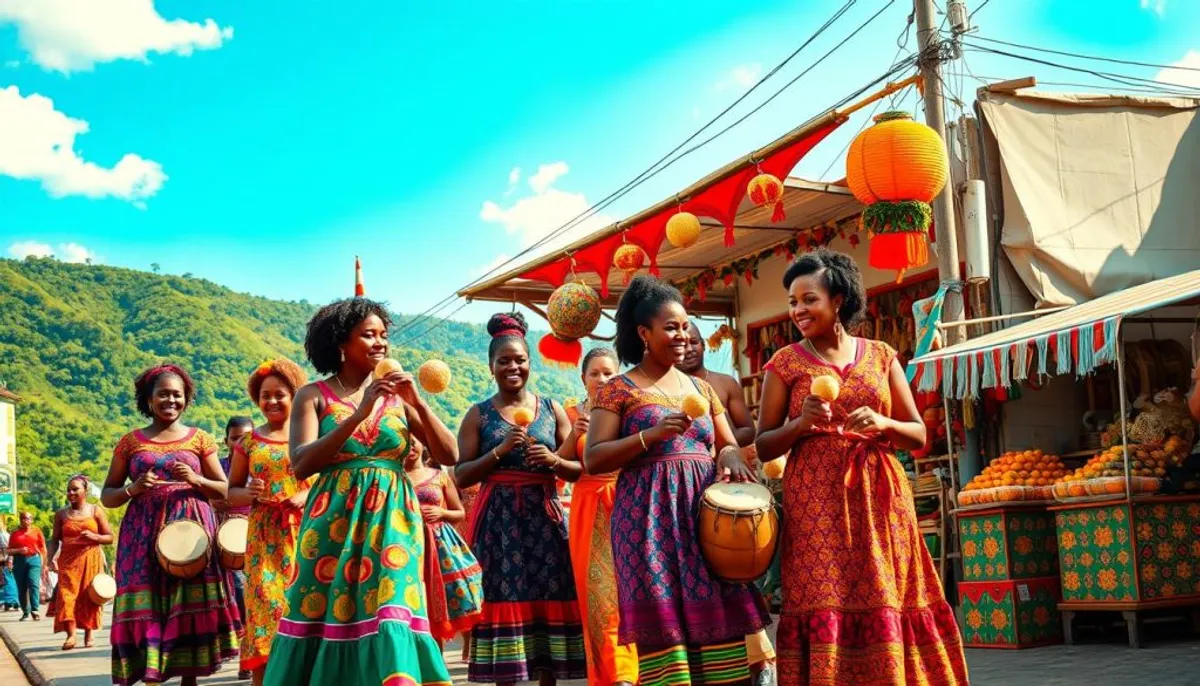
This territory of 5,128 km² represents a fascinating mosaic of diversity. Influences come from all corners of the world, creating a unique Caribbean identity.
The East meets the West harmoniously here. This destination stands out for its extraordinarily rich heritage.
Several centuries of migration have shaped this cultural society. Indigenous peoples, Africans, Indians, Europeans, and Middle Easterners have contributed to this blend.
The country has managed to preserve its multiple heritages while forging a distinctive national culture. Contributions like the steelpan and calypso are recognized worldwide.
Key Points to Remember
- Trinidad and Tobago are twin islands in the Caribbean
- A population of approximately 1.4 million inhabitants
- Capital: Port of Spain
- Official language: English, with local creole
- Rich culture derived from multiple ethnic influences
- Global contributions: steelpan, calypso, carnival
- Unique identity blending Eastern and Western traditions
Introduction to Trinidadian Culture
At the heart of the Caribbean, Trinidad and Tobago presents itself as a true laboratory of multicultural coexistence. These twin islands resemble a miniature United Nations showcase, where the East meets the West in remarkable harmony.
The territory is home to about 1.4 million inhabitants from diverse backgrounds. It features African, Indian, European, Middle Eastern, and South American influences. This human mosaic creates an exceptionally rich society.
Social life reflects this plurality through cuisine, music, and festivals. Each community contributes while respecting the traditions of others, including influences from swaziland. This mutual tolerance forms a rare model of peaceful coexistence.
Residents have transformed their diversity into creative strength. They have developed original artistic expressions that merge multiple heritages. This approach has forged a coherent and vibrant national identity.
Trinidad and Tobago have become, once and for all, a fascinating example of a prosperous multicultural society. Differences are celebrated rather than sources of division.
A Geographical and Environmental Overview
Located at the southern end of the Antillean arch, these island territories feature varied topography. Their strategic position just 11 kilometers from Venezuela explains their unique geology.
Geography of Trinidad and Tobago
Trinidad spans 4,827 km² with three mountain ranges in the north. These formations are an extension of the Venezuelan coastal range. Tobago, smaller at 303 km², offers characteristic rolling landscapes.
The highest point, El Cerro del Aripo, reaches 940 meters in altitude. This main island has a diverse relief that influences its ecosystem. Both islands benefit from a favorable tropical climate.
Biodiversity and Natural Wealth
Vegetation includes mangrove and tropical rainforests. Hundreds of species of birds, butterflies, and endemic plants can be found. The Caroni Bird Sanctuary is home to spectacular avian wildlife.
Pitch Lake represents the largest natural asphalt deposit in the world. The Buccoo Reef in Tobago attracts marine life enthusiasts. These natural wonders make this place a prime location for observation.
| Feature | Trinidad | Tobago | Particularity |
|---|---|---|---|
| Area | 4,827 km² | 303 km² | Largest island |
| Highest Point | 940 m (El Cerro del Aripo) | 576 m (Pigeon Peak) | Maximum altitude |
| Natural Attraction | Pitch Lake | Buccoo Reef | Unique site |
| Main Ecosystem | Tropical forests | Coral reefs | Biodiversity |
The Origins and History of Trinidadian Culture
Seven centuries before Christopher Columbus, these islands were already home to organized civilizations. The Arawak and Kalinago peoples lived in harmony with their environment.
From Indigenous Peoples to Colonial Civilizations
The earliest communities developed a sophisticated village society. They practiced agriculture and excelled in crafts, particularly pottery.
At the time of colonization, about 40,000 Indigenous people populated the territory. Their legacy persists today in evocative place names like Arima and Caroni.
The Cocoa Boom and Demographic Evolution
The arrival of the Spanish in 1498 marked a decisive turning point. They introduced cocoa cultivation as early as 1525, transforming the local economy.
In 1757, a resilient hybrid emerged: the trinitario cocoa. This innovation propelled Trinidad onto the world stage.
The population experienced rapid changes. By 1783, Indigenous people still represented three-quarters of the inhabitants. Just six years later, their proportion dropped to 11%.
The golden age of cocoa (1870-1930) was exceptional. Production reached 30,000 tons annually, making Trinidad the third-largest producer worldwide.
Colonial Influences and Migrations
The settlement of Trinidad resulted from a complex process involving several European powers and diverse populations, including significant influences from surinamese history. These successive waves created a unique multicultural society.
Spanish, French, and British Impact
The Spanish took possession of the island in 1498 but neglected it for nearly a century. It was only with the arrival of the French colonists in 1783 that development accelerated.
The French period, though unofficial, exerted considerable cultural influence. The British conquered Trinidad in 1797, bringing their democratic institutions.
The Contribution of Slaves and Contract Workers
The slave system began with the Indigenous populations. African slaves were introduced as early as 1562, primarily from West Africa.
After the abolition of slavery in 1833, large numbers of contracted Indian workers arrived. These slaves and workers have profoundly enriched the national identity.
Their legacy manifests in language, religion, and culinary traditions. This diversity enhances the richness of the local heritage.
The Central Role of Music in Culture
Over time, musical rhythms have shaped the collective soul of this nation. This artistic expression unites all communities in vibrant harmony.
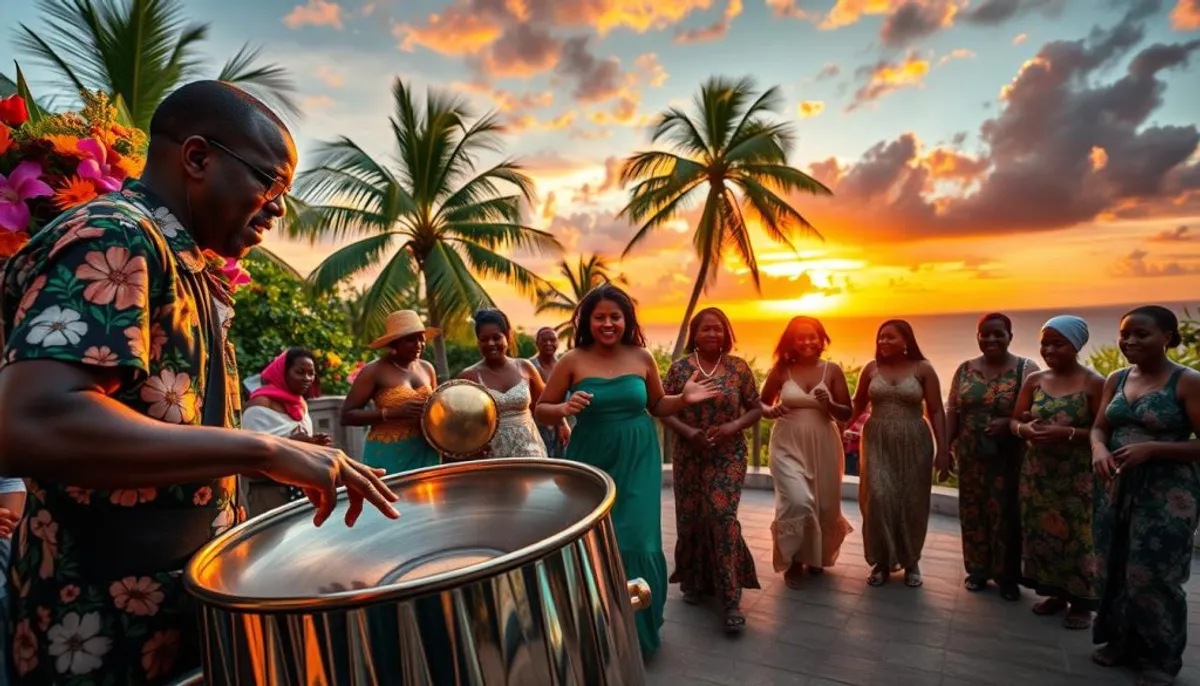
The Birth of Calypso in the Sugarcane Fields
Calypso originated as a voice of resistance among agricultural workers. These poetic songs allowed for the expression of feelings and social critiques.
Calypsonians became true chroniclers of their time. Their spiritual lyrics reflected daily realities with humor and wisdom.
Evolution to Soca and Development of the Steelpan
In the 1970s, calypso fused with contemporary rhythms to create soca. This new musical energy enlivened Caribbean festivities.
The invention of the steelpan transformed metal drums into melodic instruments. By the end of World War II, these “pans” revolutionized the music scene.
| Musical Genre | Emergence Period | Main Characteristics | Current Impact |
|---|---|---|---|
| Calypso | Early 20th century | Sarcastic lyrics, traditional rhythms | Preserved cultural heritage |
| Soca | 1970s | Energetic fusion, fast tempo | Dominant carnival music |
| Steelpan | 1930s-1945 | Innovative acoustic instrument | Recognized national symbol |
This musical creativity continues to exert a remarkable international influence. Local innovations enrich the global artistic heritage.
The Carnival: Festive and Cultural Expression
The streets of Port of Spain come alive each year during a unique celebration. This carnival has over two hundred years of fascinating history.
Initially reserved for French colonists between 1783 and 1833, this festival transformed after emancipation. The masses then took control of the celebrations.
Brilliant Costumes and Street Parades
More than a hundred masquerade groups parade today. Each group consists of between 400 and 700 participants dressed in spectacular costumes.
Local artists create stunning visual works. Feathers, sequins, and bright colors characterize these unique creations.
The main festivities take place on the Monday and Tuesday before Ash Wednesday. Catchy soca music resonates throughout the city.
The Importance of Carnival in National Identity
This event goes far beyond mere entertainment. It represents an authentic expression of collective identity.
The carnival harmoniously merges African rhythms and Indian melodies. It unites all communities in a common celebration celebrated worldwide.
This annual celebration serves as an essential vector of social cohesion. It also transmits a valuable artistic heritage to future generations.
Local Cuisine and Culinary Traditions
The culinary traditions of these islands tell the fascinating story of their multicultural settlement, reflecting the rich lesotho culture. Local gastronomy is characterized by bold flavors and generous spices.
This gustatory diversity perfectly reflects the ethnic mix of the country. Each community has contributed its specialties, creating a unique harmony.
Iconic Dishes like Doubles and Pelau
Doubles represent the most popular street snack. It consists of curried chickpeas served between two pieces of fried bread.
Pelau often brings families together during gatherings. This rice dish with caramelized meat illustrates local culinary creativity.
The inhabitants also preserve African recipes like callaloo. This thick soup made from green leaves and crab showcases a precious heritage.
| Iconic Dish | Cultural Origin | Main Ingredients | Typical Occasion |
|---|---|---|---|
| Doubles | Indian influence | Chickpeas, curry, bread | Street snack |
| Pelau | Creole fusion | Rice, meat, vegetables | Family gatherings |
| Callaloo | African heritage | Green leaves, crab | Traditional meal |
| Sancocho | Spanish influence | Meat, root vegetables | Comfort food |
Local agriculture provides cocoa, coconut, and citrus fruits. These products enrich preparations, creating once again this remarkable culinary harmony.
Craftsmanship and Traditional Artistic Expressions
Local craftsmanship reveals a living history where each creation tells a chapter of the past. The visual works of these Caribbean islands document social evolution with remarkable authenticity.
The current artistic scene presents a fascinating diversity. It harmoniously blends ancestral styles and contemporary approaches.
Ancestral Techniques and Local Creations
Craft roots trace back to the Arawak Indigenous peoples. Their pottery and basketry techniques have been passed down through the ages.
Artisans continue to use methods that are centuries old. They create utilitarian and decorative objects from local natural materials.
Over the years, different communities have enriched these skills. This cultural fusion creates distinctive craftsmanship that reflects multicultural identity.Contemporary artists use their work to explore identity issues. Their creations serve as historical testimony while commenting on the present.
This commitment to preserving ancestral techniques ensures the continuity of a tradition that is hundreds of years old. Cultural institutions provide a privileged space to discover this unique artistic heritage.
Cultural Institutions and Museums in Trinidad and Tobago
Beyond festivities and music, these Caribbean islands host an impressive network of educational cultural spaces. These institutions preserve collective memory while offering enriching experiences to visitors.
A historic park established on former lands of runaway slaves represents a site filled with emotion. This unique place showcases the beliefs and legends of the maroon communities that resisted oppression.
The country also has several museums documenting different historical periods, including the history of chad. From Indigenous occupation to independence in 1962, each colonial era finds its place here.
Contemporary art galleries and artists' studios enliven the main cities. Local creators explore identity themes while honoring ancestral heritage.
These spaces play an essential educational role for younger generations. They help understand how various influences have shaped the unique national identity.
The commitment of the government and private organizations reflects the importance placed on preservation. This diversity constitutes the fundamental wealth of society.
The Trinidadian Economy and Its Modern Pillars
The economic activity of these Caribbean islands relies on an exceptional natural resource. This unique energy wealth positions the territory as a regional leader.
For over a century, hydrocarbons have shaped local development. The main engine of prosperity finds its source underground.
The Oil and Gas Sector as an Economic Engine
The discovery of oil in 1907 radically transformed the situation. This intensive exploitation has been the economic backbone since that time.
The country ranks among the leading exporters in the Caribbean. With a GDP of 20.38 billion euros in 2009, it demonstrates remarkable vitality.
The energy sector represents 40% of the gross domestic product. It also generates 86% of total national exports.
Trinidad ranks fifth worldwide for liquefied natural gas. It supplies 72% of U.S. LNG imports.
This energy economy allows for other industrial developments. The territory is the world's leading exporter of methanol.
In 2015, GDP per capita reached the third rank in the Americas. Only the United States and Canada surpassed this performance.
Asphalt deposits produce 26,000 tons annually. This energy diversity strengthens the international economic position.
Infrastructure and Socio-Economic Development
Mobility and financial security are at the heart of the current development of this island nation. Oil revenues have enabled massive investments in infrastructure.
The road network is exceptionally well-maintained. Travel by car is facilitated by modern highways.
These roads efficiently connect urban and rural areas. They allow for smooth circulation of goods and people.
Investment in infrastructure is an essential pillar of our sustainable economic growth.
The financial sector has developed considerably. It positions the country as a major regional center.
Insurance companies offer a comprehensive range of products. This includes car insurance to protect every vehicle.
Telecommunications are among the most advanced in the Caribbean. Extensive internet coverage facilitates business activities.
| Infrastructure | Current State | Future Projects | Economic Impact |
|---|---|---|---|
| Road Network | Excellent condition | Highway extensions | Efficient transport |
| Public Transport | Expanding | Modernized buses | Alternative to cars |
| Telecommunications | Extended broadband | 5G in development | Optimal connectivity |
| Financial Services | Dynamic sector | New insurance products | Entrepreneurial growth |
This regulatory framework encourages the establishment of businesses. It attracts foreign direct investments.
The latest cars and insurance services benefit from this favorable environment. Development continues to accelerate.
Cultural and Ethnic Diversity
The 1.4 million inhabitants of these islands form a vibrant tableau of ethnic diversity. This unique demographic composition creates a truly multicultural society.
A Unique Blend of African, Indian, European, and Indigenous Influences
The population is primarily divided between two nearly equal major groups. Indo-Trinidadians represent 35.4% of residents, descendants of contracted workers from India.
Afro-Trinidadians constitute 34.2% of the population, heirs of Africans brought during the colonial period. The rest includes people of mixed origin and various minorities.
The town of Arima on the main island holds a special place as a bastion of Indigenous culture. Every August, the Santa Rosa festival honors this ancestral heritage.
The exceptional level of education facilitates intercultural communication. With a literacy rate close to 100%, exchanges between communities occur harmoniously.
This peaceful coexistence of religious traditions, including islam in kuwait, illustrates a successful model of a pluralistic society. Diversity is celebrated as a wealth rather than a source of division.
Musical Expressions and Traditional Dances
Body movements and rhythmic melodies constitute the vibrant expression of the local musical heritage. This artistic richness reaches its peak during major annual celebrations.
African heritage is manifested in spiritual dances like shango and rada. The energetic bélé and spectacular limbo complete this fascinating repertoire.
Fiery Rhythms and Typical Dances
Spanish influences persist in jaropo and castillan. The sebucan animates community gatherings with its traditional steps.
The French tradition has enriched the bélé and bequeathed the piqué. These dances harmoniously merge with other choreographic heritages.
Instruments beautifully accompany these artistic expressions. The quatro, guitar, and maracas create unique musical atmospheres.
| Cultural Origin | Representative Dances | Typical Instruments | Celebration Period |
|---|---|---|---|
| African Heritage | Shango, Rada, Bélé, Limbo | Traditional drums | All year round |
| Spanish Influence | Jaropo, Castillan, Sebucan | Quatro, Guitar, Maracas | Religious festivals |
| French Tradition | Piqué, Enriched Bélé | Violin, Accordion | Christmas period |
| Local Syncretism | Hybrid forms | Blended instruments | Carnival and major celebrations |
The parang represents a particularly cherished musical tradition in December. This Christmas music animates community gatherings in a joyful atmosphere.
These artistic expressions perfectly illustrate the remarkable cultural syncretism. They unite all communities during memorable festivities.
Trinidadian Culture in a Globalized World
The international prominence of these Caribbean islands contrasts with their modest size on the world map. This influence far exceeds the geographical boundaries of the territory.
In a context of accelerated globalization, local artistic expressions are gaining global recognition. Their cultural impact is remarkable for a small country.
Influence on Tourism and International Exchanges
The tourism sector shows steady growth but remains modest compared to neighboring destinations. The Dominican Republic welcomes nearly 2.8 million visitors annually.
Trinidad and Tobago receive only about a third of that. This situation is explained by an economy historically centered on hydrocarbons.
The intellectual prestige of the territory is exceptional with two Nobel Prize winners in literature. V.S. Naipaul (2001) and Derek Walcott (1992) testify to the national creative wealth.
Agricultural innovation has also marked world history. The trinitario cocoa, created in the 18th century, was exported as early as 1834 to Sri Lanka.
This hybrid variety has spread throughout the tropical zone. It now represents a significant share of global production.
The carnival, steelpan, and calypso/soca music serve as powerful cultural ambassadors. They attract enthusiasts from around the world to these fascinating islands.
The Representation of Culture in Media and Education
In contemporary society, education and media communication play a key role in identity preservation. These two pillars work together to promote local heritage on a daily basis.
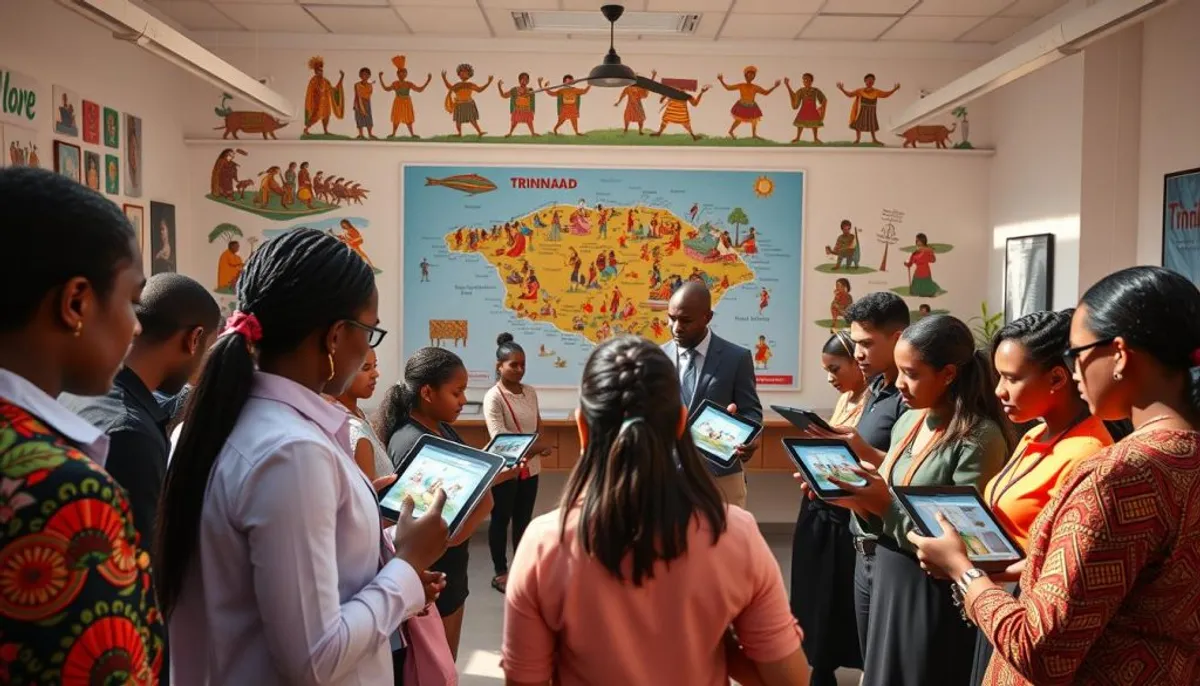
The university system includes prestigious institutions. The University of the West Indies, established in 1948, hosts between 15,000 and 20,000 students on its St. Augustine campus.
The University of Trinidad and Tobago, inaugurated in 2004, has around 6,500 students. It meets the specific training needs of the country.
The media document cultural events day after day. This regular coverage contributes to maintaining social cohesion in the lives of all citizens.
Educational programs systematically integrate national history. This approach ensures the transmission of heritage to future generations.
A Reflection on "Trinidadian Culture"
The transformation of national symbols reveals a constantly evolving historical consciousness. This reflection on collective identity takes on a particular dimension with recent official decisions.
Its Impact on National and International Identity
The independence achieved in 1962 and the proclamation of the republic in 1976 marked the definitive end of British tutelage. These crucial steps allowed the country to forge its own path.
The decision in August 2024 regarding the national coat of arms illustrates this maturation. Removing Christopher Columbus's caravels represents a strong symbolic gesture towards a more inclusive representation.
The international influence far exceeds expectations for a small territory. Two Nobel Prize winners in literature testify to exceptional creativity. This global recognition values local intellectual heritage.
The carnival and steelpan continue to inspire artists worldwide. These authentic artistic expressions demonstrate how diversity resonates with innovation.
In the end, this rich cultural tapestry offers an inspiring model of coexistence. It demonstrates that the true wealth of a nation lies in its ability to transform complex heritage into a unifying force.
This final reflection naturally prepares the conclusion on the future of this remarkable society. The third Nobel Prize could well crown the next generations.
Conclusion
At the end of this journey, the human richness of these islands emerges as their true treasure. This society has transformed its complex heritage into remarkable creative strength.
The grand celebration of carnival perfectly illustrates this vitality. It unites all communities in a joyful celebration.
Day after day, the inhabitants perpetuate unique musical and culinary traditions. The steelpan and calypso continue to inspire the entire world.
This ability to value diversity represents a universal lesson. It shows that true wealth lies in the harmony of differences.
The intangible heritage constitutes the lasting strength of this nation. It guarantees a vibrant identity for future generations.
FAQ
What are the origins of the famous Trinidad carnival?
The festivities have their roots in the traditions of French colonists and evolved with the contribution of African slaves, showcasing the rich tradition and culture that is a central event for the inhabitants.
What is the must-try dish on the island?
Pelau is an iconic dish, a delicious mix of rice, chicken, and pigeon peas. It reflects the unique blend of influences in local life.
How has oil influenced the country's economy?
The oil and gas sector is a major pillar of the economy. It has enabled significant development, although global prices can have an impact.
What is the importance of music in daily life?
Music, from calypso to soca, is omnipresent. It sets the rhythm for parties, parades, and is vital for national identity, born in the sugarcane fields years ago.
What are the main cultural influences on the island?
The culture is a rich blend of African, Indian, European, and Indigenous influences, including unique guyanese customs. This diversity is evident in cuisine, music, and festivities.