
Welcome to a universe where the desert meets the sea, and where ancestral traditions converse with modernity. This country of the Persian Gulf offers a unique identity, shaped by a rich history and varied influences.
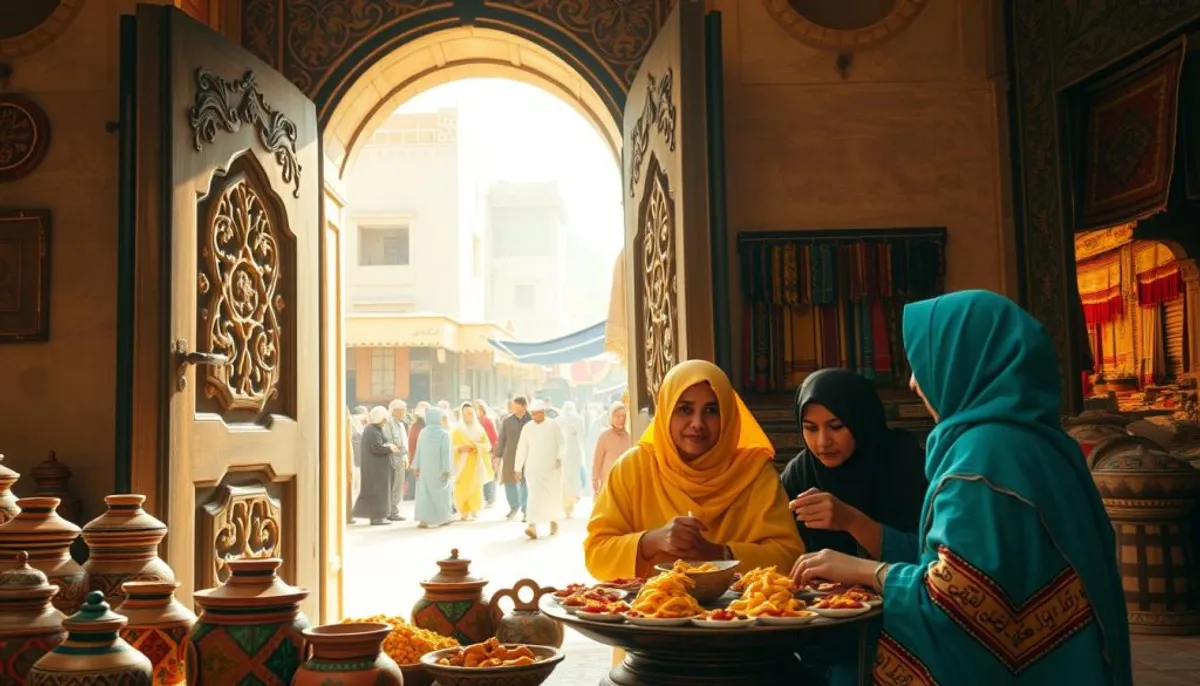
At the beginning of the 20th century, this territory had fewer than 100,000 inhabitants. Today, it is an influential regional player. Understanding its roots allows for an appreciation of the complexity of this dynamic nation.
This journey will introduce you to traditions that have survived the test of time and economic upheavals. We will explore celebrations, architecture, gastronomy, and the arts.
Discover how Kuwaitis have managed to preserve their heritage while adapting to contemporary challenges. A captivating adventure in the heart of a fascinating world awaits you.
Key Points to Remember
- Kuwaiti culture is a fascinating blend of ancient traditions and modern influences.
- Kuwait holds a special place in the Arab world due to its rich history.
- Understanding cultural roots is essential to appreciating the nation.
- The country has evolved from a small community to an influential regional player.
- Traditions have withstood the test of time and economic changes.
- The article will explore celebrations, architecture, gastronomy, and the arts.
- Kuwaitis have preserved their identity while embracing modernity.
The Historical and Cultural Wealth of Kuwait
Sixty years ago, this territory was largely unknown, primarily relying on pearl trading and fishing. Its history dates back centuries as a small strategic port.
Origins and Historical Evolutions
The origin of current prosperity is rooted in ancient trade. The natural bay served as a hub between the East and the West.
The pearl industry made this region one of only three places in the world with quality natural pearls. Along with Mexico and Colombia, the country supplied these marine treasures.
In the 1960s, there were fewer than 100,000 inhabitants. The annual income per person barely reached 100 francs. What a spectacular transformation in just a few decades!
By 1965, the population had quadrupled. The national income per capita exceeded 15,000 francs. This growth reflects the new wealth of the territory.
Influence of Cultural Exchanges
Over the years, Bedouin caravans and merchants enriched the local fabric. Indian and Persian influences mingled with Arab traditions.
Independence in 1961 marked a turning point. The country preserved its bosnian cultural heritage while accelerating its modernization. This dual orientation still characterizes its development today.
The geographical location favored exchanges with Baghdad, Damascus, and Europe. This openness has shaped the unique history of this nation over time.
The Importance of Kuwaiti Culture in the Modern World
At the heart of the Persian Gulf, Kuwait demonstrates how a small state can shine well beyond its borders. Its role on the international stage far exceeds its geographical size.
This nation has managed to find a remarkable balance between identity preservation and adaptation to contemporary realities, including elements of yoruba mythology. Its influence now extends across various fields.
Between Tradition and Innovation
The unique blend of ancestral values and technological progress characterizes the Kuwaiti approach. Recent years have seen the emergence of a society that honors its past while looking towards the future.
The country has established itself as an attractive regional cultural center. Film festivals, international concerts, and artistic events find a prominent place here.
Diplomatically, its importance continues to grow. Kuwait frequently plays the role of mediator in regional conflicts.
This ability to engage with the world while maintaining its essence makes Kuwait a model of cultural balance. Its authentic Arab tradition coexists harmoniously with modern innovations.
Diversity of Communities and Multicultural Influences
With a unique demographic composition in the Middle East, the country offers a fascinating model of multicultural coexistence. This human richness is one of the most remarkable aspects of its contemporary identity.
National and Expat Communities
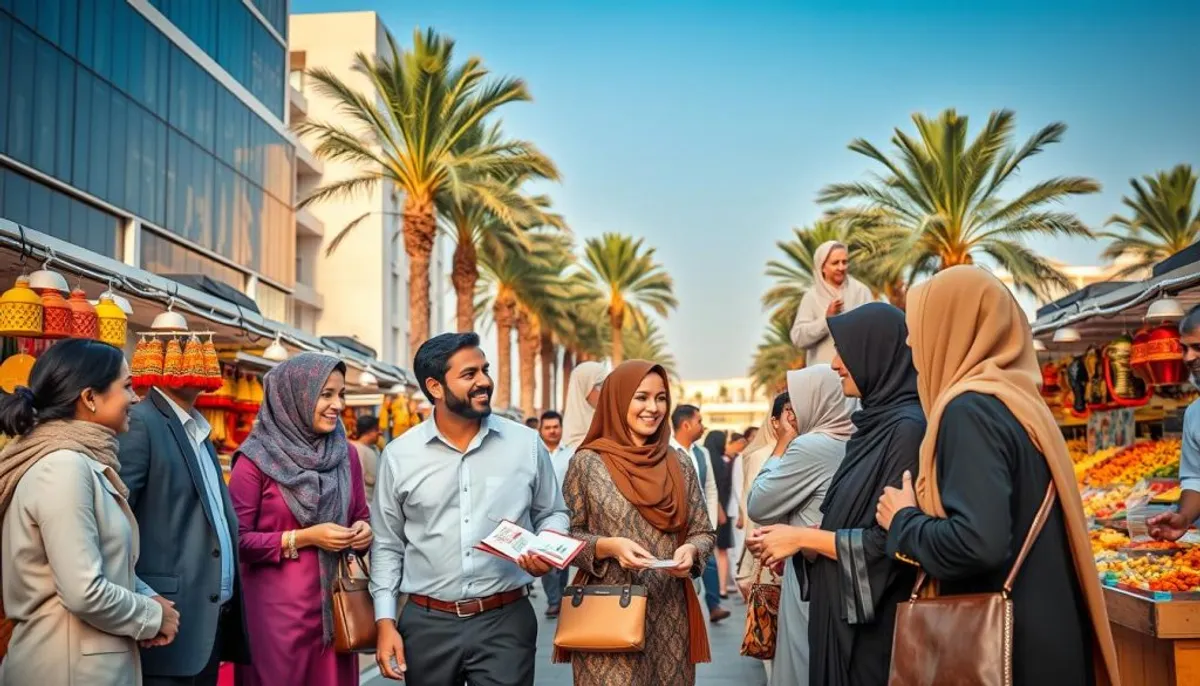
The total population stands at 4.9 million inhabitants, with an exceptional distribution. Expatriates make up 70% of residents, creating a society where only one-third are nationals.
Among Kuwaiti citizens, about 60% of families are of Bedouin origin. The Arab majority coexists harmoniously with a significant Shiite community representing 30% of the population.
Influence of Diasporas
The Indian, Egyptian, Pakistani, and Bangladeshi communities have profoundly impacted the social landscape. Their contributions extend across all economic sectors, from construction to services.
The presence of Western expatriates, mainly European and North American, also enriches this diversity. These expatriates actively participate in cultural life and organize various events.
Despite this heterogeneity, social cohesion remains remarkable. All communities celebrate national traditions together, creating a unique cosmopolitan environment.
Iconic Traditions and Festivals
The Kuwaiti calendar comes alive each year with vibrant celebrations that unite the people. These festive moments reflect a deep attachment to ancestral values.
Major events transform the country into a spectacle of collective pride. Each celebration possesses its unique character and particular significance.
National Day and Liberation Day Celebrations
The 25th and 26th of February mark two exceptional days. The National Day commemorates the independence achieved in 1961.
The following day, the liberation after the Iraqi invasion of 1990 is celebrated. These traditions bring the entire population together in a joyful atmosphere.
The streets light up with spectacular fireworks. Impressive military parades accompany traditional folk dances.
These customs harmoniously blend ancestral music with modern festivities. What an explosion of colors and emotions during these two days in February!
Religious Rituals and Festivities
The sacred month of Ramadan is observed with particular fervor. Community prayers and iftars strengthen social bonds.
Eid al-Fitr and Eid al-Adha see families sharing traditional meals. These religious events also include donations to the less fortunate.
The diversity of communities enriches the festive calendar. Holi and Diwali bring their vibrant colors to local traditions.
All residents enthusiastically participate in these celebrations. This participation creates a remarkable sense of collective belonging.
The Culinary Landscape of Kuwait
The flavors of Kuwait tell a millennia-old story of exchanges and traditions. This cuisine perfectly reflects the unique blend that characterizes this country.
Authentic Kuwaiti Cuisine
Traditional maltese cuisine uses local ingredients such as lamb, Gulf fish, and basmati rice. Aromatic spices give the dishes their distinctive character.Machboos is an iconic dish. It is spiced rice flavored with saffron and accompanied by meat. Harees offers a creamy texture of wheat and meat.
These specialties are passed down according to ancestral customs. They are prepared for grand celebrations.
Persian and Indian Influences
The Persian influence is evident in grilled kebabs and creamy hummus. The preparations use fresh herbs and dried fruits.
The presence of expatriates enriches the culinary offerings. Indian curries, Chinese stir-fries, and Italian pasta can be found.
| Traditional Dish | Main Ingredients | Typical Occasion |
|---|---|---|
| Machboos | Rice, saffron, lamb | Family celebrations |
| Harees | Wheat, meat, spices | Religious celebrations |
| Kebabs | Marinated meat, herbs | Everyday meals |
This diversity makes Kuwait a paradise for food lovers. Tradition and modernity meet on the plate.
Impact of Oil on Cultural and Social Evolution
Black gold has reshaped the face of Kuwait in just a few decades. The discovery of oil in the 1950s-1952 triggered an unprecedented revolution.
This new wealth radically transformed daily life. Kuwaitis abandoned their centuries-old traditional activities.
Modernization and Economic Development
Traditional shipbuilding and pearl fishing gave way to a modern economy. Adobe houses with natural ventilation disappeared.
Cement villas with air conditioning became the norm. What a spectacular change in such a short time!
95% of households already owned televisions in the 1960s. Camels and donkeys were replaced by luxury cars.
| Traditional Aspect | Replaced by | Impact on Society |
|---|---|---|
| Adobe Houses | Modern Villas | Improved Comfort |
| Animal Transport | Cars | Increased Mobility |
| Family Economy | Global Capitalism | Profound Transformation |
The hydrocarbon sector still dominates the economy. It represented over 35% of GDP in 2023.
This rapid transition has created psychosocial upheavals. Kuwaitis have gained an exceptional standard of living but lost some values.
Recent Social and Economic Transformations
In a changing global context, the Kuwaiti state is reinventing itself economically while preserving its social model. The government launched the ambitious "New Kuwait 2035" program in 2017.
This strategy aims to transform the country into a regional commercial and financial hub. It foresees investments representing 120% of GDP.
Challenges and Opportunities in a Diversification Context
The current situation presents several structural challenges. About 15,000 young nationals enter the job market each year.
Youth unemployment stands at 15%, creating significant social pressure. The public sector employs 380,000 civil servants, which weighs heavily on the budget.
In the face of this diversity of challenges, the government is betting on the "Kuwaitization" of the private sector. This policy gradually replaces foreign labor with qualified nationals.
In 2024, controversial measures were taken with over 60,000 nationality revocations. These decisions reflect tensions related to demographic management.
| Economic Challenge | Current Impact | Proposed Solution |
|---|---|---|
| Dependence on Oil | 35% of GDP, 92% of exports | Diversification via New Kuwait 2035 |
| Population Growth | 15,000 young entrants annually | Kuwaitization Policy |
| Weight of the State | 380,000 civil servants | Structural Reforms |
Despite the persistent oil wealth, the state recognizes the urgency of developing other revenue streams. This period of transformation represents both a major challenge and a historic opportunity.
The time has come to redefine the economic model while preserving social achievements. The transition to a less oil-dependent economy is essential for the future.
The Influence of Arts and Literature
The Kuwaiti creative scene shines today as a cultural beacon in the Gulf region. This artistic vitality enriches the daily life of the residents.
The country attracts visitors from around the world thanks to its rich programming. International events regularly enliven cultural spaces.
Traditional and Contemporary Artistic Expression
Local artists blend ancestral Arab motifs with modern techniques. This approach creates a distinctive style that is part of the luxembourgish national identity.Creative activities allow Kuwaitis to explore their heritage and congolese traditions. The works question and celebrate traditions in a contemporary context.
Kuwaiti Literature and Poetry
The poetic tradition dates back to the ancestral Bedouin heritage. Poetry holds a central place during social events and celebrations.
Writers and poets, including many famous writers, are internationally recognized for their contributions. Their work transcends borders and influences contemporary Arab culture.
| Artistic Domain | Main Characteristics | Cultural Impact |
|---|---|---|
| Visual Arts | Fusion of tradition and modernity | Identity Reinforcement |
| Literature | Rich poetic heritage | International Influence |
| Cultural Events | International Programming | Tourist Attraction |
This cultural dynamic demonstrates the growing importance of the arts in society. Kuwaitis show a passionate interest in all forms of expression.
Architectural Heritage and Traditional Monuments
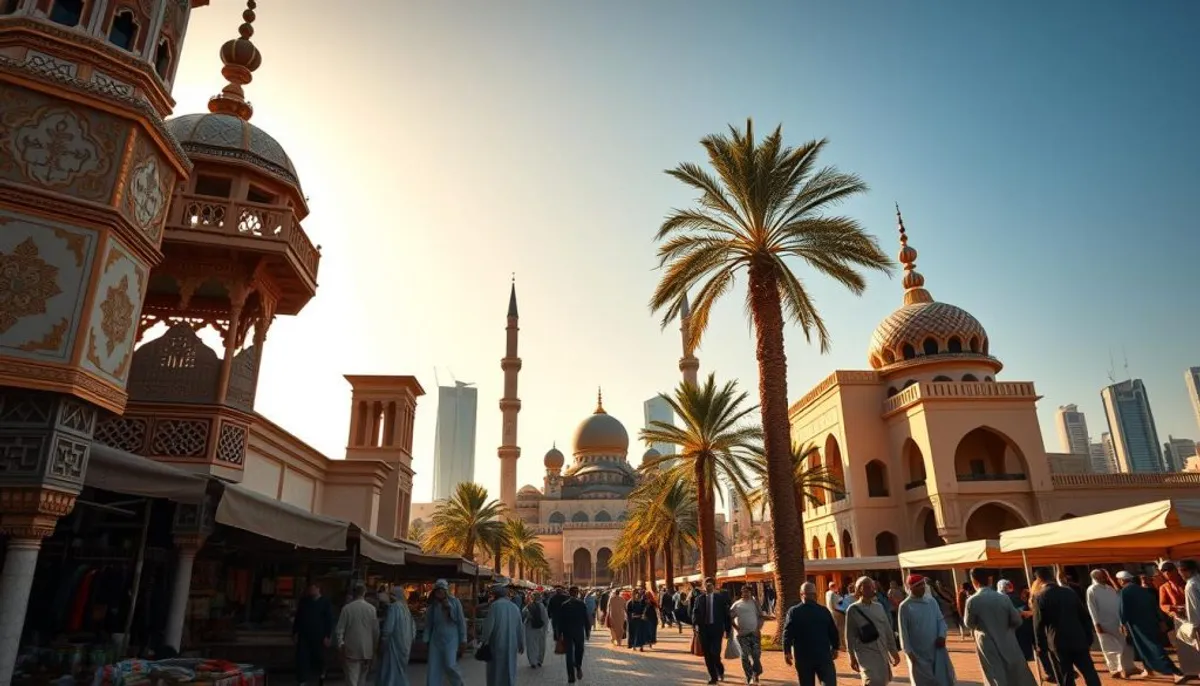
The urban landscape of Kuwait offers a striking contrast between ancestral remnants and ultramodern skyscrapers. This architectural transformation reflects the country's rapid evolution.
Traditional Architecture and Historical Remnants
Adobe houses represented an ingenious adaptation to the desert climate. Their system of openings created natural cooling air currents.
These constructions used local materials and techniques passed down through generations. They formed an essential part of the built heritage.
Modernization of Urban Spaces
The capital, Kuwait City, had 4.2 million inhabitants in 2022. This modern city coexists with Jahra and Ahmadi, each having its unique character.
Water management represents a major challenge in this arid place. Modern desalination systems have replaced traditional methods.
The current urban view blends skyscrapers with a few preserved remnants. These efforts maintain a link to the past while building for the future.
In a short time, access to drinking water has become guaranteed throughout the city. This modernization has radically transformed the urban experience.
Conclusion
The journey of Kuwait represents a remarkable transformation in the modern history of Arab nations. This country has evolved from a modest territory to a prosperous state of nearly 5 million inhabitants. The history of qatar is also a testament to the rich cultural heritage of the region.
The independence of 1961 and the liberation of 1991 forged a resilient national identity. Kuwaiti society maintains a unique balance between ancestral traditions and contemporary innovations.
The presence of many expatriates enriches this exceptional diversity. Cultural events and celebrations unite all communities in a cosmopolitan atmosphere.
The government continues its vision with the "New Kuwait 2035" plan. This strategy aims to diversify the economy while preserving social achievements.
Despite geopolitical challenges, Kuwait retains its role as a regional mediator. Kuwaitis enjoy a high quality of life and modern infrastructure.
This small Gulf state remains an attractive destination in the Arab world. Its unique model inspires admiration and international respect.
FAQ
What is the influence of oil on Kuwaiti society?
Oil wealth has profoundly transformed the country. It has enabled rapid modernization, access to education, and high social security. However, the country is striving to diversify its economy for the future.
How does the expatriate population influence life in Kuwait?
Expatriates, who make up a significant portion of the residents, bring incredible diversity. This mix is reflected in cuisine, cultural activities, and daily life, creating a society open to the world.
What are the most important events of the year in Kuwait?
The celebrations of National Day and Liberation Day in February are key moments. Religious holidays, such as Eid, are also celebrated with fervor by the majority of the population.
Is Kuwaiti cuisine influenced by other regions?
Absolutely! The local cuisine is a delicious blend of Arab traditions, with Persian and Indian touches. This diversity reflects the history of exchanges in the Gulf region.
Is Kuwait a safe destination for travelers?
Yes, the State of Kuwait is considered one of the safest countries in the Middle East. The government places great importance on security, making this country a peaceful destination.
How do traditions coexist with modernity?
It’s a fascinating balance! Kuwaitis are very proud of their history and customs while embracing innovation. This harmony between the past and the present defines today's society.