
Welcome to a captivating journey at the heart of a millennia-old civilization. This exploration transports you between India and Bangladesh, two nations sharing an extraordinary heritage.
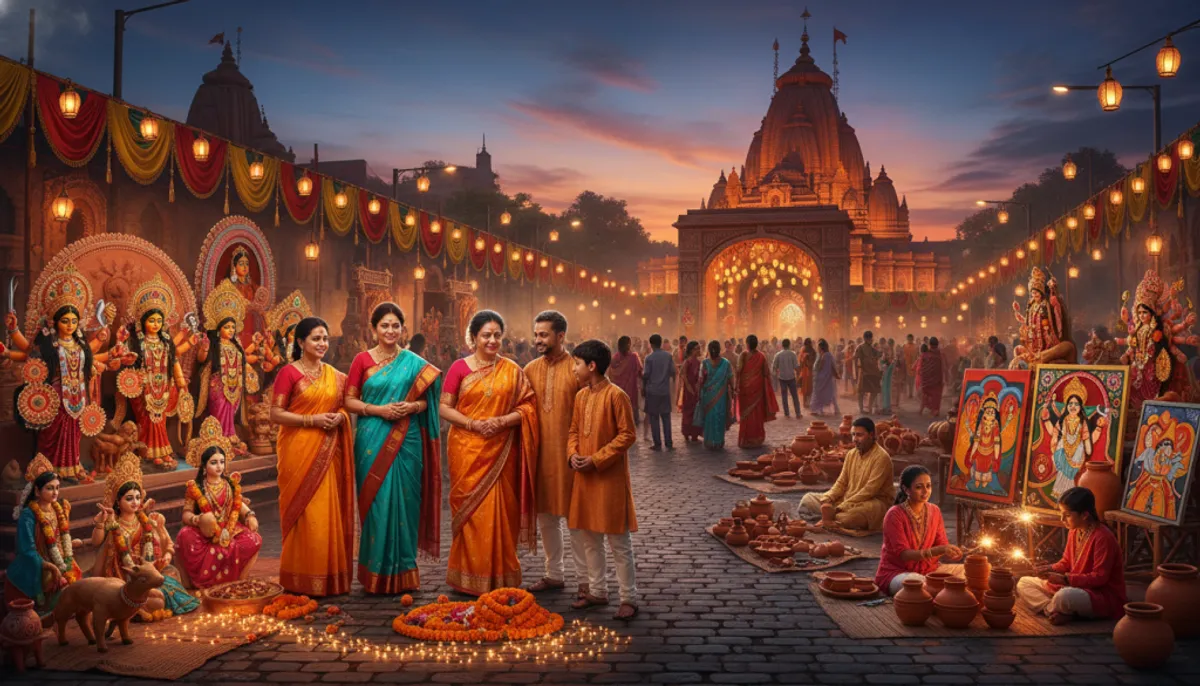
Discover how this unique identity shapes the daily lives of millions. They share a common language, Bengali, and traditions deeply rooted in the history of the Indian subcontinent.
Explore the multiple dimensions of a society where art, spirituality, and literature intertwine. Family customs create a distinct and vibrant identity.
Understand why this country, politically divided yet united by its heritage, represents one of the most dynamic treasures of South Asia. Every aspect of life is imbued with meaning.
Key Points to Remember
- A rich civilization spans two modern nations.
- The Bengali language unites millions of people.
- Art and spirituality are at the center of this society.
- Family traditions are deeply rooted.
- A dynamic and unique heritage in South Asia.
- Daily life reflects ancestral values.
Introduction to Bengali Culture
Explore this part of the world where poets and artists draw inspiration from an exceptional environment. This fertile region, traversed by the Ganges and Brahmaputra rivers, constitutes a unique place in Asia.
The landscape of this land has profoundly influenced the development of a resilient society. Despite numerous invasions throughout history, this community has preserved its distinctive identity.
Daily life reflects a harmonious synthesis of different spiritual traditions. This fusion creates a vibrant and colorful artistic expression.
| Cultural Aspect | Main Characteristic | Geographical Influence | Modern Expression |
|---|---|---|---|
| Language and Literature | Exceptional poetic richness | Fertile plains and waterways | Works of Tagore and other authors |
| Artistic Traditions | Hindu-Muslim synthesis | Monsoon climate | Cinema and visual arts |
| Social Structure | Respect for elders and hospitality | Proximity to sacred rivers | Maintenance of family values |
This introduction reveals how a single people, sharing a common language, maintains deep bonds despite political divisions. Artistic creativity testifies to the vitality of this millennial culture.
Iconic figures like Rabindranath Tagore illustrate the exceptional contribution of this region to global heritage. Their legacy continues to inspire contemporary generations.
The Historical Foundations and Cultural Origins
Let us go back in time to discover the deep roots of this society. The naga history begins on a fertile land where the Ganges delta witnessed the birth of the first civilizations.
This identity has been built on a solid foundation blending nature and knowledge. It has absorbed external influences while retaining its essence.
The remarkable fact of this history is its capacity for adaptation. The people have integrated diverse influences without losing their unique character.
| Historical Period | Cultural Influence | Main Contribution | Modern Heritage |
|---|---|---|---|
| Buddhist Empires | Spirituality and philosophy | Religious tolerance | Community harmony |
| Muslim Sultanates | Architecture and arts | Artistic synthesis | Architectural heritage |
| Mughal Empire | Administration and language | Literary refinement | Poetic tradition |
| Colonial Era | Education and modernity | Cultural renaissance | Educational institutions |
This part of the world has experienced multiple periods of transformation. Each era has enriched the contemporary culture, which remains dynamic and nuanced.
Understanding these origins allows for an appreciation of the current richness. This identity unites millions of people despite political borders.
The Spiritual Influence of Islam and Hinduism
Bengali spirituality finds its essence in a unique dialogue between two great religious traditions. Islam and Hinduism are the fundamental pillars of this society, creating a remarkable synthesis.
These two belief systems have had to contend with well-established local traditions. The notable fact lies in their mutual adaptation rather than opposition.
| Spiritual Aspect | Contribution of Hinduism | Contribution of Islam | Current Synthesis |
|---|---|---|---|
| Philosophy | Concepts of dharma and karma | Unitary theology | Inclusive spirituality |
| Practices | Puja and colorful festivals | Daily prayers | Shared religious rhythm |
| Social Values | Respect for elders | Community hospitality | Strong collective ethics |
| Artistic Expression | Rich iconography | Calligraphy and architecture | Mixed visual heritage |
The Baul singers perfectly embody this spiritual fusion. Their message transcends strict religious affiliations.
This part of the world demonstrates how different beliefs can coexist harmoniously. The religious dimension forms the foundation of family and social values.
The influence of Islam and Hinduism has shaped a society where tolerance and syncretism prevail. This rich spiritual culture continues to inspire contemporary generations. A comprehensive comparison of cultural rates reveals the intricate dynamics between these traditions and their impact on societal values.
The Colonial Legacy and Cultural Renaissance in Kolkata
At the heart of English domination in India, Kolkata became a unique cultural melting pot. This city served as the imperial capital from 1757 to 1912, a crucial period in the regional history.
The Bengalis were the first to benefit from Western education. This historical fact provided them with a considerable advantage in colonial administration.
The early mastery of English, which became the state language in 1835, transformed this society. Kolkata thus became the main place of exchange between East and West.
| Transformation Aspect | Before the Colonial Era | After Western Influence | Lasting Impact |
|---|---|---|---|
| Education | Traditional teaching | Access to modern sciences | Formed intellectual elite |
| Language | Literary Bengali | Mastery of English | International openness |
| Thought | Ancestral traditions | Enlightenment ideas | Cultural renaissance |
| Arts | Classical forms | East-West fusion | Innovative expression |
This period saw the emergence of iconic figures like Tagore and Vivekananda. Their contributions marked the intellectual history of all of India.
The colonial legacy, while complex, has shaped a modern culture that preserves its roots. Kolkata remains a major artistic center today.
Traditional Music and Dance
Melodies and rhythmic movements constitute the vibrant soul of this artistic expression. They traverse generations through rigorous oral transmission.
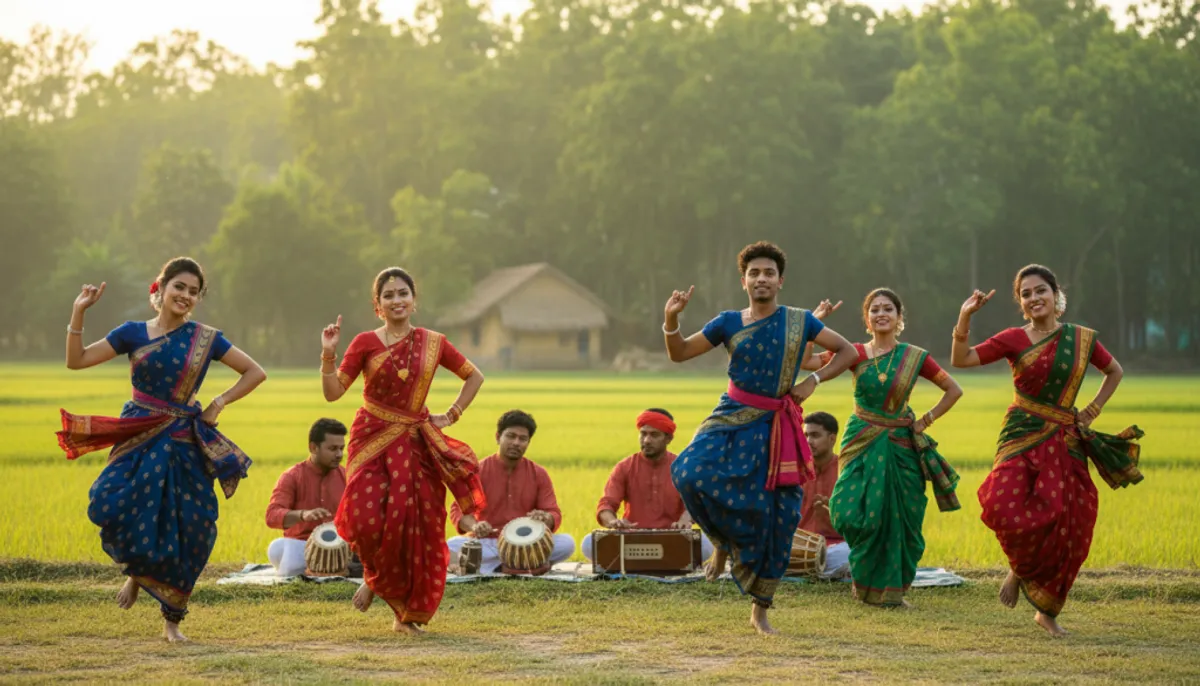
The guru-shishya parampara system ensures the preservation of ancestral knowledge. This method of learning involves a deep relationship between teacher and student.
The Nuances of Rabindra Sangeet
Rabindranath Tagore revolutionized the musical landscape with his Rabindra Sangeet. This unique domain fuses Indian traditions with Western influences.
More than 2000 songs compose this exceptional heritage. They include the national anthems of India and Bangladesh.
Traditional and Modern Dance Expressions
Dance manifests an extraordinary diversity of styles. Classical forms like Manipuri coexist with village dances.
Tagore also created the Rabindra Nritya, an innovative style. It elegantly marries tradition and modernity in choreographic expression.
| Artistic Form | Main Characteristic | Transmission | Contemporary Expression |
|---|---|---|---|
| Rabindra Sangeet | Classical-Western fusion | Institutional teaching | Concerts and recordings |
| Classical Dances | Precise symbolic gestures | Specialized schools | International performances |
| Folk Dances | Regional rhythms and costumes | Community transmission | Local festivals |
| Rabindra Nritya | Freedom of expression | Tagore academies | Choreographic creations |
These artistic activities are learned from an early age. They cultivate respect for art and knowledge.
Traditional vocal music requires a complete discipline of life. It connects the individual to the universe of the sacred.
Family Customs and Social Etiquette
The family unit represents the fundamental pillar of social organization. It structures daily life around ancestral values.
Each member occupies a well-defined place. This natural hierarchy promotes collective harmony.
Respect Rituals and Bengali Hospitality
Young people show their deference by touching the feet of elders. This symbolic gesture invokes their blessing.
Tradition dictates that this greeting is performed with the right hand. It illustrates intergenerational continuity.
| Social Aspect | Traditional Practice | Meaning | Community Impact |
|---|---|---|---|
| Greeting Elders | Touching feet | Respect and blessing | Reinforcement of hierarchy |
| Address Terms | “Uncle/Aunt” classifiers | Family integration | Creation of bonds |
| Role of the Woman | Welcoming guests | Sacred hospitality | Social cohesion |
| Foundational Proverb | “Atithi Narayan” | The guest is god | Permanent openness |
Hospitality is practiced with warm simplicity. The proverb “Atithi Narayan” summarizes this philosophy.
The married woman plays a central role in welcoming. Her sindur and bracelets symbolize her status.
These customs create strong bonds between generations. They ensure the transmission of values within the society.
Festivals and Rituals: A Vibrant Cultural Calendar
The rhythm of the seasons finds its echo in an exceptionally dense festive calendar. This part of the year is marked by celebrations that bring together all generations.
The Pûjâs and the Celebration of Durgâ
In October, at dawn, the broadcast of Mahalaya announces the beginning of Durga Pujas. This state of fervor lasts until November, completely transforming daily life.
The remarkable fact lies in the scale of preparations. Artisans sculpt more than twenty thousand statues for this unique occasion.
The Festive Atmosphere and Community Celebrations
For a month, professional activities slow down in favor of festivities. This period creates exceptional social harmony.
Every public place becomes a gathering spot. Associations organize concerts and free shows for everyone.
| Festive Element | Period | Preparation | Community Impact |
|---|---|---|---|
| Mahalaya | Early October | Radio broadcast | Spiritual opening |
| Durga Puja | October-November | 6 months of preparation | Halting of activities |
| Cultural Activities | All year round | Associative planning | Strengthening of bonds |
| Distribution of Bhog | During the pujas | Collective cooking | Food sharing |
These celebrations perfectly illustrate the local saying. “Twelve months, thirteen festivities” summarizes this eventful richness.
Bengali Literature and Its Iconic Poets
The pen and ink have always held a sacred place in this society. Writing represents much more than a mere means of expression.
Rabindranath Tagore marked history by becoming the first Asian writer to receive the Nobel Prize in Literature in 1913. This complete poet was also a musician, painter, and a proponent of humanist thought.
The 19th century constituted a golden age for this artistic domain. The cultural renaissance in Kolkata allowed for the emergence of many talents.
These poets revolutionized not only the language but also social thought. Their influence extended well beyond regional borders.
The passion for reading particularly animates the population during festivals. Special publications enjoy immediate success.
Publishing houses constantly modernize the written language. They make literature accessible to all readers.
This part of intellectual life testifies to a society that deeply values letters. Families encourage a love of books from childhood.
Contemporary writers perpetuate this rich tradition. They explore universal themes while retaining their roots.
The Language and Identity: Pillar of Bengali Culture
The tumultuous history of the Bengali language reveals a struggle for identity preservation. This part of history shows how linguistic debates have shaped the destiny of a people.
In the 19th century, Muslims were divided between aristocracy and peasant masses. The elite preferred Persian while the people spoke Bengali.
Between 1920 and 1930, writers and journalists proclaimed Bengali as the mother tongue of all. This decision laid the foundation for a unified identity.
During the Pakistani period (1947-1971), the regime attempted to impose Urdu. These efforts aimed to strengthen ties with Islam by altering the script.
The society fiercely opposed this policy. The Language Movement of 1952 saw students defend their linguistic heritage.
This struggle became the foundation for the creation of Bangladesh. The new state adopted Bengali as its sole national language in 1972.
Today, this linguistic culture transcends religious and political divisions. It unites Muslims and Hindus beyond the borders of the country.
The modern language incorporates various influences while preserving its richness. It remains a living symbol of resistance and identity unity.
Visual Art, Theater, and Performing Expressions
The Bengali theatrical universe offers a palette of unique performing expressions. Two main forms coexist harmoniously in this artistic domain, including elements of viennese art that enrich the cultural tapestry.
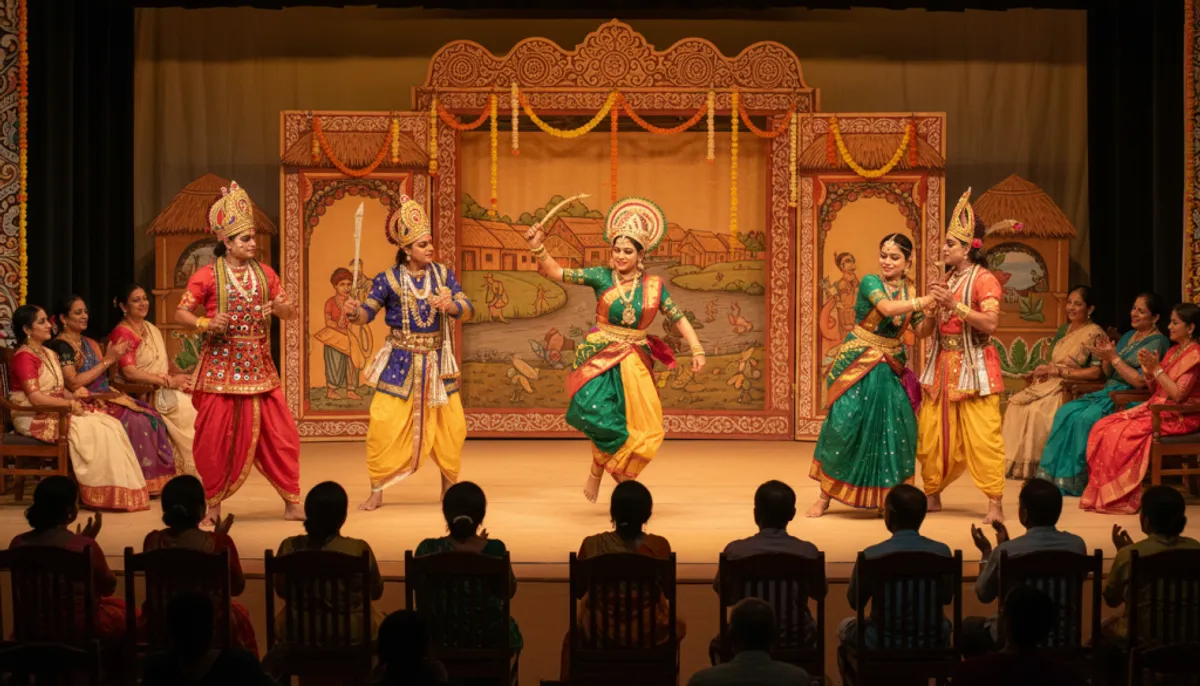
Modern theater draws inspiration from Western styles while developing its own identity. It addresses contemporary social themes with local sensitivity.
The yatra represents the popular tradition rooted in villages. This form combines music, dance, and storytelling to deeply touch the audience.
During festivals, theatrical activities multiply significantly. Millions of spectators enjoy free performances every day.
This cultural meeting place becomes accessible to all. Parents instill respect for art in their children from an early age.
Filmmaker Satyajit Ray embodies the excellence of visual arts. His moving work has brought this creativity to global attention.
The central place occupied by theater reflects a society that values collective expression. The performing expressions testify to a continuous creative vitality.
The Influence of Nature and Elements on Heritage
The deep imprint of natural elements marks every aspect of Bengali heritage, including the rich tapestry of serbian heritage. This region is defined by its intimate relationship with water and light, creating a unique environment in Asia.
The country is characterized by the omnipresence of water in all its forms. The gigantic rivers descending from the Himalayas sculpt the landscape, while rice fields organize rural life.
This relationship manifests in rituals, notably the annual immersion of divine statues. The gesture symbolizes the eternal cycle of creation and dissolution in nature.
The fertile land of the delta, enriched by alluvium, allows for prosperous agriculture. It has been the economic foundation of this country for millennia.
The particular golden light gives colors exceptional strength. This quality profoundly influences local pictorial and cinematic aesthetics.
The elements also demonstrate their power during regular cyclones and floods. These phenomena have shaped the resilient character of the populations.
This connection explains why harmony with the environment occupies a central place. Natural elements are considered sacred forces to be respected.
The influence is found in all aspects of heritage, from literature to festivals. The geographical place and nourishing land create an unbreakable bond with the environment.
The Role of Education and the Transmission of Artistic Knowledge
A sacred respect surrounds any object related to knowledge, revealing the deep value placed on education. This remarkable fact manifests in spontaneous gestures of deference towards books and instruments.
If someone accidentally drops a book, they immediately touch their forehead with their right hand. This cultural reflex testifies to the central place occupied by learning.
| Education Method | Artistic Domain | Transmission | Impact on Activities |
|---|---|---|---|
| Guru-shishya system | Traditional Music and Dance | Teacher-student relationship | In-depth learning |
| Modern Education | Contemporary Arts | School institutions | Widespread accessibility |
| Hybrid Combination | All Levels | Tradition and innovation | Cultural continuity |
The guru-shishya system represents the ancestral method of transmission. The teacher thoroughly examines the candidate's aptitude before accepting them as a disciple.
This privileged relationship allows for personalized teaching in traditional music and dances. Knowledge is transmitted orally and through direct example.
Modern education integrates these traditional methods with contemporary approaches. This combination ensures the sustainability of knowledge at all educational levels.
This educational system constitutes the solid foundation of a rich and fulfilling intellectual life. It keeps the intergenerational transmission of the arts alive, as reflected in the numerous reviews on iesa arts and culture that highlight the importance of these traditions.
Cultural Exchanges Between India and Bangladesh
Political borders separate, but cultural ties unite two Bengali nations. The Partition of 1947 divided this region on a religious basis, creating a unique situation where the same people live in two distinct countries.
West Bengal in India has about 60 million inhabitants, with a majority being Hindu. Bangladesh is home to 125 million Bengali-speaking Muslims, forming the largest part of this global population.
Despite this division, artistic and intellectual contacts remain vibrant. Writers and musicians regularly cross the border, preserving their common heritage.
Islam plays a different role in each state. In Bangladesh, it has been the official religion since 1988. In the west, Hinduism dominates in a secular framework.
These exchanges also reveal tensions. Some Bangladeshi Muslims encounter prejudice in the west. External influences sometimes push towards a more rigorous Islam, distant from local traditions.
The question of water creates additional challenges. The rivers first traverse India before reaching Bangladesh, affecting the majority of its population.
Yet, the attachment to a common language and shared values inspires hopes for rapprochement. This common language transcends divisions, uniting the two countries in a continuous dialogue.
Contemporary Challenges and Future Perspectives
Contemporary Bangladesh navigates between cultural heritage and new political realities. Debates about national identity regularly animate society.
A significant event occurred in 1988 when Islam became the state religion. This decision created tensions with the original secular aspiration of the country.
Bengali Muslims today must reconcile local traditions with external influences. Assistance from Gulf countries gradually comes with religious pressures.
The Bengali language remains a pillar in the face of these transformations. Attempts to alter its script meet fierce opposition.
Despite these challenges, the historical strength of resistance offers reasons for hope. Artistic and intellectual activities continue actively.
Each year brings its share of discussions about the future of this rich culture. The youth is committed to preserving this unique heritage.
The society seeks its path between modernity and ancestral traditions. These passionate debates show remarkable vitality.
The balance between religious belonging and cultural identity constitutes the foundation of future challenges. Muslims and Hindus continue their centuries-old dialogue.
The Expression of Bengali Culture in Daily Life
Cultural expression is nestled in domestic rituals and social exchanges, including somali customs and traditions. Every gesture of daily life reflects values passed down through generations.
Hospitality begins with a simple glass of water offered upon arrival. This entry ritual always precedes the tasting of special dishes.
Food occupies a central place in these exchanges. The famous “Bengali sweets” are prepared with care to honor guests.
In every village, dusk marks a special moment. Farmers bring out their harmonium to share traditional songs.
The melodies of Tagore resonate in the evening air. These songs create an atmosphere where few moments escape the music.
The married woman plays an essential role in this daily expression. She wears the red sari during major occasions, a color symbolizing happiness.
This dress reveals civil and social status. Artistic activities are not reserved for festivals but are an integral part of existence.
Children learn early to express their emotions through dance and song. This tradition ensures the continuity of ancestral practices.
Every entry into a home thus becomes a celebration of social bonds. Bengali life transforms the ordinary into the extraordinary.
Conclusion
The Bengali cultural phenomenon, including the lao loum culture, defies simple categorizations. It represents a living heritage that unites millions of people beyond political borders.
This exploration reveals how Hinduism and Islam have created a unique synthesis. The common language serves as a central pillar of this shared identity.
The rich literature and artistic traditions testify to remarkable depth. They transcend divisions between the two modern countries.
We hope that this heritage continues to flourish. This dynamic culture proves that unity can surpass divisions.
FAQ
How have Hinduism and Islam shaped Bengali society?
What are the most important traditional dances?
The heritage is very alive! There are folk dances like Chhau, linked to epic tales, and more classical forms. Modern expressions, inspired by poets like Tagore, continue to evolve.
What role does language play in preserving this heritage?
The language is the central pillar of identity. It unites people through literature, songs, and theater. It is through it that knowledge and traditions are transmitted from generation to generation, within the family and society.
What occasions are suitable for discovering songs and music?
Major festivals, such as Durga Puja in October, are perfect moments. Family gatherings, weddings, and cultural events are also opportunities to hear Rabindra Sangeet and other iconic melodies.
How does nature influence art and daily life?
The relationship with the land and water is very strong. Landscapes, rivers, and seasons inspire poets, musicians, and painters. This connection is reflected in rituals, food, and a deep appreciation for the environment.