
Welcome to the discovery of a fascinating universe. Somalia, the federal republic of the Horn of Africa, is home to nearly 18 million inhabitants. This territory is a true crossroads of civilizations.
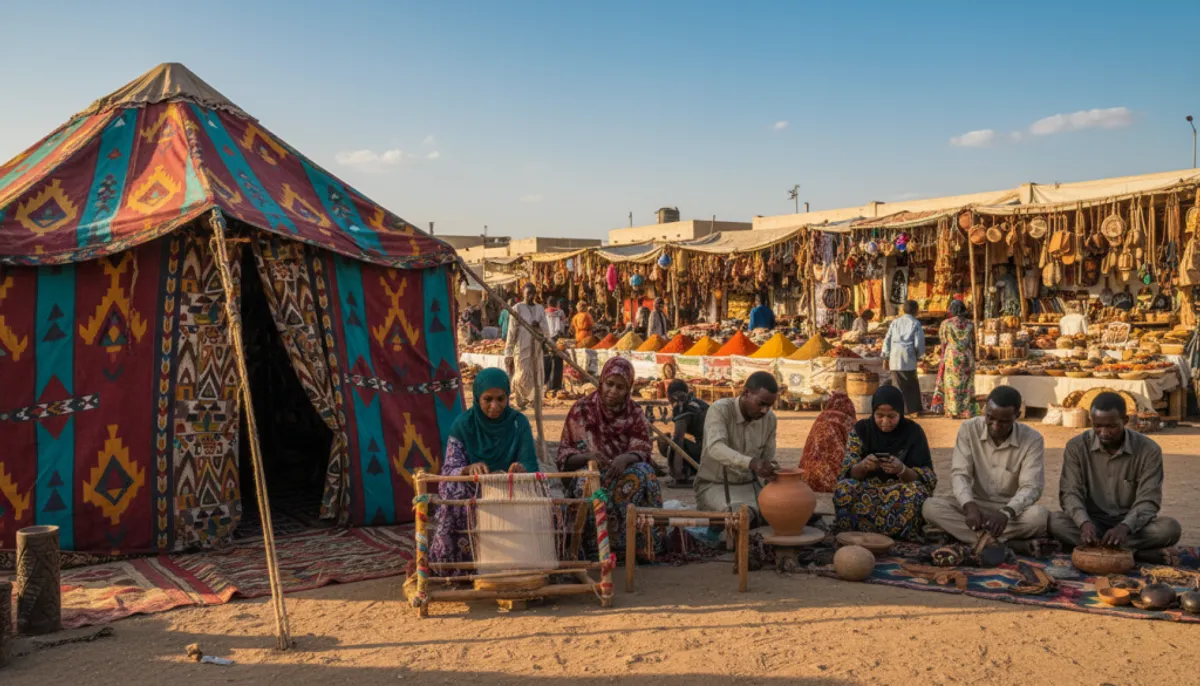
The Somali people have forged a remarkable identity. Despite the challenges, they have created a rich and unique heritage. Poetry, music, and craftsmanship are its jewels.
African, Arab, and Islamic influences blend harmoniously. This fusion has given birth to an original civilization. From daily practices to the most refined artistic expressions, each facet tells a story.
The environment of the Horn of Africa has profoundly shaped lifestyles. Trade exchanges and traditions bear its imprint. Today, preserving this wealth is essential.
Key points to remember
- Somalia is a country in the Horn of Africa with a population of approximately 18 million inhabitants.
- Somali and Arabic are the two official languages of the country.
- The Somali cultural identity is a unique blend of African, Arab, and Islamic influences.
- The cultural heritage is famous for its poetry, music, and craftsmanship.
- The geography of the country has played a crucial role in the development of its traditions.
- Despite historical challenges, the culture has shown great resilience.
- The capital, Mogadishu, is an important historical and cultural center.
Introduction to Somalia's heritage
At the heart of Somali identity lies a rare cohesion on the continent. This country stands out for its exceptional ethnic homogeneity, with 94.4% of the population belonging to the same group.
Unlike many fragmented African states, Somalia benefits from a common national language. Somali unites the entire population and facilitates the transmission of traditions. This linguistic unity forges a strong cultural identity.
The heritage results from ancient migrations and trade influences. Islamic religion, clan structures, and poetic oral tradition are the fundamental pillars. These elements form a coherent whole that positions this people uniquely in the world.
Despite colonizations and conflicts, this cohesion has allowed for the maintenance of unity through the centuries. Adaptation to an isolated geographical environment has strengthened this remarkable resilience.
Historical and geographical context
Located at a strategic crossroads, this African country enjoys an exceptional location. Its position in the Horn of Africa has conferred a crucial maritime role since antiquity.
| Characteristic | Somalia | France (comparison) |
|---|---|---|
| Total area | 637,700 km² | 547,030 km² |
| Coastline length | 3,025 km | 3,427 km |
| Land borders | 2,366 km | 2,913 km |
Geographical situation and borders
The territory shares borders with Ethiopia, Kenya, and Djibouti. More than half of its land boundaries run along Ethiopia.
This geographical configuration partially isolates the country while making it a historical trade bridge. Exchanges between Africa, Arabia, and Asia transit through this region.
The evolution from antiquity to the modern era
The history dates back to the highest antiquity. The ancient Egyptians were already familiar with this region, which played a significant role in the development of ancient egypt.
Between the 2nd and 7th centuries, some areas belonged to the kingdom of Aksum. In the 7th century, Arab tribes founded the sultanate of Zeila.
Cushitic migrations gradually populated the northern Somalia and then the coastal regions. Today, political fragmentation complicates the preservation of heritage.
Historical cities like Mogadishu and Zeila bear witness to this rich territorial evolution. They played a crucial role in regional maritime trade.
The history of Somali culture
As early as the 7th century, a major transformation shaped the destiny of this region. Companions of the prophet Muhammad sought refuge in the Horn of Africa. Islam thus established itself very early, long before many Arab countries.
This early adoption created a unique synthesis. The people retained their ancestral Cushitic languages while integrating religious practices. This reality shows a remarkable harmony between local traditions and external influences.
| Medieval Empire | Peak period | Commercial specialty |
|---|---|---|
| Ajuran | 13th-17th century | Control of maritime ports |
| Ifat-Adal | 13th-16th century | Ivory and gold trade |
| Warsangali | 13th-19th century | Exchanges with Persia and India |
International trade enriched these empires. Ivory, gold, fabrics, and spices passed through Somali ports. These exchanges fostered contacts with Arabia, Persia, and China.
In the 14th century, Ibn Battuta described Mogadishu as an "exceedingly large" city. This testimony illustrates the prosperity generated by maritime trade. Conflicts with Ethiopia reinforced Islamic identity while preserving local specificities.
Linguistic diversity and alphabets in Somalia
Beyond its ethnic unity, the country stands out for its rich diversity in language use. This particularity reflects a history marked by commercial and cultural exchanges.
The linguistic system functions as a mirror of the multiple influences that have shaped this society. It harmoniously combines local and international elements.
The official languages: Somali and Arabic
Somalia officially recognizes two main languages. Somali serves as the national language for daily communication. Nearly 95% of the population uses this Cushitic language.
Arabic occupies an important place in religious and administrative life. The Muslim majority uses it for prayers and Quranic education.
External influences and linguistic borrowings
The Somali language incorporates about 20% of Arabic vocabulary. These borrowings testify to historical ties with the Arabian Peninsula.
There are also Persian, Urdu, and Hindi terms resulting from Asian trade. Italian and English have contributed around 300 modern words.
This fusion creates a unique language, enriched without losing its African identity. The two official languages thus coexist in complementary domains.
Writing systems and the use of the Latin alphabet
In 1972, a historic decision radically transformed the approach to writing in the country. This reform established the Latin alphabet as the official spelling of the state.
Before this date, several systems coexisted to transcribe this rich language. This fragmentation complicated education and national administration.
Transition from Arabic script to the Latin alphabet
The Somali language is one of the few Afro-Asiatic languages primarily using the Latin alphabet. This choice is surprising given the profound Islamic influence.
The adoption aimed to modernize the country and facilitate literacy. It also asserted national identity in the face of colonial English and Italian influences.
| Characteristic | Somali Latin alphabet | Standard Latin alphabet |
|---|---|---|
| Letters used | All except p, v, z | Complete 26 letters |
| Special signs | Apostrophe only | Variable diacritics |
| Complexity | Simplified system | Variations depending on languages |
The Arabic alphabet continues to be used for religious texts. This duality reflects the complementarity of the two official languages.
This system facilitates access to modern technologies. It also maintains the link with the Arabic heritage of the Somali language.
The influence of Islam on Somali traditions
For over thirteen centuries, the Muslim faith has structured collective and individual existence. For this people, Islam represents much more than a religion. It constitutes a complete system that governs culture, social customs, and family organization, including elements of kawaii culture that have emerged in contemporary society.
Religious practices and daily rituals
The day often begins with ritual ablutions. The five daily prayers rhythm community life. Each believer scrupulously observes these moments of reflection.
The reading of the Quran in Arabic occupies a central place. During Ramadan, fasting enhances collective spirituality. These practices unite believers in the same devotion.
Dress codes also reflect this influence. Men wear garments covering from neck to knees. Women opt for modest outfits down to their ankles.
The Islamic calendar and festivals
The country officially uses the Muslim lunar calendar. This system organizes the main religious celebrations. Eid al-Fitr and Eid al-Adha mark the year.
The majority of believers follow the Shafi'i legal school. Sufism brings an important mystical dimension. Spiritual brotherhoods animate religious life.
Islam even influences diet with the prohibition of pork. Halal slaughter respects Quranic precepts. These traditions in Arabic maintain a strong link with origins.
Traditional and modern arts
Beyond religious traditions, the arts occupy a central place in social life. This creative diversity reflects the richness of the artistic heritage.
Artistic expressions skillfully combine ancestral traditions and contemporary influences. They testify to a remarkable capacity for adaptation.
Music, dance, and theater
Music is distinguished by its characteristic pentatonic melodies. The creative process involves a unique collaboration between different artists.
Lyricists, known as midho, work with composers and singers. The latter are called odka in the local language.
Traditional instruments like the batar and the kaban create unique sounds. Renowned groups have managed to blend these elements with modern styles.
| Instrument | Type | Use |
|---|---|---|
| Batar | Traditional drum | Basic rhythms |
| Kaban | String lute | Main melodies |
| Oud | String instrument | Accompaniment |
Visual arts and craftsmanship
Traditional craftsmanship exhibits exceptional quality. Basketry, weaving, and decorated pottery are passed down from generation to generation.
These ancestral techniques preserve valuable know-how. They constitute an essential element of cultural identity.
Leatherwork and other crafts complement this rich creative palette. Each piece tells a part of the collective history.
Architectural and urban heritage
As early as the 15th century, foreign travelers marveled at Somali constructions. The Chinese brought back stone houses of 4 to 5 stories from Mogadishu. Vasco da Gama described this city as a great city with imposing palaces.
Excavations in Zeila have revealed 200 to 300 stone houses. Some reached 18 meters in height. This discovery shows advanced construction capabilities.
The historic center of Mogadishu housed mosques with distinctive cylindrical minarets. The buildings used cut coral blocks. Thick walls and flat roofs characterized this architecture.
| Architectural site | Maximum height | Equivalent in stories |
|---|---|---|
| Mogadishu (15th century) | 15-18 meters | 4-5 stories |
| Zeila (ruins) | 18 meters | 8-9 stories |
| Taleh (Warsangali sultanate) | 15 meters | 7 stories |
The Islamic Solidarity Mosque in Mogadishu is the largest in the Horn of Africa. It symbolizes architectural and religious continuity. This unique architectural language blends Swahili influences with a distinctive identity.
The coastal cities developed a recognizable style. Decorative horns (zankwaye) adorned the corners of buildings. This visual language created harmony between function and beauty.
Historical trade and markets: a crossroads of exchanges
Somali ports have long shone as economic beacons on global maritime routes. This intense commercial activity transformed the coastal cities into remarkable centers of prosperity.
The ports and trade routes
Mogadishu emerged as the most important hub in East Africa. Its sophisticated port simultaneously accommodated many ships, creating congestion that testified to the intensity of exchanges.
Wealthy merchants exported high-quality fabrics, gold, and ivory. The tax-based fiscal system financed administration and monumental constructions.
The impact of international exchanges
The Ajuran empire minted its own currency with the names of its rulers. These coins found in the United Arab Emirates demonstrate the geographical extent of trade.
Archaeological discoveries reveal coins from Sri Lanka, Vietnam, China, and Venice. These findings prove the existence of sophisticated transcontinental trade contacts.
In local markets, camel meat, wheat, barley, and spices were abundant. This food wealth nourished a prosperous population, whose merchants were often described as obese by travelers.
The commercial expansion extended as far as Mozambique with the port of Solafa. Somalis even led the Maldives archipelago in the 15th century, considering their regional influence.
Colonial influence and linguistic heritage
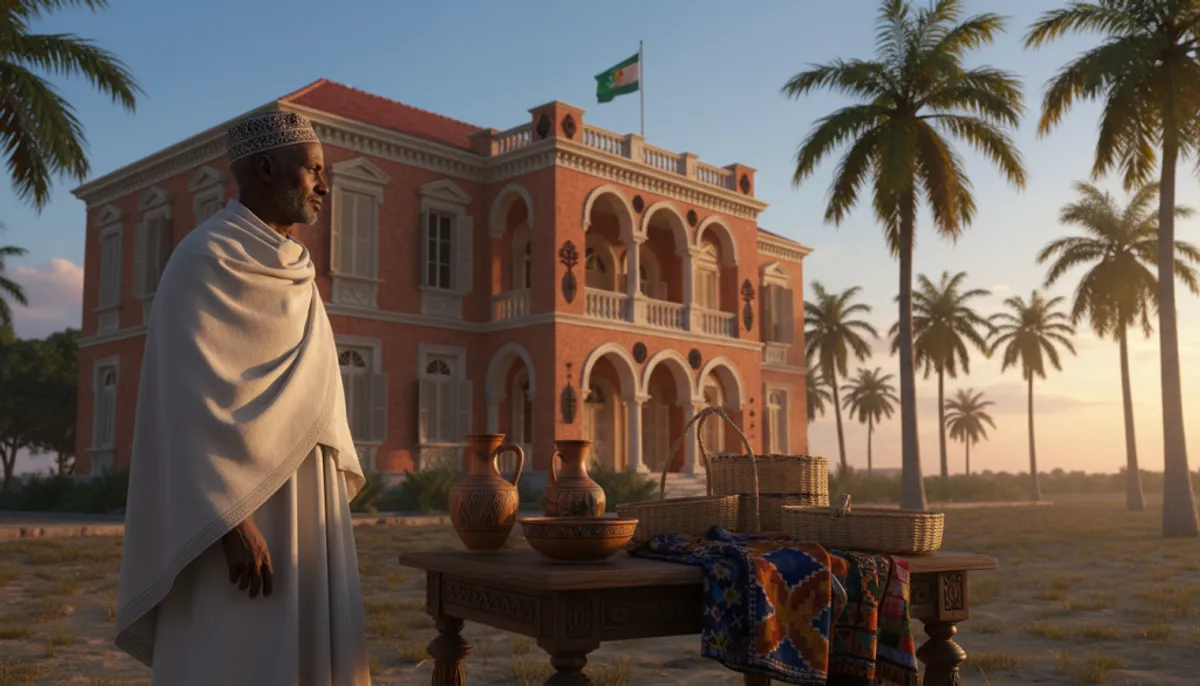
In 1887, a historic turning point divided the territory between two distinct European powers. Great Britain established a protectorate in the north, while Italy imposed its influence in the south. This partition created divergent zones of linguistic influence.
The British and Italian actions
The British imposed English in colonial administration and education. Less than 10% of the population mastered this language, creating an urban elite cut off from monolingual rural areas.
The Italian colonization introduced about 300 words into the local vocabulary. These terms still describe modern concepts and everyday objects today.
A major colonial war broke out with the dervish revolt. Led by Mohammed Abdullah Hassan from 1899 to 1920, it required five British military expeditions.
During World War II, British Somalia was occupied by Italy in August 1940. British forces regained control in March 1941.
From independence in 1960 until the onset of the civil war in 1991, English and Italian served as secondary teaching languages. This period formed a bilingual generation in urban areas, and the duration to verify the pass culture file was an important aspect of educational assessments during this time.
The colonial legacy left a lasting educational fragmentation. It also created westernized elites and enriched the lexicon of the national language.
The literary and artistic contribution
This land is often described as a nation where poetry flows in the veins of its inhabitants. The literary tradition is among the most vibrant in Africa.
Traveling bards have transmitted history and moral values for centuries. Their art combines collective memory and poetic performance.
Poets, writers, and bards
Mohamed Ibrahim Warsame Hadrawi (1943-2022) is nicknamed the "Somali Shakespeare." This playwright and thinker embodies the excellence of literature in the national language.
The linguistic diversity of authors reflects a rich history. Nuruddin Farah writes in English with international recognition. Cristina Ali Farah and Igiaba Scego use Italian.
| Author | Language of writing | Major contribution |
|---|---|---|
| Nuruddin Farah | English | Novel on exile and identity |
| Hadrawi | Somali | Engaged poetry and theater |
| Ayaan Hirsi Ali | Dutch | Feminist essays |
Recurring themes include exile, civil war, and the condition of women. Each work carries a name that counts in the African literary landscape.
This artistic production transcends borders. The diaspora enriches the global language with unique voices. The name of each author represents a chapter of this living history.
Daily life and cultural values
Family and clan ties form the foundation of collective existence. This social organization defines the identity of each person in this country.
The clan system structures all human relationships. Alliances and responsibilities must be scrupulously respected.
Traditions and community lifestyles
The xeer represents a unique traditional socio-political contract. It governs relationships between clans and conflict resolution.
Hospitality towards the stranger is not an option but a sacred duty.
Core values include respect for elders and community solidarity. Members must be supportive in times of need.
| Social structure | Main function | Geographical scope |
|---|---|---|
| Extended family | Basic unit | Local |
| Clan | Collective identity | Regional |
| Clan confederation | Political alliances | National |
Evolution of behaviors in the face of modernity
Urbanization is gradually transforming these ancestral traditions. Younger generations are adopting westernized lifestyles.
Yet, values persist even more strongly in rural areas. The diaspora relies on these traditions to maintain its identity.
This people demonstrates a remarkable capacity to adapt its rich culture to contemporary realities, reflecting the process of cultural evolution. The balance between tradition and modernity remains a daily challenge.
The Somali diaspora and its international exchanges
The global dispersion of the Somali people represents a remarkable demographic phenomenon. Since 1991, millions have left their home country.
This massive migration results from civil wars and political instability. It has created dynamic communities across several continents.
Somali now has about 28 million speakers worldwide. This language far exceeds the population of the home country.
| Region of establishment | Main countries | Estimated population |
|---|---|---|
| Neighboring Africa | Djibouti, Ethiopia, Kenya | 1.3 million |
| Europe | United Kingdom, Netherlands, Scandinavia | 250,000 |
| North America | United States, Canada | 150,000 |
| Gulf countries | United Arab Emirates, Yemen | 250,000 |
Money transfers constitute a vital source of income. They support the national economy and families left behind.
Our community maintains strong cultural ties despite geographical distance.
Community centers preserve the language and ancestral traditions. Younger generations navigate between multiple cultural influences.
This diversity further enriches the artistic and intellectual heritage. The diaspora produces contemporary creations that fuse different inspirations.
Heritage preservation initiatives
Despite massive destruction, a cultural renaissance is taking shape through various projects. The country is making remarkable efforts to safeguard its threatened heritage.
Cultural and educational projects
Since 1991, conflicts have severely damaged heritage. Yet, local and international initiatives are reviving traditions.
UNESCO launched an important project in 2008. It is among the few international programs dedicated to traditional performing arts.
The National Museum in Mogadishu, destroyed in 1991, was rebuilt in 2019. It now serves as a major educational center for youth.
In Somaliland, the Hargeisa Provincial Museum has been operating since 1977. A new National Museum opened its doors in 2024.
The Shabab militias have destroyed many Sufi mausoleums. These acts have motivated a stronger community response.
Educational programs now transmit knowledge to younger generations. Craft workshops and poetry recordings ensure exceptional quality of preservation.
The diaspora actively funds cultural projects. It creates centers abroad that serve as valuable relays.
This country thus demonstrates a firm will to protect its identity. Each project counts in this remarkable cultural renaissance.
Contemporary challenges and cultural evolution
In the face of political upheaval, collective identity demonstrates an astonishing capacity for adaptation. The country has remained fragmented since the onset of the civil war in 1991.

This war has devastated cultural infrastructures. Theaters, museums, and libraries have suffered massive destruction.
| Cultural aspect | Before 1991 | After 1991 |
|---|---|---|
| Functional institutions | Open national theater | Closed until 2012 |
| Transmission of traditions | Continuous | Interrupted for 20+ years |
| Artistic freedom | Relative | Severe restrictions |
The ideological conflict opposes ancestral traditions and rigorism. Militias prohibit certain artistic expressions.
Despite adversity, creativity persists and adapts to new realities.
The resilience of the people in the face of these challenges is remarkable. This article highlights how traditions survive against all odds.
The gradual reconstruction since 2012 offers hope. The very poor country relies on its cultural wealth to be reborn.
Conclusion
The heritage presented in this article reveals exceptional richness. This heritage spans from antiquity to contemporary expressions in our modern world.
The people of this region have developed a sophisticated civilization despite their situation in the Horn of Africa. Their unique language unites over 28 million people across the globe.
The resilience in the face of historical challenges remains remarkable. Colonizations and conflicts have not erased artistic traditions and fundamental values.
Contemporary challenges must be met with determination. Institutional reconstruction and heritage preservation require sustained efforts.
The potential for contribution to intercultural dialogue remains immense. The creativity of new generations promises a bright future for this vibrant culture.
FAQ
What are the two official languages of Somalia?
Somali and Arabic are the two official languages of the country. Somali is the national language, while Arabic holds religious and historical significance.
How has the civil war affected the Somali people?
Since 1991, the conflict has profoundly impacted society, leading to population displacements and economic challenges. Despite this, resilience and community ties remain strong.
What role do markets play in traditional trade?
Markets have always been vital centers of exchange, connecting cities and facilitating trade in various goods. They reflect the local economic and social reality.
Are English and Italian still used in Somalia?
Yes, these languages, inherited from the colonial era, are still present, particularly in business, education, and some media. They coexist with the official languages.
What initiatives exist to preserve cultural heritage?
Diverse educational and artistic projects aim to safeguard traditions, music, and literature. These efforts are crucial for maintaining the quality of this heritage for future generations.