
Welcome to a fascinating journey into the heart of a millenary civilization. This vibrant tradition was born in ancient Kangleipak, a region that today corresponds to the northeast of India.
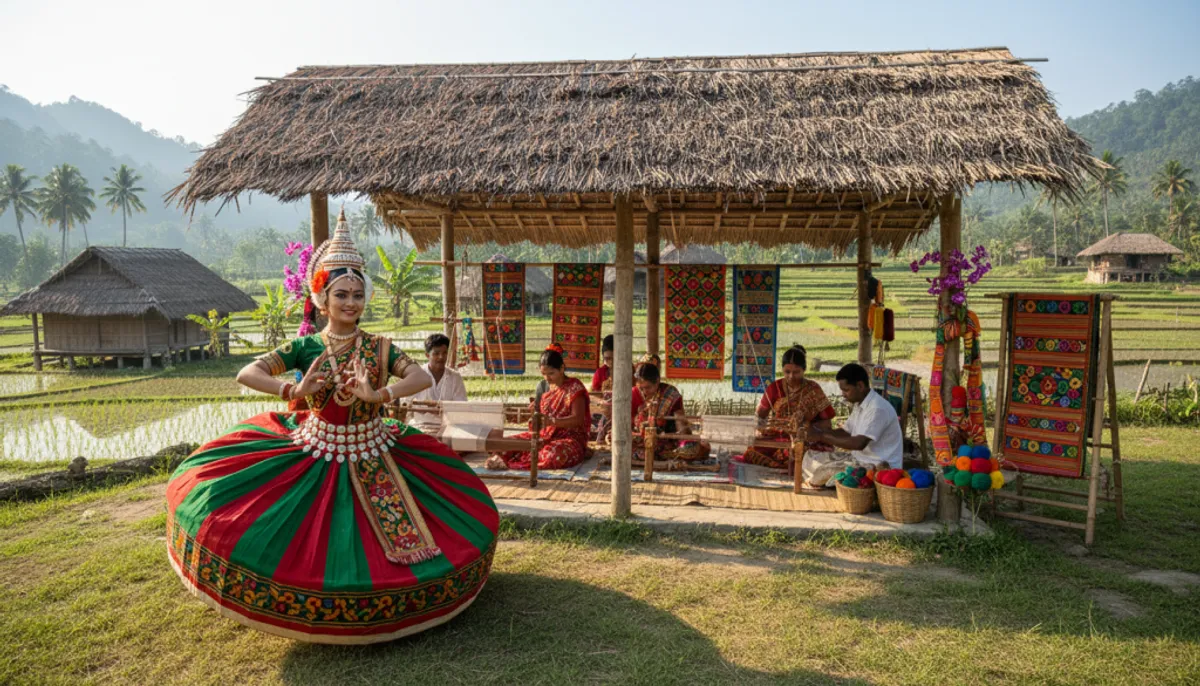
Over the centuries, this society has developed an artistic and spiritual heritage of exceptional richness. It has managed to preserve its unique identity while influencing neighboring kingdoms.
From ancient temples like Kangla to sacred classical dances, each element tells a profound story. We will discover how this artistic expression continues to illuminate the modern world.
Key Points to Remember
- An ancient civilization that has evolved over thousands of years.
- Originating from the historical region of Kangleipak in northeast India.
- Recognized for its intangible heritage, particularly classical dance.
- Manipuri dance is a profound spiritual expression, considered a national dance in India.
- A distinctive architecture illustrated by sites like the Pakhangba temple.
- A culture that has influenced and been influenced by surrounding regions.
- A living heritage that continues to shape its identity today.
Introduction to Manipuri Culture
Discover the many facets of a society rich in ancestral heritage and traditions. This human expression encompasses knowledge, beliefs, arts, and customs acquired collectively, highlighting the impact of culture on the development of identity.
The social fabric of this region presents a remarkable plural nature. Different ethnic communities have coexisted harmoniously for centuries, creating a unique mosaic.
This heritage embodies both deep spiritual dimensions and tangible material manifestations. This balance between tradition and daily life shapes the identity of the people.
Understanding this expression goes far beyond the arts and letters. It is a complete way of life that includes values, rites and traditions, and collective beliefs.
The richness of this diversity significantly contributes to national identity. Each community preserves its specificities while enriching the whole.
This inclusive approach allows individuals to fully express themselves and realize their potential. Cultural development naturally accompanies economic progress for a sustainable future.
The people of this region have built a civilization where tradition and innovation constantly engage in dialogue. This dynamic ensures the sustainability of their unique heritage.
Understanding Manipuri Culture: Origins and Evolutions
Let’s dive into the deep roots of this millenary tradition. Its history dates back to ancient Kangleipak, thousands of years ago.
This civilization has traversed different eras with a remarkable capacity for adaptation. From ancient times to the medieval period, each century has brought its share of transformations.
Over time, trade exchanges and migrations have enriched this heritage. These external influences have shaped its evolution without erasing its fundamental identity.
The current richness results from this constant openness to other societies. Yet, essential values have been passed down through generations.
Understanding this historical dynamic is crucial to appreciating contemporary complexity. This tradition has never been static but always in motion.
Each period has contributed to building the heritage we know today. This adaptability ensures the sustainability of this unique expression.
The Historical and Mythological Roots
Immerse yourself in the foundational stories that have shaped this civilization. The Meitei mythology reveals a rich pantheon where animals serve as divine messengers.
Among the important gods, Khunu Leima reigns over pigeons and doves. Nganu Leima protects ducks and waterfowl. These goddesses illustrate a profound spiritual history.
The traditional religion is expressed through enlightening tales. The story of Uchek Langmeitong tells of a young woman's transformation into a hornbill. This story symbolizes resistance against familial injustice.
The tale of Sandrembi and Chaisra explores themes of betrayal and reincarnation. These narratives convey essential moral values to society.
Manipuri mythology uses animals as bridges between the human and divine worlds. This unique approach enriches contemporary religion and its rituals.
These mythological foundations remain alive today. They continue to influence spiritual practices and collective identity.
Architecture and Historical Heritage
Explore the exceptional monuments that embody the creative genius of the Meitei builders. This architectural heritage reveals remarkable technical sophistication.
The Kangla complex represents the heart of this heritage. Its monumental gates guarded by Kanglashas symbolize power and protection.
Classical architecture is fully expressed in sacred structures like the Pakhangba temple. These religious edifices use traditional symbolic motifs.
Among the notable places, the Ima market testifies to a unique social heritage. Exclusively managed by women, it combines economic function and architectural value.
Preservation efforts keep these historical places alive. This continuity ensures transmission to future generations.
Contemporary architecture still draws inspiration from these ancestral principles. These ancient structures continue to influence the modern built environment.
The Arts and Traditional Dances
Let’s delve into the heart of the ancestral artistic expressions that define this rich tradition. Cultural movements and choreographic practices constitute the living soul of this heritage.
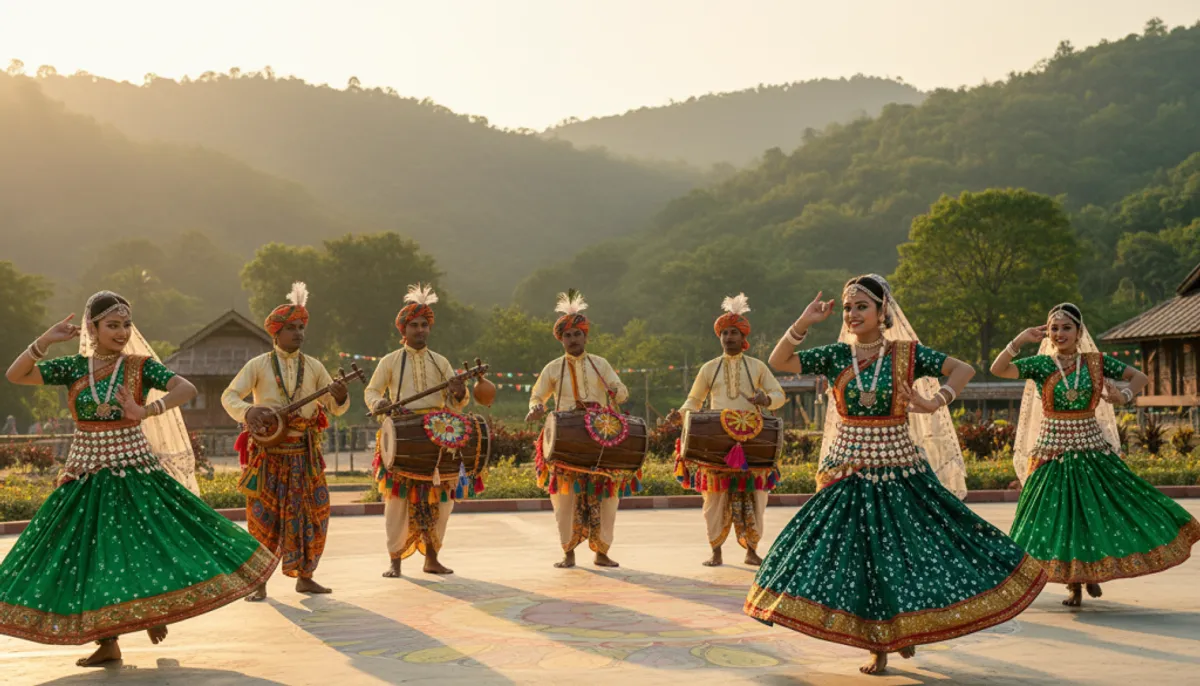
The Thang-Ta, a martial art using sword and spear, forms the essential technical foundation. This martial discipline directly influences the movements of classical dances.
The Classical Dance and the Role of Thang-Ta
The dance Raas Leela represents the pinnacle of spiritual expression. Developed in the 18th century, it honors devotion to Krishna.
Different choreographic forms coexist harmoniously. Each possesses its own identity and cultural function.
| Dance Form | Characteristic | Function |
|---|---|---|
| Lai Haraoba | Ritual movements | Divine celebration |
| Pung Cholom | Drummed rhythms | Energetic expression |
| Sankirtana | Devotional chants | Collective practice |
Theater and Traditional Stage Expression
The Shumang Kumhei theater presents remarkable adaptations. Greek and Sanskrit plays are reinterpreted with authenticity.
International recognition culminates with the film Ishanou. Celebrated as a “World Classic” at Cannes, it testifies to artistic excellence.
These performances keep a millenary tradition alive. They constantly engage with the contemporary world.
The Meitei Language and Literature
Let’s enter the linguistic and literary universe of the Meitei. This written tradition dates back centuries and constitutes a fundamental pillar.
The writing system has evolved over time. It reflects the intellectual sophistication of this society.
The Puyas and Oral Transmission
The puyas represent the heart of classical literature. These ancient texts like Numit Kappa and Leithak-Leikharol are treasures.
They mark the transition from myth to reason. This intellectual evolution places this civilization on a unique pedestal.
| Major Work | Thematic | Importance |
|---|---|---|
| Numit Kappa | Mythological narratives | Spiritual foundation |
| Langon | Ancestral traditions | Historical preservation |
| Leithak-Leikharol | Esoteric knowledge | Sacred transmission |
Unfortunately, few people can read these works today. Even graduates in language encounter difficulties.
Narration, Poetry, and Traditional Writing
The oral tradition admirably complements the written. Poetry and narration ensure the transmission of knowledge.
These forms of expression continuously enrich literature. They keep this rich tradition alive.
Contemporary writings draw inspiration from these legacies. This dynamic ensures the sustainability of creative expression.
Religion and Spirituality in Manipuri Culture
Let’s dive into the heart of the ancestral beliefs that structure daily life. Sanamahism represents the traditional religion of the Meitei, still alive today.
This ancient spirituality possesses a rich pantheon of protective deities. Each divine entity oversees specific aspects of existence.
Sanamahism and the Deities of the Meitei Pantheon
Lainingthou Sanamahi occupies a central place in family worship. Daily offerings honor this household deity.
The Pakhangba temple at Kangla serves as an important sanctuary. It symbolizes the continuity of traditional religious practices.
| Deity | Domain | Sacred Place |
|---|---|---|
| Khunu Leima | Pigeons and doves | Family shrines |
| Nganu Leima | Waterfowl | Water points |
| Koupalu (Koubru) | Northwest protection | Koupalu Ching |
| Marjing | Equestrian sports | Sacred hills |
Mountains like Nongmaiching Ching house divine entities. Pilgrimages to these sites strengthen community beliefs.
The Sanamahi Culture University preserves this spiritual heritage. Its central sanctuary perpetuates traditions in the face of modernization.
Society and Family Traditions
At the heart of this community, family ties and traditions structure collective existence. This society deeply values authentic wisdom while viewing cunning with suspicion.
A person too clever may be compared to a “fox.” This metaphor aptly illustrates fundamental ethical values. Human relationships rely on honesty and integrity.
Animals hold a special place in this society. Dogs are regarded as true companions. They even received elaborate funerals, equal to those of humans.
Traditional institutions like Pandit, Pala, and Maibi Loishangs play a crucial role. They preserve and transmit ancestral knowledge, including various art activities. These structures maintain social cohesion.
The family constitutes the central pillar of this organization. Roles and responsibilities are clearly defined. Family traditions reinforce intergenerational bonds.
In the face of modernization, these institutions face significant challenges. Revitalization efforts are necessary to preserve this unique heritage. Transmission to younger generations remains essential.
This society continues to evolve while honoring its roots. The balance between innovation and traditions shapes the future of each family.
Festive Rituals and Traditional Celebrations
The festive calendar of this society rhythmically marks collective life with remarkable intensity. Each day seems marked by a ritual or preparation for an upcoming event.
Major celebrations like Lai Haraoba mobilize the entire community for several days. These complex ceremonies blend sacred dances and offerings to the deities.
Cheiraoba, marking the New Year, and Ningol Chakouba, the festival of sibling bonds, are other important festivals. They strengthen family and neighborhood connections, the leikais.
This high frequency of rituals creates a strong emotional group life. Attention naturally focuses on the close circle – family and clan.
This focus presents a dual aspect. It preserves a unique identity but can sometimes distract from broader civic engagements.
The impact on economic and political life is therefore significant. The balance between tradition and national participation remains a contemporary challenge.
Natural Heritage and Sacred Sites
The natural landscape of Manipur reveals a unique spiritual dimension. The mountains and hills, called Chings, are not mere geological formations. They embody sacred spaces inhabited by protective deities.
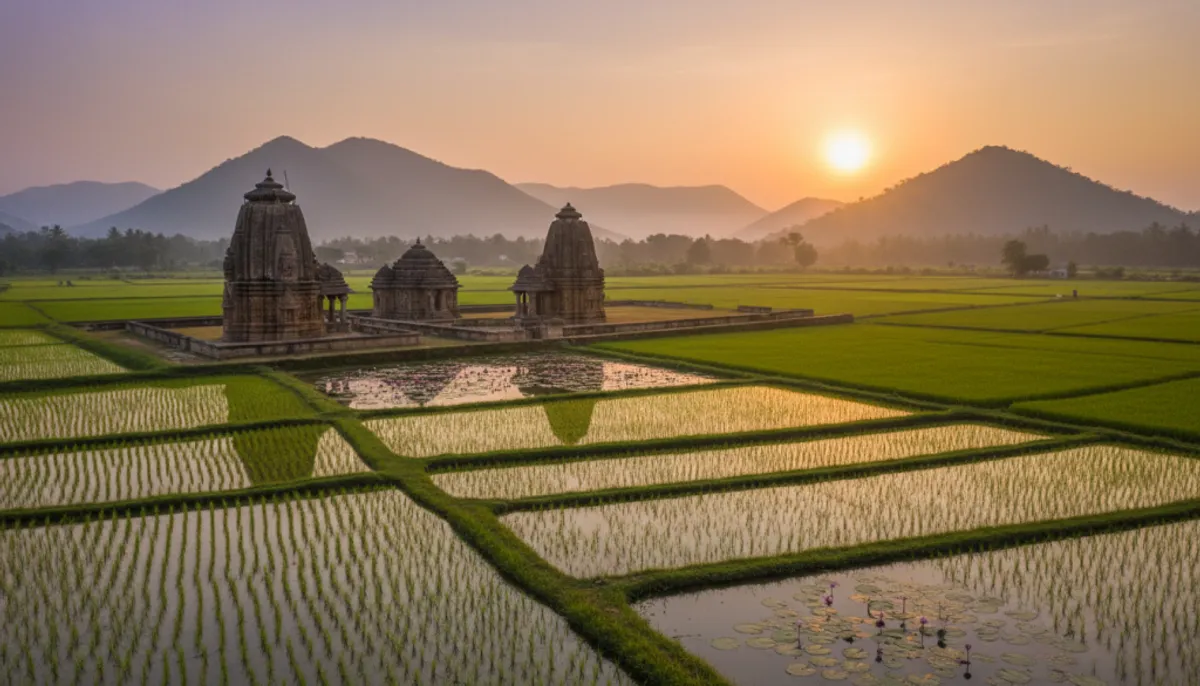
These natural sites constitute the heart of Meitei mythology. Each Ching has its own story and resident deity. Heingang Ching houses the god Marjing, associated with traditional polo.
The government has erected the world's tallest equestrian statue at the summit of this mountain. This work celebrates the origin of modern polo in this region.
| Sacred Mountain | Resident Deity | Protective Function |
|---|---|---|
| Heingang Ching | Marjing | God of traditional polo |
| Koupalu Ching | Koupalu | Northwest protection |
| Kounu Ching | Goddess Kounu | Female sanctuary |
| Nongmaiching Ching | Kainou Chingsomba | Divine abode |
| Langkol Ching | Seven goddesses and eighteen gods | First perfect creation |
These natural environments are mentioned in many ancient texts. Works like Chinglon Laihui testify to their historical importance. Devotees regularly perform rituals there and seek blessings.
Preserving this heritage in the face of modern development remains crucial. Maintaining the ecological and spiritual integrity of these exceptional sites is a priority.
Contemporary Artistic and Cultural Movements
The contemporary creative horizon reveals remarkable vibrancy. These artistic movements, including cameroonian art, testify to exceptional vitality in the current landscape.
Film, photography, and modern architecture represent innovative expressions. These emerging forms significantly enrich the living heritage.
The film Ishanou perfectly illustrates this excellence. Presented at Cannes in 1991, it was crowned “World Classic” in 2023 after thirty-three years.
Today's creators establish a fruitful dialogue with tradition. They experiment with new techniques while honoring their roots.
Contemporary art festivals and digital platforms are emerging. These initiatives allow for a global dissemination of current works.
Politics encourages this dynamic between heritage and innovation. It fosters the emergence of original and authentic expressions.
These movements ensure the relevance of heritage in a globalized world. They attract younger generations and guarantee continuity.
The Impact of Culture on Education and Knowledge Transmission
The education of younger generations relies on a delicate balance between tradition and modernity, including the rich lao loum traditions. This integrated educational approach allows for a harmonious transmission of ancestral knowledge while assimilating contemporary scientific advancements.
The National Education Policy of 1986 establishes a balanced curricular framework. It integrates national heritage, constitutional values, and scientific temperament. This holistic vision preserves identity while promoting intellectual progress.
The Guru Shishya Parampara system retains its relevance in cultural learning. This master-disciple tradition ensures a living transmission of performative arts and ritual practices. It represents an essential pillar of authentic teaching.
| Educational Initiative | Main Objective | Level of Application |
|---|---|---|
| Puyas Specialization | Preservation of ancient texts | University (M.A.) |
| Cultural Literacy | Heritage knowledge | Primary and secondary |
| Creative Programs | Artistic awareness | All levels |
| Scientific Integration | Technological balance | National curriculum |
The urgency to create specializations in the study of puyas at the universities of Manipur and Assam is crucial. These programs will train a new generation capable of reading and interpreting these literary treasures. Preserving this ancestral knowledge guarantees the continuity of intellectual heritage.
Cultural education simultaneously develops verbal and heritage literacy. Each child thus acquires a fundamental understanding of their heritage. This dual approach enriches quality of life through beauty, harmony, and refinement.
The Evolution and Modernization of Culture
Let’s examine how ancestral traditions meet the digital age. This evolution represents a profound challenge that goes beyond the mere adoption of technological tools.
Modernization requires a transformation of mindsets while preserving essential values. New techniques document and disseminate traditional practices.
Influence of Modern Techniques on Traditions
Social media and online platforms allow for global dissemination. This exposure creates opportunities but also tensions.
How to preserve authenticity in the face of accelerated changes? Technology offers valuable digital conservation tools.
The modern world poses complex economic and political challenges. A balanced reform must avoid de-culturation while allowing progress.
Education plays a crucial role in this successful modernization. It must integrate heritage and innovation without creating distortions.
The Role of Cultural and Educational Institutions
Cultural and educational institutions are essential pillars for preserving heritage. They structure the contemporary ecosystem with a strategic approach.
The state adopts a catalytic role with “remote intervention.” This method promotes the autonomy of organizations while providing necessary support.
The Sanamahi Culture University represents a flagship institution. Its central sanctuary, the Lainingthou Sanamahi Kiyong, symbolizes the connection between spirituality and education.
“Cultural development requires a coordinated and sustainable institutional approach.”
Several ambitious projects are being considered to strengthen this network. An Advanced Study and Research Center dedicated to Manipuri heritage is planned.
Specialized centers for training in various forms of art will emerge. This initiative aims to professionalize the transmission of knowledge.
| Type of Institution | Main Function | Territorial Impact |
|---|---|---|
| Specialized Universities | Research and training | Regional and national |
| Composite Cultural Centers | Dissemination and accessibility | District by district |
| Research Institutes | In-depth study | International |
| Artistic Training Centers | Transmission of techniques | Local and community |
Establishing composite cultural centers in each district is a priority. These spaces will integrate museums, libraries, and exhibition areas.
A State Prize system rewards exceptional contributions to Manipuri heritage. This recognition encourages excellence and innovation.
Collaboration between departments ensures an integrated approach to development. Education, Cultural Affairs, and Tourism work in synergy.
These institutions thus play a decisive role in the sustainability of heritage. Their coordination ensures effective transmission to future generations.
Culture and Economic and Political Development
How do ancestral values influence current economic dynamics? This central question reveals the deep interdependence between traditional heritage and modern development.
Economic and technical progress must advance hand in hand with the evolution of artistic expressions. Without this harmony, material growth risks neglecting fundamental spiritual aspirations.
The region currently faces significant economic and political challenges. An approach integrating heritage dimensions, including aspects of karen ethnicity, could help address these systemic issues.
Investing in intangible heritage represents a crucial lever for sustainable growth. It allows for a development that respects local values and the aspirations of the population.
Traditional factors play an essential role in motivating change agents. Ancestral knowledge and historical skills enrich transformation processes.
Redefining development from a pluralistic perspective becomes necessary. This involves recognizing different ways of life rather than mechanically imitating a dominant model.
The impact of this integrated approach on society would be profound. It would restore to economic progress its authentic human significance, where individual flourishing takes precedence over mere quantitative indicators.
Manipuri Culture in the Contemporary World
From prestigious stages to national symbols, this rich tradition asserts itself in the contemporary global world. It establishes a constant dialogue with international artistic expressions while preserving its authenticity.
The film Ishanou perfectly illustrates this recognition. Crowned “World Classic” at the Cannes Film Festival 2023, it demonstrates artistic excellence on the international stage.
Theater also engages with universal classics. Meitei language adaptations of Greek plays like Antigone are presented in Edinburgh and Athens.
These concrete examples show remarkable openness. Classical dance even appears on Armenian stamps, symbolizing its global reach.
At the national level, ancestral symbols integrate modern contexts. The crest of the destroyer INS Imphal represents the Kangla Sanathong and the Kanglasha.
This integration affirms the importance of heritage for Indian identity today. It shows how tradition dialogues with modernity, where east meets west.
The balance between openness and preservation remains essential. This approach avoids cultural colonization while enriching the contemporary artistic landscape.
These examples demonstrate exceptional vitality. The millenary heritage continues to inspire the world through its spiritual depth.
Conclusion
In summary, this exploration reveals a heritage of exceptional richness that continues to shape contemporary identity. The puyas truly constitute the supreme intellectual foundation of this millenary tradition.
Preserving traditional geographical elements like khongs and pukhris is just as crucial as preserving artifacts. These natural sites carry immense historical value.
In the face of current economic and ethical challenges, this culture offers profound solutions for regional progress. Its inclusive approach allows all citizens to participate fully.
The balance between tradition and modernity ensures a future where fundamental values persist while adapting. This dynamic assures the sustainability of a unique and composite identity.
In the spirit of unity in diversity, this plural expression deserves to be encouraged to flourish. It significantly contributes to the world heritage while strengthening social cohesion.
FAQ
What is the importance of the Meitei language in preserving heritage?
The Meitei language, or Manipuri, is fundamental. It is the primary vehicle for ancient texts, the *puyas*, and oral narratives. It keeps alive the connection with the philosophy, history, and unique social values of this community.
How are traditional dances like thang-ta taught today?
Teaching often takes place in dedicated institutions, such as the Jawaharlal Nehru Manipur Dance Academy, and by masters (*gurus*) who perpetuate the master-disciple transmission. These artistic forms are also integrated into the programs of the University of Manipur.
What are the most significant festivals of this society?
Celebrations like Yaoshang (Holi), Lai Haraoba, and Ningol Chakouba are very significant. They blend religious rituals, dances, including the naga dance, and strengthening family bonds, reflecting rich spirituality and social cohesion.
What role does Sanamahism play in daily life?
Sanamahism, the indigenous religion, profoundly influences ethical codes, family rites, and the relationship with nature. It permeates daily activities, festivals, and respect for sacred sites, like the Keibul Lamjao forest.
How does modernization affect traditional ways of life?
The influence of technologies and globalization brings changes, particularly in urbanization and communication. However, a strong revitalization movement, supported by institutions, works to adapt traditions to remain relevant.
Where can one learn more about this heritage outside of Manipur?
Cultural centers, exhibitions, and dance performances travel across India and the world. Academic resources are also available through cultural studies departments at certain universities and online.