
At the heart of Europe lies a country with an extraordinary heritage. Austria, with its alpine landscapes and imperial cities, offers a journey unique through the centuries. Its identity has been forged by a rich history, marked by the influence of the Habsburgs.
The nation has over 9 million inhabitants. An overwhelming majority speak German. Roman Catholicism, a legacy of the empire, remains very present in society and influences the celebrations.
The federal structure, with nine states, adds remarkable diversity to regional traditions. Each state has its own character. This variety enriches the overall heritage.
Discovering Austrian culture is diving into a universe where music, art, and gastronomy intertwine. Despite its modest size, this culture shines well beyond its borders.
Key Points to Remember
- Austria is a country in Central Europe with a marked imperial past.
- The main language is German, spoken by over 95% of the population.
- Catholicism is the dominant religion, influencing traditions.
- The national holiday is celebrated on October 26.
- The country is a federation of nine states, each with its specificity.
- Its cultural heritage is immense, particularly in the artistic and musical fields.
- Exploring this culture is an immersive experience through history and customs.
Introduction to the History of Austria
Austrian history traces its roots back to Roman antiquity when the region became a strategic province. This rich chronicle spans two millennia, marked by powerful dynasties and territorial transformations.
Historical Context and Roman Influences
Around the year 40 AD, the Romans established the Provincia Noricum. They set their border at the Danube and built the Brenner road. This road directly connects the new province to Italy.
In the 2nd century, the territory was divided into two administrative regions. This Roman organization laid the foundations for future development. The infrastructure and imperial administration left a lasting imprint.
The Great Dynasties and the Habsburg Legacy
In 976, the Babenbergs became margraves of the territory. They were elevated to the rank of duchy in 1156. The Privilegium Minus then constitutes the founding act.
Rudolf I of Habsburg came to power in 1278. This Swiss dynasty would reign for over six centuries. Under Charles V, their possessions experienced remarkable expansion.
The empire faced the Ottomans during the sieges of Vienna in 1529 and 1683. Maria Theresa modernized the administration starting in 1740. The country later became a republic after World War I.
Exploring Austrian Culture: Traditions and Modernity
Daily life in Austria reflects a subtle harmony between respect for conventions and openness to change. This nation has always managed to reconcile innovation and tradition with remarkable grace, including practices like culture checks boulanger that contribute to this balance.
Evolution of Cultural and Social Practices
Austrians have contributed to European avant-gardes while maintaining a deep attachment to traditional values. This duality creates a society where courtesy and discretion remain fundamental.
Punctuality is particularly valued in social life. Conversations maintain an appropriate distance, reflecting the reserved nature of the population.
The evolution since the Biedermeier era shows how each period has marked behaviors. Respect for rules in public spaces illustrates this social discipline.
| Period | Social Characteristics | Cultural Influences | Notable Evolution |
|---|---|---|---|
| Biedermeier (1815-1848) | Bourgeois life, family intimacy | Decorative arts, chamber music | Focus on the private sphere |
| Fin de siècle (1890-1914) | Avant-garde, artistic innovation | Vienna Secession, psychoanalysis | Break with traditionalism |
| Contemporary Period | Balance between tradition and modernity | Globalized European influences | Harmonization of contrasts |
Prestigious universities like that of Vienna play a crucial role in this cultural transmission. They ensure the sustainability of heritage while encouraging innovation.
This unique culture navigates between imperial heritage and international influences. It creates a dynamic identity where each generation finds its balance.
Emblematic Traditions and Customs
Throughout the year, Austrians honor their traditions through various festivities, including traditional malagasy dances. These celebrations rhythm the social and spiritual life of the country.
National Holidays and Religious Celebrations
The calendar begins on January 1 with New Year's Day. Important religious festivities include Epiphany on January 6 and Corpus Christi in June.
The Assumption in August and All Saints' Day in November also mark the year. The national holiday on October 26 celebrates the country's permanent neutrality.
Christmas Markets and Local Festivities
The Advent season in December transforms the cities. Christmas markets offer local crafts and culinary specialties.
On December 6, St. Nicholas is accompanied by Krampus, a traditional character. Village festivals strengthen community ties throughout the year.
These traditions create a strong collective identity. They blend religious heritage and popular customs harmoniously.
The Historical Influence of the Austrian Empire
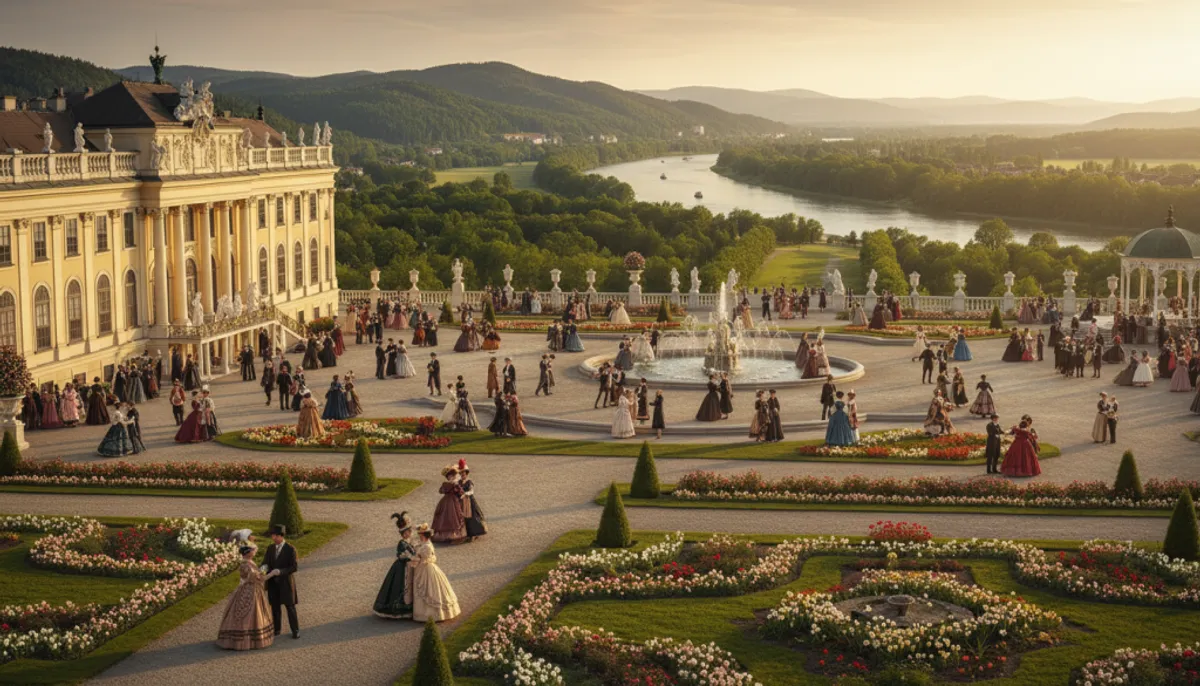
The territorial expansion of the Habsburgs has durably shaped the political landscape of Central Europe. This gradual growth created a vast empire with shifting borders.
Key Periods and Territorial Restructurations
As early as the 14th century, the Habsburgs integrated Carinthia and Tyrol. Rudolf IV founded the University of Vienna in 1365, reinforcing intellectual influence.
Under Ferdinand I, Bohemia, Hungary, and Croatia joined the hereditary possessions. The Peace of Westphalia in 1648 profoundly redrew the borders after the Thirty Years' War.
Maria Theresa and Joseph II launched significant development projects. They settled German peasants in various regions to enhance the territories.
The Metternich system established European balance after 1815. The defeat at Sadowa in 1866 led to the creation of the Austro-Hungarian dual monarchy.
The Treaty of Saint-Germain in 1919 marked the end of this glorious empire. Modern Austria became a small country composed of nine federal states.
- Progressive acquisition of territories since the 14th century
- Maximum expansion under Ferdinand I in the 16th century
- Profound transformations after major European conflicts
- Restructuring into a dual monarchy in 1867
- Radical territorial reduction after 1919
The Artistic and Musical Heritage
From legendary composers to revolutionary architects, the Austrian artistic heritage fascinates. This wealth is expressed through an exceptional musical tradition and remarkable visual achievements.
Essential Figures and Contributions in Classical Music
Mozart, Schubert, and Haydn revolutionized classical music. Beethoven, although German, developed his work in Vienna. Their legacy endures in prestigious concert halls.
Mahler, Bruckner, and Schönberg continued this excellence in the 20th century. Their compositions continue to inspire music lovers worldwide.
Festivals, Operas, and Cultural Events
The Wiener Staatsoper and the Musikverein represent temples of music. The New Year's Concert broadcasts a Viennese waltz to a billion viewers every January.
Festivals like the Salzburg Festival attract thousands of visitors. These events enliven the various cities of the country throughout the year.
| Institution | Location | Specialty | Foundation |
|---|---|---|---|
| Wiener Staatsoper | Vienna | Classical opera | 1869 |
| Musikverein | Vienna | Symphonic concerts | 1870 |
| Salzburg Festival | Salzburg | Music and theater | 1920 |
| Albertina Museum | Vienna | Graphic arts | 1776 |
The visual arts shine with Klimt and Schiele. The baroque architecture of Fischer von Erlach still marks the landscape. The capital and Salzburg are UNESCO World Heritage sites.
The MuseumsQuartier and the Belvedere showcase these treasures. This artistic diversity makes the country shine internationally.
The Richness of Austrian Gastronomy
The Austrian table reveals an exceptional culinary heritage where alpine traditions and imperial influences blend. This Austrian cuisine draws from a generous terroir to create unique flavors.
Traditional Dishes and Regional Specialties
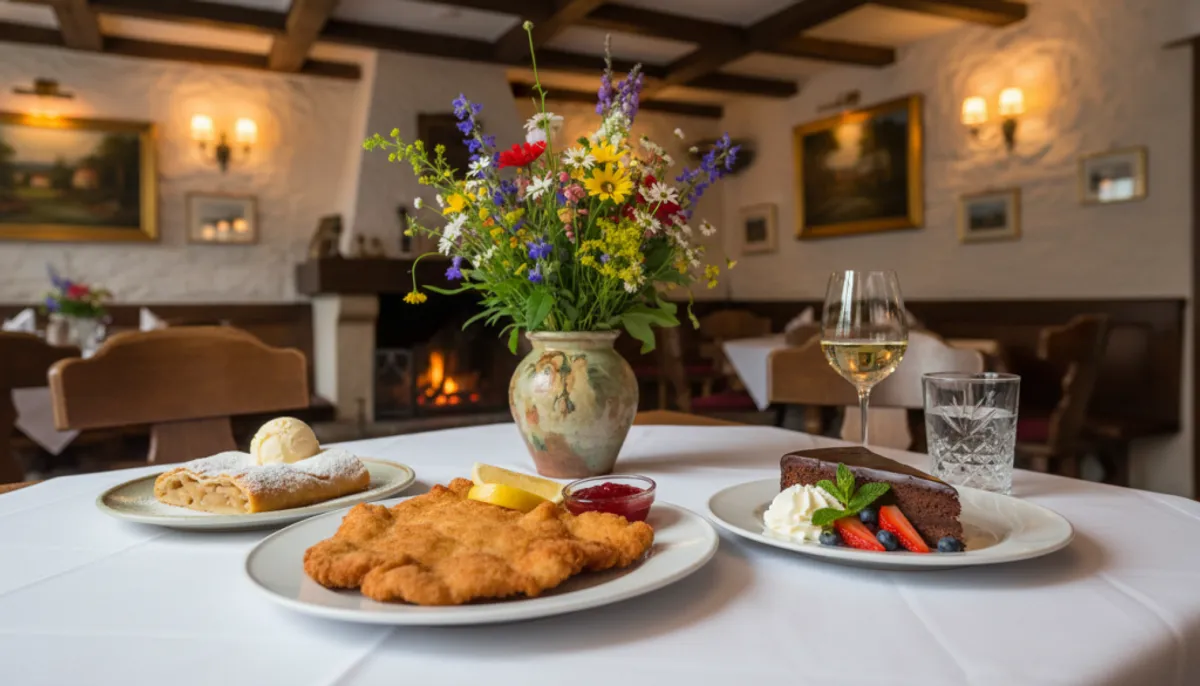
The Wiener Schnitzel embodies the international fame of this cuisine. This breaded cutlet, prepared with veal or pork, offers a crispy texture and delicate flavor.
Other iconic dishes enrich the culinary heritage. The Rindgulasch adds spicy notes thanks to paprika. The Schweinsbraten, roasted pork with cumin, warms family meals.
Each region develops its own specialty. Desserts like Sachertorte and Apfelstrudel elegantly crown the meal. Their authentic flavor delights gourmets.
The production of white wines complements this gastronomic experience. Local wines, particularly Grüner Veltliner, pair perfectly with meat dishes. This harmony between food and drink characterizes the local art of living.
The Facets of Living in Austria
Beyond the monuments, it is in daily interactions that the Austrian soul is revealed. This society values a unique balance between formality and authenticity, including the eligibility for darty culture checks that reflect social norms.
Viennese Cafés and the Art of Conversation
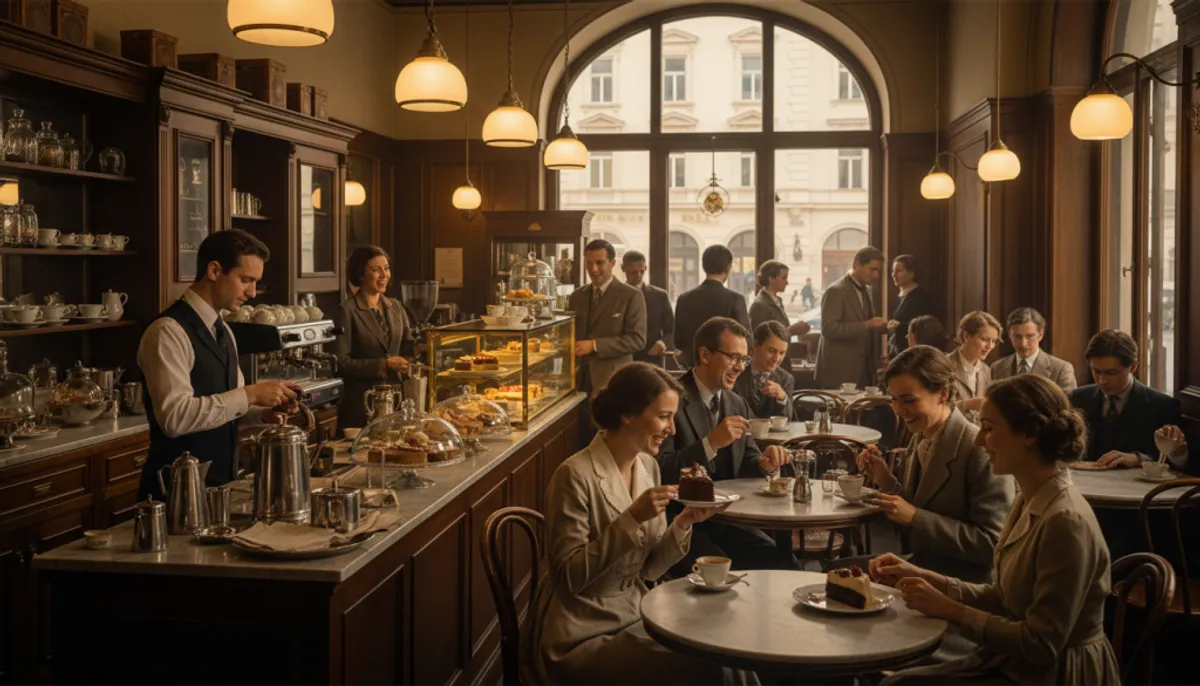
Viennese cafés represent true social institutions. People spend hours reading, writing, or discussing over a Melange.
Contrary to what many believe, the "Viennese coffee" does not exist locally. The specialty is called Wiener Melange: coffee, milk, and milk foam.
These establishments occupy a central place in the lives of Austrians. They serve as salons where the art of conversation is practiced with refinement.
Etiquette, Punctuality, and Local Friendliness
Respect for conventions guides behaviors. Punctuality is appreciated, as is maintaining an appropriate distance in exchanges.
In the cities, a natural discipline prevails during movements. Everyone finds their place in shared spaces.
This courteous friendliness characterizes daily life. It creates an environment where mutual respect facilitates relationships.
Conclusion
Exploring this country in Central Europe is embarking on a captivating journey through the centuries. The richness of its culture has been built by exceptional men and women in all fields.
Despite its modest size, Austria undoubtedly occupies a major place in European history. Its imperial heritage and musical tradition shine well beyond its borders.
Discovering this Austrian culture is traversing the history of art, including the vibrant expressions of israeli art, from the baroque splendors to modern avant-gardes. The Austrians have managed to preserve their identity while adapting gracefully.Each region contributes its specificity to this national mosaic. From Vienna to the Tyrolean valleys, diversity enriches the whole.
Traveling here undoubtedly constitutes a total immersion. Each city tells a story that resonates with the continent. This country deserves to be devoted time, year after year, for an unforgettable journey.
FAQ
What are the most significant periods in the country's history?
The history of this nation is rich, with Roman influences, the era of great dynasties like the Habsburgs, and the restructurations of the Empire. These periods have profoundly shaped its institutions and identity.
What can be discovered in the regions regarding traditions?
Each region has its own local festivities, such as the famous Christmas markets in December. National and religious holidays, like those in January, are also very lively and colorful.
How does artistic life express itself today?
The artistic heritage is immense, from baroque to classical music. Essential figures like Mozart have left a vibrant legacy, celebrated in operas and festivals throughout the year in the cities.
What typical dishes must be tasted during a trip?
The local gastronomy is a true delight! Try specialties like the Wiener Schnitzel, a veal or pork cutlet, and explore the local wines. Each dish tells a part of the history of the terroir.
What important etiquette should be respected?
Respect and punctuality are highly valued. Taking time in a Viennese café for a conversation is an art of living. Friendliness is at the heart of relationships between men and women.