
Perched in the hills of northeastern India, Nagaland is home to a fascinating world. This border region with Myanmar is the cradle of a mosaic of tribes with ancestral customs.
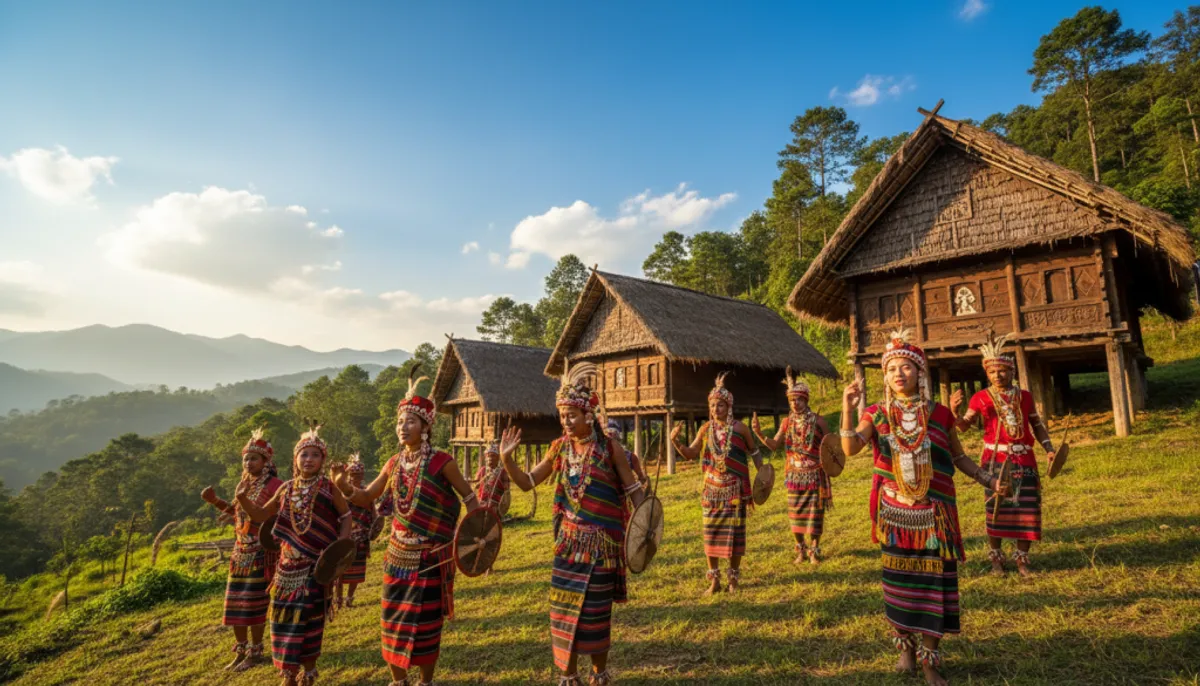
More than sixteen major ethnic groups coexist here, each possessing its own language and distinct dress code. This diversity makes the villages true living museums.
Daily life revolves around terrace farming and community rituals. Traditions are passed down from generation to generation, creating a heritage of exceptional richness.
This article invites you to discover the distinctive elements of these communities. We will explore their spiritual practices, colorful festivals, and remarkable craftsmanship.
Key Points to Remember
- Nagaland is a state in northeastern India, bordering Myanmar.
- It is home to over 16 major tribes with distinct cultures.
- Each group has its own language, customs, and traditional clothing.
- The region offers a remarkable example of preserved cultural diversity.
- Social organization and daily life vary significantly from one tribe to another.
- This culture fascinates with its ancestral traditions and adaptation to the modern world.
Introduction and Historical Context
At the heart of the Indo-Burmese hills, a mosaic of groups has formed over the ages. Their history, including the lao loum history, reveals fascinating encounters between populations.
The Origins of the Naga Tribes
These populations do not share a single common origin. They result instead from multiple waves of migration.
Each group has its own founding stories. Some claim to descend from stone, while others recount journeys from the north.
This diversity of origin created an extraordinary political variety. Systems ranged from autocracy to pure democracy.
The Historical Legacy and Colonial Influence
The 19th century marked a decisive point. The British sought to secure their border with Burma.
They established a land passage between tea plantations. This contact profoundly transformed local societies.
The colonial withdrawal created bloody conflicts. The region closed its borders to foreigners from 1947 to 2001.
This closure paradoxically preserved traditions. Today, these groups navigate between preservation and integration into the modern world.
The Ancestral Traditions and Rituals
A vital force called fertility constituted the spiritual foundation of these societies. This mystical concept unified the different communities despite their diversities.
Fertility Rituals and Merit Festivals
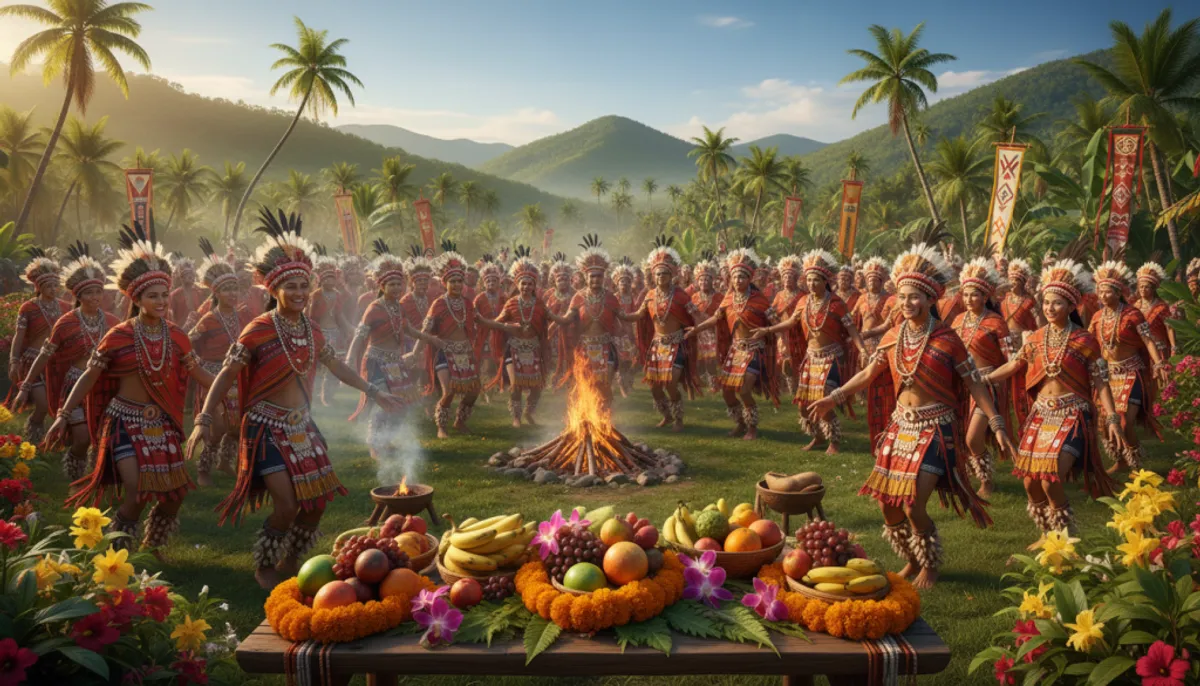
Wealthy individuals organized sumptuous community feasts. These events legitimized their high status.
The redistribution of wealth during these ceremonies reinforced the spiritual principle. Benefactors earned the right to erect commemorative monuments.
Head-Hunting Practices and Symbolism
Hunters had to bring back heads to assert their adult status. This practice determined social hierarchies.
The number of heads collected indicated the warrior's power. Some young men could not marry without this feat.
The heads played a central role in many rituals. The Rengma placed them near fields to regenerate the soil.
The Konyaks kept skulls in their communal houses. These trophies symbolized the strength of the clan.
The arrival of Christianity put an end to these ancestral practices. This transformation profoundly altered social structures.
Exploring Authentic Naga Culture
Traveling to Nagaland means primarily exploring its village communities, guardians of a living heritage. These hamlets offer a unique window into preserved ways of life.
The Iconic Villages of Nagaland
The village of Bara Basti in Kohima is the oldest in Asia. Its traditional thatched houses sit alongside stone monoliths.
Khonoma stands out for its terraced rice fields and ecological commitment. This model village offers a complete immersion in local life.
At the Indo-Burmese border, Longwa is home to the Konyak tribe. Mokokchung, the cultural capital, vibrates with the rhythm of dances and ancestral tales.
Hospitality and Stays with Locals
Stays in local houses transform visits into human experiences. Hosts share traditional meals and family stories.
This immersion allows for understanding the role of communities in passing down traditions. Each village offers a different approach to daily life.
These encounters create lasting memories while respecting the authenticity of the places. The hospitality of the locals makes each stay unique.
Festivals, Celebrations, and Cultural Ceremonies
The annual calendar of Nagaland comes alive with traditional celebrations that rhythmically mark the lives of the communities. These events are highlights where ancestral values are transmitted, including a vibrant cultural show that showcases the rich heritage of the region.
Must-See Festivals: Hornbill, Moatsü, Sekrenyi
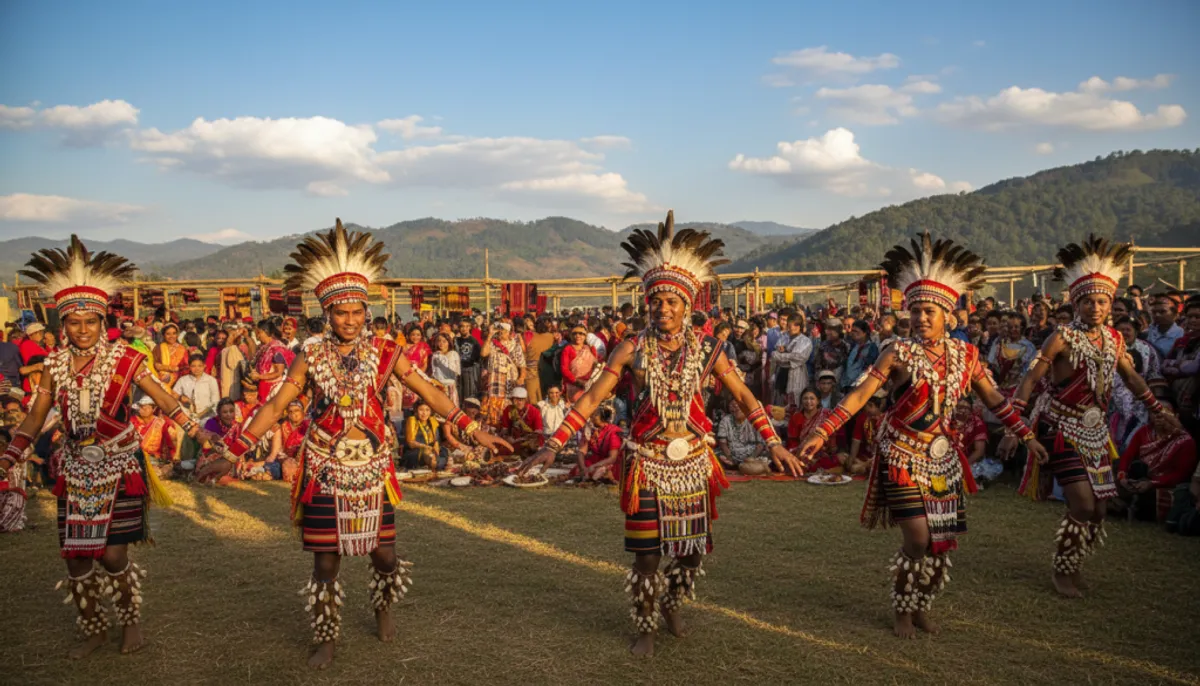
The Hornbill festival in December brings together all ethnicities near Kohima. This grand showcase features dances, songs, and traditional crafts.
Moatsü, celebrated on May 2 by the Ao, marks the end of planting. Fire rituals ensure agricultural prosperity.
Sekrenyi in February is the main purification ceremony of the Angami. It features vibrant dances and bright costumes.
| Festival | Tribe | Period | Characteristics |
|---|---|---|---|
| Hornbill | All | December | Complete cultural showcase |
| Moatsü | Ao | May 2 | Agricultural rituals and fires |
| Sekrenyi | Angami | February | Purification and dances |
| Monyu | Phom | April | 12 days, end of winter |
| Aoleang | Konyak | April | Warrior costumes |
Ceremonies and Occasional Traditions
Many other events punctuate the year. Monyu in April marks the end of winter with traditional drums.
Aoleang, also in April, sees the Konyak don warrior attire. This moment recalls their proud past.
These celebrations traverse generations. They keep alive an exceptional khmer heritage.
Art, Craftsmanship, and Cultural Symbols
The skilled hands of artisans bring to life a millennia-old tradition where each object tells a story. This artistic production reveals a complex value system linking social status and spirituality.
Art on Wood, Bamboo, and Beads
The work of bamboo spans all communities. This versatile material is used to make ceremonial baskets and musical instruments.
Wood carving reaches its excellence among the Konyak. Their miniature figurines often evoke head-hunting.
Colorful beads are the exclusive wealth of women. They represent their unique material heritage that can be passed down.
Trophies, Ornaments, and Significant Adornments
Men's adornments use symbolic materials. Tiger teeth and monkey skulls adorn warrior headdresses.
The number of heads represented on pendants corresponds to the hunter's exploits. These objects visually indicate the prestige of their wearer.
Each ornament follows a strict code according to social rank. This material culture creates a visual language of exceptional richness.
Conclusion
In this border region, a remarkable balance has been created between tradition and modernity. The different tribes keep alive an exceptional heritage while adapting to the contemporary world. This includes the rich and diverse karen culture, which showcases their unique traditions and practices.
The arrival of Christianity marked a decisive point, putting an end to warrior practices. This transformation pacified societies while preserving the essence of ancestral traditions.
Agriculture remains the foundation of daily life, from terraced rice fields to traditional livestock farming. This terrestrial anchoring gives communities the power to control their cultural evolution.
Each responsible visit contributes to preserving this unique wealth. Travelers thus discover authentic ways of life where past and present harmoniously interact.
FAQ
Where do Naga communities live today?
The tribes mainly live in the Indian state of Nagaland, but also on both sides of the border with Myanmar. Their lives are organized around their traditional villages.
What is the most important festival not to miss?
The Hornbill festival in April is a highlight. It gathers all the tribes and offers a unique perspective on their art, dances, and traditions.
Do head-hunting practices still exist?
No, this ritual practice belonging to the past has come to an end. It held great symbolic importance, linked to the power and prestige of hunters and their village.
What is the role of beads in craftsmanship?
Beads are central. They are not just decorations. Each type and color tells a story, marks a social status, or celebrates an event, such as a ceremony.
How are traditional houses built?
Houses are mostly made of bamboo and raised on stilts. This architecture is perfectly suited to the climate and lifestyle, often based on agriculture.
Is there a chief or king system?
Traditionally, the role of leader was often held by the village king or a respected elder. Their authority was crucial for making important decisions for the community.