
Welcome to an amazing country, a narrow strip of land stretching 4300 kilometers long. Its territory extends from the arid Atacama Desert to the majestic glaciers of Patagonia.
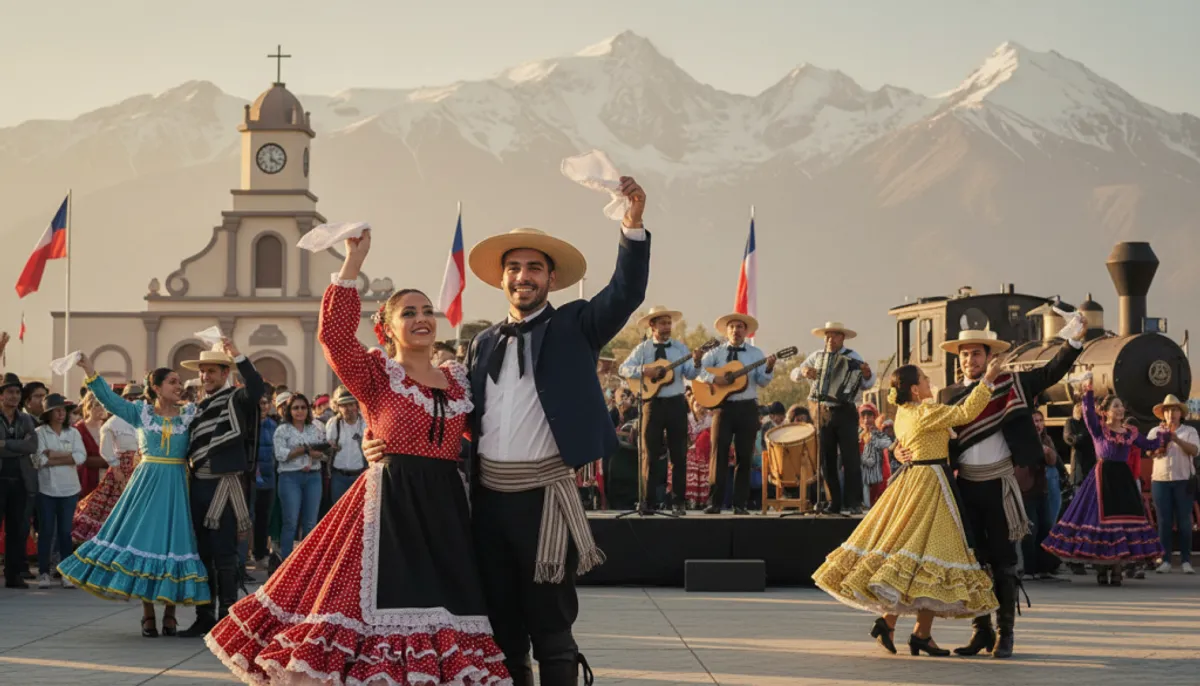
Nearly 18.5 million people inhabit this nation. More than seven million reside in the dynamic capital, Santiago. This human diversity forges a rich and complex culture.
The current Chilean culture is a vibrant heritage. It draws its roots from pre-Columbian civilizations. The Spanish influence of colonization has also left a deep mark.
Each region has its own artistic expressions and traditions. This variety reflects an exceptional geography and a tumultuous history. Together, they create a unique and fascinating national identity.
Key Points to Remember
- Chile is a country with extreme and elongated geography, profoundly influencing its cultural diversity.
- With approximately 18.5 million inhabitants, its population is predominantly concentrated in the capital Santiago.
- Its cultural heritage is a blend of pre-Columbian legacies, Spanish colonization, and modern history.
- The landscapes, from desert in the north to glaciers in the south, have shaped distinct regional traditions.
- This nation is recognized for its vibrant literary and artistic production.
- Exploring this culture means discovering a resilient and creative people.
Introduction to Chilean Culture
With land borders with Peru, Bolivia, and Argentina, Chile occupies a unique geographical position. Easter Island has also been part of it since 1888, adding a Polynesian dimension to this state.
A Historical and Geographical Overview
This country stretches across nearly an entire hemisphere. Its extreme geography, from the Atacama Desert to the fjords of Patagonia, has shaped very distinct local realities.
Expressions vary notably from one region to another. This diversity contrasts with the appearance of homogeneity often perceived from the outside.
The Foundations of a Plural Identity
The current population, of about 18.5 million inhabitants, is the result of a mixture. According to the 2024 census, nearly 12% of citizens identify as indigenous.
The majority of Chileans descend from Europeans. The main origins include:
- The Spaniards, particularly Basques and Castilians.
- British, Irish, and German immigrants, especially in the south.
This mosaic forms the foundation of a complex and rich national identity. The modern identity merges these multiple heritages into a vibrant and unique experience.
Historical Origins and Cultural Influences
The history of Chile is a rich tapestry, woven from indigenous, colonial, and migratory threads. This unique fusion continues to shape its identity today.
Pre-Columbian Civilizations and Their Legacies
Before the arrival of the Spaniards, this territory was inhabited by many peoples. The Mapuches, the most numerous, fiercely resisted the Europeans.
The Aymaras, Atacameños, Picunches, and Changos also contributed their traditions. Unfortunately, some groups like the Selknam have disappeared over the years that followed.
The Impact of Colonization and Migrations
Ferdinand Magellan arrived in 1520. Pedro de Valdivia founded Santiago in 1541, establishing the language and Catholic religion.
Independence was declared in 1818. The country then began to forge its own path.
In the 19th century, new European settlers arrived. Germans settled in the south, and Yugoslavs populated Patagonia.
This composite heritage defines the current cultural landscape. The rich traditions of balkan folklore and Chilean culture are a vibrant example of successful mixing.
Regional Diversity of Chile
From the arid altiplano to the rainforests of the south, each territory has its own character. This extreme geography has shaped very marked local identities.
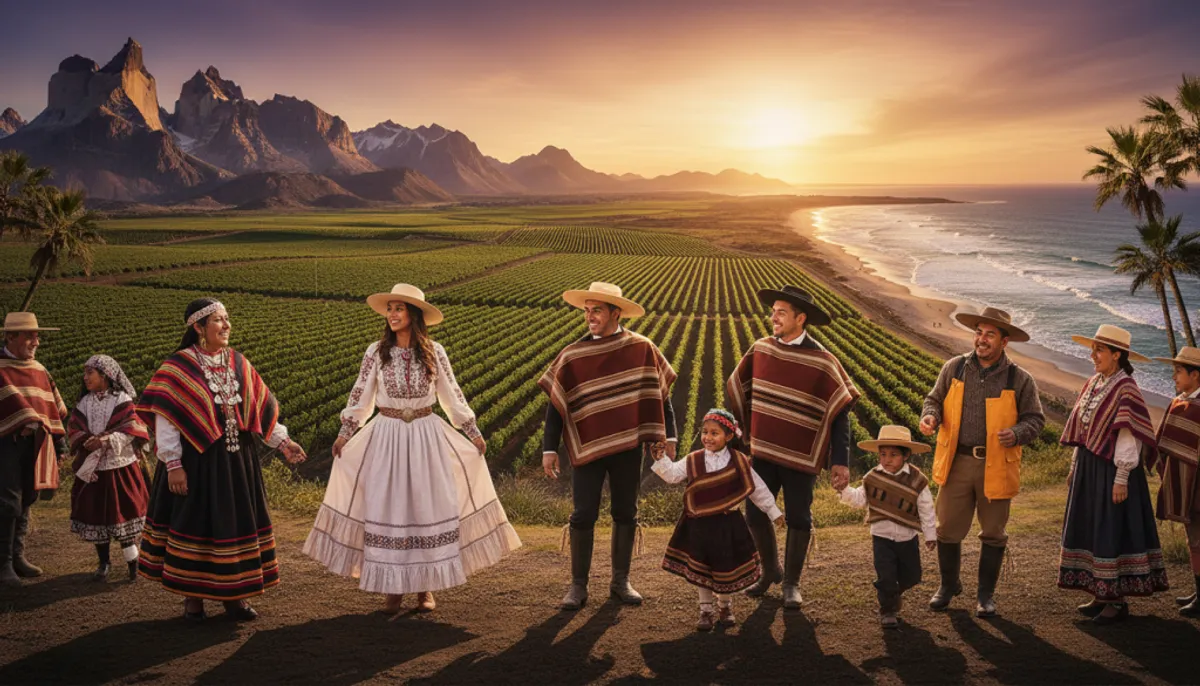
The Andean North and Aymara and Quechua Cultures
The northern Andes vibrate to the rhythm of Aymara and Quechua communities. Their ancestral traditions blend with Catholicism, creating a unique syncretism.
Festivities like La Tirana in July are a perfect example. This region offers a vibrant and colorful heritage.
The Rural Center and Patriotic Identity
The center gathers the majority of the population. It is considered the heart of national identity, with its deep rural traditions.
Patriotism is expressed fervently, especially during Independence Day celebrations. Here lies the essence of the inhabitants.
The South, Mapuche Culture, and European Influences
Further south, the region of Araucanía is the home of the Mapuche. Temuco houses nearly a quarter of this community, which maintains its language and craftsmanship.
The European influence, especially German, is visible in Valdivia or Puerto Varas. The island of Chiloé and Easter Island add their distinct universes to this mosaic. The extreme regions testify to a fascinating mixing.
Unique Festivals and Traditions
From vibrant carnivals to emblematic dances, the festive traditions reveal the soul of the country. This cultural kaleidoscope blends indigenous, Catholic, and European heritages, including elements of austrian folklore.Carnivals and Local Celebrations
The north particularly comes alive in February. The Machuca carnival takes place at over 3000 meters altitude.
It features colorful parades and syncretic ceremonies. In the coastal city of Iquique, another large carnival attracts thousands of people.
Between January and February, Arica hosts the Inti Ch’amampi carnival. Over 15,000 dancers perform Aymara ritual dances.
The Cueca and Other Traditional Dances
The Cueca is the national dance. It plays a central role during the patriotic celebrations in September.
The north also features dances like Caporales and Diabladas. Easter Island has its own Polynesian expressions, such as the Tamuré.
In rural areas, they dance the Refalosa or the Sajuriana. These traditions are essential to preserving a precious heritage.
Art and Craftsmanship: Symbols of a Living Identity
From woven wool to painted walls, artistic expression is a pillar of national identity. These creations embody a living heritage, connecting the past to the present.
Ancient Craft Techniques
Ancient traditions are perpetuated in the work of local materials. In the northern regions, llama and alpaca wool is transformed into ponchos and rugs with Inca patterns.
The extreme south favors sheep wool. Near San Pedro de Atacama, artisans craft silver and copper jewelry.
This region is also known for its stone sculptures. The pottery from Pomaire and Quinchamalí reflects centuries-old craftsmanship.
Cultural Value Objects
Some objects possess a unique symbolic value. Lapis lazuli jewelry exploits the rare blue stone native to this territory.
Copper, the national metal, is also widely used. These traditional creations engage in dialogue with more contemporary forms of urban art.
Valparaíso is an open-air museum. Its murals blend indigenous motifs and social messages, offering a powerful cultural valorization.
Chilean Culture and Its Literary and Musical Icons
Chile shines on the world stage thanks to its exceptional writers and musicians. This renown forms an essential part of its identity, allowing many to save on culture while exploring the rich artistic landscape.
Poets and Nobel Prize Winners in Literature
This country is famous for its literature. It has two Nobel Prize winners in literature.
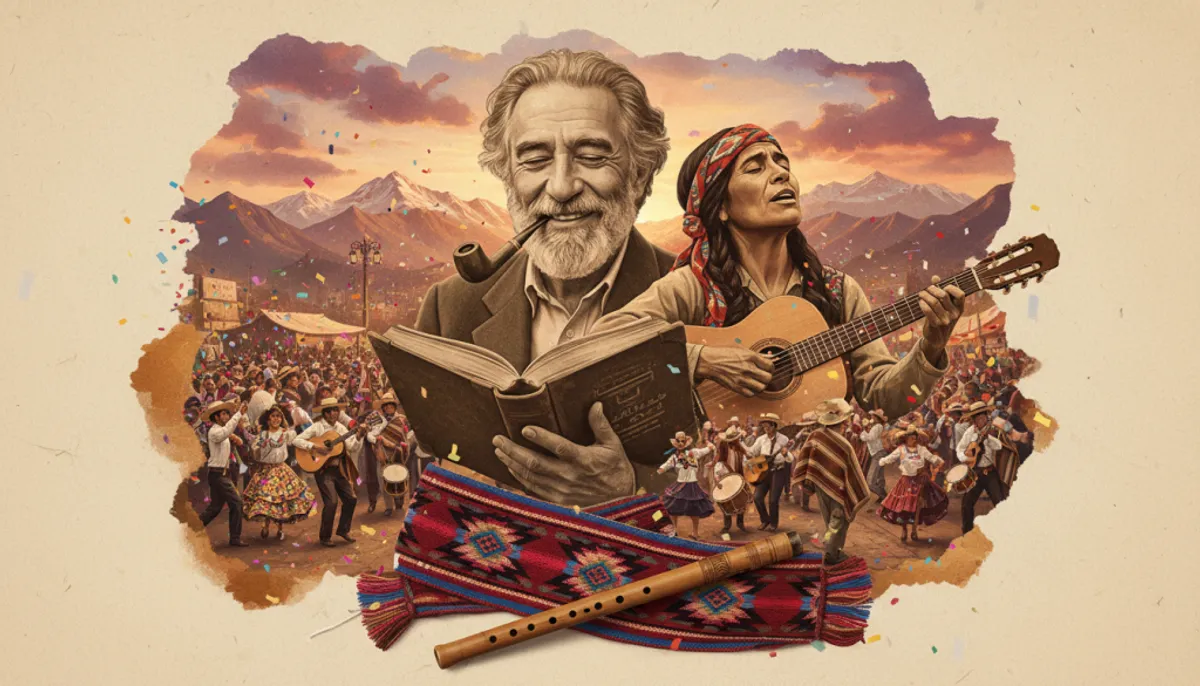
Gabriela Mistral received this prize in 1945. Pablo Neruda was honored in 1971. Their works, such as Twenty Love Poems or Of Love and Desolation, are universal.
Other authors enrich this heritage. Isabel Allende, Luis Sepúlveda, and Roberto Bolaño are read worldwide.
| Field | Iconic Figure | Main Contribution |
|---|---|---|
| Literature | Pablo Neruda | Nobel Prize 1971, engaged and lyrical poetry. |
| Literature | Gabriela Mistral | First Latin American woman Nobel Prize winner 1945. |
| Literature | Isabel Allende | World-renowned novelist (The House of the Spirits). |
| Music | Violeta Parra | Founder of the nueva canción chilena. |
| Music | Victor Jara | Engaged singer, symbol of resistance. |
| Music | Inti-Illimani | Iconic group of engaged folk music. |
The New Song and Music Festivals
Traditional music draws from Andean and Mapuche roots. Pan flutes, charangos, and sacred drums rhythm ceremonies.
In the 1960s, a powerful movement was born. The nueva canción chilena carries social demands.
“Song is a bird without a flight plan.”
Violeta Parra is its pioneer. Victor Jara becomes its martyr. Groups like Inti-Illimani or Quilapayún perpetuate this legacy.
Today, artists like Ana Tijoux vibrate on the current scene. The Viña del Mar Festival, since 1959, celebrates this vitality. It is the most important musical event in Latin America.
Impact of the Dictatorship and Democratic Renewal
September 11, 1973, marks a tragic turning point in Chile's jordanian history. A military coup overthrew the democratic government of Salvador Allende.
The country then entered a long dictatorship led by General Pinochet. This period, which lasted until 1989, left deep scars.
The Scars of a Dark Past
During these dark years, artistic life was severely repressed. Many musicians, writers, and filmmakers had to flee abroad.
Singer Victor Jara paid for his commitment with his life. Local cinema was particularly affected, with an entire generation forced into exile.
The Emergence of a Liberated Artistic Expression
The return of democracy in 1989 allowed for a renaissance. The subject remains very sensitive, but art found a crucial place to testify.
Directors like Pablo Larraín have gained worldwide fame. His film No revisits the referendum that ended the dictatorship.
Other works, such as Machuca, El Conde, or Los Colonos, explore this past. They help the country confront its history.
Since 2019, a strong social mobilization shows that younger generations are transforming their nation. The election of President Gabriel Boric in 2021 is a symbol of this.
The Secrets of Chilean Culture
To truly understand the country, one must listen to its language and observe its social habits. These daily elements reveal a unique and authentic character.
Language, Expressions, and Local Dialect
Castilian is the official language spoken by the majority of the population. Several indigenous languages also survive, such as Aymara and Mapudungun.
Rapanui is spoken on Easter Island. Unfortunately, others have become extinct.
The local dialect is radically distinct. Chileans speak quickly and swallow syllables.
The Chilenismo, their slang, is rich in expressions based on animals. They often add “po” at the end of words.
A common question is “cachai?” (do you understand?). The expressions and diminutives like -ito make Chilean Spanish very warm.
Gastronomy and Daily Life
Social life has its codes. People easily greet each other with a kiss, even among colleagues.
Society presents great disparities. Machismo remains latent, despite progress.
The family is central. Young people often leave home only upon marriage.
Sunday is traditionally reserved for family gatherings, often around a good meal. Couple relationships follow well-defined stages.
Understanding these expressions and this daily life is to grasp the essence of the people.
Conclusion
This exploration concludes with the image of a nation whose identity is nourished by its extreme landscapes and complex past, including the rich flavors of argentine gastronomy. The heritage vibrates daily, from family gatherings to grand patriotic celebrations in September.
For the Chileans, preserving their traditions while innovating is second nature. This dynamic makes every journey here unique and personal.
From the Andean regions to Patagonia in the south, not to mention the enigmatic Easter Island, every discovery enriches. Plan your stay in spring, in November, for an optimal experience.
Our comprehensive guides help you learn more and organize your own trip. Let yourself be captivated by the warmth of the Chileans and the richness of their culture.
FAQ
What are the main influences that have shaped the country's traditions?
The national identity is a rich blend of heritages. Pre-Columbian civilizations, like the Mapuche, laid solid foundations. Spanish colonization then brought its language and customs. Waves of European migration, particularly in the south, have also enriched this unique heritage. Understanding the history of quebec can provide valuable insights into similar cultural dynamics.
How does geographical diversity reflect in the lives of the inhabitants?
The territory, very extensive from north to south, creates distinct realities. The Andean north vibrates to the rhythm of Aymara and Quechua cultures. The center, the historical heart, cultivates a strong patriotic identity. The south, in turn, is marked by the Mapuche presence and German influences, visible in art and architecture.
Who are the most famous literary figures and what is their impact?
Chile takes pride in its two Nobel Prize winners in literature. Gabriela Mistral was the first Latin American woman to receive this prize. Her successor, Pablo Neruda, is a global icon whose poetry celebrates love and the Chilean land. Their words resonate deeply in the country's identity.
Is there an emblematic national holiday and how is it celebrated?
Yes, the Fiestas Patrias, around September 18, are the major event of the year. The whole country comes alive to honor independence. People dance the cueca, the national dance, share asados (barbecues) with family, and visit *fondas* (traditional fairs). It is a moment of great collective pride.
What role did the dictatorship period play in artistic expression?
This dark period left deep scars. Censorship stifled many voices. In reaction, a powerful artistic movement of resistance was born, such as the Nueva Canción Chilena. After the return to democracy, a liberated creativity emerged, openly exploring memory and human rights in contemporary art.
What does Easter Island represent for Chileans and what can be discovered there?
Rapa Nui (Easter Island) is a unique treasure and a symbol of the country's rich heritage. This mysterious island, lost in the Pacific, is home to the famous *moai*, these monumental statues. Its distinct Polynesian culture, volcanic landscapes, and history make it a fascinating destination for any traveler.
What typical artisanal specialties should be discovered during a stay?
Craftsmanship is a living reflection of the different regions. In the north, you can find beautiful alpaca wool textiles and lapis lazuli objects. The center is known for its basketry and pottery. In the south, the Mapuche excel in silverwork and textiles with traditional patterns. These objects tell the story of the people who create them.