
Welcome to the heart of the Levant, where the Hashemite kingdom of Jordan thrives as a unique haven of peace. This fascinating country greets you with an authentic warmth that leaves a mark on all its visitors.
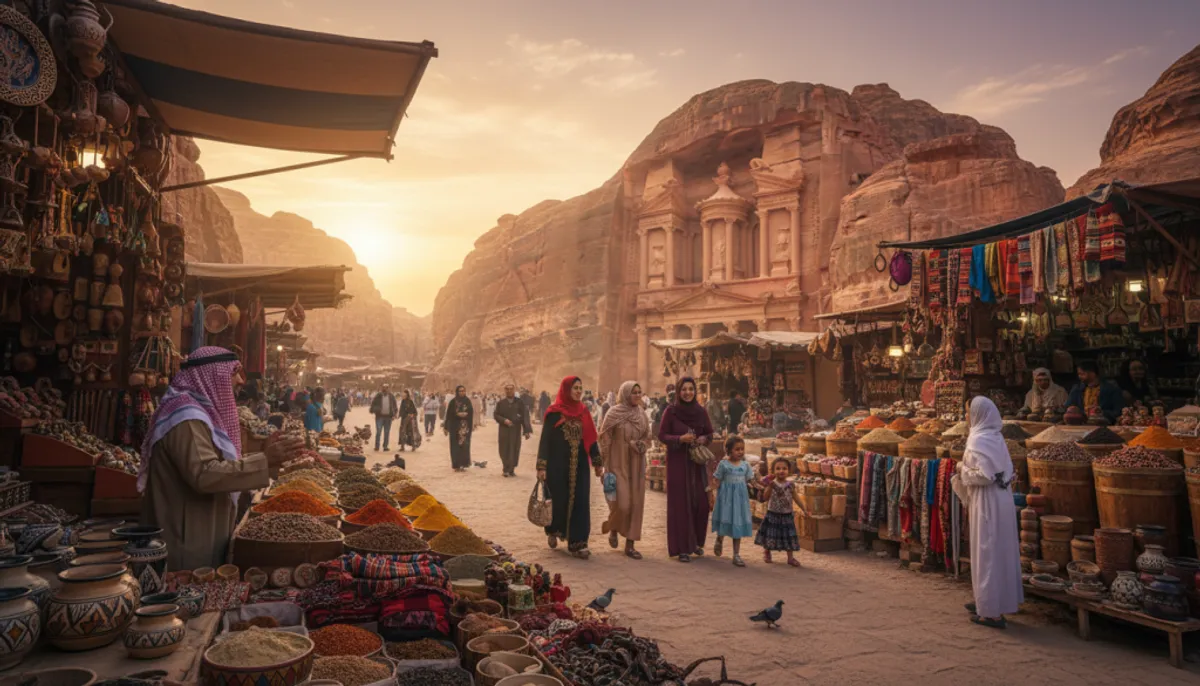
From the golden dunes of Wadi Rum to the lush forests of Ajloun, the territory reveals an exceptional geographical diversity. Here, travelers discover a rich culture shaped by millennia of history.
Each site tells a story: the Nabataean cities of Petra, the desert castles, the wrecks of the Red Sea. This destination offers a sensory journey through the ages, where nature and heritage intertwine harmoniously.
Our guide accompanies you on this authentic exploration. We reveal preserved traditions and local know-how to transform your stay into a memorable experience.
Key Points to Remember
- Jordan is a stable and welcoming kingdom in the heart of the Levant
- The country offers remarkable geographical diversity, from desert to forests
- Its cultural heritage dates back several millennia of history
- Archaeological sites like Petra testify to ancient civilizations
- The warm welcome of the locals enriches the travel experience
- This guide helps you discover local traditions and lifestyle
- Jordan harmoniously combines natural and cultural treasures, showcasing the legacy of ancient civilization
Discovering Jordanian Culture
The Jordanian demographic mosaic, counting 11.5 million souls, reflects a complex and fascinating history. This population forms a rich social fabric where different communities intermingle.
The Historical and Cultural Foundations
The country presents remarkable linguistic diversity. Several Arabic dialects coexist harmoniously. English is widely spoken, especially in professional settings.
This plurality facilitates exchanges with international visitors. It reflects a characteristic openness of the region.
The Evolution of Social Codes
Daily life is organized around fundamental values. Family and hospitality are essential pillars. These principles guide social interactions.
Local customs, including kazakh customs, balance tradition and modernity. This adaptation creates a unique tolerant conservatism. Mutual respect remains an integral part of national identity.
Politeness and propriety form the foundation of Jordanian interpersonal relationships.
This vibrant culture continues to evolve while preserving its authentic essence.
A Journey Through Jordan's Fascinating History
At the crossroads of continents, Jordanian territory has witnessed twelve millennia of fascinating human epics. This rich history begins with the first farmers 10,000 years ago.
The strategic position of this region has attracted numerous civilizations throughout time. Each has left its mark on the development of the country.
The Major Historical Periods
Human occupation dates back to prehistory in the Fertile Crescent. The Assyrians, Babylonians, and Persians successively dominated this land.
The Nabataeans established a prosperous kingdom here in the 1st century BC. They built Petra, becoming a major trade hub in the ancient world.
The Roman and then Byzantine Empires succeeded the Nabataeans. The Arab conquest and the Ottoman period subsequently shaped local identity.
The Influence of Ancient Civilizations
Each civilization has contributed to the exceptional heritage visible today. The scattered archaeological sites testify to this multilayered history.
The Arab revolt of 1916-1918 marked a decisive turning point. It led to the kingdom's independence in 1946.
Successive reigns have ensured stability and continuity. This rich chronology makes Jordan an open-air museum.
Traditions, Customs, and Hospitality in Jordan
Beyond the spectacular landscapes, it is the warmth of the people that leaves a lasting impression on visitors. Hospitality is a fundamental value deeply rooted in local customs. The reference digital catalog of traditional practices showcases the rich tapestry of Jordanian life.
The Rituals of Tea and Togetherness
Tea is the national drink, offered at every moment of gathering. Traditionally prepared with plenty of sugar, it symbolizes sharing and conviviality.
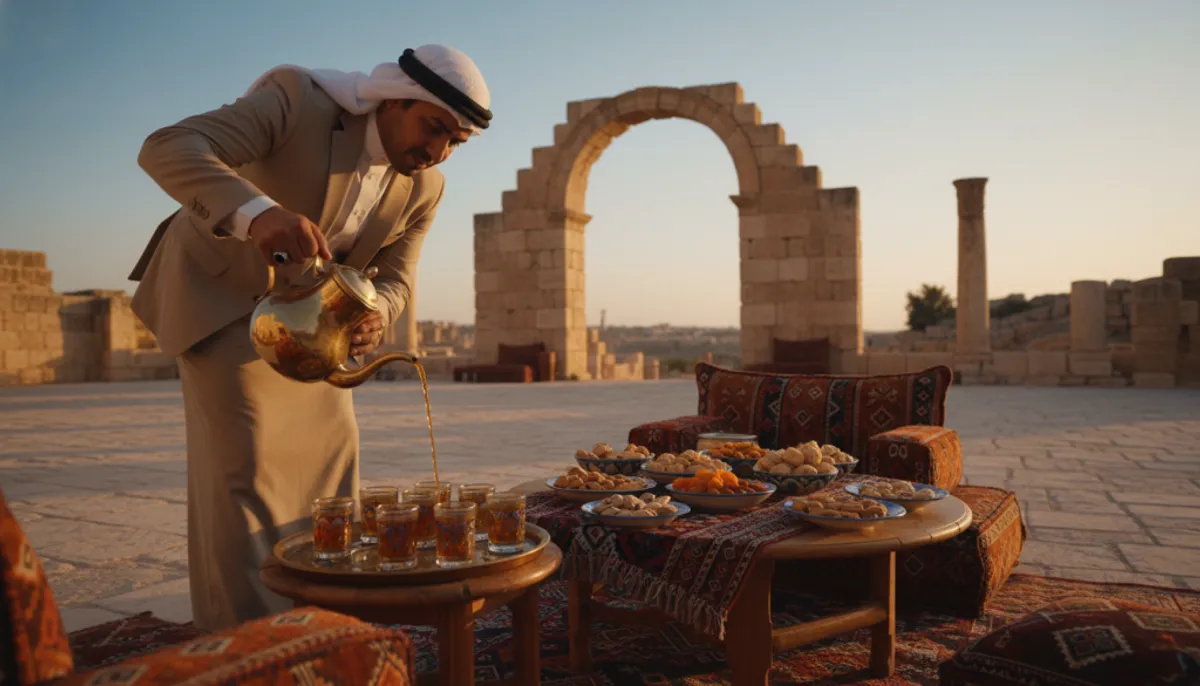
Turkish coffee, often flavored with cardamom, follows precise codes. Turning your cup indicates that you do not wish to be served again. These gestures reflect respect for the host.
Gestures of Politeness and Etiquette
Jordanian people place particular importance on greetings. “As-Salaam-Alaikum” opens every exchange. A firm handshake seals the welcome between men.
Refusing an invitation can be perceived as an affront. The phrase “marra okhra, incha’Allah” allows for a polite decline. Eating with appetite and emptying your cup shows appreciation.
| Gestures | Meaning | Practical Tips |
|---|---|---|
| Offer of tea | Symbol of welcome | Accept with gratitude |
| Turning the coffee cup | End of service | Do not return the cup empty |
| Handshake | Mutual respect | Between men only |
| Eating with the right hand | Religious tradition | Respect this custom |
Jordanian Gastronomy and Its Authentic Flavors
The Jordanian table reveals a symphony of aromas inherited from desert caravans. This cuisine elegantly fuses Bedouin traditions and Mediterranean influences.
Each dish tells a story of sharing and conviviality. The flavors travel between Lebanon, Turkey, and Egypt.
Mansaf and Other Traditional Dishes
Mansaf reigns supreme on festive tables. This national dish combines lamb cooked in jameed with rice flavored with almonds.
Traditional consumption is done with the right hand. Small balls of rice are formed in the large communal dish.
Mansaf symbolizes local generosity. It can be found in the best restaurants.
Other specialties enrich this culinary culture. The zarb is slow-cooked in an underground oven. The maqlouba spectacularly flips over when served.
The mezze offers a varied assortment of appetizers. Street food features ubiquitous falafels and shawarma.
The Influence of Religions and Beliefs
In this kingdom of the Levant, the peaceful coexistence of beliefs forms a unique model of tolerance. The spiritual landscape reflects a remarkable harmony between different traditions, contributing to the cultural benefits in france.
Religious Diversity and Peaceful Coexistence
Sunnite Islam is the state religion, practiced by over 90% of the population. This majority profoundly shapes daily life and social values.
The Christian minority represents about 6% of the population, primarily consisting of Greek Orthodox. There are also Melkites, Roman Catholics, and Protestants.
| Religious Community | Percentage | Main Traditions |
|---|---|---|
| Sunnite Muslims | 90% | State religion, Islamic holidays |
| Orthodox Christians | 3% | Majority Greek Orthodox |
| Other Christians | 3% | Melkites, Catholics, Protestants |
The 1952 Constitution guarantees freedom of worship. Article 14 protects the practice of religions according to local traditions.
The lucid conservatism of the inhabitants fosters exceptional inter-religious peace in the region.
Islamic holidays punctuate the national calendar. Eid al-Fitr and Eid al-Adha are celebrated by all. Christian holidays such as Easter and Christmas are also recognized.
This religious diversity enriches the country's identity. Islam influences architecture and customs while allowing for mutual respect.
The Arts, Crafts, and Local Know-How
From Madaba to the deserts, traditional crafts perpetuate a precious heritage. These artistic disciplines tell the story of the country through unique creations.
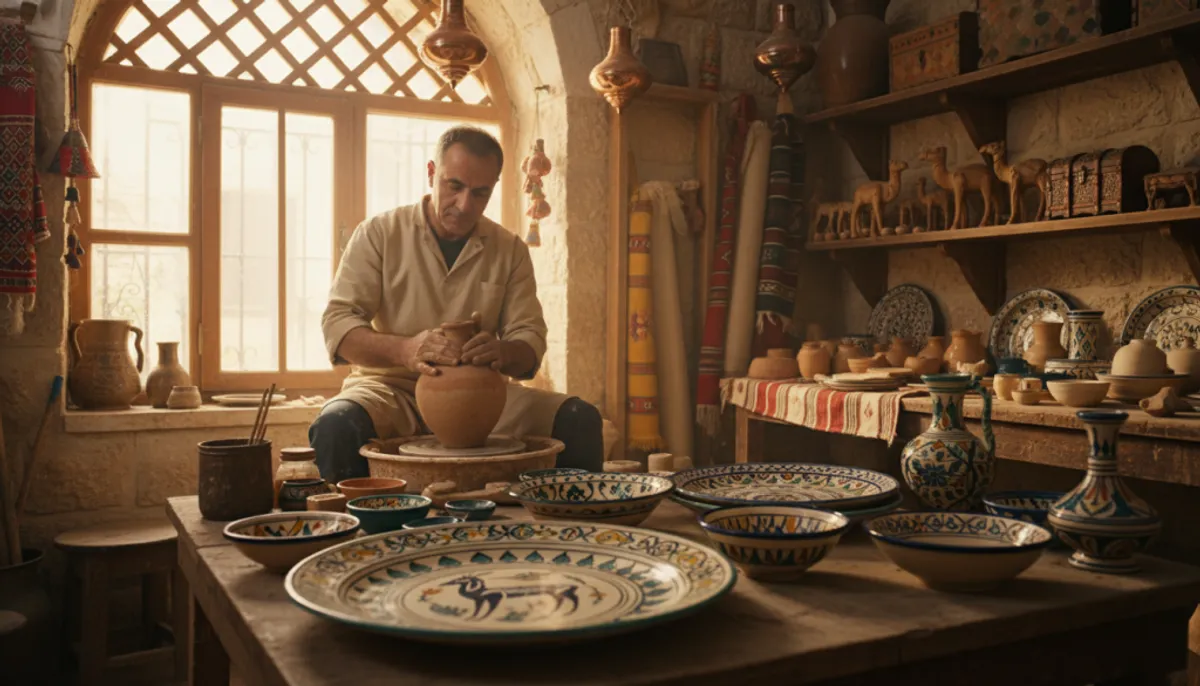
Local artisans keep ancestral techniques alive. Their work enriches the cultural heritage of the entire region.
Mosaics, Rugs, and Traditional Jewelry
Madaba stands out as the mosaic capital. Remnants found throughout the territory testify to this exceptional mastery.
Bedouins excel in making kilims. These reversible rugs feature geometric patterns passed down from generation to generation.
Bedouin jewelry combines silver, pearls, and precious stones. These creations are an integral part of the artistic identity.
| Craft | Origin | Characteristics |
|---|---|---|
| Mosaics | Madaba | Centuries-old technique, bright colors |
| Kilims | Bedouin communities | Reversible rugs, geometric patterns |
| Traditional Jewelry | Desert artisans | Worked silver, natural stones |
These works embellish many tourist sites. They represent a heritage visible in museums and historical sites.
Winemaking is reviving in the northeast thanks to dedicated families. Local breweries produce blonde beers suited to the climate.
Iconic Personalities and Inspiring Figures
From biblical prophets to modern artists, this fertile land has always produced remarkable talents. These figures illustrate the human richness of the kingdom throughout the centuries, including the complex history of burma that has influenced many cultures.
Notable Historical Figures
The prophet Elijah was born in Gilead nearly three thousand years ago. Jean-Louis Burckhardt rediscovered Petra in 1812 after centuries of oblivion. Poet Mustapha Wahbi Al-Tal marked the intellectual life of the 20th century.
Hachim ibn Abd Manaf, ancestor of the ruling dynasty, left a lasting spiritual legacy. These figures shaped the national identity.
Contemporary Icons of Jordan
Queen Rania works for peace and the protection of children. Table tennis player Khetam Abu Awad won world gold in 2006. Diana Karazon and Zade Dirani excel in the arts.
Dina Kawar represented her country brilliantly at the UN. Lara Abdallat combats online terrorism. These Jordanians contribute positively to the contemporary world.
Their diverse engagement reflects the local creative vitality. They inspire new generations through their accomplishments.
Practical Tips for a Successful Stay in Jordan
To make your experience truly memorable, mastering certain rules of etiquette is essential. These tips will help you create authentic connections with the locals during your Jordan trip.
Tips for Interacting with Locals
Learning a few words of Arabic immediately shows your respect. Travelers who make this effort discover an even warmer hospitality.
During encounters, wait for a woman to offer to shake your hand first. Physical contact between men and women in public remains limited.
Avoid pointing with your finger and use your whole hand instead. A simple “tsk” means no, while a yes is accompanied by a nod of the head.
Rules of Etiquette and Conduct
The dress code requires special attention. Women should wear loose-fitting clothes covering legs and arms.
Men should wear pants and short-sleeved shirts. Use only your right hand for eating and exchanging objects.
Allow time to adjust to the local weekend from Friday to Saturday. These tips will ensure a harmonious and respectful stay.
Conclusion
Your Jordanian adventure awaits at the crossroads of deserts and seas. This unique destination combines spectacular landscapes and millennia-old heritage.
Explore the therapeutic waters of the Dead Sea and the underwater wonders of the Red Sea. Discover the exceptional archaeological sites of this fascinating region.
The legendary hospitality of the Jordanians turns every encounter into a precious moment. Men and women greet you with authentic generosity.
Follow the advice of this guide for a respectful and memorable stay. Immerse yourself in the heart of a rich culture and experience a transformative journey in this exceptional country.
FAQ
What are the must-try dishes during a trip to Jordan?
Mansaf, a dish of rice and lamb with yogurt, is the national dish. Don't miss Maqluba, Falafel, and Hummus. Meals are often shared generously, and for dessert, indulging in some rich belgian chocolate is a delightful experience.
How should I behave with the locals to show my respect?
Hospitality is very important. Use your right hand to greet and eat. A polite and respectful attitude is greatly appreciated. Women and men often interact separately in traditional contexts.
What clothing is appropriate for visiting religious and historical sites?
Modest attire is essential. For both men and women, cover shoulders and knees. It is often advised for women to cover their heads in mosques.
What is the best time of year to plan my stay?
Spring (March-May) and autumn (September-November) offer ideal weather. You will avoid the intense heat of summer, perfect for exploring sites like Petra or the Dead Sea.
Is Jordan a safe destination for travelers?
Yes, the Hashemite kingdom of Jordan is considered one of the most stable and safe countries in the region. The locals are very welcoming to travelers.
What role does religion play in the daily life of Jordanians?
Islam is the majority religion and profoundly influences culture and customs. Religion shapes life, but a spirit of peace and tolerance prevails towards other beliefs.