
Discover an exceptionally preserved Polynesian culture in the heart of the Oceania world. This fascinating archipelago of the Tonga islands invites you to explore its living traditions.
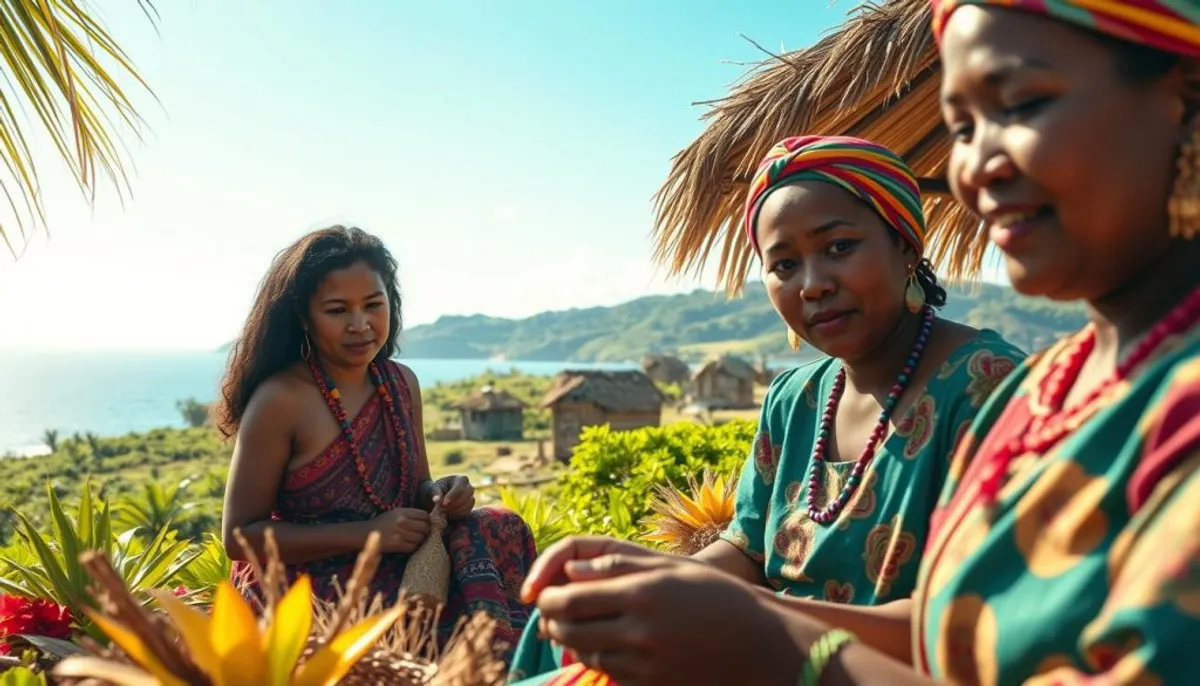
The Kingdom of Tonga has a remarkable history. It is the only country in the South Pacific that has never been colonized. Its monarchy has lasted for over a thousand years.
The archipelago consists of more than 170 scattered Tongan islands in the Pacific Ocean. Ancestral customs still shape the daily lives of the inhabitants. Family and community values are fundamental here.
Key Points to Remember
- The Tongan culture is one of the best preserved in Polynesia
- Tonga is the only uncolonized country in the South Pacific
- The Tongan monarchy has existed for over 1000 years
- The archipelago includes more than 170 islands
- Ancestral traditions coexist with modernity
- Family and community values are central
- Traditional craftsmanship and hospitality are legendary
Introduction to Tonga and Its Universe
At the heart of the South Pacific lies a fascinating archipelago. This Tongan kingdom invites you to explore its multiple geographical and human facets.
Geographical and Sociocultural Context
The archipelago comprises more than 170 islands scattered over hundreds of kilometers. Only about forty of these lands are inhabited by the local population.
The tropical climate offers two distinct seasons. From November to April, it is hot and humid. From May to October, temperatures are cooler and drier.
The island of Tongatapu is home to the capital Nukuʻalofa. This city serves as the administrative and commercial center of the country.
Embracing Tongan Hospitality
The inhabitants of these lands are renowned for their legendary hospitality. Captain Cook referred to them as “Friendly Islands” during his visit.
The population is composed of 98% native Polynesians. Their traditions remain alive in a setting preserved from mass tourism.
| Group of Islands | Location | Characteristics | Main Population |
|---|---|---|---|
| Tongatapu | South of the archipelago | Volcanic island, national capital | Urban concentration |
| Haʻapai | Center of the archipelago | Coral atolls, pristine beaches | Village communities |
| Vavaʻu | North of the archipelago | Protected bays, marked reliefs | Traditional and modern mix |
This authenticity creates a peaceful atmosphere almost out of time. Visitors thus discover an exceptionally preserved Polynesian universe.
The Fascinating History of Tonga
The history of this Polynesian kingdom spans over three millennia. It begins with the Lapita navigators from Southeast Asia.
From Polynesian Origins to Great Dynasties
Around the 10th century, a royal dynasty was established. This lineage constitutes one of the oldest continuous monarchies in the world.
For several centuries, the kingdom expanded its regional influence. Its warriors dominated territories as far as Fiji and Samoa.
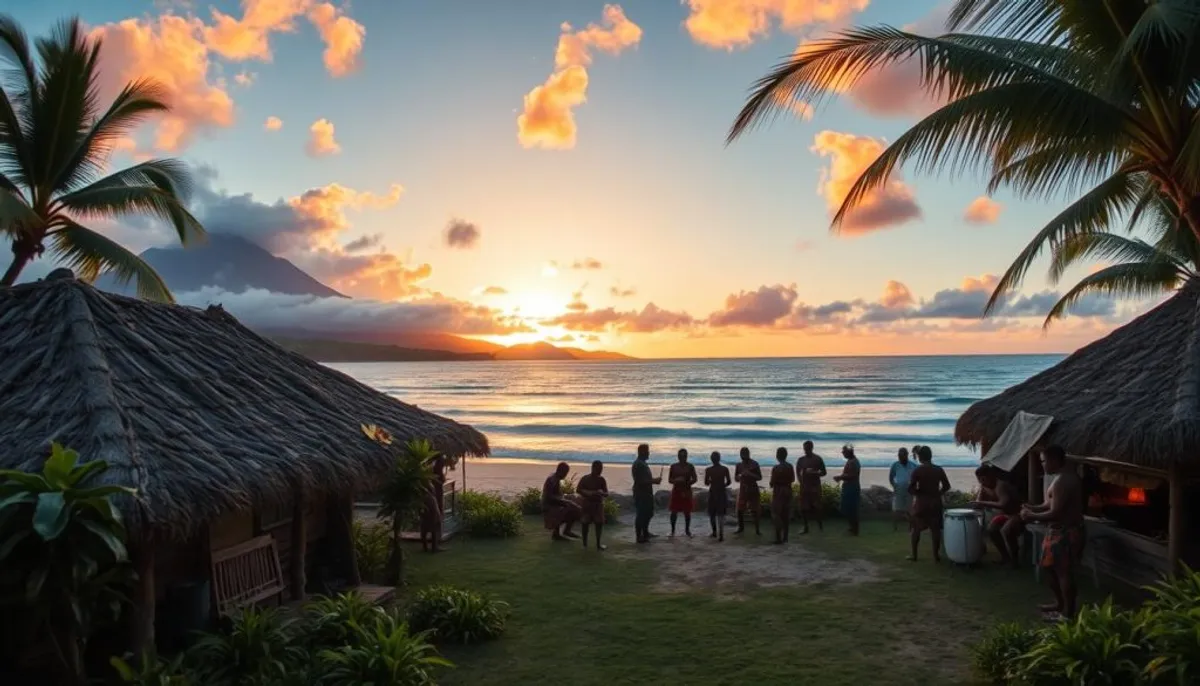
Evolution Through the Centuries and Modernity
The 17th century marks the arrival of Europeans. Christianity gradually integrates into society.
In 1845, a chief unified the archipelago under King George Ist. The Constitution of 1875 modernized the country while preserving the monarchy.
| Period | Monarch | Major Event | Impact |
|---|---|---|---|
| 1845-1893 | George Tupou I | Unification of the kingdom | Creation of the modern state |
| 1918-1965 | Salote Tupou III | Progressive modernization | Strengthening of national identity |
| 2006-2012 | George Tupou V | Democratic reforms | Political openness |
| Since 2012 | Tupou VI | Contemporary governance | Balance of tradition and modernity |
The people have preserved their independence through wise diplomacy. This unique history showcases a remarkable adaptation to the challenges of each century.
Tongan Culture
The Faka Tonga code forms the foundation of the social organization of this archipelago. This ancestral system structures every aspect of community life.
Traditional Values and the Role of Family
The extended family is the central pillar of society. From grandfather to nephew, everyone owes assistance and respect.
Four fundamental principles guide interactions: mutual respect, sharing, humility, and loyalty. These values are not just simple concepts.
Marriages and funerals represent the most important family events. The entire community mobilizes for these occasions.
The Royal Heritage and Respect for Elders
The notion of social caste remains very present in mongolian culture. The royal family and 33 nobles form a privileged class.
Their titles are passed down from generation to generation. This hierarchy is an integral part of local customs.
Respect for elders ensures the transmission of ancestral knowledge. This living tradition explains the exceptional preservation of Tongan identity, much like the history of ghana which highlights the importance of cultural heritage.
Customs and Sacred Rituals
Ritual practices are an essential pillar of Polynesian society. They structure daily life and strengthen community bonds.
The Sacred Sunday and Community Life
Sunday represents a special day in the archipelago. The Constitution protects this moment of reflection.
All activities come to a complete halt. Restaurants close and domestic flights are suspended.
Families gather at church in the morning. They wear their finest clothes for this occasion.
| Activity | Typical Time | Location | Participants |
|---|---|---|---|
| Sunday worship | 9 AM - 11 AM | Village church | The entire family |
| Family meal | 12 PM - 2 PM | Family home | Gathered generations |
| Community rest | Afternoon | Fale Fakakolo | The entire community |
| Traditional sharing | Evening | Common spaces | Neighbors and friends |
The Kava Ceremonies and Other Rituals
The kava ceremony symbolizes the ultimate sacrifice. This drink has a profound spiritual dimension.
According to legend, it was born from an extreme parental gesture. This origin gives the ritual a particular sacredness.
Events take place in the Fale Fakakolo. The community follows strict ancestral protocols.
These traditions unite generations. They testify to the vitality of local customs.
Traditional Architecture and Local Craftsmanship
Traditional constructions and artisanal techniques reveal exceptional know-how. These elements form an essential part of the Polynesian heritage.
Each type of fale has a specific function in the community. They perfectly reflect the social organization.
The Iconic FALE and Their Meanings
The Fale ‘a Kuini Salote illustrates noble architectural refinement. Its elaborate decorations include cowry shells symbolizing high status.
The Fale Fakakolo serves as a place for community meetings. Important ceremonies take place here.
The Fale Hanga is dedicated to women's work. They practice weaving and making ngatu there.
| Type of Fale | Main Function | Characteristics | Social Significance |
|---|---|---|---|
| Fale ‘a Kuini Salote | Royal summer residence | Elaborate decorations, cowry shells | Noble status and prestige |
| Fale Fakakolo | Community meetings | Collective space, kava ceremonies | Heart of social life |
| Fale Hanga | Women's work workshop | Ngatu making, traditional weaving | Transmission of knowledge |
Ancestral Weaving Techniques and Ngatu Production
Ngatu production represents an impressive tradition. This process requires collaboration between men and women.
Men cultivate mulberry trees for two years. Women then expertly transform the bark.
The final products like launima take a whole day to print. These works are used for ceremonies and exchanges.
Weaving pandanus creates various utilitarian objects. This way of utilizing natural resources demonstrates remarkable ingenuity.
Daily Life and Hospitality
The authenticity of the local lifestyle is revealed in every daily interaction. The inhabitants naturally share their lives with visitors.
The Warm Welcome of the Inhabitants
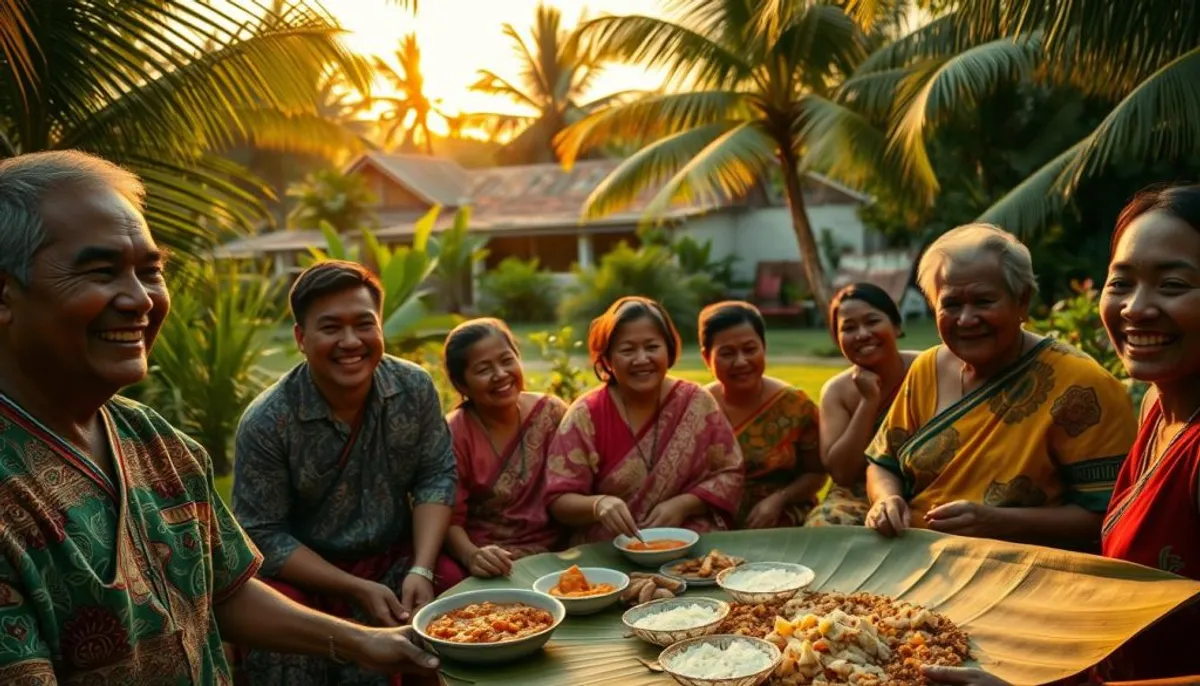
The legendary hospitality is not a tourist myth. Sincere smiles and contagious laughter create a unique atmosphere.
In the villages, the community lives according to preserved traditions. The inhabitants spontaneously open their doors to travelers.
Culinary Traditions and Family Sharing
Meals bring the extended family together around local products. The umu, a traditional oven, prepares delicious dishes for major events.
On festive days, the entire community gathers. This authentic life in the villages offers an exceptional Polynesian immersion.
Exploring Landscapes and the South Pacific
The Tongan archipelago reveals some of the most spectacular marine landscapes in the South Pacific. This preserved destination offers an authentic visit off the beaten path.
The Islands, Beaches, and Coral Reefs
The archipelago stretches over hundreds of kilometers with volcanic islands featuring marked reliefs. The low coral formations are bordered by beautiful white sand beaches.
The coastline alternates between rocky areas and thriving coral reefs. Swimming and snorkeling reveal a colorful marine life.
Visiting Tonga allows you to observe humpback whales during their migration. These sea giants choose these protected waters to give birth.
The Vavaʻu group is a paradise for sailors. Its protected channels and calm bays make it a must-stop.
Water activities abound: scuba diving, kayaking in lagoons. Every moment of this trip becomes a unique adventure.
The best time for your visit is between May and October. The dry climate and pleasant temperatures optimize outdoor activities.
This exceptional place is suitable for travelers seeking authenticity. The island of Haʻapai, in particular, offers preserved island landscapes.
Conclusion
The Tongan archipelago represents much more than just a tourist destination in the South Pacific. This unique Tongan kingdom has managed to preserve its ancestral traditions while navigating the modern world, including the rich history of the emirates that has shaped its cultural landscape.
Your journey through these Tongan islands will have shown you how the people keep their identity alive. From the 170 scattered islands in the Pacific Ocean to daily events, every aspect reflects a deep attachment to inherited values.
Visiting this country in the south Pacific transforms a simple visit into an authentic encounter. The inhabitants generously share their way of life, offering a profound human experience.
This kingdom demonstrates that it is possible to honor traditions while participating in the contemporary world. Your journey to the Tonga islands will remain an unforgettable experience that enriches the understanding of cultural diversity.
FAQ
How is society organized in the Tonga islands?
Society is highly hierarchical, with the king and nobility at the top. Family is the central pillar of life. Respect for elders guides social relationships within the villages.
What does the sacred Sunday mean in the kingdom?
Sunday is a day of rest and worship. Most activities come to a halt. The inhabitants gather at church and share meals with family, strengthening community ties.
What etiquette rules should be followed for a trip?
Modest attire is essential, especially on Sundays. It is polite to accept hospitality, such as a meal. Showing respect towards the king and traditions is highly appreciated by the local population.
What is the traditional dish that must be tasted?
The ‘umu, a feast cooked in an underground oven, is a must. It features pork, chicken, fish, and root vegetables, often shared during family events.
Can Tonga be visited year-round to see whales?
The humpback whale watching season runs from July to October. This is the best time for a trip to the South Pacific to witness this incredible natural spectacle.
Is local craftsmanship important in the archipelago?
Absolutely. Weaving and ngatu (tapa) production are ancestral techniques. These artisanal products tell the story and customs of the Tongan people.