
Welcome to this fascinating exploration of the United Arab Emirates, a country where ancestral heritage harmoniously meets the most advanced modernity. This federation of seven emirates offers a vibrant tableau of captivating contrasts.
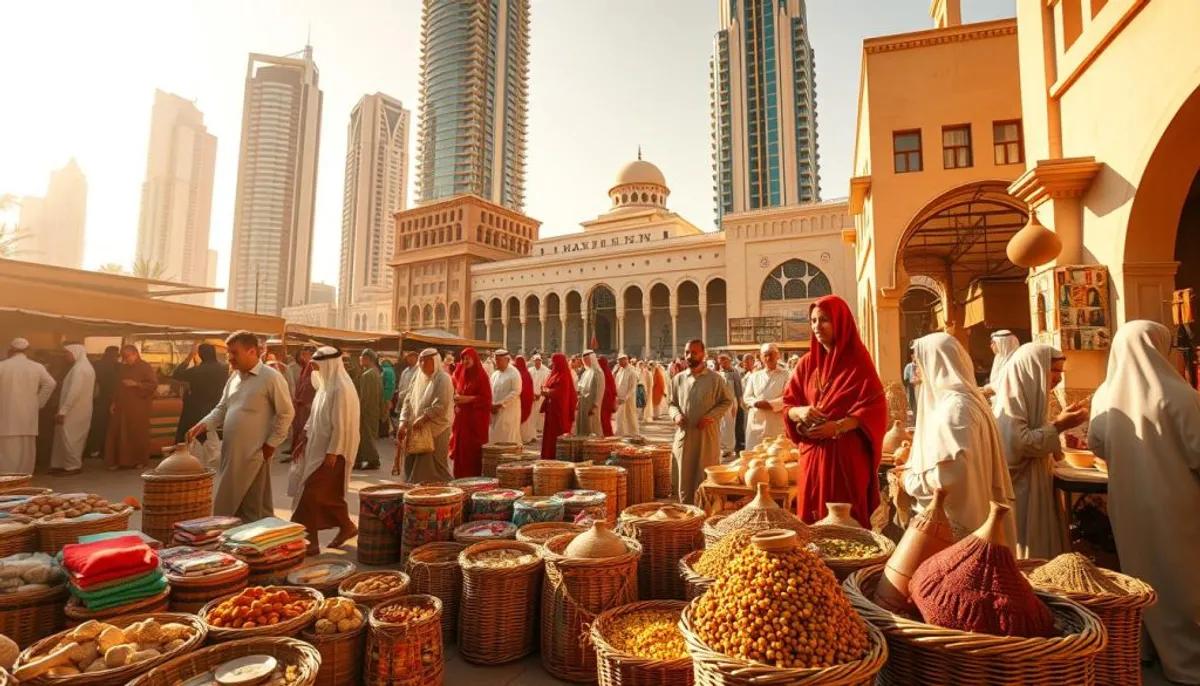
Since their unification in 1971, these territories have managed to preserve their traditions while embracing innovation. The unique identity of this nation is based on centuries of Bedouin history and maritime trade.
The rich heritage of the Emirates is manifested through authentic customs and diverse influences. Successive waves of immigration have enriched this culture without erasing its deep roots.
Visitors discover here a society where Islamic values and legendary hospitality are fundamental pillars. Understanding this culture is essential to fully appreciate the depth of the emirates.
Key Points to Remember
- The United Arab Emirates combine ancestral traditions and modernity
- The federation has grouped seven emirates since 1971
- Bedouin history and maritime trade have shaped the national identity
- Cultural heritage is enriched by various influences
- Hospitality and respect for elders are fundamental values
- Ultra-modern infrastructures coexist with authentic traditions
- Understanding this culture enriches the experience of visitors and residents
Introduction to Emirati Culture
Let’s dive into the heart of a national identity shaped by a unique blend of heritage and modernity. This federation of seven emirates has developed its own character since its unification in 1971.
Presentation and Challenges
The country has approximately 6.4 million inhabitants. Only 15 to 20% are citizens by origin. This human diversity creates an extraordinarily multicultural society.
Communities from India, Pakistan, and other nations have enriched the social fabric. They bring their customs without erasing local traditions.
Preserving authenticity in the face of rapid modernization represents a major challenge. Institutions like the national museum and traditional souks play a crucial role.
The government invests heavily in promoting heritage. It seeks a balance between respecting roots and being open to the world.
This approach allows new generations of people to take ownership of their history while looking towards the future.
History and Evolution of the United Arab Emirates
From nomadic tribes to futuristic skyscrapers, the evolution of the emirates impresses with its speed. This extraordinary transformation is rooted in a thousand-year history marked by adaptation to the desert.
Origins, Bedouin Tribes, and Pearl Economy
The original population consisted of nomadic Bedouin tribes. They roamed the desert in search of water and precious resources.
The region has always been a strategic trade center. Archaeological remains in Umm Al Nar testify to prosperous civilizations as early as the Bronze Age.
In the early 20th century, the pearl economy dominated. Local divers exploited the oyster beds of the Gulf to supply global markets.
Unification and Modernization
The 1930s saw a decline in the pearl industry. The arrival of Japanese cultured pearls disrupted this traditional activity.
The discovery of oil in the 1950s transformed the country. This windfall financed modern infrastructures and public services.
December 2, 1971, marks a turning point. Under the leadership of Sheikh Zayed bin Sultan Al Nahyan, the seven emirates unite to form the current federation.
This unification allowed for a spectacular urban metamorphosis. Modern cities have emerged from the desert, blending futuristic architecture with preserved historic neighborhoods.
Demographic Diversity and Interculturality
The demographic composition of the United Arab Emirates challenges conventional statistics of modern nations. Of the 6.4 million inhabitants, only 15 to 20% hold Emirati nationality.
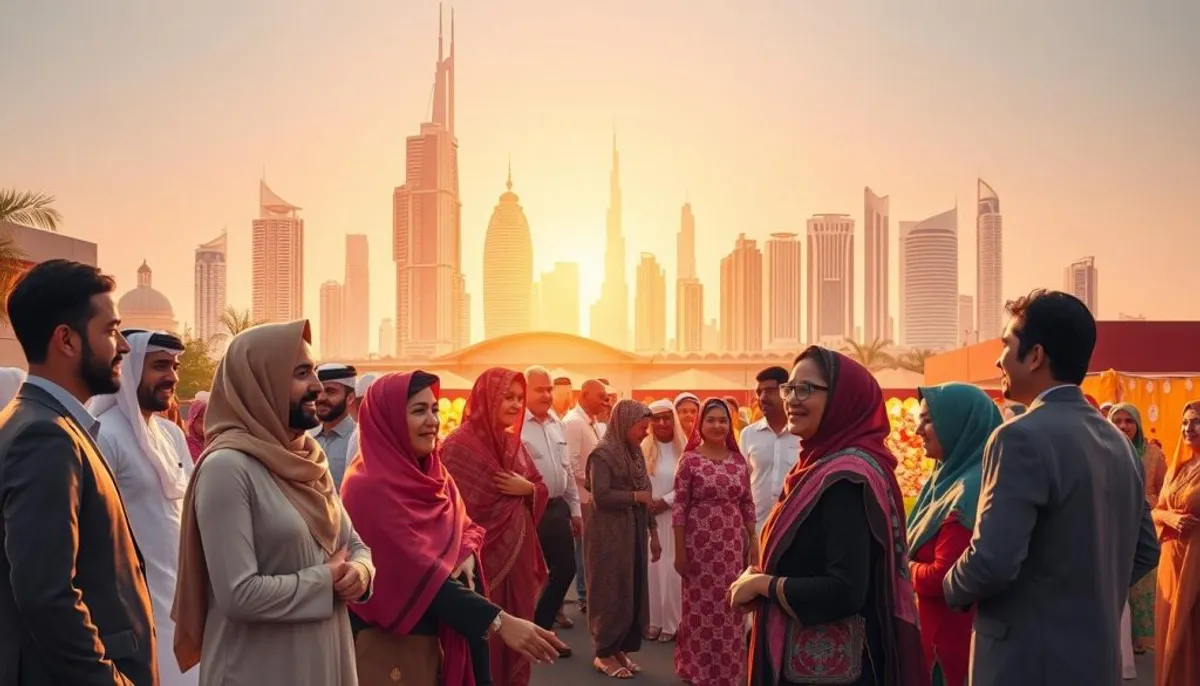
This reality creates an extraordinarily cosmopolitan society. Expatriates from India, Pakistan, Bangladesh, and the Philippines contribute to this human richness.
Multinational Population and Diverse Influences
The various cities and urban centers of the country accommodate this multinational population. Despite this diversity, few ethnic tensions are observed.
The harmonious coexistence can be explained by several key factors:
- 76% of the population is Muslim, with significant Hindu and Christian communities
- Arabic remains the official language, but English and other languages are widely spoken
- Cultural influences enrich daily life without erasing local identity
This population primarily speaks English, Hindi, Urdu, and Persian. This linguistic plurality facilitates communication among all people.
The Emirates thus demonstrate that a multicultural society can be a model of social cohesion. This success is impressive in a region often marked by divisions.
Everyday Emirati Culture
The rhythm of daily life in the United Arab Emirates follows a unique tempo. Each day is marked by the harmony between modernity and deeply rooted cypriot traditions.
The family is the central pillar of social organization. Intergenerational bonds remain extraordinarily strong across all emirates.
Family Values and Social Rituals
Regular family gatherings punctuate social life. Several generations come together around hearty meals to maintain these traditions.
Respect for elders guides all interactions. These customs create a society where family solidarity prevails.
Role of Islam and Religious Customs
The Muslim religion marks each day with five calls to prayer. Friday, the holy day, marks the beginning of the weekend.
The fasting of Ramadan and the Eid celebrations structure the year. These practices reinforce values of hospitality and generosity.
| Religious Practice | Frequency | Social Impact |
|---|---|---|
| Daily Prayers | 5 times per day | Collective rhythm |
| Family Gatherings | Weekly | Strengthening bonds |
| Religious Celebrations | Annual | Spiritual communion |
Conveyed in Arabic, these customs preserve national identity. The religion thus influences all aspects of life in the emirates.
Traditional Clothing and Dress Customs
Clothing in the United Arab Emirates reveals a remarkable harmony between tradition and modernity. These garments reflect national identity while addressing climatic challenges.
Traditional clothing offers optimal comfort against the intense heat. They also symbolize respect for Islamic values of modesty.
Men's Traditional Attire: Dishdasha and Thawb
Men primarily wear the dishdasha or thawb. This long white cotton robe reaches down to the ankles.
It allows for optimal air circulation in the desert climate. Men complete their outfit with the ghutra, a turban held in place by the agal.
Feminine Elegance and Modernity
Women wear the abaya, a flowing tunic often in black. Nowadays, it comes in various colors with delicate embroidery.
Unlike other countries, the Emirates do not impose the veil. Many women freely choose to wear the shayla or hijab.
| Type of Garment | Traditional Use | Modern Adaptation |
|---|---|---|
| Dishdasha/Thawb | White men's robe | Discreet color variations |
| Abaya | Black women's tunic | Varied colors, embroidery |
| Ghutra | Traditional turban | Modern materials |
Western fashion is gaining popularity among the youth. However, modest dressing remains valued across all emirates.
These garments represent much more than mere protection against the elements. They embody the living traditions of the emirates.
Art and Craftsmanship: Cultural Expression
Artistic expression in the United Arab Emirates reveals a creative richness that transcends centuries. These forms of art preserve national identity while evolving with modernity, yet they also highlight the potential loss of self and cultural identity as globalization influences local traditions.
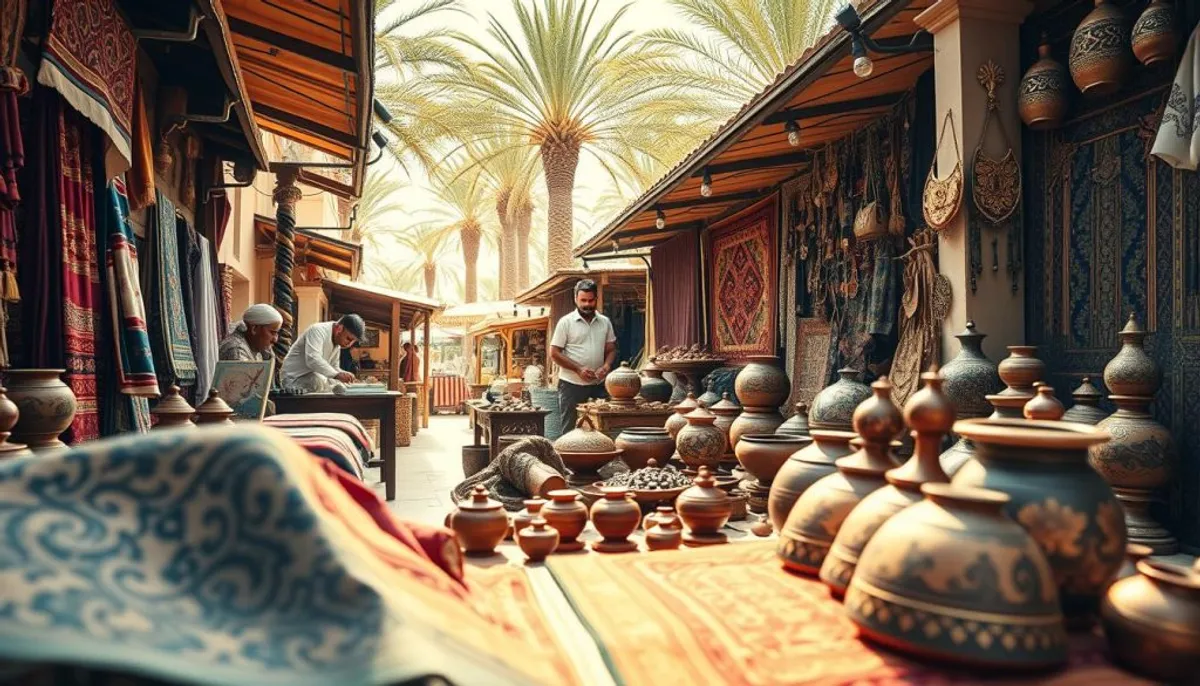
Calligraphy, Poetry, and Handcrafted Jewelry
Arabic calligraphy adorns not only mosques but also public architecture. This refined art is now displayed in contemporary museums and art galleries.
Poetry has held a central place for generations. Great poets like Ibn Majid and Moubarak al-Owais have marked literary history.
Craftsmanship perpetuates ancestral techniques. Handmade pearl jewelry recalls the once-thriving pearl economy.
The emirates host prestigious institutions like the Louvre Abu Dhabi. These museums preserve heritage while showcasing modern works.
The traditional souks of the cities demonstrate how art can be a bridge between traditions and innovations. Each piece tells a part of the country's history.
Emirati Music, Dance, and Folklore
The performing arts hold a privileged place in local cultural expression. These traditions rhythmically enhance social life and strengthen community ties across all emirates.
Traditional Instruments and Local Percussion
Traditional music uses characteristic musical instruments of the region. The oud, similar to a mandolin, produces enchanting melodies.
The habban, a goat-skin bagpipe, and the qanun, a zither, complete the orchestra. Percussion instruments like the manior and the taba provide rhythm for celebrations.
Dances and Festive Ceremonies
Folkloric dances enliven weddings and community events. The Al-Ayala, once danced by Bedouins before battle, symbolizes courage.
The Al Harbiya features synchronized movements with sticks or swords. These dances create a festive atmosphere during festivals.
Major events like the Dubai Shopping Festival incorporate these traditions. The Sikka Art Fair and the International Film Festival also highlight this living heritage.
Thus, music and dance remain pillars of national identity, passed down with passion from generation to generation.
Emirati Cuisine: Traditions and Togetherness
The authentic flavors of the United Arab Emirates tell a story of generosity and sharing. This vibrant traditional japanese cuisine blends regional influences and ancestral traditions.Iconic Dishes and Authentic Spices
The machbous dominates the table with its spiced rice accompanied by grilled meat or fish. Spices like cardamom and saffron delicately flavor each dish.
During Ramadan, al harees combines crushed wheat and meat in a comforting preparation. Desserts like luqaimat (date syrup donuts) complete the feast.
Hospitality and Meal Rituals
Each meal becomes an opportunity for social gathering. Guests serve themselves with their right hand from large shared platters.
Arabic coffee (gahwa), prepared by hand with cardamom, warmly welcomes visitors. Fresh dates symbolize this legendary hospitality.
| Traditional Dish | Main Base | Typical Occasion |
|---|---|---|
| Machbous | Rice and meat/fish | Daily meals |
| Al Harees | Wheat and meat | Ramadan |
| Luqaimat | Donuts and dates | Celebrations |
The karak chai, spiced tea with milk, is enjoyed throughout all emirates. These culinary traditions preserve a rich identity despite modern influences.
Conclusion
The model of the United Arab Emirates demonstrates how to preserve its soul while embracing the future. This unique culture, forged by a rich history from Bedouin tribes to the federation of 1971, remains vibrant, reflecting the culture of oman.The heritage is alive. It can be discovered in modern museums, the ancient neighborhoods of each city, and during traditional events. Daily life, rhythmically guided by religion and the Arabic language, retains its fundamental values.
We encourage you to explore this history in dialogue with the locals. Taste the cuisine, visit the museums, participate in the events. The identity of the emirates is a successful balance, making this region an inspiring example for the future of cultural life.
FAQ
What is the official language spoken in the United Arab Emirates?
Arabic is the official language of the country. However, English is widely used, especially in business and commerce, due to the great diversity of the population.
How do Emirati women traditionally dress?
Women often wear a long black dress called an abaya, sometimes embroidered with elegant patterns. It is frequently accompanied by a headscarf (shayla). Under the abaya, they may wear modern clothing, thus combining tradition and personal style.
What is the national dish of the United Arab Emirates?
The machboos is considered an iconic dish. It is a flavorful spiced rice, usually prepared with meat (chicken, lamb, or even fish) and a blend of aromatic spices.
What are the most important cultural festivals?
The two major events are the Dubai Shopping Festival and the Abu Dhabi Festival. However, religious celebrations, such as Eid al-Fitr and Eid al-Adha, are also significant moments in family life and customs.
Does the cultural offering go beyond traditions?
Absolutely! In addition to the rich heritage present in museums and souks, the country has developed a dynamic modern art scene with internationally renowned art galleries, such as the Louvre Abu Dhabi.
What does Arabic coffee symbolize in local culture?
Arabic coffee (gahwa) is much more than a beverage. It is a profound symbol of hospitality. It is served in small cups during receptions and social gatherings, often accompanied by dates.
Does music and dance hold an important place?
Yes, music and dance are vital to identity. Traditional instruments like the oud and drum accompany folkloric dances, such as the Ayalah, which tell the story and traditions of the country.