
In the heart of the vast blue of the Pacific Ocean, the Samoa Islands shine like a preserved jewel. They are considered the vibrant soul of Polynesia. This unique Samoan culture has managed to traverse the centuries while maintaining its deep authenticity.
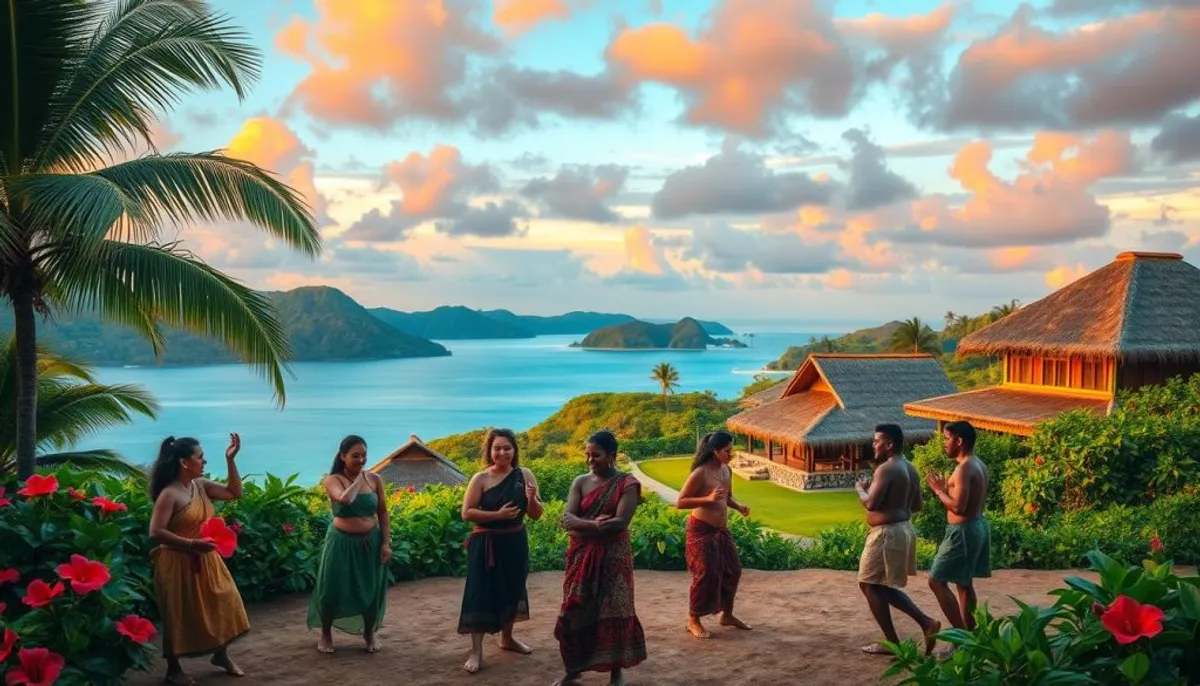
Despite increasing modernization, the weight of traditions remains very important in daily life. The country has a population of around 190,000 inhabitants, forming a close-knit community. Few places in the world have such a vibrant and respected ancestral heritage.
The secret to this resilience? The Fa'a Samoa, or "the Samoan way." This fundamental principle organizes all social, family, and spiritual life. It is the invisible pillar that maintains harmony and respect between generations.
This article invites you on a journey to discover the riches of this archipelago. We will explore its fascinating history, captivating customs, and unique way of life, rhythmically guided by strong values.
Key Points to Remember
- The Samoa Islands are considered the heart of Polynesia.
- Their cultural heritage is exceptionally well preserved.
- The Fa'a Samoa is the central principle organizing society.
- Tradition remains very influential despite modernization.
- This article explores in detail the traditions, history, and customs.
Introduction and General Overview
The journey to Samoa reveals two territories united by a common identity. This Polynesian nation consists of the independent State and American Samoa.
Overview of Samoa and Its Heritage
Despite their political separation, these islands share a common language and identical customs. Many families live on both sides of this fictitious border.
| Territory | Political Status | Natural Feature |
|---|---|---|
| Independent State of Samoa | Sovereign nation | Stable tropical climate |
| American Samoa | American territory | 90% preserved forests |
The natural heritage remains remarkable with constant temperatures around 27°C. These ideal conditions favor both local life and tourist exploration.
Objectives and Issues of the Article
Our exploration aims to understand how this people maintains its authenticity. We will analyze the balance between ancestral traditions and modernity.
Respectful tourism and intergenerational transmission represent major challenges. These issues determine the sustainability of a unique heritage.
Origins and History of Samoa
The history of Samoa dates back thousands of years, marked by epic migrations and maritime conquests. This rich chronology explains how this archipelago became the heart of Polynesia.
The Beginnings: From Hawaiki to the First Settlements
Archaeologists estimate that the first Polynesians arrived around 3,000 years ago. They came from Asia via Melanesia and Fiji.
Savai'i is identified as the legendary Hawaiki. This mythical island was the cradle of Polynesian civilization.
For centuries, local populations ruled over the Pacific. The outside world discovered these lands much later.
| Period | Major Event | Lasting Impact |
|---|---|---|
| 3000 BC | First Polynesian settlement | Foundation of cultural identity |
| 1000 BC | Expansion to other islands | Diffusion of culture in the Pacific |
| Before 1787 | Reign of traditional societies | Preservation of ancestral customs |
The Colonial Era and the Quest for Independence
The first Europeans arrived in 1787 with the La Pérouse expedition. By the 1830s, missionaries like John Williams developed Christianity.
In 1899, the territory was divided into two parts between Germans and Americans. New Zealand administered the country from 1918 to 1962.
On January 1, 1962, Samoa became the first country in the Pacific to gain its independence.
This conquest of sovereignty crowned years of struggle. The Mau movement symbolized this peaceful resistance.
In 1997, the name change marked an additional assertion of identity. Western Samoa became the independent State of Samoa.
Traditions and the Fa'a Samoa
The remarkable social cohesion of these islands is explained by the rigorous application of the Fa'a Samoa. This system organizes every aspect of daily life according to ancestral principles, including the culture of oman. It represents the invisible foundation of collective harmony.
To understand this unique organization, one must examine its three fundamental pillars.
The Pillars of the Fa'a Samoa: aiga, matai, and church
The Fa'a Samoa is based on a well-defined triangular structure. Each element plays an essential complementary role.
| Pillar | Main Function | Scope of Influence |
|---|---|---|
| Matai (chief) | Decision-making authority and land management | Extended family and village representation |
| Aiga (family) | Basic social unit and mutual support | Transmission of values and responsibilities |
| Church | Spiritual and social center of the village | Integration of Christianity and traditions |
The Importance of Family and Chiefs in Culture
The extended family is the heart of the system. Each member finds their place with specific obligations. The respect for elders guides intergenerational relationships.
The matai, numbering 18,000 for 362 villages, form local councils. These traditional chiefs gather in the fale to make community decisions.
The creed of the Fa'a Samoa dictates that each family member has a responsibility equal to that of the matai.
This distribution of roles ensures social balance. The system has demonstrated remarkable efficiency for generations.
Rituals and Customs in Daily Life
Each day in the archipelago follows a sacred calendar where spirituality and conviviality intertwine. These ordinary practices reveal how traditions remain alive in modern life.
Religious Practices and Sunday Respect
Sunday represents a special moment of reflection. All noisy activities cease, and businesses close their doors.
Families dedicate themselves to prayer and rest. This way of life shows a deep respect for spiritual traditions.
Every evening around 6 PM, bells or conch shells announce the evening prayer. No one moves around the villages during this ritual.
Hospitality, Dance, and Tattoo: Cultural Expressions
The warm welcome is legendary here. Contagious smiles are an integral part of local hospitality.
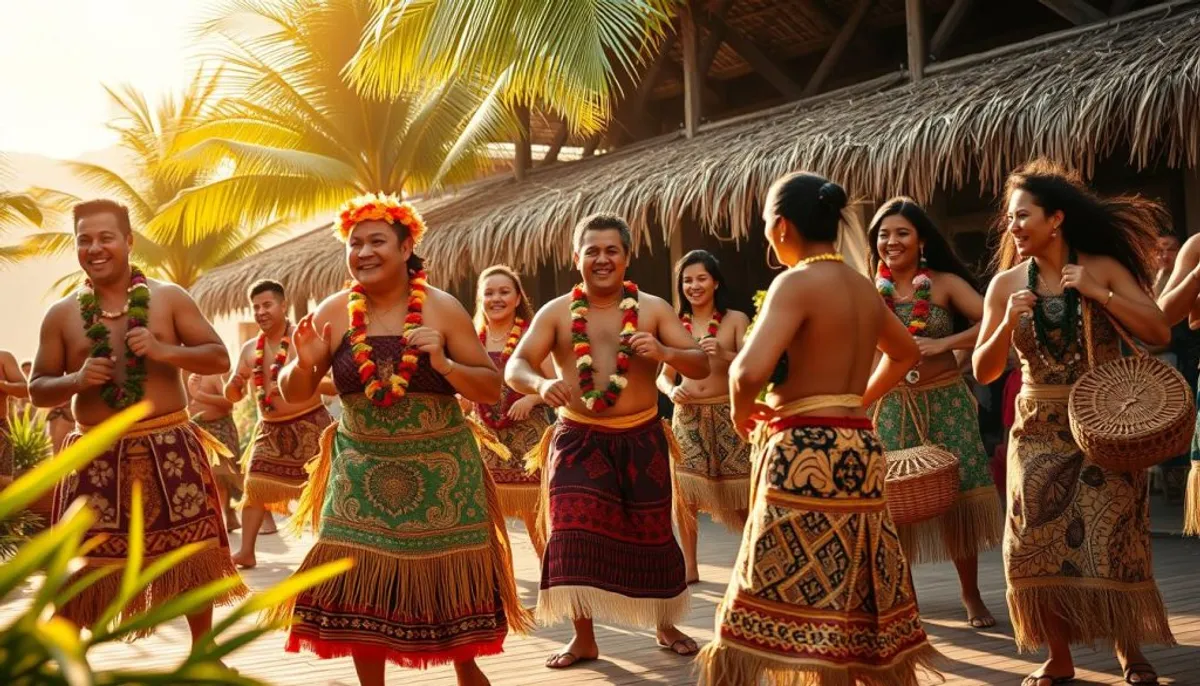
Women perform the graceful siva, telling stories with their hands. Men practice the spectacular siva afi with flaming knives.
The traditional tattoo pe'a is part of masculine identity. A concrete example of protocol: always remove shoes before entering a fale.
Samoan Culture: A Living Heritage
The Samoan paradox fascinates observers: a modernity accepted without renouncing ancestral traditions. This exceptional resilience makes Samoa a unique case in the contemporary world.
Traditional Values and Modernity
Despite American influence in American Samoa, the weight of customs remains predominant. Colonizers never succeeded in standardizing this unique identity.
Christianity has integrated harmoniously into the traditional system. With 97% of Christians, the church has become a complementary pillar rather than a replacement.
Younger generations navigate between modern technologies and respect for elders. This adaptation demonstrates remarkable flexibility.
| Contemporary Challenge | Resilience Mechanism | Impact on Transmission |
|---|---|---|
| Significant diaspora | Family ties maintained at a distance | Preservation of values abroad |
| Cultural globalization | Strengthened identity pride | Selective adaptation of influences |
| Attraction of Western trends | Enhanced family education | Balance between tradition and modernity |
The traditional lavalava and the local language remain strong identity markers. This middle eastern culture is not static but evolves while preserving its essence.
The coexistence of old and new is an integral part of daily life. Once again, Samoa proves that tradition and modernity can harmoniously dialogue.
Cultural Diversity and External Influences
The bilingualism practiced in Samoa reflects a unique balance between local heritage and international exchanges. This linguistic harmony demonstrates remarkable adaptability in the face of globalization.
Languages, Religions, and International Exchanges
Nearly 87% of the population uses Samoan as their first language. Just over 10% primarily speak English, often of mixed Euro-Polynesian descent.
Younger generations generally master both languages. This skill allows them to navigate between tradition and modernity with ease.
In parliament, debates take place in Samoan but laws are written in English. This mixed system preserves authenticity while facilitating international exchanges.
The independent state joined the Commonwealth of nations in 1970. This membership opens significant economic and cultural perspectives.
Iconic Figures and Notable Personalities
Dwayne “The Rock” Johnson embodies international success with Polynesian pride. The Hollywood actor constantly claims his roots.
Robert Louis Stevenson, nicknamed Tusitala by the locals, chose to end his life here. The Scottish writer symbolizes enriching cultural exchanges.
Brian Lima represents sporting excellence on the world stage. The rugby player is considered one of the best wings in history.
Albert Wendt carries local ideas and values into international literature. His work contributes to disseminating this rich culture.
The Impact of Tourism and Travel on Samoa
Visitors discover in Samoa a model of responsible tourism where local communities fully control the experience. This country has managed to preserve its authenticity while welcoming travelers with generosity.
Exploration of Landscapes and Immersion in Villages
The national park of American Samoa spans four beautiful islands. Tutuila, Ofu, Olosega, and Ta'u offer breathtaking landscapes. Tropical rainforests cover 90% of the territory.
The turquoise water of the lagoons often reaches over 27°C. The marine sanctuary of Fagatele Bay is home to exceptional biodiversity. One can swim with dolphins, turtles, and octopuses among 800 species of fish.
| Type of Experience | Main Locations | Available Activities |
|---|---|---|
| Marine Exploration | Fagatele Bay | Diving, marine observation |
| Land Hiking | National Park | Forest trails, bird watching |
| Cultural Immersion | Traditional Villages | Accommodation in fale, local crafts |
Authentic Encounters and Respect for Customs
The fale accommodation program allows for total immersion in the villages. Welcoming families teach their customs to visitors. This way of traveling creates lasting bonds.
Respect for traditions is essential. One removes shoes before entering a house. The land being sacred, permission is always asked before settling. Tourist services belong exclusively to the locals.
The month of January is ideal for a trip. Independence of the country is celebrated with authentic festivities. Each visit thus becomes an example of responsible tourism.
Conclusion
The Samoan social system, based on traditional chiefs and the extended family, serves as a model for cultural preservation. Since the independence of January 1, 1962, this country has demonstrated exceptional resilience, much like the lessons learned from mongolian history.
After more than 60 years of sovereignty, the Samoa Islands maintain their identity in a globalized world. Women and men actively participate in this intergenerational transmission.
This remarkable fact inspires other island nations. Once on site, you will understand how these ancestral ideas coexist with modernity. The independent state remains a living part of the Polynesian heritage.
FAQ
What exactly is the Fa'a Samoa?
The Fa'a Samoa means "the Samoan way." It is a way of life that guides daily living. It is based on three main pillars: the extended family (aiga), the chief system (matai), and the importance of the church. These elements define social relationships and respect for elders.
What role does a matai play in a village?
A matai is a title chief, man or woman, who leads an extended family. They have several responsibilities. They manage the family's land, represent their group at village meetings, and ensure everyone's well-being. Their role is crucial in maintaining order and tradition.
Why is Sunday so special in the Samoa Islands?
Sunday is a sacred day, dedicated to rest and religion. This tradition dates back to the arrival of missionaries. Most activities stop. Families attend church and share a large meal. It is important for visitors to respect this custom.
How can visitors show respect for local culture?
Visitors can show their respect in several ways. Dressing modestly, especially on Sundays, is appreciated. Accepting hospitality with gratitude and learning a few basic words in Samoan makes a big difference. It is also polite to ask for permission before taking photos in a village.
What is the importance of tattooing in Samoan society?
Tattooing, or *tatau*, is much more than an art form. For men (the *pe'a*) and women (the *malu*), it is a deeply significant rite of passage. It symbolizes strength, commitment to culture, and dedication to family and community. It is an ancient tradition that remains very much alive.