
Let's discover together one of the most fascinating civilizations of Western India. This community has a millennia-old heritage that continues to influence the region today.
Its influence extends over a dynamic geographical triangle including Mumbai, Goa, and Nagpur. These territories form the vibrant heart of this unique regional identity.
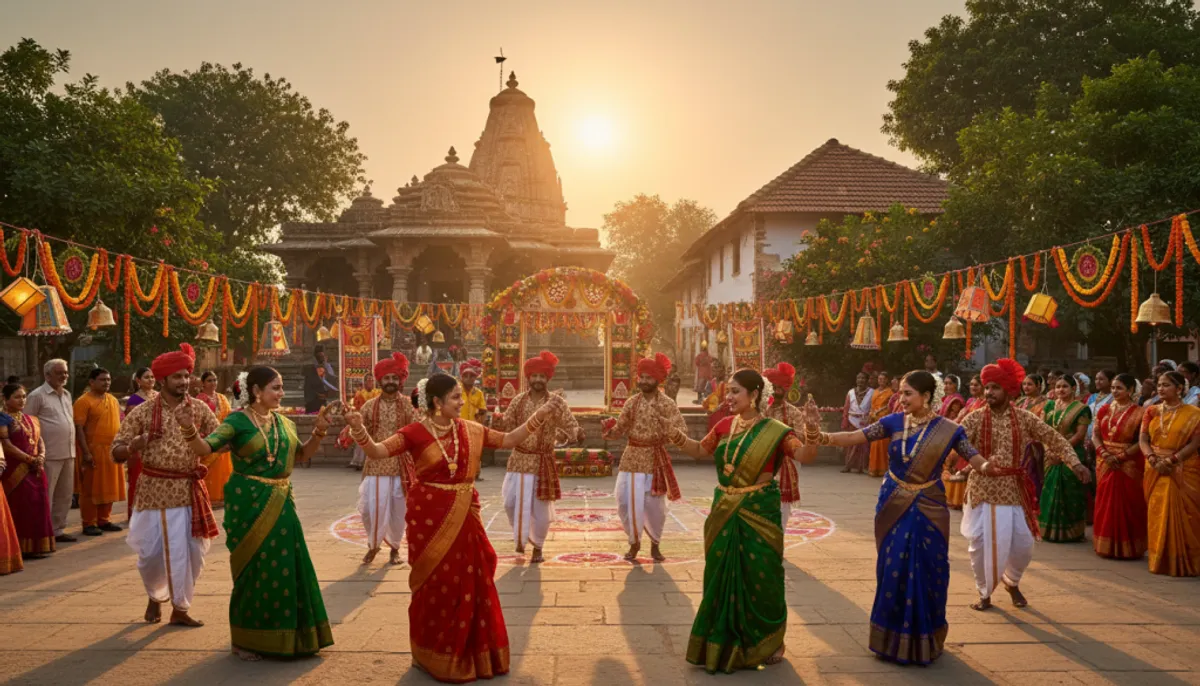
The Marathi language holds an important place as the fourth constitutional language of the Indian Union. With 65 million speakers, it carries a rich literary and cultural tradition.
Architecture, religious customs, and social organization display distinctive characteristics. These elements contribute to the uniqueness of this civilization.
This guide offers you a journey through the centuries to explore the many facets of this captivating universe, including the rich khmer cultural history. We will discuss its history, language, literature, and artistic heritage.
Understand how this influence has shaped the cultural identity of modern India. An exciting adventure awaits you through the pages.
Key Points to Remember
- Rich and influential civilization of Western India
- Geographical region covering Mumbai, Goa, and Nagpur
- Marathi language spoken by 65 million people
- Millennia-old heritage with distinctive traditions
- Importance in shaping modern Indian identity
- In-depth exploration through history and arts
Introduction to Maratha Culture
Located in a privileged coastal area, this population has developed a remarkable influence. Its heritage spans a vast territory with unique geographical features.
Historical and Geographical Context
The Mumbai-Goa-Nagpur triangle forms the heart of this civilization. This region benefits from a strategic position between the Arabian Sea and the Deccan Plateau.
Maharashtra serves as the main cradle of this identity. Pune plays a central linguistic role with its dialect becoming standard.
| City | Geographical Role | Cultural Importance |
|---|---|---|
| Mumbai | Main port on the west coast | Modern economic center |
| Goa | Historical maritime interface | Crossroads of influences |
| Nagpur | Central continental point | Link with the interior of the country |
| Pune | City of the Deccan Plateau | Linguistic reference |
Importance and Influence of the Culture
With 65 million speakers, this language holds the fourth constitutional place in the Indian Union. Its demographic weight reflects exceptional vitality.
The dialectal diversity significantly enriches this linguistic tradition. Each region contributes its peculiarities while maintaining a fundamental unity.
The influence extends far beyond the borders of Maharashtra. It profoundly impacts all of Western India through centuries of trade and cultural exchanges.
The Origins and Linguistic Evolution of the Marathas
The roots of this fascinating language trace back to the 11th century with monumental inscriptions. This period marks the beginning of a distinct linguistic identity that will evolve over several generations.
The Earliest Inscriptions and Ancient Texts
The earliest specific testimonies appear on stone inscriptions dating from the 11th century. These documents are scattered across a territory corresponding to present-day Maharashtra.
The original center was located on the banks of the upper Godavari, in the Paithan region. This area was the linguistic cradle under the reign of Hindu kings from Deogiri.
Influences of Prakrit and Sanskrit
The māhārāṣṭrī, an ancient form of the modern term, referred to the Prakrit spoken in the "Great Kingdom." This name was attributed by Sanskrit writers recognizing its importance.
The Prakrit served as a vernacular linguistic base, while Sanskrit brought vocabulary and grammatical enrichments. This dual influence gradually shaped the modern language.
| Period | Linguistic Form | Main Characteristics |
|---|---|---|
| 11th Century | Ancient Inscriptions | First specific testimonies |
| Medieval | Māhārāṣṭrī Prakrit | Regional vernacular base |
| Evolution | Sanskrit Influence | Grammatical enrichment |
| Modern | Contemporary Marathi | Consolidated language |
Marathi Literature Through the Ages
The written tradition of this Western Indian civilization unfolds its treasures from the 12th century. However, a significant conservation challenge arises: no manuscript prior to the 16th century has survived.
This rich production mainly includes three fundamental genres. The abhanga constitutes hybrid prayer-poems, blending spiritual devotion and artistic expression.
From Abhanga to Epic Masterpieces
The great Sanskrit epics like the Mahābhārata and the Rāmāyaṇa witness remarkable adaptations. These transpositions make these sacred texts accessible to the people.
The Līḷācaritra (circa 1280) represents an exceptional specimen of primitive prose. It recounts the life and teachings of Cakradhara, the founder of the Mahānubhāv sect.
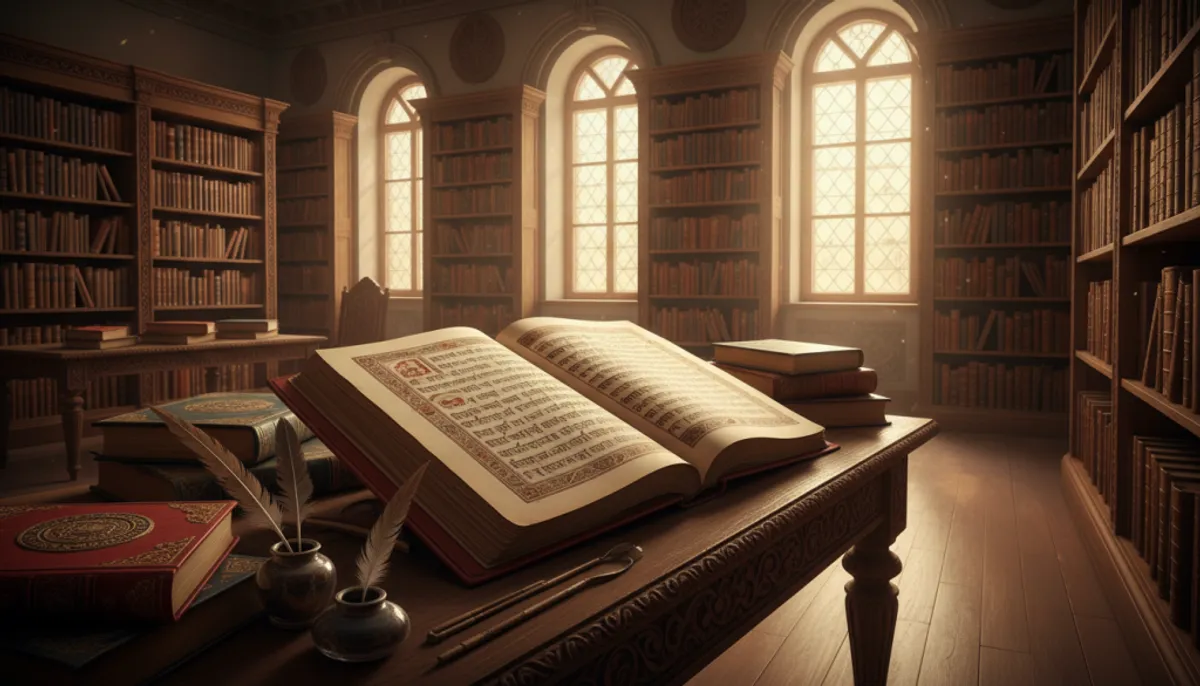
The Role of Jnāneśvarī in Literary Tradition
The Jnāneśvarī (1290) stands out as the absolute masterpiece. Composed by Jnāndev at just nineteen years old, this poem contains ten thousand verses.
This immense creation serves as a comprehensive commentary on the Bhagavad Gītā. Each verse of the sacred text is quoted and illustrated with examples from daily life.
The innovative structure makes complex philosophical concepts accessible to all. Simple comparisons transform this text into a captivating sermon.
| Period | Major Work | Literary Contribution |
|---|---|---|
| 13th Century | Līḷācaritra | First primitive prose |
| Late 13th Century | Jnāneśvarī | Poetic commentary on the Bhagavad Gītā |
| Early 14th Century | Śiśupāḷavadha | Krishnaite poetry by Bhāskarbhaṭṭ |
The religious subject naturally dominates this medieval production. This orientation reflects the deep spirituality of society during this period.
Traditions and Customs in the Maratha Kingdom
The social system of the Maratha kingdom was based on a complex organization that structured every aspect of existence. This hierarchy ensured remarkable political stability while defining everyone's roles.
Religious Ceremonies and Rituals
Religion held a central place in daily life, with the luo tradition influencing many ceremonies. Ceremonies marked all significant stages of human existence.
From birth to funerals, each event followed codified rituals. Brahmins led these practices according to ancient sacred texts.
Annual festivals like Ganesh Chaturthi and Diwali punctuated the year. The worship of Vithoba in Pandharpur attracted pilgrims from across the region.
The Role of Caste and Social Practices
Society was organized according to four main functional orders. Brahmins (priests), kshatriyas (warriors), vaishyas (producers), and shudras (servants) formed this structure.
Each caste had specific obligations and privileges. Relations between groups were strictly regulated.
The family and community company played an essential role. It maintained ancestral traditions, including the rich naga traditions, through the participation of all members.
Maratha Culture Through the Centuries
The artistic journey of this Indian civilization reveals a fascinating transformation over several generations. From the 12th to the 17th century, literary creation remains exclusively religious and spiritual.
The 17th century represents a pivotal turning point. After maintaining a purely sacred tradition, writings open up to secular texts.
This transition reflects the social and political transformations of Maharashtra. New forms emerge such as povāḍe (heroic ballads) and lāvaṇī (erotic songs).
| Period | Type of Literature | Main Forms |
|---|---|---|
| 12th-17th Century | Exclusively religious | Sacred texts, commentaries |
| From the 17th Century | Emergence of secular texts | Povāḍe, chronicles, lāvaṇī |
| 20th Century | Growth under Western influence | Diverse modern literature |
The 20th century brings a decisive Western influence. Secular literature then experiences exceptional growth among Indian languages.
This evolution marks the end of the exclusive dominance of sacred works. A diverse production emerges, reflecting the complexity of modern society and the rich tapestry of guyanese cultural heritage.
Artistic and Architectural Influences in Maratha Culture
The architecture of this Western Indian civilization reveals exceptional artistic richness. Its architectural heritage draws its roots from the great dynasties of southern India.
From the beginning of the 10th century, styles evolve to create unique forms. This region becomes a crossroads of remarkable architectural influences.
The Heritage of Temples and Historical Monuments
The Hoysalas create a blend of Dravidian and Indo-Aryan styles. Their mandapas feature finely carved stone columns.
The Cholas particularly influence architecture with their monumental gopurams. Their bronze work produces divine statuettes of exquisite beauty.
Maratha Sculpture and Decorative Art
The Vijayanagar style primarily uses granite as a material. It blends Chalukya, Hoysala, Pandya, and Chola elements.
Fortified temples reflect the defensive concerns of the time. Their architectural form includes protective enclosures.
Characteristic decorative elements often bear the name of their founding dynasties. Sculptures of hippogriffs and epic engravings adorn the entrances.
The Socio-Political Impact of Maratha Culture
The success of this civilization relied on a decentralized administration combining central authority and regional autonomy. This approach ensured remarkable stability.
The Organization of Society and Caste Hierarchy
The Maratha state adopted the mandala system from its capital. This model created concentric circles of influence.
Each province enjoyed substantial autonomy. However, they all recognized central authority.
The company of Brahmins played a crucial role. They legitimized the political power of the sovereigns.
| Caste | Political Role | Social Function |
|---|---|---|
| Brahmins | Religious advisors | Legitimization of power |
| Kshatriyas | Military rulers | Defense of territory |
| Vaishyas | Administrators | Economic management |
| Shudras | Servants | Essential services |
The succession system saw the father transmit power and responsibilities. This continuity ensured dynastic stability.
Under the reign of great sovereigns, the balance between castes was maintained. This social harmony fostered political cohesion.
The military company formed the backbone of power. It combined military effectiveness with territorial administration.
Cultural and Commercial Exchanges in India
From the 1st century, the ports of the Indian west coast were connected to the Mediterranean world. This strategic region served as a bridge between different countries and civilizations.
The territory of Maharashtra occupied a central position in these exchanges. Located in the west of the Indian peninsula, it formed a natural crossroads.
Interaction with Other Civilizations
Trade relations with the Roman Empire date back to the 1st century AD. The ports of Mumbai and Goa exported precious spices and textiles.
Land exchanges also connected this region to China. The routes crossed the center of the peninsula to join the Silk Road.
Even before Islam, contacts existed with the Arabian Peninsula. The Arab conquest of Sind in 713 intensified these exchanges.
These interactions mutually enriched civilizations. Techniques, ideas, and artistic practices circulated freely between the countries.
The Transmission of Knowledge and Contemporary Literary Evolution
The encounter with the West triggered a profound metamorphosis of traditional written expressions. This radical transformation truly began in the 20th century.
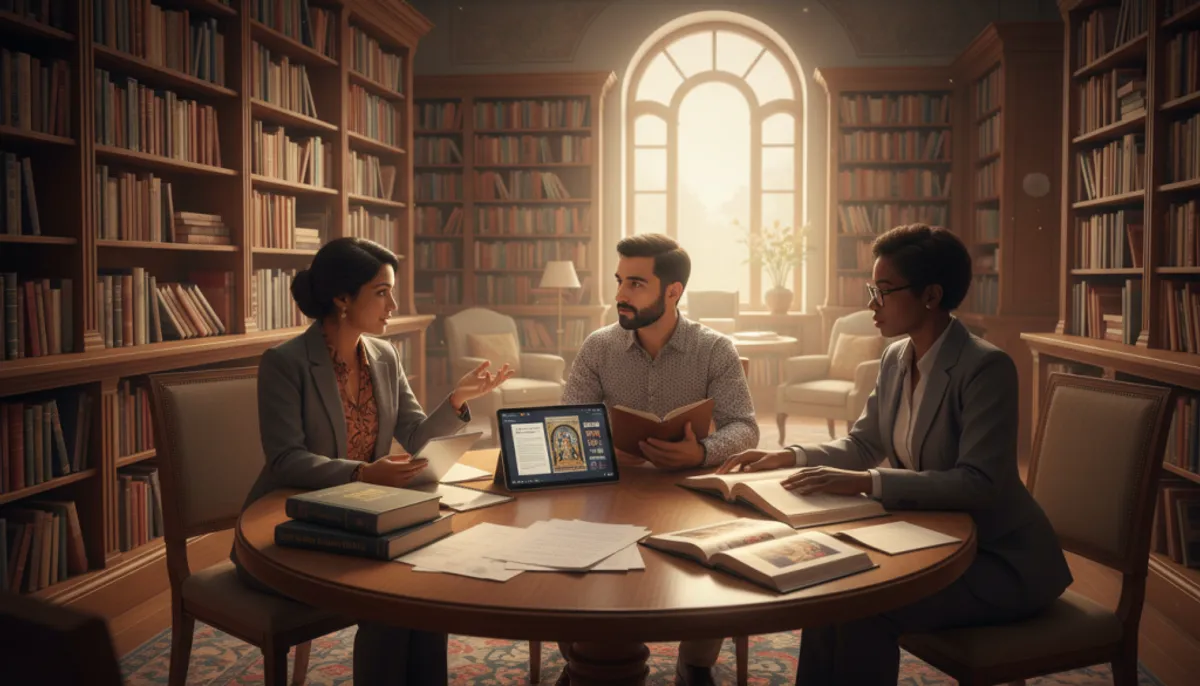
Western influence introduced new literary genres. Novels, short stories, and essays gradually replaced ancestral poetic forms.
Western Influence and Modernization of Writings
In the early years of the century, themes evolved significantly. Social realism and character psychology became predominant.
British colonization brought innovative pedagogical methods. This period saw the emergence of particularly dynamic modern prose.
Writers navigated between preserving traditions and adopting new forms. Their contribution to cultural diffusion surpassed that of other regional languages.
The intellectual legacy dating back to the Gupta golden age continued to inspire creations. Mathematical and astronomical innovations enriched this heritage transmitted through the years.
Conclusion
This historical journey reveals how a cultural identity has managed to preserve its essence while evolving with its time. From its origins in the heart of the Indian peninsula to its contemporary influence, this tradition has demonstrated exceptional resilience.
Maharashtra, located in the west of the country, remains the faithful guardian of this millennia-old heritage. The linguistic and literary evolution, from the earliest inscriptions to the modernization of the 20th century, attests to this constant vitality.
Religion has played a central role in identity formation, with various religions coexisting harmoniously. The social organization, inherited from the father of Aryan society, structured community life for centuries.
The architectural heritage continues to adorn the heart of cities, testifying to a glorious past. Despite invasions, this identity has managed to endure throughout its history.
Alongside other great regional traditions, this contribution enriches Indian heritage. Even as our exploration comes to a end, the study of this cultural wealth never truly has a end.
We encourage you to continue this fascinating discovery. Every aspect deserves special attention, from art to literature to ancestral traditions.
FAQ
What is the geographical origin of Maratha culture?
This civilization emerged in the west of the Indian peninsula, primarily in the territory corresponding to present-day Maharashtra. Its coastal position facilitated exchanges.
What are the major works of Marathi literature?
The literary tradition is rich, with foundational texts like the Jnāneśvarī, a commentary on the Bhagavad-Gita, and many abhanga, devotional poems written by saint-poets.
How has religion influenced this society?
Religions, particularly Hinduism, have been at the heart of daily life. Religious ceremonies and rituals structured the calendar and social practices of the population.
What role did the Maratha kingdom play in Indian history?
The kingdom became a major power during the 17th century, resisting neighboring empires. Its influence shaped the politics and borders of the region for many years.
Can we still see the architectural heritage of this era?
Absolutely! Many stone temples and forts built under the reign of sovereigns like Shivaji still stand. They showcase a unique style of sculpture and decorative art.