
Welcome to the heart of a living and extraordinarily rich heritage. Cameroon, often referred to as “Africa in miniature”, showcases an exceptional diversity within its territory.
This guide invites you to explore how this country in Central Africa harmoniously combines ancestral traditions and contemporary expressions. It is a true mosaic in constant evolution.
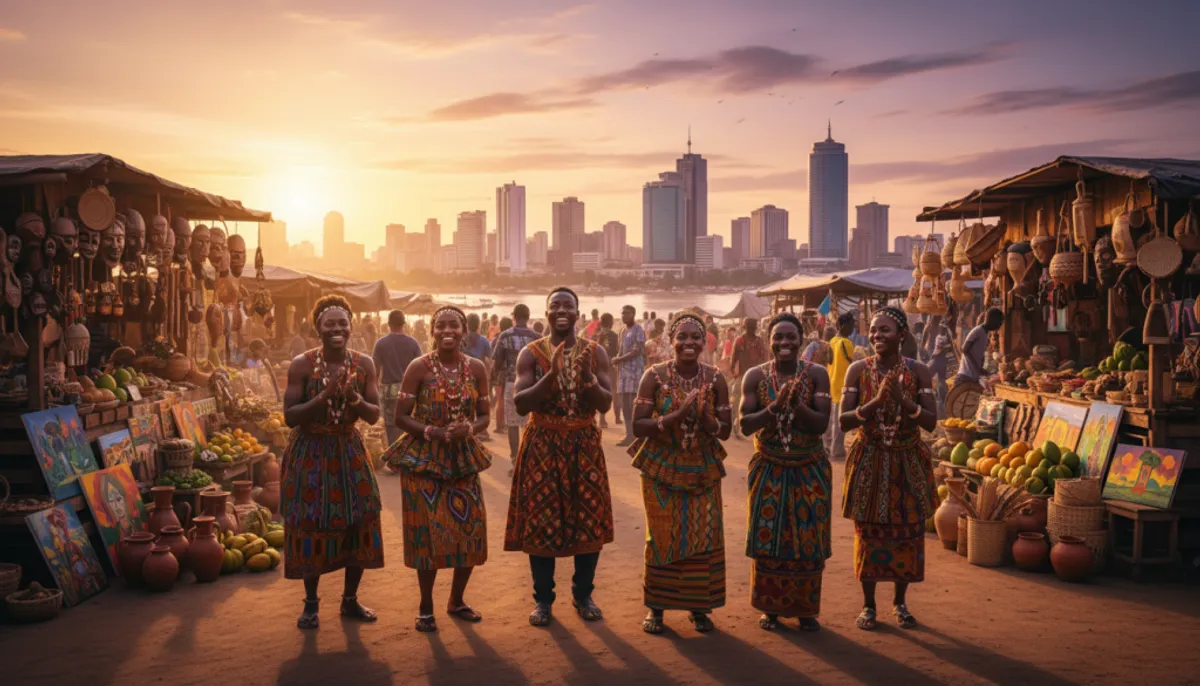
Historical influences, including colonial periods, have shaped a unique identity. Yet, the authenticity of deep roots remains vibrant and well-present.
With over 26 million inhabitants spread across various regions, they contribute daily to this dynamic. Prepare for a captivating journey through four major cultural areas.
They give rise to a wealth of artistic, musical, and social expressions. This culture fascinates visitors and is a fundamental element of identity.
Key Points to Remember
- Cameroon is considered a “miniature Africa” due to its incredible cultural diversity.
- Its heritage is a harmonious blend of ancestral traditions and modern expressions.
- History, including colonial influences, has contributed to shaping its current identity.
- The territory is structured around four distinct major cultural areas.
- This wealth is a central element of identity for its millions of inhabitants.
- It continues to evolve while preserving its deep and authentic roots.
Introduction to the Cultural Universe of Cameroon
Imagine a territory where nearly 200 communities share the same living space. This reality defines the country and its extraordinary human mosaic.
Each group has its own language and customs. This diversity forms the foundation of a vast collective heritage.
General Overview and Historical Context
Powerful pre-colonial kingdoms have left their mark. Subsequently, the French and British periods brought new influences.
This unique history has created an official bilingualism, French and English. It is a distinctive feature in Central Africa.
Importance of Artistic and Social Heritage
Architecture, local cuisine, and festivals tell this story. Craftsmanship reflects a know-how passed down through generations.
Oral traditions, such as tales, serve as a living memory. They convey ancestral values that still structure social life.
This artistic ensemble is one of the richest on the continent. It honors the past while engaging with the present.
Exploring "Cameroonian Culture" in Daily Life
In Cameroon, cultural heritage is lived out daily, in simple exchanges and shared habits.
Ancestral practices still structure family and community relationships. Respect for elders and collective solidarity are fundamental pillars. These living traditions create a unique social fabric.
From ritualized greetings to culinary practices, every gesture has meaning. These customs vary significantly from one ethnic group and region to another. Local cuisine, for example, narrates this diversity at every meal.
Values are passed down through tales, songs, and proverbs. They deeply influence the behaviors of modern Cameroonians. This popular wisdom guides life choices in the present.
Dress art expresses identity pride, even in urban settings. Traditional outfits adapt to special occasions and daily life.
Legendary hospitality transforms every encounter into an enriching moment of sharing for the traveler. These conviviality rituals are at the heart of the experience.
This immersion in daily life allows for a better understanding of the more spectacular manifestations to come.
The Cultural Areas and Their Specificities
The human geography of Cameroon is understood through four distinct major ensembles. Each region possesses unique traits shaped by history and environment.
Fang-Béti Zone and Sawa Zone
In the south and center, the Fang-Béti peoples live in the tropical forest. Their social organization is based on more than twenty clans, each led by a traditional chief.
Along the Littoral, the Sawa, or “water peoples”, share a spiritual connection with the Wouri River and the ocean. Their historical heritage is founded on common ancestral values.
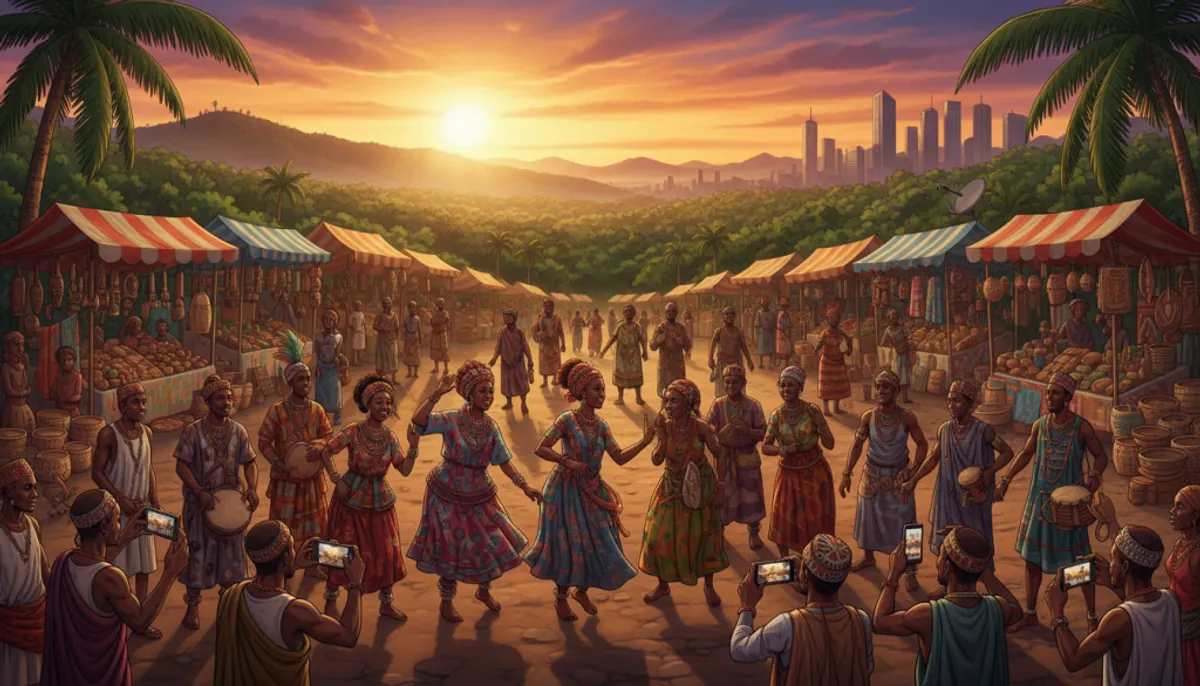
Grassfields Zone and Soudano-Sahelian Zone
In the west and north-west, the Grassfields are home to the Bamiléké and Bamenda. This mountainous region is famous for its prestigious chiefdoms and refined art objects.
The museums of Foumban, Bafoussam, and Bandjoun attest to this. In the north, the Soudano-Sahelian zone is organized into powerful lamidats and sultanates. These traditional structures coexist with modern administration.
| Cultural Zone | Main Region | Main Characteristic | Notable Example |
|---|---|---|---|
| Fang-Béti | South, Center | Forest clans led by a chief | More than 20 clan groups |
| Sawa | Littoral | Water peoples, connection with the Wouri | Common maritime heritage |
| Grassfields | West, North-West | Chiefdoms and refined art | Museums of Foumban, Bafoussam |
| Soudano-Sahelian | North, Adamaoua | Powerful lamidats and sultanates | Traditional hierarchical structures |
This mapping of the peoples helps to better situate festivals and artistic expressions. It illustrates why the country is often called “Africa in miniature”.
Ethnic, Linguistic, and Religious Diversity
The richness of Cameroon lies in the incredible diversity of its peoples, languages, and beliefs. This mosaic forms a unique laboratory of coexistence.
The Multiple Ethnicities and Indigenous Languages
More than 250 distinct ethnic groups live in the territory. They speak over 280 indigenous languages.
The official bilingual system coexists with French and English. About 70% of the population uses French, and 30% English.
In markets, pidgin serves as a lingua franca. This creative blend facilitates exchanges among all peoples.
| Category | Details | Distribution |
|---|---|---|
| Official Languages | French and English | French (70%), English (30%) |
| Indigenous Languages | More than 280 languages | Spoken by 250+ ethnic groups |
| Main Religions | Christianity, Islam, Animism | Christians (~70%), Muslims (~21%) |
Coexistence of Religions and Ancestral Values
The country is a secular state. The main religions are Christianity, Islam, and animism.
About 70% are Christians, 20.9% are Muslims. There are also 5.6% animists and 3.2% free thinkers.
This plurality of religions coexists peacefully. It forges a tolerant and mixed people.
The diversity of spiritual beliefs enriches our cultures and strengthens our unity.
Ancestral values engage with modern frameworks. This harmony is a fundamental pillar of identity.
Music and Dance: Expressions of a Vibrant Identity
Rhythm and movement are the universal languages that define the Cameroonian soul. This music is lively and energetic, transcending all borders.
It constitutes a fundamental expression of identity for all. The accompanying dance steps communicate emotions and stories.
Traditional Rhythms (Makossa, Bikutsi, Assiko…)
Several iconic music genres have gained international fame. The Makossa is catchy, the Bikutsi is percussive, and the Assiko is melancholic.
The Bend skin, Menang, and Mangambeu complete this rich palette. The new genre Bolé particularly appeals to the youth.
| Music Genre | Character | Main Audience |
|---|---|---|
| Makossa | Catchy, danceable | All ages |
| Bikutsi | Percussive, rhythmic | Forest regions |
| Assiko | Melancholic, lyrical | Older generations |
| Bolé | Modern, fusion | Urban youth |
The Evolution of Dances and Contemporary Influences
The music is constantly evolving. Artists are merging ancestral rhythms with international sounds.
Traditional dances sometimes incorporate sacred masks or representations of warriors. They tell the founding myths of each people.
These arts are elevated during weddings and traditional festivals. They form the beating heart of a culture in perpetual renewal.Our culture reinvents itself in movement, but its heart beats to the rhythm of our traditions.
Art, Craftsmanship, and the Theatrical Scene
Beyond music, Cameroon expresses its creative genius through tangible artistic forms. Sculptures, paintings, and handcrafted objects tell deep stories.
Sculpture, Painting, and Traditional Craftsmanship
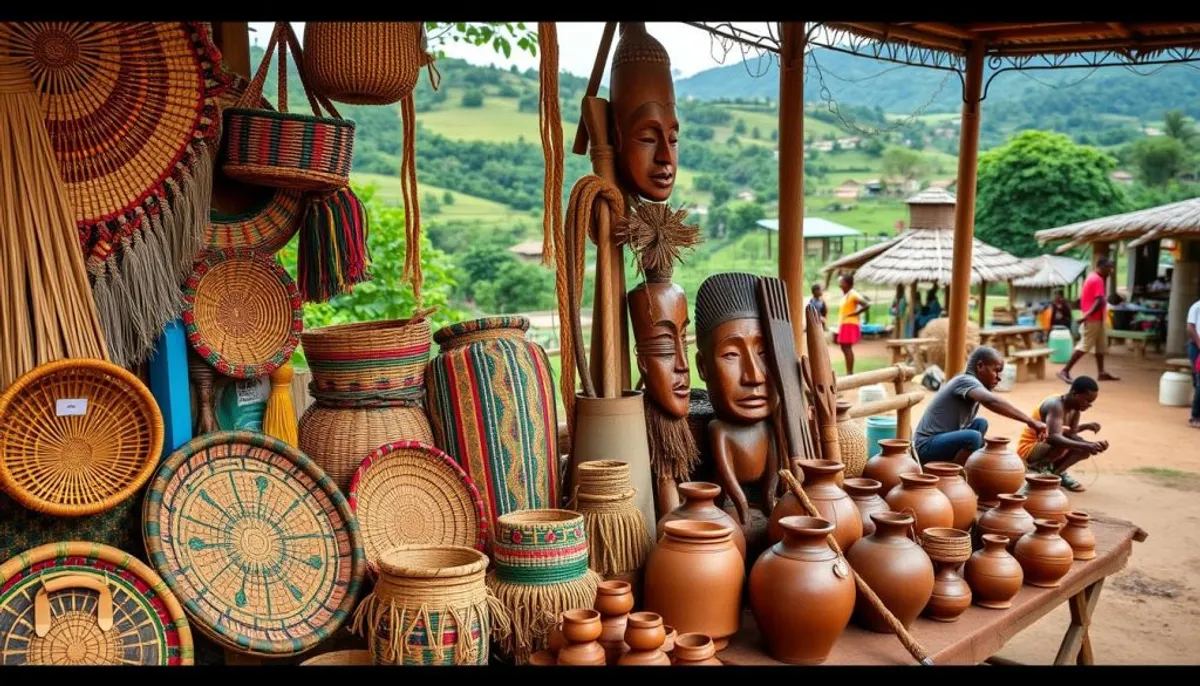
Wood sculpture is a renowned art form. The works of the Grassfield peoples are particularly fine and refined.
A master artisan transmits this ancestral know-how. Local clay pottery and brightly colored paintings complete this panorama.
Theater and Cultural Performances
A vibrant theatrical scene animates the major cities. Troops blend popular traditions with modern questioning.
Museums and cultural centers showcase these treasures. They celebrate an artistic culture in perpetual evolution.
This creativity forges a living heritage. It honors the past while engaging with the present.
Festivals and Celebrations: Rituals and Modernity
These festive events, including various festivals and celebrations, are essential pillars for the transmission of ancestral knowledge. They provide a unique opportunity for gathering for each people.
Traditional Festivals (Ngondo, Elog Mpoo, Nyem Nyem, Lebouo)
Each festival has its own rhythm and profound significance. The Ngondo brings together the Sawa people every December near the Wouri River.
It honors ancestors through dances and songs. The Elog Mpoo celebrates fertility in Édéa once a year.
The Nyem Nyem showcases the courage of Fulfuldé hunters. It takes place every two years in the Adamaoua region.
The Lebouo transforms Yaoundé into a living gallery. It highlights the craftsmanship of the Bassa people annually.
| Festival | People | Frequency | Main Theme |
|---|---|---|---|
| Ngondo | Sawa | Annual (December) | Ancestors and protection |
| Elog Mpoo | Douala | Annual | Fertility |
| Nyem Nyem | Fulfuldé | Every two years | Hunting |
| Lebouo | Bassa | Annual | Culture and craftsmanship |
Other festivals like the Nguon in Foumban enrich this heritage. These celebrations often connect the cycles of nature to historical traditions.
They attract visitors from all regions. It is a perfect opportunity to discover this living wealth.
Iconic Figures and Cultural Leaders
The cultural history of a country is also written through the journeys of its leaders. These personalities preserve legacies and inspire new generations.
Their commitment shapes the identity and radiance of Cameroonian culture.
Portraits of Influential Chiefs and Artists
Traditional chiefs keep ancestral customs alive. Their moral authority stabilizes communities.
Meanwhile, contemporary artists innovate and export their art. They blend roots with modern forms.
These figures ensure an essential link between the past and the future.
Notable Example: The Journey of Bidoung Mkpatt
Dr. Bidoung Mkpatt Ismael embodies this excellence. Born on November 16, 1953, in Nanga Eboko, in the center region, he holds a Doctorate in Arts.
From 1974 to 1996, he wrote nine plays performed in the cities of the country and abroad. His play “Monsieur le Préfet” won an international award in 1976.
| Year | Event | Achievement |
|---|---|---|
| 1953 | Birth | November 16 in Nanga Eboko (center) |
| 1976 | Literary Award | “Monsieur le Préfet” awarded at the Inter-African Theatrical Competition |
| 1996 | End of a Creative Period | 9 plays written and performed in several cities |
| 2023 | Global Recognition | Inclusion of NGUON in the intangible heritage of UNESCO |
| 2024 | Official Ceremony | Presentation of the UNESCO convention on November 27 |
His role as a leader has been confirmed through key positions. He is currently the Minister of Arts and Culture.
His efforts have been crucial for the recognition of NGUON by UNESCO. This shows how a leader can enhance a collective heritage.
Conclusion
To grasp the essence of this country, one must taste its cuisine, listen to its music, and meet its peoples. Our exploration reveals an exceptional heritage, the result of a harmonious interaction between traditions and modernity.
Writings never surpass real experience. Plan your trip to discover the four cultural areas spread across the different regions. Each offers unique moments.
The local cuisine is a delight. Savor the ndolè, mbongo soup, or gombo sauce couscous. These dishes narrate the diversity of the peoples and terroirs.
The social organization, festivals, and craftsmanship intertwine. They form a coherent whole that defines the identity of this welcoming people.
Every trip contributes to preserving this heritage. Become an actor by discovering and sharing it with respect. Once on site, you will experience a vibrant culture.
This harmonious diversity is an inspiring model. It deserves to be celebrated and passed on. Enjoy your journey to the heart of Africa in miniature!
FAQ
What are the main cultural regions to discover in Cameroon?
The country is often divided into several major areas. There is the Fang-Béti zone in the center, the Sawa region on the coast, the Grassfields in the west, and the Soudano-Sahelian zone in the north. Each has its own traditions, languages, and forms of craftsmanship.
How does linguistic diversity manifest in daily life?
With over 250 local languages, this richness is omnipresent. French and English are the official languages, but in markets, families, and festivals, you will hear a multitude of indigenous languages, reflecting a living heritage.
What major traditional festivals can one experience?
Several celebrations are must-sees. The Ngondo of the Sawa people, the Elog Mpoo of the Bassa, or the Lebouo in the west are unique opportunities to immerse oneself in the rituals, music, and ancestral dances of these peoples.
Is Cameroonian music limited to Makossa?
Not at all! While Makossa is famous, Bikutsi from the center and Assiko from the west are equally fundamental. These traditional rhythms also nourish the contemporary scene, creating a vibrant and constantly evolving sound identity.
What role do traditional chiefs play in society today?
Chiefs, or traditional authorities, remain essential guardians of customs. They preside over ceremonies, resolve conflicts, and ensure the transmission of values and social organization within their communities.
Can we talk about a national cuisine, or are there regional specialties?
Gastronomy varies greatly from region to region. Ndolé is a very popular dish, but you will discover distinct specialties depending on whether you are in the south, north, or west of the country, each cuisine reflecting local products and historical influences.