
At the heart of West Sumatra, a unique society captivates travelers. The Minangkabau form the largest matrilineal community in the world. About four million people perpetuate this fascinating heritage.
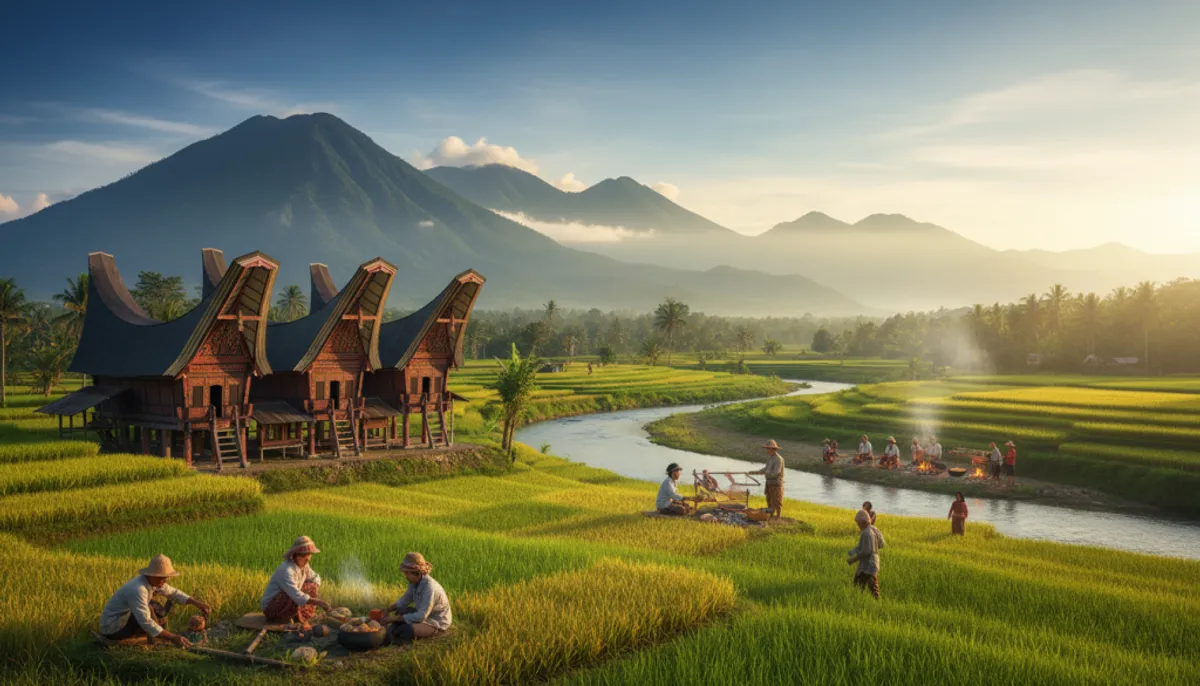
This Muslim community has preserved its ancestral traditions with remarkable strength. It resists external influences while living in the largest Muslim archipelago. The Indonesian island offers a spectacular natural setting for this land of traditions.
The mountainous region around Bukittinggi reveals majestic volcanoes and lush rice fields. The lush nature accompanies every aspect of their daily existence. The victorious buffalo, an emblematic symbol, still profoundly influences their social organization.
Key Points to Remember
- Most significant matrilineal society on the planet
- Located in the west of the island of Sumatra in Indonesia
- Exceptional preservation of ancestral traditions
- Harmony between Islam and pre-existing customs
- Spectacular natural setting with volcanoes and rice fields
- Women at the center of heritage transmission
- Resilience in the face of modern pressures
Origins and History of Minangkabau Culture
The deep roots of this community reveal an exceptional historical journey. This region of West Sumatra has experienced several centuries of fascinating transformations.
Ancestral and Religious Influences
The origin of this society dates back to ancient animist traditions, which are deeply intertwined with balinese beliefs. Subsequently, the arrival of Buddhism and then Hinduism marked this island. In the 13th century, Muslim traders introduced Islam throughout the archipelago.
Unlike other countries, matrilineal customs have survived through these religious changes. This unique adaptation shows remarkable resilience in the face of external influences.
Historical Evolution and Founding Legends
The legend of the “victorious buffalo” gives its name to this community. According to traditional accounts, four founding clans originated from the slopes of Mount Merapi.
This tradition has integrated respect for the original mother with Islamic practices. Each era has contributed to the current cultural edifice, creating a rare syncretism in the world.
Symbols and Ancestral Traditions
The tangible symbols of this community manifest through its unique habitat and rites of passage. These visual elements tell a rich story spanning several generations.
Architecture and ceremonies form a living symbolic language. Every detail reveals deeply rooted values in this society.
Traditional Houses and Their Horn-Shaped Roofs
The traditional houses, called rumah gadang, feature an instantly recognizable silhouette. Their pointed roofs evoke the horns of the buffalo, an emblematic animal.
| Number of Horns | Family Status | Characteristics |
|---|---|---|
| Two Horns | Modest Families | Basic structure, simple ornaments |
| Four Horns | Middle Class | Larger space, elaborate decorations |
| Six Horns or More | Wealthy Notables | Complex architecture, rich symbols |
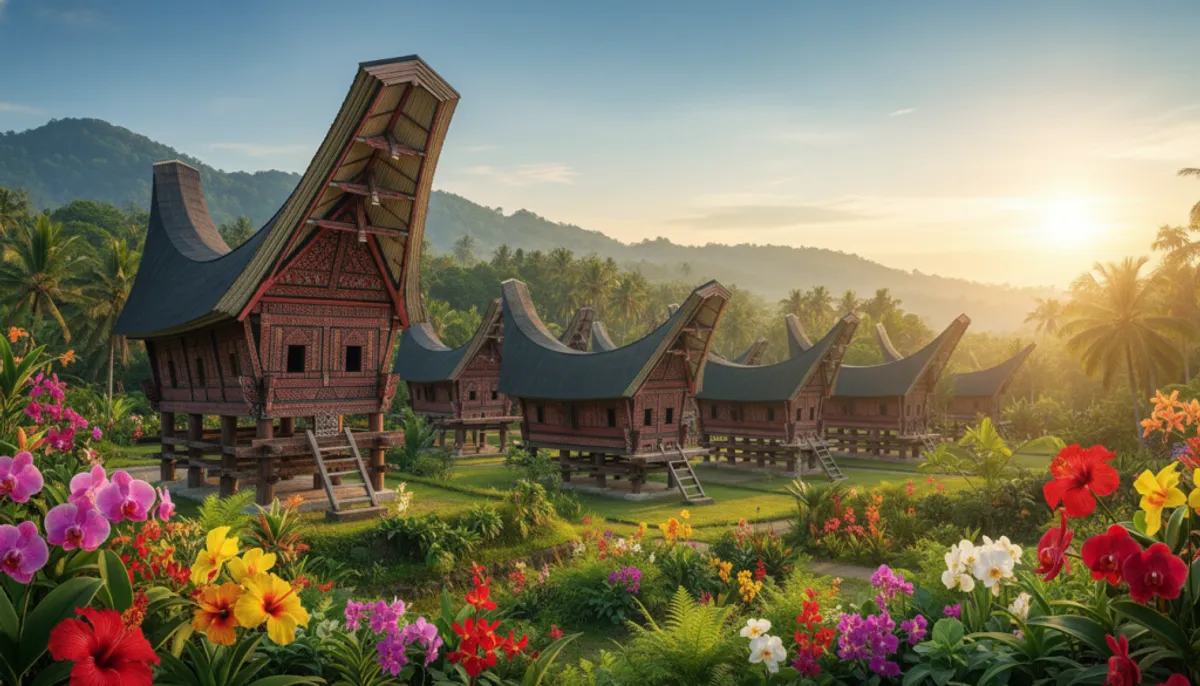
These houses use slanted pillars to withstand earthquakes. Some dwellings have existed for several centuries.
The fern often decorates these roofs, symbolizing simplicity and natural connection. Each architectural element carries a precise meaning.
Rituals: From Merentau to Wedding Ceremonies
The merentau represents an important rite of passage for young boys. Around six or seven years old, they leave the family home.
They then live in the village mosque until marriage. This practice explains the significant diaspora throughout Indonesia.
Wedding ceremonies last several days. They bring together the entire matrilineal clan in colorful festivities.
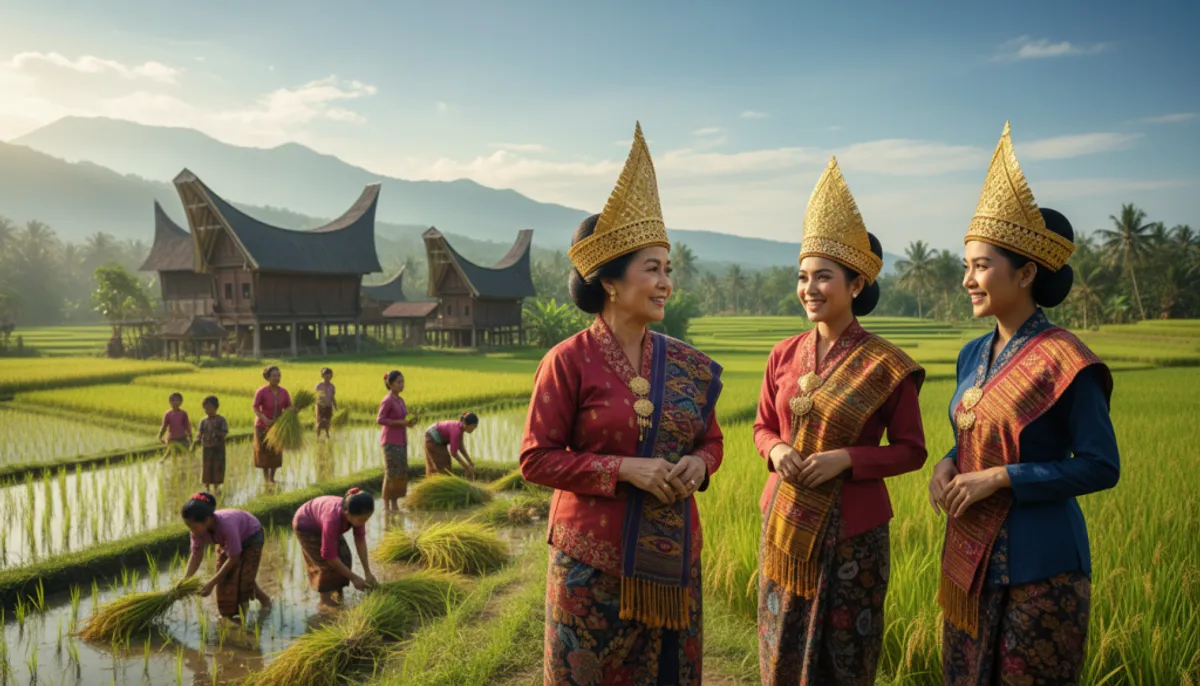
The women perform the rice transplanting in the rice fields. The climate allows for three annual harvests of this essential grain.
The Matriarchal Society and the Role of Women
The Minangkabau matrilineal system places women at the center of family heritage. This unique social organization disrupts the dominant patriarchal patterns in the world.
Matrilineal Transmission and Female Power
Heritage is transmitted exclusively from mother to daughter. Women receive the family name, the house, and the land.
Men are considered “guests” in their wife's home. Buyung testifies: “I live well because my wife supports me; she is the one who earns our living.”
| Type of Asset | Heir | Men's Rights |
|---|---|---|
| Family House | Eldest Daughter | Right of use only |
| Rice Fields | All Daughters | No ownership rights |
| Movable Assets | Wife | Joint management |
Contemporary Challenges and Family Changes
Wil, 47, heir to a large house, shares her monthly anxiety about bills. “It’s hard, but we are not allowed to sell our heritage.”
The complexity increases with large families. Young couples are now building their own houses on the family land.
This evolution shows an adaptation to modern economic realities. Traditional lifestyles are gradually transforming.
Impact of Islam and Cultural Influences in Daily Life
In the bustling streets of Bukittinggi, a unique balance emerges between Islamic faith and ancestral heritage. This region of West Sumatra exhibits remarkable syncretism.
Religious Syncretism and Local Customs
The sacred formula “Adat Basandi Syarak, Syarak Basandi Kitabullah” guides this society. It means that tradition rests on Islam, and Islam on the Quran.
The arrival of Islam in the 13th century did not erase matrilineal customs. Muslim traders integrated their practices without imposing a break.
Wedding ceremonies perfectly illustrate this fusion. They last several days with colorful traditional festivities.
The religious ceremony includes significant protection for women. The husband signs an oath accepting divorce if his wife requests it.
Integration of Traditions into Modernity
Young generations navigate between tradition and modernity. Gemi testifies: “I feel much more concerned about Islam than about matrilineal tradition.”
Men exert moral control over the “purity” of women. This paradox persists in a society where they hold economic power.
Rural exodus and education are gradually transforming this balance. Modern life influences ancestral practices throughout the archipelago.
Conclusion
The Minangkabau people demonstrate a remarkable ability to evolve while preserving their essence and their sundanese cultural patrimony. This community has traversed centuries, maintaining its unique identity in the face of multiple transformations.Their matrilineal heritage represents a valuable alternative social model for our time, including the growing field of online malaysian art. Young generations skillfully navigate between respecting traditions and adapting to contemporary realities.We invite you to discover this exceptional land where volcanic landscapes and lush rice fields create an authentically preserved living environment. Each visit offers an immersion into a delicate balance between past and present.
The future of this community remains dynamic, between identity conservation and necessary mutations. This cultural resilience continues to inspire with its ability to renew itself without renouncing its roots.
FAQ
Where do the Minangkabau live and why do their houses have such unique roofs?
This people primarily lives in the West Sumatra region, on the island of Sumatra in Indonesia. Their traditional house, called *Rumah Gadang*, is famous for its pointed roofs that evoke the horns of the buffalo. This shape symbolizes strength and is linked to an ancient founding legend.
How does the Minangkabau matriarchal society function daily?
It is one of the largest matrilineal societies in the world. Family and assets, such as rice fields and the house, are passed down from mother to daughter. Women hold central authority within the village, while men often play an important role in religious and political life.
What is the role of merentau in men's lives?
The *merentau* is a tradition where young men leave their village to travel, acquire money, knowledge, and experience. This quest, which can last for years, is seen as a necessary rite of passage before marrying and returning to contribute to their community.
Has the arrival of Islam changed their customs?
How does a traditional wedding take place today?
The wedding is a central event. The girl's family organizes a large celebration. The husband is traditionally “welcomed” into his wife's lineage. Although tradition persists, practices evolve with modernity, especially in urban areas.