
Welcome to a captivating exploration of the Javanese universe. This rich tradition harmoniously blends spirituality and artistic expressions for centuries.
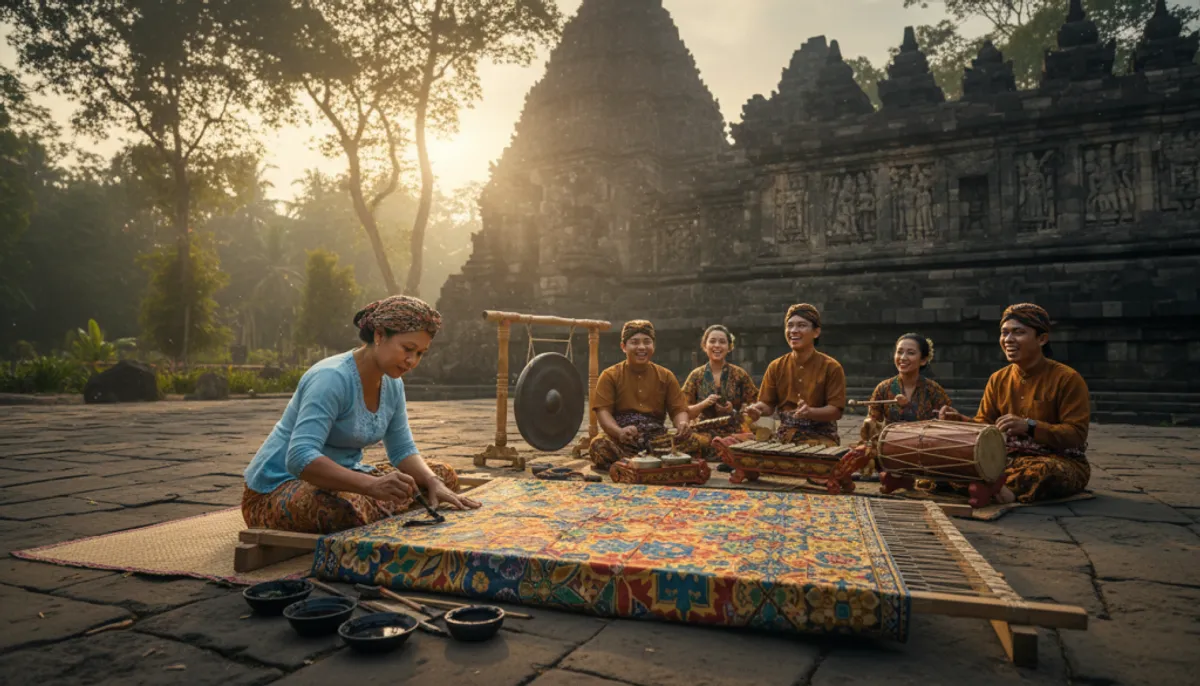
On this Indonesian island, nearly 90 million people perpetuate a unique heritage. Their worldview profoundly influences the entire region.
Four fundamental pillars define this remarkable identity. The batik reveals an ancestral textile dyeing technique. The gamelan enchants with its mesmerizing metallic sounds.
The keris, a ceremonial weapon, carries deep spiritual symbolism. The wayang, shadow theater, tells millennia-old epics.
These elements constitute a heritage recognized internationally. They represent the very essence of a philosophy based on harmony.
This article guides you through the various dimensions of this living tradition. Discover how it evolves while preserving its essential values.
Key Points to Remember
- Four fundamental pillars define Javanese identity
- Batik represents a unique ancestral textile art
- The gamelan offers a mesmerizing musical experience
- The keris possesses rich spiritual symbolism
- The wayang perpetuates the transmission of epics
- This tradition influences the entire Indonesian region
- A living heritage that adapts to modern challenges
The History and Evolution of Javanese Culture
Let us discover how centuries have shaped the unique heritage of this Indonesian region. This rich history spans over fifteen centuries, marked by successive influences.
Indian, Islamic, and Indigenous Influences
As early as the 5th century, a significant period of Indianization transforms the region. Hinduism and Buddhism bring writing and new spiritual traditions.
In the 14th century, gradual Islamization begins in coastal cities. This new influence harmoniously integrates with local practices.
From the Sultanate of Banten to Modern Times
The Sultanate of Banten perfectly illustrates this historical evolution. The inhabitants maintain their traditions while adopting Islamic elements.
The arrival of Europeans in the 16th century adds a new layer of influences. The strategic position of Java in the archipelago makes it a cultural crossroads.
Over time, this capacity for integration creates a fascinating syncretic blend. Different elements, including kikuyu culture, coexist harmoniously in contemporary culture.Understanding Javanese Culture: Key Elements
Let us dive into the core principles that structure contemporary Javanese thought. These fundamental values guide the daily lives of millions of people and shape their social relationships.
Foundations and Traditional Values
The central philosophy is based on urip sejati, or "true life." This quest for harmony balances relationships between people, humanity and the universe, as well as humans and the divine.
Essential elements include respect for etiquette, self-control, and refined politeness. Each individual is part of a larger whole, where consensus prevails over conflict.
From childhood, these values are learned through family education and observing elders. A concrete example is gotong royong, a community mutual aid system.
Discretion and humility are also valued. Excessive expression of feelings is perceived as disturbing social balance.
These principles are not mere abstract concepts. They concretely influence daily decisions, from social interactions to family choices.
Traditional Arts: Batik, Gamelan, Keris, and Wayang
Four major disciplines embody the creative richness of this millennia-old tradition. Each art has its own history and profound meaning.
These artistic expressions transmit ancestral values through unique forms of material culture. They represent the collective soul of a people.
Batik: Textile Art and Identity Symbol
The term "batik" finds its origin in local vocabulary. This dyeing technique transcends mere craftsmanship.
Complex patterns tell stories and indicate social status. The centers of Surakarta and Yogyakarta preserve ancestral methods.
Each step, from drawing to waxing to dyeing, requires great patience. The final result spiritually protects the wearer.
The Gamelan and the Role of the Gong in Ceremony
The gamelan forms a unique orchestral ensemble of metallophones and gongs. Its sounds accompany every important ceremony, including performances of traditional malaysian music.
The gong, a central element, has a rich history dating back to the Dong Son culture in Vietnam. According to beliefs, this instrument has its own soul.
The gamelan is not just music; it is a living being whose every element breathes with the universe.
Traditionally, offerings are made to the gong every Thursday evening. This respect reflects its sacred dimension.
| Traditional Art | Main Function | Spiritual Element | Important Centers |
|---|---|---|---|
| Batik | Textile Expression | Symbolic Protection | Surakarta, Yogyakarta |
| Gamelan | Ceremonial Music | Soul of the Gong | Throughout Java |
| Keris | Ritual Object | Magical Powers | Majapahit Region |
| Wayang | Shadow Theater | Epic Transmission | Village Communities |
The physical body of each artistic object hides a profound spiritual dimension. These arts form a coherent whole that defines regional identity.
Shadow Theater and Its Variants
The wayang represents a unique millennia-old artistic tradition. This art dates back to the 10th century, as evidenced by an inscription discovered in Bali.
The origin of the word wayang shares its root with "hyang" (deity) and "moyang" (ancestor). This etymology reveals its sacred dimension initially linked to evocation rituals.
Wayang Kulit, Wayang Golek, and Wayang Klitik
Wayang kulit is the most widespread form of this theater. It uses flat puppets made from meticulously cut buffalo leather.
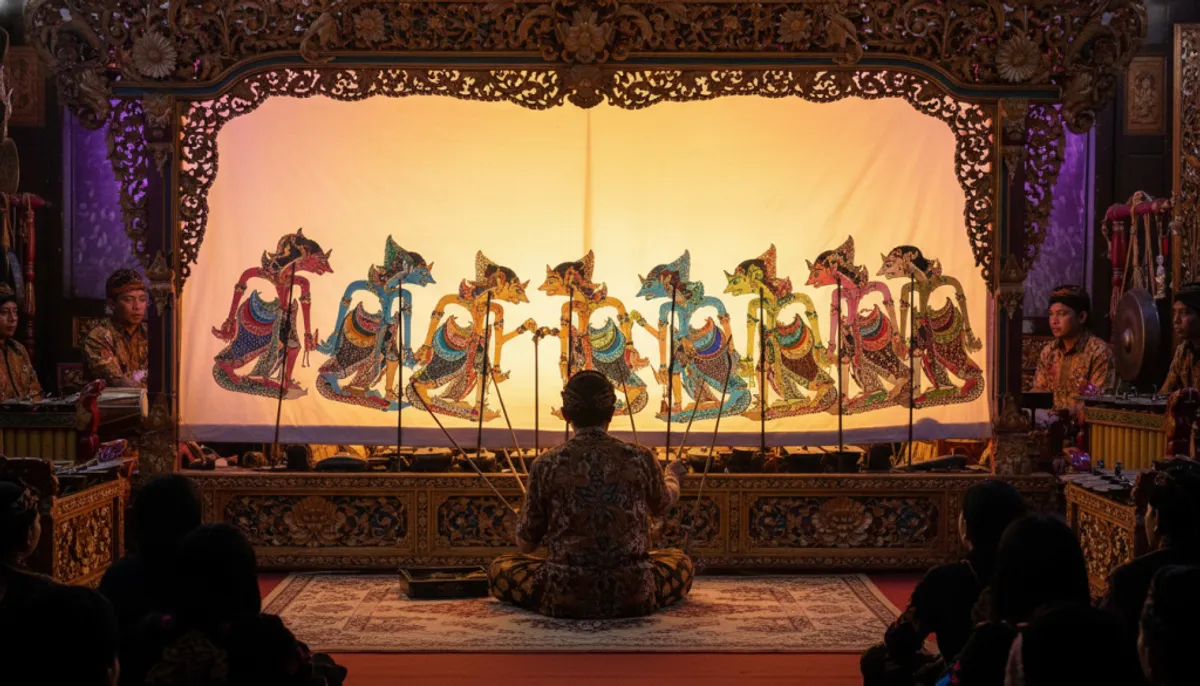
Wayang golek is distinguished by its three-dimensional carved wooden puppets. Particularly popular in the Sundanese region, this form offers a different approach.
Wayang klitik employs flat wooden puppets. It generally tells stories from the Majapahit kingdom rather than Indian epics.
From this tradition, a danced form called wayang wong has developed. Human actors embody the characters with elaborate costumes.
Each time a performance is presented, it fulfills a specific ritual function. Weddings, circumcisions, or purification ceremonies utilize this sacred theater.
This article invites you to discover how these different artistic expressions perpetuate a living tradition, including insights into somali cultural history. They harmoniously merge spirituality and popular entertainment.
Music and Dance: Expressions of the Javanese Soul
The enchanting melodies and graceful gestures reveal the very essence of this tradition. These living arts capture the harmony between body and spirit.
Mesmerizing Rhythms to Spiritual Melodies
The gamelan structures the time of performances into three distinct phases. Each period creates a unique emotional atmosphere.
The musical ensemble guides the audience's emotions throughout the night. From calm exposition to dramatic conflict, then to harmonious resolution.
Classical dance reaches its peak in royal courts. Slow and symbolic movements express refined beauty.
Each hand gesture carries a precise meaning. This discipline requires years of meticulous practice.
Music does not merely mark time; it sculpts emotion and guides the soul through the night.
The tembang represents the most delicate vocal art. These sung poems celebrate landscapes and memories with pure emotion.
Another form of popular dance honors agricultural cycles. Celebrations for the goddess of rice unite community and nature.
The tayub creates a joyful interaction between artists and the audience. This dance invites everyone to participate in the celebration.
| Type of Dance | Context | Characteristics | Social Function |
|---|---|---|---|
| Classical | Royal Court | Symbolic Slow Movements | Aristocratic Representation |
| Agricultural | Village | Seasonal Rhythms | Harvest Celebration |
| Tayub | Popular Festival | Collective Interaction | Community Strengthening |
Each mode of musical and choreographic expression seeks the perfect balance. This quest for beauty reflects profound philosophical values.
The dance thus connects noble traditions and village practices. It unites people through shared emotions.
Traditional Rituals and Ceremonies
Every important stage of life finds its recognition through ancestral ceremonial practices. These moments rhythm human existence from birth to the last breath.
The structuring framework offered by these celebrations brings profound emotional security. Communities gather to honor fundamental transitions together.
The Slametan and Rites of Passage
The slametan is at the heart of many important ceremonies. This communal meal aims to ensure peace and prosperity for all participants.
From the first month, a child experiences their first ritual. The symbolic cutting of a lock of hair marks the beginning of a long journey.
The tedhak siti represents a crucial stage where the child touches the ground for the first time. This "descent to earth" symbolizes their entry into the community.
The transformation into adulthood is accompanied by elaborate ceremonies. Circumcision for boys and first menstruation for girls mobilize many people.
The marriage represents perhaps the most ritualized moment of an entire life. Several days of complex celebrations honor this sacred union.
| Rite of Passage | Age/Moment | Meaning | Associated Celebration |
|---|---|---|---|
| Hair Cutting | 1 Month | First Purification | Family Slametan |
| Tedhak Siti | 7-8 Months | Entry into the Community | Earth Ceremony |
| Circumcision/First Menstruation | Adolescence | Transition to Adulthood | Grand Slametan |
| Marriage | Adulthood | Sacred Union | Several Days of Celebration |
| Mitoni | 7th Month of Pregnancy | Preparation for Motherhood | Community Blessings |
Pregnancy itself receives special attention. The seventh month triggers the mitoni, a blessing ceremony for the expectant mother.
A typical example of an annual ritual can be the bersih desa or "village cleaning." This purification honors the tutelary spirit and the goddess of rice.
The worship of Sri recalls the founding myth where her sacrificed body gave birth to rice. This agricultural tradition unites people with the nourishing land.
Spirituality and Kejawen
Beyond visible arts, a profound spiritual dimension animates the people of this Indonesian island. The kejawen represents the very essence of the traditional values that guide their existence, including oromo traditions.
The Quest for Harmony and the Concept of Mamayu-Ayu Ning Buwono
This philosophy seeks harmony at three fundamental levels. It unites people with each other, humanity with the universe, and beings with the divine.
The concept of mamayu-ayu ning buwono expresses this worldview. Each individual contributes to preserving cosmic balance for collective well-being.
Mystical Practices and Ritual Offerings
Practices include meditation, fasting, and spiritual retreats. They aim for mastery of the body and the search for inner balance.
The sesajen offerings honor the spirits of sacred places. This tradition maintains harmony between the visible and invisible dimensions.
| Spiritual Practice | Main Objective | Key Element | Frequency |
|---|---|---|---|
| Meditation (tapa) | Self-Mastery | Body Control | Daily |
| Sesajen Offerings | Harmony with Spirits | Flowers and Food | Weekly |
| Cult of Pusaka | Respect for Sacred Objects | Recognition of the Soul | Special Rituals |
| Thursday Kliwon Night | Ancestral Communication | Presence of Spirits | Specific Calendar |
These spiritual values coexist with formal religions. They demonstrate the characteristic flexibility of Javanese thought.
The Impact of Trade on Cultural Identity
Maritime routes have profoundly transformed the identity of this Indonesian island region. As early as the 8th century, historical sources reveal an exceptional trade network.
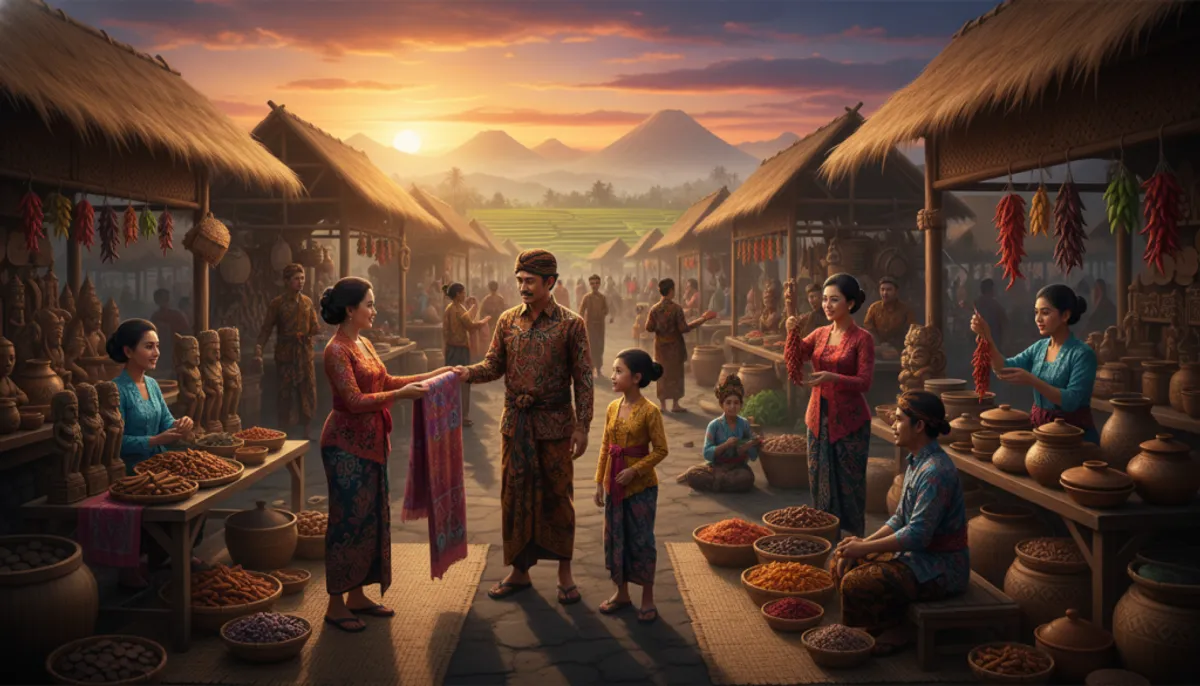
This period sees Java become a cosmopolitan crossroads. Indian, Arab, and Chinese merchants converge there regularly.
Maritime Routes and Indianization
The strategic position of the archipelago makes it a mandatory passage. The Indonesian straits connect the Indian Ocean to the South China Sea.
The trade of camphor from Barus attracts sailors. In exchange, the inhabitants receive valuable manufactured goods.
These exchanges are not limited to goods. Religious and technical ideas also travel on ships.
Indianization in the 5th-6th centuries results from these repeated contacts. The local population gradually adopts Hindu and Buddhist elements.
This openness explains the unique syncretic character. The island has managed to integrate diverse influences through time.
Javanese Literature and Poetry
The literary works of Java reveal a fascinating written tradition that dates back over a thousand years. This exceptional richness combines adaptations of great epics and original creations.
The Javanese Versions of the Ramayana and Mahābhārata
As early as the 9th century, local versions of the Ramayana appear. The Mahābhārata has a public reading in 996 at the court of King Dharmawangsa.
These texts are not mere translations. They are deeply adapted to the local context with unique interpretations.
Wayang performances often use the Mahābhārata as a source of inspiration. The characters are reinterpreted through the local prism.
Literature has also produced its own narrative cycles. The Panji cycle, for example, tells the adventures of a prince from Majapahit.
The kidung, epic songs from the 16th century, are sung in tembang. The Serat Centhini represents another masterful example of this tradition.
This encyclopedic work preserves traditional knowledge. It testifies once again to creative vitality.
Heritage and the Role of Tradition in Daily Life
Contrary to what one might imagine, Javanese cultural heritage is not confined to museums but breathes in every ordinary gesture. This living heritage structures the lives of the inhabitants well beyond royal palaces.
The courts of Surakarta and Yogyakarta remain precious guardians of this tradition. They train artists and artisans according to ancestral methods. Yet, the true essence of this heritage is also found in the villages.
The bersih desa, an annual purification ceremony, honors Sri, the goddess of rice. This village practice unites community and nature, reflecting the essence of xhosa traditions. The Javanese way of life remains imbued with fundamental values.
Pencak silat, a traditional martial art, transmits much more than combat techniques. Masters teach the mystical secrets of kejawen. They thus preserve a complete spiritual heritage.
Family objects like ancient keris possess a recognized soul. They require respect and regular offerings. Each marriage or birth activates these community traditions.
This constant presence in daily life can be observed everywhere. From offering markets to batik workshops, the heritage is an integral part of national identity. It remarkably adapts to contemporary realities.
The Contemporary Influence of Javanese Culture Worldwide
The contemporary reach of this tradition far exceeds its geographical cradle of origin. Its influence now extends internationally due to its exceptional richness.
Nearly 90 million people perpetuate this unique heritage. Their diaspora extends to Malaysia, Singapore, and other countries in Southeast Asia.
From Java to International Artistic Practices
The batik has become a recognized Indonesian textile symbol worldwide. This ancestral technique now inspires international creators.
The gamelan has fascinated Western musicians since the 19th century. Composers like Claude Debussy have drawn inspiration from it for their works.
Through migrations, elements of this Javanese culture are spreading internationally. Universities offer courses in gamelan and dance.
| Cultural Element | International Influence | UNESCO Recognition |
|---|---|---|
| Batik | Global Textile Symbol | 2009 |
| Wayang Kulit | Inspiration for Contemporary Theater | 2003 |
| Gamelan | Global University Teaching | – |
| Classical Dance | Presence in International Festivals | – |
Contemporary artists are part of the international artistic scene. They showcase their works in prestigious biennials.
This dynamic population continues to enrich the global heritage. Its influence transcends borders with remarkable vitality.
Conclusion
This exploration reveals a cultural system of exceptional richness. The fundamental values and artistic elements intertwine harmoniously.
The heritage of Java goes beyond mere traditions. It forms a unique worldview based on harmony and respect.
This millennia-old culture continues to inspire through its capacity for adaptation. It proves that tradition and modernity can coexist.
By discovering this Javanese culture, we learn universal values. Balance and beauty guide every aspect of life.
This collective soul offers valuable lessons for our time. A true treasure to preserve and share.
FAQ
What are the most emblematic arts of the island of Java?
The most representative arts include batik, a fabric with complex patterns, gamelan, a traditional orchestra, wayang, a shadow theater, and swahili art. The keris, a distinctive dagger, is also an important symbol of this heritage.
How does spirituality manifest in the lives of the inhabitants?
Spirituality is deeply linked to kejawen, a philosophy seeking harmony. It expresses itself through rituals like slametan, a communal meal, and offerings to maintain balance between the spirit and the world.
What role does dance play in this society?
Dance is a vital expression of the collective soul. It tells stories, celebrates events like weddings, and serves as a link to the sacred. Its graceful movements embody values of beauty and serenity.
How have traditions evolved over time?
Throughout history, Indian, Islamic, and Western influences have enriched local practices. Today, these elements coexist, creating a dynamic heritage that remains fundamental in the daily life of the population.
What is wayang and why is it so important?
Wayang is a form of narrative performance, often with puppets. It conveys epic tales, moral teachings, and entertains. It is a pillar of art that unites people during ceremonies and festivals.