
Luxembourg offers us a fascinating blend of ancestral traditions and European modernity. This small country at the heart of Western Europe possesses a truly unique identity.
Its heritage has been built over the centuries thanks to the influences of its neighbors. Yet, it has managed to maintain a strong and distinctive national identity.
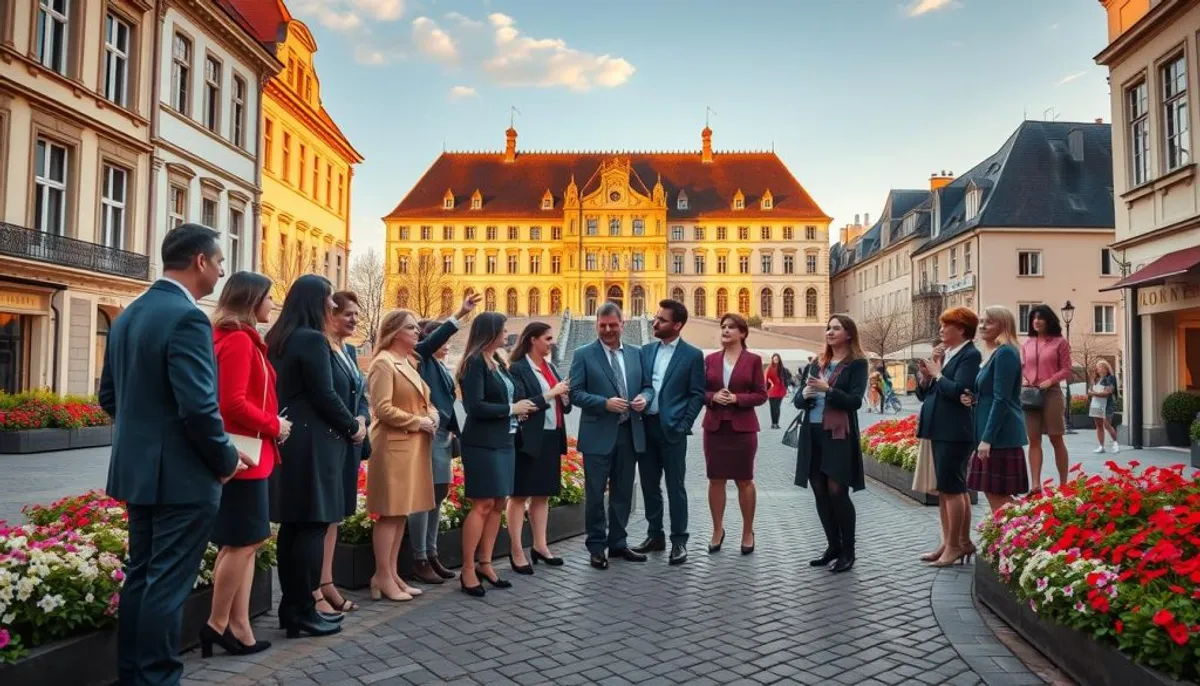
The history of this nation shows a remarkable evolution since the Middle Ages. Today, the Grand Duchy has become a major European cultural center.
We invite you to discover the many facets of this rich culture. From unique linguistic traditions to internationally renowned institutions.
You will see how this country has preserved its heritage while opening up to the world. It is among the most multicultural nations in Europe.
Key points to remember
- Unique blend of traditions and European modernity
- Heritage built on centuries of varied influences
- Remarkable historical evolution since the Middle Ages
- National identity preserved despite external influences
- Country that has become one of the most multicultural in Europe
- Rich culture with many facets to discover
- Importance of unique linguistic traditions
Introduction: An overview of the Grand Duchy
Modern Luxembourg, with approximately 660,000 inhabitants, represents a fascinating study of multicultural coexistence. This small state at the heart of Europe shares its borders with France, Germany, and Belgium.
Historical and sociocultural context
The history of this territory begins in 963 with the founding of the castle of Lucilinburhuc. This medieval origin marks the beginning of a long political evolution.
The current population reflects a remarkable openness. Nearly half of the residents hold foreign nationality, creating a unique mosaic.
This exceptional diversity makes the Grand Duchy one of the most cosmopolitan countries in the world. Its strategic position has shaped centuries of cross influences.
Overview of the article's axes
Our systematic exploration will address several essential dimensions. We will analyze historical evolution and linguistic traditions.
The article will also examine artistic expressions and material heritage. Each section will reveal the connections between past and present.
This approach allows for an appreciation of the richness and current complexity. Understanding the context is fundamental to grasping the full subtlety of this unique culture.
The historical evolution of Luxembourgish culture
Since its foundation in the 10th century, the Luxembourgish territory has undergone a unique political and cultural evolution. This fascinating history of cyprus shows how a small county became a modern European nation.
From medieval origins to modern times
The origin of Luxembourg dates back to 963 with the construction of the castle of Lucilinburhuc. This fortress marks the beginning of a rich history that would see the county produce three emperors of the Holy Roman Empire.
For over 400 years, the territory experienced various foreign dominations. The Habsburgs, revolutionary France, and the Netherlands took turns in power.
Foreign influences and identity construction
These centuries of external influences paradoxically strengthened national identity. The Congress of Vienna in 1815 and independence in 1867 mark crucial milestones.
In the 20th century, despite invasions, the country asserted its commitment to independence. Modern times saw Luxembourg become a founding member of the EU while preserving its heritage.
The secrets of Luxembourgish culture: language, arts, and traditions
Multilingualism is one of the most remarkable aspects of Luxembourgish national identity. This particularity has shaped the daily lives of its inhabitants for generations.
Focus on multilingualism and the Luxembourgish language
The Luxembourgish language, known as Lëtzebuergesch, represents the identity pillar of the country. This unique Franconian dialect blends Germanic and French influences.
Since 1984, three official languages coexist harmoniously. The educational system reflects this exceptional linguistic diversity.
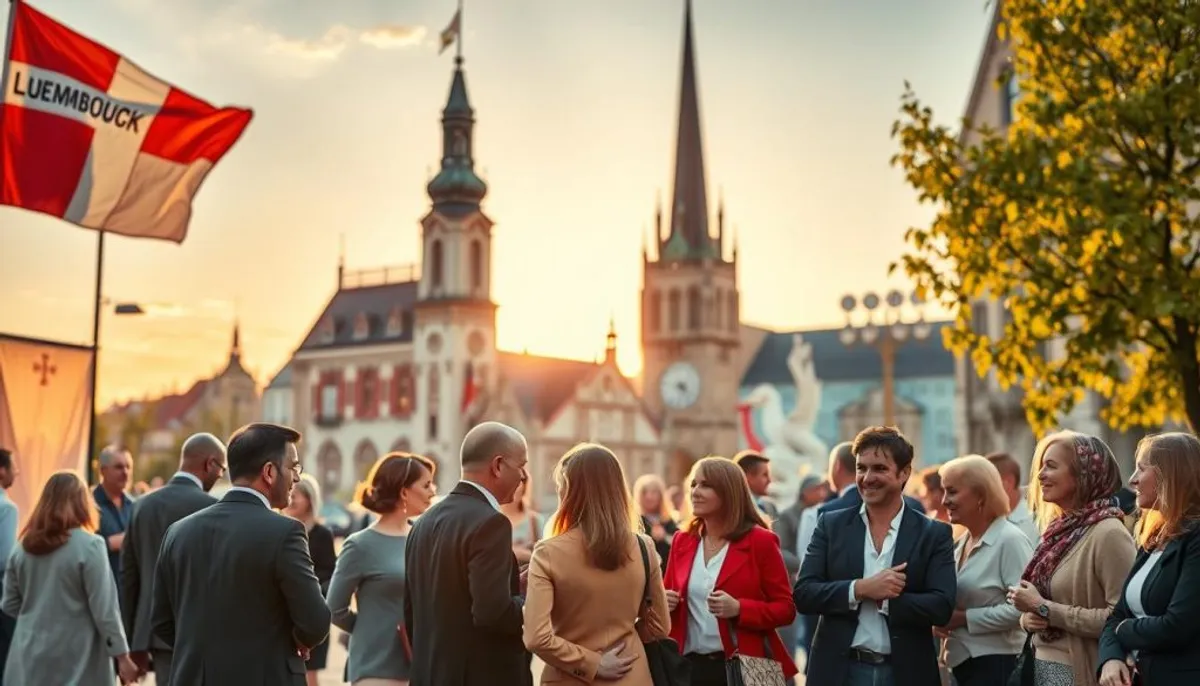
Learning begins in Luxembourgish in kindergarten. German is used for literacy, then French is introduced at the age of seven.
Traditional values and symbols
Traditional arts testify to this multicultural richness. Medieval architecture coexists with contemporary creations.
Symbols like the Gëlle Fra embody the values of national memory. This monument commemorates historical sacrifices with dignity.
Citizens express genuine pride in their linguistic heritage. They consider their language a living treasure to be preserved.
Luxembourgish culture
The intangible Luxembourgish heritage enjoys remarkable international recognition. This living dimension of national heritage reveals unique traditions, including aspects of albanian folklore, preserved with passion.
The importance of intangible heritage
The dancing procession of Echternach perfectly illustrates this richness. Inscribed on the UNESCO list in 2008, this centuries-old tradition attracts thousands of participants each year.
The Sprangprëssessioun has honored Saint Willibrord for centuries. Dancers move in a specific formation through the historic city.
International recognition and UNESCO labels
The exhibition “Family of Man” by Edward Steichen also received prestigious recognition. This documentary heritage was recognized by UNESCO in 2003.
Permanently installed at the castle of Clervaux, this work attracts visitors from around the world. The site hosts the famous photographic collection created in 1955.
These labels testify to the exceptional value of national heritage. They ensure transmission to future generations in a world of constant evolution.
The languages and multilingualism
At the heart of national identity lies a remarkably organized linguistic balance. This tripartite system functions with surprising fluidity in daily life.
Luxembourgish, national and mother tongue
Luxembourgish occupies a special place as the only national language. This language serves as a fundamental identity marker for citizens.
Lëtzebuergesch represents the mother tongue of the majority of inhabitants. Its daily use strengthens community ties and preserves linguistic heritage.
The role of French and German in administration
French holds a privileged status in legislative and judicial matters. All laws must be written in this language according to the constitution.
German plays a crucial role in administration, particularly for tax matters. Official documents are systematically available in these two languages.
This complementarity allows citizens to choose their language of communication with the state. The educational system also reflects this tripartite linguistic organization.
The arts and literature in Luxembourg
The Luxembourgish artistic scene reveals astonishing creativity that transcends the borders of the small state. This cultural vitality expresses itself through various disciplines, from visual arts, including bosnian art, to contemporary literature.Visual arts, architecture, and photography
The development of macedonian history and visual arts has seen remarkable growth since the 19th century. Painters like Joseph Kutter and Jean Jacoby have marked the history of national art.
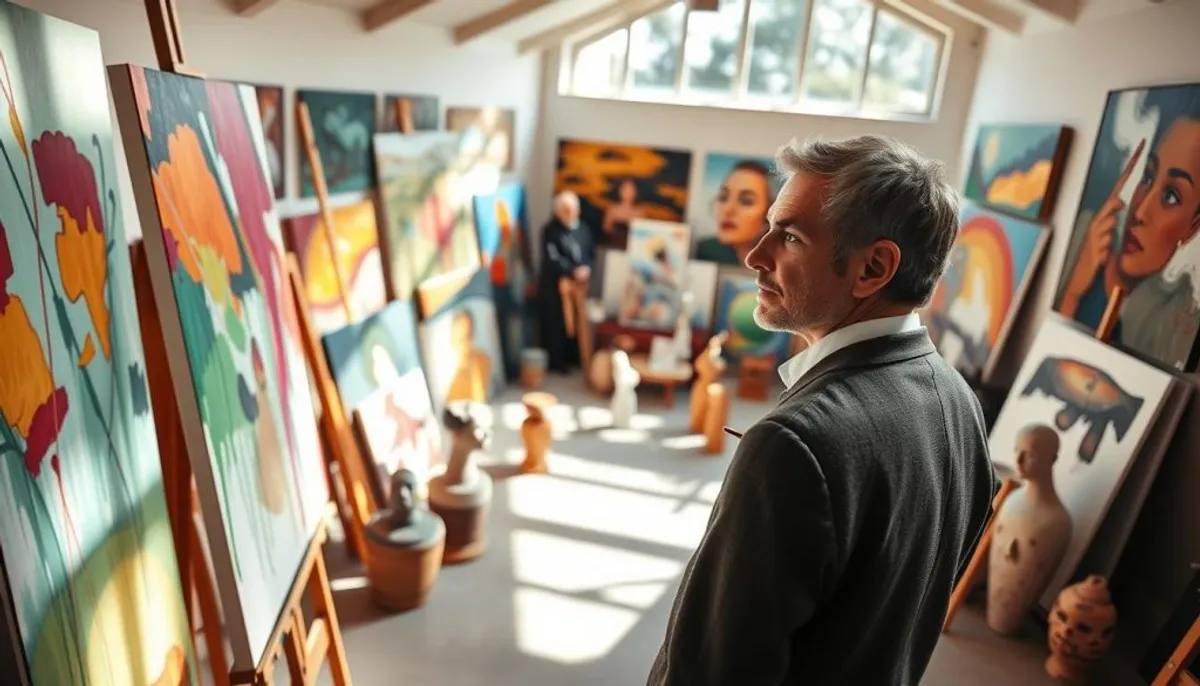
Architecture harmoniously blends medieval castles and contemporary creations. The capital is transforming into a true architectural laboratory.
Photography holds a place of honor thanks to Edward Steichen. His exhibition “Family of Man” remains a global reference.
Literature, theater, and cultural festivals
Luxembourgish literature reflects multilingualism with authors writing in three languages. Michel Rodange and Anise Koltz have contributed to forging a distinctive identity.
Theater and festivals enliven the cultural life of cities throughout the year. These events attract a diverse international audience.
Recognition culminates with prestigious awards like the Golden Lion awarded to Su-Mei Tse. The audiovisual industry counts forty active production companies.
Festivals, traditions, and public holidays
Throughout the seasons, Luxembourg showcases a rich array of festivals and ancestral customs, including elements of icelandic folklore. These celebrations rhythm the social life and strengthen community ties.
The national holiday and annual celebrations
The national holiday represents the highlight of the festive calendar. Celebrated every year on June 23, it officially honors the sovereign's birthday.
This date was set in 1961 for climatic reasons. It allows for outdoor festivities throughout the country.
| Date | Name of the festival | Meaning |
|---|---|---|
| January 1 | New Year's Day | Beginning of the new year |
| Easter Monday | Easter | Christian holiday |
| May 1 | Labor Day | Workers' day |
| June 23 | National Holiday | Celebration of the sovereign |
| August 15 | Assumption | Religious holiday |
Local customs and popular events
Buergbrennen marks the end of winter every February. Immense bonfires symbolize spring renewal.
Bretzelsonndeg sees men offering pretzels to women. This charming love tradition enlivens the month of March.
The Schueberfouer attracts over 2 million visitors each year. This large fair lasts three weeks in summer.
Cultural heritage and institutions
The network of Luxembourgish cultural institutions forms a dynamic ecosystem that preserves national heritage. These structures ensure the transmission of collective memory to future generations.
Museums, libraries, and UNESCO World Heritage sites
Luxembourgish museums cover a remarkably wide spectrum, from ancient art to contemporary creation. The capital concentrates several major institutions that position the city as a European cultural center.
The castle of Clervaux houses the famous exhibition “Family of Man” by Edward Steichen. This site attracts visitors from around the world to this picturesque city in the north.
The castle of Vianden testifies to medieval grandeur and is among the most beautiful heritage sites. Thousands of visitors discover this architectural gem each year.
The impact of cultural institutions on society
The impact of these institutions far exceeds their conservation function. They serve as places for meeting, education, and intercultural dialogue.
The National Library plays a crucial role in preserving written memory. It promotes reading in an increasingly digital world.
These structures contribute to forging a sense of national belonging. Their network spread between the capital and various cities ensures democratic access to heritage.
Conclusion
At the end of this exploration, Luxembourg appears as a model of unique cultural success in Europe. This small country of 660,000 inhabitants has managed to transform its diversity into a true strength. Nearly half of the population being of foreign origin, it embodies harmonious coexistence.
Daily life reflects this balance between tradition and modernity. Natural multilingualism and valued punctuality coexist with remarkable European openness. A founding member of the European Union, the Grand Duchy hosts major institutions in its capital.
International successes, from the Olympics to artistic awards, testify to exceptional vitality. The trilingual system operates with rare efficiency where each language finds its place. This unique culture at the heart of Europe continues to evolve while preserving its precious heritage.
FAQ
What is the official language of Luxembourg?
Luxembourg has three administrative languages: Luxembourgish, French, and German. Luxembourgish is the national language, while French is often used in legislative and administrative fields, and German in the media.
When is the Luxembourg National Holiday?
The National Holiday is celebrated every year on June 23. It is a public holiday marked by fireworks, parades, and numerous festivities throughout the country, particularly in the city of Luxembourg.
Are there typical culinary traditions in Luxembourg?
Yes, gastronomy is part of the intangible heritage. Dishes like *Judd mat Gaardebounen* (pork with broad beans) or cakes like *Quetschentaart* are especially enjoyed during local festivals.
Does Luxembourg have UNESCO-listed sites?
Absolutely! The old town of Luxembourg and its fortifications are listed as UNESCO World Heritage. This historical site reflects the rich history and strategic position of the country at the heart of Europe.
How is multilingualism manifested in daily life?
Multilingualism is omnipresent. Luxembourgish is often spoken at home, French at work or in stores, and German for reading the news. This ease with multiple languages is a national pride and an asset in the European Union.
What are the must-visit museums?
The National Museum of History and Art (MNHA) and Mudam (Museum of Modern Art) are major institutions. They offer varied programs throughout the year, showcasing local and international art.