
Welcome to this captivating exploration of one of the most vibrant regions of India. Gujarat represents a true treasure where ancestral traditions and dynamic modernity blend harmoniously.
This welcoming land located in western India has shaped iconic personalities like Mahatma Gandhi. Its spiritual and commercial heritage radiates well beyond the borders of the country.
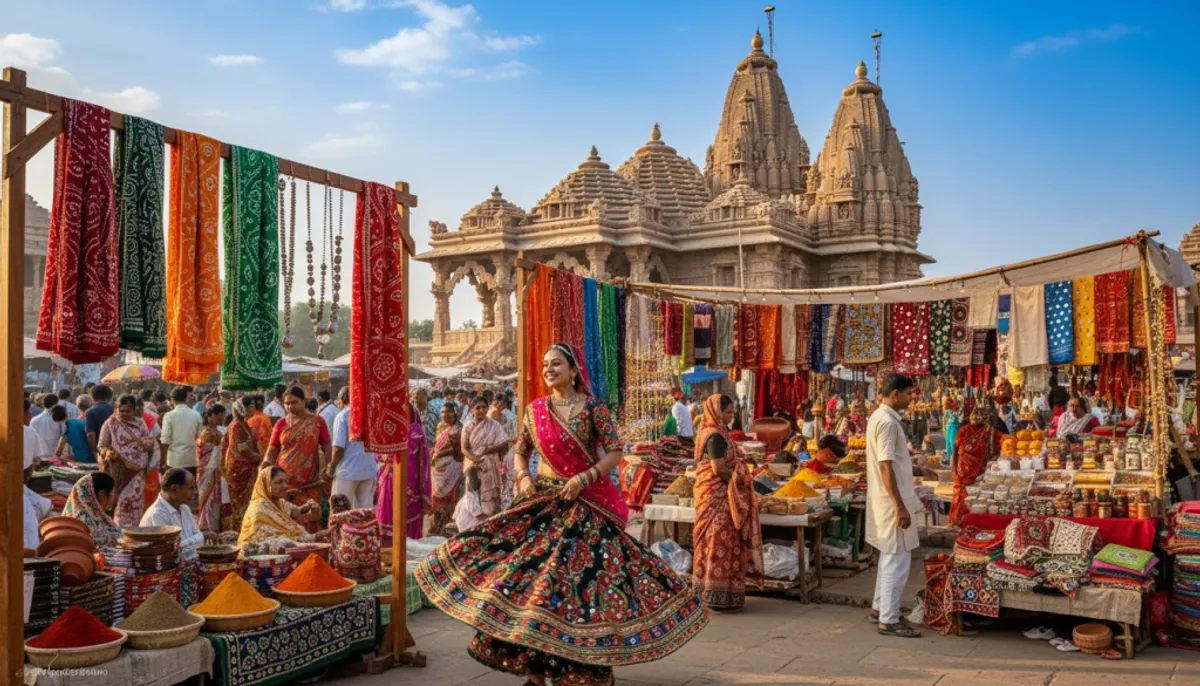
You will discover how this unique region preserves a heritage of incomparable richness. Its colorful festivals, majestic temples, and traditional dances create an exceptional sensory experience.
The local craftsmanship, passed down from generation to generation, testifies to remarkable know-how. Every aspect of daily life is imbued with deep spiritual symbolism.
This introduction will reveal why Gujarat fascinates the entire world. Its cultural mosaic and legendary hospitality make it a unique destination.
Key Points to Remember
- Gujarat is a region in western India with a rich cultural heritage
- This land has seen the birth of historical figures like Mahatma Gandhi
- Spirituality deeply permeates daily life
- Artisanal traditions are passed down from generation to generation
- The peaceful coexistence of communities creates a unique diversity
- Gujarati hospitality is renowned throughout the country
- The influence of this region extends beyond national borders
Exploring Gujarati Culture
With its diverse borders and extensive coastline, Gujarat presents a remarkable territorial configuration. This land in western India offers a unique balance between modern development and preserved traditions.
Overview and Context
The state of Gujarat occupies a strategic position in the Indian subcontinent. Its geographical location has made it a region of passage and exchange for millennia.
The diversity of landscapes, from fertile plains to desert areas, contributes to the richness of this state. This natural variety directly influences local lifestyles and traditions.
Location and Key Demographic Data
The territory extends over nearly 1,600 kilometers of coastline along the Arabian Sea. This historic maritime openness has fostered trade and cultural exchanges.
The population of the state exceeds 60 million inhabitants with a balanced distribution. This demographic creates an environment where urban and rural communities coexist harmoniously.
Ancient Traditions and Rituals
The ancestral traditions of Gujarat illuminate every aspect of daily life. They create a deep connection between the past and the present.
Iconic Festivals and Ceremonies
The Navaratri festival lasts for nine days dedicated to the goddess Durga. Thousands of people dance the Garba until dawn.
Every year on January 14, Ahmedabad hosts an international kite festival. The sky fills with vibrant colors for several days.
At the end of August, the Tarnetar fair brings together local tribes. They wear their most elaborate traditional costumes.
Arts and Ancestral Crafts
Local craftsmanship reflects a precious heritage. The weaving of Patola saris in Patan takes several months of work.
The art of Rogan survives only in the village of Nirona. A few families perpetuate this fabric painting technique.
Daily life is marked by vegetarianism. More than 80% of the population follows this dietary tradition.
Each community contributes to enriching the cultural heritage. Meghwal embroidery and bell-making are living examples of this.
History and Multiple Influences
The history of Gujarat unfolds like a fascinating tapestry of successive civilizations, including the rich history of maratha culture. This land has witnessed empires and cultures that have shaped its identity.
From Harappan Civilizations to Medieval Kingdoms
The 6th century marks the arrival of the Gurjars, giving its name to the region. Their exact origin remains debated among scholars.
Long before this period, the Harappan civilization was already flourishing. Sites like Lothal reveal a sophisticated trading port dating back to 3000 B.C.
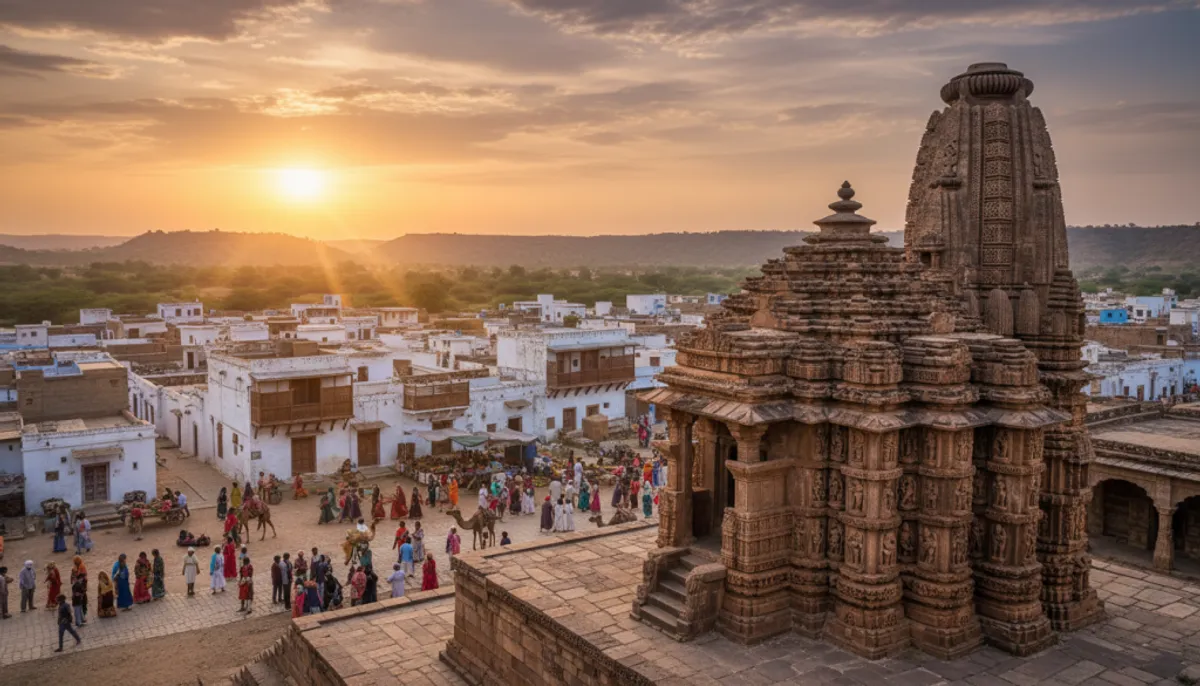
From the 10th to the 13th century, the Solanki dynasty developed distinctive architecture. The temples of Modhera bear witness to this creative period.
Islamic and Jain Influences in the Region
The conquest by the Sultanate of Delhi in 1298 introduced new influences. Architecture fused Hindu and Islamic styles.
In the 15th century, Ahmedabad became the capital under the local sultanate. The magnificent Jami Masjid illustrates this architectural syncretism.
The Maratha Empire took control in the 18th century. Then came the British period with its autonomous princely states.
The independence of 1947 led to the creation of the current borders in 1960. This land birthed Gandhi and Jinnah, major figures of the 20th century.
Architectural Wealth and Historical Sites
The ancient stones of this Indian region tell centuries of history and spirituality. The local architecture forms a true open-air museum.
Temples, Mosques, and Heritage Monuments
The Jain temples of Palitana comprise 863 shrines on a sacred hill. Their architectural beauty impresses visitors.
The historic mosques blend Hindu and Islamic styles. The Jami Masjid of Ahmedabad exemplifies this syncretism with its 260 pillars.
The Sun Temple of Modhera dates back to 1026. Its alignment allows sunlight to illuminate the sanctuary at the equinoxes.
UNESCO World Heritage Sites
The old city of Ahmedabad was the first Indian city listed in 2017. Its fortified neighborhoods preserve an authentic charm.
The Rani-ki-Vav in Patan is an 11th century stepwell. This UNESCO site descends seven spectacular levels.
Champaner-Pavagadh offers other remarkable sites listed. This ancient medieval capital fascinates with its preserved ruins.
Spirituality and Sacred Places
In Gujarat, every stone tells a story of millennia of devotion and religious coexistence. This land is home to shrines venerated for centuries.
Spirituality permeates every part of life in this state. Different traditions coexist harmoniously.
Sanctuaries and Temples of Devotion
The Somnath temple represents the first of the twelve Jyoti lingas of Shiva. Its spire rises fifty meters towards the sky.
Dwarka holds a central place in Hindu sacred geography. This holy city is associated with Krishna in his local forms.
Mount Girnar houses edicts of Ashoka inscribed around 250 B.C. This unique place brings together Jain and Hindu temples.
| Sacred Site | Religious Significance | Main Features | Affiliation |
|---|---|---|---|
| Somnath | First Jyoti linga of Shiva | Chalukya style, 50m spire | Hinduism |
| Dwarka | Char Dham and Sapta Puri | Holy city of Krishna | Hinduism |
| Palitana | Jain vegan city | 863 shrines on a hill | Jainism |
| Ambaji | Shaktist pilgrimage center | Dedicated to the mother goddess | Hinduism |
The Hutheesing temple in Ahmedabad dates back to 1850. It houses 238 statues dedicated to Tirthankara Dharmanath.
The tradition of pilgrimage structures the local spiritual calendar. Millions of devotees visit these temples each year.
This region offers an authentic spiritual experience. Its religious heritage fascinates visitors from around the world.
Arts, Dances, and Cultural Festivals
The lively rhythms and vibrant colors define the festive identity of this region. Each celebration becomes an occasion for sharing and collective creativity.
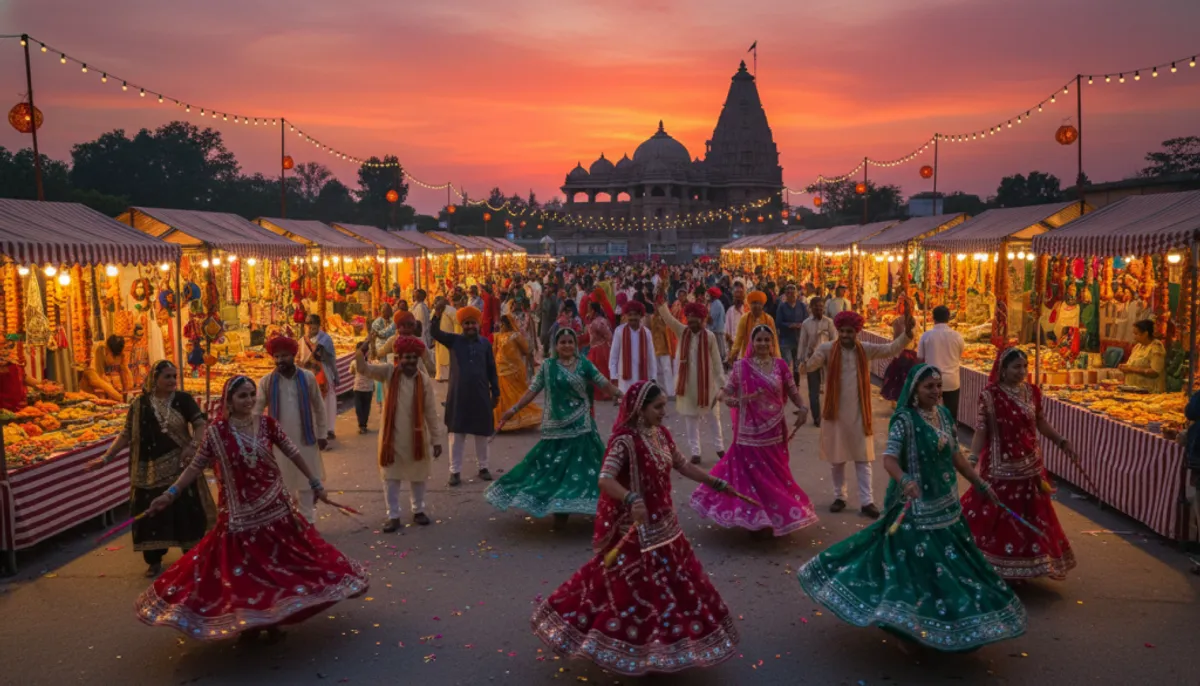
The vibrant energy of local events captivates visitors. They reveal a culture deeply rooted in the joy of living.
The Garba, Navaratri, and Other Events
For nine days, Navaratri transforms the state into a vast dance stage. Thousands of people perform the Garba until dawn.
This circular dance creates a moving meditation around a sacred lamp. It symbolizes divine feminine energy.
Every year on January 14, Ahmedabad hosts its international kite festival. The sky adorns itself with artistic creations from around the world.
At the end of August, the Tarnetar fair brings together tribal communities for three days. They showcase their most elaborate traditional costumes.
The local cinema dates back to 1932 with Narsinh Mehta. In 2005, a tax exemption revitalized this film industry.
Traditional arts include Rogan painting and Patola weaving. Music employs the dhol and shehnai for lively rhythms.
These artistic expressions transcend languages. They unite all communities through universal codes.
The Social Role and Community Diversity
The human mosaic of Gujarat represents a fascinating model of multicultural coexistence. This diverse population creates exceptional social wealth throughout the state.
The religious distribution shows a Hindu majority of 89.1%. It coexists with a significant Muslim community of 9.1% and the largest concentration of Jains outside Rajasthan.
Languages reflect this remarkable diversity. Gujarati dominates with 71% of Hindu speakers. Hindi, Kutchi, Sindhi, Marathi, Marwari, and Bhili are also spoken depending on the regions.
Gujaratis, Kutchis, Rajputs, and Lohanas form the main groups. The Rabari are nomadic herders from Sindh. They perpetuate an ancestral pastoral lifestyle.
About one-fifth of the population includes indigenous tribal groups. The Bhil from the forests and Meghwal embroidery specialists enrich this part of the living heritage.
Social life is traditionally organized around the “Pol.” These gated neighborhoods maintain strong ties between different communities. This organization persists partially today.
The Economic Impact and Traditional Industries
The economic dynamism of Gujarat is an essential pillar of its national and international reputation. This Indian state boasts an impressive average growth of 10% per year between 1995 and 2010.
Its GDP per capita exceeds the national average, making this region one of the most prosperous in the country. The diversity of sectors ensures remarkable economic stability.
From Textiles to Handicrafts
The production of cotton positions Gujarat as the undisputed national leader. This precious fiber fuels a thriving textile industry that combines ancestral know-how with modern technologies.
The city of Surat has established itself as the global capital of diamond cutting. This activity accounts for 90% of global diamond processing.
The dairy industry, symbolized by the Amul cooperative near Anand, represents a remarkable success. It makes Gujarat the top national milk producer.
The Alang shipyard in the Gulf of Khambhat holds the title of the largest ship dismantling site in the world. This activity recycles hundreds of boats annually.
The state of Gujarat also has the largest petrochemical complex in the country. Oil accounts for nearly 23% of total industrial production.
Traditional handicraft industries generate jobs and income for thousands of families. They preserve an intangible heritage of inestimable value.
Tourism and Ecotourism in Gujarat
Gujarat reveals an authentic tourist face, far from the beaten path. This region offers a unique experience combining preserved nature and millennia-old heritage.
National Parks and Natural Sanctuaries
The Gir National Park is a major attraction. It is home to the last Asiatic lions, approximately 400 individuals.
This park spans 1,400 km² in the south of Kathiawar. It protects a rich ecosystem with leopards and antelopes.
The salt desert of the Rann of Kutch covers 7,500 km². Its lunar landscapes change with the seasons.
The Wild Ass Sanctuary preserves the Indian wild ass. This 5,000 km² reserve also hosts flamingos and wolves.
Archaeological Sites and Cultural Routes
The Harappan sites of Dholavira and Lothal date back to 3000 B.C. The port of Lothal had a basin of 215 meters.
The old city of Ahmedabad has been a UNESCO World Heritage site since 2017. Its 15th century mosques showcase remarkable architectural syncretism.
The island of Diu offers preserved Portuguese charm. Its maritime fort and beaches create a unique atmosphere in the state.
Conclusion
Gujarat represents much more than just an Indian state: it is a true laboratory of cultural coexistence. This fascinating region harmoniously unites millennia-old traditions, including the intriguing naga origins, and modern economic development.From five-thousand-year-old archaeological sites to contemporary industries, this land perfectly illustrates the motto “unity in diversity.” Its population of over 60 million inhabitants preserves a unique heritage while innovating, reflecting the relationships between nature and culture.
Gujarat shines today in the world thanks to its dynamic diaspora. This part of India continues to inspire with its ability to engage with its past while building its future.
FAQ
Where is Gujarat located in India and what is its uniqueness?
Gujarat is located on the west coast of India. It is an important state, known for its long coastline, its textile industry such as cotton production, and unique natural sites like the salt desert of the Rann of Kutch.
What are the most famous festivals in Gujarat?
Navratri and its Garba dances are extremely popular. The kite festival, Uttarayan, in January is also a spectacular event that attracts people from around the world.
Does Gujarat have UNESCO World Heritage sites?
Yes, absolutely! The historic city of Champaner-Pavagadh is an archaeological site listed by UNESCO. It features temples, mosques, and fortifications that testify to a rich past.
Are there natural reserves to visit in this region?
Gir National Park is world-renowned as the last refuge of the Asiatic lion. It is an iconic place for ecotourism. The Gulf of Kutch Marine National Park is also remarkable for its biodiversity.
What is the influence of the Jain community in Gujarat?
The Jain influence is profound, especially in architecture. There are magnificent Jain temples, such as those on Mount Shatrunjaya in Palitana, which are major pilgrimage and spiritual sites. Many visitors incorporate zen practices into their experiences, enhancing their spiritual journeys.
What is the most well-known handicraft specialty of the state?
The textile work is renowned, with techniques like Kutch embroidery and the famous Patola, a woven silk sari. Salt production is also an important traditional industry in some regions.