
The spiritual path of zen finds its roots in the experience of the awakening of Buddha Shakyamuni. Today, this tradition continues to evolve around the world, centered on the practice of zazen.

Zen represents a philosophy of life that invites us to rediscover simplicity and fullness in every moment. In a modern world characterized by stress, the principles of this tradition offer a valuable counterpoint to regain balance and serenity.
This article will guide you through the foundations of this millennial wisdom and how to integrate it into your daily life to transform your relationship with yourself and the world around you.
The origins and foundations of zen culture
Zen culture finds its roots in the rich and complex history of buddhism. This spiritual tradition has evolved over the centuries, influencing various Asian cultures.
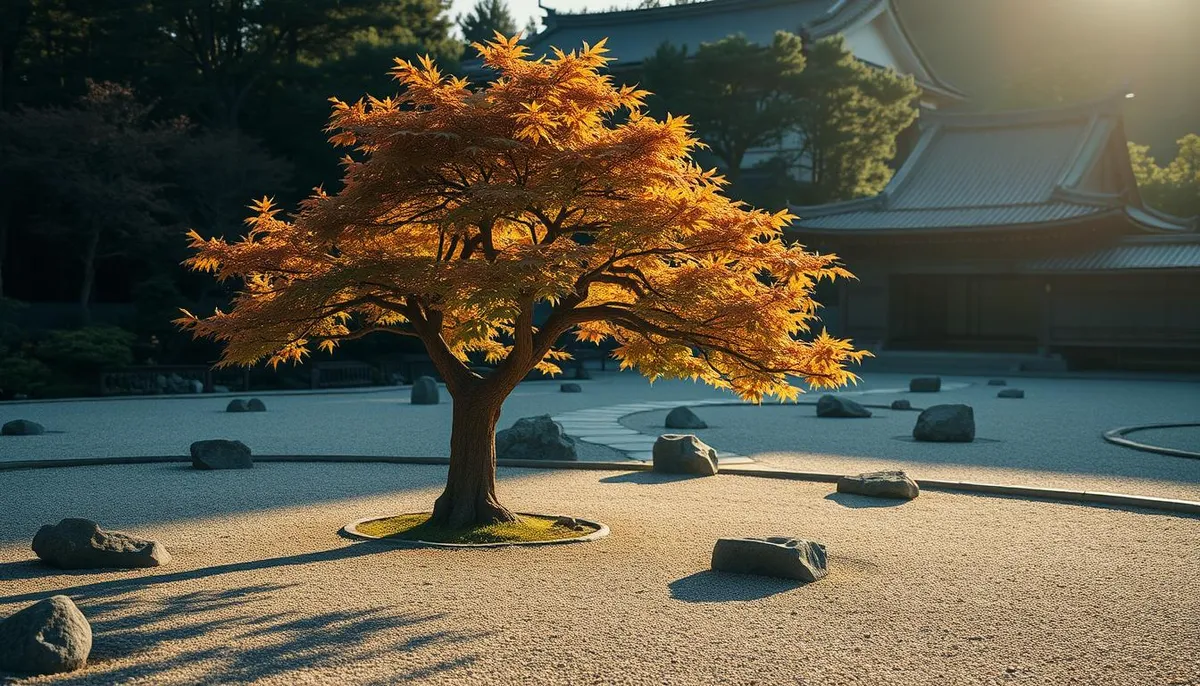
The legacy of Buddhism and the awakening of the Buddha
Zen Buddhism originates from the awakening of the Buddha, which had a profound influence on Eastern spirituality. This awakening gave rise to a lineage of meditative practices passed down from master to disciple.
From India to Japan: the evolution of the zen tradition
The zen tradition traveled from India to China in the 6th century with the monk Bodhidharma, giving rise to the Chan school. Later, in the 13th century, the monk Dōgen introduced the Sōtō school of zen to Japan. In the 20th century, masters like Taisen Deshimaru contributed to its spread in the West.
Throughout its journey, zen has merged with elements of Taoism, developing a unique approach to meditation and connection with the local culture, particularly through studies in arts and culture.
Zazen meditation: the heart of zen practice
Zazen meditation is at the heart of zen culture. It represents an essential practice that allows practitioners to cultivate a clear and peaceful state of awareness.
Fundamental principles of zazen
Zazen, or seated meditation, is based on fundamental principles that aim to establish a deep connection between body and mind. This ancestral practice promotes tranquility and mental clarity.
The correct posture for effective meditation
Posture is a crucial element in the practice of zazen. A correct posture allows for deep and natural breathing, essential for effective meditation. Practitioners should sit comfortably, with a straight back, to facilitate the flow of energy.
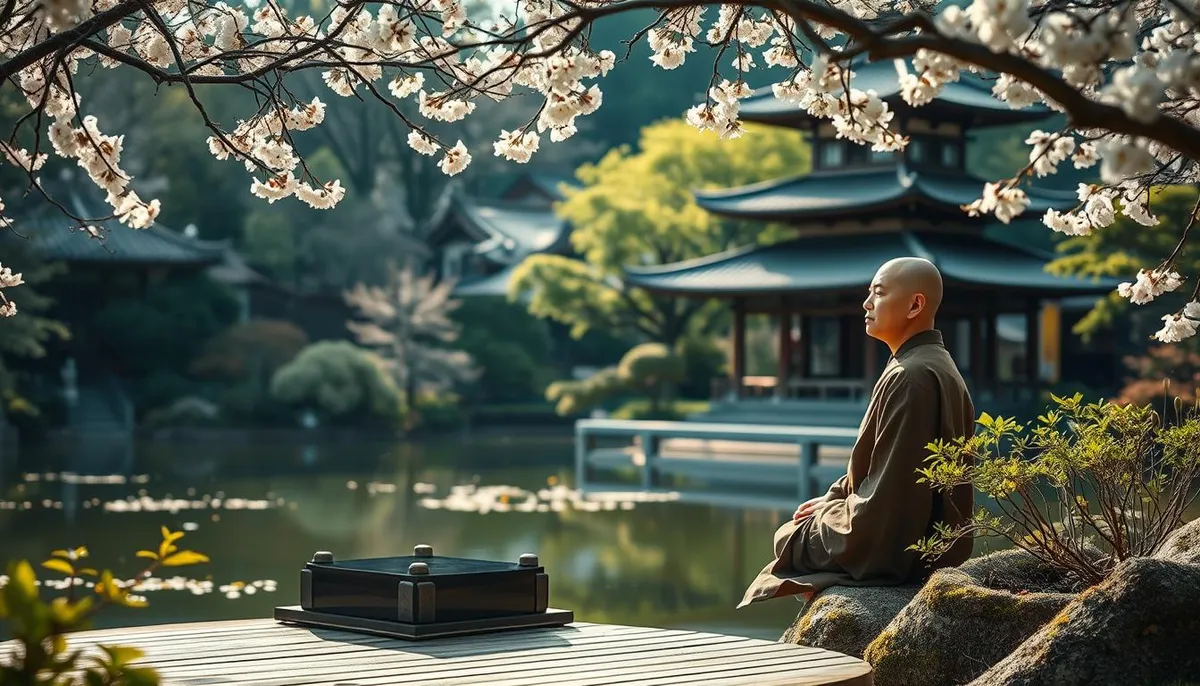
Breathing: technique and importance
During zazen, breathing is essential. It is calm and establishes a slow, powerful, and natural rhythm. The exhalation is long and deep, often compared to the mooing of a cow by zen masters. The inhalation, shorter, comes naturally. This slow and deep exhalation sweeps away the complications of the mind, leaving the mind clear like a cloudless sky.
Breathing serves as the bridge between body and mind in the practice of zazen. Here are some key points about its importance:
- Natural and deep breathing promotes a state of calm and mental clarity.
- Long and deep exhalation helps release tension and distracting thoughts.
- Observing one's breath during meditation reveals the influence of our mental state on our breath.
| Aspect of breathing | Characteristic | Benefit |
|---|---|---|
| Exhalation | Long and deep | Releases tension and distracting thoughts |
| Inhalation | Shorter, natural | Revitalizes and balances energy |
| Rhythm | Slow and powerful | Promotes tranquility and concentration |
In summary, zazen meditation, through its posture and breathing, offers a path toward greater serenity and a better understanding of oneself.
The zen spirit in daily life
The zen spirit permeates every aspect of our daily lives. By adopting the principles of zen culture, we can transform the way we live and perceive the world around us.
Mindfulness in ordinary actions
Mindfulness is one of the keys to zen practice. It involves being fully present and aware in our daily actions, whether it is eating, walking, or working. By being attentive to our gestures and thoughts, we can cultivate greater serenity and a better understanding of ourselves.
Kinhin: walking meditation
Kinhin, or walking meditation, is a complementary practice to seated meditation (zazen). It involves walking slowly and consciously, paying attention to each step and breath. This practice helps us develop a deeper awareness of our body and mind. Additionally, the culture card and benefits can enrich this experience by providing resources and opportunities to deepen our understanding of these practices.
Managing thoughts and cultivating awareness
In zen practice, thoughts are not considered enemies to be eliminated but rather natural phenomena to be observed with detachment. By letting thoughts pass without attaching to them, we can gradually access a broader state of awareness, which zen texts describe as "original mind."
According to the Diamond Sutra, "When the mind does not dwell on anything, the true mind appears." This approach invites us to discover the awareness that precedes conceptual thought, allowing us to develop profound inner freedom.
Zen temples: places of practice and transmission
At the heart of zen culture are the temples, places of practice and transmission where the teachings of Buddhism are lived out daily. These temples provide not only a space for meditation and reflection but also an environment where practitioners can immerse themselves in the zen spirit.
Architecture and symbolism of zen temples
Zen temples are designed to foster an atmosphere of calm and concentration. Their architecture is often simple and uncluttered, reflecting the principles of zen culture. Elements such as stone gardens, Buddha statues, and meditation dôjôs contribute to creating an environment conducive to reflection and meditation. Moreover, these places can also host distance learning programs, allowing a wider audience to get acquainted with zen practices.
Zazen experiences for beginners in temples
Many zen temples open their doors to beginners, offering guided zazen sessions led by experienced monks. These sessions allow novices to discover the basics of zen meditation and benefit from the expertise of the monks. For example, Kenchō-ji temple offers zazen sessions open to beginners every Friday and Saturday.
| Temple | Session Day | Time |
|---|---|---|
| Kenchō-ji | Friday, Saturday | 3:30 PM |
| Other temples | Check schedules | Check schedules |
Zen temples like Kenchō-ji offer a unique meditation experience in a historical and authentic setting. Beginners are welcome and can benefit from the expertise of the monks to enhance their practice.
Integrating zen culture into modern life
Zen is more than a philosophy; it is a way of life that can be adopted daily. The practice of zen can be easily integrated into our modern lives, even in a constantly changing world.
Since the 20th century, zen has sparked growing interest in the West. Masters like Taisen Deshimaru played a key role in transmitting the essence of traditional zen to a new generation of practitioners.
- Integrating zen into our daily lives begins with small changes, such as establishing a regular meditation practice.
- The zen approach can transform our relationship to work by inviting us to be fully present.
- Zen principles of simplicity and non-attachment offer a valuable counterpoint in our consumer society.
Contemporary zen centers provide spaces where traditional practice adapts to the constraints of modern life. The influence of zen now extends well beyond the spiritual sphere, inspiring innovative approaches in various fields.
By integrating zazen practice and zen principles into our daily lives, we can cultivate a wisdom embodied in the simple gestures of life.