
Welcome to this immersion into the heart of Botswana's identity. The country derives its name from the Tswanas, a major ethnic group that makes up about 75% of the population. This Bantu community forms the living foundation of the nation.
Once referred to as "Bechuanas" by 19th-century explorers, these people are now proud of their heritage. Their presence profoundly marks the social landscape of Southern Africa.
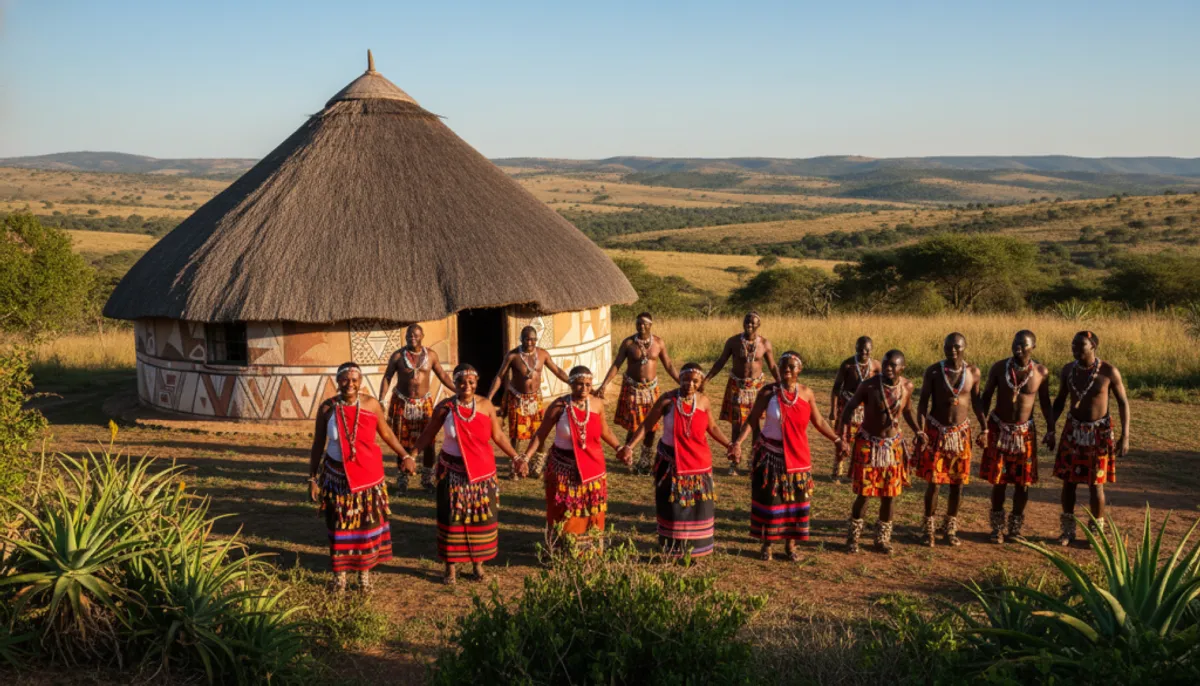
Despite modernization, ancestral customs, including various african customs, continue to shape daily life. This rich tradition manifests in the arts, rites, and social relationships. It is a heritage that harmoniously blends the past and the present.
Our guide invites you to discover this captivating universe. Together, we will explore the languages, crafts, music, and practices that resonate within this society. Prepare for a journey into the heart of a unique national identity.
Key Points to Remember
- The Tswanas represent about 75% of Botswana's population
- The name "Botswana" means "land of the Tswana"
- This culture forms the foundation of national identity
- Ancestral traditions coexist with modernity
- The heritage is reflected in various aspects of social life
- The exploration will cover languages, arts, music, and customs
- An accessible guide to understanding the soul of Botswana
Introduction to Tswana Culture
Dive into a society where traditions and modernity intertwine harmoniously. This country in Southern Africa offers a fascinating picture of identity preservation.
Overview and Context
With about 2.6 million inhabitants, Botswana has a population that is predominantly Tswana. This group represents over 70% of the citizens.
The influence of this community extends to all aspects of national life. It is particularly evident in traditional decision-making structures.
The official language, Setswana, unites the different communities, while the Sotho language adds to the rich tapestry of linguistic diversity. It is an essential pillar of collective identity.
Objectives of the Ultimate Guide
Our ambition is to provide you with an authentic understanding of this rich tradition. We will go beyond tourist clichés to grasp the true essence.
You will discover how ancestral values coexist with contemporary realities. This part of Africa reveals a timeless wisdom that is still alive.
The deep connection with nature and the importance of oral transmission characterize this worldview. Other ethnic groups also contribute to this diversity.
This guide will show you how these traditions still influence the daily lives of millions. A captivating immersion awaits you.
Historical and Demographic Context of Botswana
Botswana has a rich history that spans several millennia. This African land holds traces dating back to the Stone Age, with over 2000 identified archaeological sites.
From Prehistoric Origins to Modern Times
The first inhabitants were the Bushmen, present since prehistoric times. In the early 19th century, the Bantu migrated to the region. They divided into three main groups.
European missionaries like David Livingstone marked this period. They introduced Christianity while preserving some local traditions. The territory became a British protectorate in 1885.
Evolution of the Tswana Population
The demographics have undergone a dramatic transformation. The country had only 152,983 inhabitants in 1921. Today, it exceeds 2.6 million people.
This growth is explained by several factors. Diamond discoveries and urbanization played a crucial role. Independence in 1966 opened the country to the modern world.
The post-colonial era allowed local heritage to flourish freely. This unique demographic history continues to shape the protectorate that has become a sovereign nation.
The Peoples and Linguistic Diversity in Southern Africa
Thirty distinct languages coexist harmoniously within Botswana's territory. This linguistic richness reflects the mosaic of peoples that make up this nation in Southern Africa.
Bantu Languages and Khoisan Languages
The linguistic landscape divides into three main groups. The Bantu languages dominate, with Setswana as the primary mother tongue.
The Khoisan languages feature unique click consonants. They represent the heritage of the oldest indigenous populations.
| Language | Language Family | Percentage of Speakers | Characteristics |
|---|---|---|---|
| Setswana | Bantu | 71.1% | National lingua franca |
| Kalanga | Bantu | 9.4% | Second language of the country |
| Bochiman | Khoisan | 1.7% | Distinctive click consonants |
| English | Germanic | Official language | Administration and education |
The Role of English and Setswana
English remains the language of written administration and courts. Setswana dominates daily communications among the various peoples.
This functional complementarity creates practical bilingualism. However, it raises questions about the preservation of minority languages.
Rites of Passage and Traditional Ceremonies
Life transitions are celebrated with a unique symbolic depth. These moments mark personal development and social integration. They represent fundamental milestones in each individual's journey.
Bogwera and Bojale
Bogwera prepares young boys for their future responsibilities. For several weeks, they leave the village to receive intensive teaching. Elders pass on essential values and practical skills.
Bojale serves as the female equivalent of this initiation. Young girls learn from older women the knowledge related to motherhood. These ancestral practices prepare them for household management and marital relationships.
The Importance of Community Rituals
These ceremonies strengthen community cohesion. They create strong intergenerational bonds between children and their elders. Transmission occurs together during these special moments.
Once a certain age is reached, young people participate in these structuring rituals. Isolation in the bush and secret teachings are integral parts of the process. These practices persist in some rural areas today.
The entire community is involved in the success of these initiations. They represent an identity pillar for young children becoming adults.
Oral Transmission and Ancestral Legends
The elders hold the keys to a living library made of stories and proverbs. This oral tradition forms the beating heart of Botswana's collective memory, showcasing the beauty of malagasy craftsmanship.
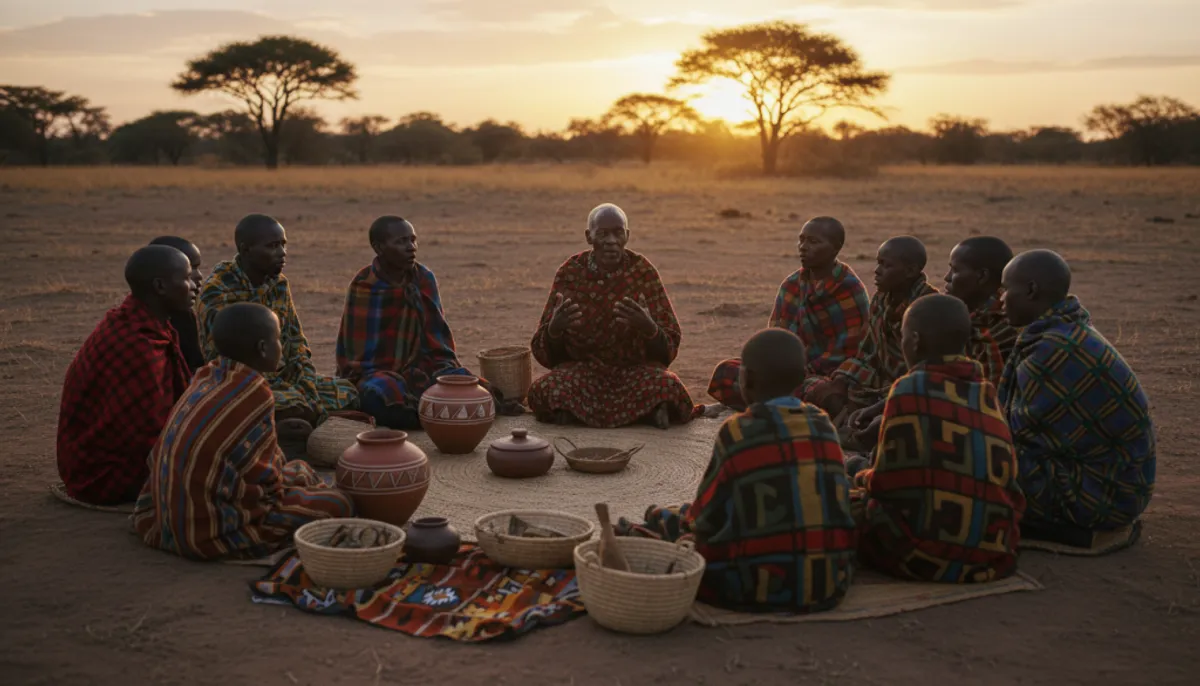
Stories and Proverbs Passed Down Through Generations
Several forms of oral literature, including those in igbo language and literature, coexist harmoniously. Each serves a specific function in the transmission of knowledge.
| Oral Type | Main Function | Traditional Carriers | Contexts of Use |
|---|---|---|---|
| Moral Tales | Education of Values | Grandparents | Nighttime Gatherings |
| Proverbs | Conflict Resolution | Heads of Families | Daily Discussions |
| Mythological Narratives | Explanation of Origins | Specialized Griots | Important Ceremonies |
| Historical Songs | Preservation of History | Village Elders | Community Events |
The voices of the elders resonate particularly during family gatherings. They teach respect for nature and solidarity between generations.
“A dying elder is a library that burns.”
This rich tradition faces modern challenges. Urbanization and new media are transforming transmission methods.
Yet, the power of the word persists. It continues to connect the Botswana people to their history and their spiritual world.
Traditional Crafts and Ancestral Know-How
The skilled hands of Botswana artisans weave the soul of the country through remarkable creations. These functional and decorative works represent a living heritage passed down from generation to generation, highlighting the importance of financing artistic projects to sustain this cultural legacy.
Basketry, Pottery, and Wood Carving
Botswana's basketry is among the most refined in Africa. Artisans primarily use the mokola palm fiber as their raw material.
This natural material is dyed with roots or bark to create complex geometric patterns. The complete process can take several weeks for a single large basket.
Techniques and Natural Materials Used
Traditional pottery has gained international recognition since its inscription by UNESCO in 2012. The Kgatleng district particularly preserves this know-how.
The Thamaga craft center, founded in 1974, illustrates how these ancestral techniques create economic opportunities. Each year, the National Museum of Gaborone organizes a competition rewarding the best creations.
| Craft | Main Material | Production Time | Recognition |
|---|---|---|---|
| Basketry | Mokola Palm Fiber | 2 to 6 weeks | International Reputation |
| Pottery | Local Clay | 1 to 3 weeks | UNESCO Heritage 2012 |
| Wood Carving | Mopane Wood | Variable | Recognized Tribal Art |
The transmission of these skills often occurs in the artisans' mother tongue. This language conveys the technical subtleties that give the works their exceptional quality.
These know-hows demonstrate a harmonious relationship with the natural environment. They constitute an essential part of national identity.
Music, Dance, and Performing Arts
The melodies of the Tswana resonate like a dialogue between heaven and earth. This artistic expression unites generations around ancestral rhythms.
Traditional Instruments and Their Symbolism
Traditional music employs instruments with unique sounds. The setinkane produces crystalline melodies on its metal strips.
The segaba is played against the cheek like a one-string violin. The kwadi combines strings and breath in an ingenious musical arc.
Flute ensembles perfectly illustrate the collective spirit. Each of the 13 to 19 musicians produces a unique note.
Ritual Dances and Collective Performances
Communities gather for vibrant ceremonies. Rain dances sometimes mobilize dozens of participants.
Men play while women clap their hands. This complementarity strengthens social bonds.
These performances are not just entertainment. They connect participants to their ancestors and to nature.
Young generations reinterpret these traditions today. They thus preserve the symbolic essence of their heritage.
Architecture and Intangible Cultural Heritage
Botswana's architecture tells a millennia-old story between man and his environment. Traditional dwellings adopt circular shapes perfectly suited to the semi-arid climate.
These constructions exclusively use local materials. Rammed earth, wood, and thatch create ecological structures.
Traditional and Modern Influences
The village organization places the kgotla at the center of community life. This public space symbolizes social unity.
Ancestral techniques persist in some regions. The UNESCO recognition in 2012 highlights this exceptional craftsmanship.
| Architectural Aspect | Traditional Materials | Thermal Advantages | Current Preservation |
|---|---|---|---|
| Circular Dwellings | Earth, Wood, Thatch | Natural Insulation | Rural Regions |
| Cow Dung Floors | Recycled Material | Humidity Regulation | Declining Use |
| Modern Structures | Concrete, Glass | Air Conditioning Needed | Main Cities |
“Heritage is not the legacy of the past, but the bequest for the future.”
The urban development in Gaborone sometimes integrates traditional elements. This architectural fusion shows the evolution of the country, including options for in-store payment at darty.
Sites classified like Tsodilo testify to ancient human occupation. The Okavango Delta offers a unique ecosystem in the world.
The transmission of this knowledge often occurs in the mother tongue. This language conveys valuable technical knowledge.
Social Practices and the Importance of the Kgotla
At the heart of Botswana's social life beats the kgotla, an ancestral democratic space. This institution dates back centuries and still structures community relations today.
The kgotla functions as a true school of citizenship. Every adult can express their opinion freely.
The Community Assembly and Its Role in Decision-Making
The chief, called kgosi, presides over the debates but does not impose his views. He listens carefully to each intervention before making a decision.
The search for consensus guides all deliberations. This approach avoids divisions within the group.
The issues addressed cover all aspects of collective life, including contemporary cultural issues. From conflict resolution to the organization of community work.
| Type of Decision | Concerned Participants | Meeting Frequency | Impact on the Community |
|---|---|---|---|
| Conflict Resolution | All Adults | As Needed | Maintaining Cohesion |
| Land Allocation | Heads of Families | Annual | Economic Equity |
| Collective Work | Youth and Adults | Seasonal | Local Development |
| Celebrations | Entire Village | Special Events | Identity Reinforcement |
This tradition profoundly influences the national political system. The Ntlo ya Dikgosi incorporates these principles at the governmental level.
Most rural villages maintain this living practice. It represents a unique model of participatory governance.
Education, Official Languages, and Language Policy
Two languages coexist with complementary roles in the Botswana administration. This linguistic duality creates a unique balance between local heritage and international openness.
The status of the official languages presents an interesting paradox. The 1966 Constitution does not designate any official language, but the Interpretation Act of 2010 explicitly recognizes English and Setswana.
The Sharing Between English and Setswana in Administration
English dominates written administration and higher education. Laws and government documents exclusively use this language.
Setswana prevails in oral communications and parliamentary debates. This functional distribution ensures governance is accessible to all citizens.
| Domain | Main Language | Specific Use |
|---|---|---|
| Written Administration | English | Laws, Regulations, Official Documents |
| Parliamentary Deliberations | Setswana | Political Discussions and Debates |
| Primary Education | Setswana | Teaching in Early Years |
| Secondary/Higher Education | English | Main Language of Instruction |
The educational system gradually transitions between the two languages. Teaching starts in Setswana before shifting to English.
This language policy raises questions of equity. It must reconcile the promotion of the national official language with respect for linguistic minorities.
Language education represents a crucial issue for the country's future. It will determine how future generations preserve their heritage while opening up to the world.
The Legacy of Colonization and Its Cultural Impacts
Unlike other African nations, the country experienced relatively peaceful colonization. The territory was placed under British protectorate in 1885, becoming Bechuanaland.
This protection was requested by local chiefs concerned about Boer expansionism. The administrative capital was established outside the territory, in Mafeking, South Africa.
The British Influence on Institutions
The colonial administration introduced English as the official working language. However, its impact remained limited on the local population.
Setswana remained the primary lingua franca for daily communications. English was reserved for government, courts, and a few schools.
Missionaries played a paradoxical role during this period. They introduced Christianity while documenting some oral traditions.
Independence in 1966 under Seretse Khama marked a peaceful transition. The country managed to balance colonial heritage and national renewal.
This unique history explains why English coexists harmoniously with local languages today.
Major Festivals and Cultural Events
The rhythm of the seasons in Botswana is accompanied by an exceptional festive calendar. These events punctuate the lives of the inhabitants and attract visitors.
Traditional Celebrations and Artistic Events
The Maitisong Festival transforms Gaborone every year since 1987. For a week, the capital vibrates to the sounds of theater, music, and performing arts.
Contemporary dances coexist with urban performances. This flagship event showcases the artistic vitality of the country.
| Period | Event | Type of Celebration | Participants |
|---|---|---|---|
| January-March | Rain Dances | Seasonal Ritual | Village Communities |
| April-June | Harvest Festivities | Agricultural Celebration | Farmers and Families |
| July-August | Initiation Ceremonies | Rite of Passage | Young Generations |
| September-October | Healing Dances | Spiritual Practice | Traditional Healers |
Young people are reinventing artistic expression through hip-hop. Modern theater dialogues with ancestral traditions.
This event diversity is generating increasing interest. Tourists and researchers discover an exceptional living heritage.
The Contemporary Art Scene and Museums
Gaborone is home to cultural institutions that celebrate art in all its forms. The National Museum, founded in 1968 in the center of the capital, represents a vital space for creation.
Exhibitions at the National Museum of Gaborone and Beyond
Each year, this institution organizes a basketry competition rewarding artisanal excellence. This event perfectly illustrates the valorization of traditional know-how.
Other cities have significant museums. Mochudi hosts the Phuthadikobo Museum, Serowe the Khama III Memorial Museum, and Francistown the Supa Ngwao Museum.
Contemporary artists use various media to explore national identity. Their work constitutes an essential part of the current artistic dialogue.
Artistic freedom of expression benefits from a favorable environment. In 2016, the country ranked 43rd out of 180 for press freedom.
These institutions provide a beautiful example of heritage preservation while encouraging creative innovation.
Cuisine and Culinary Art in Tswana Tradition
Each traditional dish carries the story of a harmonious relationship with nature. Culinary practices reflect an ingenious adaptation to the semi-arid environment.
Tripod cast iron pots represent the fundamental tool of this tradition. Placed over a wood fire, they allow for slow cooking that develops flavors.
Sorghum and maize form the dietary base, transformed into bogobe. This thick porridge is accompanied by legumes grown on this generous land.
The intelligent use of local resources is seen in conservation techniques. Drying meat and fermenting grains ensure food sustainability.
Iconic dishes like seswaa celebrate important occasions. The transmission of recipes occurs in the mother tongue, conveying precious knowledge.
This culinary language unites generations around the family table. It tells how this community has managed to make the most of its land.
Fermented sorghum beer accompanies social gatherings. Every gesture in the kitchen speaks an ancestral language of respect for the environment.
The Impact of Tourism on Cultural Valorization
In Botswana, visitors discover much more than exceptional wildlife. This destination in Southern Africa is attracting growing interest for its human heritage.
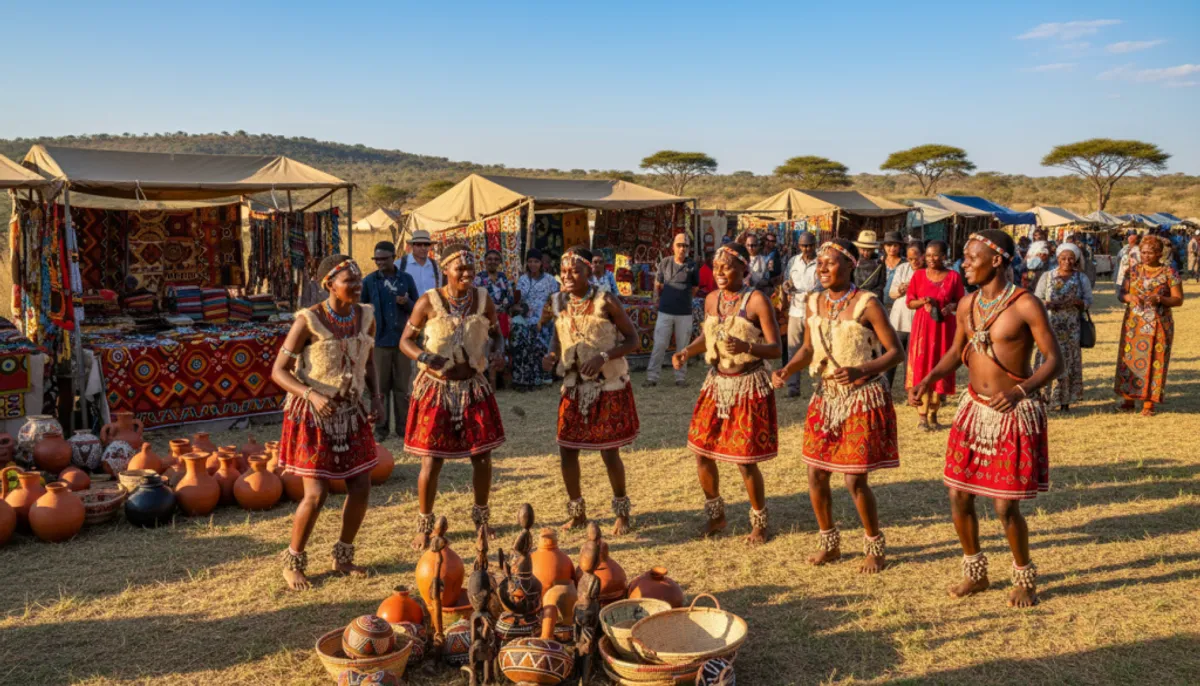
The country has developed a unique model of high-end tourism. This approach limits the impact on the environment and local traditions.
Cultural Tours and Immersive Safaris
Immersive safaris allow for not only observing animals. They also offer authentic encounters with communities.
Visitors participate in ceremonies with community consent. They discover traditional crafts and ancestral villages.
This tourist development creates significant economic opportunities. Local guides and artisans benefit directly from these exchanges.
The Botswana model shows how to preserve authenticity through initiatives like culture checks boulanger. It avoids folklorization while sharing a precious heritage.
This region of Southern Africa thus balances modernity and traditions, including the rich history of the songhai empires. Visitors leave with a deep understanding of the country.Innovations and Challenges in Heritage Preservation
In the face of globalization, Botswana deploys innovative strategies to safeguard its unique heritage. This region of Southern Africa faces complex challenges with increasing urbanization.
The issue of linguistic equity remains central. Parliamentary debates in 1969, 1988, and 1995 raised questions about the marginalization of minority languages.
Linguistic erosion threatens diversity. Many speakers abandon their ancestral languages in favor of Setswana or English.
The country develops technological solutions to document this heritage. Digital archives and mobile applications allow for learning threatened languages.
These initiatives concern not only linguistic preservation but also artisanal know-how. Sustainable development must reconcile modernity and traditions.
Success requires the commitment of the entire society. This collaborative approach ensures a rich future for all communities in this region of Southern Africa.
Conclusion
Botswana offers us a remarkable example of identity preservation in Southern Africa. This living heritage harmoniously combines ancestral traditions and modernity.
The diversity of peoples enriches this cultural mosaic. The Tswana language unites most inhabitants while English facilitates integration into the global world.
This dynamic system faces contemporary challenges. The balance between modernization and tradition remains crucial for local communities.
We invite you to discover this fascinating land beyond animal safaris. Every encounter becomes a lesson in humanity where ancient practices dialogue with modern life.
Understanding this rich part of human history is to grasp the essence of a society that proudly celebrates its identity while opening up to the world. The transmission of language and knowledge ensures the sustainability of this unique heritage.
FAQ
What is the official language spoken in Botswana?
The country has two official languages: English and Setswana. English is primarily used in administration and education, while Setswana, a Bantu language, is the most spoken daily by the majority of the inhabitants.
How are important decisions made in communities?
The kgotla, a traditional community assembly, plays a central role. It is a space where group members gather to discuss village issues and make collective decisions, giving a voice to everyone.
Are there rites of passage for young people?
Yes, ceremonies such as bogwera for boys and bojale for girls mark the transition to adulthood. These ancestral practices teach values, responsibilities, and strengthen bonds within the people.
What are the typical dishes of local culinary art?
The cuisine often uses products from the land, such as sorghum or maize. An iconic dish is seswaa, boiled and pounded meat, usually accompanied by pap, a porridge made from corn flour.
Where can one discover craftsmanship and heritage?
The National Museum of Gaborone offers exhibitions on history and know-how, such as basketry or pottery. Many villages also offer authentic experiences to observe these techniques up close.
Does the educational system integrate oral tradition?
Increasingly, tales, legends, and proverbs are valued in education to transmit wisdom and history to children. This helps preserve a rich heritage while promoting modern development.