
Dive into the fascinating universe of a people who shaped the destiny of West Africa. The Songhai Empire represents one of the most remarkable civilizations on the African continent.
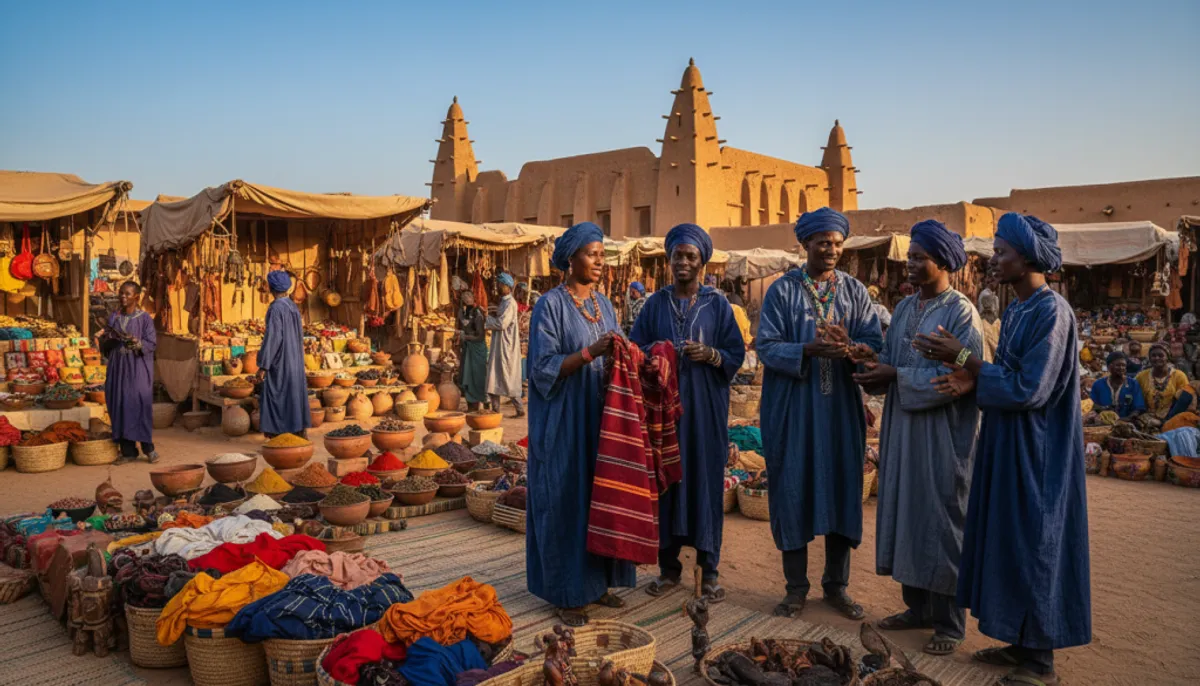
Its rich history spans several centuries, marked by exceptional achievements. This society developed complex systems of social and political organization.
Mainly settled in the Niger Valley, these peoples built a sophisticated civilization. Their economy relied on agriculture, livestock, and caravan trade.
Between the 15th and 16th centuries, their influence extended from the Atlantic to the Chad Basin. This expansion is a testament to their power and organizational expertise.
Their legacy continues to inspire current generations. Discover how this civilization has left a lasting mark on the region.
Key Points to Remember
- Major civilization of West Africa in the 15th-16th centuries
- Empire extending from the Atlantic to Lake Chad
- Society based on agriculture and caravan trade
- Sophisticated social and political organization
- Enduring cultural heritage in the region
- People established in the Niger River valley
- Remarkable equestrian and trading traditions
Introduction and Historical Context
The 15th century marked a decisive turning point for the peoples settled along the Niger. The Songhai Empire emerged during this pivotal period, covering territories corresponding to several modern countries.
Before this political rise, these populations already formed a structured ethnic group. Their presence extended from the Malian banks of the Niger to present-day Nigeria.
This expansion occurred in a century of profound transformations. The region was experiencing the decline of the Mali Empire, creating a strategic void.
The pre-imperial society had a well-defined hierarchy. Kings, nobles, artisans, and griots collaborated in a sophisticated social organization.
| Aspect | Pre-imperial Period | Imperial Period (15th Century) |
|---|---|---|
| Territorial Expansion | Niger Valley | Mauritania to Nigeria |
| Political Structure | Local Kingdoms | Centralized Empire |
| Regional Influence | Limited | Dominant in West Africa |
The geographical position greatly favored this development. Between the Sahara and savanna, this area allowed for the flourishing of a prosperous civilization.
The history of this imperial formation reveals a gradual transition rather than a sudden rupture. This evolution was based on solid social foundations and a favorable context.
The Origins and Emergence of the Songhai
The origins of the Songhai group trace back to millennia of population movements. Their language has roots in the proto-Saharan spoken nine thousand years ago.
In the 7th millennium BCE, a significant linguistic differentiation occurred. The western Sahelian branch emerged, giving rise to Songhai languages.
Migration Pathways and Neolithic Influences
The harsh climatic conditions of the Sahara pushed these populations southward. They followed large mammals and changing pastures.
This migration led them to the fertile region of the Niger River. The Neolithic period thus marks a decisive turning point in their settlement.
The Impact of Neighboring Civilizations on Songhai Identity
A complex blending occurred with speakers of Afro-Asiatic languages. These exchanges gave rise to new ethnic clans.
The newcomers established themselves as "masters of the land" among the indigenous populations. This social hierarchy structured the future Songhai society.
The group formed thus enriched itself with multiple cultural influences. This diversity forged a unique identity in the West African region.
The Monarchies and Dynasties of Songhai
The year 1464 marked a major political turning point with the successful secession from the Mali Empire. This regained independence allowed for the emergence of two dynasties crucial for imperial development.
The Reign of Sonni Ali Ber and His Conquests
The accession to power of Sonni Ali Ber in 1464 inaugurated an era of radical military transformations. His strategic genius was notably manifested by the creation of a fleet of 400 ships.
This maritime innovation, accompanied by the post of admiral, revolutionized river warfare. Sonni Ali also modernized the ground army with new specialized units.
In 26 years of reign, this sovereign won 32 successive conflicts. His victories allowed for the conquest of iconic cities like Timbuktu and Djenné.
The Dynamics of the Askia Dynasty
The succession after the death of Sonni Ali Ber in 1492 was tumultuous. His son Sonni Bar held power for only a few months before being overthrown.
Mohammed, a general of Sonni Ali, founded the Askia dynasty in 1493. His approach differed from that of his predecessor by emphasizing religious diplomacy.
Although less brilliant militarily, Askia Mohammed consolidated the Songhai Empire through strategic alliances. His reign until 1528 continued the territorial expansion initiated by Sonni Ali Ber.
The Foundations of Songhai Culture
Contrary to appearances, the term Songhai conceals a reality much more nuanced than that of a simple ethnicity. It primarily designates a habitat territory rather than a specific ethnic identity.
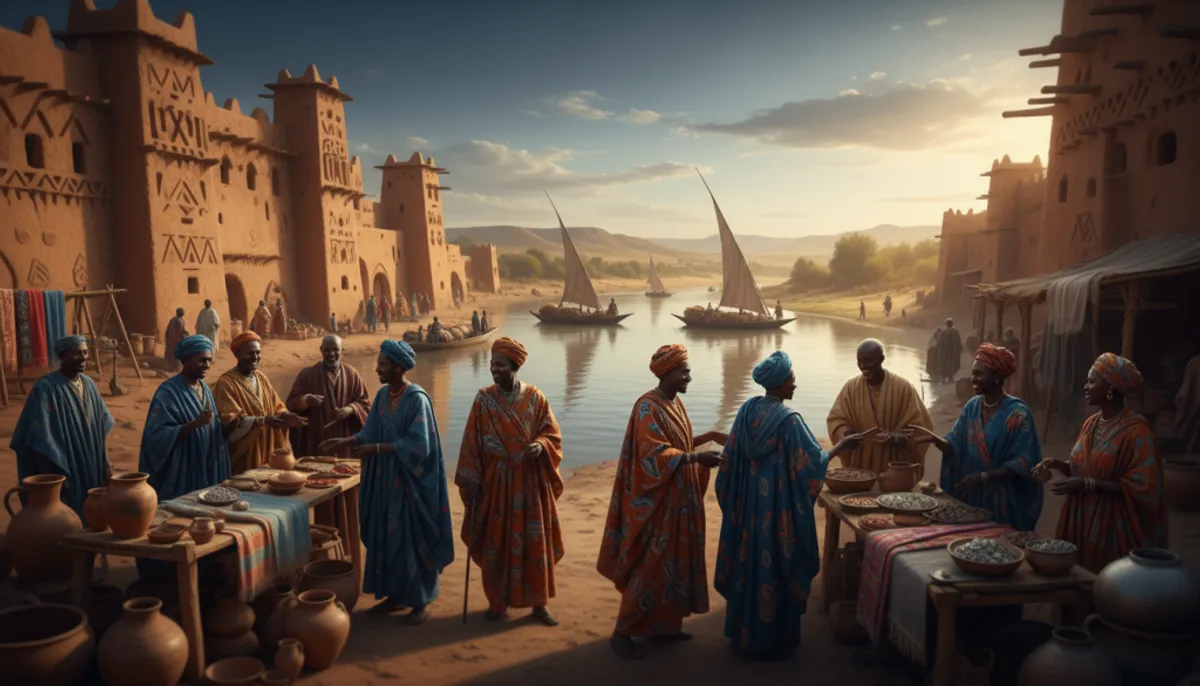
The populations concerned use the expression ayneha to refer to themselves, meaning "I have said" in their language. This self-designation reveals a particular approach to collective identity.
The internal diversity of this people is remarkable. Several sub-groups with distinct histories and specializations can be distinguished.
The Koyraboro represent the urban dwellers of historic cities like Timbuktu. The Zarmas descend from za Hamay, while the Dendi migrated south after the imperial collapse.
This society was built on varied economic activities. Agriculture (rice, wheat, millet) and livestock (cattle, dromedaries) form the traditional economic base.
| Sub-group | Main Characteristic | Geographical Distribution |
|---|---|---|
| Koyraboro | Urban dwellers of ancient cities | Timbuktu, Gao |
| Zarmas | Descendants of za Hamay | Niamey region |
| Dendi | Post-imperial migration | South of Niger, Benin |
| Arma | Moroccan-Andalusian blending | Niger Valley |
The Songhai language unites these different groups across a vast territory. Some Tuareg communities have even adopted it as a lingua franca.
These foundations show a rich culture, born from successive blends and a remarkable adaptation to the Sahelian environment. The society thus formed possesses a complex and deeply rooted identity.
The Importance of the Niger River and Trade
The Niger River constituted the vital artery of the empire, pulsating life and prosperity throughout its territories. This majestic waterway offered much more than just a watercourse.
The Strategic Role of the Niger River
The river allowed for flourishing agriculture thanks to paddy rice cultivation along its banks. This production ensured food security for the population.
Gao, strategically positioned as the capital, benefited doubly from its location. It was situated at the crossroads of the desert and the Niger River.
This location made it a unique cosmopolitan marketplace. Merchants flocked there from all over Africa and the Islamic world.
Trans-Saharan Trade Routes and Their Impact
The trans-Saharan trade created an extraordinarily lucrative exchange system. The abundant gold in the south was traded for the precious salt from the north.
Products traveled in both directions:
- To the north: gold, ivory, kola nuts, spices
- To the south: salt, textiles, weapons, horses
This economic interdependence favored political stability. The wealth generated financed the army and major architectural projects.
The salt from the Saharan salt flats was sometimes worth its weight in gold. Its control represented a strategic monopoly for the empire.
Unfortunately, the opening of European maritime routes in the 15th century weakened this vital trade. This economic decline contributed to the subsequent fall of regional power.
The Society and Hierarchy of the Songhai
At the heart of the empire thrived a society with multiple facets and specializations. This organization reflected a sophistication comparable to the great civilizations of its time.
Social Organization and Traditional Classes
The nobility occupied the top of the social pyramid. Members of the imperial family held high administrative and military positions in each important city.
The marabout classes, primarily of Malinke and Moorish origin, held religious power. These Muslim scholars played a crucial role in administration under the Askia dynasty.
Fishermen formed a particular category, divided into fono and faran. They were feared for their presumed magical powers while being respected for their technical skills.
The servile classes included the tyindikata, personal slaves of the nobility, and the gabibi who practiced agriculture. The institution of slavery was firmly established in this structure.
| Social Class | Characteristics | Main Role | Status |
|---|---|---|---|
| Imperial Nobility | Ruling family | Administration and army | Privileged |
| Maraboutic | Muslim scholars | Religious affairs | Influential |
| Fishermen | River specialists | Fishing and construction | Respected |
| Artisans | Specialized castes | Economic production | Functional |
| Slaves | Servants and workers | Domestic services | Servile |
Jean Rouch identified four fundamental groups based on their relationship with the environment. Despite this rigid hierarchy, a certain social mobility existed, particularly under the Askia where slaves could access high positions.
Artistic and Architectural Contributions
Beyond their political power, these populations left an exceptional artistic heritage that continues to amaze. Their creative approach combines technical innovation with refined aesthetic sense.
Architectural Heritage and Historical Monuments
The medieval cities like Timbuktu, Djenné, and Oualata preserve remarkable architectural testimonies. Their construction demonstrates advanced technical mastery for the time.
These agglomerations featured two-story houses equipped with sophisticated hydraulic systems. The urban center of each city housed imposing monuments.
The tomb of Askia Mohammed in Gao perfectly illustrates this architectural genius. This UNESCO World Heritage site represents a jewel of this civilization.
Oral Arts, Sculptures, and Creative Traditions
The sculptures discovered in Djenné reveal an abstract and three-dimensional artistic approach. Created over 800 years ago exclusively by women, they testify to a surprising modernity.
The griot tradition has preserved history and epics through poetic narratives. These artists transmitted knowledge orally from generation to generation.
These creative expressions still influence the cultural identity of the region today. They constitute a living heritage that transcends mere remnants of the past.
The Role of Islam and Religion in the Empire
In 1009, a fundamental religious turning point oriented the destiny of the kingdom. The sovereign za kussoy dare officially adopted Islam as the state religion.
This decision marked the beginning of a profound transformation. The Muslim faith gradually became an identity pillar.
Islamization and the Influence of the Ulemas
Two contrasting approaches characterized this era. Sonni Ali Ber maintained a balance between local traditions and Islam.
| Religious Aspect | Before Askia Mohammed | Under Askia Mohammed |
|---|---|---|
| Official Approach | Syncretic balance | Active Islamization |
| Construction | Few mosques | Schools and monuments |
| External Relations | Regional trade | Global Muslim links |
| Administration | Traditional nobility | Influence of the ulemas |
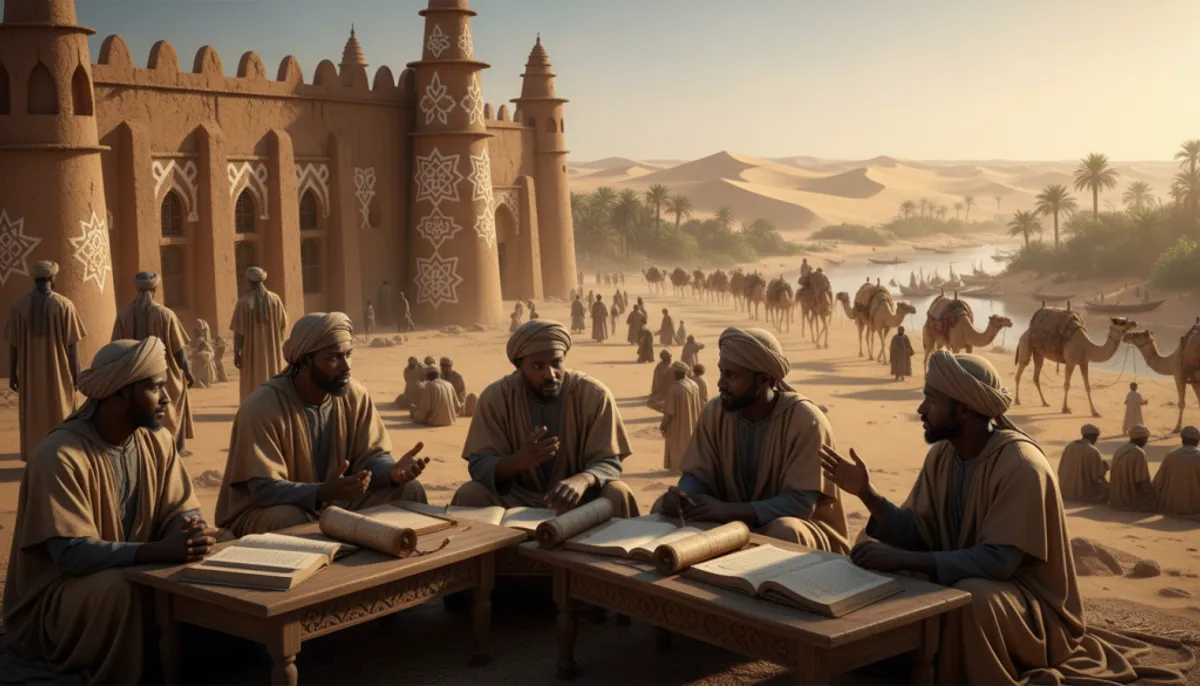
Askia Mohammed overturned this policy as early as 1493. The fervent Muslim sovereign engaged in complete Islamization.
His pilgrimage to Mecca in 1497 reinforced his legitimacy. Askia Mohammed obtained the title of caliph for Sudan.
The ulemas gained considerable influence in administration. Timbuktu became a renowned Islamic intellectual center.
This unification through religion transcended ethnic divisions. Islam forged a common imperial identity.
Territorial Expansion and Military Strategies
Revolutionary tactical innovations allowed this armed force to achieve unprecedented regional dominance. The maximum expansion was realized through exceptional military organization.
Conquest Tactics and Military Innovations
Sonni Ali Ber completely transformed military power. He created a fleet of 400 ships to transport his troops across the river.
The land army consisted of 30,000 infantry and 10,000 specialized cavalry. These soldiers wore iron mail outfits with improved weapons.
The military campaigns extended in all directions. To the south, the Mossi of Yatenga were defeated near Bendugu.
Each neighboring kingdom had to face this impressive force. The conquest of strategic cities like Timbuktu strengthened the empire.
Despite this power, some resistances persisted. The Borgou and certain Hausa cities put up a tenacious defense.
Internal Conflicts and the Fall of the Songhai Empire
The peak of the Songhai Empire was followed by a period of internal tensions that hastened its decline. The deposition of Askia Mohammed in 1529 inaugurated twenty years of destructive dynastic conflicts.
Dynastic Conflicts and Decline Factors
The absence of clear succession rules generated fratricidal struggles. Each death of a sovereign triggered new competitions for power.
The Askia dynasty experienced its terminal decline after the death of Askia Daoud in 1582. A plague epidemic coincided with this critical period.
The imperial state also had to face major economic challenges. European maritime routes diverted vital trans-Saharan trade.
In 1591, the Moroccan invasion from the north sealed the end of the empire. The Battle of Tondibi saw the defeat of Songhai armies against better-equipped forces.
The last reign of Askia Ishaq II marked the final collapse. The Songhai Empire fragmented into a dozen rival principalities.
The Lasting Legacy of the Songhai Empire in West Africa
More than four hundred years after its fall, the influence of this empire remarkably persists. The sophisticated political systems developed during this era continue to inspire modern administrative structures.
Cultural Transmission and Impact on Contemporary Societies
The economic history reveals surprising innovations. The empire already possessed advanced financial concepts for its time.
Among these remarkable economic achievements:
- An organized banking system with exchange rates
- A stock exchange for commercial transactions
- Checks used by merchants
These mechanisms foreshadowed contemporary financial institutions. They demonstrate an exceptional economic vision.
The Songhai language still unites nearly 9.5 million people. This population is spread across five countries in the region.
Timbuktu retains its status as a prestigious intellectual center. Under the reign of the Askia, this city attracted scholars from around the world.
The kingdom of Dendi has preserved imperial traditions. This continuity ensures cultural transmission to this day.
The architectural legacy testifies to lasting craftsmanship. The medieval multi-story houses impress with their technical ingenuity.
This empire proved that an African civilization could compete with the great global powers. Its legacy is a source of pride for the entire continent.
Conclusion
A thorough study of this civilization reveals valuable lessons for understanding pre-colonial Africa. This empire marked its century with exceptional achievements.
Its strategic position on the Niger and control of trans-Saharan trade ensured its prosperity. The innovative army and centralized administration consolidated its power throughout the region.
Despite its end in 1591, the legacy of the Songhai Empire endures after more than four hundred years. Its history still inspires contemporary generations.
This article demonstrates how African societies developed advanced civilizations long before the colonial period. Their contribution to world heritage deserves thorough recognition.
The exploration of this West African history enriches our understanding of the continent. It invites further discovery of African cultural treasures.
FAQ
When and how did the Songhai Empire actually emerge?
The empire truly began to rise in the 15th century, succeeding the Mali Empire. Sonni Ali Ber, a charismatic military leader, unified several cities along the Niger River, such as Gao and Timbuktu, to form a major regional power.
What was the importance of trade for this empire?
Trade was vital! The empire controlled lucrative trans-Saharan trade routes. Gold, salt, and slaves were exchanged, making the wealth of the state and its great cities.
Who was Askia Mohammed and how did he change the empire?
Askia Mohammed came to power after Sonni Ali. He consolidated the empire, reformed the administration, and promoted greater adoption of Islam, making Timbuktu a famous center of learning and religion.
What role did the Niger River play in daily life?
The Niger River was absolutely central. It served as an artery for trade and transport, provided water for agriculture, and connected different regions of the empire, making it a strategic axis.
What ultimately caused the fall of this great empire?
Several factors led to the decline. Internal power struggles weakened the empire, making it vulnerable. By the end of the 16th century, a Moroccan invasion equipped with firearms overcame its traditional army.