
Welcome to a captivating journey into one of the most vibrant traditions of West Africa. This remarkable people, numbering over 35 million souls, shines far beyond the borders of Nigeria.
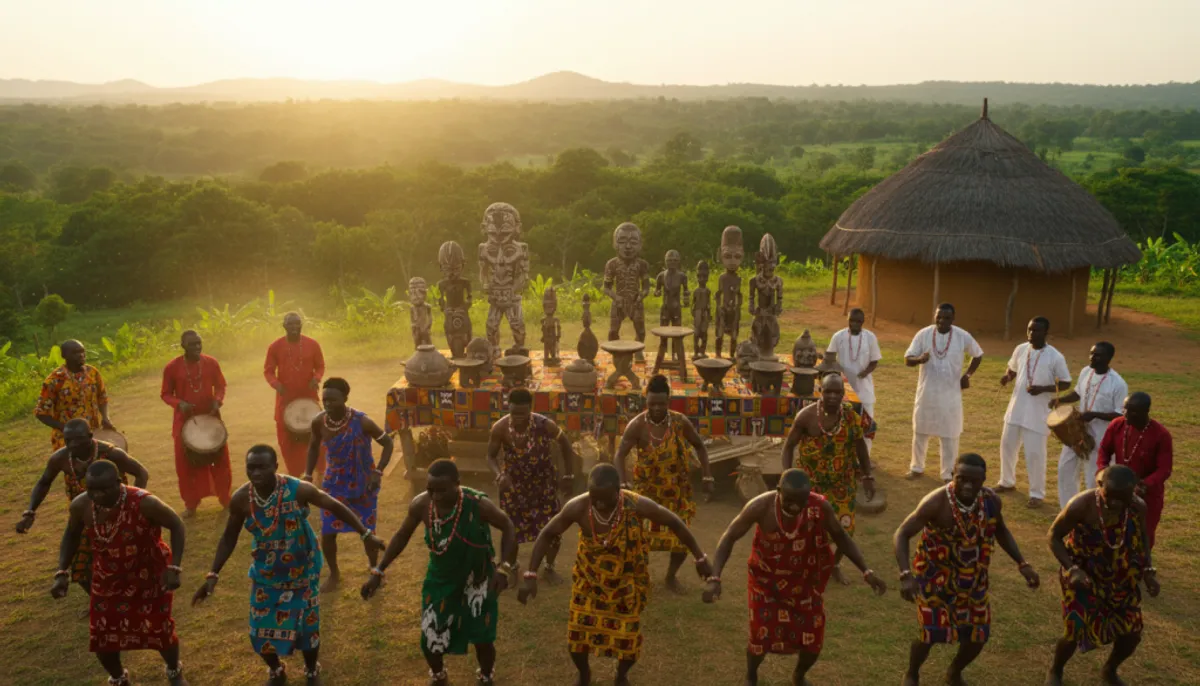
You will discover how this community has shaped its unique identity through millennia of history. Their social, artistic, and spiritual systems continue to enrich the daily lives of millions today.
This article will present the many facets of Igbo culture. From ancestral origins to contemporary practices, we will explore together the culinary traditions, artistic expressions, and distinctive social organization.
Prepare to understand why this culture represents an invaluable heritage. The core values of this people – entrepreneurship, resilience, and community spirit – positively influence our modern society.
Key Points to Remember
- Discovering one of the most dynamic cultures in West Africa
- Exploring a unique identity shaped over millennia
- Presentation of social, artistic, and spiritual systems
- Journey through ancestral traditions and contemporary practices
- Understanding core values and their modern influence
- Importance of this cultural heritage for Africa and the diaspora
Discovering Igbo Culture: History and Origins
Contrary to popular belief, the Igbo political organization combines monarchy and democracy. This rich history shows how different forms of governance coexisted.
The Origins of the Igbo and Their Ethnic Formation
The Nri Kingdom (948-1911) represents one of the oldest political systems. Led by the Eze Nri, this theocratic government exerted extensive spiritual influence.
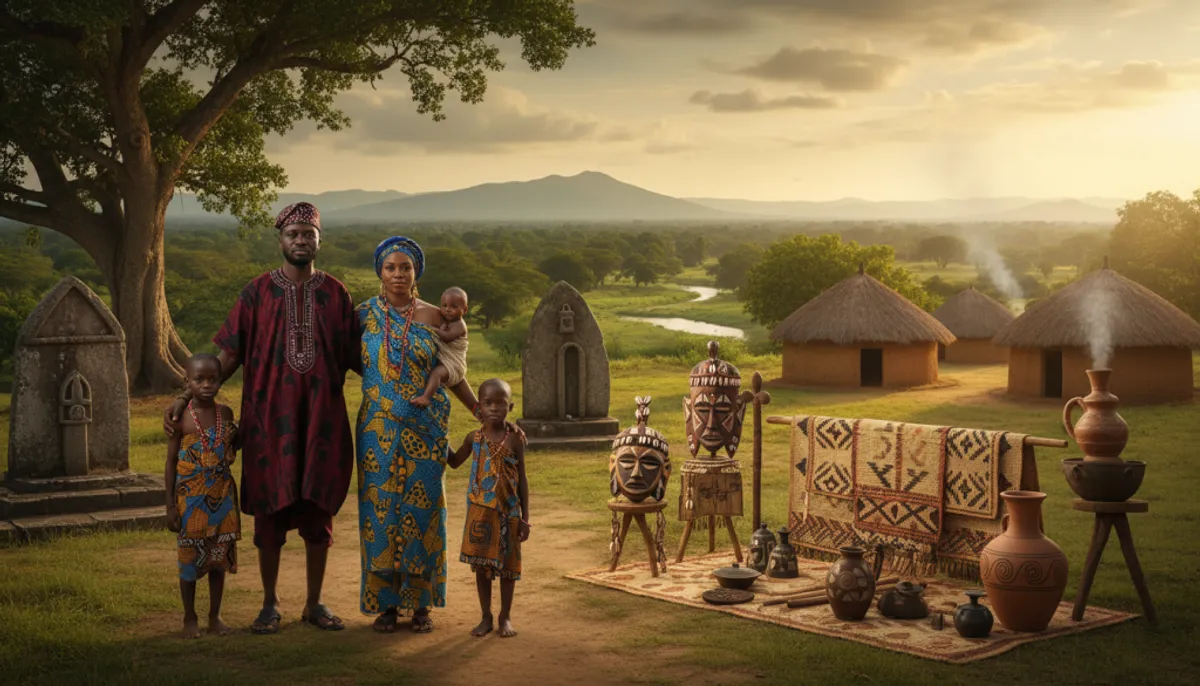
The secret society Nze na Ozo performed crucial judicial functions. It maintained social balance through purification rituals.
Traditional Kingdoms and Political Systems
The Aro Confederacy (1690-1902) united 19 city-states under a constitutional monarchy. Its economic power relied on palm oil trade.
Most communities practiced a remarkable democratic system. Councils of elders and age grades allowed for collective decision-making.
This decentralized model represents one of the oldest democratic systems in Africa. Important decisions engaged the entire community.
The Traditions and Customs of the Igbo
Igbo traditions come alive through ancestral rituals that shape community life. These practices are the social glue that unites generations.
Religious Practices and Ancestral Beliefs
Spirituality permeates every aspect of existence. Beliefs honor natural forces and ancestors.
The kola nut, known as Oji, symbolizes hospitality during significant events. Its blessing ritual followed by sharing adheres to specific protocols.
Cultural Festivals and Rituals
The New Yam Festival marks the harvest of yams, a sacred food. This annual celebration expresses gratitude towards the nourishing earth.
The Mmanwu festival features masked dancers creating a bridge between the visible and invisible worlds. These manifestations strengthen community ties.
The traditional lunar calendar structures time in natural cycles. Each community follows this ancestral rhythm for its celebrations.
Art, Music, and Craftsmanship in the Igbo Universe
The artistic expression of this West African people shines through visual and auditory creations of exceptional richness. These art forms constitute a living language that conveys values and stories.
Masks, Sculptures, and Other Art Forms
Artisans excel in the creation of ceremonial masks with deep symbolism. Each piece tells a specific story.
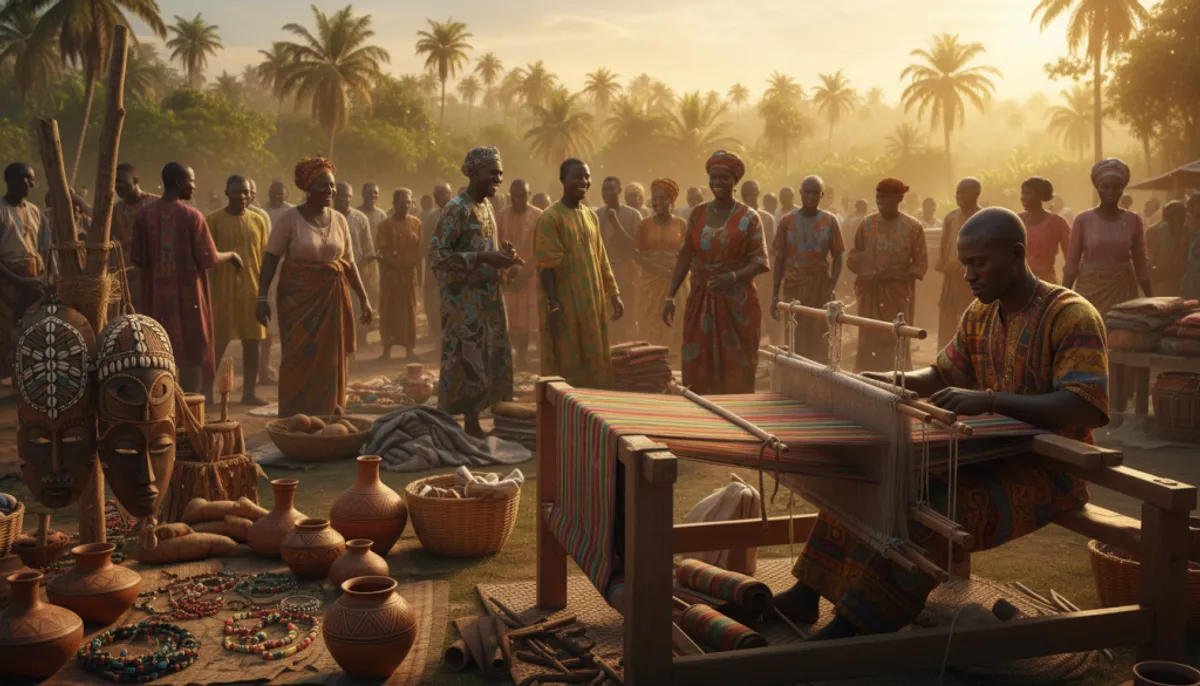
Wooden sculptures represent ancestral figures and deities. These works are used during important rituals.
The Impact of Highlife and Traditional Instruments
Traditional music employs a remarkable diversity of instruments. Each community develops its own rhythmic variations.
Highlife represents a brilliant fusion of jazz and ancestral sounds. This musical genre enjoys phenomenal success in West Africa.
| Instrument | Type | Characteristic | Usage |
|---|---|---|---|
| Udu | Percussion | Resonant clay pot | Ceremonies |
| Igba | Percussion | Similar to the djembe | Rhythmic ensembles |
| Opi | Wind | Traditional flute | Melodies |
| Ogene | Metal | Forged iron bell | Main rhythm |
Artists like Oliver De Coque popularize this unique style. Their musical legacy continues to inspire contemporary creations.
This artistic expression goes beyond mere entertainment. It accompanies all significant moments of collective existence.
Igbo Cuisine: Flavors and Culinary Traditions
The gastronomy of this West African community reveals a symphony of flavors where each dish tells an ancestral story. This traditional cuisine far exceeds mere sustenance to become a true cultural language.
Iconic Dishes and Their Cultural Significance
Yams occupy a central place in the diet, symbolizing prosperity and agricultural success. Men were traditionally judged on their ability to cultivate this sacred tuber.
The kola nut, known as Oji, represents hospitality during major social events. Its sharing ritual follows specific protocols that strengthen community bonds.
Local Ingredients and Their Symbolisms
Fermented cassava (akpu) and taro (ede) demonstrate culinary ingenuity in transforming local resources. These staple ingredients adapt perfectly to the regional climate.
Dried fish head adds umami depth to preparations while serving as an essential protein source. Each culinary element carries spiritual and social significance.
The tradition of ọmụgwọ illustrates the deep connection between food and family health. Ancestral recipes restore the well-being of women after childbirth.
Conclusion
Beyond historical trials, this African tradition demonstrates exceptional resilience. The slave trade and the Biafran war deeply marked the communities involved.
Despite these challenges, the cultural heritage thrives today across Africa. Millions continue to uphold this rich identity in various countries.
The diaspora embodies a remarkable entrepreneurial spirit. International figures illustrate the excellence valued by this society.
Preserving this language and these traditions remains essential for future generations. This unique heritage enriches our human diversity.
FAQ
Where does the Igbo people primarily live?
The majority of the population resides in southeastern Nigeria. There are also vibrant communities in the diaspora, particularly in Europe and America.
What is the basis of traditional social organization?
It is based on the extended family and the village. Age grades and acquired titles also play a significant role in the structure of society.
What is the staple food of the cuisine?
Cassava is very important, often prepared as garri or fufu. Palm oil is another central ingredient that gives color and flavor to many dishes.
Do masks have a special significance?
Absolutely! They are not just art objects. They are used during festivals and rituals to represent ancestral spirits and play a vital role in ceremonies.
How has history shaped modern identity?
Events like colonization and the slave trade have had a profound impact. Today, this heritage and a strong tradition of business success continue to forge a unique and resilient identity.