
Welcome to this immersion into the heart of a European culture that is unknown yet fascinating. Slovakia has unexpected treasures in store for you.
This country in Central Europe has about 5.4 million inhabitants. Its unique geographical position has shaped a rich and complex identity.
Slovak history dates back to the origins of the Slavs. It culminates with the independence achieved in 1993. This historical trajectory has profoundly marked local traditions.
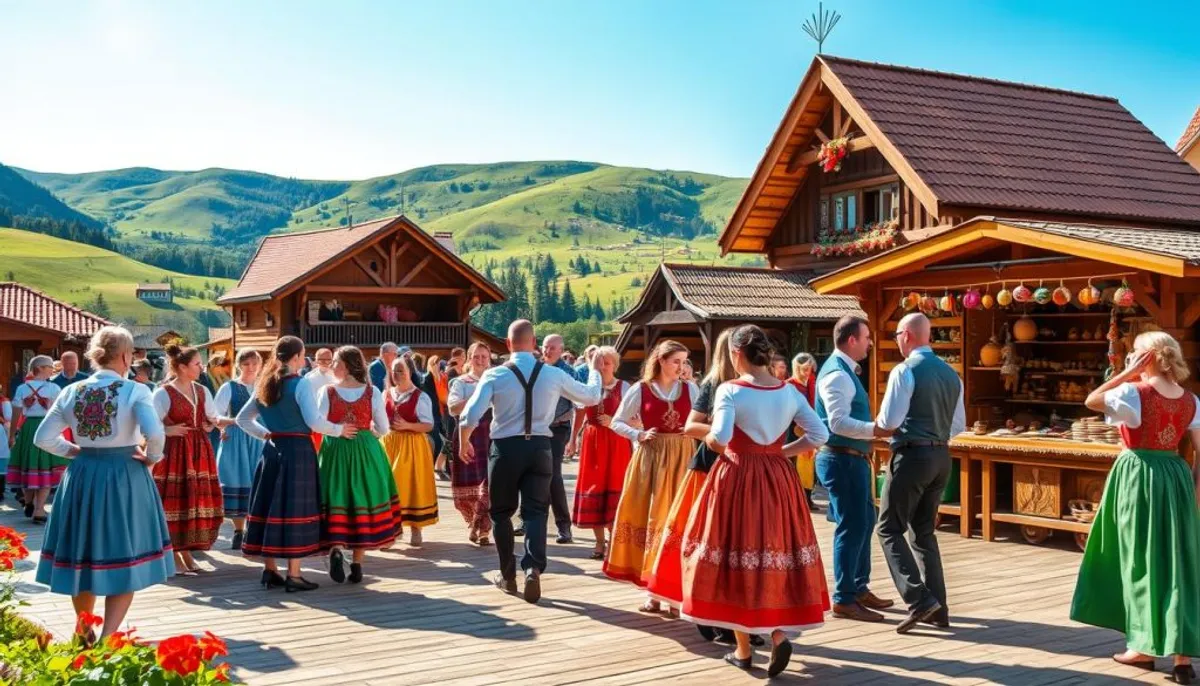
Folk customs are particularly vibrant. Embroidered costumes, ancestral festivals, and traditional music rhythm the lives of communities.
Gastronomy reflects this authentic soul. Robust dishes and typical beverages tell the deep connection with the land and the seasons.
Religious practices still structure daily life. They coexist with a dynamic artistic scene, blending medieval heritage and contemporary creativity.
Key Points to Remember
- Slovakia has a unique cultural identity in Central Europe
- Its history dates back to the origins of the Slavs with recent independence in 1993
- Folk traditions are very present in daily life
- Gastronomy reflects an authentic rural and Slavic heritage
- Religious practices still strongly influence society
- The artistic heritage combines medieval wealth and modern creativity
- The geographical position has shaped a culture with multiple influences
Introduction: An Overview of Modern Slovakia
Discover the current face of this dynamic republic born in 1993. The peaceful separation from the Czech Republic marked its entry onto the international stage.
This country has about six million inhabitants. It quickly integrated into European institutions after its independence.
Daily life combines Western modernity and ancestral traditions. This duality defines contemporary national identity.
The Slovak economy shines in the global automotive industry. It coexists with preserved mountainous landscapes like the Tatras.
| Neighboring Country | Direction | Border Length |
|---|---|---|
| Poland | North | 541 km |
| Ukraine | East | 97 km |
| Hungary | South | 677 km |
| Austria | Southwest | 106 km |
| Czech Republic | Northwest | 252 km |
Bratislava embodies this harmony between historical heritage and European ambitions. The capital on the Danube symbolizes openness to the world.
This young nation values its symbols and traditions. It builds its future while honoring its complex past.
History and Identity Formation of Slovakia
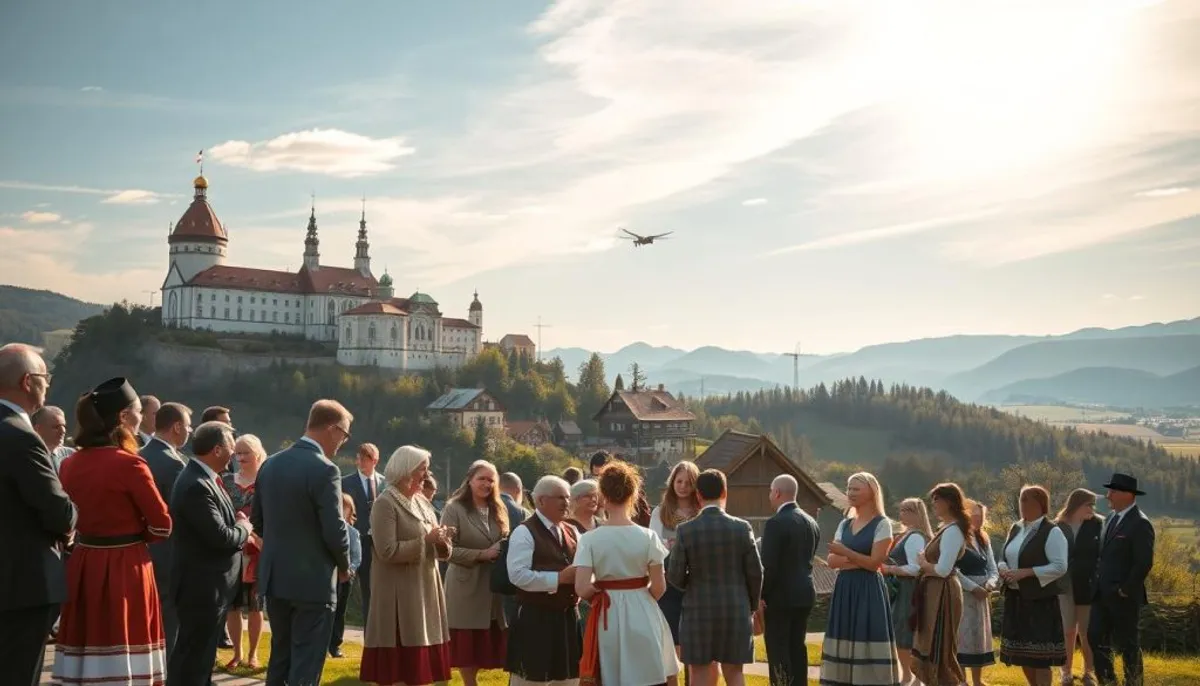
The historical journey of this territory reveals a complex identity. This history begins in the 5th century with the arrival of the Slavic peoples. They crossed the Carpathians and settled permanently.
The Origins and Great Moravia
In the 7th century, the Kingdom of Samo established a first union. Slovaks and Czechs found themselves united under the same authority. This entity foreshadows future alliances.
The 9th century sees the birth of Great Moravia. This first organized Slavic state leaves a major legacy. But in the 10th century, the Magyars conquer this territory.
Key Steps Toward Independence
The 19th century marks a decisive turning point. Ľudovít Štúr codified the language in 1843. This standardization provided a name and a literary identity for the people.
On October 28, 1918, Czechoslovakia experiences its birth. This republic offers the first official recognition. But the union with the Czechs hides tensions.
True independence arrives on January 1, 1993. After the “velvet divorce,” a new sovereign state emerges. This modern republic finally fulfills its national destiny.
The Foundations of Slovak Culture
The language truly constitutes the soul of a nation, and this country is no exception. Its roots run deep in the Western Slavic group.
The Slovak Language and Literary Codification
The Slovak language has three main dialects. Each reflects the regional diversity of this nation. These phonetic and lexical variations enrich the linguistic heritage.
Standardization was a complex process. Anton Bernolák attempted a first codification in 1787. But it was Ľudovít Štúr who succeeded in 1843 with the central dialect.
Today, this language is the only official language of the territory. Municipalities with more than 20% speakers of a minority benefit from bilingual signage.
Foreign Influences and Common Heritage
The linguistic proximity to Czech facilitates mutual understanding. This heritage dates back to the union between Slovakia and the Czech Republic. This period has left a lasting mark on cultural exchanges.
The geographical position has created a crossroads of influences. Slavic traditions, Austro-Hungarian heritage, and Hungarian heritage blend harmoniously. This unique fusion defines contemporary identity.The Hungarian, Romani, and Ruthenian communities contribute to this richness. Their presence adds valuable nuances to the social fabric. This diversity, along with elements of celtic culture, is the strength of the local culture.Customs and Folk Traditions
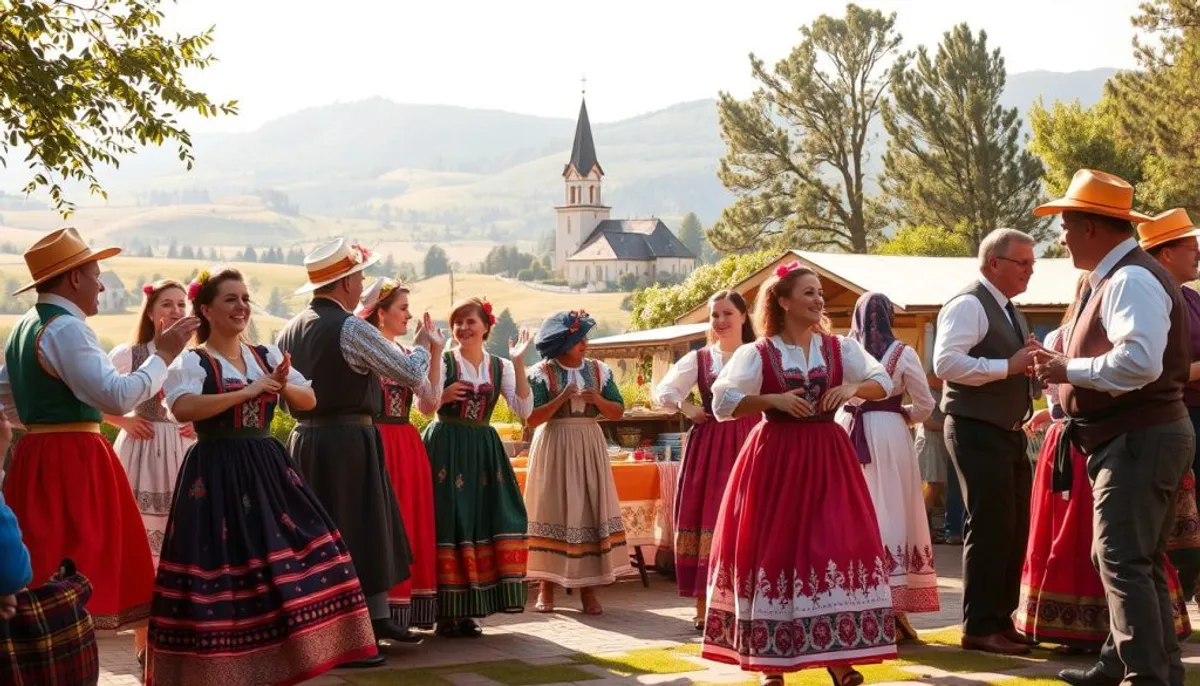
Slovak folklore vibrates to the rhythm of the seasons and ancestral celebrations. These practices constitute a living heritage recognized internationally.
Ancestral Festivals and Seasonal Rituals
The year revolves around significant traditional events. On Easter Monday, young men roam the villages with a Korbač.
In May, the month of love, spring celebrations animate the communities. On the night of June 23 to 24, protective fires illuminate the countryside.
Traditional Costumes and Clothing Symbols
The regional costumes called “kroye” fascinate with their elaborate embroidery. Each region has its distinctive recognizable style.
These traditional outfits once indicated marital and family status. They represent a true visual identity card.
| Heritage Element | Year of UNESCO Recognition | Type |
|---|---|---|
| Fujara and its music | 2008 | Traditional instrument |
| Music of Terchová | 2013 | Musical expression |
| Puppet Theatre | 2016 | Performing art |
These traditions are not mere remnants of the past. They continue to shape contemporary social life.
Festivals in July showcase this folk richness. Dance, music, and theater animate these summer celebrations.
Religious Practices and Spiritual Rituals
The spiritual landscape reveals a fascinating complexity between heritage and modernity. Nearly 69% of the population identifies as Catholic, but the Eurobarometer shows that 40% are atheists or agnostics. This paradoxical effect illustrates a society in transition.
The Importance of Sunday Mass and Religious Celebrations
Sunday holds a sacred place for many families. Slovaks gather at church for weekly mass. This tradition unites generations.
Children discover religious rituals very early. They accompany their parents to cathedrals and churches. Easter represents a particularly intense moment.
This holiday rivals Christmas in importance. It combines Christian devotion and ancestral customs. Extended family reunions strengthen community ties.
The country showcases notable diversity within Christianity. There are 62% Roman Catholics and 8.5% Protestants. This variety enriches spiritual life.
The religious history also bears painful traces. Only 2,300 Jews live in the country today, compared to 90,000 before the war. This reduction in number testifies to past tragedies.
Religion functions as an identity marker for Slovaks. It structures social relations within communities. This cultural recognition has a unifying effect despite increasing secularization.
Slovak Gastronomy and Culinary Traditions
The Slovak table tells a story of terroir and ancestral traditions. This generous cuisine reflects the rural and mountainous soul of the country.
Local products occupy a central place. Meats, potatoes, and fermented dairy products form the basis.
Iconic Dishes: Bryndzové halušky and Pirohy
The national dish remains undoubtedly Bryndzové halušky. These potato dumplings are accompanied by sheep cheese and crispy bacon.
Pirohy represent another classic. These dumplings are often filled with sheep cheese. The zemiaková placka, a thick pancake, completes this culinary palette.
Traditional Beverages and Local Winemaking
The tradition of strong spirits runs deep. Slivovica (plum) and Borovička (juniper) accompany festive moments.
Offering a glass of Slivovica symbolizes hospitality. Refusing this honor would be considered impolite according to custom.
Southern winemaking produces quality wines. Local Pilsner-style beers are also very popular.
Arts and Music: The Expression of Slovak Identity
Slovak arts express a deep national identity through various creative forms. This rich artistic tradition dates back several centuries and continues to evolve today.
The cultural gift vouchers in france heritage manifests in prestigious institutions and contemporary creations. These artistic expressions tell the story of the people and their aspirations.
Theatrical Scene and Historical Visual Arts
The Slovak theatrical scene impresses with its vitality. Institutions like the Slovak National Theatre, founded in 1920, present classic and modern works.
The Arena Theatre in Bratislava has been operating since 1828. These establishments form a dense cultural network across the country.
Visual arts have a remarkable medieval tradition. Master Paul of Levoča represents this ancient excellence.
In the 20th century, artists like Koloman Sokol renewed visual creation. Their work combines traditional techniques and modern innovations.
Traditional and Contemporary Music
Slovak music offers extraordinary diversity. Traditional instruments like the fujara coexist with modern classical compositions.
Composers like Eugen Suchoň made their mark in the 20th century. Their work still resonates in concert halls today.
Soprano Edita Gruberová has conquered international stages. Her success testifies to the musical excellence of the country.
Dance also holds an important place. The Slovak National Theatre Ballet has been presenting remarkable performances since 1920.
Conclusion
The identity journey of this people demonstrates exceptional resilience in the face of historical challenges. This quest for authenticity has forged a unique heritage in Central Europe.
The recent cultural pass 2026 independence of 1993 marked a decisive turning point for the flourishing of this culture. Freed from the constraints of the Czechoslovak union, it has been able to fully assert itself on the international stage.Today, this nation occupies a remarkable place despite its modest size. UNESCO recognition of several traditional elements testifies to this rich heritage.
The balance between ancestral traditions and danish modernity particularly characterizes this society. This harmony manifests within communities as well as in contemporary artistic expressions.The birth of this republic has strengthened the attachment to national symbols. Each visit reveals a warm people, proud of their heritage and open to the world.
FAQ
What is Ľudovít Štúr's influence on the Slovak language?
Ľudovít Štúr is a central figure in national history. In the 19th century, he codified the modern language, unifying the dialects and providing the people with a powerful symbol of identity. His work laid the foundations for literature and cultural recognition.
What are the most popular folk events in Slovakia?
The country lives to the rhythm of many festivals! The Východná Festival is a must for music and dance. Christmas markets, like those in Bratislava or Košice, are magical. The May rituals, with the raising of the poles, are also deeply rooted in traditions.
Is bryndzové halušky really the national dish?
Absolutely! This simple dish made from potatoes and sheep cheese is a true institution. It can be found in all typical restaurants. It perfectly represents the rustic and flavorful cuisine of the Carpathians.
How is traditional music preserved today?
The scene remains very lively! It is maintained by folk groups in every region and during major events. Contemporary music often draws inspiration from it, creating a unique link between heritage and modern creation.
Do Slovakia and the Czech Republic share the same culture?
Although having a common history within Czechoslovakia, each country has developed its own identity after independence in 1993. The language, certain traditions, and aspects of daily life differ, even though a fraternity and reciprocal influences persist.