
Welcome to this comprehensive guide that invites you to discover an extraordinary society. This city-state, although small in size, represents a true mosaic where four official languages coexist and no less than ten recognized religions thrive.
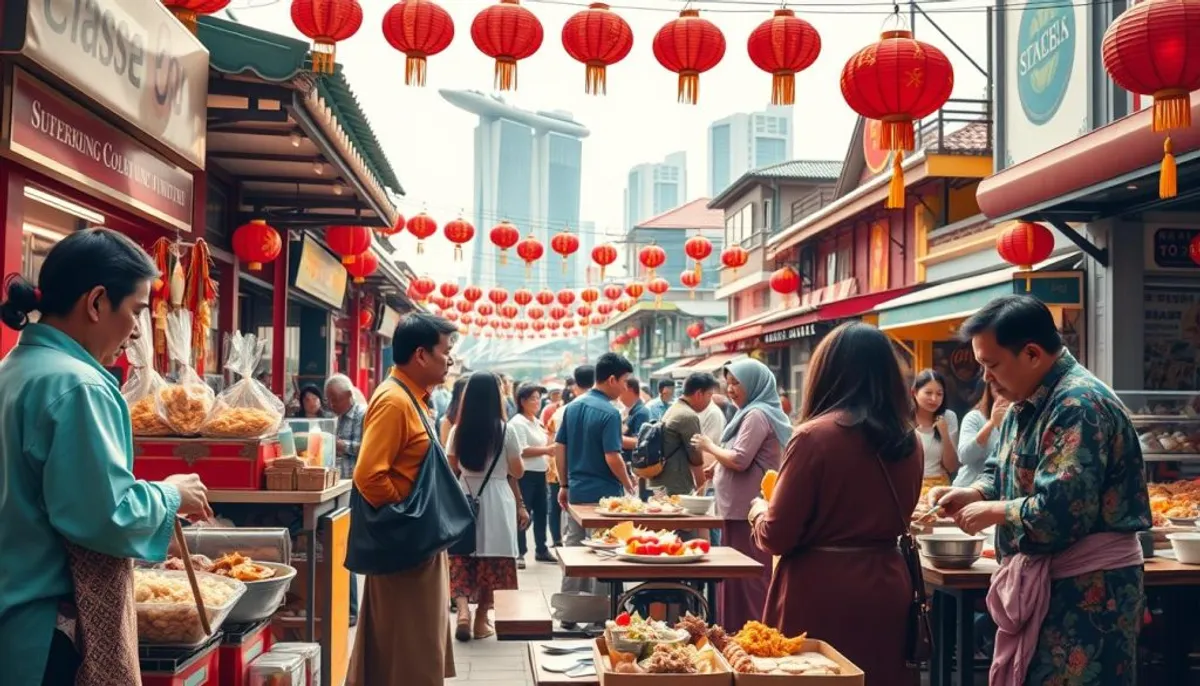
This island nation has a population of over 4.6 million inhabitants. It is primarily composed of Chinese, Malay, and Indian communities. Each brings its distinctive traditions, creating incredible richness.
In 700 years of history, the country has transformed from a modest trading post to a vibrant metropolis. Today, this diversity manifests in all aspects of daily life. From the cuisine of hawker centers to colorful celebrations, harmony reigns.
Our overview will guide you through the foundations of this unique identity. We will explore how Asian and Western influences merge to create a model admired throughout the world.
Key Points to Remember
- Singapore is a multiethnic society with four official languages.
- The population consists of Chinese (75%), Malays (14%), and Indians (7%).
- Ten different religions are officially recognized in the country.
- The city-state has a history of 700 years, evolving from a trading post to a modern metropolis.
- Cultural diversity is reflected in cuisine, festivals, and architecture.
- Singapore is a remarkable example of harmony and peaceful coexistence.
Historical Heritage and Cultural Influences
Behind modern development lies a fascinating history that begins over 700 years ago. This guide reveals how different civilizations have shaped this unique nation.
The Beginnings with Stamford Raffles and Colonial Evolution
In 1819, Thomas Stamford Raffles established a British trading post. This initiative aimed to counter Dutch influence in the region.
The island joined the Straits Settlements with Malacca and Penang. It became a Crown colony in 1869 and a strategic naval base.
The Influence of Empires and Trade Exchanges
Long before Raffles, the region was part of powerful empires. The Sriwijaya and Majapahit empires dominated this part of the world.
The kingdom of Singapura was founded in 1299 by Prince Sang Nila Utama. By the 13th century, Islamic kingdoms emerged in Southeast Asia, enriching the religious diversity.
Significant Traditions and Festivals in Singapore
The annual calendar of Singapore resembles a rainbow of vibrant celebrations. This multicultural society honors its diverse roots through an exceptionally rich festive program.
Calendar of Local Festivals and Celebrations
Starting January 1, the year kicks off with energy. The following months see unique events that rhythm local life.
The Role of Chinese New Year and Thaipusam
The Chinese New Year represents a highlight with its lion dances and fireworks. The subsequent Chingay Procession dazzles with its spectacular floats.
Thaipusam, in January or February, showcases impressive Hindu devotion. Devotees walk the streets with symbolic offerings.
Other Cultural and Religious Festivities
Vesak Day in May honors Buddha in a reflective atmosphere. The Singapore Dragon Boat Festival animates the waterways in June.
Deepavali, Hari Raya Puasa, and Christmas complete this festive tableau. Each community shares its traditions with everyone.
This guide to celebrations reveals how the local culture unites differences. The National Day on August 9 particularly symbolizes this harmony.
Cuisine: A Culinary Journey in Singapore
The culinary experience in Singapore represents a unique sensory adventure in Asia. This city-state deserves its title as the gastronomic capital of the continent.
Each neighborhood reveals different gastronomic treasures. The following guide will help you navigate this exceptional diversity.
The Hawker Centers and Culinary Diversity
These food centers embody the local culinary soul. Once simple street vendors, they have become institutions.
You can find Chinese, Malay, Indian, and Peranakan stalls side by side. This coexistence creates an extraordinary offering at accessible prices.
These street restaurants provide a tasty alternative to fast food. They preserve recipes passed down through generations.
Regional Influences on Gastronomy
Local cuisine draws inspiration from all over Asia. Spices from Tamil Nadu meet flavors from Fujian.
This fusion creates unique dishes that tell the story of migrations. Each neighborhood has its regional specialties.
Sharing a meal in these places strengthens social bonds. This practice is an integral part of daily life in the city.
Our guide invites you to explore these authentic flavors. Discover them around every corner and in all the neighborhoods.
Singaporean Culture in Daily Life
Daily life in Singapore reveals unique social codes that shape the urban experience. This modern society combines Confucian tradition and strict regulation.
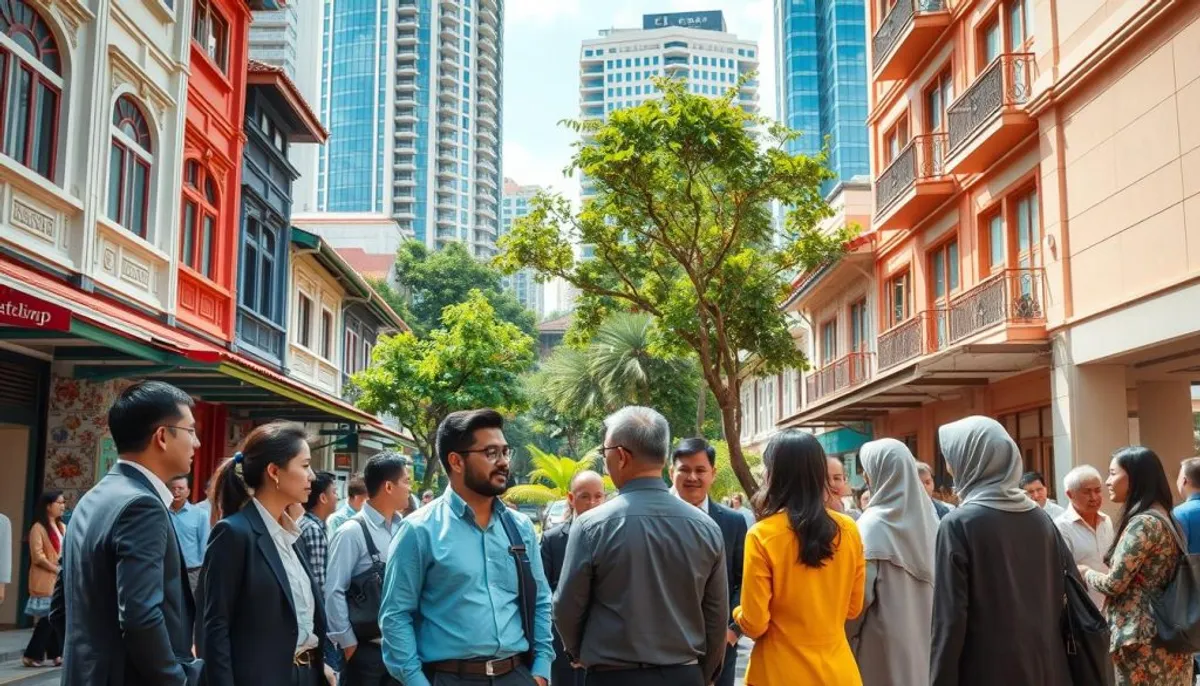
Social Codes and Etiquette in Urban Life
Respect for hierarchy remains fundamental in all interactions. Inspired by Confucian philosophy, this principle profoundly influences relationships.
The notion of "face" structures social exchanges. One must preserve their dignity and that of others, avoiding direct confrontations.
Singaporeans exhibit characteristic emotional reserve. They express their feelings discreetly in public spaces.
| Important Rules | Prohibitions | Applicable Fines |
|---|---|---|
| Public Behavior | Spitting, smoking in public places | Very high |
| Environmental Respect | Littering, chewing gum | Significant |
| Urban Safety | Crossing outside pedestrian crossings | Significant |
The Importance of Order and Cleanliness
The city maintains exceptional cleanliness standards through rigorous regulation. Plainclothes officers ensure compliance with the rules.
The concept of kiasu (fear of losing) influences behaviors. This constant desire for excellence manifests in education and work.
Our guide will help you navigate this polished society. These rules contribute to collective harmony and quality of life.
Religious and Interfaith Influences
Singapore offers a remarkable example of peaceful coexistence among different spiritual traditions. This harmony results from a balanced approach and deep mutual respect.
The Plurality of Beliefs and Their Impact
The religious distribution reflects the ethnic composition. Malays primarily practice Islam, while Chinese mix Buddhism, Taoism, and Confucianism.
Indians are predominantly Hindu. A dynamic Christian community represents 14% of the population, with notable growth among the Chinese. This diversity enriches the spiritual landscape.
Interfaith Dialogue and Social Harmony
The country has learned from the tensions of the 1950s and 1960s. Strict rules today ensure the secularism of the state and freedom of worship.
Dialogue between communities is actively encouraged. Pope Francis recently praised this exceptional capability among the youth.
This religious harmony serves as a model admired throughout the world. It is part of a millennia-old tradition of encounters between civilizations.
Our guide helps you understand how this plurality shapes the rich local culture. Singaporeans experience this diversity as a daily norm.
Iconic Figures and Political Context
The political destiny of Singapore has been shaped by visionary figures who have marked its history. This part of our guide explores how two exceptional personalities have shaped the modern country.
The Historical Role of Lee Kuan Yew and Stamford Raffles
Thomas Stamford Raffles established a trading post in 1819. This colonial foundation launched the economic development of the island.
Lee Kuan Yew, Prime Minister from 1959 to 1990, led the nation to independence. His leadership transformed this small territory into an economic powerhouse.
"I did not spend my life building Singapore to see it all collapse."
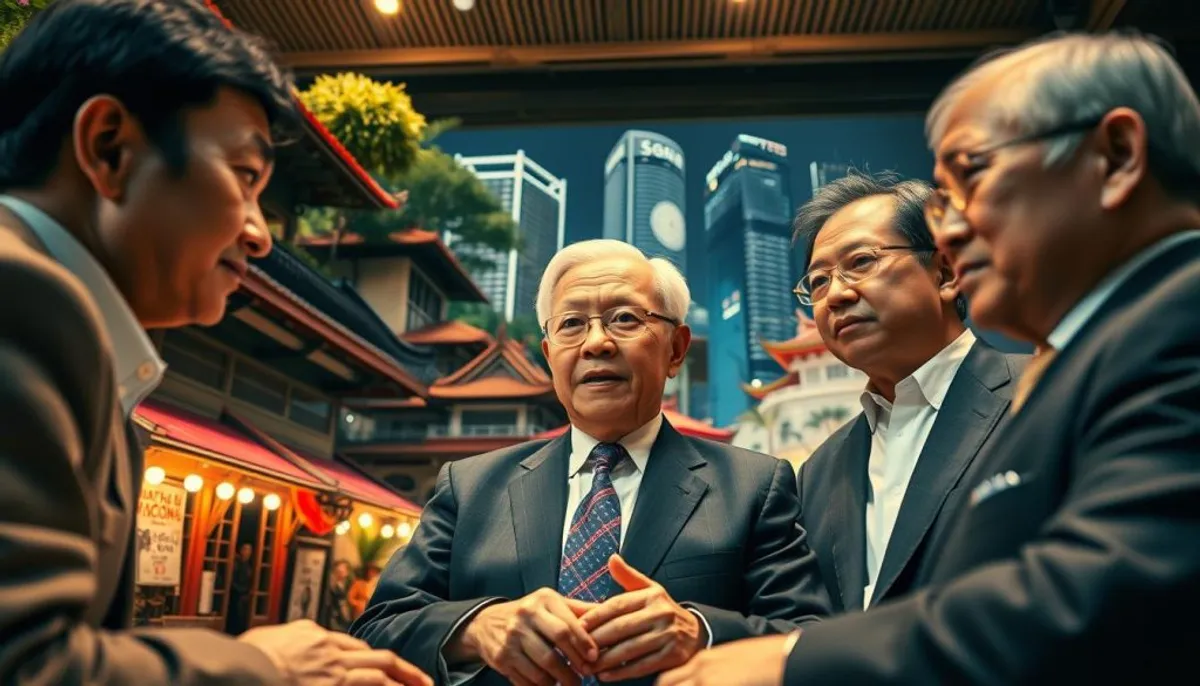
The Political Rise and Democratic System of Singapore
The Japanese occupation (1942-1945) strengthened the desire for autonomy. The country obtained its constitution in 1959 after the return of the British.
The failure of integration with Malaysia led to independence on August 9, 1965. This date marks the beginning of a new political era.
| Key Event | Date | Political Impact |
|---|---|---|
| Foundation of the Trading Post | 1819 | Beginning of British influence |
| Japanese Occupation | 1942-1945 | Strengthening of independence aspirations |
| Independence | August 9, 1965 | Birth of the sovereign state |
The current system is a stable parliamentary democracy. The People's Action Party has dominated political life for many years.
The president, elected for six years, holds a primarily honorary role. The real executive power belongs to the Prime Minister.
This stability has allowed for remarkable economic growth. The recent history of the country is intertwined with its global commercial success.
The Impact of Multiculturalism on Singaporean Society
This multiethnic society has developed unique mechanisms for harmonious coexistence. Multiculturalism permeates every aspect of daily life in this dynamic city.
Our guide offers you a comprehensive overview of this fascinating reality. Let’s discover how this diversity functions in everyday life.
Ethnic Mix and Official Languages
The demographic composition reflects a rich human mosaic. The Chinese represent 75% of the population, followed by Malays (14%) and Indians (7%).
Four official languages coexist harmoniously: Malay, Tamil, English, and Mandarin. Minnan Chinese dominates informal conversations while English serves as a lingua franca.
| Ethnic Group | Percentage | Main Language |
|---|---|---|
| Chinese | 75% | Mandarin/Minnan |
| Malay | 14% | Malay |
| Indian | 7% | Tamil |
| Others | 4% | English |
Life Codes and Cultural Adaptations
Each community preserves its traditions while sharing common spaces. Ethnic neighborhoods like Chinatown and Little India illustrate this symbiosis.
"Our strength lies in our ability to celebrate our differences while building a common identity."
The practice of feng shui reflects Chinese influence in urban planning. This adaptation creates a particular balance between modernity and traditions.
Public places become spaces for intercultural encounters. This reality seems natural to the inhabitants of this Southeast Asian region.
Conclusion
At the end of this exploration, a truth clearly emerges about what makes this nation so exceptional. This comprehensive guide has provided you with a fascinating overview of how age-old traditions and modernity coexist harmoniously.
Every street and all public places testify to this multicultural richness. Understanding social codes becomes essential to fully appreciate life in this dynamic country of Southeast Asia.
Ultimately, this destination offers much more than just a journey. It is an immersion into a living laboratory of mutual respect where every part of the city tells a unique story. Whether you visit for a few years or a few days, this experience will leave a mark on your memory.
FAQ
What are the main influences that have shaped society in Singapore?
The country has been marked by several legacies. The British colonial influence, particularly with Sir Stamford Raffles, laid the foundations of the city. Trade exchanges in Southeast Asia also brought in Malay, Indian, and Chinese traditions. This unique blend creates the current diversity.
Where can one discover the best local cuisine?
For an authentic experience, visit the hawker centers. These open-air food courts are the heart of culinary life. You will taste a delicious mix of flavors from the different communities, such as Hainanese Chicken Rice or Laksa.
How do different religions coexist in the city?
Harmony is an important pillar. Temples, mosques, and churches are found close to each other. Interfaith dialogue is encouraged, especially during festivals like Thaipusam or Chinese New Year. This reinforces mutual respect among residents.
What are the most important festivals not to be missed?
The calendar is rich! Chinese New Year is spectacular, with its parades and markets. Thaipusam, a Hindu celebration, is also very impressive. Each neighborhood lives at its own pace according to the traditions of its inhabitants.
What is the code of conduct to be respected in daily life?
Local etiquette values order and cleanliness. It is important to respect these rules, such as not eating on the subway. Politeness is also highly appreciated in daily interactions, whether in the street or in stores.