
Welcome to this captivating exploration of one of the most influential traditions of East Africa. This heritage continues to significantly shape today's Kenyan identity.
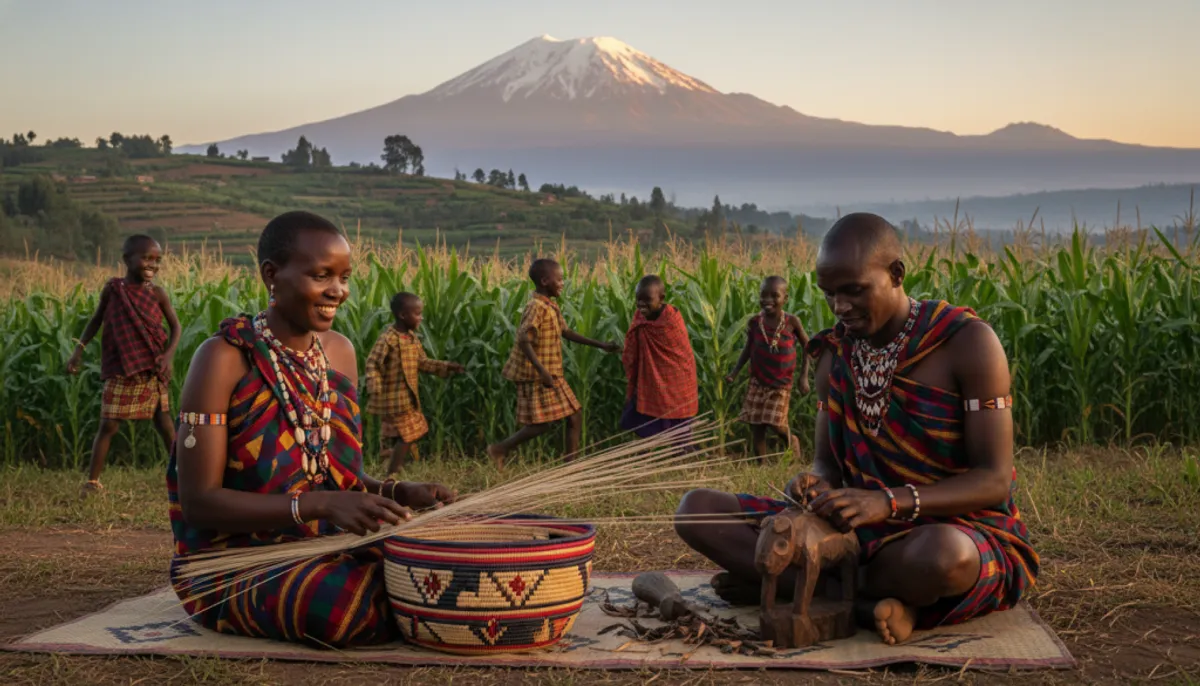
The Kikuyu people, with over eight million members, constitute the largest ethnic group in Kenya. Their history is marked by a central role in the development of the region.
We will dive into a world where ancestral myths meet dynamic modernity. You will explore spiritual beliefs, social practices, and a unique artistic heritage.
Understand why this culture is of paramount importance to Kenya and beyond. It has inspired movements and contributed to economic progress.
Key Points to Remember
- The Kikuyu people are the largest ethnic community in Kenya.
- Their heritage profoundly influences contemporary Kenyan society.
- The richness of their traditions is expressed through art, spirituality, and social life.
- Their history is characterized by resistance and innovation.
- This culture remains alive, being passed down through generations.
- Their impact transcends national borders, affecting the entire African continent.
Origins and History of the Kikuyu People
Let’s delve into the mythological narratives that recount the birth of this important Kenyan ethnicity. Their fascinating history traces back to ancestral legends that explain their origins.
The Founding and Mythical Narratives
According to tradition, all creation begins at the summit of Mount Kenya. The god Ngai established his throne there and created the first couple, Gikuyu and Mumbi.
This ancestral couple gave birth to nine daughters in a sacred grove. Ngai blessed these daughters with nine husbands, thus forming the nine main clans.
The name Gikuyu, carried by the founding ancestor, remains the term that this people uses to refer to themselves. The term “Kikuyu” comes from an external linguistic adaptation.
The Impact of the Colonial Period
This era marked a dramatic turning point in the history of the people. In 1885, the British established their power over ancestral lands.
The colonists confiscated the fertile highlands around Mount Kenya. The Kikuyu ancestors, once prosperous farmers, became squatters on their own land.
| Aspect | Pre-Colonial Period | Colonial Period |
|---|---|---|
| Land Status | Community ownership | Mass expropriation |
| Lifestyle | Settled agriculture | Forced labor and squatting |
| Social Organization | Traditional clans | Destabilization of structures |
This radical transformation sowed the seeds of resistance that would mark the future of the country. However, the ancestors preserved their identity through these trials.
Introduction to the Kikuyu People and Their Identity
Now let’s discover the demographic and identity characteristics of this major population. The Kikuyu people represent a significant numerical force in the Kenyan landscape.
Ancestral Roots in East Africa
With over 8 million individuals recorded in 2019, this ethnic group makes up about 22% of the national population. This community is primarily concentrated in the central region, around Nairobi and Mount Kenya.
The group refers to itself by the name Agikũyũ, although “Kikuyu” is the most widely used international name. Several variants exist, reflecting the linguistic richness of this cultural ensemble.
Connection with Other Bantu Groups
The ethnic ties unite this Kikuyu people with the Kambas and Swahilis. Their language belongs to the Bantu family of Niger-Congo languages.
This linguistic and cultural proximity reinforces their belonging to the larger Bantu family of East Africa. The following table presents the main names of this ethnic group:
| International Name | Name Used by the People | Common Variants |
|---|---|---|
| Kikuyu | Agikũyũ | Gikuyu, A-kikuyu |
| Standard Transcription | Self-designation | Alternative Forms |
| Global Usage | Internal Use | Regional Variations |
The geographical distribution of this community extends far beyond its region of origin. It maintains a strong cultural identity throughout Kenya.
Kikuyu Culture: Traditions and Beliefs
Immerse yourself in the spiritual and traditional universe of this community. The foundations of their value system rest on deeply rooted ancestral beliefs.
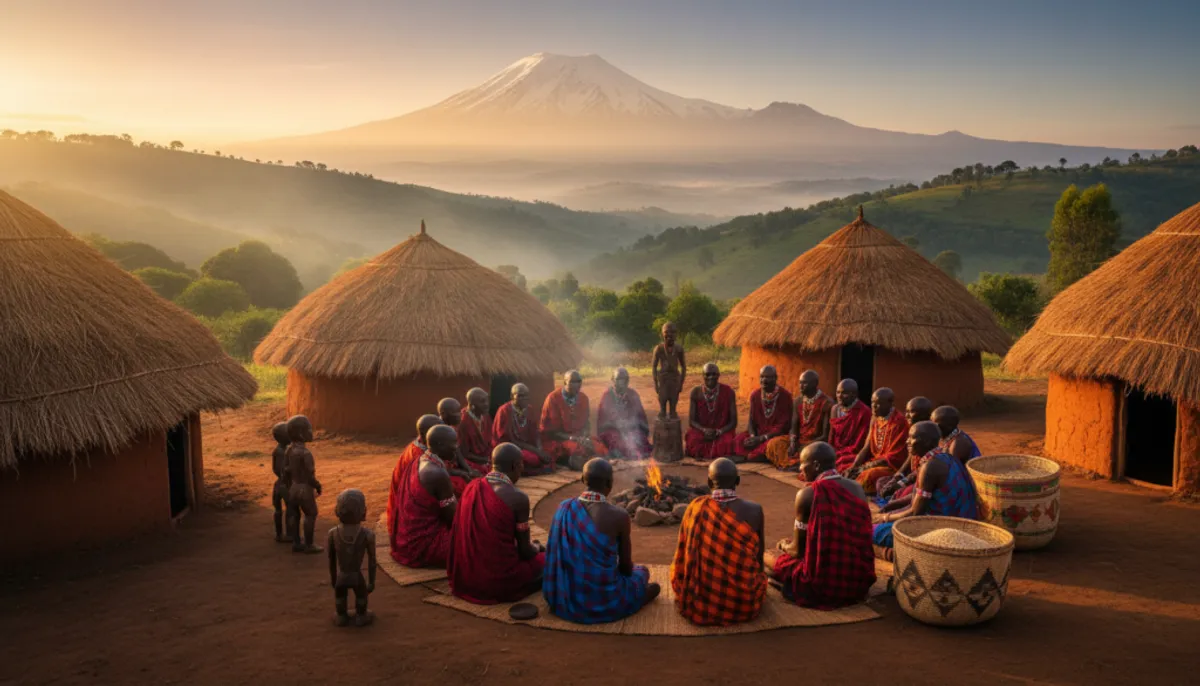
Religious Beliefs and Mythology Surrounding Ngai
Mount Kenya represents the spiritual heart of this tradition. Ngai, the Supreme Creator, resides on its snowy peaks.
Sacred trees like the mugumo and the müküyü serve as places of worship. Traditional rites honor the ancestors and protective spirits.
| Spiritual Aspect | Traditional Practices | Modern Adaptations |
|---|---|---|
| Holy Places | Mount Kenya, sacred trees | Churches and mosques |
| Ancestral Worship | Offerings and sacrifices | Family commemorations |
| Transmission | Orality and initiation | Educational programs |
Oral Transmission and Intergenerational Values
The family plays a central role in preserving traditions. Knowledge is passed down orally from generation to generation.
The naming system for children maintains a living connection with the ancestors. The eldest carries the name of the paternal grandfather, creating family continuity.
This transmission structures daily life and community celebrations. Cultural festivals ensure the longevity of this precious heritage.
Social Organization and Clan Structure
Let’s decipher together the foundations of the traditional clan structure. This social organization is based on remarkable democratic principles.
Nine clans form the basis of this society. Each clan traces its origin from the mythical daughters of the founding couple.
The Clans and Traditional Lineages
The clan system is divided into several patrilineal lineages. Each lineage has specific land rights over ancestral territories.
The selection of lineage leaders follows a democratic process. Men unanimously choose leaders for their wisdom and skills.
The family constitutes the basic unit of this organization. A family head guides and protects the members while passing down traditions.
The elders play a central role in governance. They make collective decisions and preserve ancestral customs.
This acephalous structure promotes democratic participation. It maintains community cohesion at various levels.
Rituals, Rites of Passage, and Traditional Ceremonies
Key moments in existence are marked by ancestral rituals. These celebrations accompany every significant transition in individuals' lives.
Marriage Ceremonies and Agricultural Rites
The traditional marriage follows five well-defined stages. Each phase symbolizes the progressive union of two families.
The dowry, negotiated over several years, includes livestock. This practice strengthens alliances between different clans.
Agricultural celebrations honor the cycle of seasons. Dances and songs thank the ancestors for the fertility of the land.
Initiations and Other Life Transitions
Young men participate in significant initiation ceremonies. Circumcision marks their transition to adulthood.
The riika system classifies individuals by age groups. This organization creates lasting social bonds.
Funerals involve the entire community. Songs and prayers accompany the deceased to the world of ancestors.
- Rites of passage from birth to death
- Age groups creating generational identity
- Marriage ceremonies in five symbolic stages
- Agricultural celebrations for harvests
Art, Language, and Traditional Craftsmanship
Let’s delve into the artistic and linguistic universe of this community. These creative expressions embody a vibrant and dynamic identity.
The Kikuyu Language and Its Cultural Importance
The language known as Gikuyu has six million native speakers. This linguistic treasure uses a unique tonal structure where intonation changes the meaning.
The name Gikuyu is favored by the people themselves. The international term “Kikuyu” comes from historical adaptations.
This language preserves oral traditions, songs, and ancestral stories. It remains fundamental during important ceremonies.
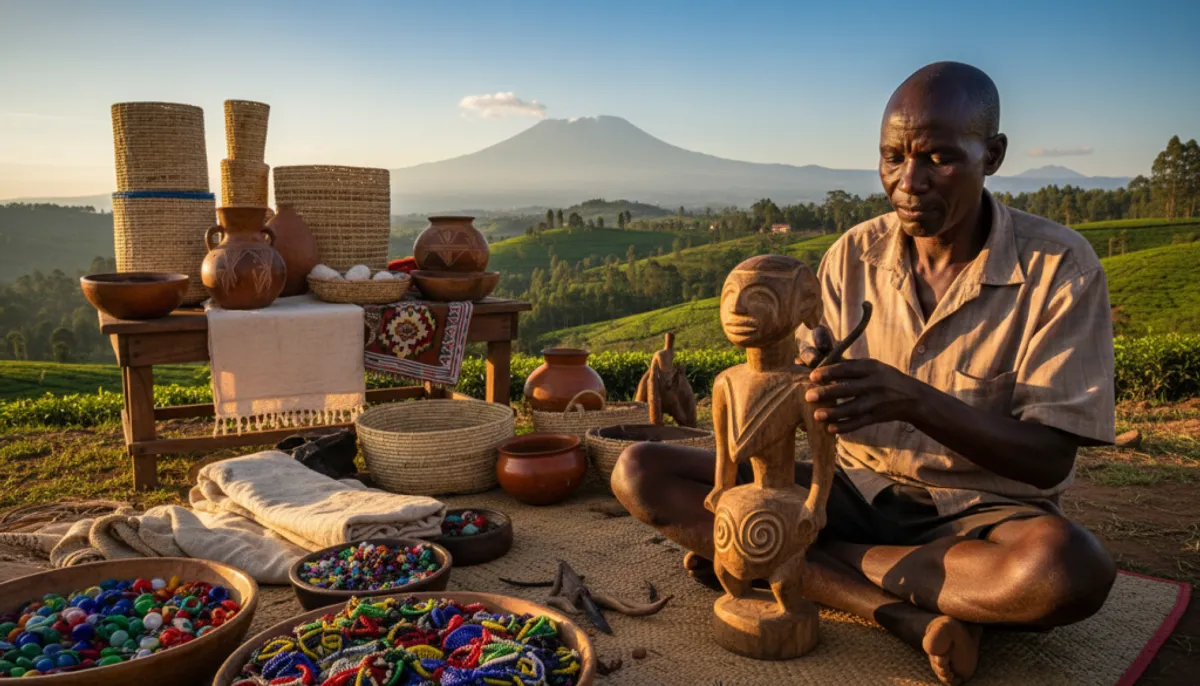
| Craft Form | Materials Used | Main Function | Transmission |
|---|---|---|---|
| Wood Carving | Local woods | Rituals and decoration | Master to apprentice |
| Traditional Pottery | Natural clay | Food storage | Family generations |
| Handweaving | Plant fibers | Household items | Mother to daughter |
| Traditional Jewelry | Beads, shells | Special ceremonies | Specialized artisans |
Artisans create functional and aesthetic pieces. Each work carries deep and symbolic messages.
These skills are faithfully passed down through generations. They maintain a precious link with ancestral heritage.
The Mau Mau Uprising and the Struggle for Independence
A crucial chapter in history opens with armed resistance against British colonialism. The Mau Mau movement emerges in 1952 to defend the confiscated ancestral lands.
This intense struggle lasts eight years until 1960. It mobilizes thousands of fighters determined to regain their dignity.
Iconic Figures and Their Stories
Four charismatic leaders lead this liberation movement. Dedan Kimathi, Stanley Mathenge, Waruhiu Itote, and Musa Mwariama become symbols of courage.
The founding group “The Forty Group” gathers former World War II fighters. Their military experience strengthens the organization of resistance.
The Political Legacy in Contemporary Kenya
After independence in 1963, Jomo Kenyatta becomes the first president of the country. This transition marks a turning point in Kenyan political history.
Three of the four Kenyan presidents descend from this community. Their leadership has a lasting influence on national development.
The recent rehabilitation of the Mau Mau movement finally honors these unsung heroes. Monuments commemorate their sacrifice for freedom.
Socio-Economic Impact and Innovations in Kenya
The economic dynamism of this community represents a fundamental pillar of Kenyan development. Its influence extends across all sectors of the country.
Agriculture, Trade, and Entrepreneurial Initiatives
Family farms expertly exploit the fertile lands of the central mountains. This agricultural system combines subsistence crops and export productions.
The entrepreneurial spirit particularly distinguishes this people. Businessmen excel in various innovative sectors.
| Economic Sector | Main Activities | Regional Impact | Recent Innovations |
|---|---|---|---|
| Agriculture | Coffee, tea, horticulture | National exports | Sustainable techniques |
| Craftsmanship | Jewelry, sculptures | Cultural tourism | Contemporary design |
| Trade | Dynamic SMEs | Job creation | Digitalization |
| Services | Education, finance | Urban development | Green technologies |
Education plays a central role in this success. Wangari Maathai illustrates this multidisciplinary excellence.
Her Nobel Prize in 2004 demonstrates the international impact of these initiatives. The community unity strengthens these economic achievements.
Conclusion
This journey through Kikuyu heritage reveals a remarkable saga of resilience and innovation. The Kikuyu people have masterfully preserved their identity while adapting to contemporary challenges.
Their role in building independent Kenya remains fundamental. From the Mau Mau movement to their current influence, this community has shaped the history of the country.
Ancestral traditions continue to structure community life. The clan system and ceremonies persist with pride among the new generations.
This unique cultural ensemble, rooted near Mount Kenya, remains relevant in today’s society. Its importance transcends borders, inspiring other African groups.
Despite colonial trials, the Kikuyu people have transformed their lands into economic prosperity. This extraordinary resilience ensures their ongoing contribution to national development.
This fascinating culture represents an essential part of African heritage. Its discovery enriches us all, amidst continental diversity.
FAQ
Who are the Kikuyu and where do they primarily live?
This ethnic group is one of the largest in Kenya. They primarily inhabit the central region of the country, around Mount Kenya, which they consider a sacred land. Their traditional name is Gikuyu.
What is the traditional social organization of this community?
Their social system is structured around clans and family lineages. Each family unit is part of a larger whole, creating strong cohesion within the community.
What role did the Mau Mau movement play in their history?
The Mau Mau uprising was a crucial struggle for Kenya's independence during the 1950s. Figures like Jomo Kenyatta emerged from it, and this movement profoundly impacted the country's political history.
What are their main traditions and beliefs?
Their traditions include a belief in a single god, Ngai, associated with Mount Kenya. Rites of passage, such as initiations, and agricultural ceremonies play a central role in transmitting their history and values.
How have their language and craftsmanship developed?
The Gikuyu language is essential for preserving their identity. Their traditional craftsmanship, including basketry and beadwork, reflects their heritage and connection to the land.