
At the heart of Ethiopia beats the pulse of a major people. The Oromo are the largest ethnic group in the country, representing nearly 36% of the population. Their main home is the Oromia region, where afaan oromoo, a Cushitic language, resonates.
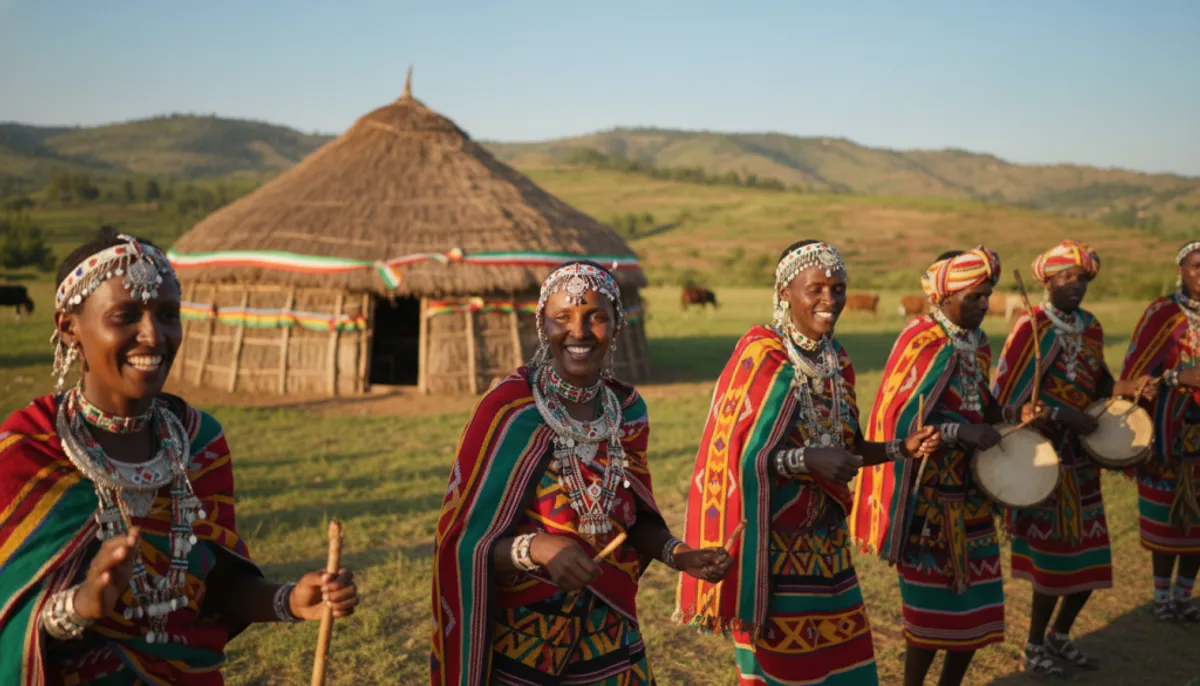
Their heritage is of exceptional richness. It rests on unique pillars such as the Gadaa political system, a millennia-old generational governance. Ancestral spiritual practices and colorful festivals, such as Irreecha, also rhythm their lives.
The historical journey of this community is marked by resilience. Originating from the south, they expanded and integrated into the modern Ethiopian empire. Despite difficult periods, they have fiercely preserved their identity.
Today, there is a remarkable renewal of pride. Artistic expressions and oral transmission are experiencing a resurgence. This living heritage remains a fundamental element of contemporary Ethiopia, evolving between tradition and modernity.
Key Points to Remember
- The Oromo are the largest ethnic group in Ethiopia.
- Their traditional governance system, the Gadaa, is unique.
- Their history is characterized by expansion and resilience.
- They preserve their identity through festivals like Irreecha.
- A significant cultural revival is taking place today.
- Their heritage is a cornerstone of modern Ethiopian identity.
Introduction to Oromo Culture
Third in importance on the African continent, this ethnic group dominates the demographic landscape of the Horn. Their massive presence transcends national borders.
According to the 2007 census, they represented about 34.5% of the Ethiopian population. This equates to over 25 million individuals at that time.
Their main territory is located in the Oromia region, the largest in the country. They are also found in Kenya and other neighboring nations.
This community is divided into two main branches: the Borana and the Barento. Each has numerous clans with unique characteristics.
Belonging to the Cushitic family, they share linguistic ties with other peoples in the region. Yet, their identity remains strong and distinct.
The traditional Gadaa system organizes all aspects of their community life. This structure demonstrates the complexity of their society.
Language, spiritual practices, and attachment to the land define their heritage, including tigrayan customs. Understanding this richness is essential to grasp the regional dynamics.
The Historical Origins of the Oromo
It is in the south of Ethiopia that the starting point of their historical journey is found. Linguistic research indicates a geographical origin around the Chew Bahir and Chamo lakes.
This region also extends into the north of Kenya. Populations have lived there for centuries before their expansion.
The Migrations and Early Influences
A crucial period begins around 1530. The “Great Migrations” transform the regional landscape.
Two main confederations move. The Borana to the west, the Barento to the east of the Rift Valley.
This era coincides with conflicts between the Ethiopian empire and the Adal sultanate. The context favors their territorial expansion.
The Traditional Systems and the Gadaa
The Gadaa system represents the soul of social organization for the luo tribe. It is a unique democratic structure in the world.
Leaders are elected for eight years. Power renews itself according to well-defined age classes.
This system has allowed remarkable cohesion. Despite geographical dispersion, it maintains unity over vast stretches of land.
The Oral Traditions and Ancestral Rituals
The stories passed down orally are the beating heart of this community's intangible heritage. They serve as an essential vehicle for the transmission of knowledge across ages.
The Tales and Legends
The elders use stories to teach moral values to the younger ones. These narratives often explain the origins of the people and celebrate the feats of ancestral heroes.
Several distinct forms enrich this tradition. The seenaa are historical narratives, while the mammaaksa (proverbs) offer condensed life lessons.
The following table presents the main categories of oral traditions:
| Type of Tradition | Main Function | Target Audience |
|---|---|---|
| Mythological Tales | Explain Origins | All Ages |
| Proverbs (mammaaksa) | Moral Teaching | Adults and Adolescents |
| Traditional Songs | Celebration of Events | Entire Community |
| Narrative Poems | Historical Transmission | New Generation |
The Rites of Passage
These rituals mark crucial stages of existence. From birth, xhosa ceremonies welcome children into the community.
Integration into the Gadaa system represents a pivotal moment. Each transition strengthens social bonds and ensures cultural continuity.
These practices demonstrate remarkable adaptability. They evolve over time while preserving their essence for future generations.
The Religious and Spiritual Practices
The spiritual landscape of this community reveals a rich diversity of traditions. These beliefs have evolved over time while retaining their fundamental essence.
Waaqeffanna and Indigenous Beliefs
The Waaqeffanna represents the ancestral monotheistic religion. Waaqa, the supreme deity, is considered the creative force behind all life. The faithful venerate him as a provider of grace and protection.
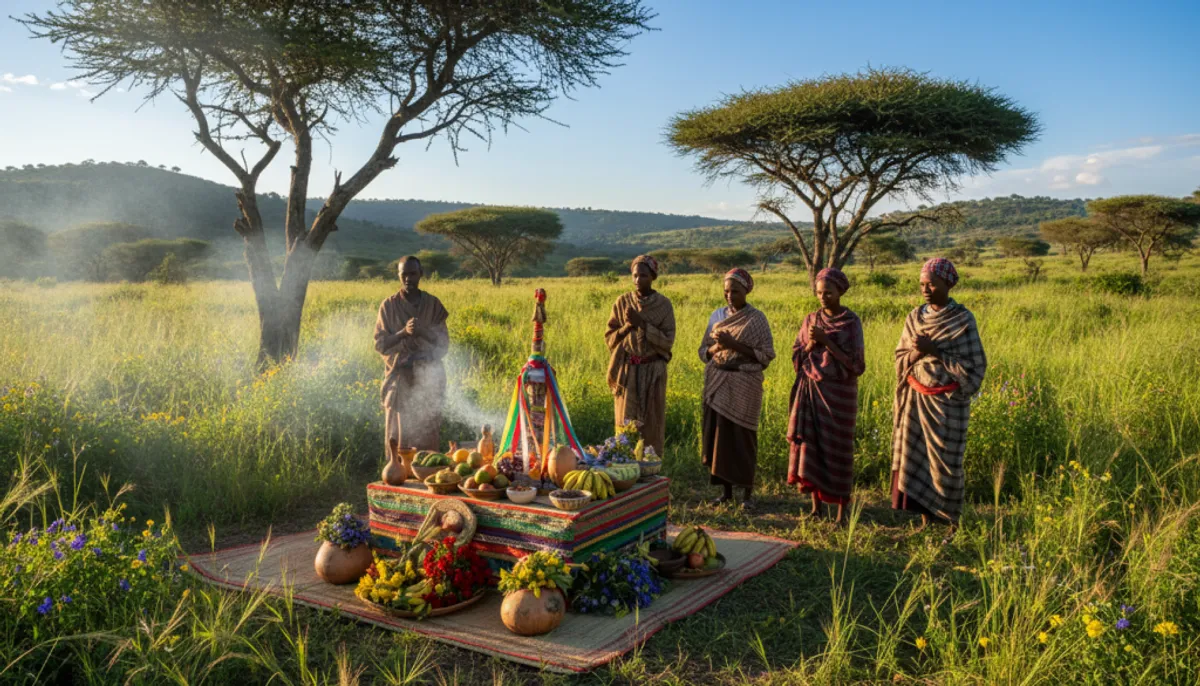
This tradition existed long before the arrival of Christianity and Islam. Its fundamental principles continue to influence contemporary spirituality, including aspects of african spirituality.
The following table presents the main practices of Waaqeffanna:
| Ritual | Objective | Frequency | Participants |
|---|---|---|---|
| Veneration of Sacred Trees | Connection with Waaqa | Regular | Entire Community |
| Community Prayers | Seeking Protection | Special Events | Elders and Families |
| Offerings to Waaqa | To Obtain His Grace | Seasonal | Traditional Priests |
| Purification Ceremonies | Spiritual Renewal | Annual | Specific Age Classes |
Since the 1990s, Waaqeffanna has experienced significant revival. It has become a powerful symbol of identity in the face of cultural assimilation.
Today, the majority of the faithful practice Islam or Christianity. However, many incorporate elements of their ancestral beliefs, including igbo religions and beliefs. This fusion demonstrates the resilience of spiritual traditions.
The Cultural Festivals and the Celebration of Irreecha
Thousands of people converge on Bishoftu for an ancestral celebration. This annual event brings together all generations around living traditions.
The Meaning and History of Irreecha
Irreecha marks the transition between seasons. Participants thank Waaqa for the harvest and the spring renewal.
For many years, this celebration was banned. It regained its central place after 1991 thanks to new cultural freedoms.
The following table presents the main dimensions of the festival:
| Aspect | Meaning | Participants |
|---|---|---|
| Ceremony at the Lake | Collective Purification | Entire Community |
| White Clothing | Symbolizes Peace | Men, women, children |
| Offerings | Gratitude to Waaqa | Elders and Youth |
| Traditional Songs | Cultural Transmission | All Generations |
The Impact on Community Unity
Irreecha demonstrates a remarkable unifying force. It brings together people of all ages and backgrounds.
Sabkebar Gezu, 35 years, emphasizes: “Irreecha is an important traditional celebration for our people”. This statement reflects a deep attachment to this tradition.
The festival occupies a central place in social cohesion. It helps strengthen ties between different generations.
The Language and the Role of Afaan Oromoo
Afaan oromoo represents much more than just a means of communication for this community. This language is Cushitic and carries the soul and collective memory of an entire people.
Origins and Linguistic Evolution
Belonging to the Afro-Asiatic family, this language has over 40 million speakers. It ranks as the fourth most spoken language in Africa.
For many years, successive regimes imposed Amharic as the official language. This suppression created a sense of linguistic shame among an entire generation.
The Importance of Mother Tongue Education
A historical turning point occurred in the 1990s. The new government finally recognized the right of children to be educated in their mother tongue.
The Latin alphabet Qubee now allows for written standardization. This recognition symbolizes the struggle for cultural dignity and equality.
Name Changes and Identity Pride
A silent yet powerful movement is transforming personal identity in Ethiopia. Many people are rediscovering their true roots through a simple yet significant act: changing their official name.
Reclaiming Identity Through Name
The Ethiopian naming system follows a particular model. The second part of a person’s name usually corresponds to their father's first name, rather than a traditional family name.
For decades, families chose Amharic names for their children. This practice aimed to facilitate integration into a system dominated by another culture.
Moti Begi, a 40-year-old man, perfectly illustrates this phenomenon. Formerly known by the Amharic name “Dereje,” meaning “increased,” he adopted “Moti,” which means “king” in afaan oromo.
| Person | Previous Name | New Name | Meaning |
|---|---|---|---|
| Moti Begi | Dereje | Moti | King |
| Abdi Gamachu | Girma | Abdi | Hope |
| Ebisa Bayissa | Endalkachew | Ebisa | Prosperity |
Contemporary Examples Like Moti Begi
This man engineer explains his decision with conviction. “The simplest thing I can do to reclaim my identity is to change my name”, he confides.
Seven of his friends have recently followed his example. Abdi Gamachu abandoned “Girma” to reclaim his true name “Abdi,” meaning “hope.”
These changes symbolize a deep identity reclamation. Each new name becomes a declaration of regained pride for this people.
Integration and Political Influence Through the Ages
Over the centuries, the relationships between the central state and local communities have undergone profound transformations. This era marks a turning point in the distribution of power within the country.
The Regimes and Cultural Marginalization
As early as the 16th century, some groups gained notable influence. Emperor Susenyos I, having grown up among them, entrusted them with important positions.
The Yejju dynasty exercised de facto power over the empire from 1784 to 1853. They particularly controlled the northern provinces such as Begemder.
The situation changed radically with Menelik II crowned in 1889. His reign imposed Amharic language and customs as the national norm.
Under Haile Selassie, local autonomy completely disappeared. Haile Selassie centralized authority in the hands of a restricted elite.
Educated members of the community were denied access to power. This systematic exclusion created a deep sense of injustice.
Even the Derg regime after 1974 continued this policy. Despite its egalitarian rhetoric, Haile Selassie and his successors maintained marginalization.
This long history explains the intensity of current claims. Haile Selassie symbolizes a period of persistent cultural suppression.
Oromo Culture in Modern Society
The end of the Derg regime in 1991 opened a new chapter for identity affirmation. The 1994 Constitution guaranteed the right of nationalities to promote their heritage.
Cultural Reaffirmation Since 1991
The last thirty years have seen a remarkable transformation. Children have grown up with education in afaan oromoo, developing a newfound pride.
This young generation enjoys freedoms that their parents did not experience. The following table shows the educational evolution:
| Period | Language of Instruction | Cultural Access |
|---|---|---|
| Before 1991 | Exclusive Amharic | Limited |
| 1991-2018 | Progressive Bilingual | Increasing |
| After 2018 | Strengthened Afaan Oromoo | Expanded |
The Role of Leadership and Political Figures
The arrival of Abiy Ahmed in 2018 created immense hope. The first prime minister from this community symbolized historical recognition.
Unfortunately, many today hide their disappointment. Despite his origins, political expectations remain unmet.
This current article shows how advances coexist with persistent challenges. The tswana culture continues its path between tradition and modernity.
The Contribution of the Oromo to Art and Music
Artistic and musical creativity represents a fundamental pillar of Ethiopian heritage, including shona art. These expressions enrich the African heritage in multiple creative forms.
Artistic and Craft Expressions
Musical traditions are distinguished by their complex rhythms and unique instruments. They reflect the diversity of life experiences of this community.
The main instruments include the kirar (lyre) and the masenqo (one-string violin). They accompany ceremonies and preserve oral history.
Visual crafts showcase remarkable aesthetics through textiles, pottery, and basketry. Distinctive patterns convey ancestral values.
Contemporary artists merge traditions with modern influences. Their work speaks to younger generations while honoring the heritage.
Art and music also serve as tools of cultural resistance. During difficult periods, they have asserted identity with strength.
A man or woman can excel in all forms of expression. Their contribution extends to literature and modern media.
The Oromo Heritage and Its Intergenerational Transmission
The social organization by age classes constitutes the foundation of identity preservation. This system ensures the continuity of values over time.
The Legacy of the Gadaa System
The Gadaa functions as a unique generational democracy. Every eight years, nine leaders are chosen by consensus.
These Salgan ya’ii Borana lead the community with wisdom. Their strictly limited mandate ensures regular power renewal.
When an Abbaa Gadaa dies in office, his wife inherits the bokkuu. This symbol of power allows her to proclaim the laws.
| Role | Term Length | Selection Process | Main Function |
|---|---|---|---|
| Abbaa Gadaa | 8 years | Community Consensus | General Leadership |
| Salgan ya’ii Borana | 8 years | Collective Election | Collegial Governance |
| Keeper of the bokkuu | Variable | Family Succession | Symbolic Preservation |
The Preservation of Traditional Values
The family represents the primary vector of transmission. Parents and grandparents teach children the ancestral traditions.
From a young age, children learn their responsibility towards the land. This education forges a deep bond with the heritage.
Despite increasing urbanization, attachment to roots persists. Each generation thus contributes to the safeguarding of the heritage.
Contemporary Challenges and Ethnic Renewal
In the contemporary Ethiopian political landscape, a fundamental question persists. How can a group representing more than a third of the population feel marginalized in its own country?
Marginalization and Social Claims
During the Irreecha festival, political slogans reveal deep frustration. “Many are imprisoned! We are marginalized!” shout the participants. These voices express a growing discontent with persistent injustices.
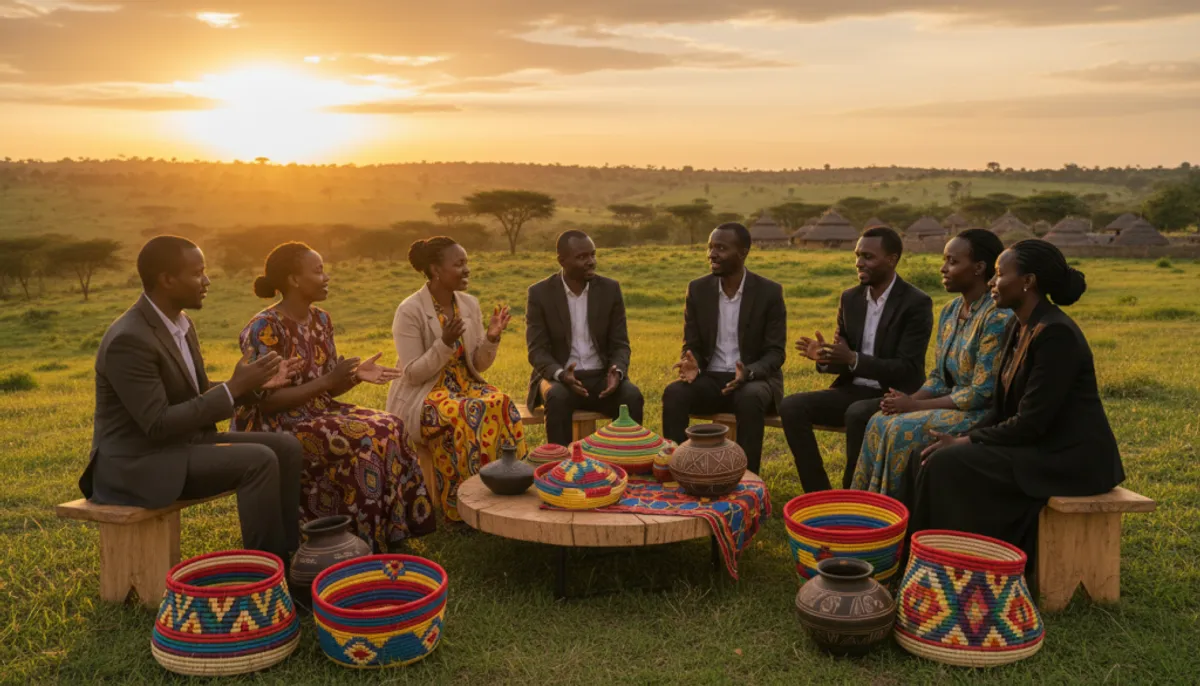
Sabkebar Gezu emphasizes a crucial point. “Many issues remain ignored, not just cultural questions.” The economic and political situation affects the daily lives of millions.
The Struggle for Cultural Recognition
The Oromia region experiences violent conflicts with areas controlled by armed groups. This political violence creates an atmosphere of insecurity for local peoples.
Ababa Korsa, a 30-year-old accountant, notes a relative improvement. “It’s a bit better, we can celebrate our heritage freely.” However, political claims remain largely unmet.
Ethnic renewal becomes a response to these challenges. Identity affirmation serves as a means of resistance against persistent inequalities in modern society.
Oromo Culture: Between Tradition and Modernity
How to transmit a millennia-old heritage while adapting to contemporary realities? This question animates the reflections of communities today.
The Transmission of Ancestral Knowledge
Women play a crucial role in this intergenerational transmission. They adapt traditional narratives to modern contexts.
The Gadaa system, once reserved for men, now integrates female perspectives. This evolution shows the flexibility of secular institutions.
Younger generations learn to navigate between two worlds. On one side, the values tied to the ancestral land. On the other, the skills needed in the globalized world.
The Influence on Ethiopian Identity
After years of marginalization, this community now influences national identity, including the diverse ethnic groups of kenya. Its music, cuisine, and values enrich Ethiopian heritage.The diaspora maintains strong ties to its roots. Cultural festivals organized around the world create bridges between generations and continents.
This people demonstrates that tradition and modernity can coexist harmoniously. Its living heritage continues to evolve while retaining its fundamental essence.
Conclusion
The millennia-old heritage of the Oromo represents a living treasure for contemporary Ethiopia. This article has explored how their unique traditions, notably the Gadaa system and amhara traditions, have survived centuries of challenges.
This rich culture concerns the entire country, as it represents more than a third of the population. The children and younger generations play a crucial role in its transmission.
Women and men adapt this heritage daily to modern life. Their practices evolve in various forms while retaining their essence.
This tradition occupies a central place in building an inclusive society. It shows how tradition and modernity can coexist harmoniously.
FAQ
What is the Gadaa system and why is it so important?
The Gadaa is an ancient governance system that organizes social and political life in eight-year cycles. It distributes power and responsibilities equitably among age classes. This system is fundamental as it has structured community life for generations and represents a unique democratic model.
How has the afaan oromoo language evolved over time?
Afaan oromoo, spoken by millions, has a rich linguistic history. Its origins date back far and it has managed to withstand periods of marginalization. Today, it is revitalized through its teaching in schools, thus reinforcing the identity pride of the people.
What is the role of women in the transmission of Oromo culture?
Women play a central role in preserving heritage. They are the guardians of oral traditions, songs, and artisanal knowledge. They ensure the transmission of values to children, guaranteeing that the culture remains alive.
What is the Irreecha ceremony and what does it symbolize?
Irreecha is a major annual thanksgiving festival that celebrates renewal and peace. People gather en masse by the lakes to thank Waaqa (God). This event is a powerful symbol of unity and resilience for the entire community.
Who was Moti Begi and why is his story significant?
Moti Begi was an important leader whose name was changed during a period of forced change. The recovery of his true name today illustrates the quest for identity reclamation and reconnection with a long-hidden history.
How does Oromo culture influence modern Ethiopian identity?
As the majority ethnic group, the Oromo have a significant influence on modern society. Their art, music, and traditions enrich the national cultural fabric. Their struggle for recognition contributes to redefining the collective identity of the country.