
Welcome to a guide designed to help you explore a hidden treasure of South East Asia. This land, imbued with serenity, holds a heritage of rare depth and authenticity.
Its identity has been shaped over the centuries. It harmoniously blends Khmer, Thai, and French influences. This unique mix has given birth to a deeply original cultural expression.
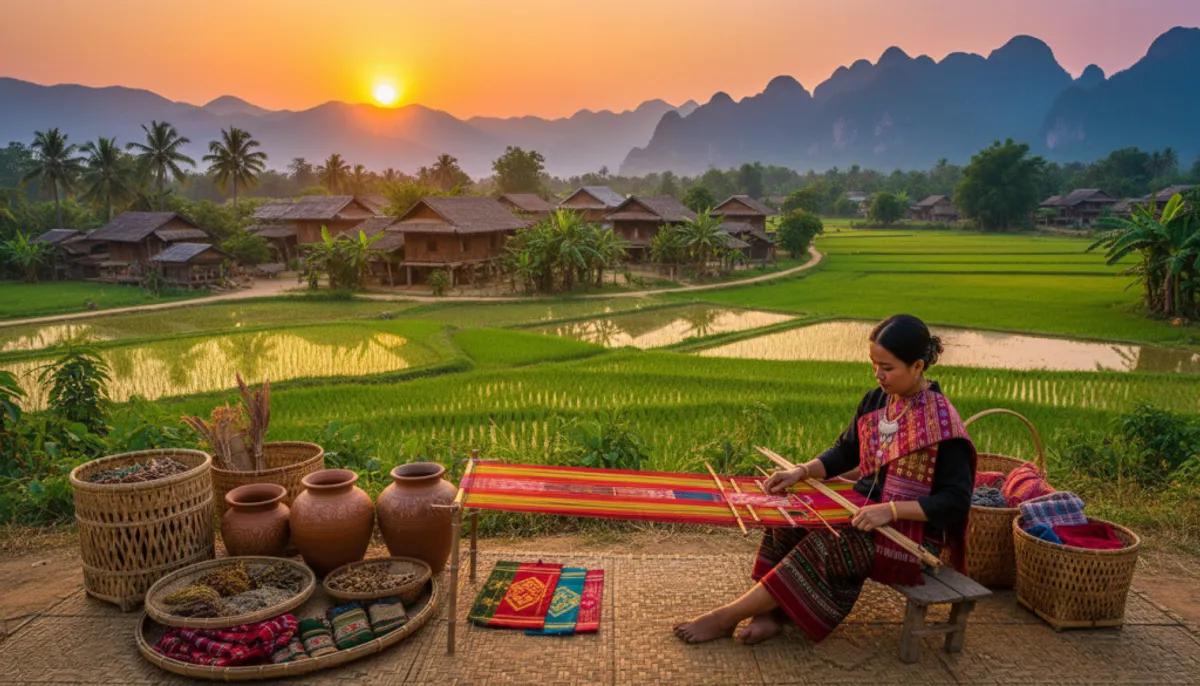
Embarking on a trip to Laos means diving into a universe where time seems tranquil. Buddhism and ancestral traditions shape the daily lives of the inhabitants. They create a unique way of life centered on spirituality and community.
This country is often regarded as one of the last sanctuaries of authenticity in the region. Modernity coexists with age-old practices without conflict. Prepare for a total immersion in a world of preserved beauty.
Key Points to Remember
- Laos is a preserved and overlooked cultural jewel of South East Asia.
- Its unique identity is the result of a blend of varied historical influences.
- Theravada Buddhism is at the heart of social and spiritual life.
- It is recognized as a sanctuary of authenticity where traditions remain alive.
- A visit offers a deep immersion into a peaceful way of life.
- Social codes and rituals are marked by great gentleness.
- The coexistence of modernity and ancestral customs is harmonious.
General Overview of Laos and Its Cultural Riches
The true treasure of this country lies in its ethnic mosaic, composed of over 130 distinct groups. Located in the heart of the Indochinese peninsula, it is home to a population of around seven million inhabitants.
This low human density contributes to its legendary calm atmosphere. It contrasts sharply with the hustle and bustle of neighboring nations.
No fewer than 80 ethnic minorities form a unique human kaleidoscope. This harmony among communities constitutes one of the most beautiful mosaics in South East Asia.
The riches of its culture are expressed through these numerous groups. Each perpetuates ancestral know-how and unique customs.
This nation has managed to preserve its traditions in the face of modern world influences. It thus offers a rare authenticity to travelers in search of meaning.
The strong identity of the country arises from this preserved diversity. It creates a powerful link between past and present generations.
History and Heritage of the Kingdom of a Million Elephants
The mysterious stone jars scattered across the Plain of Jars testify to very ancient occupations. The narrative history of the country truly begins in 1353. That year, Prince Fa Ngum founded the Kingdom of Lan Xang Hom Khao, the "Kingdom of a Million Elephants and the White Parasol".
From Ancient Civilizations to Thai Conquests
Fa Ngum unified the local principalities. He established a prosperous kingdom that dominated the region for centuries. Vientiane became the official capital in 1550.
The ancient times of Lan Xang are considered a golden age of ancient civilization. Art and Buddhism flourished there. This kingdom fragmented into three entities in the early 18th century.
The Colonial Influence and Modern Transformations
In 1893, France established its protectorate. This period paradoxically preserved social structures while leaving an architectural imprint.
The modern era shifted in 1975. The Pathet Lao took power, ending the monarchy. It established a regime that profoundly transformed society.
However, the legacy of Lan Xang remains alive. It still shapes the identity and traditions of this peaceful people.
Ethnic and Linguistic Diversity at the Heart of the Country
More than 130 distinct ethnic groups coexist harmoniously on Laotian territory. This human mosaic is one of the richest in the region.
The population is traditionally distributed according to the altitude of its habitats.
The Ethnic Groups and Their Specificities
The ethnicities are classified into four main categories. The Lao Loum live in the fertile plains and represent 75% of the inhabitants.
The Lao Thai occupy the valleys. The Lao Theung reside on mid-altitude lands.
Finally, the Lao Soung inhabit the mountains above 1000 meters. Each ethnic family has its own customs and unique traditions.
The Role of Languages in Cultural Unification
The official language of Laos is Lao, spoken by 58.1% of the population. Four major language families structure this diversity.
These include the Tai-Kadai, Austro-Asiatic, Hmong-Mien, and Sino-Tibetan families. This variety reflects complex historical origins and migrations.
Lao serves as a lingua franca among all ethnicities. It unites the inhabitants of different regions and mountains.
Exploring Laotian Culture Through Its Traditions
To understand this people, one must delve into its mythical narratives and symbols. Traditions are the living thread that connects the past to the present.
A founding myth recounts the origin of the ethnicities. Magical sounds emerged from two giant gourds pierced by divine leaders.
From there, the Lao Theung and Lao Loum emerged. This legend explains the diversity of the country.
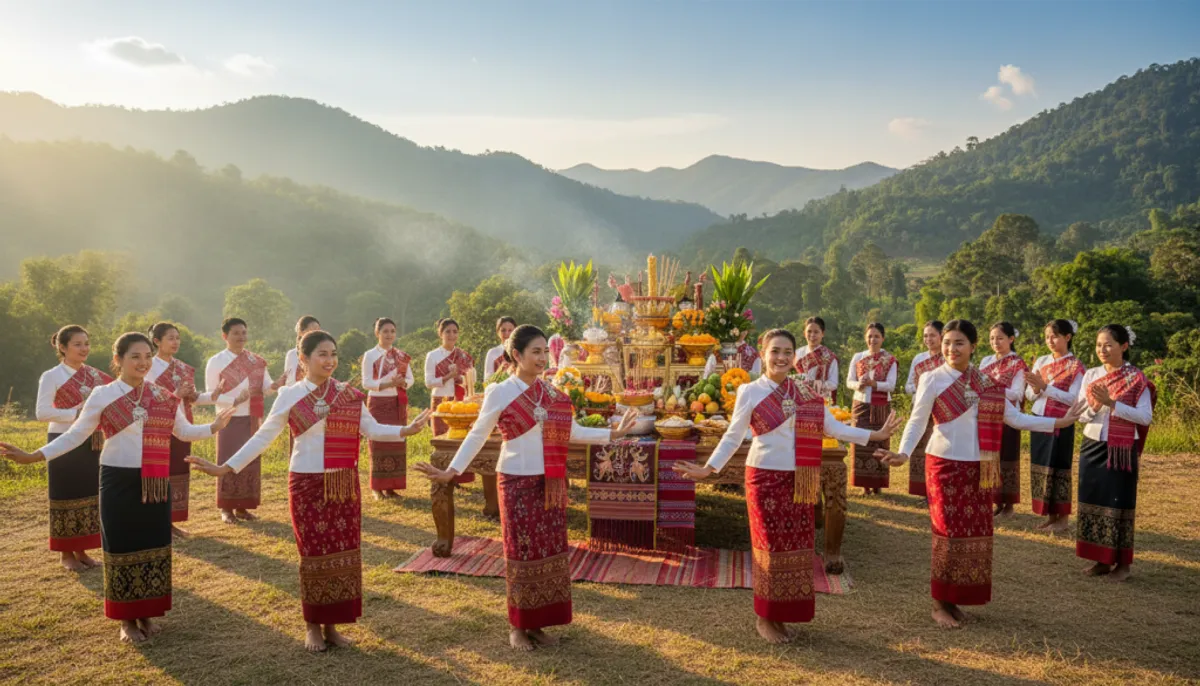
Khun Borom was then sent to reign. He had seven sons who founded kingdoms throughout the territory.
The frangipani flower, or dork champa, is a national symbol. It represents love and prosperity, central values here.
| Element | Meaning | Manifestation |
|---|---|---|
| Myth of the Two Gourds | Explains the origin of the main ethnic groups. | Oral transmission, ceremonies. |
| Khun Borom | Unifying paternal figure of the nation. | Historical narratives, foundation of ancient kingdoms. |
| Frangipani Flower (Dork Champa) | Symbol of love, sincerity, and prosperity. | Offerings in temples, decoration during festivals. |
| Oral Traditions | Link between generations and preservation of identity. | Tales, songs, family teachings in daily life. |
These traditions are discovered through daily gestures. They unify the different regions.
An authentic journey allows one to grasp this depth. You will see how each gesture tells a story.
Buddhism and Essential Spiritual Rituals
The spiritual soul of the country beats to the rhythm of Theravada Buddhism, a philosophy of life that permeates every moment. More than half of the population follows this "doctrine of the ancients." It creates a framework of serenity and respect, much like the vibrant scene of music and art in germany that reflects cultural depth and expression.
The Practice of Tak Bat and the Collection of Offerings
Just before dawn, around 6:00 AM, a silent spectacle takes place. The monks in saffron robes parade through the streets for Tak Bat. The faithful, kneeling, offer them fresh rice.
This daily ceremony embodies humility and generosity. It is at the heart of spiritual philosophy. The offerings must be prepared with great reverence.
It is crucial to respect the monks. A woman should not touch them or hand them a gift directly. They are always given the right of way.
The Baci Ceremonies and Their Symbolic Meaning
The Baci, or soukhouan, is a unique ritual. It aims to recall the 32 souls to rebalance a person. It is practiced for a newborn, a departure, or a return.
The officiant ties white cotton threads around the wrists of the participants. These threads are symbols of protection and blessing. They are kept for at least three days without being cut.
This ritual shows the harmonious blend of Buddhism with ancestral animist beliefs. It celebrates important moments in existence. The temples are also perfect places to witness evening prayers, around 5:00 PM.
Festivals and the Traditional Lunar Calendar
The rhythm of the year in Laos is dictated by an ancestral lunar calendar, punctuated by vibrant celebrations, including various swedish festivals. These events change date each year, following the cycles of the moon.They mark the seasons, harvests, and sacred moments of Buddhism. Each festivity has its profound significance and unique rituals.
From the Laotian New Year to Local Celebrations
The most important celebration is the New Year, Pimai, around April 15. This period of April is a time of renewal and purification through water.
This joyful festival lasts three to four days. It enlivens all the cities and villages of the country.
In November, two major events captivate the minds. The That Luang festival attracts thousands of pilgrims to Vientiane.
The That Luang, a stupa covered in gold, becomes the spiritual center of the country. The Festival of Lights closes the rainy season with splendid illuminations.
Other highlights punctuate the year. The Rocket Festival in May, Buddhist Lent in July, and the celebration of the Dead in August.
December 2 is the national holiday. At the end of November, the Hmong New Year celebrates the end of the harvest.
Participating in these festivals allows one to grasp the collective soul and understand the history of quebec. Each ritual transmits ancestral values from generation to generation.
Laotian Handicrafts: Silks, Baskets, and Goldsmithing
Laotian handicrafts reveal themselves in the delicacy of silks and the sturdiness of baskets. At the markets, you will find beautiful woven baskets at very reasonable prices.
Silk weaving is one of the most prestigious crafts. Each piece is handmade, ensuring absolute authenticity.
In this tradition, weaving is a sacred art. The geometric patterns are not merely decorative. They express ethnic belonging and bring good fortune.
Many villages specialize in this craft. They perpetuate ancestral know-how such as goldsmithing, pottery, or rattan weaving.
Goldsmiths create jewelry in silver and gold. Coppersmiths shape utensils in copper. Each object tells a story.
The way these techniques are preserved is remarkable. This manual work represents a living heritage, and cultural vouchers fnac also constitute a source of income for communities.Visiting these villages offers a unique insight into this exceptional handicraft. You will discover the passion and patience behind each creation.
Traditional Arts: Theater, Dance, and Music
The performing arts offer a fascinating window into the deep identity of this nation, including the contributions of portuguese artists. Theater, dance, and music are pillars of its artistic expression.
The Phalak Phalam and Theatrical Performances
The Phalak Phalam is the local adaptation of the Indian Ramayana. It features Prince Pha Lam, Princess Sida, and the army of monkeys.
This epic theatrical play enchants spectators. Performances take place at the grand theater of Luang Prabang.
The Lam Vong and the Khene Song
The Lam Vong is much more than a dance. It is the graceful expression of the national soul.
Couples turn in circles with codified gestures. This choreographic form is inspired by Buddhist mudras.
Traditional music finds its origin in shamanic rituals. The khene, a bamboo mouth organ, produces an enchanting sound.
This instrument, recognized by UNESCO, accompanies all manifestations. It also serves as a backdrop for oratory contests, a unique social game.
The shadow theater of Champassak brings these tales to life. These arts preserve a living heritage for the whole world.
Etiquette and Practical Tips for an Authentic Journey
To ensure your stay is a rewarding experience, it is essential to master a few rules. Social relationships are governed by a duty to welcome the foreigner. In return, the visitor must show respect.
Greet in the same manner as your hosts, with hands joined. In temples, adopt a covering outfit. Always remove your shoes before entering.
Anger and shouting are perceived as signs of weakness. Avoid "showing your feet." Slightly bend when crossing a seated assembly.
Be deferential to the monks. Give them the right of way. Avoid any physical contact, especially for women. Do not touch religious objects or anyone's head.
To attend prayer around 5:00 PM, observe silence. Do not point your feet towards the Buddha. Proper attire is mandatory.
For an authentic journey, prioritize donations through schools or dispensaries. Tips are appreciated. Budget around 2.5 euros per day for a driver.
Respecting these codes is the best way to experience a harmonious journey. You will be welcomed with even more warmth.
Cuisine and Drinks: Authentic Flavors of Laos
Discovering the cuisine of Laos means immersing yourself in a culinary art where sticky rice reigns supreme. This staple accompanies all meals and varies according to seasons and regions.
Must-Try Dishes and Rice Specialties
Rice is often served sticky, in balls that are dipped in sauces. It forms the base of iconic dishes such as lap, a mix of meat or fish "cooked" in lime with herbs.
Spicy green papaya salad, mok cooked in banana leaves, and sausages flavored with lemongrass are other classics. Thai and Vietnamese influences enrich this gastronomic culture.
One can also find tom yam soups or pho. The generosity of herbs, chilies, and spices creates unique flavors.
Laos Beer and the Famous Lao Lao
To accompany these dishes, the national beer Laos Beer is a light and refreshing blonde. It is perfect for the climate of this country.
The traditional alcohol, lao lao, is a rice spirit with an alcohol content of about 40 degrees. It is often shared during festivities, including various festivals and celebrations in nicaragua, to enhance conviviality.
For non-alcoholic beverages, coffee from the Bolovens Plateau and Pu-erh tea from Phongsaly are excellent. Prefer bottled water to avoid any discomfort.
Excursions and Cruises on the Majestic Mekong
To grasp the magnitude and beauty of Laos, embark on an adventure on the Mekong. These navigations are among the most memorable experiences of a trip to Laos. They reveal landscapes and river life that cannot be seen otherwise.
Two main regions are available to you: the mountainous north and the broader south. The packages range from a few hours to several days, for all budgets.
Itineraries in the North Between Luang Prabang and Houeyxay
The classic northern itinerary connects Luang Prabang to Houeyxay in two days. You navigate amid spectacular panoramas with an overnight stay in Pakbeng.
This cruise allows you to visit riverside villages and the sacred caves of Pak Ou. The cost ranges from 450 to 650 euros. An economical option is the public "long boat" for 25 euros.
From Luang Prabang, a half-day excursion to the Pak Ou caves is perfect for a beginning. In the evening, a sunset dinner cruise combines gastronomy and spectacle.
In the south, a three day cruise between Paksé and the 4000 islands showcases a more majestic Mekong. The best time to navigate is at the beginning of the dry season, from November to April.
Spa, Massage, and Well-Being the Laotian Way
After a day of exploration, nothing is better than a relaxing treatment to recharge in an authentic spa. The term "spa" comes from the Latin "Salutis Per Aqua," meaning health through water. These establishments have multiplied, offering a wide variety of treatments.
You will find massages, beauty treatments, aromatic baths, and pedicures. Special techniques such as hot stones or herbal wraps are also offered.
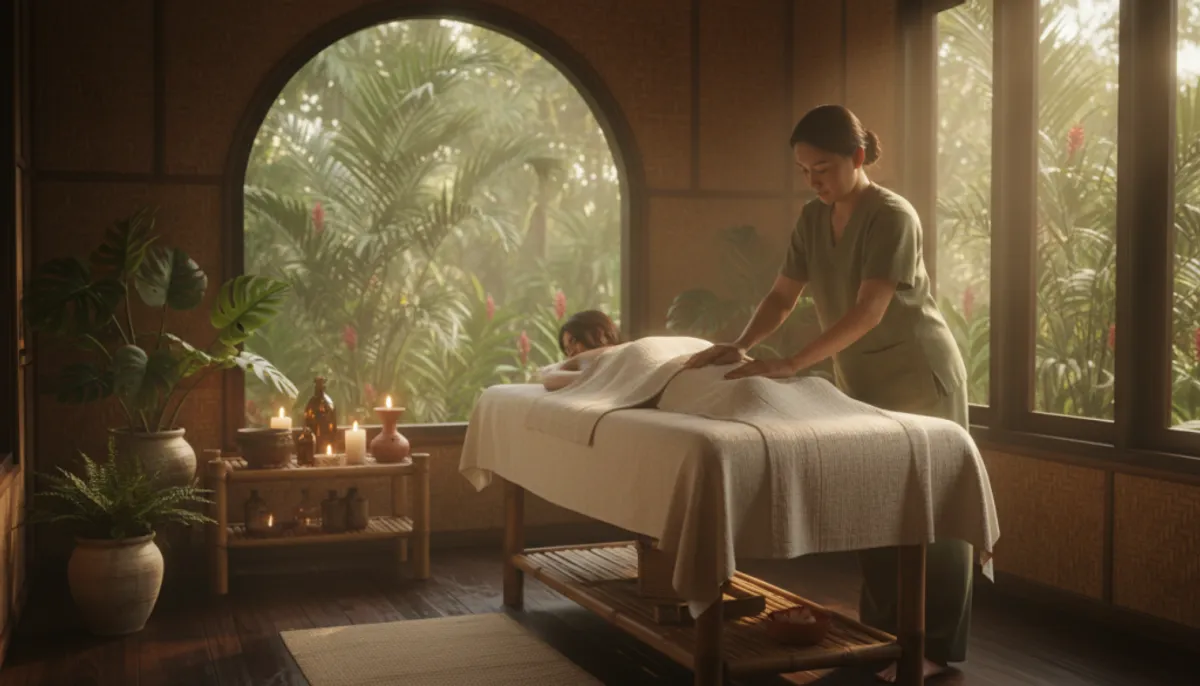
The traditional massage is a holistic approach to health. It harmonizes the body and mind through ancestral techniques.
This treatment combines deep pressures, energetic kneading, and gradual stretching. The goal is to reveal tensions and unblock energy meridians.
It thus improves blood and lymphatic circulation. Unlike a gentle massage, it can be very invigorating.
It may sometimes require a recovery time. You might feel some soreness the next day, a sign that blockages have been released.
At the end of a hike, it is an excellent way to recover. These practices are an integral part of local life.
They meet the needs of the population and travelers alike. Taking the time for a treatment is to immerse oneself in an important dimension of the well-being culture.
The underlying philosophy is rooted in a holistic vision of life. The balance between body and mind is essential.
At the end of your stay, you will understand why these traditions remain central to daily life.
| Type of Treatment | Main Technique | Key Benefit | Typical Duration |
|---|---|---|---|
| Traditional Massage | Pressures and stretches | Release of energy tensions | 60-90 min |
| Hot Stone Treatment | Application of hot basalts | Deep muscle relaxation | 75 min |
| Herbal Bath | Infusion and immersion | Purification and relaxation | 30 min |
| Body Wrap | Application of clay or plants | Skin cleansing and hydration | 50 min |
Conclusion
At the end of this exploration, Laos reveals itself as a preserved jewel at the heart of South East Asia. This country has managed to retain its authenticity through the centuries, from the Kingdom of a Million Elephants to the era of Pathet Lao.
Its population, composed of numerous ethnicities, forms a unique human mosaic. From the mountains of the north to the villages of the south, each region unveils living traditions, shaped by chilean geography.
A journey here is a deep immersion. You will discover ancestral arts and an omnipresent spirituality. The capital Vientiane and its majestic That Luang symbolize this heritage.
At the end of your stay, you will understand why this culture remains a vibrant testimony. It resists the modern world while welcoming visitors with warmth.
FAQ
What is the best time to visit Laos and attend its festivals?
The dry season, from November to April, is ideal. You can enjoy celebrations such as the Laotian New Year (Pi Mai) in April. The coolness of November is perfect for exploring Luang Prabang and its temples.
What does the Baci ceremony mean, and can I attend it?
The Baci is a ritual to call the vital spirits. It marks significant life events. Visitors are often respectfully invited. It is a profound experience of the soul of the country.
Why do we see monks collecting offerings in the early morning?
This practice, Tak Bat, is a daily act of merit. The faithful offer food to support the religious community. In Luang Prabang, it is a very respected moment of serenity.
What typical dishes should I absolutely try?
Don’t miss the laap (minced meat salad) and the tam mak hoong (papaya salad). Sticky rice accompanies most meals. For drinks, Laos Beer and lao lao (rice alcohol) are must-tries.
Is Laos a safe country for travelers?
Yes, it is a very safe destination. The locals are welcoming. Just respect traditions, such as dressing modestly in temples and not touching people's heads.
Where can we admire the best of local handicrafts?
Luang Prabang is renowned for its silks. The night market is a must. In the villages around the capital Vientiane, you will discover traditional basketry and goldsmithing.
What is the influence of Buddhism on daily life?
It is omnipresent. This philosophy shapes etiquette, art, and festivals. It teaches peace and detachment, which is felt in the peaceful atmosphere of the kingdom.
Can we take a cruise on the Mekong from Houeyxay?
Absolutely! A cruise from Houeyxay to Luang Prabang is a classic. You will navigate between mountains and ethnic villages, discovering life at the river's pace.