
Welcome to this exploration of a fascinating universe, where the ancient meets the modern. This Scandinavian country attracts the attention of the whole world with its unique approach to social life.
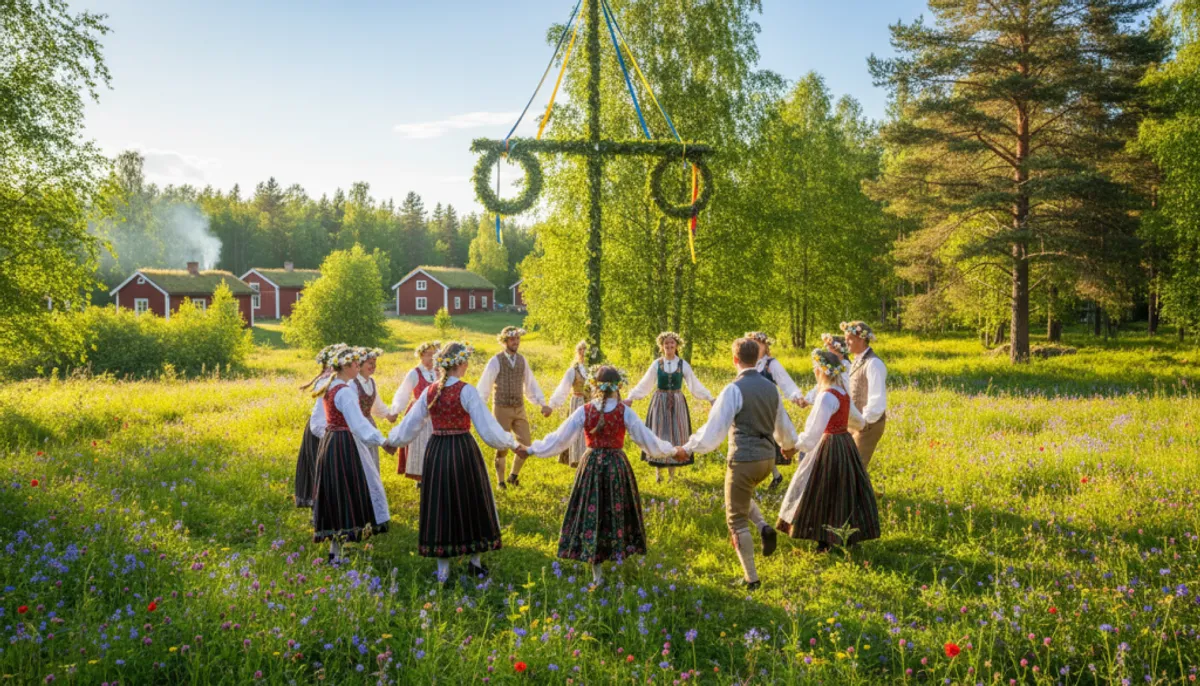
Their social heritage is unique. Unlike many European nations, this territory has never known serfdom. Small-scale farmers have traditionally exercised significant influence.
The Protestant ethic has profoundly shaped the current collective mentality. It has instilled values of work, moderation, and community responsibility.
Today, the fundamental pillars revolve around individual freedom, social equality, and environmental sustainability. These principles form what is known as “the Swedish way”.
Discovering this universe is to dive into a harmonious balance between age-old customs and progressive practices. From summer solstice celebrations to daily rituals, every aspect reflects a deep connection with nature and a commitment to collective well-being.
Key Points to Remember
- A unique blend of ancestral traditions and modernity.
- Core values of equality, simplicity, and openness.
- A distinctive social history with significant peasant influence.
- The Protestant ethic as a shaping force of the collective mentality.
- Three contemporary pillars: freedom, equality, and sustainability.
- A harmonious coexistence between ancient customs and innovative practices.
- A strong relationship with nature and a pronounced sense of community.
The Historical and Cultural Heritage
The evolution of national identity in this region of Northern Europe reflects a rich blend of heritages. This land has built its contemporary culture through varied influences from multiple horizons, including the history of mexico which adds to the diverse tapestry of cultural narratives.
Historical Influences and Protestant Ethic
During the medieval period, the Catholic Church and neighboring Germans laid the first foundations. Their impact has left a lasting mark on the social and religious history of this territory.
The 18th century saw French influence assert itself, particularly under the reign of Gustav III. Over time, Germany and then the Anglo-Saxon world successively inspired modern developments.
Ethnic Groups and Linguistic Diversity
This country is characterized by remarkable linguistic diversity. Nearly 90% of people speak English fluently, while Danish and Norwegian are widely understood.
The current Swedish population includes indigenous communities like the Sami, as well as long-established groups. This language of cultures enriches contemporary society daily.
Exploring Swedish Culture: Traditions and Customs
Discovering local customs reveals a unique philosophy of life where balance prevails over excess. This approach profoundly characterizes contemporary Swedish culture.
The Meaning of Rituals and Traditional Festivals
Annual celebrations structure the calendar for the inhabitants. They create valuable opportunities to strengthen family and community bonds.
Christmas and Midsummer are the most important festivals. Each tradition has its specific rituals that are passed down from generation to generation.
| Tradition | Period | Meaning | Main Activities |
|---|---|---|---|
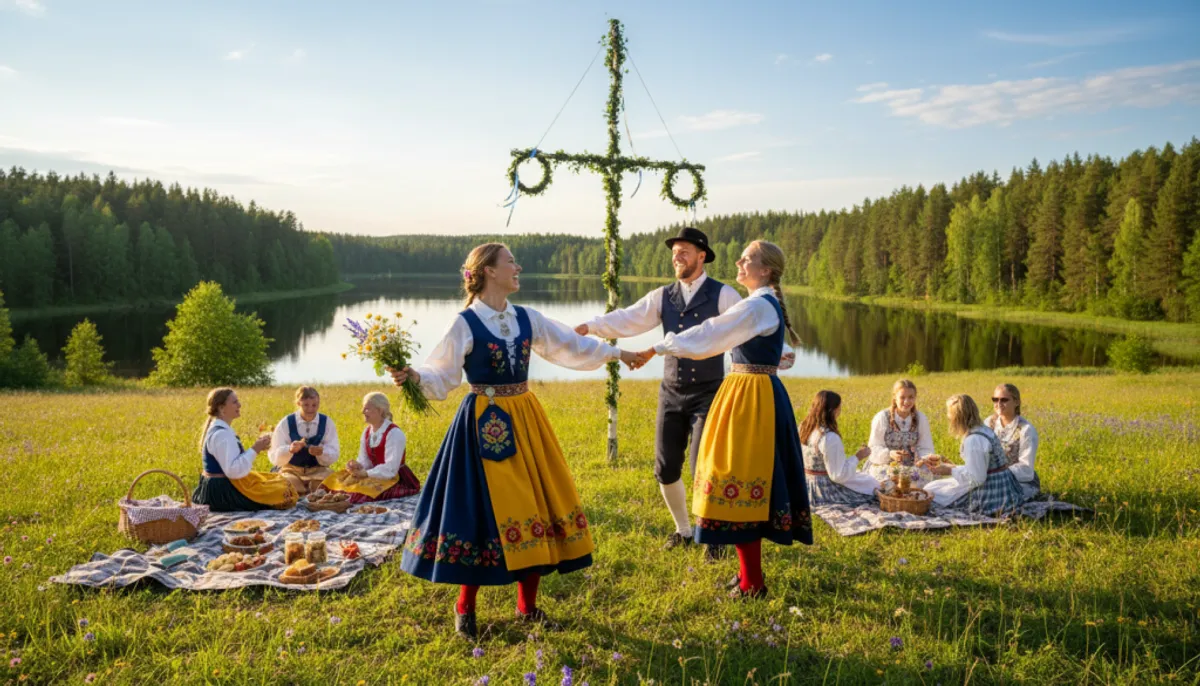
| Midsummer | June | Celebration of the summer solstice | Dances around the pole, outdoor meals |
| Jul (Christmas) | December | Winter family celebration | Christmas markets, traditional buffet |
| Fika | Every day | Social coffee break | Coffee and pastries among colleagues or friends |
Lagom and Balance in Daily Life
The concept of lagom guides the lifestyle of Swedes. It means “neither too much, nor too little, just enough.”
This pursuit of balance influences all aspects of life. Every moment of the day finds its natural place without excess.
Holidays are taken seriously to maintain a healthy balance. Work and leisure coexist harmoniously every day.
Symbols and Popular Practices
The symbols that punctuate daily life offer a fascinating glimpse into core values. These traditions create unique moments of connection between people.
Solstice Celebrations and Midsummer
Midsummer is undoubtedly the most anticipated celebration of the year. Celebrated during the summer solstice in June, it marks the longest day.
Friends and families gather around a pole decorated with flowers. This celebration around the pole perpetuates ancestral rituals.
| Celebration | Period | Main Symbols | Traditional Activities |
|---|---|---|---|
| Midsummer | June | Flowered maypole | Folk dances, outdoor meals |
| Lucia | December | Crown of candles | Candlelight processions |
| Easter | Spring | Decorated eggs | Egg hunts, festive meals |
The Worlds of Fika and Coffee Breaks
The fika is much more than just a coffee break. This social practice structures each day.
People take this moment to reconnect with their friends or colleagues. It is an essential sharing ritual.
This coffee tradition reflects the importance placed on human relationships. The fika perfectly embodies the balance sought in daily life.
Cuisine, a Reflection of Swedish Culture
Flavors and dining habits often tell more than a long discourse about a society. Here, food embodies a balance between culinary traditions and modernity.It draws its essence from local products and the seasons. This simple and authentic approach defines its unique character.
Traditional Dishes and Local Specialties
A typical meal is based on nourishing staples. Steamed potatoes often accompany a piece of meat or fish.
A rustic sauce and some vegetables complete the plate. Iconic and delicious Swedish dishes abound.
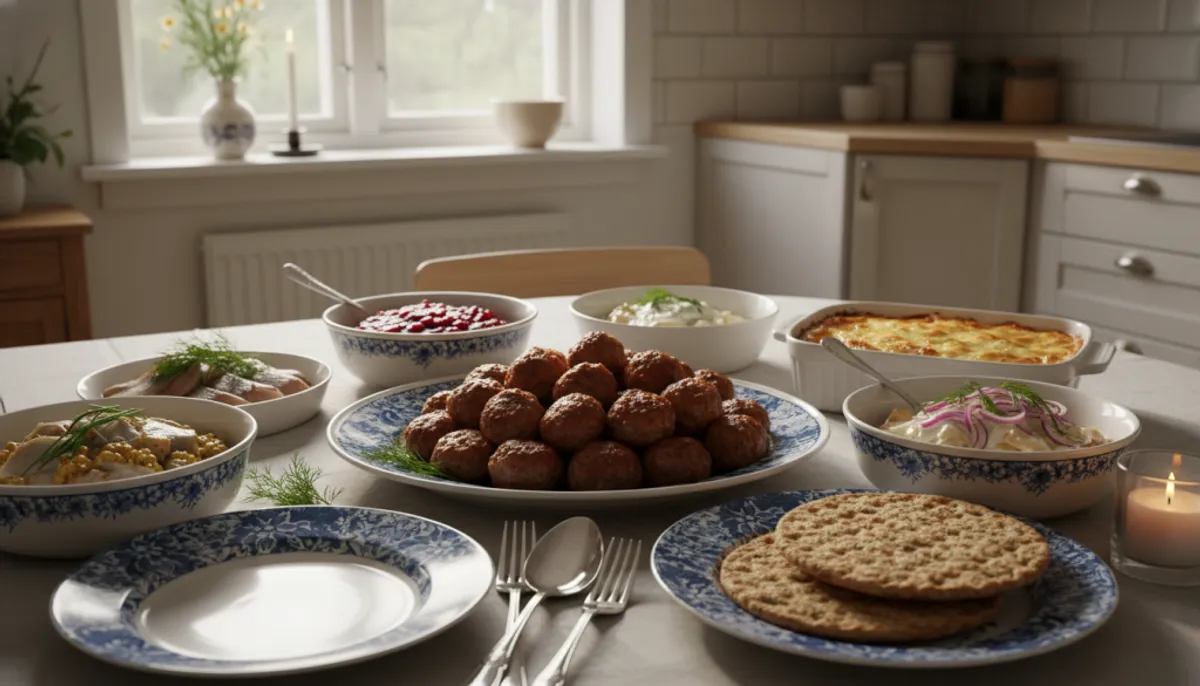
Köttbullar, famous meatballs, are served with a creamy sauce. They are accompanied by lingonberry jam and potatoes.
The herring from the Baltic Sea is prepared in multiple ways. Marinated or fermented, it remains a staple of cuisine.
| Traditional Dish | Main Ingredient | Typical Accompaniment |
|---|---|---|
| Köttbullar | Meatballs | Potatoes, sauce, lingonberries |
| Gravlax | Marinated salmon | Dill-mustard sauce |
| Surströmming | Fermented herring | Knäckebröd bread, potatoes |
Eating Habits and the Importance of Coffee
The crispy knäckebröd traditionally accompanies meals. Its long shelf life is ideal for winters.
Modernity has introduced international dishes like pasta. Yet, culinary tradition persists during celebrations.A fun curiosity: candy consumption is concentrated on Saturdays. This habit called lördagsgodis is very popular.
Coffee, central to the fika ritual, remains essential. It symbolizes friendly breaks and daily balance.
Religious Diversity and Modern Influences
The contemporary spiritual landscape reveals a remarkable social transformation. This northern country has experienced fascinating evolution in recent decades.
The Religious Landscape and Secularization in Sweden
The majority of Swedes still belong to the Lutheran Church. However, this religion lost its official status in 2000.
A significant part of the population identifies as non-religious. Agnosticism and atheism represent significant trends.
This advanced secularization characterizes modern society. It coexists with a deep respect for spiritual diversity.
External Influences and Cultural Exchanges
Immigration has enriched the confessional landscape of the country. Islam is now the second main religion.
Other religious communities contribute to this mosaic. Catholics, Orthodox, and Buddhists bring their spiritual heritage.
This openness is also reflected in human rights. The right to marriage for all has existed since 2009.
The culture values individual freedom without judgment. Each person can be who they wish to be.
This progressive approach attracts the attention of the whole world. It makes this nation a unique societal model.
Conclusion
At the end of this journey into the heart of Nordic traditions, one truth emerges clearly. This country has managed to create a societal model where balance reigns supreme.
From the solstice celebrations in June to family meals, every moment celebrates this harmony. The local cuisine, with its potato and herring dishes, reflects this authentic simplicity.
The concept of lagom guides daily life. This search for balance permeates every aspect of existence, from coffee breaks to grand celebrations.
Ultimately, this society offers the world a valuable example. It shows how to preserve traditions while embracing modernity wisely.
FAQ
What does the concept of “lagom” mean in everyday life?
Lagom is a central idea that advocates moderation and the pursuit of perfect balance. It applies to everything from work to family meals. It’s the art of taking neither too much nor too little, but just enough to feel good.
Why is the Midsummer festival so important to Swedes?
Midsummer celebrates the summer solstice, a time of almost continuous light. People gather around the flower-decorated pole, dancing, singing, and sharing large meals. It’s a strong moment of community and joy.
What are the must-try dishes during a stay?
The local cuisine offers unique flavors. Don’t miss the marinated herring, meatballs (köttbullar) served with their sauce and jam, or gravlax. Potatoes and root vegetables are also very present.
Is “fika” simply a coffee break?
Much more than that! Fika is a true social ritual. It’s a break dedicated to having coffee and a pastry, like a kanelbulle, in good company. It’s an essential moment of relaxation and connection in life.
How do ancient traditions coexist with modernity in Sweden?
The country manages to preserve its history and customs while being very innovative. The history of china is an example of how cultures can evolve over time. Festivals like Midsummer remain vibrant, and values like lagom still guide modern life. External influences integrate without erasing local heritage.