
Welcome to this comprehensive guide that invites you to explore the many facets of a rich heritage. This journey will take you from majestic fjords to ancestral traditions that are still very much alive today.
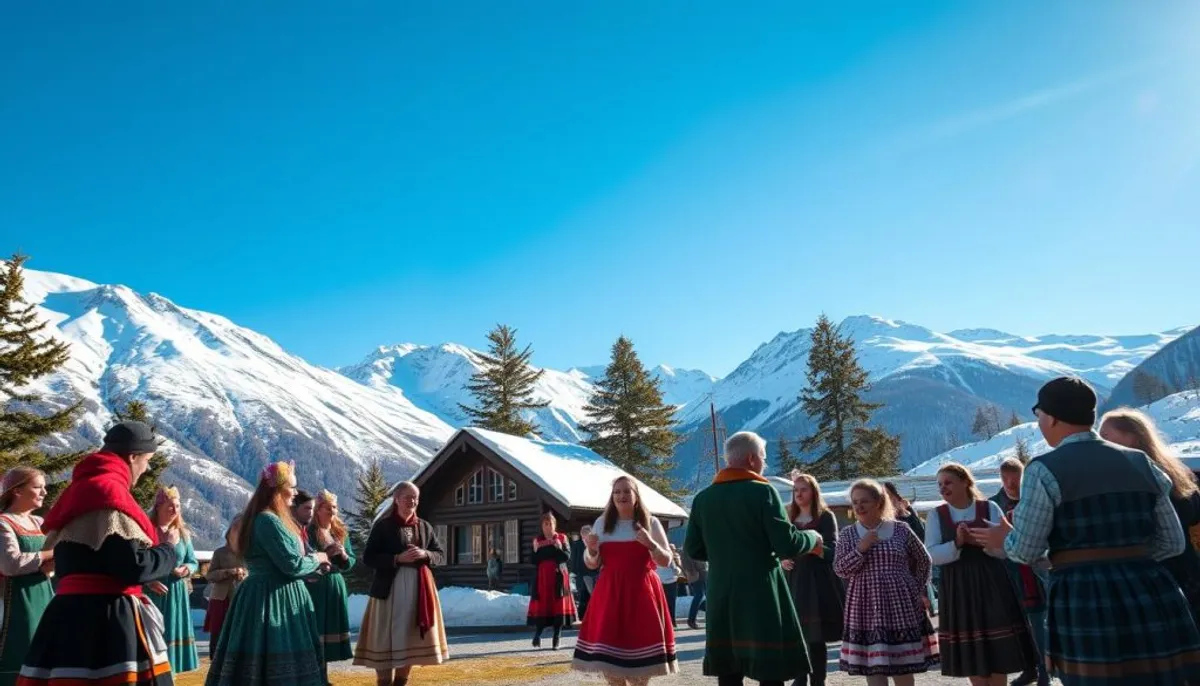
Norway, this country in Scandinavia with 5.6 million inhabitants, has a unique identity. It is shaped by its maritime history, its Nordic climate, and its progressive social values.
You will discover how the Norwegians have managed to preserve their customs while embracing modernity. They create a harmonious society where respect for nature and innovation coexist naturally.
Key Points to Remember
- Norway has a unique cultural identity shaped by its history
- Ancestral traditions coexist harmoniously with modernity
- Respect for nature is a fundamental value
- The Viking heritage still influences the spirit of exploration
- The “friluftsliv” (outdoor life) is an important daily practice
- Culinary arts and contemporary art enrich this culture
- This balanced societal model is internationally recognized
Introduction to Norwegian Culture
Let’s dive into the demographic and linguistic foundations that characterize this Scandinavian nation. With over 5.6 million inhabitants, the country presents a unique human composition.
Historical and Demographic Context
Norway has precisely 5,683,733 inhabitants in 2024. More than 83% of the population speaks Norwegian as their mother tongue.
| Language | Percentage of Speakers | Status |
|---|---|---|
| Bokmål | 80% | Main written form |
| Nynorsk | 20% | Minority written form |
| English | Widely practiced | Dominant foreign language |
Cultural and Symbolic Issues
The minority languages benefit from official protection. The Sami people, indigenous to the north, represent about 80,000 individuals.
Immigration is a significant part of modern society. It accounts for 16.8% of the total population.
This diversity enriches the social fabric while preserving local traditions. The complex history of the country is reflected in this multicultural harmony.
The Origins and Viking Heritage
The Viking era represents a fascinating chapter in human adventure. These men from the north marked world history with their extraordinary maritime skills.
The Viking Expeditions and Raids
The Viking Age began in 793 with the raid on the monastery of Lindisfarne. This period lasted nearly 300 years, until 1066.
The Norwegians launched numerous expeditions westward. They established colonies in the Orkneys, Iceland, and Greenland.
Leif Erikson reached America around the year 1000. This was five centuries before Christopher Columbus.
The Maritime Influence on Norwegian History
Viking ships, called langskip, revolutionized navigation. Their design allowed for impressive speeds of 15 to 17 knots.
This mastery of the sea enabled the unification of the territory by Harald Fairhair around 885. Christianity established itself at the turn of the millennium.
In the 13th century, the country experienced its territorial peak. Maritime influence remains fundamental in contemporary society.
Norwegian Culture: Traditions and Customs
The daily life of the inhabitants of this Scandinavian country reveals a remarkable balance between heritage and modernity, including a vibrant appreciation for danish art. This harmony manifests in every aspect of social life.
Ancestral and Modern Practices
The friluftsliv, or outdoor life, represents a fundamental practice. The Norwegians spend time in nature regardless of the season.
During winter, the concept of kos takes on great importance. It symbolizes the art of creating warm and convivial moments.
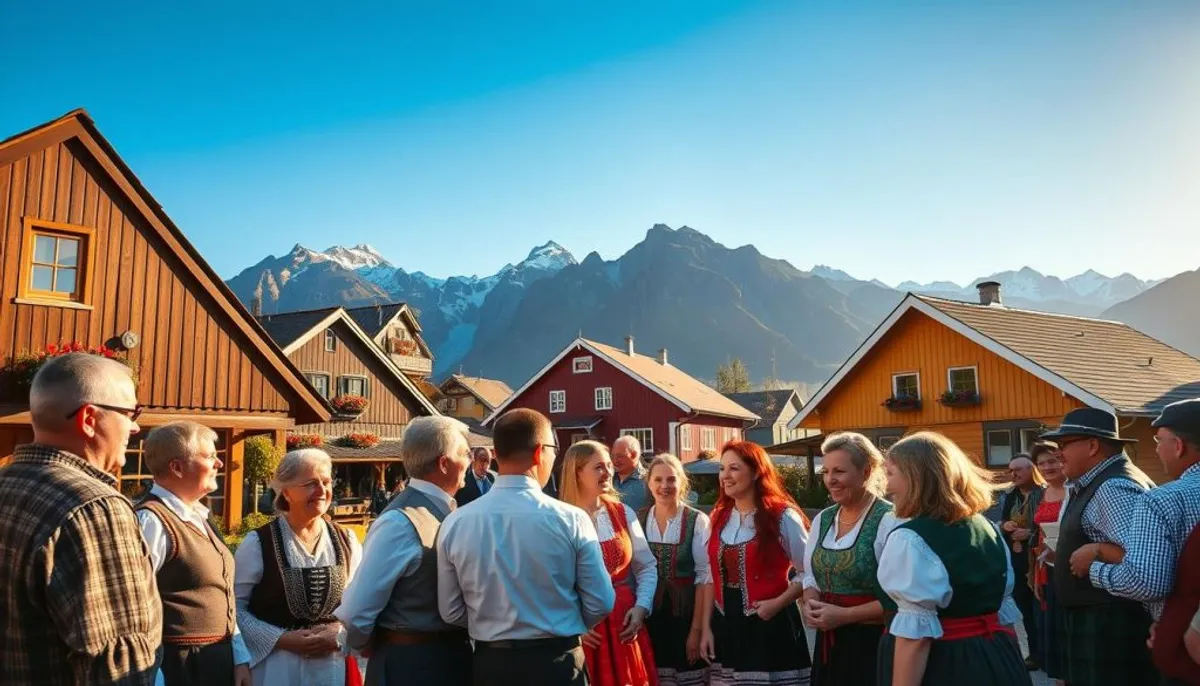
Celebrations mark the year with the national holiday on May 17th as a significant example. Traditional bunad costumes are worn with pride.
The Jante Law still influences social behaviors. It values collective modesty over individual success.
| Traditional Practice | Modern Adaptation | Frequency of Use |
|---|---|---|
| Wearing bunad during celebrations | Contemporary variations of the costume | Special occasions |
| Skiing as a means of transport | Leisure sport and competition | Regular in season |
| Preparation of ancestral dishes | Culinary reinterpretation | Festivals and daily life |
| Traditional family celebrations | Integration of new customs | Annual and seasonal |
The Arts, Music, and Cultural Expressions
The Norwegian artistic scene reveals an astonishing creative diversity that spans centuries, including institutions like the higher institute of arts studies (iesa). This richness is expressed in both traditional and contemporary forms.
Traditional and Contemporary Music
The joik of the Sami represents one of the oldest sung traditions in Europe. In the 19th century, Edvard Grieg captured the musical soul of his country.
In the 1980s, the band A-ha conquered the world with 30 million records sold. The black metal scene of the 1990s marked the history of music.
Visual Arts, Design, and Craftsmanship
Edvard Munch remains the emblematic figure of the visual arts. His work The Scream has become a global icon.
Traditional craftsmanship includes rosemaling and Sami duodji. These practices blend functionality with decorative beauty.
Theatrical Performance and Dance
Theatre has produced major playwrights like Henrik Ibsen and Jon Fosse. Their influence extends beyond borders.
The traditional halling dance coexists with the National Ballet. This choreographic diversity enriches the cultural landscape.
These artistic expressions testify to remarkable creative vitality. They constantly engage in dialogue between tradition and innovation.
Norwegian Cuisine and Culinary Expertise
Let’s discover how daily food has been built around the treasures of the sea and forests. This gastronomy, influenced by nordic cuisine, perfectly reflects the natural resources available in this northern country.
The eating habits of the Norwegians show an intelligent adaptation to the climate. Ancestral preservation techniques remain an essential part of their heritage.
Iconic Dishes and Regional Specialties
Seafood occupies a central place on the plate. Dried cod, known since the 9th century, is an excellent example of this tradition.
Smoked salmon and herring are other highly appreciated marine products. Game from the forests, such as reindeer and moose, adds a unique touch.
Cheese specialties like brunost surprise with their caramelized flavor. Meals follow a particular rhythm, with a hearty breakfast.
Coffee is a true social ritual in this society. These culinary traditions testify to a know-how passed down through generations.
Northern Explorations and Adventures
For centuries, the great explorers of this northern nation have pushed the boundaries of the unknown with courage and determination. Their legacy continues to inspire current generations.
Polar Expeditions and the Legacy of Explorers
The history of exploration dates back to the 9th century with the first navigations in the White Sea. Fridtjof Nansen made a memorable crossing of Greenland in 1888.
Roald Amundsen made history in 1911 by reaching the South Pole. His expedition demonstrated exceptional preparation.
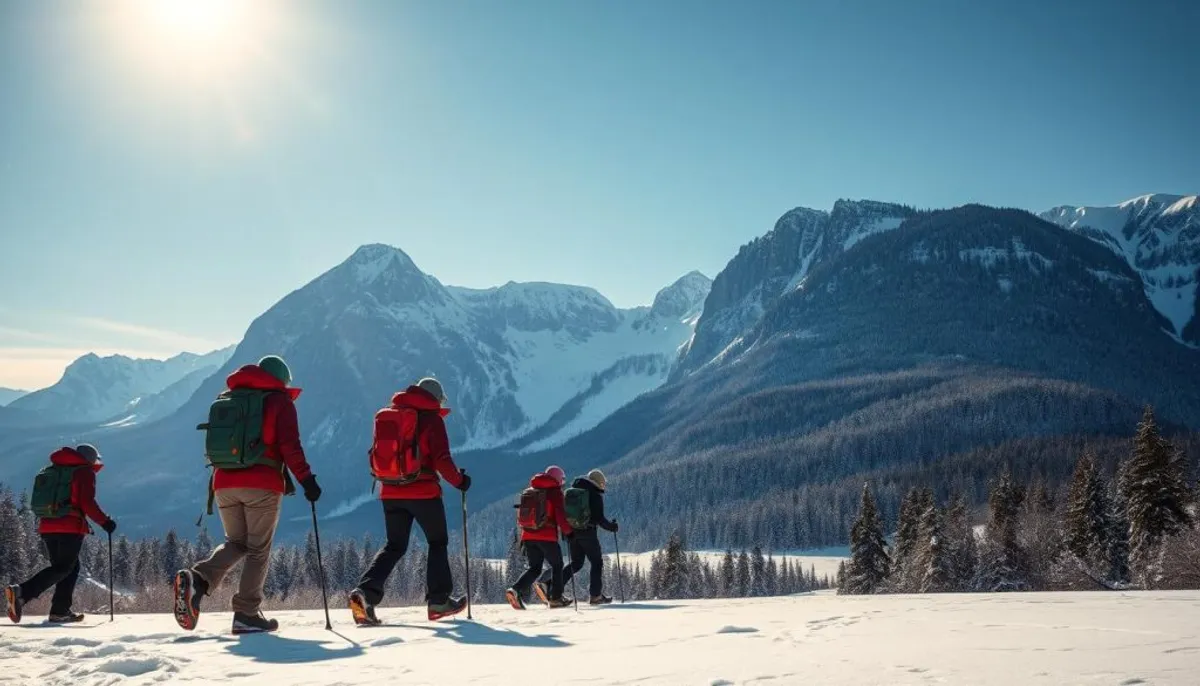
In the 1990s, Børge Ousland and Erling Kagge accomplished remarkable feats. They conquered the North and South Poles, then Everest.
Liv Arnesen became the first woman to reach the South Pole alone in 1994. Her journey lasted fifty days in extreme conditions.
The Evolution of Skiing and Winter Activities
Skiing represents an ancestral tradition dating back over 8,000 years. The Norwegians have developed this practice with passion.
Sondre Norheim popularized the telemark technique in 1867. The first manufacturing plant opened in Oslo in 1886.
Fridtjof Nansen published “Skiing Across Greenland” in 1890. This work sparked a craze for skiing worldwide.
Champions like Ole Einar Bjørndalen and Sonja Henie have excelled in winter sports. Their success confirms Norwegian dominance in this field.
Daily Life and Social Values in Norway
The Norwegian social model fascinates with its balance between traditions and modernity. This harmony is reflected in every aspect of daily life, and a sociocultural analysis reveals how these elements interact to shape the society.
Family Traditions and Education
The education of children values autonomy from a young age. Schoolchildren prepare their own lunch boxes and spend a lot of time outdoors.
The education system offers free access to higher education. Students learn English very early, often complemented by French during their schooling.
Influence of Religious and Secular Practices
The separation of church and state in 2012 marks an important turning point. Although 76% of the inhabitants are registered with the Lutheran Protestant Church, the majority claim not to believe in a deity.
This evolution towards a secular society coexists with various spiritualities. Work and personal life benefit from a remarkable balance in this social organization.
Norwegian Architectural and Religious Heritage
The Norwegian architectural landscape tells a fascinating story where wood becomes the expression of a unique sacred art. These constructions testify to remarkable craftsmanship that spans the centuries.
Wooden Churches and Stavkirke
The stavkirke represent the pinnacle of this tradition. Of about 2,000 medieval churches, only 28 survive today.
The Urnes Church, built around 1130, is the oldest. It is listed as a UNESCO World Heritage site. Its wooden structure assembles pieces without nails.
The largest church in Heddal stands 26 meters tall. Its sculptures blend Christian motifs with Viking-origin dragons.
Modernity and Heritage Conservation
The preservation of these treasures is an essential part of cultural policy. Unfortunately, some churches have been destroyed.
In the 1990s, arson attacks struck several buildings. International interest in this architecture continues to grow.
The country is also developing contemporary constructions that respect traditions. The Sami parliament in Karasjok is a beautiful example.
Conclusion
In conclusion, the Norwegian people offer us a remarkable lesson on identity preservation in a modern world. This nation has managed to build a prosperous society while honoring its Viking roots and ancestral customs.
Throughout the centuries, Norwegians have transformed their demanding environment into distinctive assets. Their balanced social model serves as an example to the entire world. The celebrations of May 17th illustrate this vibrant national pride.
This rich tradition continues to evolve creatively. It deserves several days of exploration to grasp its full depth. The country remains a unique source of inspiration.
FAQ
What is the influence of the Vikings on present-day Norway?
The legacy of the Vikings is very present, particularly in maritime development, exploration expeditions, and even some words in the language. Their spirit of adventure still influences the national mentality.
What are typical cultural practices during winter?
Winter is marked by activities such as skiing, an ancestral tradition, and the pursuit of conviviality. People warm up around hearty meals and shared moments, valuing “koselig,” an art of cozy living.
How has the sea shaped the country’s history?
The sea has always been vital, from Viking expeditions to the modern economy based on fishing and maritime transport. It has influenced the development of coastal cities and remains at the heart of national identity.
Is the Norwegian language difficult to learn?
Norwegian is considered accessible for French speakers. Its grammar is simpler than English or French. The use of two official written forms (Bokmål and Nynorsk) can be the main challenge.
What is the role of wooden churches, the stavkirke, today?
The stavkirke are jewels of architectural heritage. They are no longer just places of worship but also major historical sites, witnesses to craftsmanship and medieval art, attracting visitors from around the world.
How do Norwegians celebrate the end of winter?
The end of the cold season is often celebrated with joy. The return of the sun is marked by outdoor gatherings, and May 17th, the National Day, heralds spring with children’s parades and community celebrations.