
Nestled at the crossroads of Europe and Asia, Azerbaijan boasts a unique cultural heritage. It has been shaped by millennia of tumultuous history.
This country has seen the convergence of Turkic, Persian, Caucasian, and more recent influences. This fusion creates a rich and complex identity, recognized worldwide.
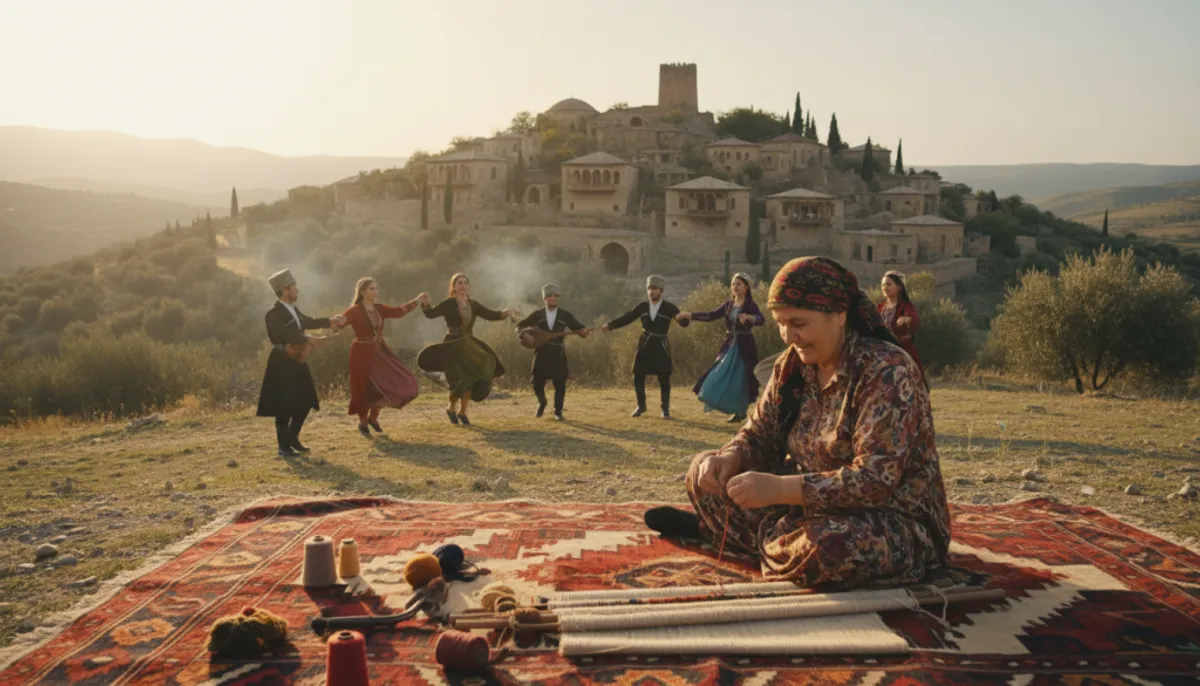
The main expressions of this culture are vibrant. One thinks of mugham music, handwoven carpets, and impressive medieval architecture.
Poetic literature and performing arts complete this picture. The geographical location, between the Caspian Sea and the Caucasus Mountains, has always favored exchanges.
Every historical period, from ancient civilizations to modern independence, has enriched the heritage. The Azerbaijani people know how to preserve their traditions while welcoming innovation.
Thus, this dynamic culture serves as the glue of national identity. It is passed down with pride between generations.
Key Points to Remember
- A unique cultural heritage, forged at the crossroads of Europe and Asia.
- A fusion of Turkic, Persian, Caucasian, and Soviet influences.
- Diverse artistic expressions: mugham music, iconic carpets, medieval architecture.
- A strategic geographical location that has favored cultural and commercial exchanges.
- A rich historical legacy, from ancient civilizations to modern independence.
- A capacity to preserve ancestral traditions while embracing innovation.
- Culture as a fundamental pillar of Azerbaijani national identity.
Introduction to the Azerbaijani Universe
Modern Azerbaijan occupies a geographical area that has borne several names throughout history. This strategic region forms a natural bridge between Europe and Asia.
Historical and Geographical Context
The country is bordered by the Caspian Sea to the east. It shares its borders with five neighbors: Russia, Georgia, Armenia, Turkey, and Iran.
Formerly called Aran or Caucasian Albania, this region has always been a crucial passage for empires. Trade routes have always been very active here.
Multiple Cultural Influences
Diverse peoples have shaped the local identity through the centuries. There is an ancient Caucasian substratum, Turkic contributions, and a significant Persian heritage.
The Azerbaijan country is home to a majority of Azerbaijanis. Numerous minorities enrich its social mosaic.
This unique fusion creates a harmonious synthesis between different cultures. The result is much more than a simple juxtaposition of influences.
Origins and Historical Heritage
Going back in time in Azerbaijan means discovering some of the oldest human traces in Eurasia. The Azykh cave has yielded remains over 700,000 years old. This places this territory at the heart of human prehistory.
From Ancient Civilizations to Modern Times
Later, the Gobustan petroglyphs, dating back to 10,000 BC, depict an organized society. We see scenes of hunting and dancing. These early peoples left their mark long before the region bore its current name.
The Caucasian Albanians are considered the first sedentary inhabitants. Successive waves, such as the Scythians in the 9th century BC, followed by the Achaemenid Persians, brought new influences. This ancient period laid the foundations for a complex history.
Key Moments and Historical Turning Points
The Middle Ages saw the establishment of the kingdom of Caucasian Albania. The arrival of Muslim Arabs in the 7th century profoundly transformed the region. Then, great dynasties like the Seljuks and Safavids marked the local peoples.
A crucial part of this history is the annexation by Russia in the 19th century. The treaties of 1813 and 1828 divided the territory. Finally, on May 28, 1918, a part of this people proclaimed the first democratic republic in the Islamic world.
Azerbaijani Culture: A Bridge Between Traditions and Modernity
The local culture acts as a living bridge between the past and the future. It is a collective language that unites generations. This people has managed to preserve its millennia-old heritage while integrating external influences.
This synthesis creates a unique identity within the Muslim world. This is evident in local jazz. It merges American improvisation with Eastern melodies.
A creative tension exists between preservation and innovation. Mugham and classical poetry coexist with avant-garde theater. Modern visual arts evolve alongside traditional craftsmanship.
Baku perfectly embodies this duality. The medieval old town of Icheri Sheher contrasts with the ultramodern Flame Towers. Brutalist Soviet architecture complements this eclectic urban landscape.
Cultural development refuses to choose between East and West. It prefers an original synthesis enriched by its multiple roots. This dynamic approach ensures continuity while embracing the future.
Ancestral Traditions and Customs
Ancestral traditions are the beating heart of society. They provide rhythm and deep meaning to daily life.
Festivals, Rituals, and Ceremonies
Among the major festivals, Novruz shines brightly. This spring celebration blends pre-Islamic rites with joyful family gatherings.
Special dishes are prepared, and symbolic rituals mark renewal. Ceremonies, such as weddings or births, also weave social ties.
They often mix Islamic references with local customs. Solidarity between generations is always visible.
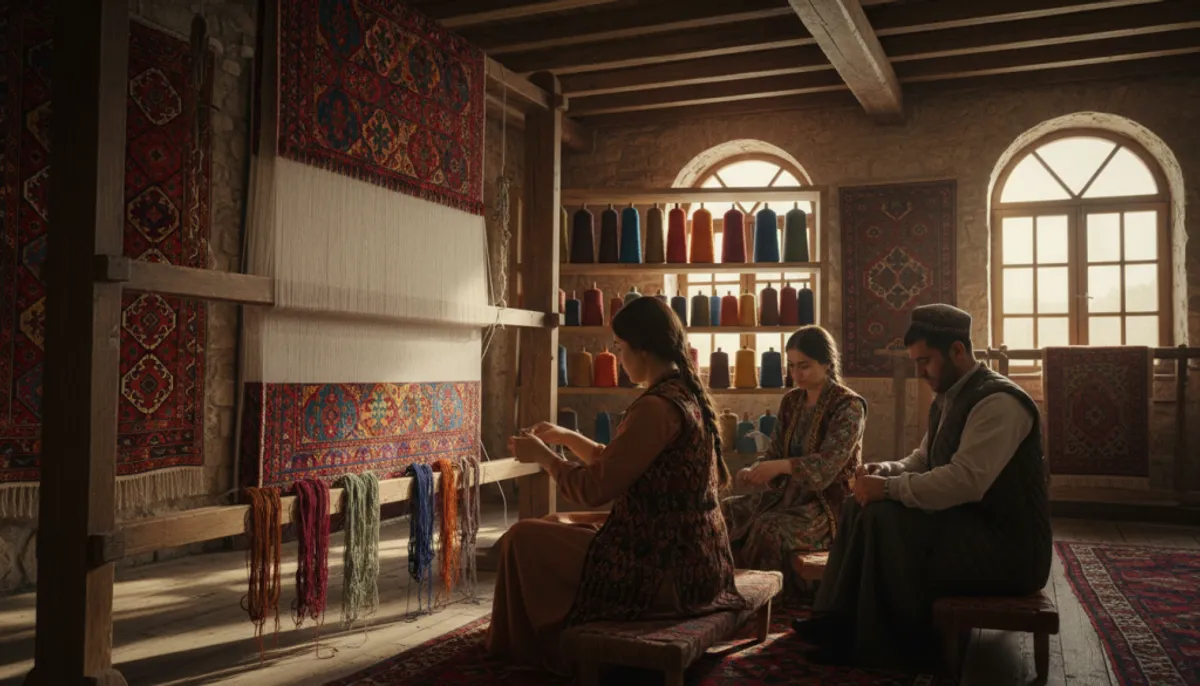
The Art of Weaving and Iconic Carpets
The art of carpet weaving is a national heritage. Its practice dates back to the Bronze Age, as evidenced by archaeological discoveries.
There are over 140 distinct regional patterns. Each tells a story through its colors and symbols.
The National Carpet Museum in Baku showcases the finest examples. Its building is shaped like a rolled carpet, an architectural tribute.
Metalwork and ceramics complement this rich artisanal panorama. These crafts are passed down with pride and continue to thrive.
Architecture and Historical Heritage
From the medieval old town to futuristic skyscrapers, the built heritage is constantly evolving. It forms an essential part of visible history.
This architectural landscape is divided into well-defined periods. Each era has left its unique mark.
Palaces, Monuments, and Medieval Architecture
The historical heart of Baku, Icheri Sheher, is a UNESCO World Heritage site. Here, one can admire the Maiden Tower and the Palace of the Shirvanshahs.
Elsewhere, the Palace of the Shaki Khans in Shaki impresses with its colorful stained glass. The Ateshgah fire temple recalls the pre-Islamic Zoroastrian cult.
Soviet Influence and Modern Urbanism
In the 19th century, Russian annexation brought theaters and new-style schools. The oil boom made Baku one of the largest cities in the Empire.
This development accelerated. The Soviet era saw the birth of worker colonies and the bold Neft Dachlari in the sea.
The 1960s solidified the capital's status with a richly decorated metro. Urban planning became monumental.
| Period | Architectural Style | Notable Example |
|---|---|---|
| Medieval | Traditional Iranian Architecture | Maiden Tower (Baku) |
| 19th century | Russian and European Influence | Theaters and Schools of Baku |
| Oil Period (19th-20th) | Fusion of European styles and Eastern motifs | Elegant buildings in the city center |
| Soviet | Functional and expressive architecture | Neft Dachlari (stilt city) |
| Contemporary | Futuristic design and organic curves | Heydar Aliyev Cultural Center |
Today, the Heydar Aliyev Cultural Center symbolizes contemporary boldness. This architecture embodies the dynamic development of the capital and its constantly renewing heritage.
Music and Dance: Cultural Expressions
Rhythms and melodies constitute the vibrant soul of artistic expression in Azerbaijan. These performing arts, closely linked, have roots in a history spanning over four millennia.
They go far beyond entertainment. They are a profound emotional and spiritual language.
Mugham, the Heart of Traditional Music
Mugham is the quintessential classical musical form. This sophisticated improvisation alternates between poetic singing and instrumental sections.
Recognized by UNESCO as an intangible heritage, it is considered a meditative experience. Its essence draws from Sufi tradition.
Mugham is not just listened to; it is experienced. It invites an inner journey where technique serves pure feeling.
Unique instruments bring this music to life. The tar (lute), kamancheh (fiddle), and balaban (oboe) create enchanting soundscapes.
The World of Mugham festival gathers masters from this world every year.
Traditional Dances and Contemporary Performance
Dance is the bodily mirror of this music. Each gesture translates the rhythm and emotion of the piece.
Female dances, such as asma kasma, emphasize grace and expressiveness of the hands. Male dances, like gangia, showcase warrior energy and spectacular jumps.
| Expression | Nature | Key Elements | Context |
|---|---|---|---|
| Mugham | Musical and Vocal | Improvisation, spirituality, instruments (tar, kamancheh) | Ceremonies, festivals, meditation |
| Female Dance (Asma Kasma) | Graceful Choreography | Fluid movements, expressiveness of hands and gaze | Wedding celebrations |
| Male Dance (Gangia) | Dynamic Choreography | Speed, jumps, agility, martial inspiration | Festivals, demonstrations of strength |
In the 20th century, a bold fusion emerged: Azerbaijani jazz. It marries American improvisation with Eastern melodies.
This innovation illustrates the country's ability to reinvent its tradition. The current scene preserves this rich heritage while exploring new horizons.
Literature and Performing Arts
The pen and the stage narrate the soul of a people with a singular power. This heritage has transitioned from oral tradition to written form.
Turkish and Persian influences have shaped this unique expression. It intertwines philosophy, spirituality, and reflections on love.
Epic Poetry and Major Literary Figures
The century of Nizami Ganjavi (12th century) marks a peak. This giant of Persian literature, born in Ganja, composed the Five Treasures.
Figures like Khagani Shirvani and Fuzuli have also left a profound mark. Their lyrical poetry employs multiple languages.
Oral epics, such as the Name of Oguz and the Book of Dede Korkut, are fundamental. The ashugs (minstrels) have transmitted them.
The Bayati genre, short poems of four lines, reflects popular wisdom. Often composed by women, they capture vivid emotions.
Theater and Cultural Performances
Modern theater was born at the end of the 19th century. The first professional performance in Azerbaijani took place in Baku in June 1873.
This art has become a platform for addressing social issues. It also draws from traditional comedic roots, such as the characters of Kos-Kosa.
After independence, the scene flourished. It now offers both traditional and avant-garde performances.
| Form of Expression | Period/Context | Main Characteristics |
|---|---|---|
| Epic Poetry (e.g., Dede Korkut) | Medieval, Oral Tradition | Heroic Oghuz tales, transmission by ashugs |
| Bayati | Traditional, Popular | Short 4-line poems (7 syllables), wisdom and emotions |
| Modern Theater | Late 19th century | First professional plays in Azerbaijani, social themes |
| Contemporary Theater | Current, Post-Independence | Fusion of tradition and avant-garde, puppetry, mime |
The novel Ali and Nino (1937) is the most internationally recognized work. Translated into over 30 languages, it explores a forbidden love.
These books and performances showcase a living art. They carry a name and a history that transcend the centuries.
Applied Arts and Fine Arts of Azerbaijan
The visual arts in Azerbaijan tell a millennia-old story, from petroglyphs to contemporary installations. This ancient civilization has always been a melting pot of creativity.
Its artistic heritage draws from ancestral crafts, including traditional crafts. It also incorporates influences from afar.
Miniatures, Ceramics, and Sculptures
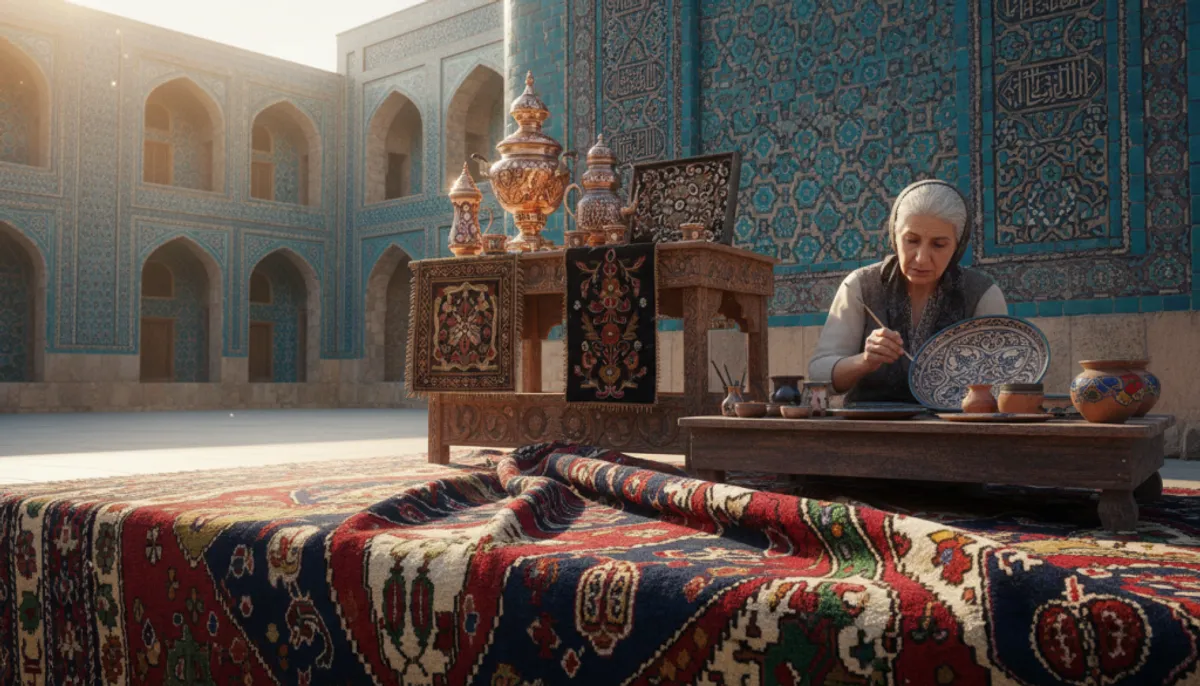
The art of metal and copper dates back over 5,000 years. Artisans have passed down their techniques from generation to generation.
In the 7th century, Persian influence introduced miniature painting. These refined works illustrate epic tales on small manuscripts.
Traditional ceramics shine with their colorful glazes. The National Museum of Art in Baku showcases superb collections.
Modern sculpture honors historical figures in the cities. These public monuments mark the urban landscape.
Innovation in Painting and Visual Arts
The Gobustan petroglyphs are the foundation of fine arts. They depict scenes of life dating back 10,000 years.
Exchanges along the Silk Road favored evolution. The development of realistic floral motifs reached its peak under the Safavids.
After the Soviet era, greater freedom allowed for exploration. Creators turned to conceptual art and installations.
Today, the scene is dynamic with galleries and festivals. Artists actively participate in international biennials, especially in June.
This vitality showcases a culture in constant rebirth. It flourishes in this unique region.
Language, Identity, and Ethnic Diversities
The official language, Azerbaijani, is much more than a communication tool. It is the glue of collective identity for the Azerbaijani people.
This language forges a deep connection across generations. It carries the memory of poems and epic tales.
Azerbaijani and Linguistic Influences
Spoken by 92% of the population, Azerbaijani is a Turkic language. Its structure is agglutinative, using many suffixes.
It has six cases and lacks articles or genders. Its vocabulary reflects a history rich in contacts.
There are massive borrowings from Persian, Arabic, and Russian. These successive layers narrate the influences endured.
| Period | Alphabet | Historical Context |
|---|---|---|
| Until 1929 | Arabic | Islamic and Persian heritage |
| 1929-1939 | Latin | Modernizing reform |
| 1939-1991 | Cyrillic | Soviet period |
| Since 1991 | Latin (32 letters) | Post-independence national affirmation |
The Cultural Wealth of Minorities
Beyond the Azerbaijani majority, the country is home to a mosaic of peoples. Their languages enrich the national heritage.
| Group / Language | Estimated Speakers | Particularities |
|---|---|---|
| Lezgian | ~180,000 | North Caucasian language |
| Talysh | ~110,000 | South Iranian language |
| Russian | ~110,000 | Important communication language |
| Armenian | ~120,000 | Mainly in Nagorno-Karabakh |
There are over 15 minority languages in total. Some, like Udi or Khinalug, are very old and endangered.
The language policy recognizes this diversity. The country signed the European Charter for Regional Languages in 1992.
The language is not just a means of describing the world; it is the world in which a people lives and recognizes itself.
This mosaic forges a complex and open national identity. It is one of the great riches of this culture.
Spirituality and Religion in Daily Life
The religious landscape of this Caucasian country is marked by diversity and moderate practice that often surprises. Nearly 95% of the population is Muslim, with a majority being Shia.
This religion is an integral part of identity, but its observance often remains relaxed. The Soviet legacy has favored an approach where faith intertwines with local traditions and various cultural influences.
Religious Practices and Spiritual Traditions
Shia Islam, established under the Safavids, shapes collective rituals. Festivals like Ashura or Ramadan rhythm the collective life.
They are celebrated with a strong social dimension. Commemoration and sharing are as important as the strictly spiritual aspect.
This relaxed religion distinguishes the country from other Shia-majority nations. It is lived as a well-rooted cultural element.
Coexistence of Beliefs and Freedom of Worship
A remarkable tradition of coexistence has existed for centuries. Alongside Muslims, there are Orthodox Christian communities and Mountain Jews.
Smaller groups, such as Catholics or Baha'is, also practice freely. The Zoroastrian temple of Ateshgah is a place that witnesses this ancient spiritual heritage.
Here, religion is a heritage that unites much more than it divides. It is part of the human landscape, discreet and respected.
This freedom of worship, guaranteed by law, allows each community to preserve its rites. It contributes to the richness of the national social fabric.
Influence of the Soviet Era and Transition to Modernity
The 20th century was a period of radical transformations. Between foreign domination and the quest for autonomy, the people experienced profound upheavals.
Urban Development and Architectural Transformation
A brief democratic republic was established in May 1918. It granted women the right to vote long before many Western countries.
The State University of Baku was created, marking a desire for modernization. Then came the long Soviet period, from 1920 to 1991.
This era brought rapid industrialization and massive urbanization. Large cities developed with standardized residential complexes.
The richly decorated Baku metro and the stilt city of Neft Dachlari are symbols of this. This concrete architectural heritage still marks the urban landscape.
| Period | Key Event | Impact on Society |
|---|---|---|
| 1918-1920 | Democratic Republic | Early modernization, women's rights |
| 1920-1991 | Soviet Era | Industrialization, secularization, cultural censorship |
| 1991 | Return to Independence | Beginning of a new national construction |
| 2000s | Stabilization and Development | Infrastructure projects funded by oil |
The regaining of independence in 1991 opened a new era. The following years were difficult, marked by economic instability.
Stabilization came under the presidency of Heydar Aliyev. Since then, the capital and the entire country have experienced accelerated modernization.
Artists regained full creative freedom. They now explore new territories while honoring their roots.
Festivals, Popular Traditions, and Gastronomy
Celebratory moments and shared meals form the heart of social daily life. They reveal a warm people proud of their heritage.
Cultural Events and Traditional Festivals
The calendar is marked by major traditional festivals. The World of Mugham celebrates classical music every year with international masters.
Contemporary art festivals are also regularly organized in Baku. They consolidate the country's position as a regional cultural hub.
The Novruz festival, celebrated over several days, is ancestral. It involves symbolic rituals and the preparation of seven special dishes.
Religious festivals, such as Ramadan and Eid, also rhythm the year. They are times of reflection and sharing with family.
Azerbaijani Cuisine: Friendliness and Authentic Flavors
Cuisine is a delicious synthesis of Caucasian, Persian, and Turkic influences. It creates a unique experience.
Among the iconic dishes are dolma and saffron plov. Various kebabs and khach soup are also highly appreciated.
Desserts, such as walnut pahlava, often end the meal. However, the central role belongs to tea, served in armudu glasses.
Offering tea or a fruit to a guest is a sacred gesture. It reflects ancestral traditions of generosity.
These meals are essential moments of sociability. Their role goes beyond food to strengthen family ties.
This legendary hospitality permeates every day. It is a fundamental pillar of the local culture.
Conclusion
The Azerbaijani identity is the result of an exceptional fusion. It harmoniously blends ancestral traditions with modernity.
This country has managed to preserve its heritage while innovating. Its unique jazz and avant-garde theater are living proofs.
Its culture expresses itself through varied languages and rich art. Mugham music and carpets tell a story spanning several centuries.
The Azerbaijani people, forged by multiple influences, assert their name in the world. Since independence, they have radiated creativity and legendary hospitality.
Come discover this richness for yourself. Explore its museums, taste its cuisine, and meet its welcoming inhabitants.
FAQ
What are the key moments in the history of Azerbaijan?
The history of the country is marked by several turning points. From ancient civilizations, through centuries of Persian and Turkish influence, to its integration into the USSR. A decisive moment was the regaining of independence in 1991, opening a new era of national development under the leadership of Heydar Aliyev.
Is the Azerbaijani carpet really that important?
Absolutely! Much more than just a decorative object, the carpet is a national heritage. This ancestral art of weaving tells the identity and history of the Azerbaijani people through its patterns and colors. It occupies a central place in traditions and family life.
What is Mugham in music?
Mugham is the jewel of traditional music. This form of vocal and instrumental improvisation, deep and moving, is classified as an intangible heritage by UNESCO. It expresses all the spiritual richness and sensitivity of this culture.
How does ethnic diversity manifest?
Azerbaijan is a land of diversity where different peoples coexist. This richness is seen in the languages, customs, and festivals specific to each community. This mosaic greatly contributes to the cultural dynamism of the Azerbaijani world.
What is the influence of the Soviet period on the cities?
The Soviet era profoundly transformed urbanism and architecture. In Baku, the capital, a unique mix has emerged: a medieval historic center coexists with Soviet-style buildings and ultramodern skyscrapers, symbolizing the country's transition to modernity.
What does cuisine represent in social life?
Azerbaijani cuisine is at the heart of conviviality. Sharing a dish like plov or dolmas is a true social ritual. These authentic flavors, passed down in families, strengthen bonds and illustrate the legendary hospitality of this region.
What traditional festivals can be discovered?
The calendar is marked by numerous festivals and popular traditions. Novruz, the Persian New Year celebrated in March, is the most important. It symbolizes renewal with its rituals, music, and abundant tables, uniting the entire people.