
Welcome to your ultimate guide to exploring a millennial treasure. Nestled at the crossroads of Asia and Europe, this heritage fascinates the entire world with its historical and spiritual richness.
This country of the Caucasus is the cradle of the first Christian state. Its unique identity has been forged through centuries of tumultuous history, resilience, and rebirth.
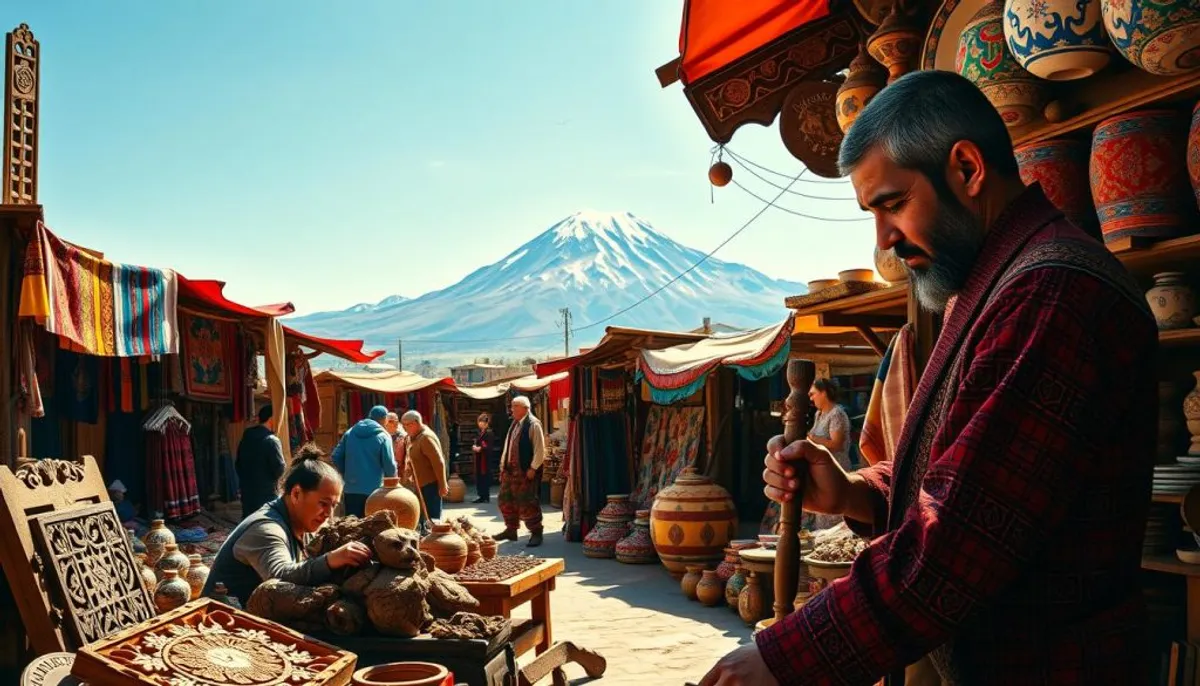
You will discover how this civilization expresses itself in everyday life. From ancient languages to family traditions, through the sacred art of khatchkars and generous gastronomy.
The influence of the diaspora, scattered across the globe, continues to enrich this remarkable heritage. Our goal is to offer you an authentic immersion.
Whether you are preparing a trip, wish to understand your roots, or simply want to discover, this guide will accompany you. Dive into the glorious history of kingdoms, admire architectural treasures, and savor culinary delights.
Key Points to Remember
- Armenia is the birthplace of the first Christian nation in the world.
- Its cultural heritage is marked by a rich history and remarkable resilience.
- The Armenian diaspora plays a crucial role in preserving and disseminating this culture.
- Art, especially khatchkars, and gastronomy are pillars of this identity.
- Legendary hospitality and family traditions are central to daily life.
- This guide offers a comprehensive exploration of history, monuments, and norwegian customs.
Introduction to Armenian Culture
At the heart of the Caucasus unfolds a civilization with deep roots and a fascinating history. This mountainous territory is home to approximately 3.3 million inhabitants, with remarkable ethnic homogeneity.
General Overview and Historical Context
The history of this nation dates back several millennia. As early as the 7th century BC, ancient civilizations like Urartu developed here.
The founding event occurs in 301 AD. The adoption of Christianity as the state religion makes this land the first country in the world to make this historic decision.
From the 11th to the 20th century, the territory experienced numerous invasions. Turks, Seljuks, Mongols, and Ottomans each marked local development.
Importance of Armenian Cultural Heritage in the World
The genocide of 1915-1916 represents a tragic turning point. This event deeply marked the collective consciousness and the national identity.
Despite the challenges, the first independent Republic was proclaimed in 1918. After a Soviet period, independence was regained in 1991.
This heritage shines well beyond borders thanks to an active diaspora. It keeps traditions alive across the entire world.
Armenian Culture: History and Identity
The evolution of this nation through the ages reveals a saga of resilience and rebirth. Its historical journey shows how a people can preserve its essence in the face of the challenges of time.
Major Historical Periods and Key Events
The history of this land spans several millennia. Since antiquity, the kingdom of Urartu marked the beginning of a distinct civilization.
The 4th century saw the adoption of Christianity as the state religion. This fundamental event shaped the national identity for the centuries to come.
The genocide of 1915-1916 represents a tragic turning point. April 24, 1915, marks the beginning of this dark period when intellectuals were arrested.
The Evolution of Armenian Identity and Heritage
The Soviet period (1922-1991) brought relative stability. However, it also limited traditional cultural and religious expression.
The 1988 earthquake catalyzed movements toward independence. This disaster revealed the weaknesses of the existing system.
International recognition of the genocide continues to evolve. France officially recognized these events in January 2001.
| Period | Major Event | Impact on Identity |
|---|---|---|
| 4th century | Adoption of Christianity | Religious foundation |
| 1915-1916 | Armenian Genocide | Collective trauma |
| 1918 | First Republic | National renaissance |
| 1991 | Current Independence | Regained sovereignty |
May 28 commemorates the first republic of 1918. September 21 celebrates the definitive independence achieved in 1991.
Language, Population, and Religion
The social fabric is characterized by exceptional ethnic unity and deep spiritual traditions. This remarkable homogeneity distinguishes this nation in the region.
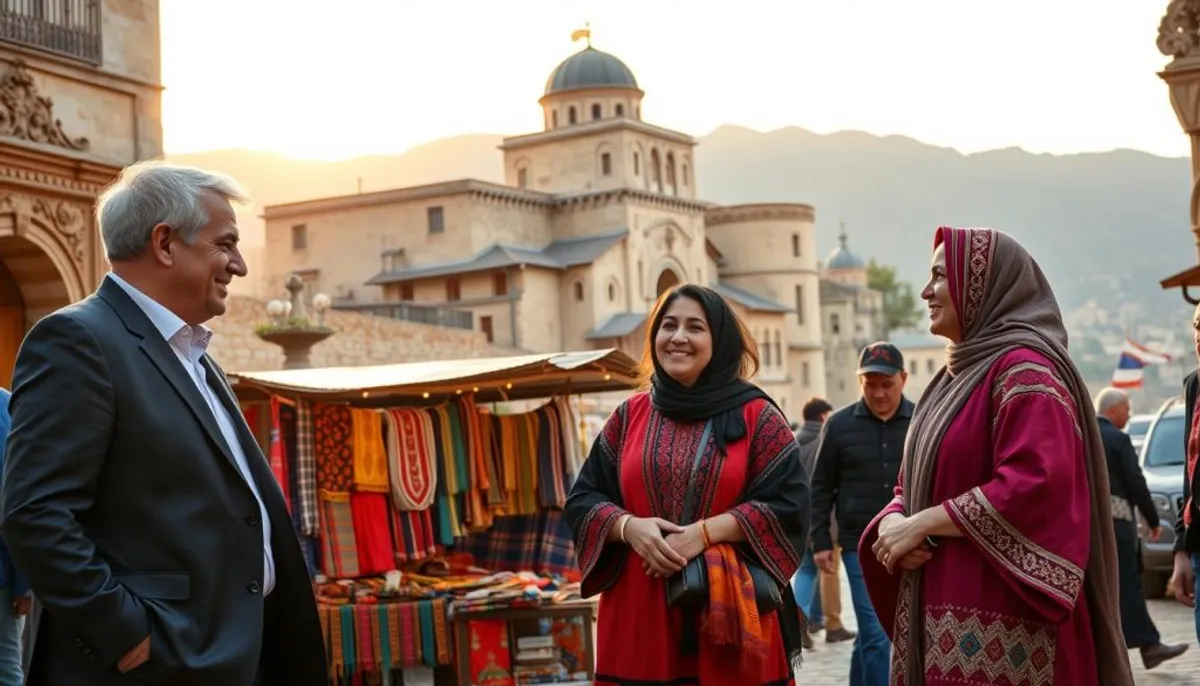
Armenian and its Variants: Classical, Eastern, and Western
The official language represents an independent branch of the Indo-European languages. Its unique alphabet was created by Mesrob Mashdots between 392 and 406.
Three main forms are distinguished. Classical Armenian serves as the liturgical language. The Eastern and Western variants are spoken by about 7 million people.
Ethnic Distribution and the Influence of the Diaspora
The population numbers around 3.3 million inhabitants. Armenians make up more than 93% of this population.
Minorities include Yezidi Kurds and Assyro-Chaldeans. Russian remains widely spoken, but English is gaining popularity.
| Ethnic Group | Number of Inhabitants | Percentage |
|---|---|---|
| Armenians | 3,100,000 | 93.2% |
| Yezidi Kurds | 40,000 | 1.2% |
| Russians | 12,500 | 0.4% |
| Assyro-Chaldeans | 3,000 | 0.1% |
Religiously, 97% of the inhabitants practice Christianity. The Armenian Apostolic Church dominates with 90-92% of the population.
This church declared its independence in 374. It has preserved national identity for centuries.
Visual Arts and Traditional Crafts
The artistic expression of this people constitutes a fascinating visual heritage that transcends the ages. This rich creative tradition manifests through various forms, from sacred sculptures to everyday objects, including cultural offers for young people in france.
Artistic Achievements: Khatchkars, Miniatures, and Sculptures
Khatchkars represent one of the most original contributions to world heritage. These sculpted stone crosses, recognized by UNESCO in 2010, have adorned landscapes and monasteries for centuries.
Miniature art represents another remarkable form of art developed in scriptoriums. Monks created lavishly decorated manuscripts that testify to exceptional technical mastery.
Craftsmanship: Rugs, Embroidery, and Traditional Ceramics
Textile craftsmanship occupies a central place in this creative tradition. Armenian rugs, especially those from Karabakh, enjoy international fame for their characteristic geometric patterns.
The palette of natural colors comes from plants in the region, passed down from generation to generation. Each rug tells a story through its intricate patterns.
Delicate embroidery and ceramics complete this artisanal heritage. A workshop in Gumri perpetuates ancestral techniques, becoming an integral part of the renaissance of this traditional craftsmanship.
These creations, from rugs to ceramic objects, illustrate a remarkable cultural continuity through each century. They remain living testimonies of exceptional know-how.
Music, Dance, and Cinema
Sound and cinematic art offer a unique window into the soul and traditions of this people. These modern artistic expressions draw their roots from a millennial heritage.
Iconic Instruments: The Duduk and Other Traditional Sounds
The duduk is the most famous instrument. This apricot wood flute produces a melancholic sound recognizable among all.
UNESCO inscribed its music as intangible heritage in 2005. This honor highlights its importance in global culture.
The musical tradition includes several distinct styles. The Khaz notation system and Ktsord religious chants coexist with popular forms like Rabiz.
| Musical Type | Characteristic | Recognition |
|---|---|---|
| Duduk | Traditional flute | UNESCO 2005 |
| Kochari | Collective dance | UNESCO 2017 |
| Gusans | Minstrels | Oral tradition |
Armenian Cinema and Its Cultural Impact
The local seventh art began in 1924 with Soviet Armenia. Hamo Beknazarian directed the first silent film two years later.
Serguei Paradjanov became a prominent figure in world cinema. His works like The Color of Pomegranates revolutionized cinematic language.
The International Film Festival of Yerevan perpetuates this rich tradition. It contributes to artistic radiance throughout the world.
These artistic expressions form an essential part of contemporary identity. They preserve heritage while constantly innovating.
Armenian Cuisine and Gastronomy
Discover a gastronomy where hospitality is measured by the abundance of shared dishes. This cuisine represents much more than just culinary art.
It constitutes a true pillar of social life. Meals bring family and friends together around ancestral traditions.
Traditional Dishes and Regional Specialties
The table is adorned with delights like khorovats, a savory barbecue, and dolma with stuffed grape leaves. Khash, a morning soup, warms the hearts.
The salmon from Lake Sevan offers a unique flavor. These specialties illustrate the richness of this millennial gastronomy.
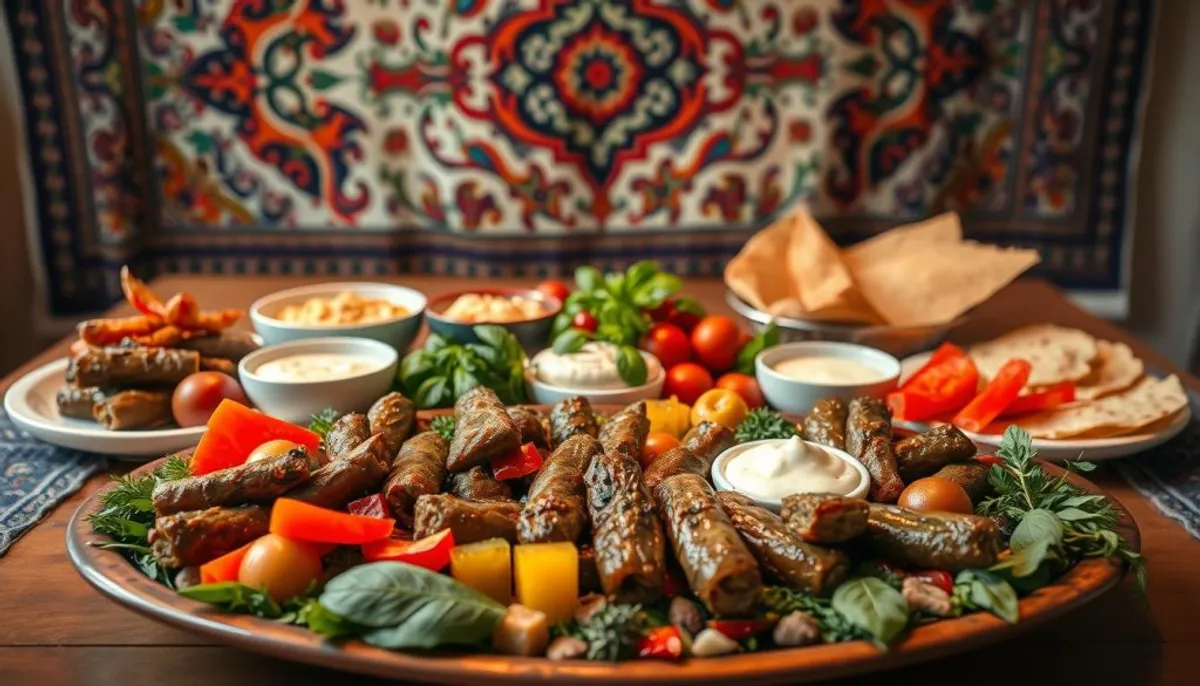
Typical Drinks and the Place of Lavash on the Armenian Table
Lavash, traditional bread, occupies a central place. Inscribed in UNESCO heritage, it accompanies every meal.
Drinks harmoniously complement this cuisine. Strong coffee shares the table with renowned brandy and local wines.
These elements shape the life of the community. They testify to a heritage passed down from generation to generation.
Over the centuries, this food culture has managed to preserve its authenticity while evolving.
Festivals, Traditions, and Symbols
The rhythm of the year revolves around celebrations deeply rooted in senegalese traditions and collective history. These events punctuate the seasons and strengthen community ties.
Festival Calendar: From Vardavar to April 24
The year begins with three days of festivities in January. New Year is followed by Orthodox Christmas on January 6.
The month of April marks a solemn commemoration. April 24 honors the memory of the victims of the genocide.
Summer brings joyful festivals like Vardavar in July. This popular celebration sees the streets come alive with water games.
September 21 celebrates the independence achieved in 1991. This national day unites the entire country.
National Symbols, Emblems, and Their Meaning
The tricolor flag embodies the spirit of the nation. Each color carries a precise historical significance.
The pomegranate symbolizes fertility and prosperity. This emblematic fruit appears in traditional craftsmanship.
The anthem Mer Hayrenik resonates during official ceremonies. Adopted in 1991, it expresses love for the homeland.
Mount Ararat remains a major geographical symbol. Although located in Turkey, it occupies a central place in the collective imagination.
Customs, Daily Life, and Social Relations
The welcome reserved for visitors in this country of the Caucasus reflects a spontaneous generosity deeply rooted in customs. This legendary hospitality shapes every interaction in daily life. Among the turkmen nomads, this warmth is particularly evident, showcasing their unique cultural heritage.
Gestures, Greetings, and Customs During Meetings
Greetings reflect the warmth of human relationships. Among women or between men and women, exchanging kisses is common. For a first meeting, a handshake accompanied by a smile is sufficient.
Respect for religious traditions is essential in holy places. Visitors adopt decent attire and maintain silence. Upon entering a home, shoes are removed as a sign of respect.
The Role of Family and the Evolution of Social Traditions
The family is the heart of society. Several generations often live under the same roof. Marriage remains a major milestone celebrated with conviviality.
The role of women is gradually evolving in the country. They are gaining visibility in education and civil society. Recent reforms support this transformation.
The contrast between city and countryside marks social life. The capital offers a modern lifestyle while villages preserve ancestral traditions. This diversity enriches visitors' experiences.
Conclusion
This journey through Armenian cultural treasures leaves us with a deep admiration for a people who have managed to preserve their identity, including their vibrant traditional georgian dances. UNESCO has repeatedly recognized this exceptional wealth.Writing and its cultural expressions (2019), the epic of the Furious of Sassoun (2012), and the scores of Aram Khachaturian (2013) testify to this contribution to world heritage. These traditions transcend the centuries with remarkable vitality.
This country of the Caucasus influences its region and the entire world through its dynamic diaspora. Armenians, wherever they live, share a common pride in their unique heritage.
We hope this discovery will inspire you to explore this vibrant culture further. Whether you visit the country or meet Armenians in your community, each encounter reveals the richness of this millennial tradition.
FAQ
What is the main religion in Armenia?
Armenia is the first country to have adopted Christianity as the state religion in 301 AD. Today, the vast majority of the population belongs to the Armenian Apostolic Church, which plays a central role in national identity.
What does the commemoration of April 24 represent?
This day is dedicated to the memory of the victims of the 1915 genocide. It is a crucial moment of reflection for the people, both in the country and within the global diaspora, to honor their ancestors.
What are the typical dishes of the local gastronomy?
The cuisine is renowned for its unique flavors, including moldovan cuisine, lavash, a traditional bread inscribed in UNESCO, khorovats (barbecue), and dishes like dolmas. Gastronomy is a pillar of social and family life.
Is Armenian craftsmanship known for anything in particular?
Absolutely! Craftsmanship, particularly rug-making, is famous for its complex patterns and vibrant colors. Khatchkars, sculpted stone crosses, are also unique works of art recognized worldwide.
How does the diaspora influence the preservation of this heritage?
The Armenian community abroad, very active, contributes significantly to keeping traditions alive. It supports the language, promotes artists, and participates in passing on heritage to younger generations, everywhere in the world.