
Welcome to this exploration of the cultural heritage of Senegal. This dynamic country in West Africa offers a rich identity, blending ancestral traditions with modernity.
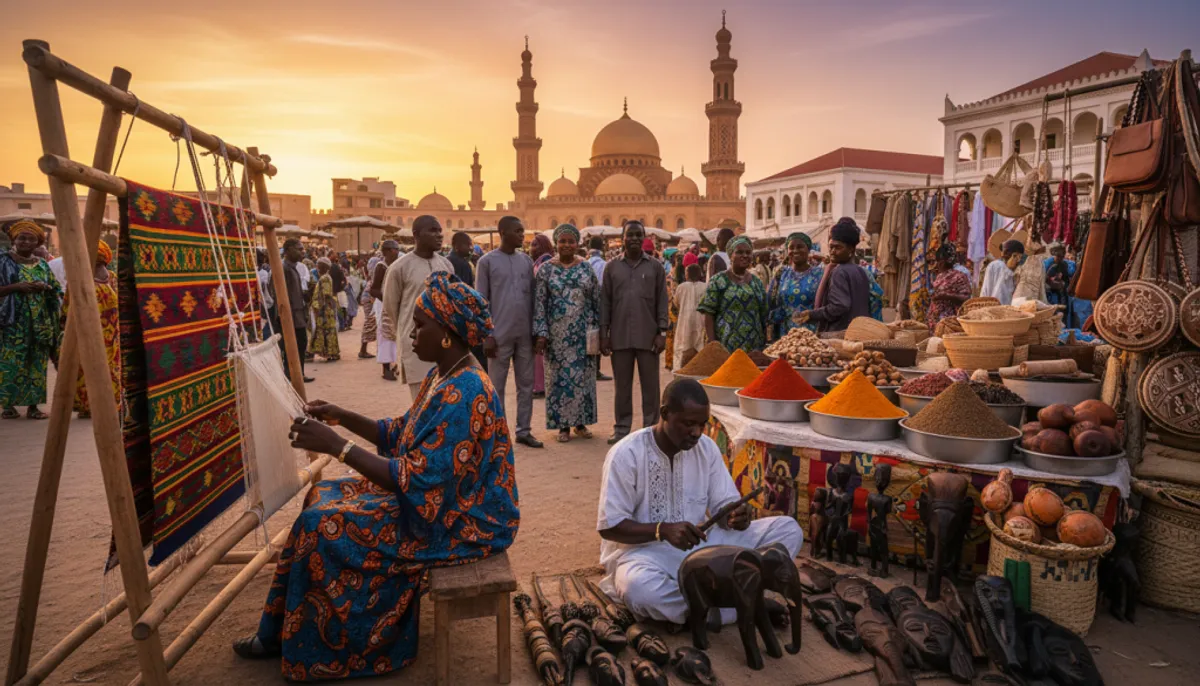
From peaceful villages to the bustling streets of Dakar, Senegalese culture is experienced daily. It unites over 18 million people around common passions.
You will discover a vibrant artistic expression. Enchanting music and expressive dance rhythm life. Creative craftsmanship transforms local materials into unique works.
The art of conversation and hospitality holds a central place. From discussions under the baobab tree to digital exchanges, social ties remain fundamental.
This guide will reveal how customs harmoniously persist alongside contemporary influences. Dive into the history, arts, and spirit of this welcoming people.
Key Points
- Senegal has a rich and diverse cultural heritage in West Africa.
- Its culture unites over 18 million inhabitants, from rural areas to cities.
- Music, dance, and craftsmanship are pillars of artistic expression.
- Hospitality and oral communication are fundamental values.
- Ancestral traditions coexist with modernity, especially in Dakar.
- The Senegalese identity is vibrant, welcoming, and deeply rooted.
Introduction to the Universe of Senegal
Senegal reveals itself as a land of living traditions where every encounter becomes a rich human experience. This West African nation has a strong identity marked by the diversity of its landscapes and its inhabitants.
Overview and General Context
Located on the Atlantic coast, this territory includes varied regions ranging from the capital Dakar to traditional villages. Daily life harmoniously blends modernity and ancestral customs.
Each geographical area contributes to the richness of the country through its local specificities. This diversity forges the unity of the Senegalese people around common values.
The Importance of Teranga and Hospitality
Teranga goes beyond the simple concept of hospitality to become a philosophy of life. This Wolof term embodies the art of welcoming others with generosity and respect.
| Event | Context | Social Impact |
|---|---|---|
| Family Welcome | Homes and ceremonies | Immediate integration |
| Food Sharing | Meals and gatherings | Creation of bonds |
| Kind Conversation | Daily interactions | Community strengthening |
This fundamental value structures relationships within the community. It explains why visitors feel instantly integrated into the social fabric.
The Origins and History of Senegalese Culture
The historical journey of this West African nation reveals a rich tapestry of empires and transitions. This history dates back over 300,000 years, with evidence of human presence since the Stone Age, including significant contributions from fields such as french archaeology.
From Ancient Civilizations to Historical Kingdoms
Several major empires have shaped the country over the centuries. The Kingdom of Tekrour and the Ghana Empire thrived through trans-Saharan trade.
In the 14th century, the Mali Empire conquered the region. It was later replaced by the Songhai Empire. These civilizations left a lasting legacy.
| Period | Empire/Kingdom | Major Contribution |
|---|---|---|
| Before the 14th century | Tekrour and Ghana | Trans-Saharan trade |
| 14th century | Mali Empire | Territorial expansion |
| 16th century | Songhai Empire | Administrative structures |
The Colonial Influence and the Struggle for Independence
The 17th century marks the arrival of Europeans. They establish trade relations with the kingdoms of Cayor and Sine. Unfortunately, this period also sees the beginning of the slave trade.
In the 19th century, the French strengthen their influence. In 1895, the territory becomes a colony of French West Africa. This colonial administration profoundly transforms social structures.
The struggle for freedom culminates in independence in 1960.
Léopold Sédar Senghor becomes the first president of the independent country. This poet and intellectual composed the national anthem “Le Lion rouge.” His leadership guided the transition to sovereignty.
This history explains the unique fusion between African traditions and colonial influences. Each period has contributed to shaping contemporary identity.
Traditional Customs and Practices
The social fabric relies on ancestral customs that structure daily life. These practices, passed down from generation to generation, form a living heritage.
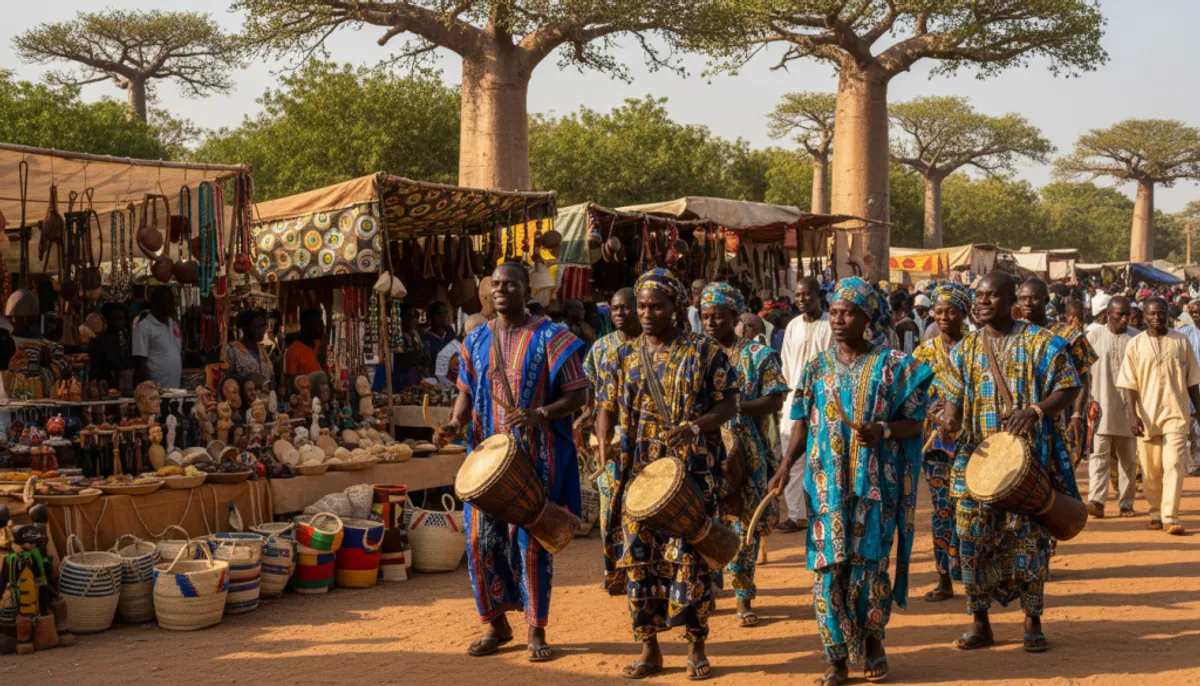
Rituals, Beliefs, and Mythologies
Traditional African beliefs are expressed through rites such as the ndut or the boukout. These initiation practices maintain a deep connection with spirituality.
Local mythology includes legendary figures like Mame Ndiare. Wolof tales convey fundamental values. This respect for traditions ensures community harmony.
The Role of Festivals and Festive Events
Religious festivals punctuate the year and strengthen social ties. Major events like Tabaski or Magal mobilize communities.
| Traditional Festival | Meaning | Period |
|---|---|---|
| Tabaski | Celebration of sacrifice | Variable (lunar) |
| Magal de Touba | Religious pilgrimage | October |
| Maouloud | Birth of the Prophet | 3rd lunar month |
| Tamkharit | Muslim New Year | 1st lunar month |
These celebrations unite the country around shared traditions. They illustrate the persistence of ancestral practices in modernity.
Family and Social Values at the Heart of Daily Life
The family dynamic forms the foundation upon which the balance of contemporary Senegalese society rests. This institution extends far beyond the simple domestic framework to become a true system of mutual support, highlighting the impact of corporate culture on communal relationships.
The Importance of Family Ties and Kinship (mbokk)
The concept of mbokk, meaning kinship in Wolof, encompasses much more than blood ties. It creates an extensive network of solidarity where everyone finds their place. Several generations often coexist under the same roof.
The authority of the head of family, usually the father or grandfather, structures daily organization. Their decisions guide the life of all members. Young people systematically consult their elders before any significant initiative.
Respect for elders is a fundamental value. Their wisdom and experience are revered in all spheres of the community. This intergenerational transmission maintains social harmony.
Even in the face of economic challenges, these extended family groups allow for collective support. The Senegalese family thus functions as a resilient institution, preserving cultural identity while adapting to modern realities.
Senegalese Culture: Music, Dance, and Arts
The vibrant rhythms and bright colors express the creative soul of the Senegalese people. This artistic expression forms a universal language that unites generations.
The Rhythms of Mbalax and Sabar
Mbalax represents the emblematic musical genre created by Youssou N'Dour. Its complex rhythms and catchy melodies have conquered the world.
Traditional instruments bring this unique music to life. The djembé with its striking sounds accompanies the sabar used for dancing. The 21-string kora produces enchanting harmonies.
The sabar refers to both a drum and a traditional Wolof dance. This practice combines intense beats and acrobatic steps. It serves as a celebration and a transmission of ancestral stories.
Visual Arts, Sculptures, and Craftsmanship
The visual artistic scene presents remarkable richness. Glass painting (souweres) coexists with the monumental sculpture of Ousmane Sow.
Traditional craftsmanship demonstrates exceptional ingenuity. Weekly masks and récup'art transform recycled materials into works of art. This creativity perfectly illustrates the fusion between tradition and modernity.
These artistic expressions form a coherent whole that narrates national identity. Music, dance, and visual arts constitute the living heart of this dynamic culture.
Wedding Ceremonies and Matrimonial Traditions
Wedding ceremonies are key moments where the richness of the country’s ethnic traditions is manifested. Each union represents much more than a simple celebration between two people.
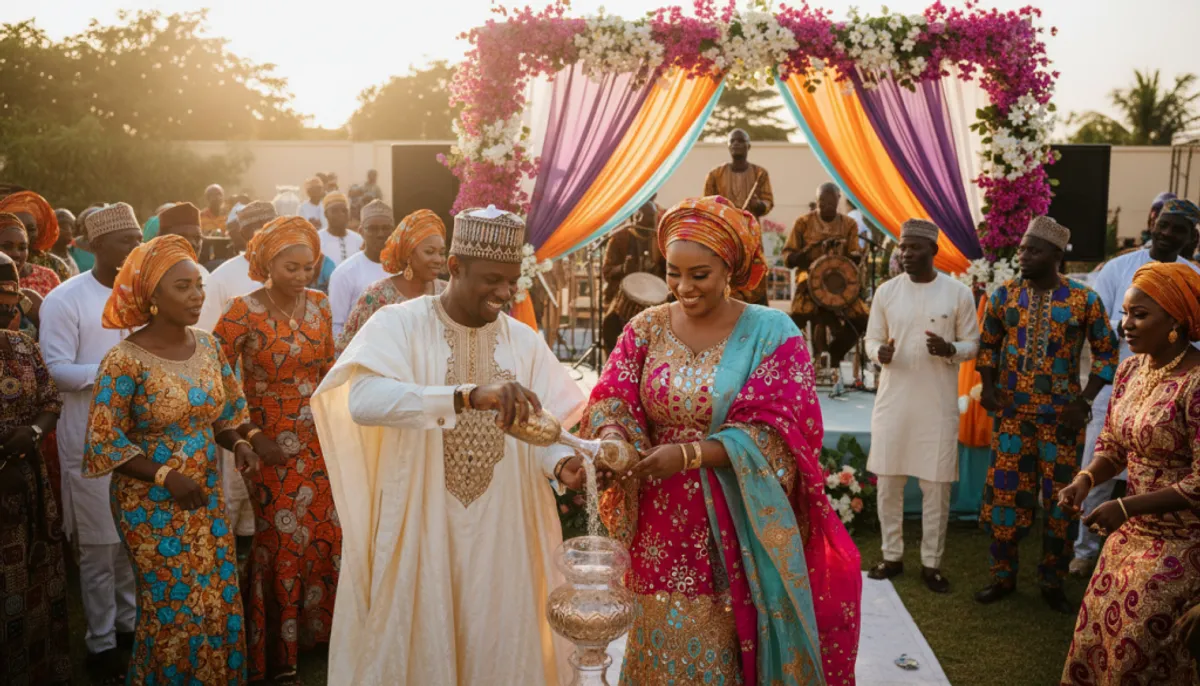
Wolof Weddings and Alliance Rituals
Among the Wolof, the majority ethnic group, weddings are held with grandeur and elegance. Fashion plays a central role with sumptuous outfits.
The bright colors of boubous and dresses reflect a taste for aesthetics. This family union is accompanied by music, dances, and hearty meals.
The Specificities of Peulh, Sérères, and Diola Weddings
Other ethnic groups bring their own particularities. The Peulh prioritize fashion parades with refined embroidery.
The Sérères symbolize the union of people with their lands through agricultural rites. The Diola celebrate outdoors with a deep respect for nature.
Symbols and Procession of Dowries
The dowry represents a crucial element in all these traditions. It materializes the alliance between families through symbolic gifts, and understanding the boulanger payment terms is essential in this context.
Each ethnic group has its own dowry procession. These rituals perpetuate ancestral values while creating lasting community bonds.
Languages, Religions, and Community Diversity
At the heart of Senegalese society lies a rich mosaic of languages and beliefs that shapes its unique character. This diversity represents a fundamental strength for the people and significantly enriches its heritage.
The country demonstrates a remarkable ability to harmonize different expressions within the same nation. This peaceful coexistence serves as a model of unity in diversity.
Multilingualism and Linguistic Richness
Senegal has two official languages: French and wolof. French is mainly used in administration and education. Wolof, on the other hand, is spoken by about 80% of the population.
Nearly forty different dialects are practiced according to the regions. Among the twenty-one codified national languages, four have more than a million speakers. This linguistic diversity reflects the composition of the various ethnic groups.
Tolerance and Coexistence of Religions
Islam is practiced by over 95% of Senegalese. This religion primarily manifests in its Sufi form. Four major brotherhoods structure this spiritual practice.
Christianity accounts for about 5% of the population. It finds its place among certain specific ethnic communities. All religions coexist in exceptional mutual respect.
This religious tolerance deeply characterizes society. The different practices of Islam and other religions harmoniously coexist. This interfaith peace inspires many countries.
This linguistic and religious diversity strengthens national identity. It contributes to a culture of respect and living together. Senegal thus shows how differences can unite rather than divide.
Cultural Heritage: Museums, Monuments, and Festivals
From prestigious museums to vibrant festivals, the country showcases a rich array of contemporary cultural expressions. These institutions play an important role in preserving the national cultural heritage.
Major Institutions and Historical Sites
UNESCO recognizes several elements of Senegalese cultural heritage. The Kankurang and the xooy are among the protected intangible traditions.
Museums like the Théodore-Monod Museum and the House of Slaves preserve collective memory. The Museum of Black Civilizations celebrates the contribution of Léopold Sédar Senghor to Senegalese culture.
These museum spaces are an essential element for understanding the evolution of society.
International Festivals and Artistic Encounters
The World Festival of Black Arts represents a major historical event. Initiated by Léopold Sédar, it marked the global black arts.
The Dakar Biennale (Dak'art) attracts enthusiasts of contemporary black arts. The Saint-Louis Jazz Festival complements this diverse cultural offering.
These events play an important role in the international prominence of Senegalese culture. They ensure transmission to future generations.
Conclusion
The richness of artistic and culinary expressions makes Senegal an unmissable destination. This exploration reveals an exceptional cultural heritage where each element contributes to a unique identity, including the delightful flavors of german cuisine.Ancestral traditions coexist harmoniously with modernity. The local nicaraguan cuisine perfectly embodies this fusion, with traditional dishes like thiéboudienne and yassa.These flavorful dishes symbolize generosity and hospitality. They are shared with family, strengthening social bonds.
The respect for traditions and legendary hospitality characterize this people. Senegalese culture remains vibrant, evolving while preserving its roots.
We invite you to personally discover this welcoming land. Every encounter and shared meal reveals a facet of this extraordinary culture.
FAQ
What is Teranga and why is it so important in Senegal?
Teranga is the concept of hospitality and warm welcome. It is a central value. It means that every visitor is treated with great respect and generosity. This practice strengthens bonds within the community.
What are the most emblematic traditional dishes of the country?
Thiébou dieune (rice with fish) is considered the national dish. Senegalese cuisine is varied, with dishes like Yassa or Mafé. These traditional dishes are often shared during large family meals.
How do music and dance integrate into daily life?
Music and dance are omnipresent. Mbalax, popularized by Youssou N'Dour, and the rhythms of the sabar enliven parties, ceremonies, and even daily events. They are a universal language of joy and gathering, much like traditional romanian dances that celebrate cultural heritage and community spirit.
What are the main ethnic groups that make up the population?
The Senegalese people are very diverse. The Wolof are the largest group. Other major ethnic groups include the Peuls, Sérères, Diolas, and Mandingues. Each brings its own traditions to the richness of cultural heritage.
What international festivals celebrate artistic creation?
The country is renowned for its major events. The World Festival of Black Arts, initiated by Léopold Sédar Senghor, and the Biennale of contemporary African art, Dak'Art, are major artistic gatherings that attract visitors from around the world.