
Welcome to a journey to the heart of Central Asia, discovering a country with a heritage of exceptional richness. Turkmenistan is home to a society where nearly 6 million inhabitants uphold millennia-old traditions.
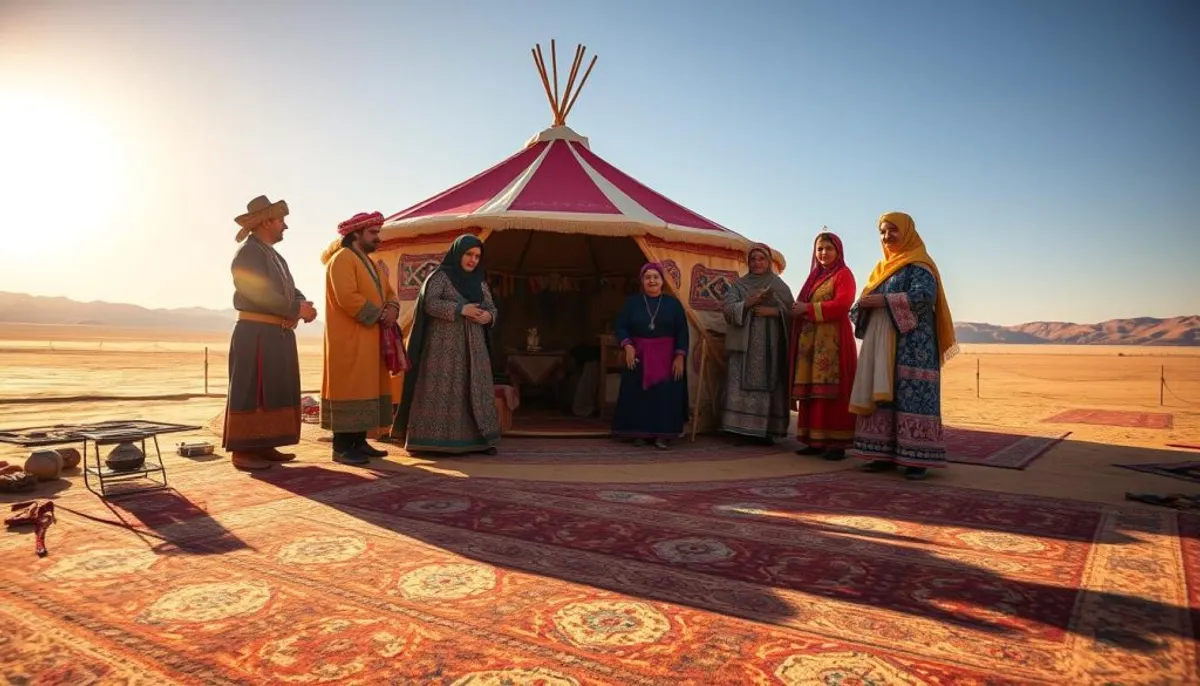
This unique Turkmen culture is the result of a fascinating history, marked by the passage of great Iranian empires and nomadic Turkish tribes. It has enriched over the centuries, creating an authentic blend of Eastern influences and Russian heritage.
Today, this nomadic heritage remains alive. It manifests in the importance of family, legendary hospitality, and deep respect for elders. National symbols like the Akhal-Teke horse and carpet art tell this history through generations.
Prepare to explore a world where the past and present meet harmoniously. Discover how this people have managed to preserve their identity through the ages.
Key Points to Remember
- Turkmenistan is a country in Central Asia with a population of about 6 million inhabitants.
- The society is predominantly Muslim and Turkmen, with a strong cultural identity.
- Its cultural heritage is a unique blend of nomadic, Iranian, Turkish, and Russian influences.
- The nomadic tradition still profoundly influences modern social values.
- Symbols like the Akhal-Teke horse and carpets are emblematic of this heritage.
- Hospitality, respect for elders, and family are fundamental pillars of society.
- This culture has remarkably resisted political changes and external influences.
- A comparison of cultural rates reveals significant insights into the societal dynamics within Turkmenistan.
Historical Context and Cultural Influences
The current Turkmen territory was the crossroads of great historical civilizations. This region of Central Asia has witnessed prestigious empires that have shaped its development.
Nomadic and Imperial Heritage
The roots of the people trace back to the Oghuz Turks of the 7th century. Their literary contributions laid the identity foundations of this nation.
The country has hosted Scythians, Kushans, and Indo-Greek kingdoms. Each civilization has left its mark on this part of the world.
| Historical Period | Main Influence | Lasting Contribution |
|---|---|---|
| Antiquity (Scythians, Kushans) | Nomadic tribal structures | Pastoral traditions |
| Middle Ages (Silk Road) | Trade exchanges | Cultural syncretism |
| Iranian Period | Architecture and language | Persian elements |
Russian and Eastern Influences
Russian domination paradoxically brought about linguistic standardization. Despite some restrictions, this period formalized written language.
Today, integration into the Turkic States Organization strengthens regional ties. This complex history mixes Eastern influences and modernization.
The rich history of this region continues to inspire its contemporary development. Nomadic traditions coexist with modern contributions.
The Richness of Turkmen Culture
Contemporary life in Turkmenistan is deeply rooted in ancestral practices that define national identity. These elements form a unique social fabric where past and present meet.
Traditions, Customs, and Lifestyles
Hospitality represents a fundamental value in this country. Every guest is welcomed as a divine gift.
Rituals surrounding tea and sacred bread punctuate gatherings. Shared meals on tablecloths spread on the ground create a warm atmosphere.
Arranged marriages by matchmakers (goşgular) maintain centuries-old customs. Respect for elders guides all family ceremonies.
The Role of Carpets and Akhal-Teke Horses
Carpets are much more than decorative objects. Their weaving has been passed down from mother to daughter for generations.
Each tribe has its distinctive geometric patterns. The characteristic red hues make each piece unique.
Akhal-Teke horses symbolize national pride. Their elegance and endurance earn them international fame.
These elements intertwine to form a coherent identity. They still structure social relations throughout the country.
Language, Population, and Ethnic Diversity
The demographic composition of Turkmenistan reveals a fascinating linguistic and ethnic diversity. This part of Central Asia is home to nearly 6 million inhabitants.
Turkmen and Other Languages in Use
The official language, Turkmen, is spoken by 70-72% of the population. It belongs to the Turkic language family.
| Main Language | Percentage of Speakers | Areas of Use |
|---|---|---|
| Turkmen | 70-72% | Official language, daily life |
| Russian | 12% | Administration, business, work |
| Uzbek | 9% | Ethnic communities |
| Other Languages | 7% | Diverse minorities |
Russian retains significant importance in professional life. Uzbek and other minority languages enrich the linguistic landscape.
The population has experienced remarkable growth since 1926. It has increased from about 1 million to nearly 6 million inhabitants.
Turkmen make up 85% of the population. Uzbeks (6%) and Russians (5%) form the main minorities. The state actively promotes national unity around the official language.
This diversity is the richness of this unique country. It reflects its strategic position in Central Asia.
Rituals, Beliefs, and National Symbols
Turkmen spirituality is expressed through remarkable syncretism where Islam coexists harmoniously with pre-Islamic customs. This unique fusion creates a distinctive spiritual identity that permeates all aspects of daily life. Additionally, the advantages of illicado culture enrich this spiritual landscape, highlighting the importance of cultural diversity in Turkmenistan.
Religious Practices and Traditional Celebrations
Sunnite Islam practiced by 89-93% of the population blends with "Turkmen Islam." This specific form integrates ancestor worship and shamanic rituals. The state frames this practice while preserving local traditions.
| Festival/Celebration | Meaning | Period |
|---|---|---|
| Norouz | Spring New Year | March 21 |
| Oraza Bayram | End of Ramadan | Variable (lunar) |
| Neutrality Day | National holiday | December 12 |
| Melon Day | Agricultural celebration | Second Sunday in August |
Strong Symbols: Emblems, Music, and Dances
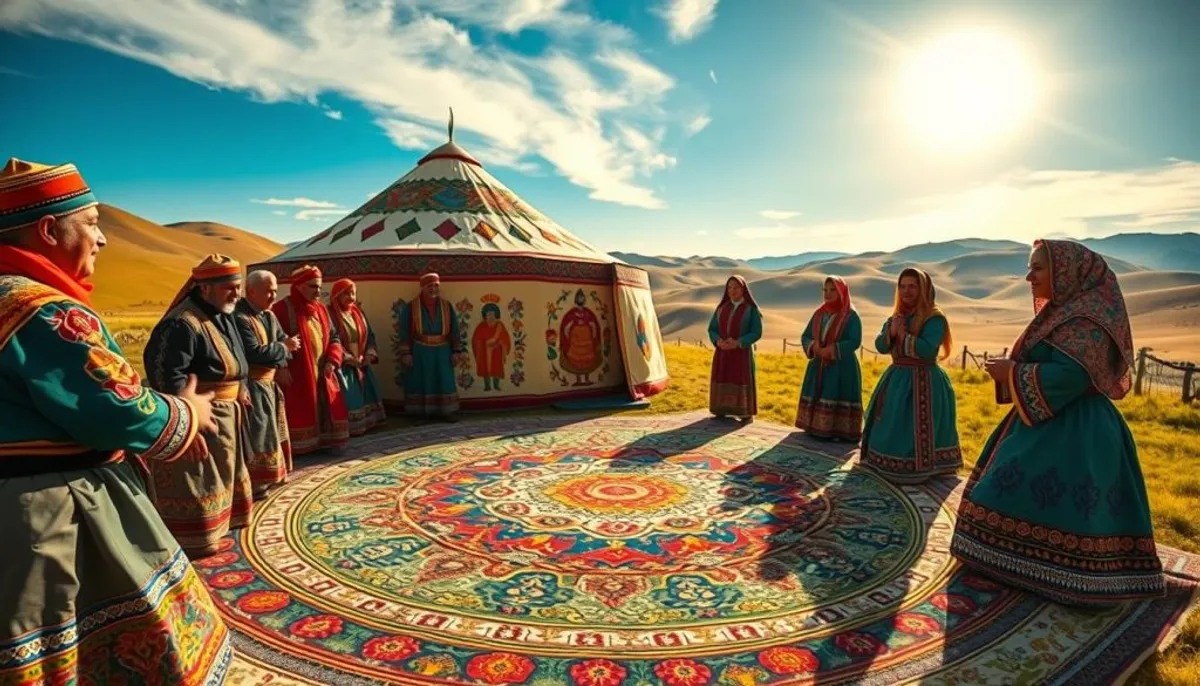
The Akhal-Teke horse and pilaf rice embody national identity. Traditional Israeli cuisine, along with the kushtdepdi, a sung and danced rite, is listed as UNESCO heritage. This way of expressing traditions has a long history.Traditional music uses the dutar and tuyduk. Folk dances accompany family ceremonies. Women play a central role in transmission within the family.
Craftsmanship and Visual Arts in Central Asia
The skilled hands of Central Asian artisans create works of exceptional beauty. This artistic heritage represents a living human treasure recognized internationally.
Unfortunately, a significant part of ancestral techniques has disappeared with modernization. The work preserved today is therefore even more valuable.
Weavers, Jewelers, and Works of Art
The National Carpet Museum of Ashgabat showcases extraordinary pieces. These carpets feature distinctive geometric patterns called gul.
Each tribe has its own unique patterns passed down through generations. The rich range of red hues makes each creation special.
The art of jewelry holds considerable importance as a protective amulet. Women artisans primarily create silver pieces adorned with precious stones.
| Type of Craft | Main Characteristics | Cultural Significance |
|---|---|---|
| Traditional Carpets | Gul patterns, red hues | Tribal and family heritage |
| Silver Jewelry | Precious stones, animal motifs | Protection and social status |
| Traditional Clothing | Embroidery, telpek, flowing dresses | Identity and protection |
Traditional Architecture and Archaeological Sites
The architecture includes nomadic yurts adapted to the pastoral lifestyle. Masterpieces of Timurid art can also be found at historical sites.
Several archaeological sites reveal the richness of this region's history. The Bactrian-Margian complex and the Parthian fortresses of Nisa are UNESCO-listed.
These places testify to an artistic history dating back several millennia. They are an essential part of the world heritage.
Turkmen Music, Dance, and Literature
The enchanting melodies of Turkmenistan tell a millennia-old story through their vibrant notes. This unique artistic expression captivates listeners with its emotional depth.
Traditional Instruments and Folk Performances
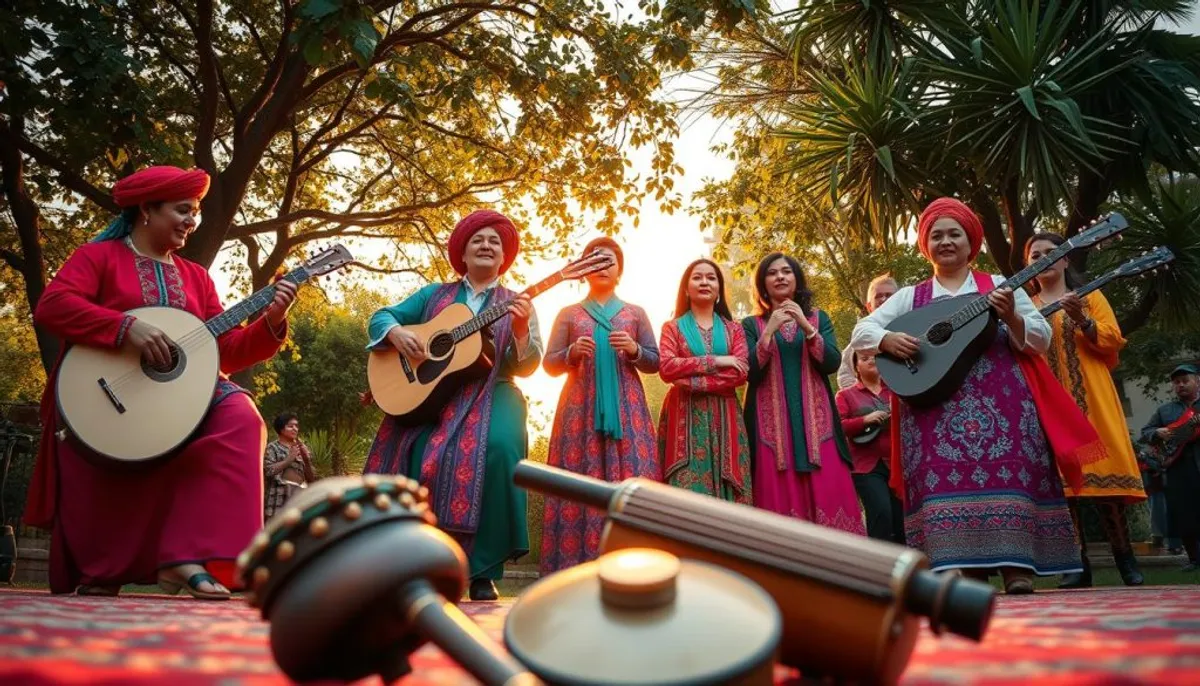
Traditional music uses remarkable instruments like the dutar string instrument and the tuyduk wind instrument. The bakhshi, itinerant storytellers, traveled the country with their lute.
They captivated villages for hours with epic tales. A national holiday still honors these legendary artists.
Traditional dances like the kushtdepdi impress with their graceful movements. Recognized by UNESCO, this performance includes polyphonic vocalizations and bells.
Literature and Iconic Poets
Turkmen literature dates back to the Oghuz Turks of the 7th century. It has produced foundational works for the Turkic-speaking world.
Magtymguly Pyragy, the father of this literature, composed over 7000 poems. His work shines throughout Central Asia.
| Literary Work | Author/Origin | Recognition |
|---|---|---|
| Book of Dede Korkut | 8th century | UNESCO 2000 |
| Görogly | Oral tradition | UNESCO 2015 |
| Poems of Magtymguly | Magtymguly Pyragy | National heritage |
The epics Manas and Koroghlou complement this rich written heritage. This literature remains alive in the hearts of Turkmen.
Tourism and Immersion in Daily Life
Traveling to Turkmenistan means accepting to be guided by the rhythms and values of a society deeply rooted in its traditions, including the culture pass france. This immersion offers a unique window into authentic Central Asia.
Authentic Experiences and Local Encounters
To discover daily life, ride the famous Akhal-Teke horses near Ashgabat. Horseback riding lessons provide a respectful approach to these emblematic animals.
Listen to the gidjak and attend Bakhshi performances. Explore markets to buy scarves and carpets while observing commercial customs.
Tips for Expatriates and Travelers
Understand that society values corporate culture assessment, family, and hospitality. Refusing tea or an invitation may be perceived as an affront.
Women often bear the domestic burden while working in education and health. The female activity rate reaches 30%.
Adopt indirect communication and modest attire. The way of greeting and sharing meals follows precise codes.
For work, expect slow negotiations and the importance of personal relationships. Consult France Diplomacy before your trip to this fascinating country.
Conclusion
At the end of this exploration, the Turkmen heritage reveals itself as a living treasure that fascinates with its preserved authenticity. This country in Central Asia has managed to retain its nomadic soul while evolving with its time.
The family remains at the heart of social organization, while women proudly pass on the art of carpet making. Their artisanal work perpetuates a millennia-old history.
The modern state values these national symbols while framing their expression. This part of the world offers an intense cultural life where every encounter becomes memorable.
Discovering this unique culture is to understand how a people maintains its traditions in the face of contemporary challenges. An enriching experience awaits you in this multifaceted country.
FAQ
What are the main influences that have shaped life in Turkmenistan?
The society has been marked by a strong nomadic heritage and by imperial influences, notably Persian and Russian. These different periods have left their mark on the customs, architecture, and way of life of the inhabitants, including elements of traditional architecture.
What is the role of the carpet in society today?
The carpet is much more than a decorative object. It is a deep national symbol, present on the flag. It represents the soul of the people, its history, and its art. The patterns tell stories and are passed down from generation to generation.
Is the Turkmen language difficult for a foreigner to learn?
Turkmen belongs to the Turkic language family. Its grammar is logical, but it can present challenges, particularly its modified Cyrillic alphabet and certain sounds. However, the locals are very welcoming to those who make the effort to learn a few phrases.
What are the most important celebrations of the year?
Beyond religious holidays, events like Nowruz (Persian New Year) are central. Folk dances and traditional music, with instruments like the dutar, enliven these joyful gatherings that punctuate community life.
Is local craftsmanship still alive today?
Absolutely! The work of weavers, jewelers, and embroiderers is highly valued. You can admire their craftsmanship in bazaars, like that of Tashkent, or visit workshops to see the creation of these unique works of art.
What do you recommend for an authentic immersion during a trip?
For a real experience, prioritize meeting families. Sharing tea, tasting traditional cuisine, and chatting with people will give you a much richer insight into daily life than simply visiting archaeological sites, however magnificent.